Annecy Old Town: What to See and How to Walk It
Plan a walk through Annecy's old town: the canals, the Palais de l'Isle and the cobbled lanes between lake and castle, with opening days and honest trade-offs.
On this page
Annecy's old town, the Vieille Ville, is the medieval core squeezed between the Canal du Thiou and the foot of the castle hill, and it is small enough to cross on foot in twenty minutes. Almost everything worth seeing sits inside that ring, so the old town is a morning or an afternoon rather than a day. Use it as the anchor of a short break, with the lake as the second half.
The centre is genuinely walkable: the tourist office publishes printable maps of the full city and a separate city-centre plan in PDF, which is worth carrying because the lanes twist and phone signal between stone walls is patchy.
What the old town is, and where it sits
The Vieille Ville is the historic medieval centre of Annecy, set between Lake Annecy and the surrounding Alps — the pairing that earned the town its Venice of the Alps nickname. The Canal du Thiou threads through the middle, which is why so much of the old town is viewed from a bridge rather than a pavement.
Practically, the old town is the middle layer of a three-part city: the lakefront and its beaches on one side, the château on its hill above, and the cobbled streets and arcades in between. Knowing that layering saves you a wasted walk, because the lake is a few minutes downhill from the lanes, not a separate trip.
If you are weighing up whether the city justifies a weekend at all, the old town is the honest test: it is compact and pretty rather than monumental, and the case for coming rests on the lake plus these streets together.
How long you need
A two-hour loop covers the canals, the Palais de l'Isle from the outside, the main lanes and the walk out to the lake. That is the right shape for a first afternoon, and it leaves the evening free.
Give it half a day if you want to go inside the Palais de l'Isle, sit down for lunch on a canal-side terrace and browse the delis and concept stores rather than speed past them. The old town rewards stopping more than it rewards covering ground, because the individual streets are short.
The trade-off is that the compactness works against you in high season: there is no quiet back route when the main lanes fill, and the arcades funnel crowds rather than shelter you from them. Plan the interior visit for the start or end of the day and treat the middle hours as a slow browse.
A walking route: canals, palace, then the lake
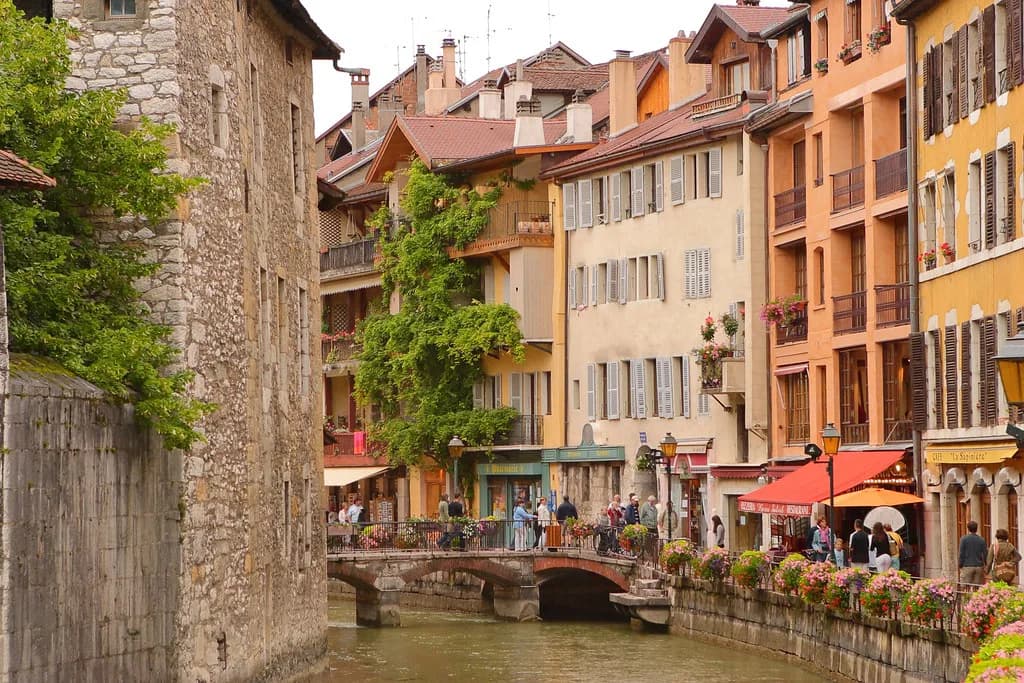
Start at the Canal du Thiou and follow the water into the centre; the canal-side lanes are the image most visitors come for, with cafés and restaurants lining the quays. Walk with the water on one side and the arcaded streets on the other, then cut inland towards the Palais de l'Isle rather than doubling back.
From the Palais de l'Isle, work uphill into the lanes towards the château, then come back down and out to the Pont des Amours and the lakefront. That order keeps the climb in the middle of the walk and finishes flat along the water, which is easier on tired legs.
If you would rather have the whole weekend mapped out in advance, the route slots neatly into a wider plan.
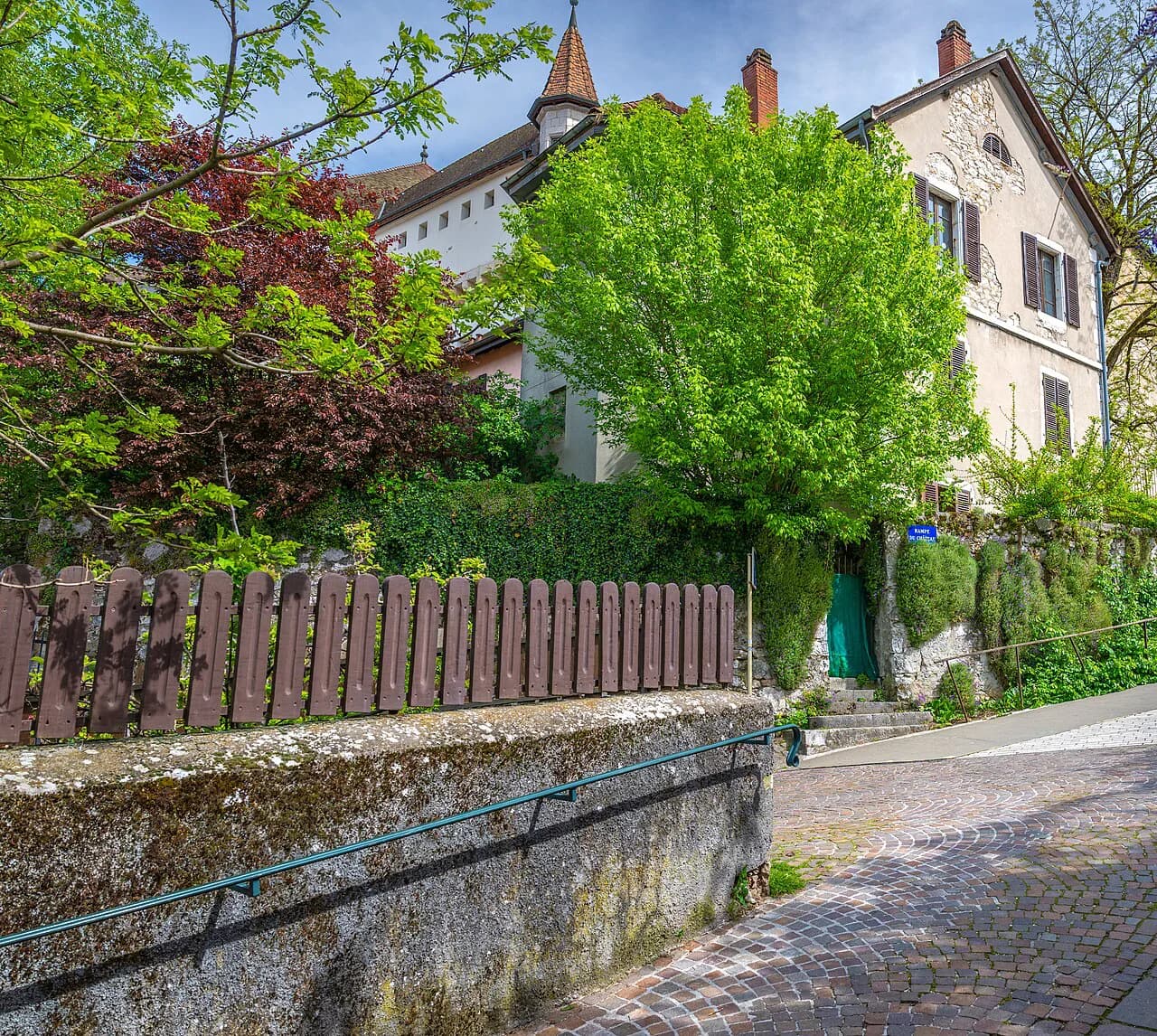
The Palais de l'Isle
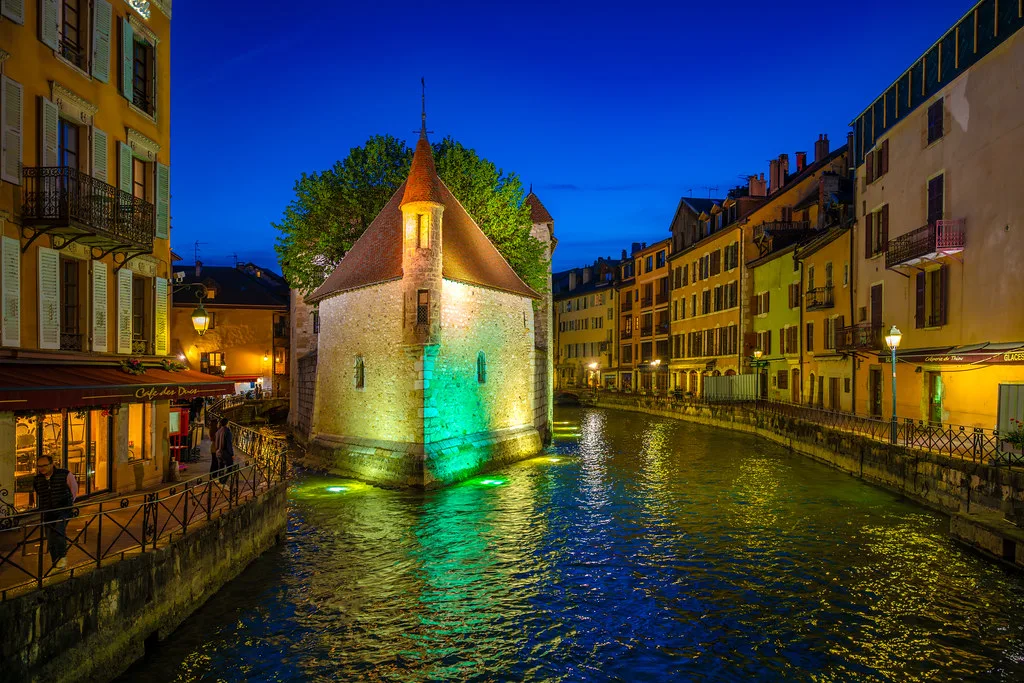
The Palais de l'Isle is the old town's signature building: a fortified palace shaped like a ship, sitting on a triangular islet in the middle of the Canal du Thiou. It dates from the 1100s and passed between noble families of the County of Geneva before becoming a prison and courthouse.
Inside, the exhibitions cover Annecy's architecture, and the tour takes in the old courtroom, the cells, the dungeon and the chapel. It is open daily except Tuesdays, so a Tuesday city break means seeing it from the bridge only — plan the rest of the old town for that day and slot the palace in on another.
Opening hours and ticket prices are not fixed across the year, so check the palace's current details at the ticket desk or on the city's tourist information before you build the day around it.
Canals and bridges
The Canal du Thiou is the spine of the old town, and the bridges over it are the viewpoints: the Palais de l'Isle seen from the water is the shot everyone takes, and the quays either side are where the cafés put their tables.
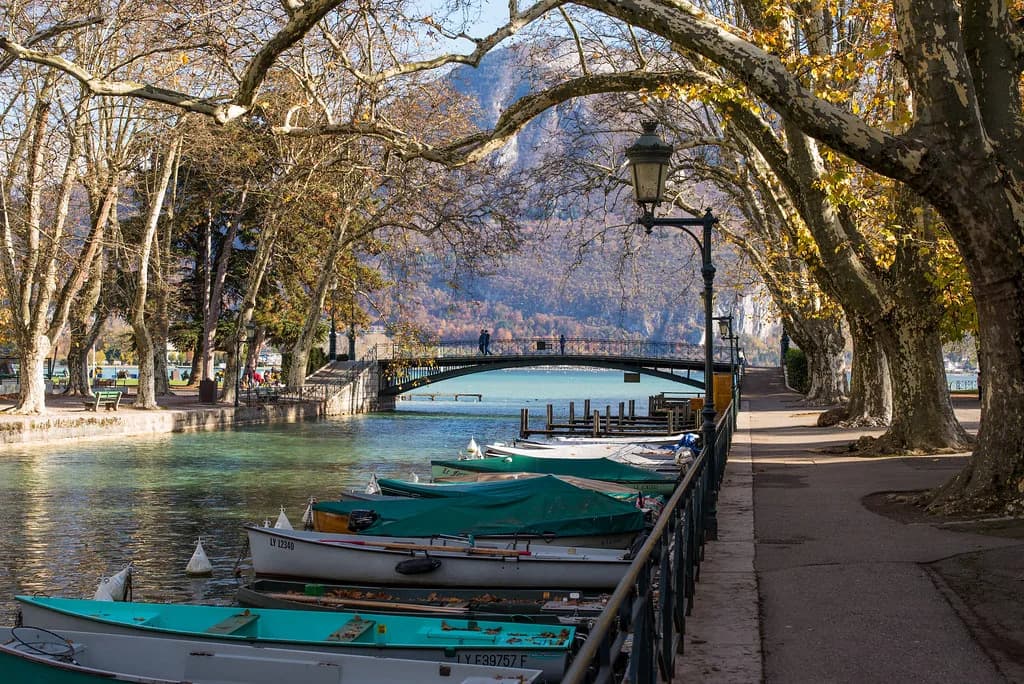
The Pont des Amours, Lovers Bridge, is the other must-stop, sitting at the point where the canals give way to the lake — a natural end to the old town walk rather than a detour.
Cobbled lanes and arcades
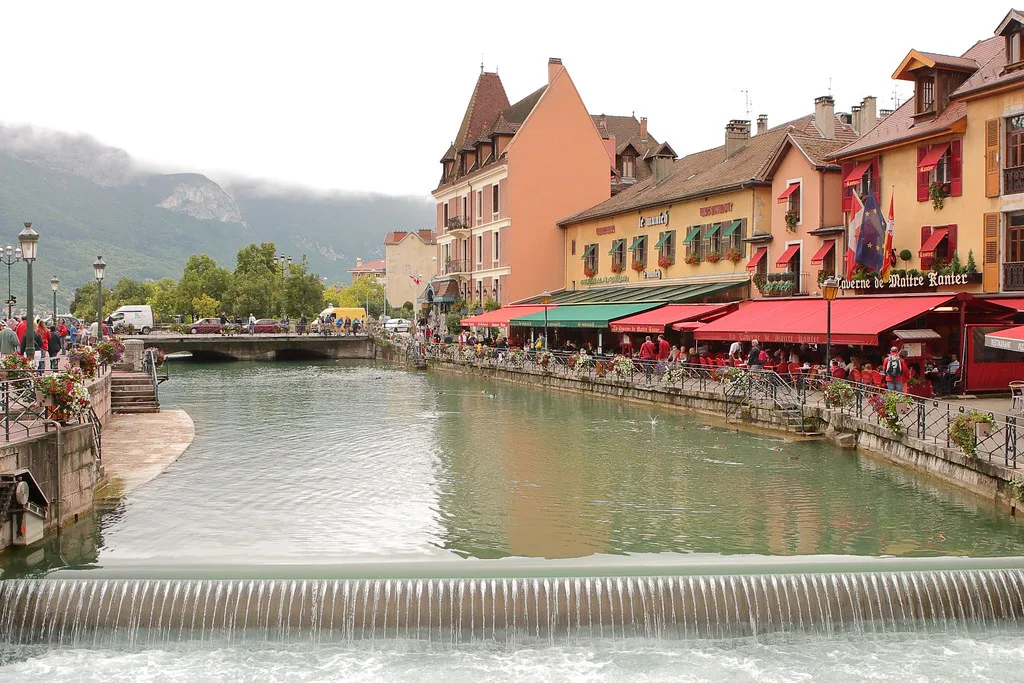
The old town streets are narrow, cobbled and built around a maze of canals, with arcades and covered passages cutting through the ground floors of the buildings. That makes them atmospheric in rain and slippery underfoot after it, so flat shoes beat anything with a heel.
This is browsing territory rather than sightseeing: boutique delis, concept stores such as Les Palettes, and canal-side cafés sit side by side, and the pleasure is in the wandering rather than ticking off a list.
If shopping is a priority rather than a background pleasure, it is worth planning which streets you want to cover before you arrive.
Markets and canal-side cafés
Farmers' markets set up in the old town, and the canal-side quays are lined with cafés and restaurants where you can eat with the water in view.
Annecy's covered market hall, Les Halles d'Annecy, is the other food anchor in the centre, useful for a stand-up lunch or picnic supplies before you head to the lake. Market days vary by market, so confirm which morning suits your dates before you build a day around one.
For a proper sit-down meal, the old town holds the bulk of the city's restaurants and the choice is dense enough that booking ahead matters on a weekend.
Shops and browsing
The old town is where Annecy concentrates its independent retail: delis selling Haute-Savoie cheeses and charcuterie, small fashion and design shops, and the concept stores that sit between the two.
Sunday is the day to plan around: in many French towns shops shut, and the old town's browsing streets are quieter for it while the cafés stay busy. Treat Sunday as a walking and eating day rather than a shopping day, and do your buying on Saturday.
When to go
Summer brings the crowds and the atmosphere in equal measure: the canals are at their best in warm weather, but the narrow lanes fill quickly and the canal-side tables are gone by lunchtime.
Winter is the honest alternative, when the old town is quieter and the medieval streets take on a colder, sharper character. In December the Christmas market takes over parts of the centre, with chalets around the St. François-de-Sales church selling Savoie crafts and local food — an atmosphere worth catching, but not the reason to plan a trip.
The shoulder months split the difference, and the weather you get is a question of averages rather than guarantees.
Practical points
The old town is flat and compact except for the climb to the château, and the station is well connected to the rest of France and to Geneva Airport by train, so you can arrive and be in the lanes within a short walk.
A car is more hindrance than help inside the centre: park outside and walk in, since the lanes are pedestrian-scale and the one-way system will cost you more time than the walk.
From the old town, the lakefront and Albigny Beach are a short downhill walk, which makes the beach an easy end to the afternoon rather than a separate excursion.
Where the old town fits into a weekend
Two nights is enough to do the old town properly and still have a full day for the lake. Give the first afternoon to the walking route above, the first evening to a canal-side dinner, and the second day to the water and the lakefront.
If you are coming in autumn, the old town is at its most comfortable: the summer queues have gone but the terraces are still open, and the light on the canals is better than in August.
Plan Your Visit
Annecy's old town is a two-hour walk with a half-day's worth of stopping in it, and the route runs canal, palace, lanes, then lake. Go early or go in winter, check the Palais de l'Isle's Tuesday closure before you build a day around it, and treat Sunday as a day for walking and eating rather than shopping.
For the rest of the trip, pair it with the lakefront and the château, and book your old town dinner before you arrive.
Explore more Annecy guides
Frequently Asked Questions
Is Annecy old town worth visiting?
Yes, for a short break. The Vieille Ville is a compact medieval centre of canals, arcades and one ship-shaped island palace, and it pairs naturally with the lake. It is pretty rather than monumental, so it works best as a two-hour walk with time to stop for lunch, not as a day of sightseeing in itself.
How long does it take to walk around Annecy old town?
A two-hour loop covers the Canal du Thiou, the Palais de l'Isle from outside, the main lanes and the walk out to the Pont des Amours and the lake. Allow half a day if you want to go inside the palace, eat on a canal-side terrace and browse the delis and shops.
Is Annecy a walkable city?
Yes. The old town is flat and compact apart from the climb to the château, and the lakefront is a short downhill walk from the lanes. The station is well connected by train, including from Geneva Airport, so you can arrive and walk into the centre.
What is the Palais de l'Isle and when is it open?
The Palais de l'Isle is a fortified palace from the 1100s, built on a triangular islet in the Canal du Thiou and shaped like a ship. It is open daily except Tuesdays, and the tour includes the old courtroom, cells, dungeon and chapel. Check current hours and ticket prices before you go.
Where are the canals in Annecy old town?
The Canal du Thiou runs through the heart of the Vieille Ville, with the Palais de l'Isle sitting on its islet and cafés lining the quays. Follow the water into the centre, then cross towards the Pont des Amours, where the canals meet the lake.
When is the best time to visit Annecy old town?
Summer has the atmosphere and the crowds, and the narrow lanes fill quickly. Winter is quieter and sharper, with a Christmas market in December, and the shoulder months are the comfortable middle. Check the climate averages rather than relying on a forecast.
Can you see the old town in a day?
Yes, easily. The old town is a two-hour walk, so a day gives you time to go inside the Palais de l'Isle, eat a proper lunch and still walk out to the lakefront. Two nights is enough to do the old town properly and give the lake a full day.
What day should you avoid for the Palais de l'Isle?
Tuesday. The palace is open daily except Tuesdays, so if your visit falls on a Tuesday, plan the old town walking route and the lake for that day and slot the interior visit into another day of your trip.
Sources
Notes for French city breaks
Optional updates to our guides.
You might also like
Continue reading
More guides you'll find useful