Things to Do in Lyon: Old Town, Fourvière and the Presqu'île
Plan things to do in Lyon by area: Vieux Lyon's traboules and cathedral, Fourvière's basilica and Roman ruins, the Presqu'île museums and Croix-Rousse murals.
On this page
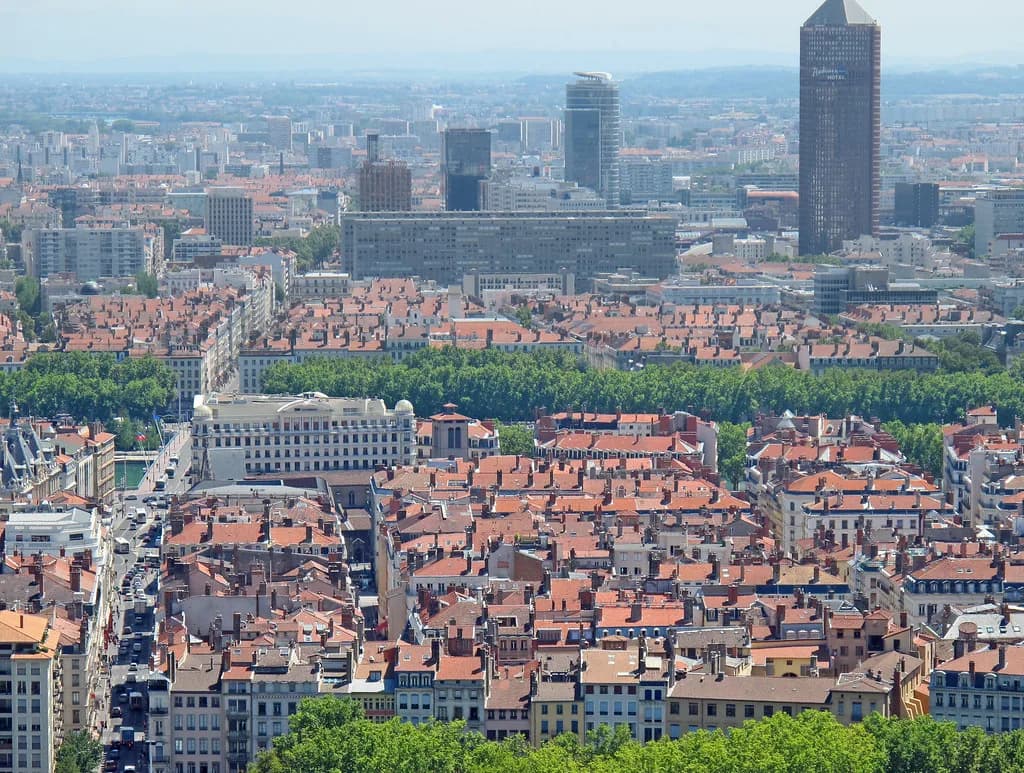
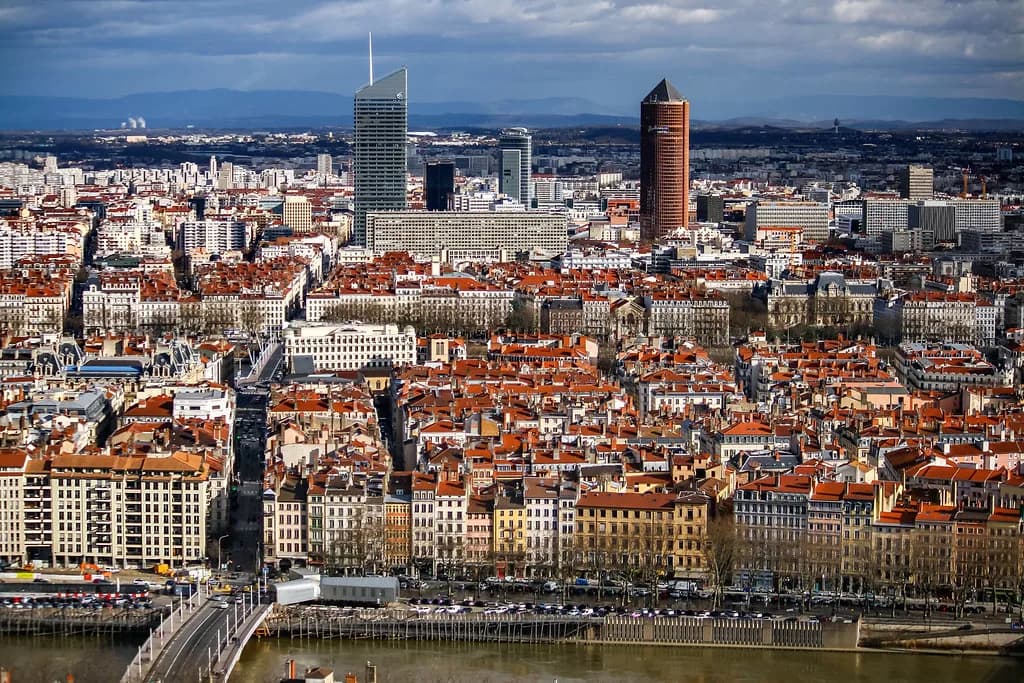
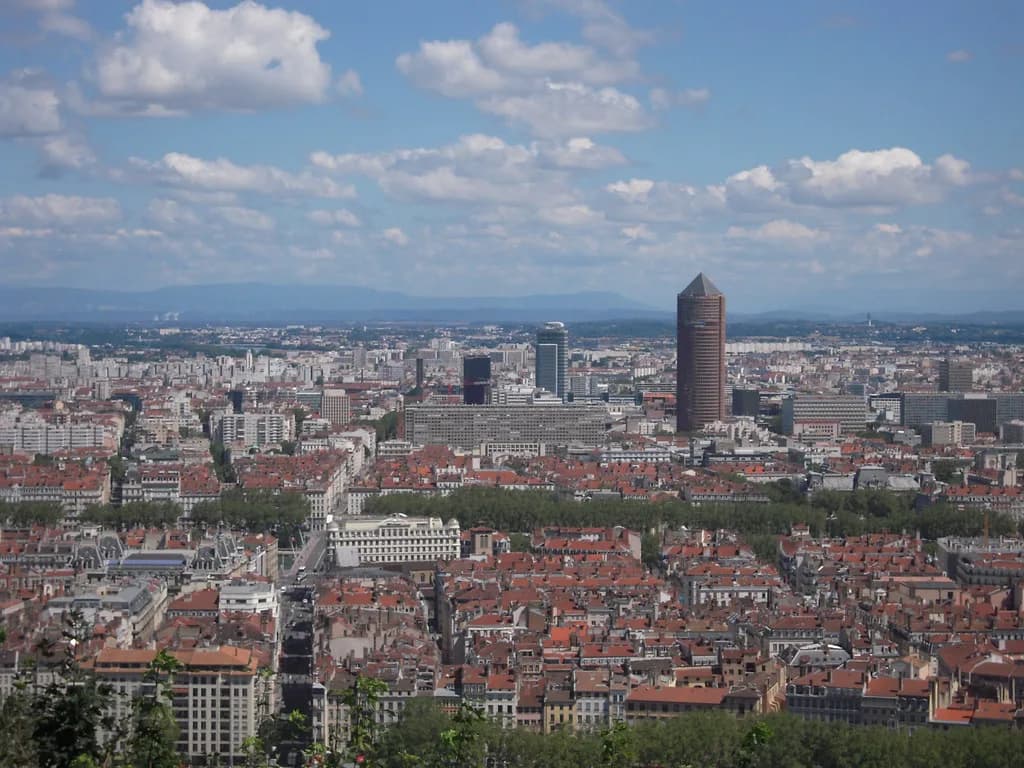
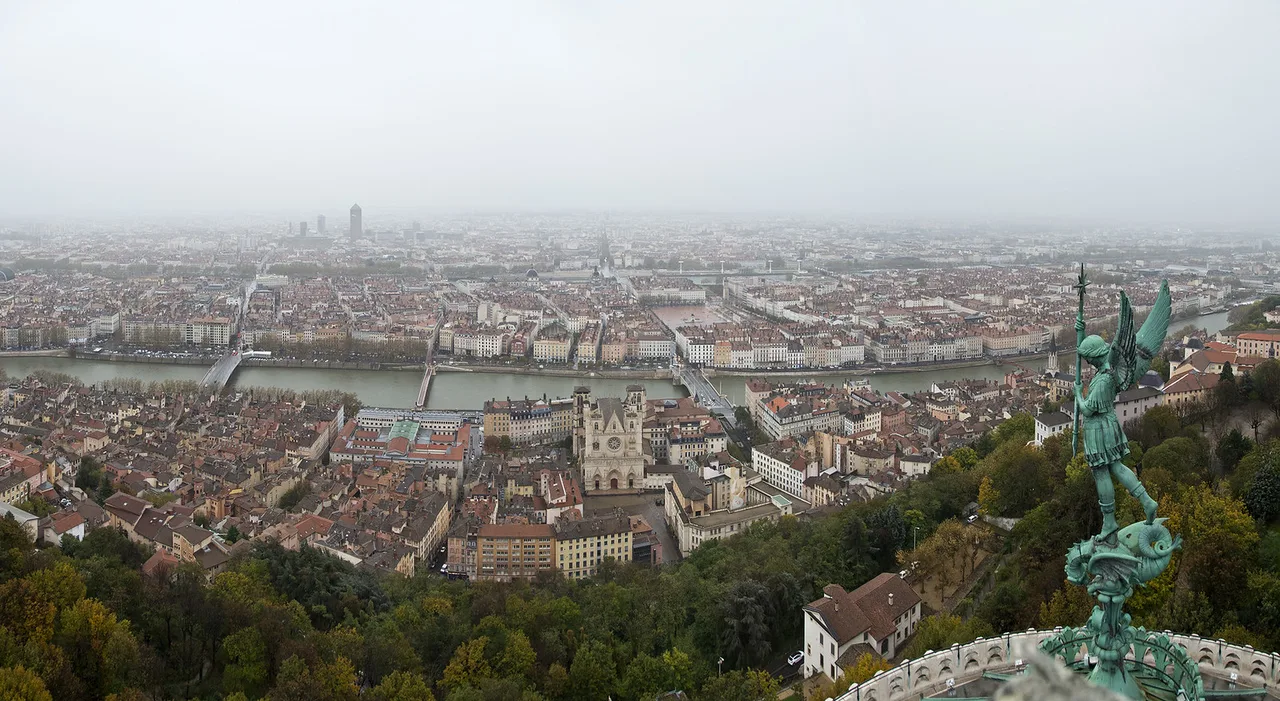
Lyon's best sights cluster in four quarters, and the fastest way to see them is to take one area at a time rather than crossing the city between individual stops. Vieux Lyon, the Renaissance old town between the Saône and Fourvière Hill, sits directly below the basilica and Roman theatres, so the hill and the old town pair naturally in a single morning or afternoon. The Presqu'île peninsula between the two rivers holds Place Bellecour and the Musée des Confluences, while Croix-Rousse, north of the peninsula, carries Lyon's silk-working history in its streets and murals.
What to see in Lyon: the short answer and how the city fits together
Start with Vieux Lyon and Fourvière Hill, add the Presqu'île for museums and shopping, and treat Croix-Rousse as a half-day for the Canuts story and street art. The city's old core is UNESCO-listed across roughly 500 hectares, with four historic districts: Fourvière, Vieux Lyon, the Presqu'île and Croix-Rousse. That geography means you can plan one district per half-day and walk between the first two without public transport.
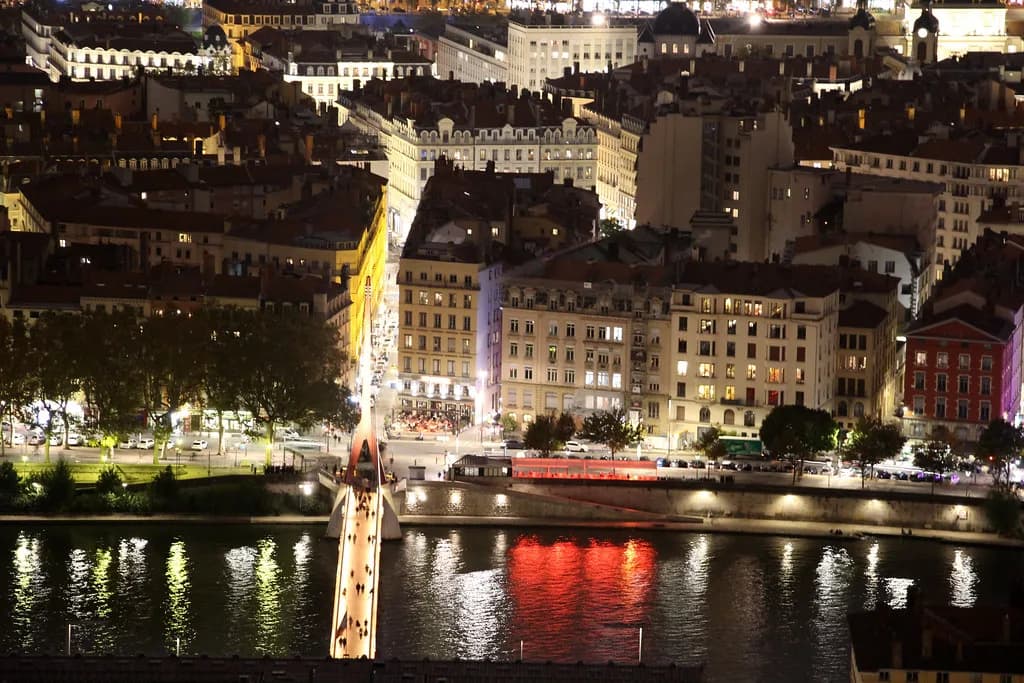
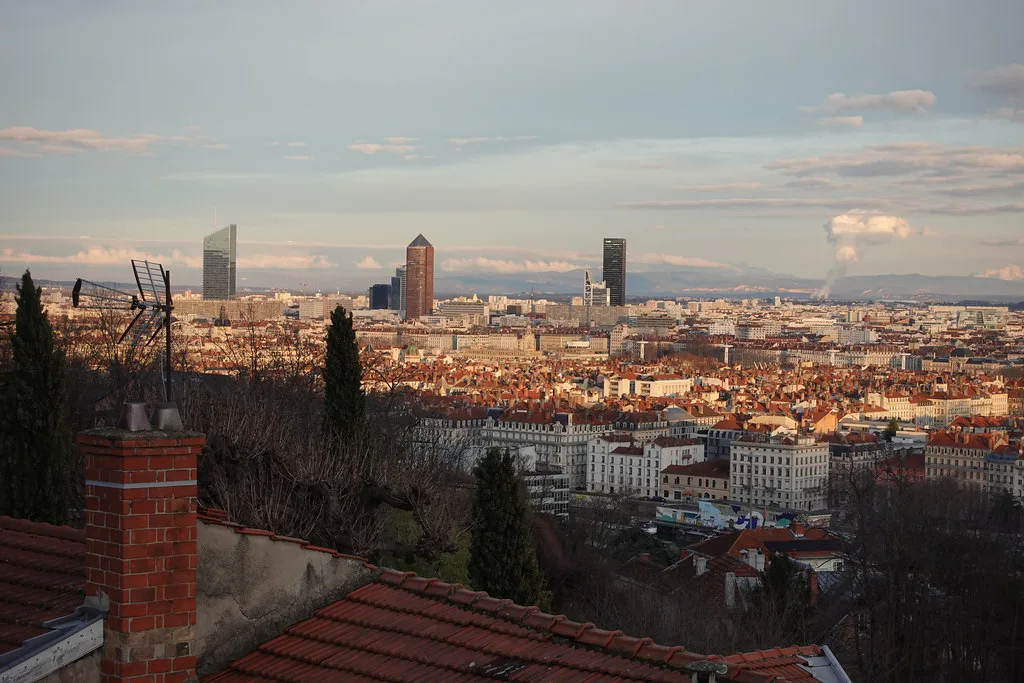
Two rivers do most of the orientation work: the Saône runs along the foot of Vieux Lyon and the Rhône along the eastern edge of the Presqu'île, meeting at the Confluence in the south. If you remember that Vieux Lyon is west of the Saône and the shopping streets are east of it, you will rarely need a map. Walking is the default in the centre, and the metro and funiculars fill the gaps when your legs give out.
How many days Lyon needs: one day, a weekend or three days
One day buys you Vieux Lyon, the funicular up to Fourvière and a walk across the Presqu'île to Place Bellecour before dinner. That is a full day at a brisk pace, and it leaves no room for a museum interior or a proper lunch. If your only Lyon day falls on a Monday, expect some museum doors to be shut and build the day around streets, squares and churches instead.
Two days is the sweet spot: the old town and hill on day one, the Presqu'île museums and Croix-Rousse on day two, with a bouchon dinner in between. A slower visitor who wants culinary stops and breaks should plan on the two-day shape rather than trying to compress everything into one loop. Three days lets you add the Lumière Institute in the Monplaisir area and still keep afternoons unhurried. If you are comparing short breaks, our things to do in Aix-en-Provence follows a similar half-day-per-quarter rhythm.
Vieux Lyon: traboules, Saint-Jean Cathedral and Rue Saint-Georges
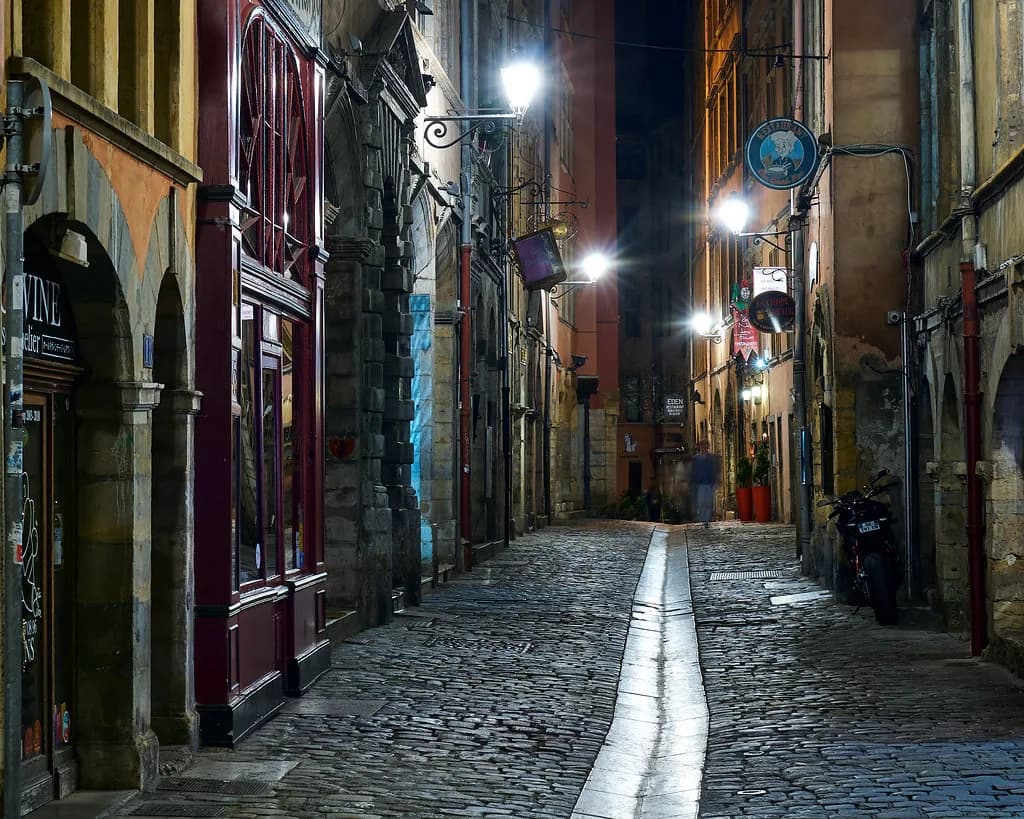
Vieux Lyon is a maze of cobbled lanes running parallel to the Saône, split into three sections: Saint-Paul in the north, Saint-Jean in the middle and Saint-George in the south. Allow at least half a day to wander, because the appeal is in the side streets rather than a single headline sight. The old town fills up at weekends, so a weekday morning gives you the same streets with fewer tour groups.
The traboules are Lyon's signature curiosity: covered passages threaded through buildings, with more than 400 across the city and the greatest concentration in Vieux Lyon and Croix-Rousse. They were once shortcuts for silk workers and, later, meeting points in wartime. Access varies from one passage to the next, so treat any traboule you enter as someone's building and keep quiet and brief.
Among the named passages, the longest traboule runs between 54 Rue Saint-Jean and 27 Rue du Bœuf, while the Cour des Voraces in Croix-Rousse is famous for its industrial staircase. The Traboule de la Tour Rose is not strictly a traboule but is a photogenic stop regardless. Nearby, Rue Juiverie preserves some of the finest Renaissance facades in the district.
Catédrale Saint-Jean-Baptiste anchors the middle of the district with a mix of Gothic and Romanesque fabric and a 14th-century astronomical clock standing around nine metres high. Look for the modern stained glass in the first chapel on the right, replaced after wartime bombing, and the damaged statues on the facade. Outside, Place de Saint-Jean is ringed by restaurants and cafés where you can sit and reset.
Rue Saint-Georges, in the southern Saint-George section, is the most photographed street in the quarter, lined with restaurants, Renaissance houses, courtyards and wine bars. It is touristy, but the architecture earns it. For eating in the district, our best restaurants in lyon guide covers the bouchons worth booking ahead.
Fourvière Hill: the basilica, the funicular and the Roman theatres
The Funiculaire de Fourvière climbs from Vieux Lyon to the hilltop in about two minutes, and a round trip costs 3€. Walking up is free but steep, and the funicular saves your legs for the sightseeing at the top. The ride drops you a short walk from the basilica and the Gallo-Roman sites.
The Basilique Notre-Dame de Fourvière is the city's focal point, an elaborate structure of two churches stacked one above the other: the lower church holds mosaics, the upper church a dense mix of Byzantine, Gothic and Romanesque elements. The view over the city from outside is the best in Lyon, and early morning is the calmest time to have it. Entrance to the basilica itself is free.
Lyon was a major Roman city, and the hill preserves two sets of remains: the Théâtre Gallo Romain de Lyon-Fourvière, a large ancient theatre that still hosts occasional live music, and the smaller Odeon nearby. Entry to the outdoor ruins is free, while the adjacent Musée Gallo-Romain charges €4–7 for one of the richest archaeological collections in France.
Down on the slope, the Amphithéâtre des Trois Gaules is the other surviving Roman structure, a smaller and quieter site that most visitors skip. It sits not far from the Cour des Voraces, so a single loop can take in both. Pair the hill with the old town below rather than treating them as separate outings.
Presqu'île: Place Bellecour, the Ainay district and the Musée des Confluences
Place Bellecour is the city's largest public square and the natural pivot for the Presqu'île, with the shopping streets of the centre fanning out around it. South of the square, the Ainay district is the quieter half of the peninsula: grand 19th-century architecture, antique shops, small boutiques and the Basilica of Saint Martin d'Ainay. It sees far fewer visitors than Vieux Lyon, which makes it a good place to wander when the old town is heaving.
At the southern tip of the peninsula, where the Saône and Rhône meet, the Musée des Confluences is a futuristic glass structure housing science and anthropology exhibitions. It is a sharp contrast to the Renaissance streets, and it makes a useful wet-weather stop. The building itself is worth the tram ride even if you only see the atrium.
If you are travelling with children or need a green pause between museums, the city's parks make an easy add-on to a Presqu'île afternoon. The botanical garden on the eastern side of the city is the largest open space, with glasshouses and a lake.
Croix-Rousse: the Canuts fresco and Lyon's silk-working past
Croix-Rousse sits on the hill north of the Presqu'île and was the centre of Lyon's silk industry, where the canuts, the city's weavers, worked in tall-ceilinged apartments. The district is still working-class in character, with a village feel and a market along the main boulevard. Allow two to three hours to walk up from the Hôtel de Ville and explore on foot.
La Fresque des Canuts is the neighbourhood's landmark mural, a huge trompe-l'œil depicting a typical Croix-Rousse scene that gets repainted and updated every few years so the characters age with the city. It is free to see and sits right in the fabric of the district rather than in a gallery. Combine it with a wander through the surrounding streets and a stop for coffee.
Cinema in Lyon: the Lumière Institute and the Musée Miniature et Cinéma
Cinema began here: Auguste and Louis Lumière invented the cinematograph in the 1890s, and the Institut Lumière occupies their former home with a collection covering the birth of film. The Hangar du Premier Film, next door, is the surviving fragment of the Lumière factory where the first film was shot, and it now holds a small cinema. The hangar is free to enter.
In Vieux Lyon, the Musée Miniature et Cinéma fills the Maison des Avocats with film props and costumes alongside miniature sets, including items from the Alien and Jurassic Park films. It is a good half-day option if it rains, and it sits right in the heart of the old town. Check the museum's own site for opening days and ticket prices, which change.
The Musées Gadagne combines the Museum of Lyon History with the Puppetry Museum in a single Renaissance building in Vieux Lyon. It is a sensible indoor stop if you want context for the streets you have been walking. Allow an hour for each collection.
Lyon's street art: the frescos worth seeking out
Lyon's painted walls are public art on a building-sized scale, and most are free to view from the street. Besides La Fresque des Canuts, the Mur des Lyonnais depicts the city's famous citizens, including the Lumière brothers and Antoine de Saint-Exupéry, packed into a single facade. La Bibliothèque de la Cité, meanwhile, paints books by Lyonnais authors across a tower.
Fresco-hunting works best as a walking route rather than a checklist: the Canuts mural sits in Croix-Rousse, while others are scattered across the Presqu'île and Vieux Lyon. Choose two or three that fit your day rather than criss-crossing the city. Most are visible from the pavement and need no ticket.
Where to eat: bouchons and Lyonnaise specialities
A bouchon is Lyon's traditional restaurant: a small, family-style dining room serving local dishes, usually with wine by the pitcher. The classic order is a quenelle, a light dumpling of flour and egg served with cream or a cheese sauce, followed by something from the pork-heavy Lyonnaise repertoire. The city's bouchons are identifiable by their red-checked tablecloths and their membership of the official bouchon association.
Named bouchons in Vieux Lyon include Daniel et Dénise, La Meunière, Les Fines Geules, Les Lyonnais, Chez Chabert and Notre Maison. For something sweet, Terre Adélice on Place de la Baleine serves ice cream made in the Ardèche department, and the queue is part of the experience. Book the popular bouchons at least a week ahead, especially at weekends.
Eating well in Lyon often means eating at lunchtime, when set menus are at their most generous. If your budget is tight, pick one bouchon meal and fill the rest of the day with bakery food and market snacks.
Getting around Lyon on foot, metro and funicular
The centre of Lyon is compact enough to explore on foot, and a metro ride is handy only for the outer districts and the Confluence. A single metro ticket costs 1,80€. The network includes a metro, trams and two funiculars, so you can combine walking with short hops.
The Lyon City Card bundles unlimited public transport with entry to 24 museums and other attractions, and it covers the funicular as well. Buy it only if you intend to visit at least a handful of paid sights, since the free streets, traboules and ruins do the heavy lifting otherwise.
Avoid bringing a car into Vieux Lyon: the streets are cobbled and narrow, and parking is scarce. Arriving by train puts you at Part-Dieu or Perrache, both connected to the metro. From Paris, the TGV takes about two hours.
When to go and how busy it gets
Weekdays are noticeably calmer than weekends in Vieux Lyon, when short-break visitors from across France and abroad arrive in numbers. If you can, put the old town and Fourvière on a weekday and save Croix-Rousse and the museums for the weekend. Spring and autumn bring milder weather and manageable queues.
Museums in France frequently close one day a week, often Monday or Tuesday, so check the official site of any museum you have set your heart on before you build the day around it. Markets also run on fixed mornings, and the Croix-Rousse market is best treated as a morning stop.
A one-day and a two-day plan that link the sights
The one-day plan: start at Saint-Jean Cathedral and walk the traboules around Rue du Bœuf and Rue Saint-Jean, take the funicular up to Fourvière for the basilica and view, and walk back down through the Roman theatres. Cross to the Presqu'île for Place Bellecour and an afternoon wander through Ainay, then finish with an early bouchon dinner.
The two-day plan adds Croix-Rousse and the Canuts fresco on the second morning, then the Musée des Confluences or the Lumière Institute in the afternoon depending on whether you prefer science or film. If you have already eaten at a bouchon, try something lighter on day two.
Common mistakes: driving into Vieux Lyon and leaving bookings late
The two errors that spoil a Lyon weekend are driving into the old town and turning up at popular bouchons without a reservation. Vieux Lyon is not designed for cars, and its cobbles punish anyone dragging a suitcase. Restaurants in the district are small and fill quickly, especially on Friday and Saturday evenings.
A third trap is over-scheduling: Lyon rewards lingering, and the pleasure is in the side streets and long lunches rather than a checklist. Pick one museum per day at most.
Plan Your Visit
Lyon's pleasures are concentrated enough that two days will feel generous if you plan by quarter. The old town and Fourvière reward a full day, the Presqu'île and Croix-Rousse fill another, and the metro and funicular keep the walking manageable.
Book restaurants ahead, skip the hire car, and let one museum at a time be enough. The rest of Lyon is free, from the traboules and frescos to the hilltop view.
Explore more Lyon guides
Frequently Asked Questions
What should I see in Lyon in two days?
Use day one for Vieux Lyon, the traboules, Saint-Jean Cathedral and the funicular up to Fourvière for the basilica and Roman theatres. Use day two for the Presqu'île, the Musée des Confluences or the Lumière Institute, and Croix-Rousse's Canuts fresco, with a bouchon dinner fitted in.
Is Vieux Lyon worth visiting?
Yes, provided you slow down and explore the side streets rather than just the main drag. The medieval and Renaissance fabric, the traboules and the cathedral make it the city's most atmospheric district. Go midweek if you can, as it is busiest at weekends.
How do you get up to Fourvière?
The Funiculaire de Fourvière climbs from Vieux Lyon to the hilltop in about two minutes, and the return fare is listed in the Lyon public transport fare tables. Walking up is the alternative if you have the time and energy, and the view over the city is free either way.
What are traboules and where do I find them?
Traboules are covered passageways threaded through buildings, used historically as shortcuts by silk workers. There are more than 400 across Lyon, with the greatest concentration in Vieux Lyon and Croix-Rousse. Access varies, so enter quietly and briefly.
Which Lyon museums are free?
The outdoor Roman ruins on Fourvière Hill and the Hangar du Premier Film are free to visit. The Musée Gallo-Romain and most other museums sell their own tickets, with current rates on each museum's official site, so check before you go.
What is a bouchon and what should I order?
A bouchon is a small, family-style Lyonnais restaurant with a traditional local menu. Start with a quenelle, the flour-and-egg dumpling served with cream or cheese sauce, then try a Lyonnaise meat dish and a pitcher of Beaujolais or Côtes du Rhône.
How many days do you need in Lyon?
Two days covers the essential old town, hill and central museums without rushing. One day is enough for Vieux Lyon and Fourvière if you start early, while three days lets you add the Lumière Institute and Croix-Rousse.
Is Lyon walkable?
Yes: the central quarters of Vieux Lyon, Fourvière and the Presqu'île are linked by foot, and walking is faster than the metro for short hops. Use the metro, trams and the two funiculars for the outer districts and the hill.
Sources
Notes for French city breaks
Optional updates to our guides.
You might also like
Continue reading
More guides you'll find useful