Best Time to Visit Lyon: A Season-by-Season Guide
Work out the best time to visit Lyon for your weekend: how each season feels, when it is busiest, and what stays open on Sundays and Mondays.
On this page
For most weekend breaks, late September and October are the safest bet in Lyon: mild enough for long walks through Vieux Lyon, far enough from the summer crush to book a bouchon without a fight. September and October are also the months a Lyon city guide singles out as the best time to visit, and that matches how the city fills its calendar once the school holidays end.
Spring is the other strong choice if you want the parks at their best, and December is the liveliest winter month for a short break. What actually decides your dates, though, is opening days: many bouchons shut on Sundays, the Pralus shop on Rue de Brest closes on Sundays too, and the Croix-Rousse market only runs on Tuesday, Friday and Sunday mornings.
The short answer: which months suit most weekend breaks in Lyon
Aim for late September or October if you are booking one weekend and want the odds stacked in your favour. A Lyon travel guide names those two months as the best window, and a second shorter trip later in autumn is easy to slot in before the city turns festive.
If your dates are fixed by work or school holidays rather than choice, don't write off the rest of the year: Lyon is described as a year-round city with mild weather, so a February or June weekend is a different trip, not a worse one. Build the plan around what survives bad weather rather than chasing a forecast.
December deserves its own slot. A winter guide calls it the most festive month of the season, which makes it the strongest case for a cold-weather city break if you want atmosphere over terrace lunches.
How Lyon's seasons shape a two- or three-day trip
Lyon's geography splits neatly into two hills and a peninsula, and each season pushes you towards a different one. The Presqu'île between the Rhône and the Saône is where you walk, eat and shop; Fourvière and Croix-Rousse are the climbs; Parc de la Tête d'Or and the Musée des Confluences are the two big escapes when the weather misbehaves.
In warm months you can spread a day across the old town, the basilica terrace and the park without feeling rushed. In cold or wet months, compress the outdoor time into one bright window and put the Musée des Confluences and Les Halles de Lyon Paul Bocuse in the same afternoon, since the museum sits at the southern tip of the Presqu'île and is reachable by tram T1 from the centre.
Two days covers the core in any season; a third day is what lets you add Croix-Rousse properly or absorb a slow lunch without cutting the afternoon short. Treat the extra day as weather insurance rather than a luxury.
Spring in Lyon: milder days, longer evenings, busier terraces
Spring is when Lyon's outdoor assets come back online: the terraces along the Presqu'île, the walk up to Fourvière, and the paths in Parc de la Tête d'Or. The park is one of the biggest urban parks in France, with a lake you can row on and a free zoo that includes giraffes, lions and flamingos, all of which rewards a dry afternoon.
Weekends in spring get booked up faster than the shoulder-season reputation suggests, so reserve a bouchon table before you travel rather than turning up. Daniel & Denise Saint Jean and Café Comptoir Abel are both reliable addresses, and the second is one of the bouchons that stays open on Sundays, which matters if your break starts on a Sunday morning.
Pack for changeable weather rather than a heatwave. Spring in Lyon is a walking season, not a sunbathing one, and the hill climbs are what your days will be built around.
Summer in Lyon: the warmest stretch and the trade-offs of heat and crowds
Summer gives you the longest days and the most flexibility: you can climb to Fourvière in the evening, take the funicular from Vieux-Lyon metro station, and still have time for a walk along the Rhône afterwards. The funicular runs every five to ten minutes, takes about three minutes, and costs the price of a standard metro ticket, which you can tap with a bank card or phone.
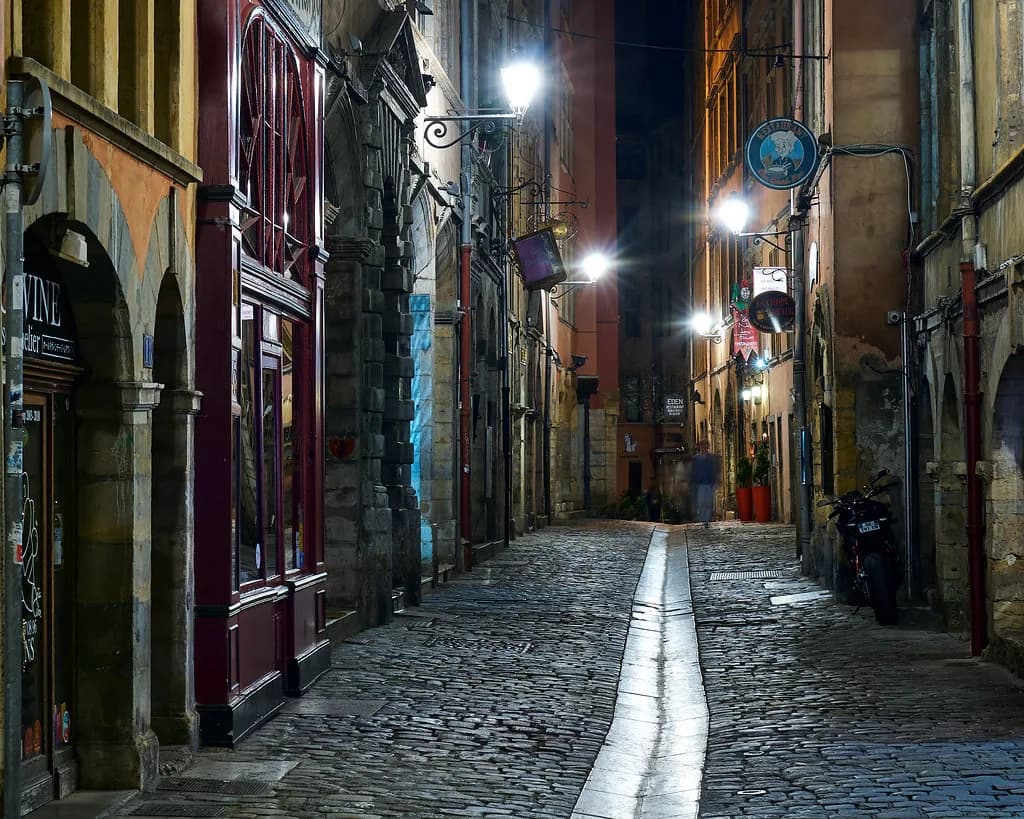
The trade-off is heat and volume. Mid-afternoon is the time to be indoors or in the shade, which is where the traboules earn their place: around 80 covered passageways thread through Vieux Lyon and Croix-Rousse, marked by small bronze plaques, and they keep you moving without full sun.
Use summer mornings for the outdoor work. The Croix-Rousse market along Boulevard de la Croix-Rousse runs on Tuesday, Friday and Sunday mornings and is at its best before the day heats up.
Autumn in Lyon: why September and October appeal for city breaks
Autumn is the sweet spot between usable weather and manageable crowds, and it suits the way most people actually spend a Lyon weekend: walking the old town, eating a long lunch, and doing one museum. September and October are named as the best time to visit, and the city's food culture is at its most appealing once the summer rush thins out.
This is the season to build a trip around eating. Look for the Les Bouchons Lyonnais plaque on the door, since only around twenty restaurants carry the certification, and book ahead for weekend dinner slots.
Rain is part of the deal in autumn, so keep one indoor anchor per day. Les Halles de Lyon Paul Bocuse is the obvious one: a covered market with cheese, charcuterie, pastry and oyster bars, and a plate of oysters with a glass of white at a standing bar is a decent way to lose an hour.
Winter in Lyon: shorter days, festive December, quieter streets
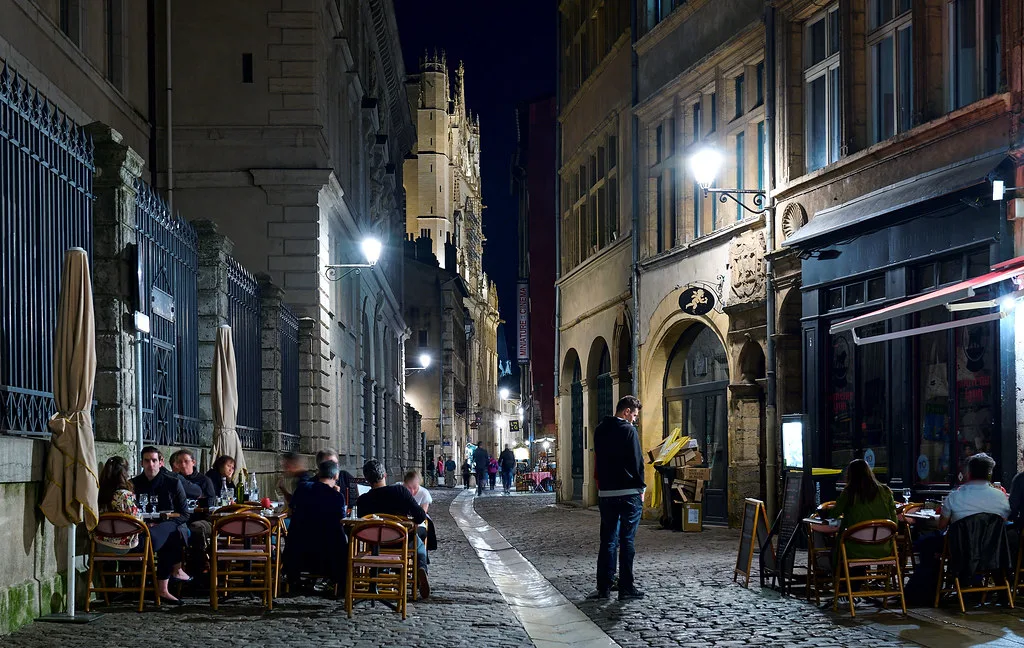
Winter strips the day down, which changes the shape of a weekend but not its quality. Plan one outdoor block in daylight, then move indoors: the Musée des Confluences works for almost anyone, with natural history, ancient artefacts and exhibits on how humans have made sense of the world, and most interpretation is in English as well as French.
December is the month a winter guide puts first, thanks to its festive atmosphere. Book your bouchon and any museum slot before you travel, because short days compress everyone into the same hours.
Outside December, winter is the calmest time to see Vieux Lyon without company, and the traboules are at their most useful when the weather is against you.
When Lyon is busiest, and which months feel calmer
Expect the heaviest demand in summer and around December festivities, with spring weekends close behind. The pattern shows up in the practical details: the Musée des Confluences is worth booking in advance at weekends and during school holidays, and bouchons fill quickly at weekends year-round.
Late September, October and the quieter winter weeks are where you notice the difference: easier tables, shorter queues at Pralus, and space on the Fourvière terrace. If your priority is a calm city rather than hot weather, shift your dates to those windows.
Sunday and Monday in Lyon: what to plan around
Sunday is the day that trips people up. Many restaurants and shops in Lyon close on Sundays, and the Pralus shop on Rue de Brest shuts too, while Café Comptoir Abel is an exception among bouchons and stays open. Build Sunday around the park: after lunch, Parc de la Tête d'Or is about a 15-minute walk from the centre on the eastern side of the Rhône, with a free zoo and space to sit by the water.
Sunday morning is also a market morning in Croix-Rousse, one of three weekly slots alongside Tuesday and Friday. Get there early, then use the afternoon for the park or the museum rather than shopping.
Les Halles de Lyon Paul Bocuse is a Sunday option, though stalls start packing up around early afternoon even when the market stays busy. Go hungry and go earlier than you think you need to.
Cost signals: where Lyon saves you compared with Paris
Lyon is described as genuinely affordable next to Paris or the south of France, and the biggest structural saving is that you can walk or take a short metro hop between almost everything on your list. Funicular and metro fares run on the same standard ticket, tapped with a bank card or phone, so transport rarely becomes a budget line of its own.
Reaching Lyon is the other half of the equation. Direct flights from most major European cities take one to two hours, and Lyon-Saint Exupéry airport sits about 30 minutes from the centre by train or shuttle; on the train, Paris Gare de Lyon to Lyon Part-Dieu takes around two hours.
Check current ticket prices and market stall costs yourself before committing, since both move with the season.
How many days Lyon needs, by season
Two full days is the baseline in spring, summer or autumn: one for Vieux Lyon and Fourvière, one for Croix-Rousse and the Presqu'île. Add a third in winter, when daylight is short and you will want an indoor block each day rather than racing between sights.
If food is the reason you are coming, give yourself three days in any season. A two-and-a-half-hour bouchon lunch is not compatible with a packed sightseeing schedule, and Pralus stops on Quai Saint-Antoine and Rue de Brest are worth seeking out separately for the praline tart, the roulezienne and the original Praluline brioche.
What to do when the weather turns: museums, covered markets and traboules
Three fallbacks cover almost any bad day in Lyon: the Musée des Confluences, Les Halles de Lyon Paul Bocuse and the traboules. All three are close to the centre or a short tram ride away, and none depends on sunshine.
The traboules are the smartest of the three. Around 80 are open to the public, marked with small bronze plaques, and they run through Vieux Lyon and down the Croix-Rousse slopes, so you can cover ground while staying mostly covered.
For a milder day that still needs a plan, the Roman ruins of Lugdunum sit a short walk along the hill from Fourvière: two well-preserved amphitheatres, free to wander and rarely crowded.
Matching the month to your trip: eating, culture, parks or a first visit
For a first visit, pick late September or October: you get the classic circuit of Vieux Lyon, Fourvière and the Presqu'île without heat or peak crowds. For a food-led weekend, autumn and winter both work, with longer bouchon lunches and praline stops at Pralus filling the days.
For parks and outdoor time, spring and early summer are the answer, since Parc de la Tête d'Or is at its most inviting and the hill walks are comfortable. For a culture-led weekend, winter is underrated: shorter queues, cheaper travel and the Musée des Confluences as a ready-made wet-weather anchor.
Wherever the month falls, Sunday and Monday are the days to plan around rather than improvise.
Plan Your Visit
Late September and October give most weekenders the best balance of weather, space and table availability, with spring close behind if parks matter more than terraces. December is the pick for atmosphere, and a winter trip outside the festive weeks is the quietest way to see the city.
Whichever month you choose, anchor each day to a place that stays open: the free zoo at Parc de la Tête d'Or in good weather, Les Halles de Lyon Paul Bocuse and the Musée des Confluences when it turns. Book bouchons ahead and treat Sunday as a park-and-market day rather than a shopping day.
Explore more Lyon guides
Frequently Asked Questions
What is the best month to visit Lyon?
Late September and October suit most weekend breaks: mild, less crowded, and easy on bouchon bookings. Spring is the alternative if you want the parks at their best, and December is the strongest winter month for atmosphere.
How many days do you need in Lyon?
Two full days covers Vieux Lyon, Fourvière and the Presqu'île at a comfortable pace. Add a third if you want a proper bouchon lunch, time in Croix-Rousse, or a slower winter trip built around daylight.
What is open in Lyon on a Sunday?
Café Comptoir Abel stays open on Sundays when many bouchons do not, Les Halles de Lyon Paul Bocuse is a Sunday option, and the Croix-Rousse market runs on Sunday mornings. Parc de la Tête d'Or, with its free zoo, is a reliable afternoon. The Pralus shop on Rue de Brest is closed on Sundays.
Is Lyon worth visiting in winter?
Yes, if you plan around short days. December is the liveliest winter month, and outside it you get quieter streets and easier museum entry. Weight each day towards indoor anchors such as the Musée des Confluences, with one outdoor block in daylight.
Is Lyon cheaper than Paris for a weekend?
Lyon is generally seen as the more affordable of the two, and much of the centre is walkable, which keeps transport costs down. Fares and menu prices change, so check current ones before you book.
When is Lyon busiest?
Summer and the December festivities draw the biggest crowds, with spring weekends close behind. Book museum tickets in advance at those times and reserve bouchon tables before you travel. Late September, October and quieter winter weeks feel noticeably calmer.
Sources
Notes for French city breaks
Optional updates to our guides.
You might also like
Continue reading
More guides you'll find useful