Best Time to Visit Aix-en-Provence: A Season-by-Season Guide
Aix-en-Provence works best in late spring or early autumn: mild days, markets in full swing and fewer crowds than July and August. Here is how each season compares.
On this page
The best time to visit Aix-en-Provence is late spring (May to June) or early autumn (September to early October), when days are mild enough for walking the old town, the markets run as normal and the summer crowds have thinned. July and August bring the liveliest café-terrace atmosphere but also heat and peak visitor numbers, so you plan around mornings. A midweek break built around Tuesday, Thursday or Saturday puts the main town-wide market on your doorstep.
Aix-en-Provence climate at a glance: sunshine, temperatures and the Mistral
Aix-en-Provence sits in the south of France and averages around 300 days of sunshine a year, according to the World Travel Guide. January temperatures typically sit around 5°C, while July averages around 22°C; these are climate averages, not forecasts, so treat them as a guide to what the season usually feels like. Rainfall tends to peak in October, making autumn the month to pack a light waterproof.
The Mistral, the cold gusty wind of the region, partly spares Aix but can still blow through on occasion, so a windproof layer earns its place in any season. If you are weighing Aix against another southern French city, the best time to visit Ajaccio follows much the same logic, with spring and early autumn the safest bets for walking weather in either place. If you are weighing Aix against another Provençal city, the best time to visit Avignon follows similar logic: spring and early autumn are the safest bets for walking weather.
Spring in Aix-en-Provence: mild walking weather and the market season opening up
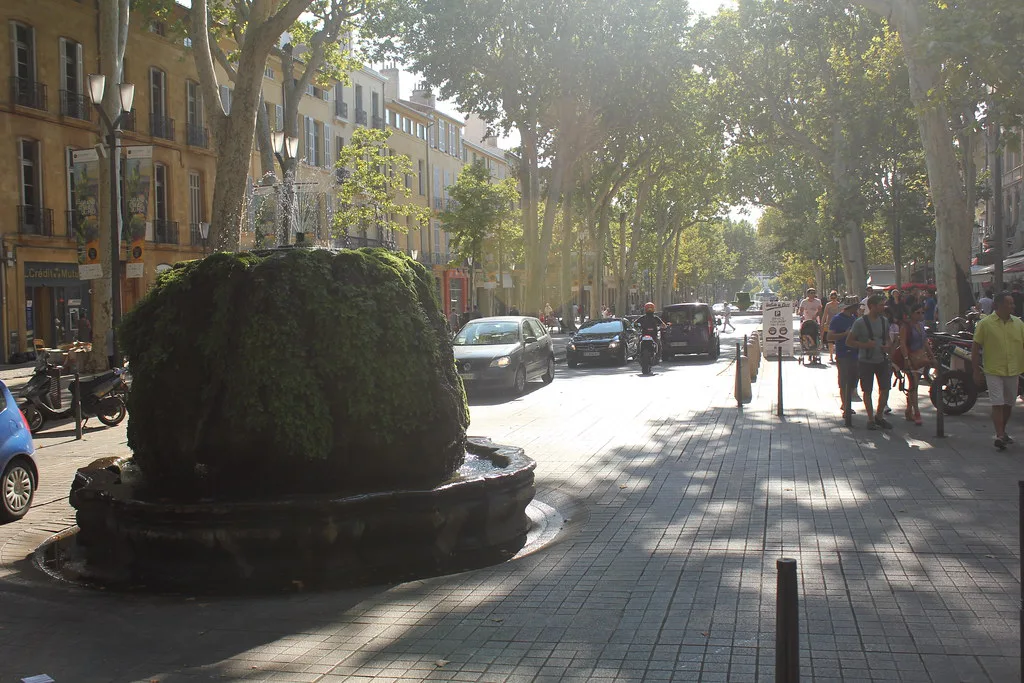
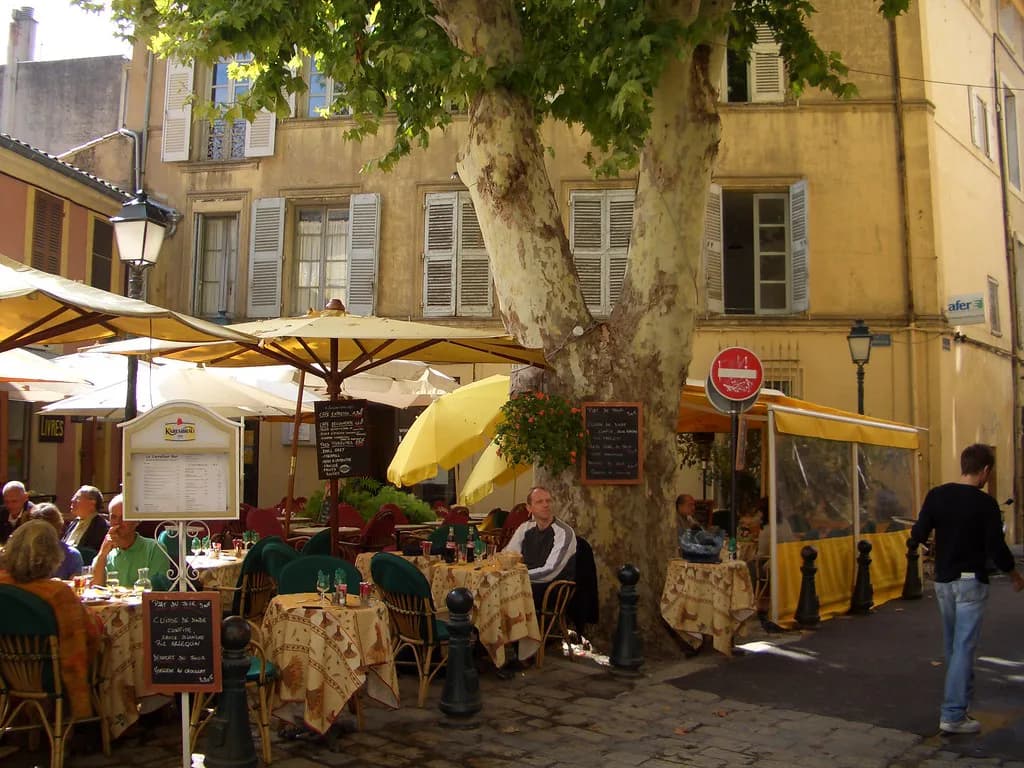
Spring is the season when the old town becomes genuinely comfortable to explore on foot, and by late May the café terraces start to fill without the midsummer crush. The daily food market on Place Richelme runs every morning of the year until 1pm, so a spring morning there is a reliable start to any day, while the main town-wide market takes over on Tuesdays, Thursdays and Saturdays from 8am to 1pm. April and May are good months to combine market browsing with a walk along the Cours Mirabeau, where the plane trees are in leaf and the Rotonde Fountain anchors the western end.
One spring trade-off is rain: April and May can bring showers, though less reliably than October. Check the forecast close to departure rather than packing for a heatwave. Spring is also when the old town's narrow streets feel busiest at midday, so earlier starts leave more room to wander.
Summer in Aix-en-Provence: heat, crowds and why you plan mornings
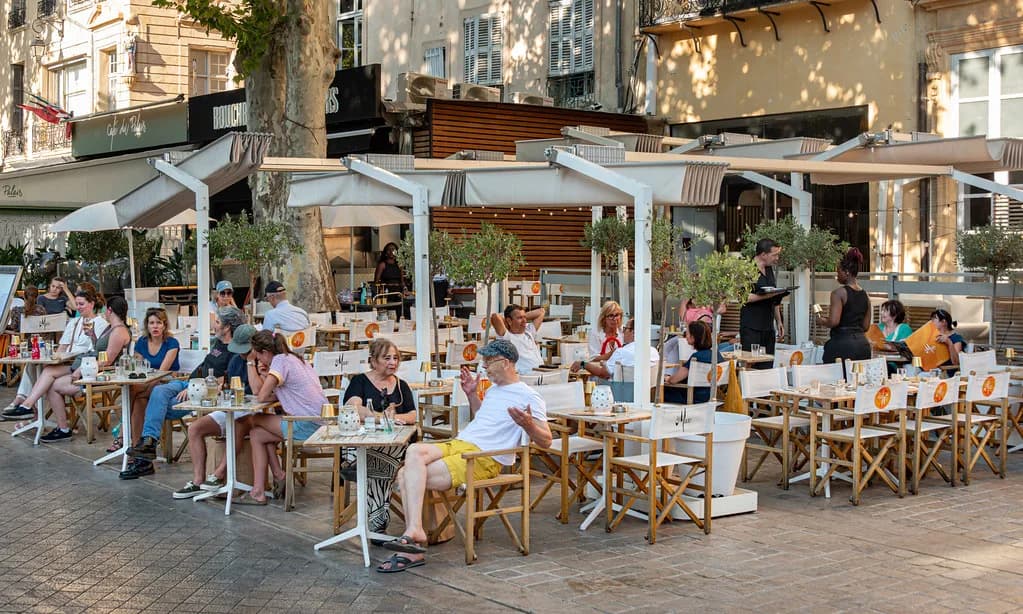
July and August are the hottest months, with July averaging around 22°C and summer days often climbing well above that on the stone-paved squares. The World Travel Guide notes that thousands of holidaymakers arrive from the north of France in midsummer, so book accommodation early if you are travelling in peak season. Plan sightseeing for mornings and late afternoons, and use the middle of the day for a long lunch under the plane trees.
Summer also brings the liveliest terrace culture, with evening craft markets on the Cours Mirabeau adding to the after-dark scene. If you are weighing whether the heat is worth it, the honest answer is that summer rewards early risers and slow afternoons rather than ambitious itineraries. See the full list of things to do in aix-en-provence for a summer-friendly plan that leans on shade and water fountains.
Autumn in Aix-en-Provence: the strongest all-round window, and the wettest month
September and early October are arguably the most balanced window: the summer crowds have thinned, the light is softer and the markets continue on their usual schedule. October is the wettest month on average, so pack a compact umbrella and expect the occasional shower rather than a washout. The daily Place Richelme food market and the Tuesday, Thursday and Saturday town-wide market both run year-round, so an autumn weekend still has market mornings to build around.
Autumn is also a good time to visit the Atelier de Cézanne, the purpose-built studio where the artist painted in his last years. It sits about a 30-minute walk from the centre, and booking through the tourist office is advisable. Check the tourist office for current opening times before you set out.
Winter in Aix-en-Provence: quiet streets, low-lying sun and what stays open
Winter is the quietest season in Aix, with January temperatures typically around 5°C and short daylight hours. The upside is that the old town's squares and streets are largely free of crowds, and the daily Place Richelme market continues through the year until 1pm. The main town-wide market still runs on Tuesdays, Thursdays and Saturdays, though some stallholders may scale back in the coldest weeks.
The trade-off is that winter is the season when you notice shop closures most: many places still close on Sundays and Mondays, and the traditional pattern is a long lunch break from around noon to 2pm. If you are planning a Sunday arrival, expect a quieter day with fewer open doors and plan around markets and museums rather than boutiques.
Markets as a reason to pick your dates: the Place Richelme daily market and the Tuesday, Thursday and Saturday market
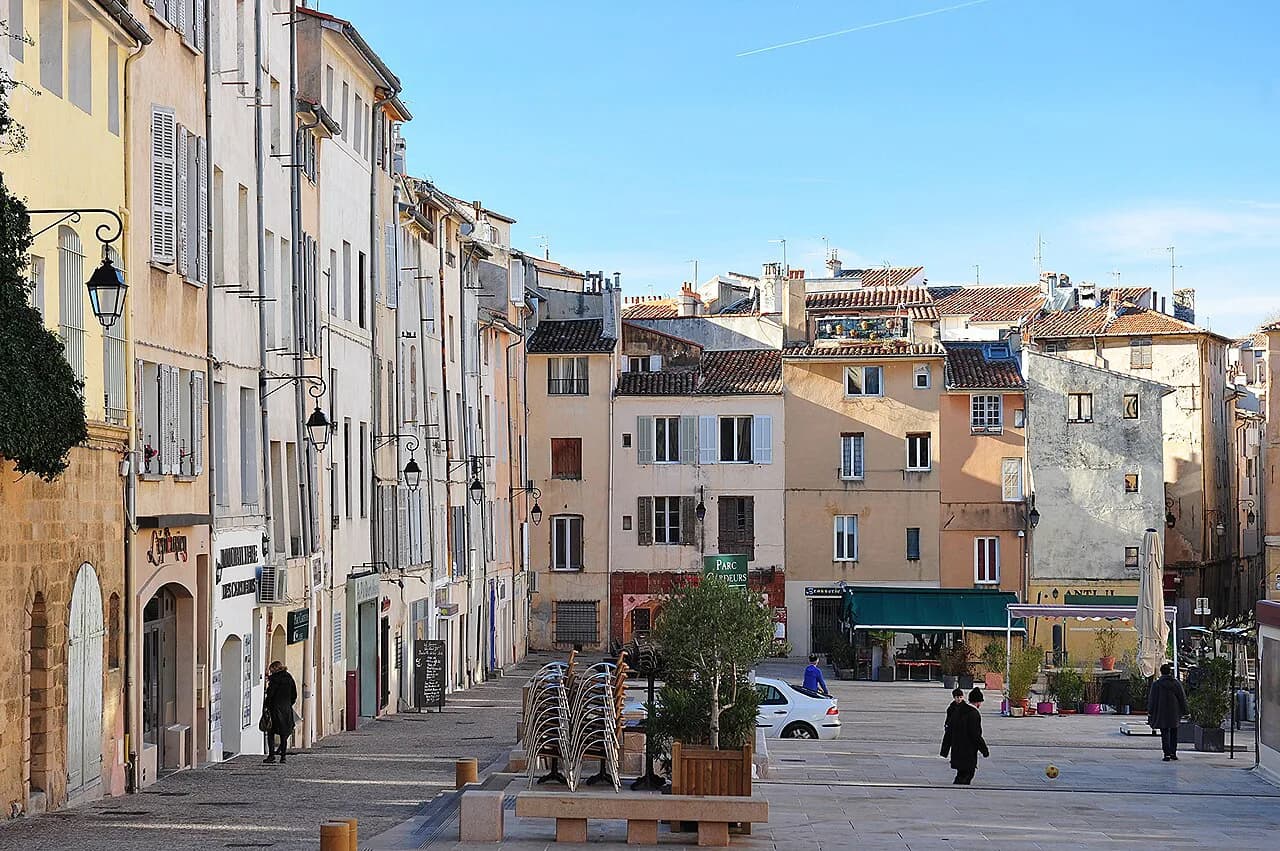
The market calendar is the single best lever for choosing when to visit Aix. Place Richelme hosts a daily open-air food market from 8am to 1pm, all year round, and it is where locals buy their produce. The main town-wide market runs on Tuesdays, Thursdays and Saturdays from 8am to 1pm, with stalls on the Cours Mirabeau for clothes, textiles and crafts, Place des Pecheurs for local produce and crafts, and a Friday flower market at Place de l'Hôtel de Ville.
A Tuesday-to-Thursday break or a Thursday-to-Saturday break therefore puts you in town for two or three market mornings. A Sunday-to-Tuesday break only catches the Tuesday market, so if market browsing is a priority, shift your dates. For a deeper look at what each market sells and where to find it, see markets in aix-en-provence.
How many days Aix-en-Provence needs and how the season changes that
The compact old town can be covered on foot in a day, which makes Aix a realistic weekend break rather than a week-long destination. Two full days lets you add the Atelier de Cézanne and the Musée Granet without rushing, and a third day opens up a slower pace or a single outing. In summer, heat slows the pace, so the same sights take longer; in spring and autumn, a two-day visit comfortably covers the highlights.
A realistic weekend plan is a Friday arrival, a Saturday market morning and an afternoon in the Quartier Mazarin, then a Sunday around the cathedral and a long lunch before departure. If you are testing whether Aix deserves the trip at all, Is Aix-en-Provence Worth Visiting? An Honest Weekend Verdict lays out the case for and against. The aix-en-provence itinerary gives a fuller day-by-day structure to adapt to your dates.
Aix-en-Provence in one day: the old town route on foot
Start at the Rotonde Fountain and walk east along the Cours Mirabeau, which divides the old town from the Quartier Mazarin. Turn into the pedestrian streets toward the Cathédrale Saint-Sauveur, then loop through the old town's squares toward the Église de la Madeleine. A stop at the Musée Granet, home to around 750 permanent works, fills an hour or two depending on the temporary exhibition.
The Quartier Mazarin rewards a slower wander: walk Rue Cardinale, see the Fontaine des Quatre Dauphins and finish at the Hôtel de Caumont, a restored 17th-century mansion with a garden, café and temporary exhibitions. A one-day route works best from spring to autumn, when daylight lasts long enough to cover both sides of the Cours without hurrying.
When to go for Cézanne and the art: the Atelier de Cézanne and the Musée Granet
Cézanne's studio, the Atelier de Cézanne, is preserved as it was when the artist died and is a 30-minute walk from the centre of town. Booking through the Aix-en-Provence Tourist Information Centre on the Rotonde is advisable, and the walk itself is a pleasant half-hour through the streets north of the old town.
The Musée Granet holds art from the 15th to 19th centuries and is one of the region's most important collections, so give it a half-day if art is your main reason for visiting. The Hôtel de Caumont stages major temporary exhibitions and also screens a short 30-minute film about Cézanne's life. In summer, the heat makes indoor museum time especially welcome; in winter, confirm opening hours before you go. A dedicated museums in aix-en-provence guide covers which collections suit which interests.
When to go for food: calissons, the market streets and café terraces
Aix is a city for eating outdoors, and the best months for café terraces are May, June, September and early October, when the sun is warm without the midsummer intensity. Calissons, the almond-paste sweets that are the city's signature, are sold at confectioners including Léonard Parli on Avenue Victor Hugo, the first calisson factory founded in 1874. At Roy René on Route d'Avignon, the Calisson museum offers a self-guided tour free of charge, and a guided tour with tasting costs €6 per adult, free for children.
The market streets around Place Richelme and Rue d'Italie are at their best in the morning, when produce stalls and cheese shops are setting out. If you want to plan meals around specific openings, the best restaurants in aix-en-provence guide names places that stay open through the seasons.

Season-by-season trade-offs: crowds, Sunday and lunchtime closures, and heat
Aix's shops still tend to open from 10am to noon and again from 2pm to 7pm, with a long lunch break in between, and many places close on Sundays and Mondays. This is a trend rather than a hard rule, and more shops are opening all day and on Sundays, but it shapes what you can do on a Sunday or Monday arrival. Plan those days around markets, the cathedral and museums rather than shopping.
Summer heat is the other trade-off: July and August reward slow mornings and long shaded lunches, while spring and autumn make it easier to cover the old town on foot without wilting. If you are deciding between Aix and another Provençal city, the best time to visit avignon follows the same principle: late spring and early autumn win on comfort.
Practical season notes: getting there, the CityPass and the tourist office
Aix is easy to reach year-round: Marseille Provence Airport is about 20 miles away, and direct TGV trains from Paris take under three hours, running several times a day. The tourist office, which sits on the Rotonde, is the place to pick up a CityPass and the map for the 1.5-hour self-guided Cézanne walking tour. A CityPass combines guided tours, museum tickets and partner discounts, and is worth pricing against your plans once you know which sights you want to see.
If you are coming from the UK or Ireland, a spring or autumn trip avoids the worst of the summer heat and the peak-season accommodation crunch. For a sense of what a short break covers, Aix-en-Provence Attractions: 6 Visitor Guides brings together the key sights in one place.
How to choose your month: a quick decision list
Choose May or June for mild walking weather, long days and markets in full swing before the summer crowds arrive. Choose September or early October for the best balance of warmth, thinner crowds and softer light, accepting that October is the wettest month. Choose July or August only if you want the liveliest terrace culture and can plan around heat and crowds, and choose November to March for quiet streets, lower prices and a slower pace, knowing that shops and some restaurants keep Sunday and Monday closures.
If your dates are flexible, build them around a Tuesday, Thursday or Saturday so the main town-wide market is running, and check the tourist office for the current CityPass offering before you book. That single decision does more for a weekend than any weather forecast.
Plan Your Visit
Late spring and early autumn are the strongest windows for Aix-en-Provence: comfortable temperatures, markets running as usual and fewer visitors than July and August. Align your dates with a Tuesday, Thursday or Saturday if the main town-wide market matters to you, and accept that Sunday and Monday arrivals will mean a quieter day with more closed doors. October rain and the occasional Mistral are the main weather risks, so pack a light waterproof and a windproof layer.
Explore more Aix-en-Provence guides
Frequently Asked Questions
What is the best month to visit Aix-en-Provence?
May, June, September and early October are the best months for a balanced trip: mild walking weather, markets running normally and fewer crowds than midsummer. July and August are hotter and busier, and October is the wettest month on average, so late spring or early autumn gives the most comfortable conditions.
How hot does Aix-en-Provence get in July and August?
July averages around 22°C, though summer days often climb higher on the city's stone squares. Plan sightseeing for mornings and late afternoons, and use the middle of the day for a long shaded lunch. These are climate averages, not forecasts, so check the weather close to your trip.
What is the weather like in Aix-en-Provence in April?
April is mild and often showery, with temperatures climbing toward the mid-20s by late May. It is a good month for walking the old town and visiting the markets, but pack a light waterproof. The Mistral can still blow through, so bring a windproof layer too.
What are the best market days in Aix-en-Provence?
The daily food market on Place Richelme runs every morning until 1pm. The main town-wide market runs on Tuesdays, Thursdays and Saturdays from 8am to 1pm, with stalls on the Cours Mirabeau and at Place des Pecheurs. Build your dates around one of those days if markets are a priority.
Is Aix-en-Provence worth visiting in winter?
Winter is quiet, with January temperatures typically around 5°C and short daylight hours. The upside is fewer crowds and a calmer old town; the downside is that many shops close on Sundays and Mondays and some keep a long lunch break. It suits a slow city break rather than a sightseeing-packed weekend.
How many days do you need in Aix-en-Provence?
Two full days covers the old town, the Musée Granet and the Atelier de Cézanne without rushing. A third day allows a slower pace or a single outing, and in summer the heat slows things down so the same sights take longer. The old town itself can be covered on foot in a day.
Does it rain much in Aix-en-Provence in October?
October is the wettest month on average, so expect occasional showers rather than a washout. Pack a compact umbrella and plan some indoor time at museums or the Hôtel de Caumont. Autumn is still a strong season for walking and markets outside the rainy spells.
Are shops open on Sundays in Aix-en-Provence?
Many places close on Sundays and Mondays, and the traditional pattern is a long lunch break from around noon to 2pm. More shops are opening all day and on Sundays, but it remains a trend rather than a rule. Plan Sunday and Monday around markets, the cathedral and museums rather than shopping.
Sources
Notes for French city breaks
Optional updates to our guides.
You might also like

Continue reading
More guides you'll find useful