Things to Do in Marseille: Vieux-Port, Le Panier & MuCEM
Plan a Marseille weekend around the Vieux-Port, Le Panier, MuCEM and Notre-Dame de la Garde, with a quarter-by-quarter layout and one-to-three-day plans.
On this page
Marseille suits a planned weekend rather than a rushed day trip because its best sights sit in distinct quarters that reward walking between them. Anchor yourself at the Vieux-Port, work north into Le Panier, cross to MuCEM and Fort Saint-Jean, then climb to Notre-Dame de la Garde for the view that explains the whole city. Two full days covers that loop comfortably; three lets you add the south quay and one outlier.
How Marseille Is Laid Out: Vieux-Port as the Hinge
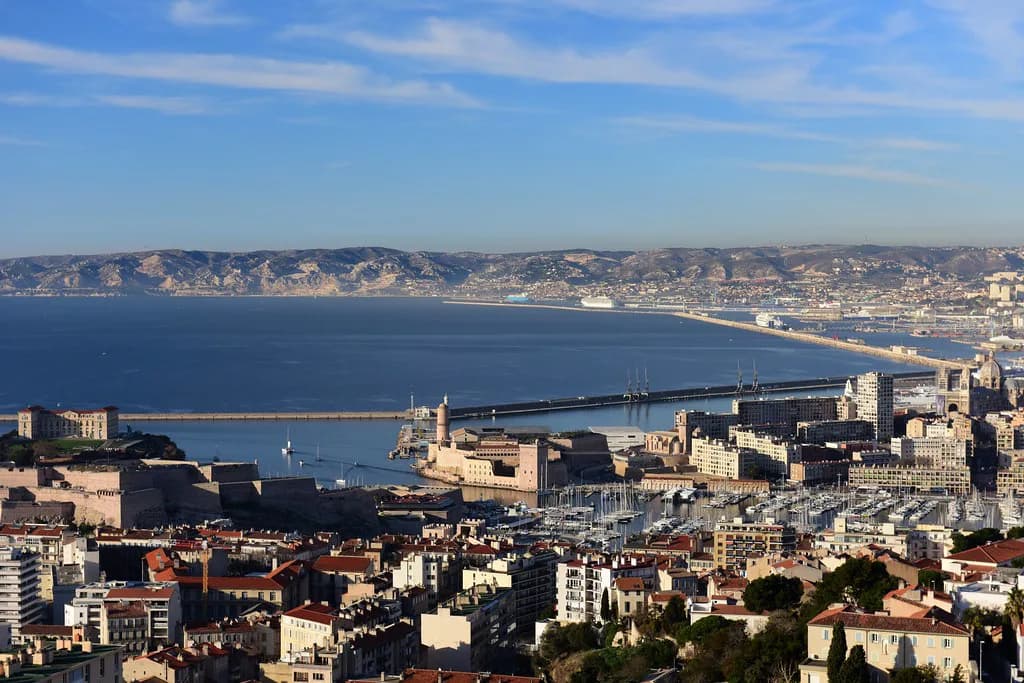
Almost everything a weekend visitor wants radiates from the Vieux-Port, the historic harbour where the metro drops you within sight of the water and the moored boats. Le Panier climbs the hill immediately north, MuCEM and Fort Saint-Jean sit at the port's ocean-side entrance, and the cathedral stands between the old town and the water. South of the harbour you find the Abbaye Saint-Victor, the Pharo gardens and the Vallon des Auffes, all reachable on foot if you keep going.
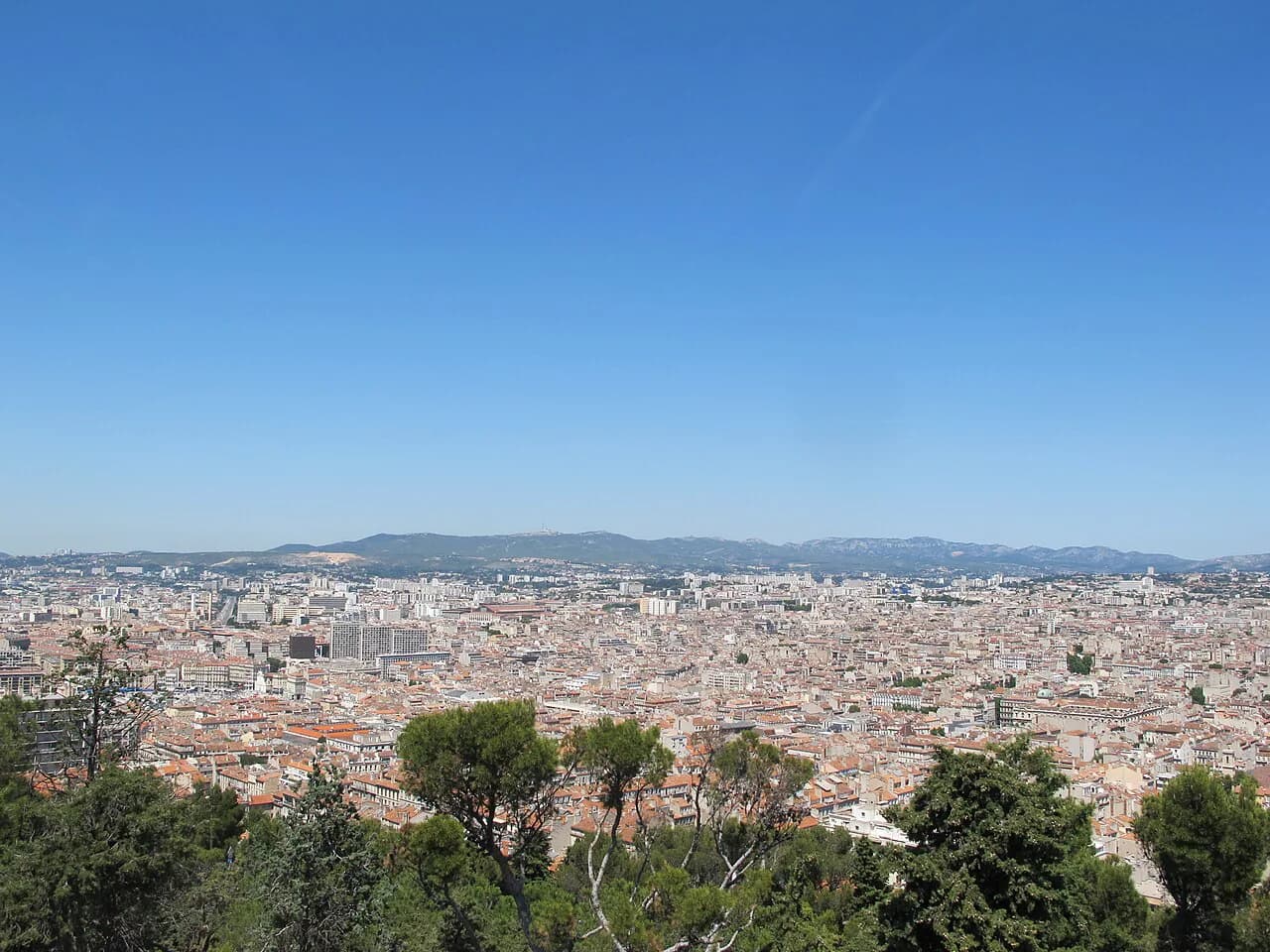
Treat the port as a compass rather than a single stop: you will cross it several times a day, and that is the point. The city is France's second largest and its oldest, founded by the Greeks around 600 BC, so the street pattern is organic rather than grid-like. Plan each half-day around one quarter and accept that you will backtrack through the harbour between them.
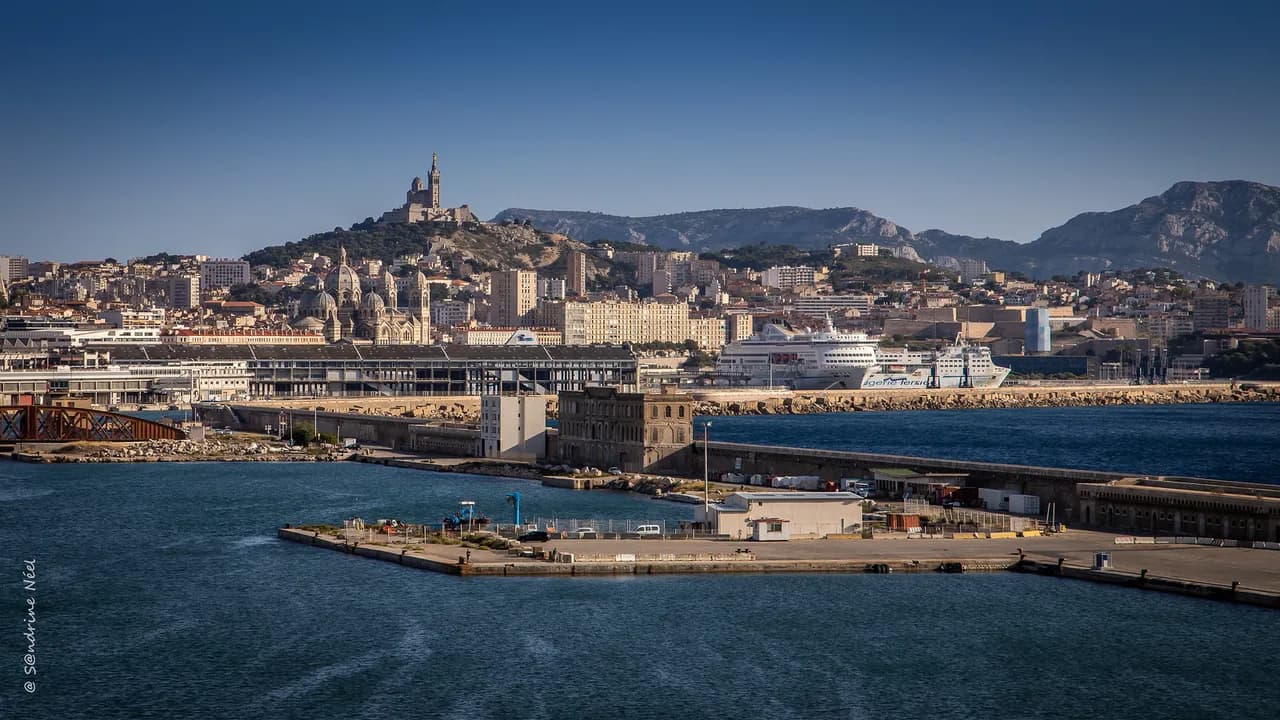
Two forts frame the harbour: Fort Saint-Jean to the north and Fort Saint-Nicolas to the south. Large cruise ships moor at the Port of Joliette further north because the historic Vieux-Port is too shallow for them, which keeps the older harbour looking like a postcard rather than a terminal. That matters for your timing: the quays stay pleasant to walk even on a busy port day.
Start at the Vieux-Port: the Harbour, Quai des Belges and the Mirrored Canopy
Begin on the Quai des Belges, where the fish market sets up every morning and fishermen present and fillet the catch of the day. Go early: this is a morning asset, not an afternoon filler, and by midday the stalls are packing away. The mirrored sun canopy overhead gives shade and a distinctive angle for photographs of the harbour.
Dozens of cafés, ice-cream shops and restaurants line the quays, which makes the port an easy place to eat without planning. In summer, the northern Quai du Port also hosts a Provençal market where Marseille soap is a sensible small purchase. Sit on the embankment or at a terrace and watch the pointus, the traditional fishing boats, come and go.
Give the harbour itself a proper hour rather than ten minutes: the facelift completed in 2013 turned the promenade into one of the city's most pleasant walks. From the water's edge you can already see Notre-Dame de la Garde on its hill, which helps you judge the climb later in the day. If you are visiting in a specific month and want to know what the weather typically does, check the seasonal averages before you commit to a date.
Le Panier: the Old Town on the Hill
Le Panier is Marseille's old town, a largely pedestrian hill district of pastel houses, street art, small boutiques and cafés. The easiest way in is up the steps beside the 17th-century Hôtel de Ville, which puts you straight into the tangle of alleys above the port. Wander without a fixed route; the neighbourhood rewards getting mildly lost.
If you want one specific stop, aim for the Vanille Noire café on Rue Caisserie, where lavender and pastis flavours are the local picks. Shops here lean towards craft and design rather than chains, so it is the better half of the city for browsing. For a wider view of where to shop across Marseille, keep a separate list and do not try to combine it with sightseeing.
Budget around two hours for Le Panier including a coffee stop, more if the street art pulls you sideways. The district sits directly between the port and the cathedral, so it slots naturally into a loop rather than needing its own trip. Wear shoes that cope with steps and uneven paving.
MuCEM and Fort Saint-Jean: the Waterfront Pair
MuCEM, the Museum of European and Mediterranean Civilisations, opened in 2013 on the J4 breakwater at the port's entrance and is linked by a pedestrian footbridge to the 17th-century Fort Saint-Jean. The building is the architectural highlight of modern Marseille; the bridge between old fortress and new museum gives you striking views back over the water. MuCEM is closed on Tuesdays, so do not build a Tuesday around it.
The exterior spaces, including the Mediterranean garden, are open to the public and free, which makes this the best-value stop on the waterfront. You can walk the fort ramparts and the bridge without buying a ticket, then decide at the door whether the exhibitions justify the entrance fee. For current ticket prices, check the museum's own site before you go.
Allow two to three hours if you are going inside, and about an hour for the fort and gardens alone. The site sits at the end of the Quai du Port, so the walk from the fish market takes only minutes. Pair it with Le Panier in the same morning and you have covered the city's two strongest quarters before lunch.
Cathédrale de La Major and the Vieille Charité
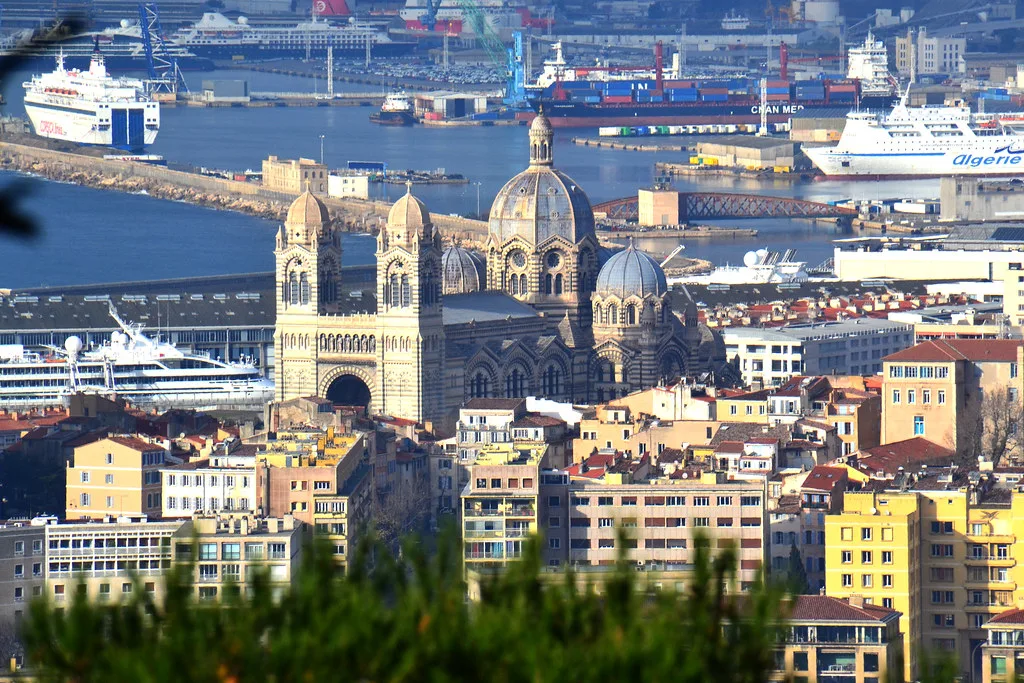
The Cathédrale Sainte-Marie-Majeure, known as La Major, stands between Le Panier and the port, a 19th-century building mixing Byzantine, Romanesque and Gothic styles. It was built to impress, and the scale inside is the reason to step through the door. Ten minutes of walking from the Hôtel de Ville steps brings you to the entrance.
The Vieille Charité in the heart of Le Panier began as a refuge for the poor and later served as a hospice for children and the elderly. Its 17th-century courtyard and baroque chapel now frame temporary exhibitions and two museums, the Mediterranean Archaeology Museum and the Museum of African, Oceanian and Native American Art. The courtyard alone justifies the detour.
These two sit within a short walk of each other, so treat them as one block of your day rather than separate outings. Check exhibition schedules before travelling if a particular show is your reason for going, since temporary programming changes. Otherwise, the architecture is the draw and needs no planning.
Notre-Dame de la Garde: the Climb and the View
Notre-Dame de la Garde, called La Bonne Mère by locals, sits on a 161-metre cliff above the city and is visible from almost everywhere on the waterfront. The basilica was built in 1864 by architect Henry-Jacques Espérandieu in a Roman and neo-Byzantine style, with an interior of Italian marble and mosaics. The bell tower rises 60 metres, topped by a monumental statue of the Virgin that sailors treat as their protector.
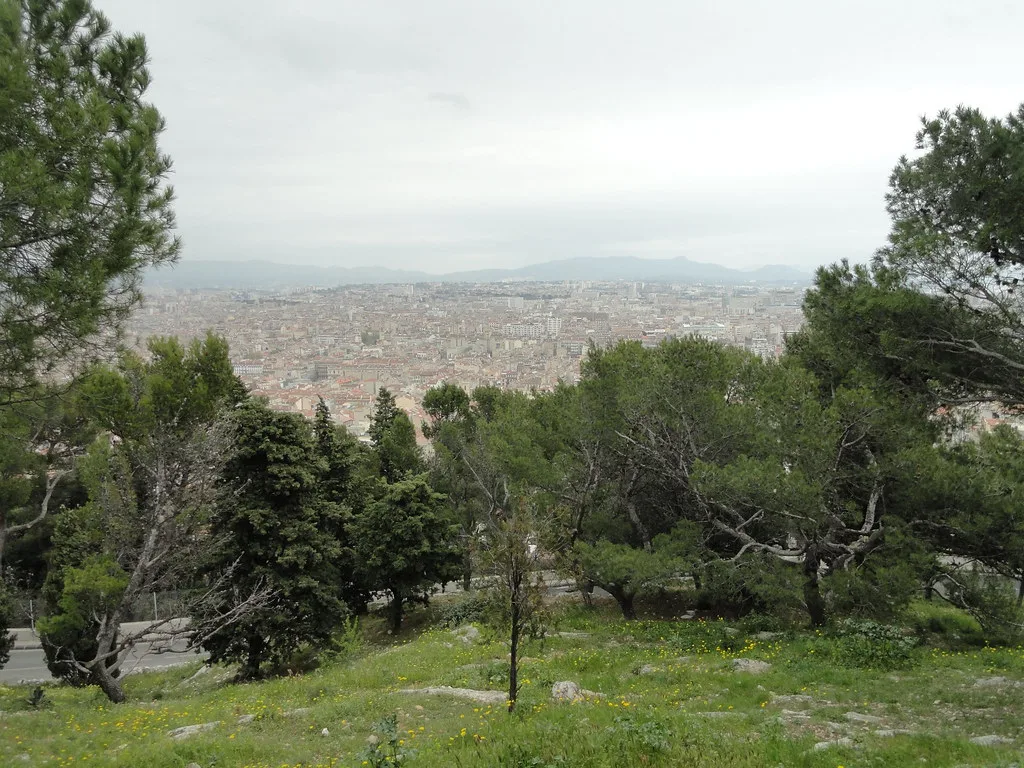
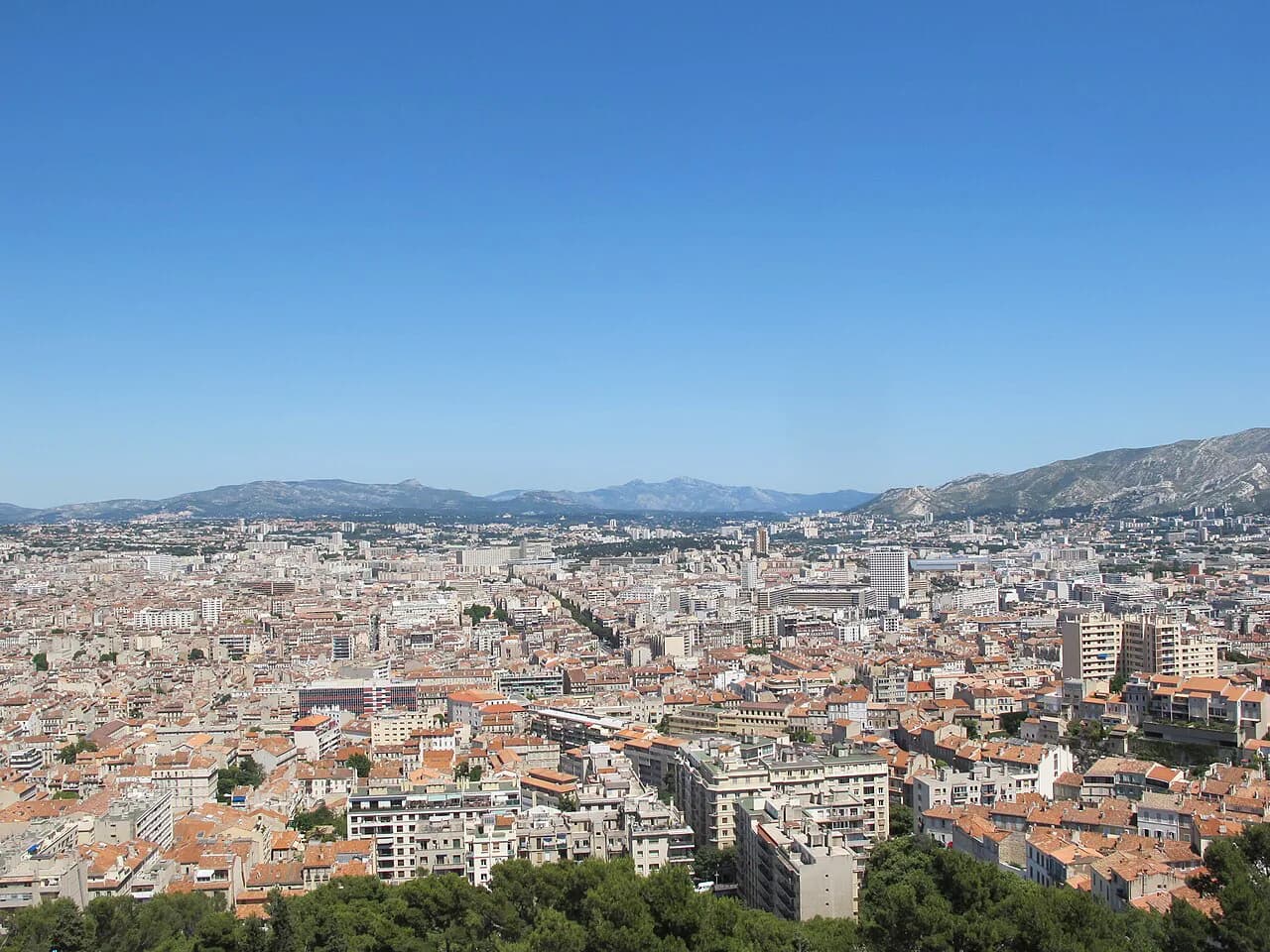
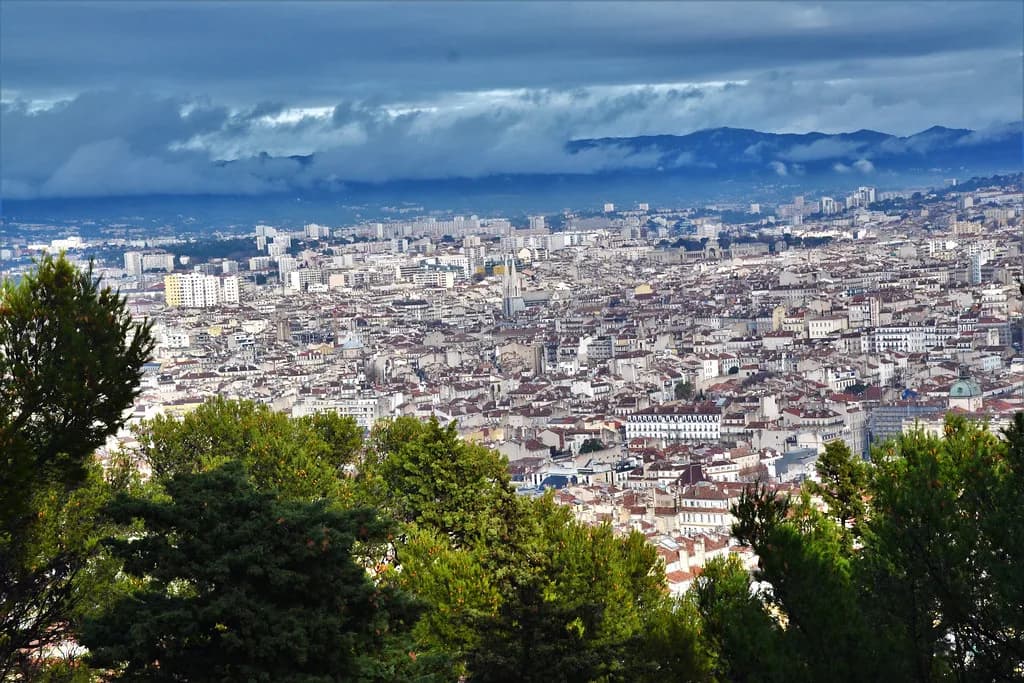
The esplanade gives the best panorama in Marseille, with an orientation table pointing out the sights you have already walked past. Go late in the afternoon for clearer light and thinner crowds, and keep an hour for the visit plus the ascent. The basilica itself is free to enter, so this is the standout sight on a tight budget.
You can walk up or take public transport most of the way and cover the final stretch on foot; the last section is steep either way. If mobility is a concern, the bus saves the worst of the gradient. Set aside a whole afternoon if you also want to linger over the interior, which is more striking than the exterior suggests.
South of the Port: Abbaye Saint-Victor, the Pharo Gardens and Vallon des Auffes
The Abbaye Saint-Victor dates back to the 5th century and was for centuries a Catholic stronghold in the south of France; the 12th-century church is the surviving building. It sits a short walk south of the old port and takes under an hour. Combine it with a wander along the south quay rather than making a dedicated trip.
The Palais du Pharo, commissioned by Napoleon III for Empress Eugénie, now hosts meetings and events, but its garden is open to the public and makes a good picnic stop. Continue west along the coast to the Vallon des Auffes, a tiny seaside district built around a picturesque port. Chez Fonfon here serves the classic Marseille bouillabaisse, the fish soup followed by the fish themselves.
Cours Honoré d'Estienne d'Orves, across from the old port on the site of a former galley shipyard, is a pleasant open square fringed by ochre houses with green shutters and lined with restaurants and boutiques. It is a natural pause between the port and the Saint-Victor end of the walk. Book a table for dinner rather than assuming you can walk in for a bouillabaisse.
Noailles Market and Cours Julien
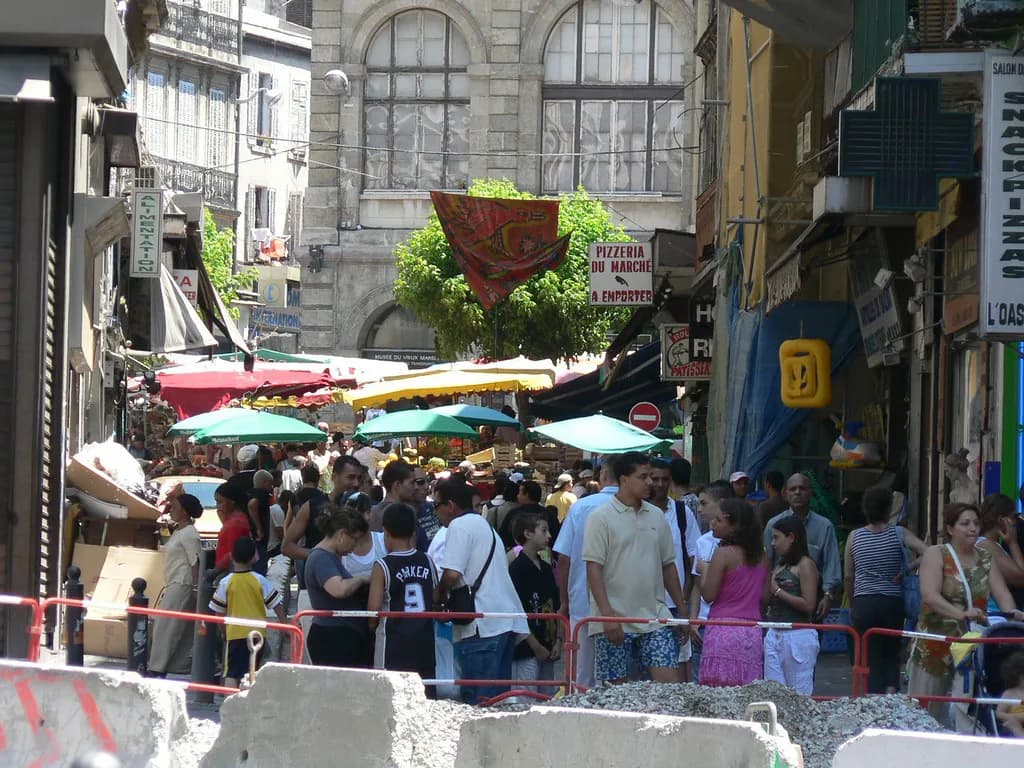
Noailles is the most colourful market in Marseille, held daily on the west side of the Marché-des-Capucins street, with a distinctly North African flavour. It is a morning stop: arrive before the stalls thin out and pair it with a coffee in the surrounding streets. This is where you buy spices and olives rather than souvenirs.
Cross to the other side of the street and you are in Cours Julien, a bohemian quarter of street art, vintage shops and casual places to eat. It is the natural place to end a morning of marketing, and it earns its own slot in the plan rather than being squeezed into a port afternoon. These are the neighbourhoods to browse without a checklist.
The Arab quarter just north of the Vieux-Port is another maze of shops, markets and restaurants, thick with the smell of spices. For couscous, Chez Kachetel is the address to note; for seafood platters, Toinou. Both are names to plan around at lunchtime rather than fall into at random.
Longchamp Palace and Park
Palais Longchamp was built where water from the Durance enters Marseille, a monument to the 19th-century engineering that ended the city's water shortage. It now houses the Museum of Fine Arts and the Museum of Natural History, and the surrounding Parc Longchamp is listed as a Notable Garden of France. This is the one major sight that sits away from the harbour, so it needs a deliberate detour.
Take the metro rather than walking if you are short on time, and check the two museums' separate closing days before you set out. Even without going inside, the colonnaded facade and the park make the trip worthwhile on a fine afternoon. Allow two hours door to door from the Vieux-Port.
La Cité Radieuse: Le Corbusier's Vertical Village
La Cité Radieuse, also called L'Unité d'Habitation, was Le Corbusier's post-war housing project: a brutalist block containing apartments, shops, a hotel and a restaurant, with exceptional views from the roof. It is not in the city centre, so reaching it takes public transport and a real chunk of your day. Go only if modernist architecture is your reason for visiting.
Weigh the time cost honestly: the core loop of port, Panier, MuCEM and basilica already fills two days, and this is the outlier that forces a choice. Skip it on a first weekend and keep it for a return. If you do go, combine it with nothing else ambitious that afternoon.
Free Things to Do When the Budget Is Tight
A cheap Marseille weekend still covers the best of the city: Notre-Dame de la Garde is free to enter, and the MuCEM's exterior spaces and Mediterranean garden cost nothing. Add the fish market on the Quai des Belges, the streets of Le Panier and the walk along the harbour, and you have a full day without buying a single ticket.
The parks are free too: Parc Longchamp and the Pharo garden both let you sit down without ordering anything. Carry water and use the markets for picnic supplies instead of paying for a seated lunch every day. That saves enough to justify one proper bouillabaisse dinner.
How Many Days Marseille Needs
One day is enough for the Vieux-Port, Le Panier and Notre-Dame de la Garde if you move briskly and skip museum interiors. Two days adds MuCEM and Fort Saint-Jean, La Major and the south quay without rushing, and that is the itinerary most weekenders should aim for. Three days lets you add Noailles, Cours Julien and Palais Longchamp.
Even three days leaves sights unseen: further districts, the islands and the beaches all sit outside a realistic weekend. Treat the guide as a menu and accept that you will not clear it. A slower pace in fewer quarters beats a rushed checklist every time.
Getting Around Marseille
Most of the core sights are walkable, and walking is how you see the city best: the port, Le Panier, MuCEM and the basilica ascent form a natural loop. For Palais Longchamp and La Cité Radieuse, use the metro. From the Gare Saint-Charles, the monumental staircase with its statues is itself worth a pause as you arrive.
A little tourist train runs several routes and is included in the Marseille City Pass, which suits anyone who wants the geography without the climbing. If you arrive by car, use underground parking such as Parking Indigo Estienne d'Orves rather than leaving it in the street. Marseille's own airport sits about half an hour from the centre.
Practical Rhythm: Museum Days and Market Mornings
The trap to avoid is a museum day that lands on a closure: MuCEM is closed on Tuesdays, so put the waterfront on another day. Markets are the opposite problem, running in the morning and gone by afternoon, so front-load the Quai des Belges fish market and Noailles. Build each day around one fixed point and walk between the rest.
For current prices, opening hours and any seasonal timetable, check each museum's own website before you travel, since they change by season. Everything else in this guide is a matter of geography and time rather than a booking.
Where Marseille Fits in a Longer Provence or Riviera Trip
Marseille works as a two-night anchor on a wider Provence or Riviera itinerary, with the TGV linking it to Avignon and onward connections along the coast. If you are also considering inland cities, compare things to do in Aix-en-Provence and things to do in Arles before deciding how to split your days.
Mistakes That Hollow Out a Marseille Weekend
The first mistake is treating the Vieux-Port as a look-and-go photo stop and then spending the rest of the day on buses. The second is arriving at the fish market at noon, or planning MuCEM on a Tuesday. The third is underestimating the climb to Notre-Dame de la Garde and arriving too tired to enjoy the view.
The fourth is trying to see everything: Marseille is France's second city, and its best moments come from lingering in one quarter. Pick two anchors a day, walk between them, and leave the rest for the next trip.
Plan Your Visit
Build your weekend around the Vieux-Port, spend a morning in Le Panier, give MuCEM and Fort Saint-Jean their own slot on any day but Tuesday, and save a late afternoon for Notre-Dame de la Garde. That structure covers the city's strongest sights without a single rushed transfer.
Add Palais Longchamp or Noailles if you have a third day, and check museum websites for current prices and hours. Marseille rewards the traveller who plans by quarter rather than by checklist.
Explore more Marseille guides
Frequently Asked Questions
What should I see in Marseille in one day?
Spend the morning at the Vieux-Port for the Quai des Belges fish market, then walk up into Le Panier via the Hôtel de Ville steps for street art and cafés. Cross to MuCEM and Fort Saint-Jean for the waterfront and free exterior spaces, then finish with the climb to Notre-Dame de la Garde for the esplanade view. Skip museum interiors and Palais Longchamp to keep the pace realistic.
How many days should I spend in Marseille?
Two full days is the right amount for most weekenders: one for the port, Le Panier and the basilica, and one for MuCEM, Fort Saint-Jean, La Major and the south quay. Three days lets you add Noailles, Cours Julien and Palais Longchamp. Even three days leaves the islands, beaches and outlying districts for another trip.
Is MuCEM free to visit?
The exterior spaces of MuCEM, including the Mediterranean garden, are open to the public free of charge, and Fort Saint-Jean is reached across the footbridge. The exhibitions inside require a ticket. Check the museum's own website for current prices and opening hours, and remember MuCEM is closed on Tuesdays.
When is the fish market at the Vieux-Port?
The fish market runs every morning on the Quai des Belges, where fishermen present and fillet the day's catch. It is a morning attraction rather than an afternoon one, so arrive early and pair it with a coffee on the quay. Do not plan to visit it after lunch.
What is the best way to get around Marseille?
Walk. The Vieux-Port, Le Panier, MuCEM and the ascent to Notre-Dame de la Garde form a natural loop on foot. Use the metro for Palais Longchamp and La Cité Radieuse, and consider the little tourist train, included in the Marseille City Pass, if you want the geography without the climbing.
Is Marseille in Provence?
Marseille sits on the Mediterranean coast in the Provence-Alpes-Côte d'Azur region, and it works as a coastal anchor for a wider Provence trip. The TGV links it to Avignon inland, so you can combine Marseille with Aix-en-Provence or Arles across a longer stay. Allow two nights in Marseille before moving on.
Sources
Notes for French city breaks
Optional updates to our guides.
You might also like
Continue reading
More guides you'll find useful