Marseille Flea Market: Where to Browse Brocantes
A practical guide to the Marseille flea market, covering what stalls sell, where the Madrague-Ville site sits, planning a weekend visit and buying etiquette.
On this page
The Marseille flea market most visitors mean is the sprawling second-hand site at Madrague-Ville, on Chemin de la Madrague-Ville in the 13015 quarter on the northern edge of the city. It is a brocante in the French sense: furniture, household pieces, old objects and general bric-a-brac laid out for rummaging, not a Provençal food market. Plan it as a half-day hunt rather than a quick stop.
Come with the right expectations and it earns its place in a short break. The appeal is browsing and the chance of a small, packable find, not shipping a wardrobe home. If you want produce, fish and flowers instead, Marseille's food markets are a separate proposition and easier to slot into a morning near the centre.
What the Marseille flea market sells
Stalls at a Marseille brocante lean towards the bulky and the domestic: second-hand furniture, lamps, crockery, linen, framed pictures, tools and assorted bric-a-brac. The pleasure is in the digging, so allow time to work along the rows instead of scanning from the entrance. Quality varies enormously from one pitch to the next.
That mix matters for a weekend traveller with a cabin bag. Chairs, chests and mirrors are the sort of thing you will see and admire but cannot reasonably carry home, so treat the visit as browsing with a small-objects budget. Postcards, small ceramics, cutlery and textiles are the realistic targets.
Where it is: the Madrague-Ville site
The site sits at 136 Chemin de la Madrague-Ville, 13015 Marseille, described as one of the biggest flea markets in southern France. That places it well north of the Vieux-Port, in a working, residential part of the city rather than the tourist centre. Expect a functional setting, not a prettified market square.
Because it sits away from the old port, it does not combine neatly with a morning at the Quai des Belges fish market or a wander through the Panier. Treat it as its own outing and build the rest of the day around it, rather than trying to bolt it onto a centre-based walk.
Which day to go and how to plan around it
Flea markets of this kind usually run on set days, and a wasted trip across town is the main risk. The listing for the Madrague-Ville site does not set out a reliable day or time, so check the current schedule with the flea market before you travel rather than assuming a Saturday. Ask your accommodation or the tourist office the week you arrive.
If the flea market does not align with your dates, Marseille still has food markets worth a morning, and the wider city has enough to fill a weekend regardless. Check what is running before you lock in a plan, particularly on Sundays and Mondays when parts of the city slow down.
How to get there and how long to allow
Chemin de la Madrague-Ville runs through the 13015 quarter, reachable by bus or taxi from the centre; a taxi is the simplest option if you are carrying bags or going early. Allow a good half-day including travel in each direction, and more if you like to sift carefully. The site is large enough that a rushed twenty minutes is pointless.
Wear shoes you do not mind scuffing and bring cash in small notes, since stallholders at this kind of market commonly prefer it. A tote bag or foldable shopper helps for small purchases, and a tape measure is useful if you are considering anything with dimensions.
What to look for and how to sort junk from a find
Look at the base and the back of anything ceramic, and open drawers and doors on furniture before deciding. French provincial pieces turn up, but so does flat-pack. Condition beats age: a plain sturdy object in good order is usually a better buy than something ornate and unstable, especially when it has to survive a train or a flight.
For small, packable finds, focus on linen, glassware, old prints and kitchenware, which are lighter and less fragile than they look if wrapped well. Ask yourself whether you would pay the same for it at home. If you are checking other French cities for comparison, the Lille flea market and the Lyon flea market give a sense of how these events vary.
Haggling and buying: practical etiquette
Bargaining is normal at a brocante, but it is done politely and usually on bundles rather than single cheap items. Ask the price first, then make a reasonable counter-offer; walking away is fine and often ends with a nod. Do not haggle hard over a two-euro cup, and do not expect card payment to be accepted everywhere.
Agree the price before anything is wrapped, and check what you are taking away before you hand over money. If you are buying several small pieces from one stallholder, ask for a price for the lot. That is the simplest way to get a fair deal without any theatre.
Other markets in Marseille and which one suits which interest
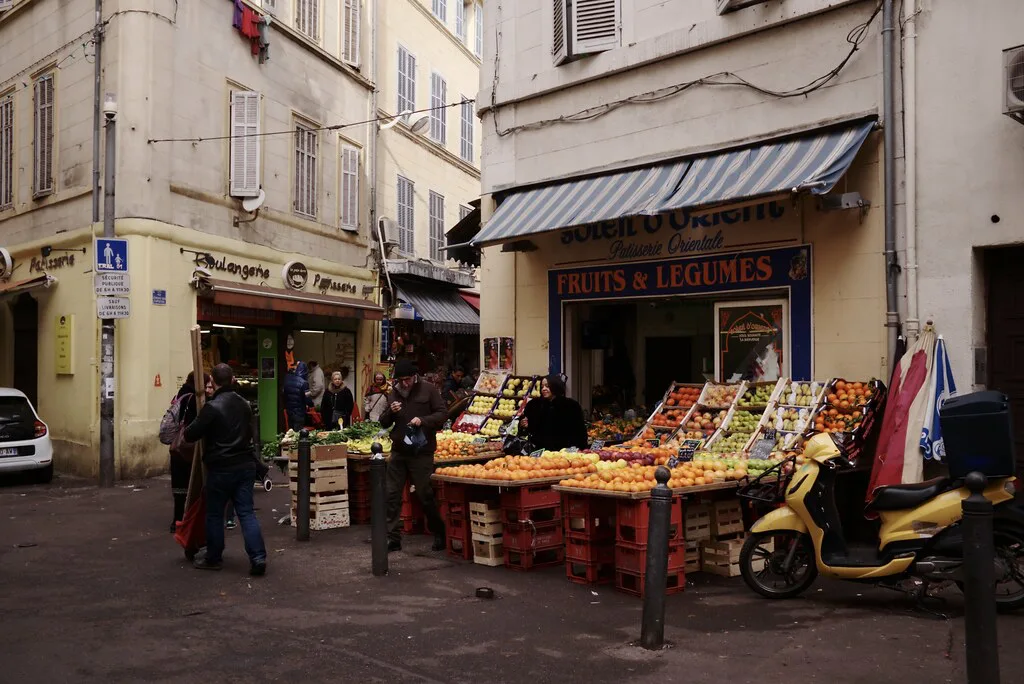
Marseille's food markets are the other half of the picture, and they suit a different appetite entirely. The daily fish market on the Quai des Belges at the Vieux-Port is the classic introduction, while neighbourhood markets around the centre sell produce, cheese and flowers on set mornings. These are places to buy lunch and picnic supplies, not furniture.
If your interest is good shopping rather than second-hand hunting, the city centre around La Canebière and the independent shops of the Cours Julien cover clothing, design and food. The Cours Julien area is also where you will find many of the best restaurants in Marseille for a late lunch after a morning out.
The Provence markets directory lists provençal markets across the region with their produce and setting, which is useful if you want to compare a Marseille market morning with a smaller town. Use it to pick one that fits your route rather than trying to see several in a weekend.
Fitting the market into a weekend
Give the flea market one morning and keep the rest of the break in the centre. A workable shape is the Madrague-Ville site early, then the Vieux-Port and Le Panier in the afternoon, with the MuCEM and Fort Saint-Jean the following day. That keeps travel time down and leaves the evening free.
Check museum closing days before you build the plan, since several in Marseille close one day a week and that day is not always the same. If you are weighing up whether the trip is worth it at all, the honest answer is that the city rewards two full days rather than one.
October is a pleasant month for market browsing, with mild temperatures and fewer crowds than high summer. If you want to know what else is on, see what Marseille in October looks like for a weekend, or check the best time to visit for a broader view of the seasons.
Plan Your Visit
The Marseille flea market at Madrague-Ville is a proper rummage, best approached as a half-day outing with cash, a sturdy bag and modest expectations about what you can carry home. Confirm the day it is running before you set off, then build the rest of your weekend around the Vieux-Port and Le Panier.
If second-hand hunting is your main reason for the trip, the Lille flea market and the Braderie de Lille show how large these events can get, while Les Puces du Canal in Lyon offer a useful comparison. In Marseille, the food markets are the reliable everyday option when the brocante does not fit your dates.
Frequently Asked Questions
Where is the biggest flea market in Marseille?
The large flea market site is at 136 Chemin de la Madrague-Ville in the 13015 quarter, on the northern edge of the city. It is described as one of the biggest flea markets in southern France and sits well away from the Vieux-Port, so plan separate travel to reach it.
Is the Marseille flea market worth visiting on a weekend?
It is worth a morning if you enjoy rummaging through second-hand furniture, ceramics and bric-a-brac. Do not expect to buy large pieces on a cabin-baggage trip; the realistic finds are small, packable objects. Check that it is running on your dates before you commit.
What day is the Marseille flea market held?
The day is not reliably set out in the listings, so confirm the current schedule with the market or the tourist office before you travel. Do not assume a Saturday and turn up. If the day does not suit, Marseille's food markets run through the week.
What can you buy at a Marseille brocante?
Expect second-hand furniture, lamps, crockery, linen, framed prints, tools and general household objects. Quality varies widely between stalls, so check condition carefully. Small ceramics, glassware and textiles are the easiest things to carry home.
Does Marseille have good flea markets and second-hand markets?
Marseille has a large brocante site at Madrague-Ville, which is the main second-hand market for visitors. The city's food markets are separate and operate on set mornings around the centre. For a broader look at what is on, check the city's market listings before your trip.
Sources
Notes for French city breaks
Optional updates to our guides.
You might also like
Continue reading
More guides you'll find useful