
La Canebière: Marseille's Most Famous Avenue
La Canebière is Marseille's best-known avenue, a straight, roughly one-kilometre run that links the Vieux-Port to the église des Réformés. Treat it as the spine of a city-centre walk rather than a sight in its own right, and it earns its place in a weekend.
The street's history is unusually legible: a hemp field became a grand commercial avenue, then a thoroughfare. Knowing that arc changes how you read the buildings and the traffic, so the sections below cover the origins, the golden century, what to see today and how the avenue fits into two days in Marseille.
What La Canebière is and where it runs
The avenue runs from the Vieux-Port at its southern end up to the église des Réformés, taking in rue Noailles and the allées de Meilhan along the way. It measures about one kilometre, so you can walk it end to end in around fifteen to twenty minutes at an unhurried pace.
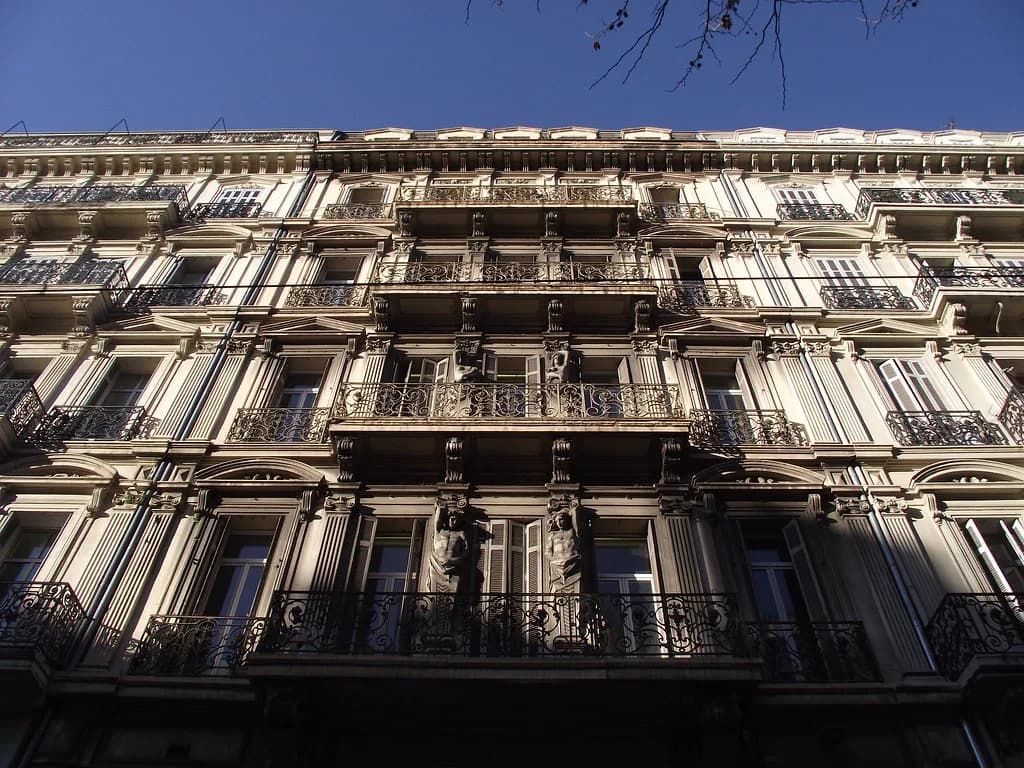
Its layout is not ancient. The avenue only took its present form in 1928, when it absorbed rue Noailles and the allées de Meilhan to create a continuous link between the port and the Réformés church, and the Haussmann-style buildings along it date largely from that era.
Locals sometimes call it the Champs-Élysées of Marseille, a nickname that says more about civic pride than about scale. Come expecting a working city street with shops and traffic, not a monumental promenade.
Why the name matters: hemp fields and rope-making
The name comes from the Provençal canebiera, meaning a hemp field, and the avenue was formally named in 1672. Marseille was one of the world's great hemp ports, and the fibre went into ropes and ship's rigging, which is why a field of hemp gave its name to what became the city's main street.
The street itself was built in the middle of the 17th century, when Louis XIV ordered the expansion of Marseille, and it was laid over the stream of the Jarret, which ran down into the Vieux-Port. At first it was a short stretch of about 250 metres between the Cours Saint-Louis and the arsenal des Galères.
It reached the Vieux-Port in 1782, which is when the avenue began to look like the route visitors use today. That gradual extension explains why the street feels assembled rather than planned: different stretches grew towards the water over more than a century.
The golden century: cafés, theatres and the 'avenue du monde'
From the mid-19th century, for more than a hundred years, La Canebière was the centre of Marseille life. Cafés multiplied along it, the most luxurious of them the Café Riche at the corner with the Cours Saint-Louis, alongside shops and grand hotels.
In 1857 the Alcazar theatre opened just off the avenue on the Cours Belsunce and quickly built a national reputation, drawing both Parisian and regional performers. The Hôtel de Noailles, built in 1865, survives as a reminder of that opulent period, and Charles Trenet gave his first public performance there.
The avenue became known internationally as l'avenue du monde, and it inspired film-makers, screenwriters and musicians as well as shoppers. That reputation is the reason the name still carries weight well beyond Marseille.
What changed after the Second World War
The bombing damage of the Second World War marked the end of the avenue's grand period, and in the 1960s the city's tram network was progressively dismantled because it had been badly hit. Some prestige venues closed soon after the war: the Café Riche in 1953 and the Alcazar in 1966.
La Canebière shifted from being somewhere people went for an evening out to somewhere people passed through. The loss of the trams is a large part of why the avenue now reads as traffic infrastructure, and it is also why the pavements are wide and the buildings feel larger than the street's current bustle.
A nineteenth-century description still captures the ambition of the place: the avenue cut in the 17th century became Marseille's most famous artery. Read the façades with that in mind and the street makes more sense.
Walking La Canebière today
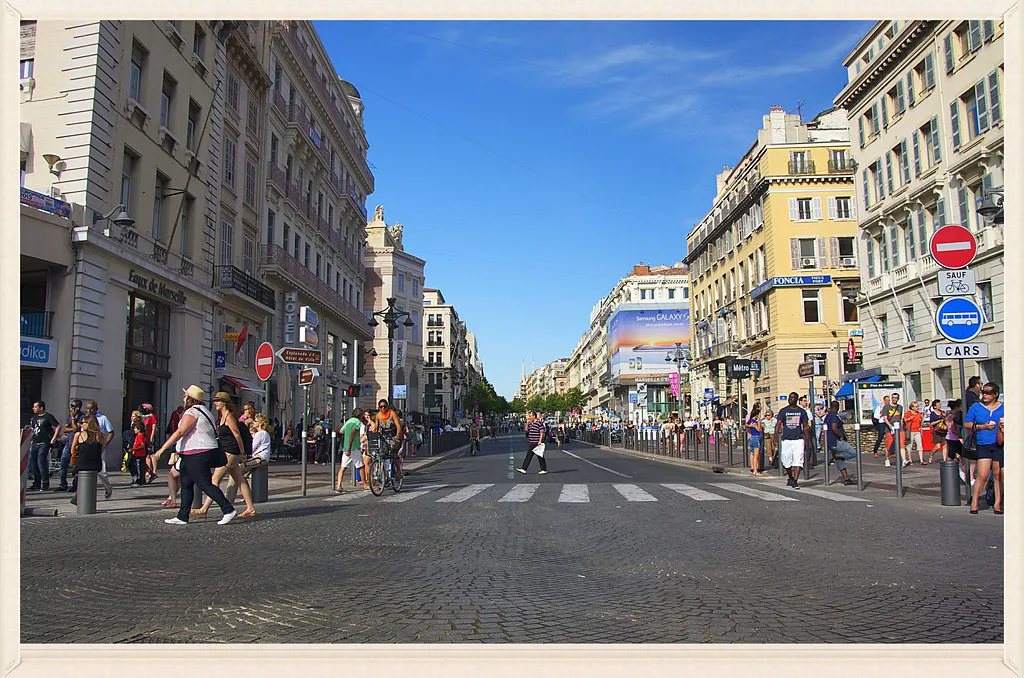
Start at the Vieux-Port and walk uphill: you pass the port end first, then the crossing with the Cours Belsunce toward the Alcazar site, then rue Noailles and the allées de Meilhan before reaching the Réformés church. Allow half an hour if you stop to look, or fifteen minutes if you are simply crossing the centre.
The walk is at its best as a link between two more rewarding areas: the old port and Le Panier on one side, and the shopping streets and Cours Julien beyond on the other. Use it as the connector rather than the destination. If you enjoy this kind of compact Provençal city centre, compare it with the things to do in Aix-en-Provence, where the old town is likewise best explored on foot.
The avenue's own attractions are modest: a carousel for children, the tourist office and plenty of places for a quick bite. Plan the walk around what sits at each end, and you will not be disappointed by the street in between.
Shopping and eating along the way
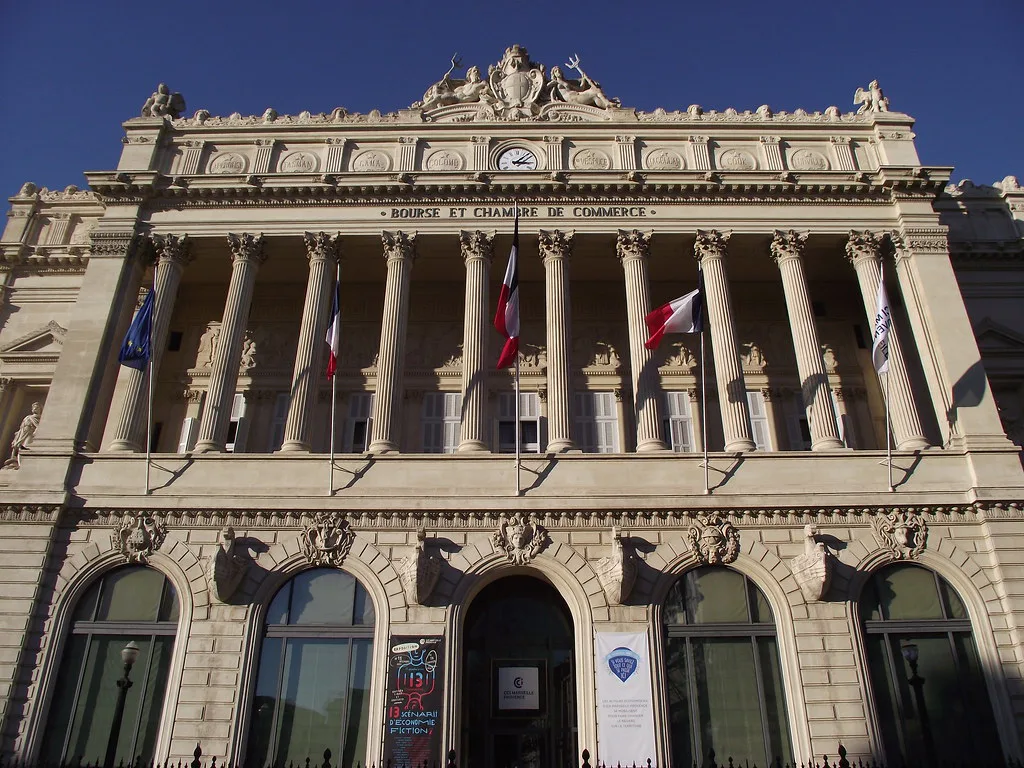
Shopping is concentrated at the centre Bourse and along rue de Rome, which branches off the avenue; those two are the practical reasons to walk this stretch if you are not simply crossing town. Between them they cover most of what a weekend shopper needs.
For food, the avenue is lined with ice-cream parlours, bakeries and kebab shops rather than destination restaurants, which suits a fast lunch between sights. The area's better eating lies in the surrounding quarters, so plan your sit-down meal away from the avenue itself.
If you want the full central-Marseille experience with markets and the Quai des Belges fish stalls, keep those for the port end of the walk and treat La Canebière as the corridor that gets you there.
La Canebière in popular culture
The avenue has its own song: Canebière, written in 1935 by René Sarvil with music by Vincent Scotto and first sung by Alibert in the operetta Un de la Canebière. It celebrates the street as known in every hemisphere, and it still shapes how the name lands.
The connection between popular song and the street is part of why La Canebière is famous worldwide even though the avenue is now quiet by comparison. Vincent Scotto's operettas and the popular singers of the interwar years are tied to the street's image.
Who the area suits and who it does not
La Canebière suits first-time visitors who want a straightforward route between the port and the city centre, and anyone interested in how a grand 19th-century avenue turned into a modern thoroughfare. It also works well for families, thanks to the carousel and the easy, level walk.
It suits less well anyone hoping for a photogenic boulevard of boutiques and cafés: it is a working street with traffic and ordinary shops. If your weekend is short, give it one crossing and spend the saved time in Le Panier, the Vieux-Port or Cours Julien.
Between the two ends, the change of character is real: the port end is busy and commercial, the Réformés end quieter. Choose where you start based on what you want to see next.
Practical orientation: getting there and how it fits into two days
Because the avenue starts at the Vieux-Port, it is reached on foot from anywhere in the old port area, and the city's public transport corridors converge on it historically. Trams once ran along it from all directions, and the street's role as a transport spine is a useful mental map even now.
For a two-day plan, walk the avenue on the morning of day one from the port towards the Réformés, then double back for the port and Le Panier. Use day two for the centre and Cours Julien, which spares you a second crossing of the same street.
If you are coming from the newer waterfront at La Joliette, the avenue is a short walk south and a natural first orientation before you branch off into the older quarters.
Where to base yourself nearby
Orientation is simple: the Vieux-Port end puts you beside the harbour, ferry quays and the old town, while the Réformés end sits closer to the shopping streets and the main station side of the centre. Base yourself at whichever end matches the rest of your plan, and treat the avenue as the link rather than the setting.
The Hôtel de Noailles, built in 1865, survives on the avenue as a reminder of its hotel heyday, but book on the strength of the location you want, not on the street's past reputation.
Honest trade-offs
La Canebière is a route rather than a highlight, and it is worth saying so plainly. Its fame comes from a century of cafés and theatres that has largely gone, and the street today is more useful than beautiful.
That is not a reason to skip it. A city break needs connective tissue between sights, and a straight, level kilometre from the port to the centre is exactly the kind of thing that keeps a weekend moving.
Walk it once with your expectations set, notice the 1928 layout and the Haussmann-style façades, and spend your lingering time at the port or in Le Panier. That is the honest trade-off this avenue offers.
Plan Your Visit
La Canebière is best used as a one-kilometre connector between the Vieux-Port and the église des Réformés, walked once with an eye on the history rather than as a destination in itself. Give it half an hour, shop at the centre Bourse or rue de Rome if you need to, and put the rest of your time into the quarters on either side.
Check current opening times and transport details before you set out, since those change with the season.
Explore more Marseille guides
Frequently Asked Questions
Where does La Canebière start and finish?
It runs from the Vieux-Port at one end to the église des Réformés at the other, absorbing rue Noailles and the allées de Meilhan along the way. The whole avenue is about one kilometre and takes roughly fifteen to twenty minutes to walk at an unhurried pace.
Why is it called La Canebière?
The name derives from the Provençal canebiera, meaning a hemp field, and the avenue was formally named in 1672. Marseille was a major hemp port and the fibre was used for ropes and ship's rigging, so a hemp field gave the city's main street its name.
How long is La Canebière?
About one kilometre. It began as a short stretch of roughly 250 metres in the mid-17th century, was extended towards the Vieux-Port by 1782, and reached its present form in 1928.
Is La Canebière worth visiting?
Yes, as a route rather than a sight. It is the simplest straight walk between the Vieux-Port and the central shopping streets, and the buildings and street layout tell the story of Marseille's 19th-century boom and its post-war change.
What is there to do on La Canebière?
Shop at the centre Bourse or along rue de Rome, stop for a quick bite at one of the bakeries or ice-cream parlours, take children on the carousel and visit the tourist office to plan the rest of your trip.
What is the song about La Canebière?
Canebière was written in 1935 by René Sarvil with music by Vincent Scotto and first performed by Alibert in the operetta Un de la Canebière. It celebrates the avenue as a street known around the world.
How do I get to La Canebière from the Vieux-Port?
Simply walk inland from the port; the avenue begins there and heads uphill towards the église des Réformés. Historically all tram lines converged on it, and it remains an easy orientation route for the city centre.