
Cours Julien, Marseille: What to See and Where to Eat
Cours Julien is a Marseille square built for lingering: a broad open space ringed by café and restaurant terraces, with a famously relaxed, artistic feel. It rewards a slow half-day or an evening rather than a sightseeing checklist, because the pleasure here is sitting out, watching the square and wandering the surrounding streets. Treat it as one block of a wider Marseille weekend, paired with the city's more monumental sights rather than replacing them.
What Cours Julien is and why it's worth a detour
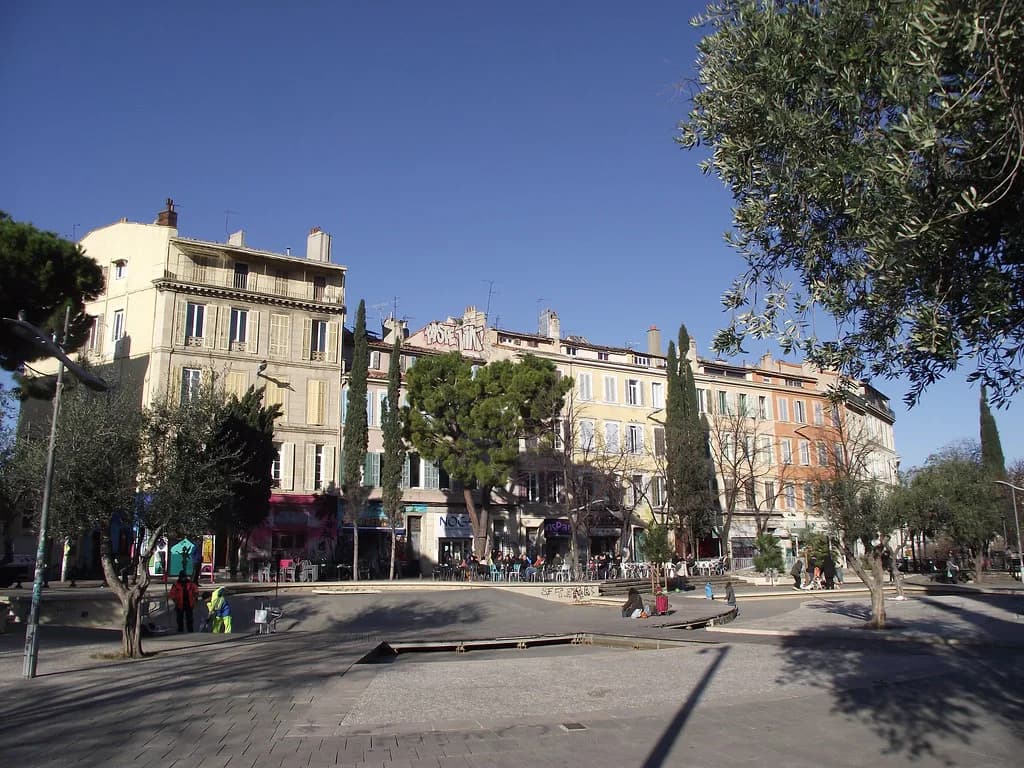
Cours Julien is a place rather than a monument. Locals and visitors fill the terraces of the bars and restaurants that surround the square, which gives the area its easy, sociable rhythm. The neighbourhood around it carries an artistic, alternative reputation, and that character is the main reason to come: you are here for atmosphere, coffee and an unhurried hour or two, not for a ticket desk.
Where it sits in Marseille and how to reach it
The square lies inland from Marseille's Old Port, up the hill behind the harbour front, and it is most easily reached on foot from the centre. Use a mapping app to plot the walk from your starting point and to see which streets feed into the square, since the approach climbs. If you are coming from further out, check the city transport network's own route planner for current options rather than relying on a printed line number.
The square itself: terraces, the fountain and the laid-back atmosphere
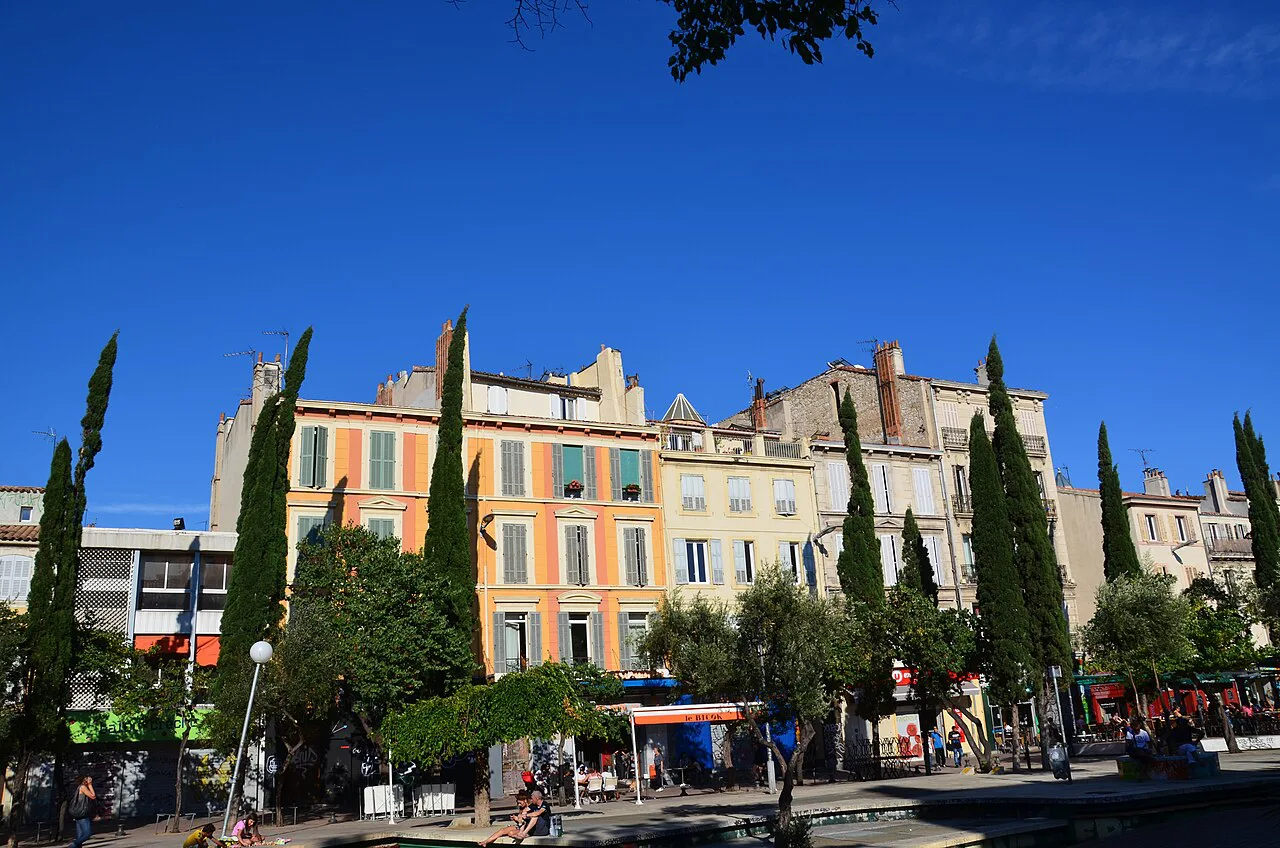
The square is open and generous, with a fountain at its heart and a ring of café and restaurant terraces around the edges. It has long been a meeting point, and the city's local mairie treats the square as a priority for improvement, which tells you how central it is to daily life. Arrive without an agenda: order something, take a seat facing the square and let the afternoon pass.
A short history: from 1735 promenade to the city's fruit and vegetable market
The site began as lists, or tournament grounds, under Louis XIV, and was turned into a promenade in 1735. It was first called the cours des citoyens before taking the name of the owner of the land, a Monsieur Julien, which is how the square got the name it still carries. That history is worth knowing because it explains the square's unusually open, walkable shape.
The market trade and the shift to Arnavaux in 1972
From 1860 until the 1970s, Cours Julien was the nerve centre of Marseille's fruit and vegetable trade. Growers from around the city, including Plan-de-Cuques, La Pomme and Bonneveine, brought their harvests here to be sold wholesale and retail. In the 1960s the city decided to move that activity out to ease congestion in the centre, and the Marché d'Intérêt National des Arnavaux opened in 1972. The square's working-market days are history; what remains is the wide open space those traders used.
Street art and the artistic character of the surrounding streets
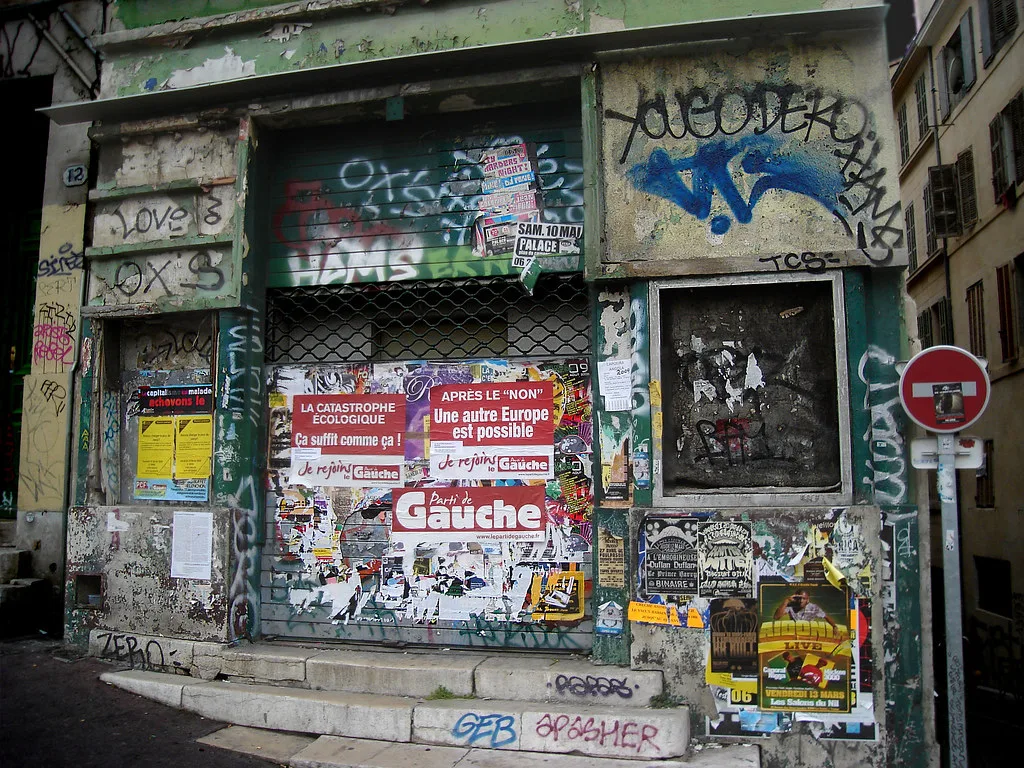
The streets around the square are where the neighbourhood's artistic reputation shows itself, with walls and shutters carrying paint and paste-ups. This is a district for wandering rather than following a fixed route: turn off the square and let the side streets pull you along. Keep an eye on doorways and lower walls as much as the big pieces, and give yourself time to double back.
Who the neighbourhood suits and who should look elsewhere
Cours Julien suits café sitters, street-art fans and anyone who wants a slower, more everyday slice of Marseille in the evening. It is also a good fit if you have already ticketed the big sights and want somewhere to decompress afterwards. It suits less well if you want monumental attractions on your doorstep, since the draw here is atmosphere rather than a list of visits; if you want the waterfront and harbour instead, make for La Joliette, Marseille and its regenerated docks.
Eating and drinking around the square: what to expect from the terraces
The eating here is terrace-led: bars and restaurants around the square, with tables spilling outward and the square itself as the view. Menus change and prices vary from place to place, so read the board at the door before you commit to a table. If a particular kitchen matters to you, check its own listing for current opening days and hours before making the walk up.
Using Cours Julien as a base: what staying in the district is like
Staying near Cours Julien puts you in a residential, sociable quarter within walking distance of the Old Port and its transport links. The trade-off is that this is a lived-in neighbourhood rather than a hotel district, so you are choosing atmosphere over convenience to the main sights. If you would rather be closer to the harbour and the museums, compare the alternatives before booking, starting with the wider Marseille Neighborhoods: 4 Area Guides. If you are weighing an inland Provençal city break against a coastal one, our guide to things to do in Aix-en-Provence makes a useful comparison.

Getting around on foot and linking it to the rest of a Marseille weekend
This is a walking district, and the natural way to link it is on foot down to the Old Port and the Quai des Belges, where the fish market runs in the mornings. From there the waterfront and Le Panier, Marseille are within easy reach, so you can build a day that moves between them without much planning. Allow more time than the distance suggests, because the hill slows you down.
Practical timing: when the square is at its liveliest and when it's quiet
Terraces fill as the day warms up and stay busy into the evening, which is when the square feels most like itself. Mornings are quieter and better for seeing the space and the streets around it without competing for a table. If your Marseille weekend is short, give Cours Julien an afternoon that rolls into dinner rather than a separate day.
Common mistakes first-time visitors make here
The commonest mistake is expecting a ticketed attraction and arriving with a checklist. The second is squeezing Cours Julien into a tight schedule: it works best as a block of time you can stretch when a table looks good. The third is skipping the surrounding streets, where much of the neighbourhood's character actually sits.
Plan Your Visit
Cours Julien earns its place in a Marseille weekend as a change of pace: a square to sit in, streets to wander and an evening that can run long. Pair it with the harbour-front sights and one of the city's other quarters, such as La Canebière, Marseille, so the trip balances atmosphere with the big draws. Check current opening days for anywhere you plan to eat before you set out.
Explore more Marseille guides
Frequently Asked Questions
What is there to do at the Cours Julien?
Sit out at the café and restaurant terraces around the square, look at the fountain and the open space at its centre, and wander the surrounding streets, where the neighbourhood's street art gives it its artistic character. It is a place for an unhurried half-day or an evening rather than a list of ticketed sights.
Is the Cours Julien worth visiting on a Marseille weekend?
Yes, if you want a slower, more everyday slice of the city alongside the big sights. It suits café sitters and street-art fans best; if you want monumental attractions on the doorstep, stay closer to the harbour instead.
Is the Cours Julien a good area to stay in Marseille?
It puts you in a sociable residential quarter within walking distance of the Old Port, at the cost of being a little further from the main sights than harbour-front areas. Choose it if atmosphere matters more to you than being next door to the museums.
Where can I eat around the Cours Julien?
Eating here is terrace-led, with bars and restaurants around the square. Menus and prices vary from place to place, so read the board at the door and check the individual venue's own listing for current opening days before you commit.
When is the Cours Julien at its liveliest?
Terraces fill through the day and stay busy into the evening, which is when the square feels most alive. Mornings are quieter and better for seeing the space and the surrounding streets without waiting for a table.