Things to Do in Carcassonne: Cité vs La Bastide
Plan things to do in Carcassonne around two halves: the walled Cité on its hill and La Bastide below, with the castle, ramparts and canal walks.
On this page
Start with the castle and the ramparts. Carcassonne's walled Cité is the reason you came, and walking its walls is the one experience that cannot be substituted or shortened. Give the Cité your first morning, then spend the afternoon in the Bastide Saint-Louis on the plain below.
The two halves sit within sight of each other and are linked by a short walk and a pair of bridges, so you can cover both without transport. Entrance to the walled town costs nothing; the Château Comtal is the only part of the Cité that carries a ticket. Everything else in this guide is either free or a small, deliberate spend.
Why Carcassonne splits into two
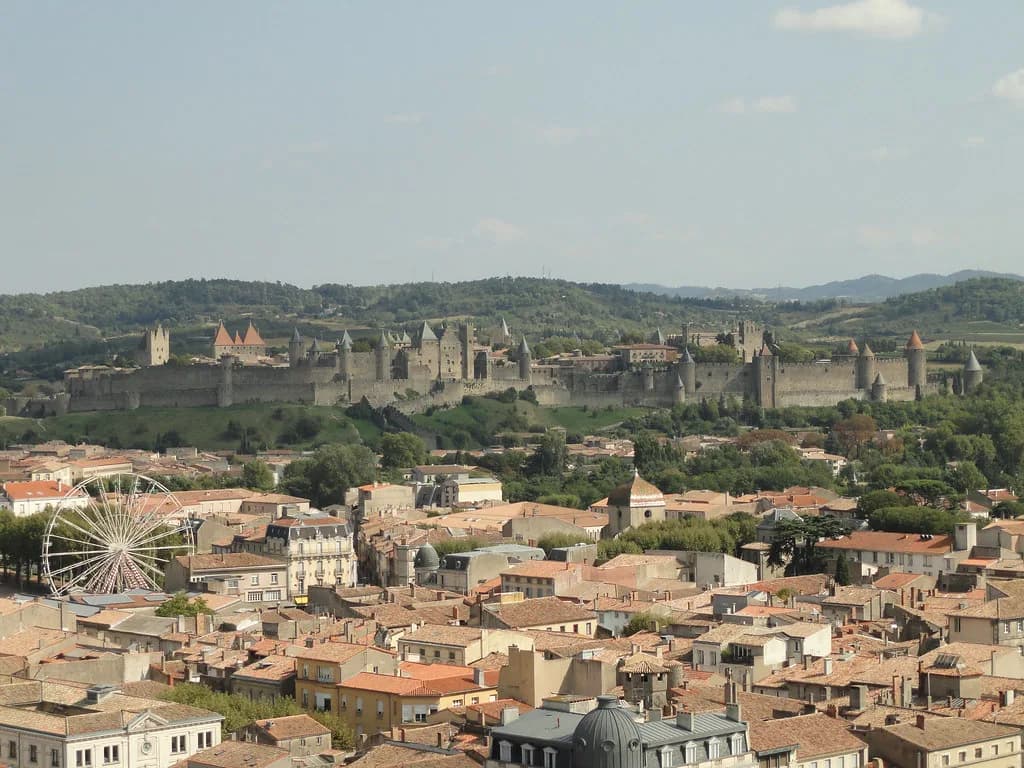
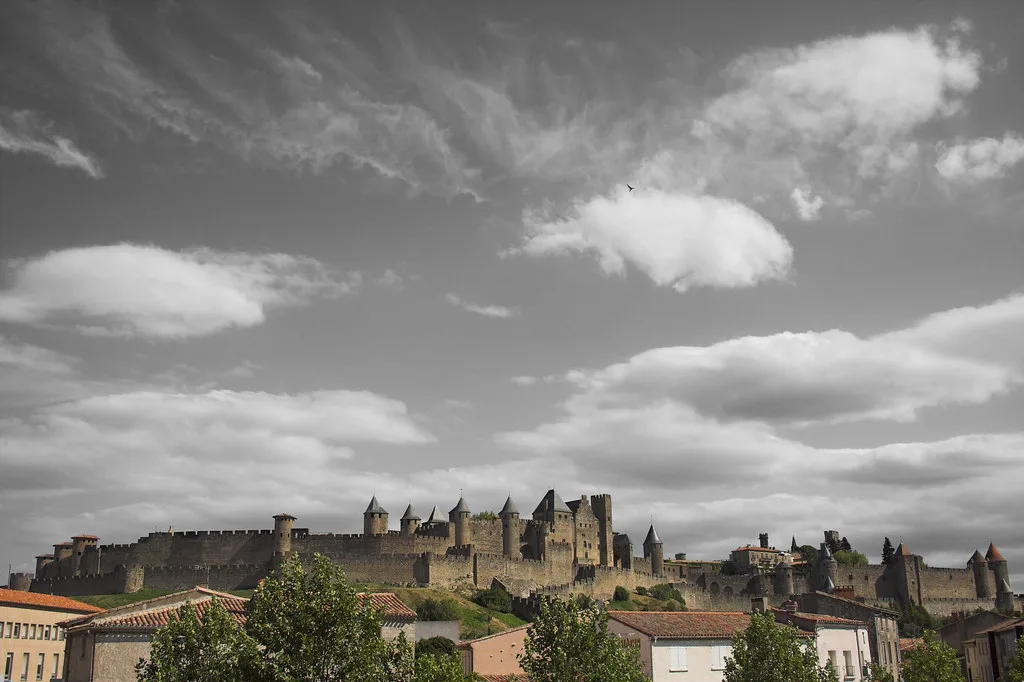
The Cité occupies the hill: a full medieval town inside a double ring of walls, with a castle in one corner. On the plain below, the Bastide Saint-Louis is the later, grid-planned town where most people live and where the everyday city functions. Treat them as two separate visits rather than one continuous wander, because the climb between them changes what you want to do at each end. The same two-part structure shapes the things to do in Aix-en-Provence, where a compact old town sits beside a later grid.
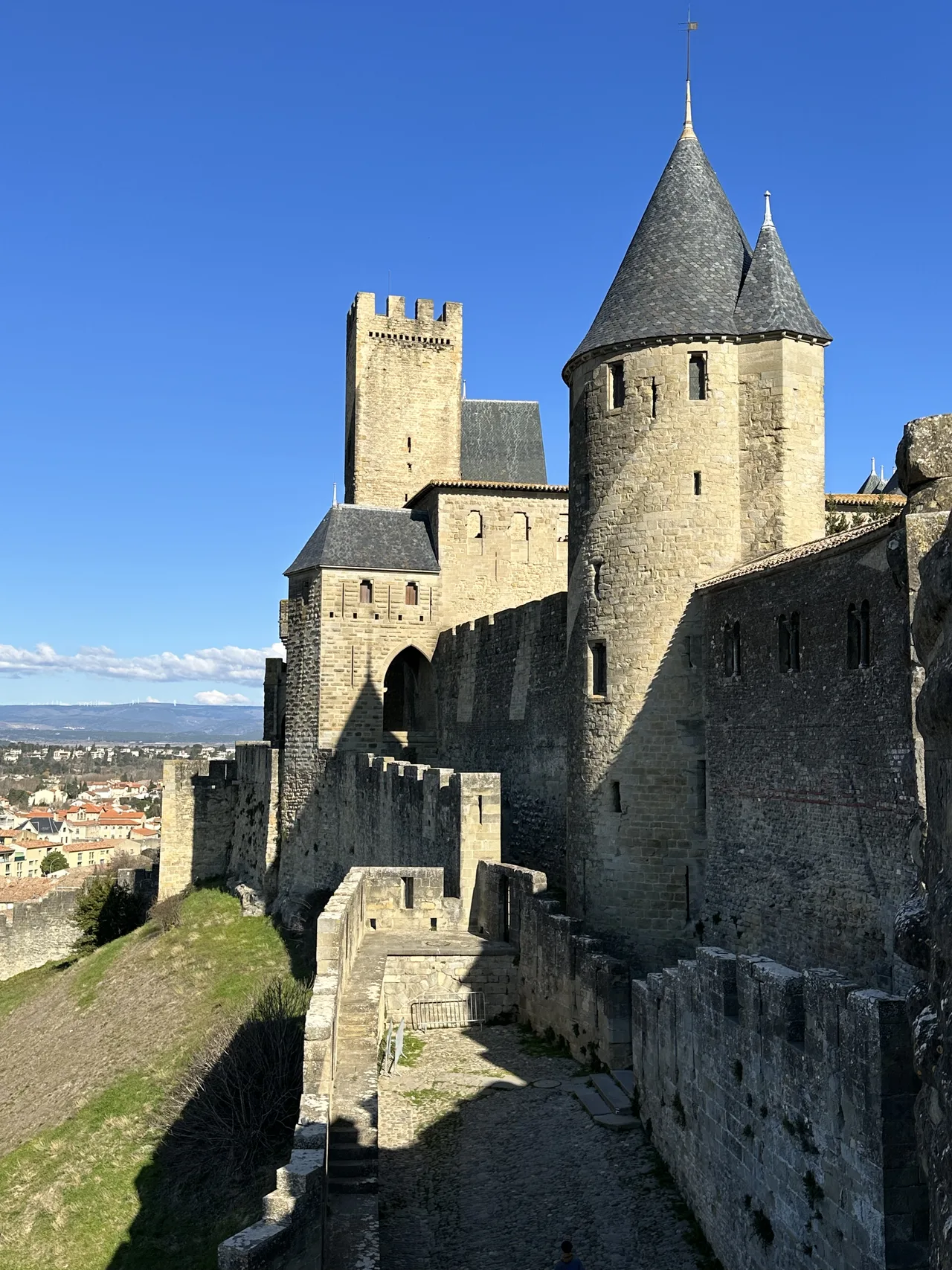
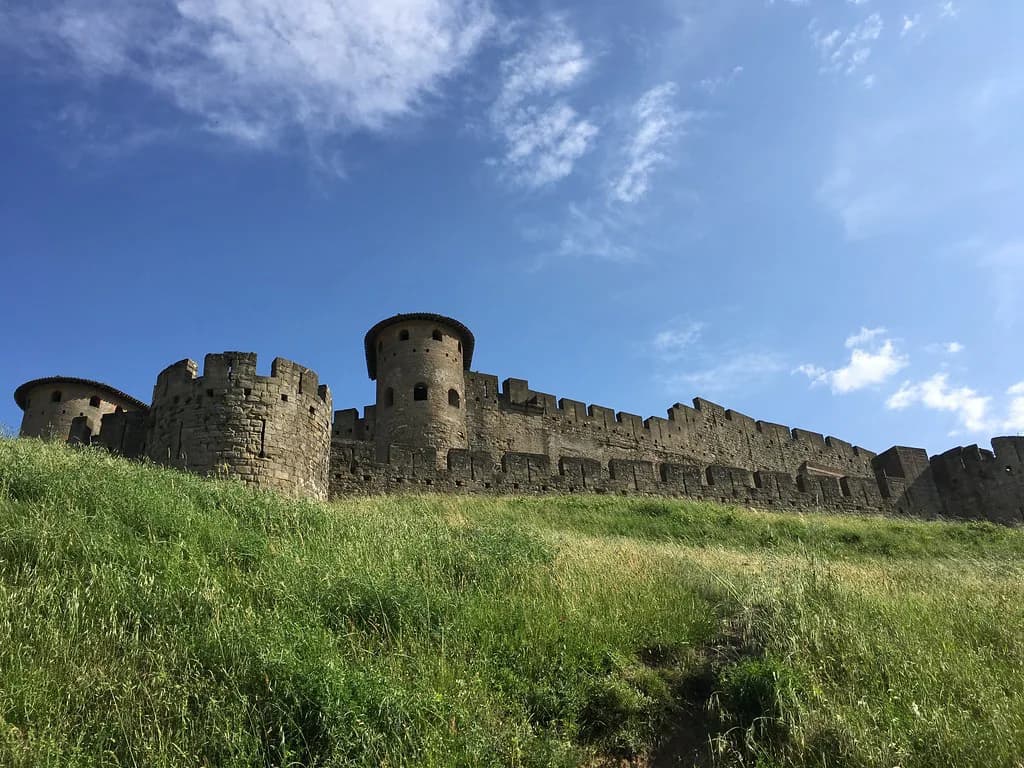
The Cité is UNESCO-listed, with the fortified ensemble lining up three kilometres of double walls and 52 defence towers according to walkers' guide Komoot. In practice that means the wall circuit is not a quick photo stop: it is a proper walk with stairs, towers and uneven stone. Budget energy for it rather than squeezing it between other stops.
Entering the Cité: Porte Narbonnaise in, Porte d'Aude out
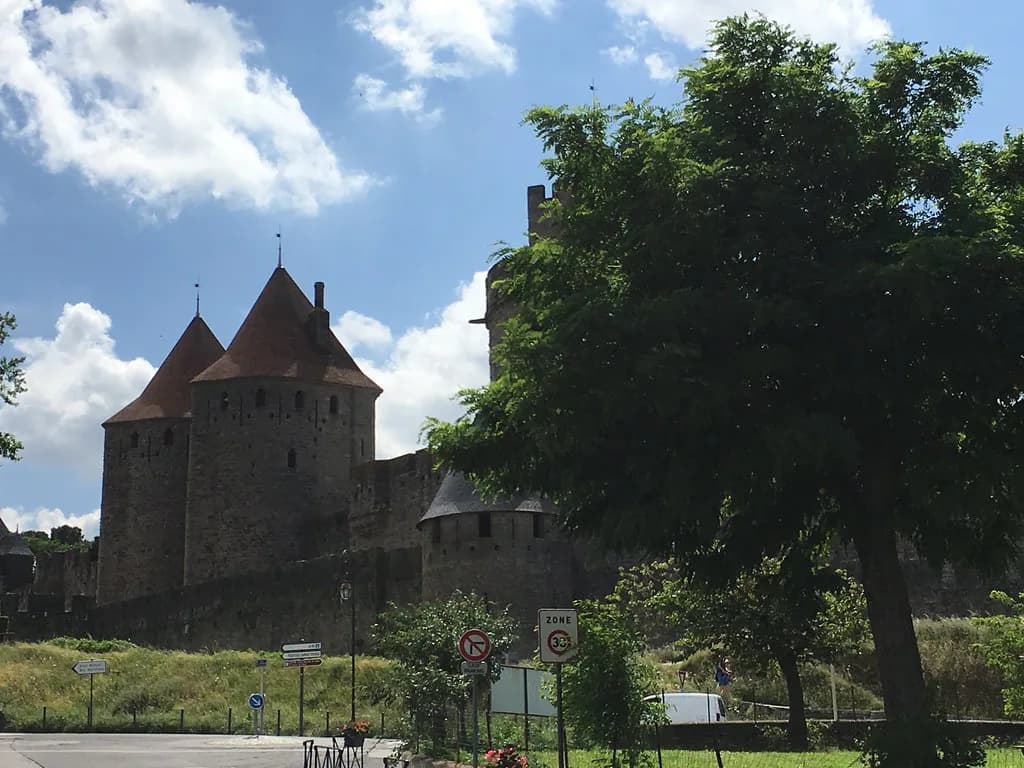
The Cité has two main gates, and the route through them matters. The Porte Narbonnaise is the principal entrance, the most heavily fortified of the gates, and it faces the old road to Narbonne; the statue of Dame Carcas stands just outside it. Arrive here first, because this is the approach that makes the walls feel as tall as they are.
Leave by the Porte d'Aude on the far side. It is the quieter gate, closest to La Bastide, and it drops you onto the downhill approach with the walls behind you and the lower town ahead. Doing the gates in this order gives you two different views of the same fortress instead of retracing your steps through the crowds.
The Château Comtal and the ramparts walk
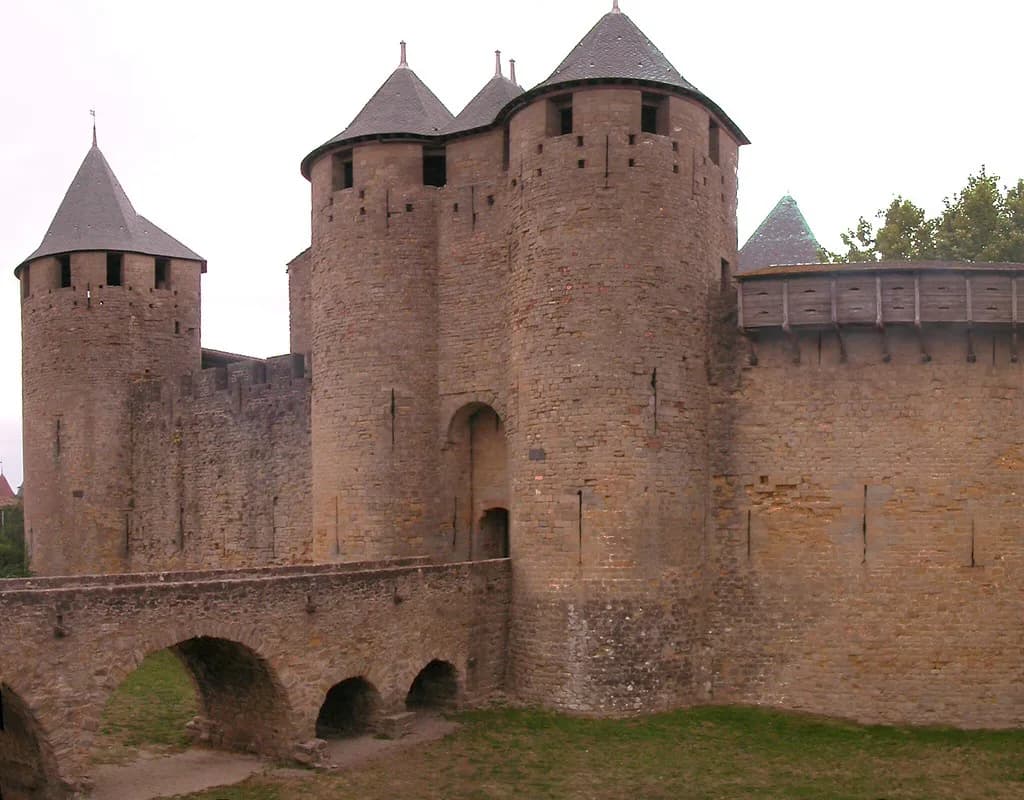
The Château Comtal is the castle in the corner of the Cité, reached across a drawbridge into a courtyard, and it holds a small museum of tombs, statues and siege projectiles. The ticket also opens the rampart walk along the castle defences and the upper town walls, which is the part worth paying for.
The full rampart circuit runs about 1.3 km and takes roughly an hour with photo stops, and it comes in three sections with exits after each one if you have had enough. You will climb steep staircases and pass through towers, so wear shoes you trust on worn stone. Expect to pay around 13 euros for castle and ramparts combined, with the site open daily from 10:00 to 18:30 and last access 45 minutes before closing, closing at 17:00 from October to March; buy on site.
Basilique Saint-Nazaire and the stained glass
The basilica began as a Romanesque church in 1096 and was partly rebuilt in Gothic style after the city fell, which is why the two halves look so different inside. The Gothic windows carry Old Testament scenes, a deliberate choice by the new rulers. Step in for the glass rather than the architecture alone, and give it twenty minutes.
Two more stops inside the Cité
The Grand Théâtre was built in 1908 as an open-air amphitheatre and folds a stretch of the inner wall into its stage; it is still the main venue for the summer music festival each July. You cannot miss it on the walk between the gates. Beyond the big sights, the real pleasure of the Cité is simply walking the narrow stone streets, so leave half an hour unstructured rather than scheduling every turn.
For food inside the walls, Au Four Saint Louis is a straightforward French bistro and Boulangerie de la Cité is a bakery and tea room. The best restaurants in Carcassonne, however, are spread across both halves of the city, and the lower town holds most of the local trade.
La Bastide Saint-Louis: the lower town grid
The Bastide was founded in the thirteenth century and laid out on a checkerboard of perpendicular streets, with Place Carnot at its centre and the Cathédrale Saint-Michel rising at its edge. This is the part of Carcassonne that works as a town rather than a monument. Walk it without a checklist and let the grid do the navigating.
Cathédrale Saint-Michel was the first church built in the Bastide, at the end of the thirteenth century, and it was incorporated into the town's defences. Opening times here are not generous and are worth confirming before you build a day around them: the published pattern is Tuesday to Saturday 10:00 to 12:00 and 15:00 to 17:00, Sunday 10:00 to 12:30, closed Monday. Check before you go.
Place Carnot is the natural pause in the lower town, and the Bastide saint-Louis is also where you will find most of the city's everyday shopping. If markets and browsing are part of your weekend, plan the lower town around a morning rather than a late afternoon, since market rhythms decide what is open.
Musée des Beaux-Arts and Square Gambetta: the free stop
The Musée des Beaux-Arts is small and free, with about ten rooms of religious painting, mythological scenes, regional landscapes and portraits, much of it by local painters. It is the low-effort, low-cost option when you want an hour out of the sun. The museum sits next to Square Gambetta, a formal park with a reflecting pool and paths, which makes an easy pairing.
Église Saint-Vincent and the bell tower climb
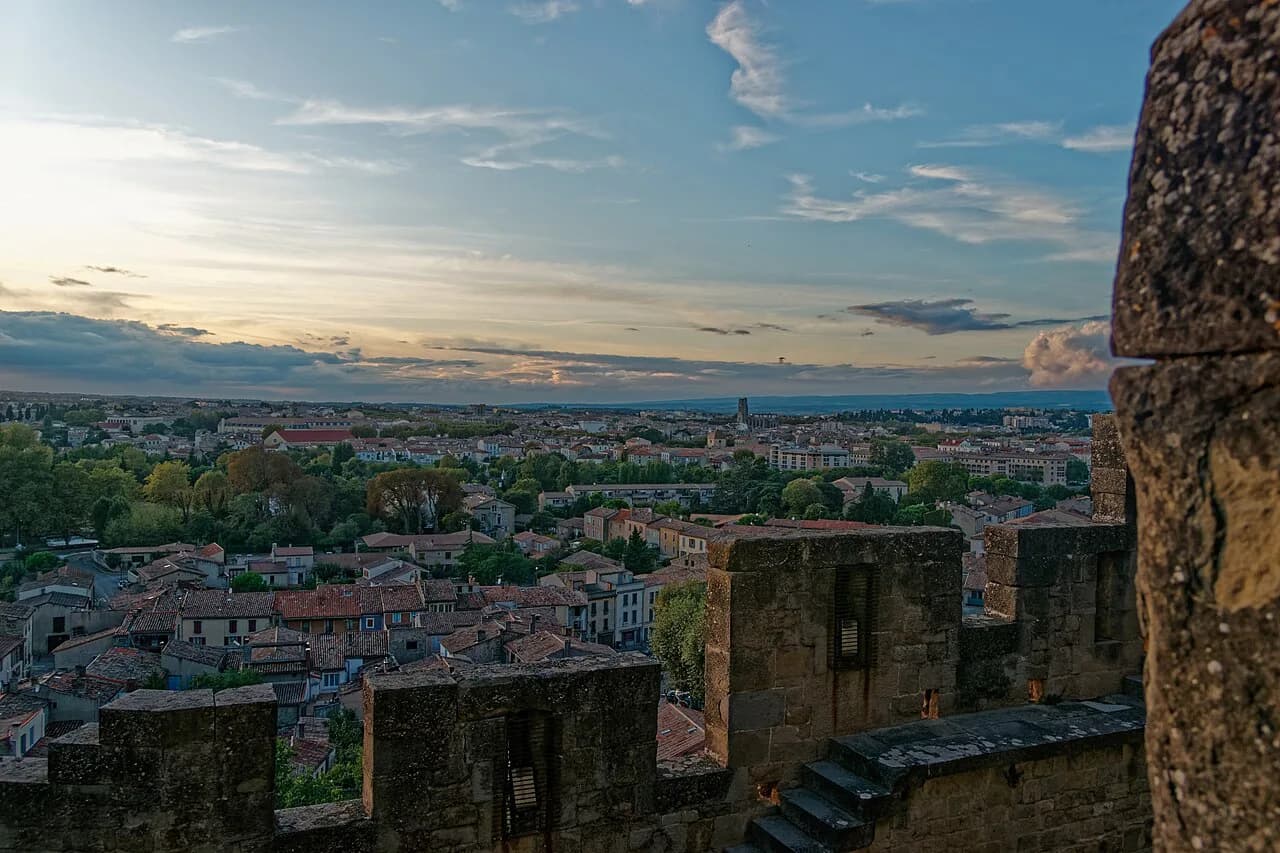
Saint-Vincent is the largest church in the Bastide, and its clock tower is the point of the visit: 220 steps of spiral staircase for a panorama that takes in both the lower town and the fortress on the hill. Climbing it is the honest trade-off in Carcassonne: the rooftop view from the Cité is grander, but the view of the Cité from here shows you how the city actually relates to its hill.
Entry to the church is free, and the tower costs 2.50 euros in cash only, so arrive with coins rather than a card. Published hours are 14:30 to 19:00 for the church and 14:30 to 18:00 for the tower. Check before you go if a tower climb is the purpose of the afternoon.
Jardin du Calvaire: the quiet corner
The Jardin du Calvaire sits on the site of a former bastion in the corner of the old town, and after its military life it served as a milling area before being laid out as a garden in 1825. It is built as a small recreation of the hill of Calvary, with paths, olive trees and stations leading to a crucifix at the top. Hours are 9:00 to 12:00 and 14:00 to 19:00, closing at 18:00 in winter, which makes it a morning or late-afternoon stop rather than a midday one.
Best viewpoints: the Pont Neuf and the N113 bridge
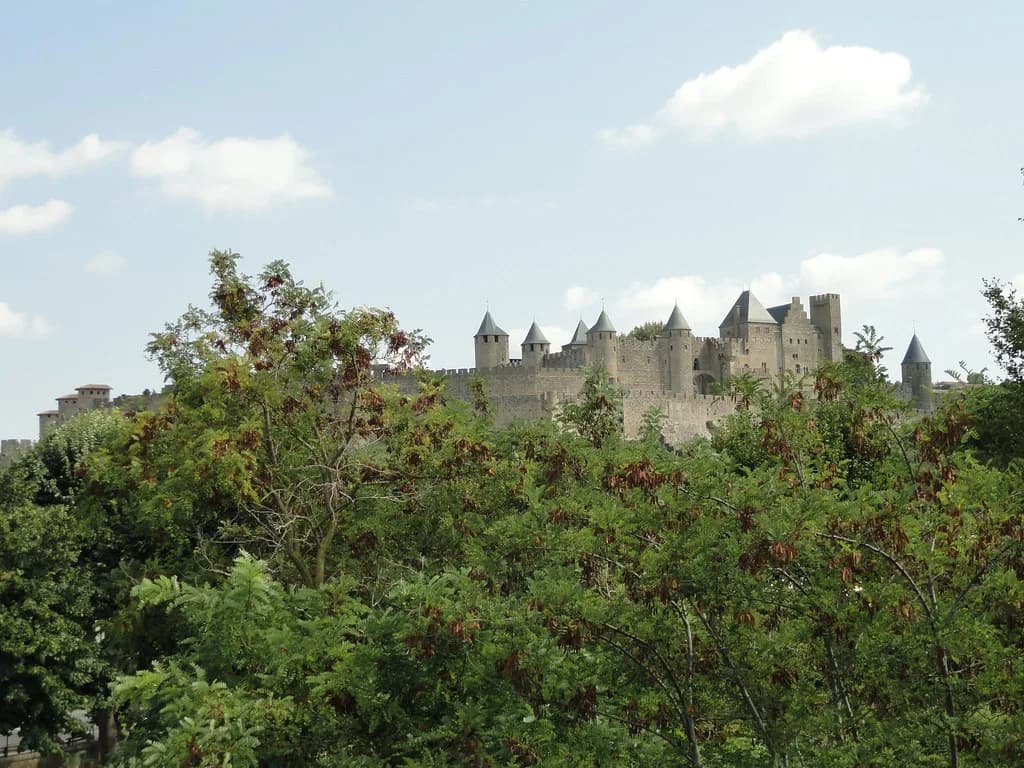
The Pont Neuf is one of the oldest bridges in Carcassonne and links the Bastide with the Cité, and the classic view of the fortress is from it. Slightly north, the road bridge on the N113 gives you the Pont Neuf and the walled town in the same frame, which is the better photograph. Walk both in the space of ten minutes and decide for yourself.
The Canal du Midi from La Bastide
The Canal du Midi runs past La Bastide, built in the late seventeenth century to link the Mediterranean and the Atlantic, and now a UNESCO site in its own right. The stretch by town is pleasant; it gets genuinely idyllic once you are out in the countryside, so commit to a longer walk or ride rather than a short loop.
You can rent bikes in town through the self-service Cyclo Libre e-bike network and set up an account in advance, or visit L'Odysee du Canal, a moored riverboat that works as a floating museum about the canal's design rather than as a cruise. Neither is expensive in time. The shopping in Carcassonne is best done in the Bastide before or after the canal, not squeezed into the middle of it.
How many days Carcassonne needs
One full day covers the Cité and the Bastide at a reasonable pace, with the castle and ramparts in the morning and the lower town in the afternoon. Add a half to full day if you want the canal by bike or on foot, because the good section is out of town. If you want a ready-made structure rather than assembling one, there is a three-day Carcassonne itinerary that spreads the same sights across a weekend.
When to go
Carcassonne records four million visitors a year, with 2.5 million of them arriving in August, which makes high summer a poor trade for anyone who wants to walk the ramparts without a queue. October is the better bet. The trade-off is shorter daylight and the castle's winter closing time of 17:00 from October to March, so start your morning earlier.
If the question is whether the city justifies the trip at all, that depends on whether you want a monument or a town. Carcassonne delivers the monument convincingly and the town modestly, and a weekend is enough to judge it for yourself.
Practical layout: walking between the two halves
The Porte Narbonnaise is about 15 minutes on foot from La Bastide, which is short enough to make the climb part of the day rather than a taxi ride. Drivers can park immediately outside the gate. The N113 bridge and the Pont Neuf both sit between the halves, so any walk between them gives you a viewpoint for free.
Plan Your Weekend
Build the weekend around two mornings: one for the Cité and its ramparts, one for the Bastide and the canal. Do the castle early, leave by the Porte d'Aude, and keep an afternoon free for the lower town.
If you want to go deeper on a single subject, the museums in Carcassonne reward a wet afternoon, and the Carcassonne Attractions: 6 Visitor Guides hub links each major sight in one place.
Explore more Carcassonne guides
Frequently Asked Questions
Is the walled city of Carcassonne free to enter?
Yes. Walking through the gates and streets of the Cité costs nothing. The Château Comtal is the only part that requires a ticket, and that ticket also covers the ramparts walk.
How long does the ramparts walk take?
The full circuit is about 1.3 km and takes roughly an hour with stops. It is divided into three sections with exits after each, so you can shorten it if stairs and towers wear you out.
How many days do you need in Carcassonne?
One full day covers the Cité and the Bastide. Add a half to full day if you want to walk or cycle the Canal du Midi out in the countryside.
What is there to do in La Bastide Saint-Louis?
Place Carnot, the Cathédrale Saint-Michel, the free Musée des Beaux-Arts beside Square Gambetta, and the climb up the Église Saint-Vincent bell tower. The lower town is also where the everyday shopping happens.
When is the best time to visit Carcassonne?
October, if you want the walls without the crush. August brings the overwhelming share of the city's visitors, and the castle closes earlier from October to March, so start your day earlier in autumn.
Which museums in Carcassonne are free?
The Musée des Beaux-Arts in the lower town is free to enter, with around ten rooms of paintings. The small museum inside the Château Comtal is covered by the castle ticket.
How far is the Cité from the new town?
About 15 minutes on foot from La Bastide to the Porte Narbonnaise, with parking right outside the gate for drivers. The Pont Neuf and the N113 bridge both sit between the two halves.
Sources
Notes for French city breaks
Optional updates to our guides.
You might also like
Continue reading
More guides you'll find useful