Carcassonne in October: Weather and 2-Day Plan
Plan Carcassonne in October with castle hours from 1 October, ticket prices, walking times for the Cité and Bastide, and a realistic two-day itinerary.
On this page
October is one of the better months to give Carcassonne a weekend: the Cité is a compact, inhabited village you can walk in a morning, and the Counts' Castle shifts to its shorter autumn schedule from 1 October. The trade-off is daylight and the need to book your castle slot around a 17:00 closing. This guide splits the trip into the hilltop Cité and the lower Bastide Saint-Louis, with the walking times the tourist office publishes.
Why October Suits Carcassonne
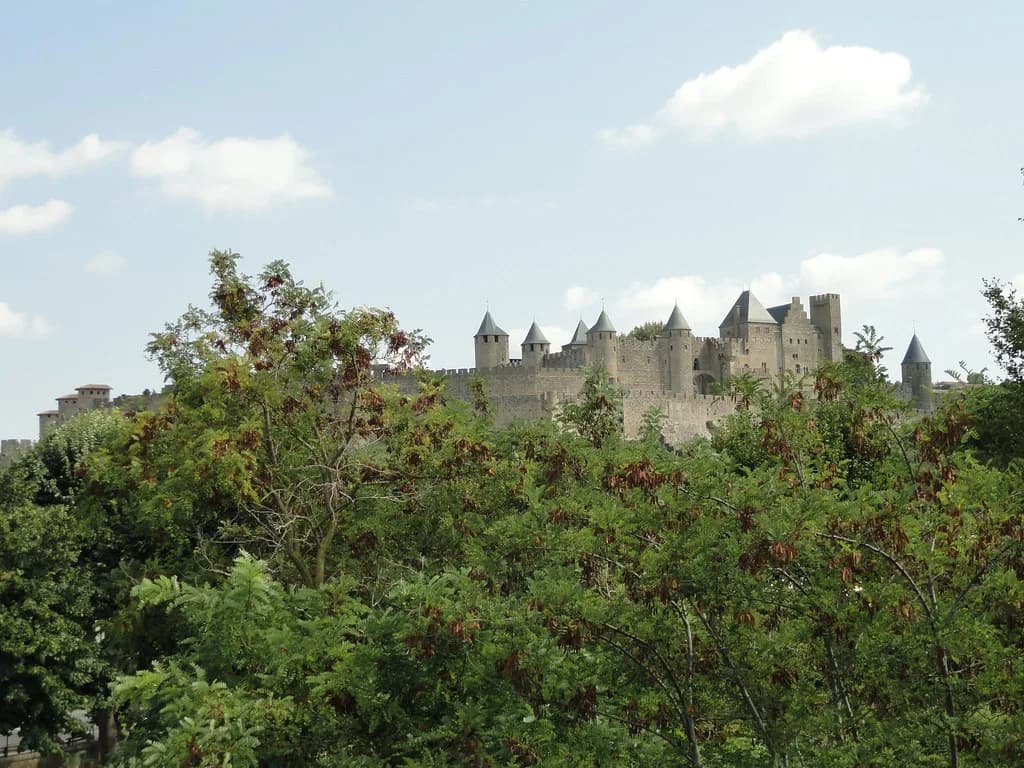
The Cité is a walled district with roughly a hundred residents rather than a museum you file through, so you enter free at any time and set your own pace. In October that freedom matters more than in high summer, when the tourist office describes the Rue Cros-Mayrevieille as the busiest street in the Cité. Going early in the day lets you cover the same 2.3 km circuit at a calmer rhythm.
The one hard constraint in October is the castle, which closes at 17:00 from 1 October. Build your morning around the castle and leave the ramparts walk and the Bastide for the afternoon. If you are weighing whether the trip earns its place in a longer French itinerary, the honest case for Carcassonne rests on the two UNESCO sites, the Cité ramparts and the canal du Midi.
Typical October Weather in Carcassonne and How to Pack
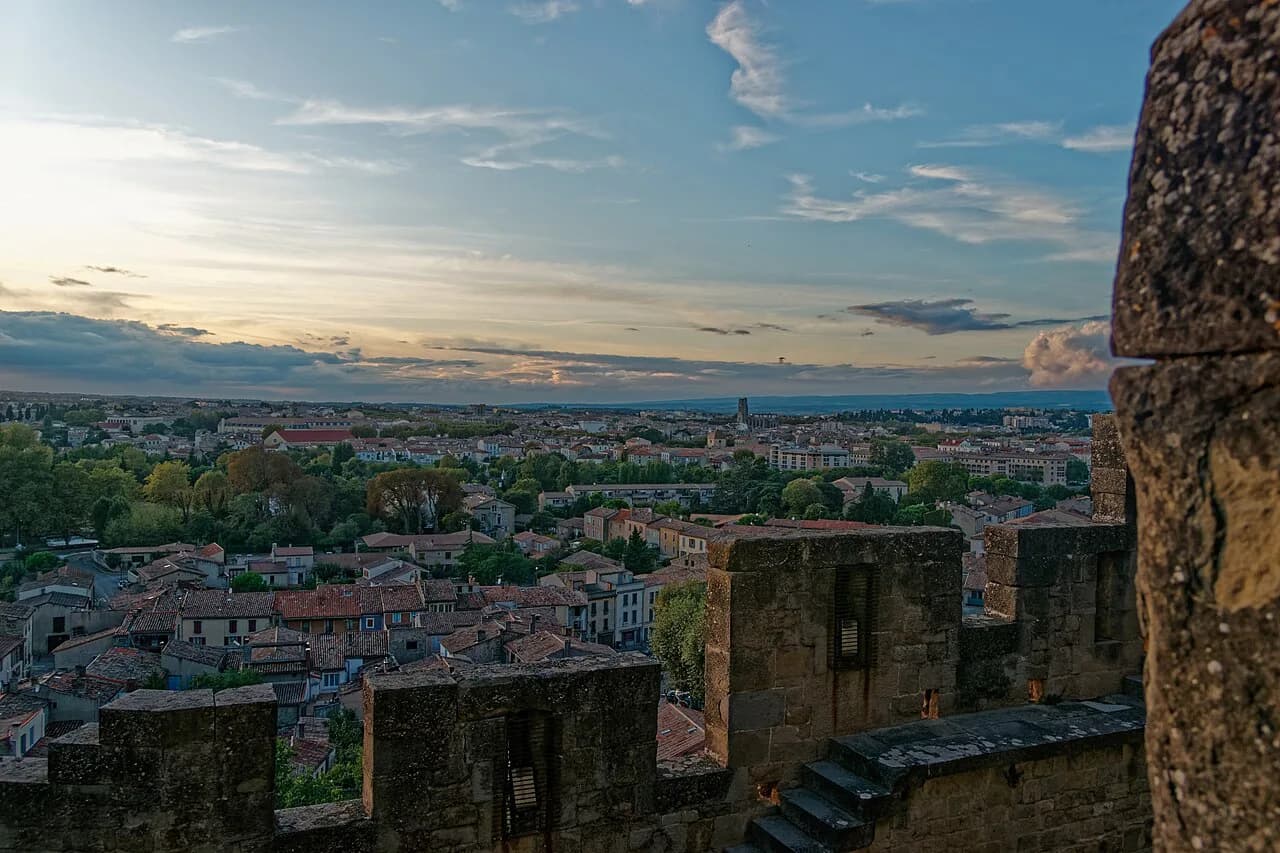
Carcassonne sits inland in the Aude, between the Pyrenees and the Montagne Noire, and the tourist office points out that the castle's upper ramparts give views of both ranges. October days can be clear enough for those long views, but they are also short, so a warm layer and a waterproof shell earn their place in a small day bag. Cobbled streets and flights of steps inside the towers make grippy shoes the practical choice.
How Carcassonne Is Laid Out
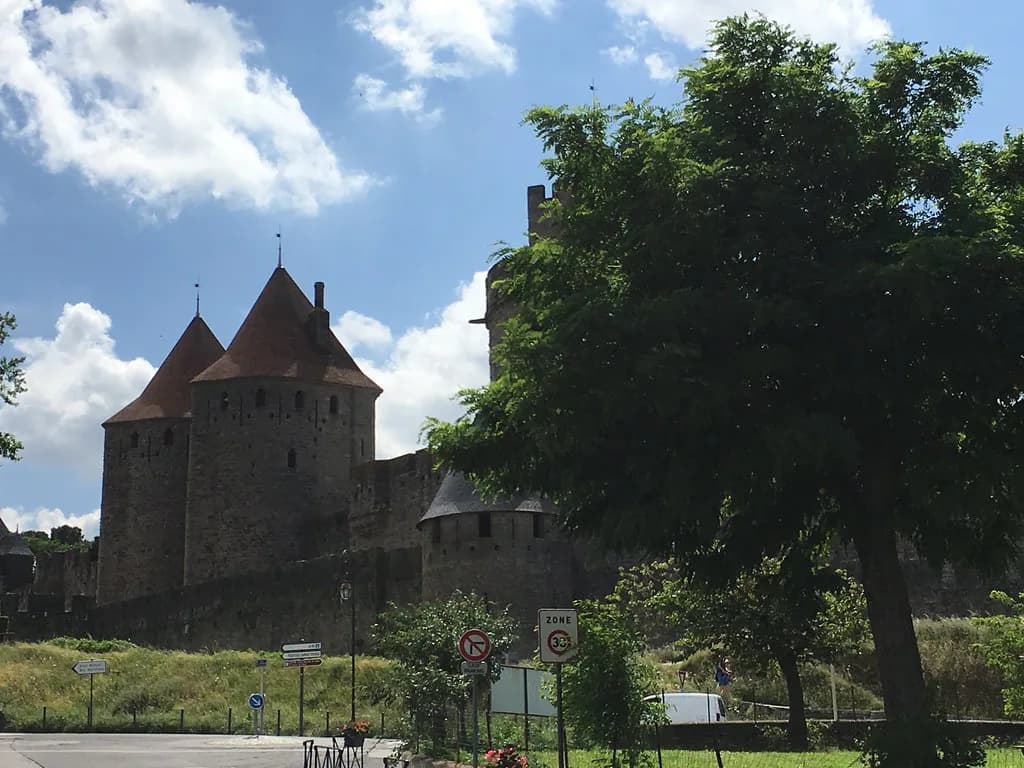
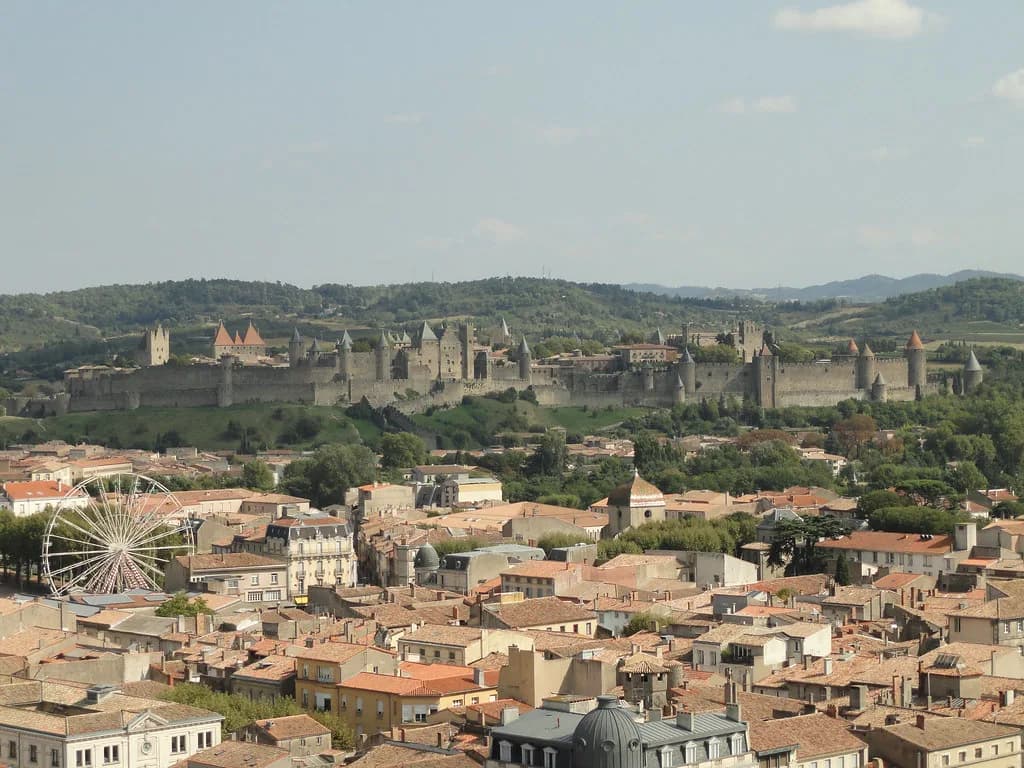
Think of Carcassonne as two towns with a river between them. The Cité sits on its hill on the right bank, entered through the Porte Narbonnaise, and the Bastide Saint-Louis spreads out on the flat lower ground. The Pont Vieux, a 14th-century footbridge over the Aude, links the two, and the tourist office measures the walk from the Cité down to the bridge at about 800 metres, or ten minutes.
How Long You Need in the Cité
Allow at least three hours for the Cité alone. The tourist office suggests an hour for the castle and ramparts plus another one to two hours for the rest of the walled town, and its suggested circuit covers 2.3 km. Add museum time and a sit-down lunch and you can fill a full morning without rushing.
Two days gives you a comfortable split: the Cité and castle on day one, then the Bastide and the canal du Midi on day two. If you want a third day for the surrounding vineyards and villages, the plan changes shape.
Morning: Through the Porte Narbonnaise to the Place du Château
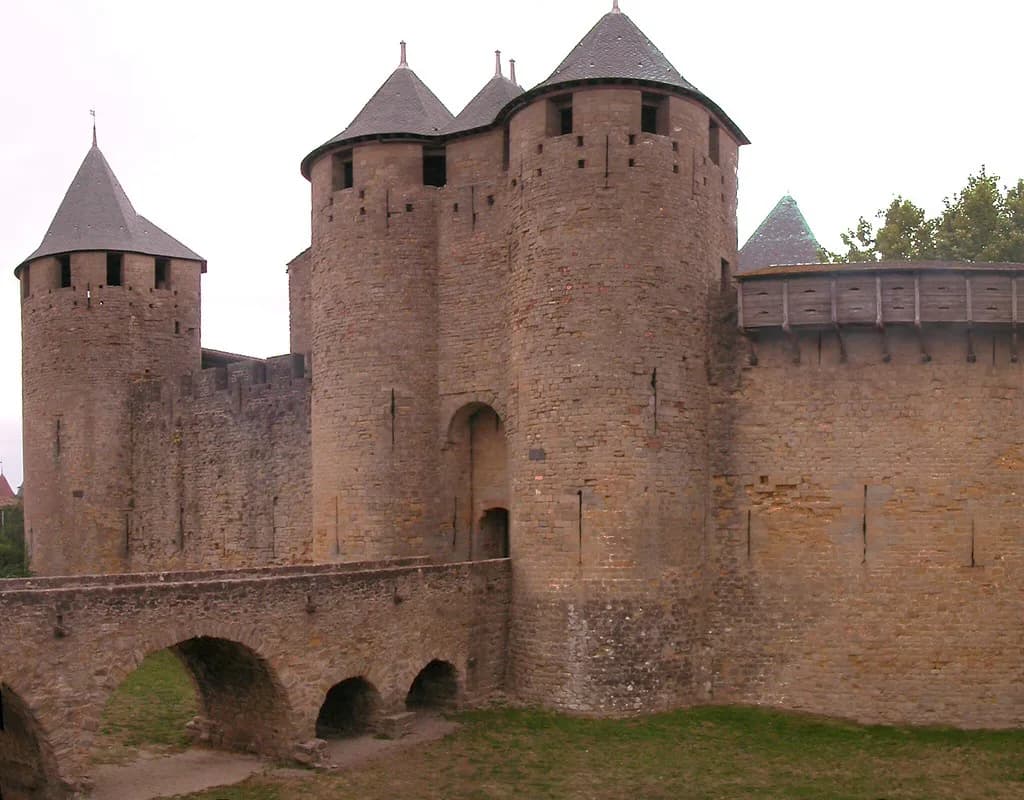
Start at the Porte Narbonnaise, the main gate, where a replica bust of Dame Carcas stands beside the drawbridge on the right. Cross into the baileys and walk up the Rue Cros-Mayrevieille, the shop-lined street, until you reach the Place du Château. This is where you pick up castle tickets and decide between the self-guided and guided versions.
If you arrive by car, the tourist office recommends the P0 pay car park, 300 metres from the Cité, with P1 as the fallback when P0 is full. Bus line 4, the little tourist train and the walk up from the Rue Trivalle are the other ways in. Whichever route you take, you enter through the Porte Narbonnaise.
The Counts' Castle and Ramparts: Hours and Prices
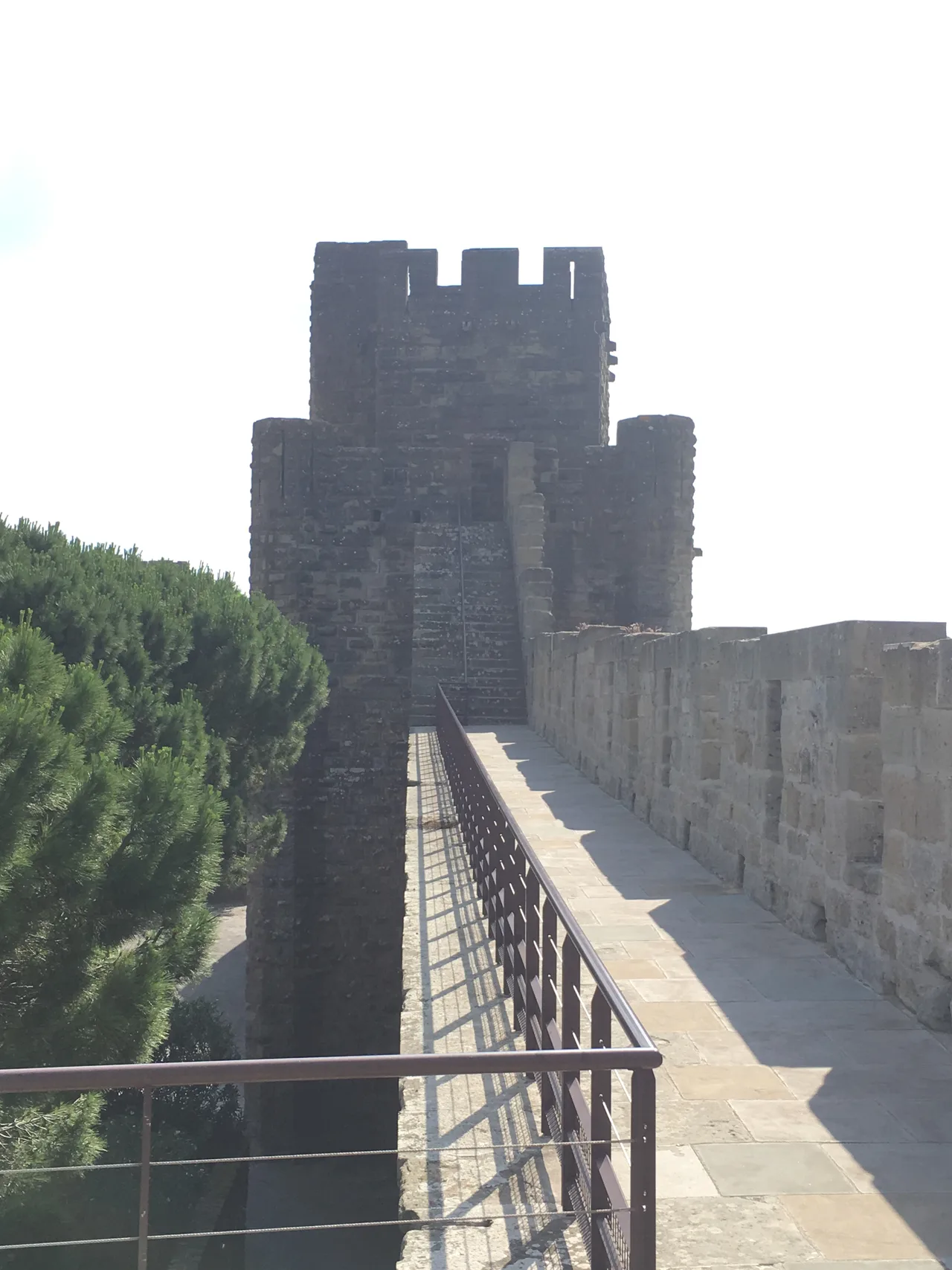
From 1 October to 24 December the Château Comtal opens every day from 09:30 to 17:00, so an October visit fits comfortably inside a short day. The route runs along the upper part of the inner rampart and through the towers, hourdings and castle museum, with plenty of steps to climb. It also delivers the best panorama of the town and the mountains beyond.
The tourist office lists the adult full rate at 13 to 19 € and the group adult rate at 11.50 to 16.50 €, with free admission for European citizens up to 26. That price buys the only paid element of the Cité, since the walled town itself costs nothing to enter. Budget for it before you compare it with any other paid sight on the trip.
Basilica of Saint-Nazaire, Place Marcou and the Lices Walk
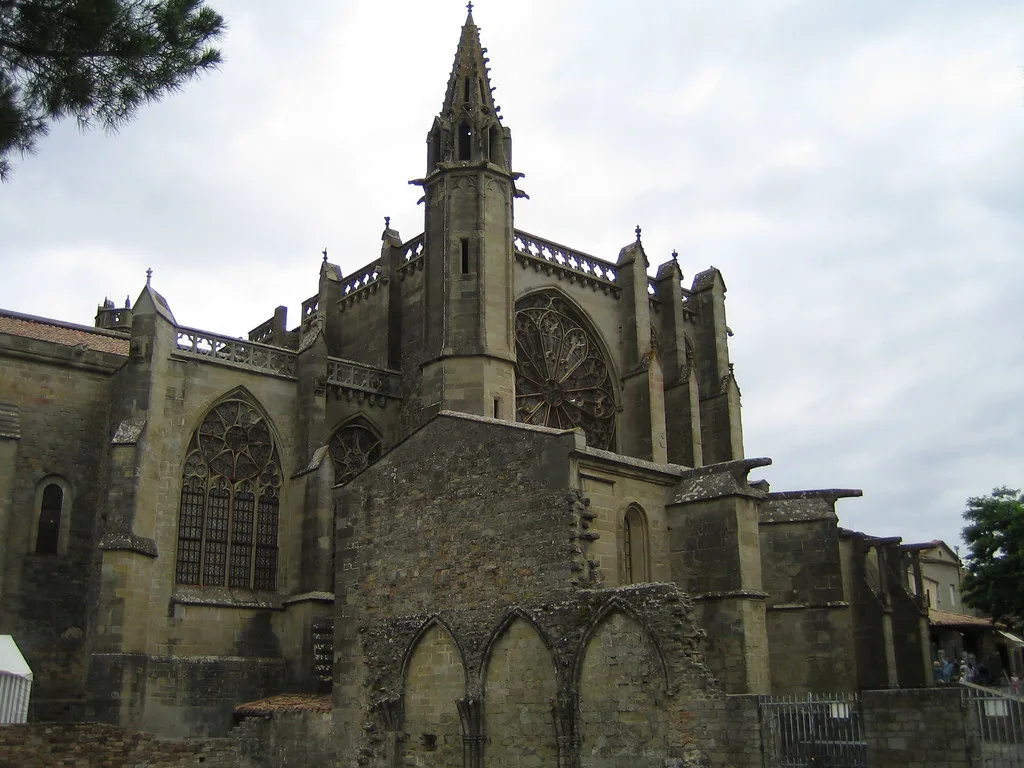
The Basilica of Saint-Nazaire is free to enter and combines Romanesque and Gothic work from the 11th to the 14th centuries, with stained glass the tourist office rates among the best in southern France. Mass is held on Sundays at 11:00. Leave by the tower exit behind the basilica and the Place Auguste Pierre Pont opens out in front of the Hôtel de la Cité, with a half-timbered bakery nearby.
From there, climb the Rue du Plo past the Place du Petit Puits and drop down into the Place Marcou, where cafés and restaurants line the square. Then cut through the Ruelle St-Sernin to the Place du Grand Puits and the Place Saint-Jean on the far side of the castle. This loop is the natural stop for a coffee before the lices.
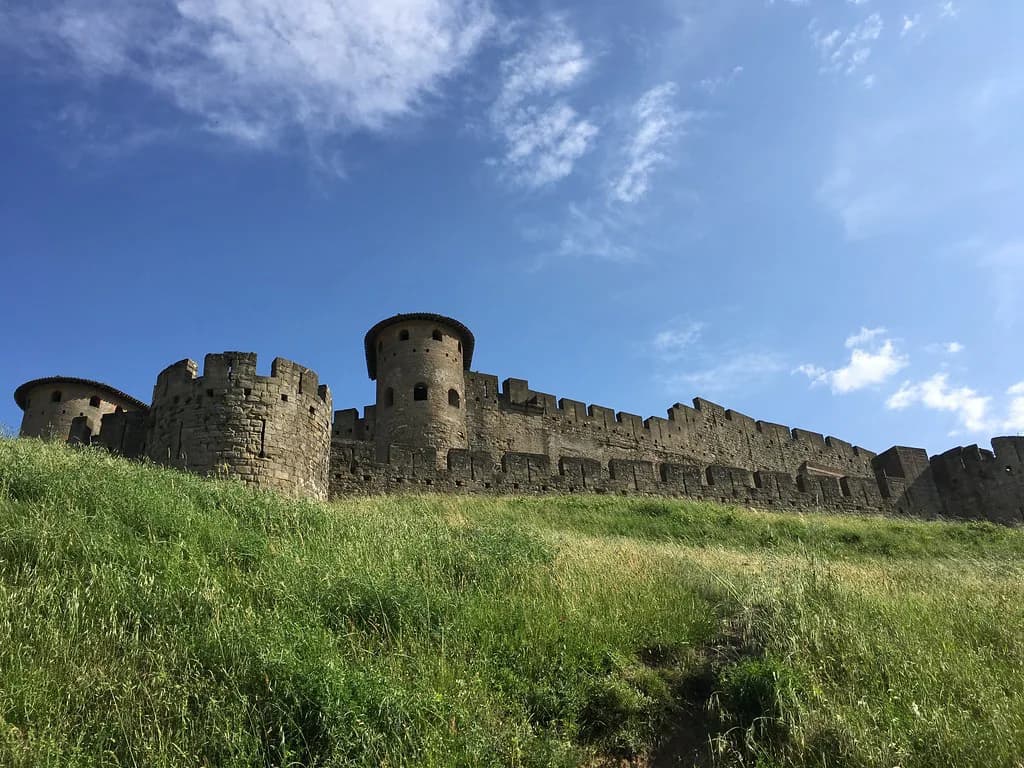
The lices are the corridor between the two rampart walls, and the tourist office allows about 20 minutes to walk them from the Rue du Moulin to the Porte d'Aude. The Aude Gate is the Cité's second entrance and gives the classic view back over the town and the castle. In July and August a chivalry tournament camp blocks the theatre circuit; that is a summer problem, not an October one.
If the castle interiors and small museums appeal, save a couple of hours for them rather than squeezing them into the same morning.
Afternoon: Down to the Bastide Saint-Louis
Leave the Cité by the Porte d'Aude or the Porte Narbonnaise and walk down to the Pont Vieux, ten minutes from the walls. Cross the Aude and you are in the Bastide Saint-Louis, the lower town, which has its own rhythm and none of the rampart drama. The tourist office's route passes Square Gambetta, where the Fine Arts Museum is free to enter, then follows the Rue de Verdun to the Place Carnot.
Place Carnot is the natural pause: a fountain, cafés and enough space to sit and watch the town go about its business, before a detour to Saint-Vincent's church and the climb up its bell tower. Give the Bastide a half-day rather than treating it as an afterthought; its grid of streets rewards a slow wander.
Food is where Carcassonne divides opinion, with plenty of ordinary tables on the tourist track and a smaller number worth planning around. The Cité has around thirty restaurants inside the walls, and the Comptoir de la Cité offers a themed tasting with a view of the castle for an evening that stays close to the ramparts.
For market mornings and food shopping, the Bastide's covered hall and street markets run on set days, so slot them into the day-two plan rather than assuming something is open on a Sunday afternoon.
The Canal du Midi End of Town
The canal du Midi port sits opposite the station, just beyond Square André Chénier and Place Carnot. Two companies run commented boat trips from the port, and you can hire bikes for signed circuits along the towpath, including a 12 km run to Trèbes or a 16 km route on the GR 36 to La Cavayère lake. The lake itself is a five-minute drive from the ramparts and works well for families.
The canal is the second of the area's UNESCO listings, and the towpath gives you an easy flat hour after the cobbles of the Cité. For a slower version of the same scenery, drop into the Carcassonne in October comparison of indoor and outdoor options elsewhere in the south if you are still choosing a city for the trip. If you are still weighing cities, our guide to Annecy in October offers the same rainy-day and opening-hours comparison for a lakeside alternative.
What to Do in Carcassonne If It Rains
Wet October days push you indoors, and the castle route itself is largely covered once you are inside the towers, the hourdings and the museum rooms. The ramparts walk is less forgiving, so lead with the castle and the basilica and add the Bastide's covered streets afterwards. The tourist office keeps a rain-focused list of activities for the surrounding area.
If you want a longer indoor block, the Gouffre Géant de Cabrespine, one of the largest caves open to the public, sits outside the city and needs a car or a booked excursion. It works better as a half-day add-on than a rainy-morning fix.
A Two-Day October Plan
Day one belongs to the Cité. Arrive at the Porte Narbonnaise for opening, take the castle first while energy is high, then the basilica, the Place Marcou loop and the lices walk to the Porte d'Aude. Finish with a walk back down to the Pont Vieux for the classic view of the walls at dusk, and eat in the Cité or back in the Bastide.
Day two is the lower town and the water. Start at Square Gambetta and its free Fine Arts Museum, walk the Rue de Verdun to Place Carnot, climb Saint-Vincent's bell tower and then head to the canal port for a boat trip or a bike on the towpath. That gives you both UNESCO sites and a relaxed finish.
Plan Your October Weekend
October in Carcassonne rewards a simple structure: castle in the morning on the 09:30 to 17:00 schedule, ramparts and basilica before lunch, Bastide and canal the next day. Book the castle ahead so the 17:00 close does not catch you out, and keep the adult rate range in the budget as the only paid sight of its kind on the trip.
For an evening that stays close to the walls, the Comptoir de la Cité's tasting with the castle in view, or the Cité's restaurants after dark, finish the day without another transfer. Check the tourist office site shortly before you travel for any change to castle hours around late December.
Explore more Carcassonne guides
Frequently Asked Questions
How long do you need to see Carcassonne?
Allow at least three hours for the Cité. The tourist office suggests one hour for the Counts' Castle and ramparts plus another one to two hours for the rest of the walled town, and its circuit covers 2.3 km. Two days gives you a comfortable split between the Cité and the Bastide Saint-Louis, with the canal du Midi on the second afternoon.
Is the Cité de Carcassonne free to enter?
Yes. The Cité is an inhabited district and you can walk in at any time without paying. The Counts' Castle and its ramparts circuit are the paid element, and the Basilica of Saint-Nazaire is free to enter.
What are the castle opening hours in October?
From 1 October to 24 December the Counts' Castle opens daily from 09:30 to 17:00, according to the tourist office. That makes a morning castle visit the sensible choice in October.
How much is the Counts' Castle and ramparts ticket?
The Greater Carcassonne tourist office publishes the adult full rate as a range, with a lower group rate for adults, and admits European citizens up to 26 free. The range spans several euros, so see its Carcassonne for 1 day page for the current figure. The ticket covers the castle circuit along the upper inner rampart.
What can you see in Carcassonne in one day?
The tourist office's one-day route covers the Cité in the morning, from the Porte Narbonnaise up the Rue Cros-Mayrevieille to the Place du Château, then the basilica and the lices walk. The afternoon crosses the Pont Vieux to Square Gambetta, the Rue de Verdun and Place Carnot, with the canal port a short walk beyond.
What is there to do in the Bastide Saint-Louis?
Walk Square Gambetta, where the Fine Arts Museum is free, follow the Rue de Verdun to Place Carnot for a break, and detour to Saint-Vincent's church to climb the bell tower. The canal du Midi port is ten minutes further on, with boat trips and bike hire for the towpath.
How far is the walk from the Cité to the Bastide?
The tourist office puts it at 800 metres to the Pont Vieux, about ten minutes, and ten minutes more along the Rue de Verdun to Place Carnot. Give the walk itself time for the view back at the walls from the bridge.
Is Carcassonne worth two days?
Yes, if you give the Bastide its own half-day rather than treating it as a footpath back to the car. Day one covers the Cité, castle and basilica; day two takes in Square Gambetta, Place Carnot and the canal du Midi. One day leaves the lower town rushed.
Sources
Notes for French city breaks
Optional updates to our guides.
You might also like
Continue reading
More guides you'll find useful