Marseille in October: Weather, Opening Days and What to Do
Marseille in October means mild walking days, thinner crowds and museums to cover a wet afternoon. Here is how to plan a short break around opening days.
On this page
October in Marseille is a walking city break: mild enough to spend whole days on your feet around the Vieux-Port and the old town, with far fewer people than midsummer. The trade-off is a shorter afternoon and the odd wet spell, so pair outdoor hours with one indoor anchor such as the Marseille History Museum. Two full days cover the centre properly; three let you add a boat out to the islands or a slower morning at the markets.
Plan around the calendar rather than the temperature. The Marseille History Museum opens Tuesday to Sunday, which makes Tuesday the natural museum day if you arrive on a Monday, and MuCEM's outdoor areas give you a free fallback when the sky turns. Everything else in this guide works on foot from the port, with one climb up to Notre-Dame de la Garde and a Metro ride for Longchamp.
What October in Marseille is actually like
Treat October as a shoulder-season month: warm enough for long walks and a coffee outside, cool enough that you want a layer by late afternoon. The daylight is shrinking, so a late start costs you more than it would in June, and an early sunset makes the evening feel longer than the daytime. Build each day so the outdoor stretch comes first and the museum or a long lunch comes second.
Rain is the variable to plan for, not cold. Marseille's weather is Mediterranean, so October can serve bright, dry days or a sharp downpour that lasts an afternoon, and you will not know which until a few days out. Keep one indoor option per day unbooked, and choose sights you can enjoy in either condition, such as the covered walkways and gardens at MuCEM or the covered halls of the History Museum. The city is a solid short-break choice in this month if you accept that trade.
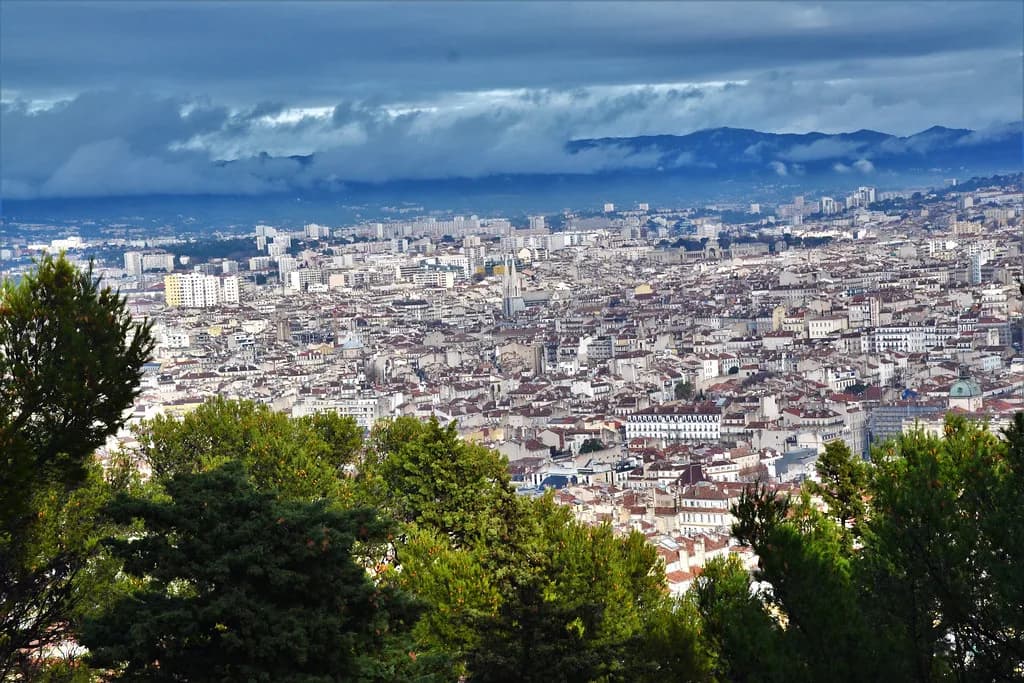
The upside is space. With the summer crowds gone, the Vieux-Port and Le Panier feel walkable rather than packed, and you can take your time at viewpoints that are shoulder-to-shoulder in August. If you are weighing up whether the city justifies the trip at all, the honest answer is that October removes the main reason people complain about it.
How the city is laid out
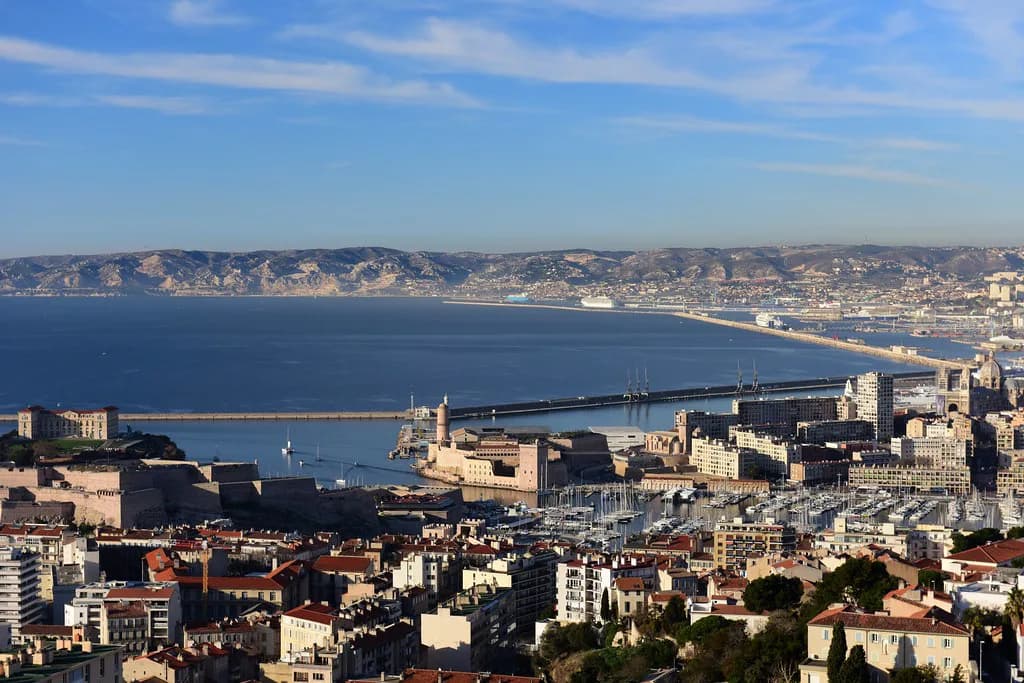
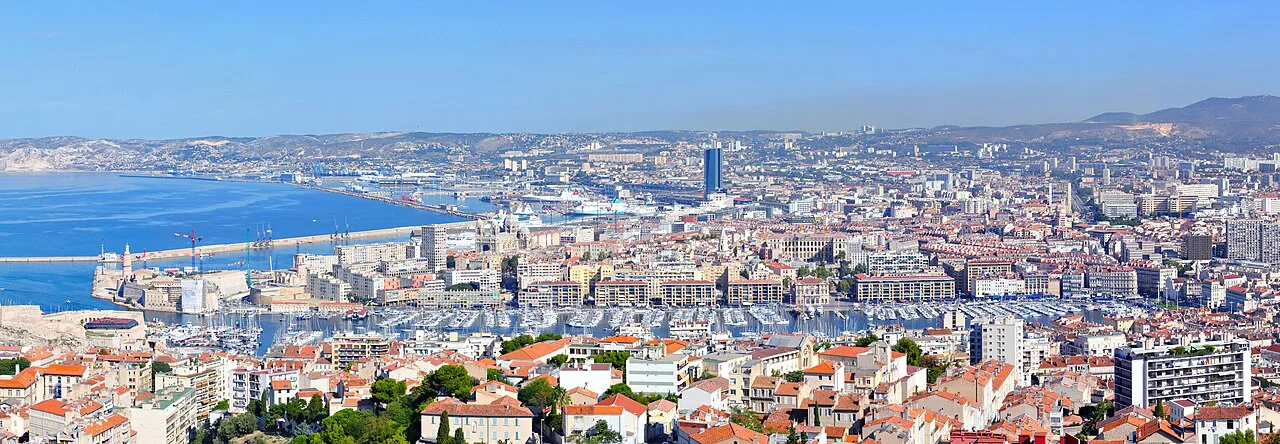
Use the Vieux-Port as your base. The old harbour is the hinge of the city: metro line 1 stops at Vieux-Port, the Quai des Belges fish market sits at its head, and the mirrored canopy gives you a landmark to navigate by. From there Le Panier rises on the north side, the MuCEM and Fort Saint-Jean sit at the harbour mouth, and the long quays run south towards the Pharo.
Most of what you want is within a 20-minute walk of the water, but two sights sit apart. Notre-Dame de la Garde crowns a 161-metre cliff south of the port, according to CosmopoliClan, so it is a climb or a bus ride rather than a stroll. The Palais Longchamp and its park lie inland, reached by metro rather than on foot, so give them a half-day of their own.
Le Panier is the old town on a hill, a largely pedestrian grid of narrow lanes where the steps are constant and a wrong turn costs you another flight. Enter from beside the Hôtel de Ville and work upwards, then come back down towards the Cathédrale de La Major on the water side. The Vieille Charité, a 17th-century almshouse with an inner courtyard, sits within the quarter and holds museum collections, so it doubles as shelter if it rains.
A two-day October plan that keeps the outdoors for the best hours
Day one stays low and central. Start at the Quai des Belges fish market in the morning while the light is good, walk the quays and the mirrored canopy, then head into Le Panier for the climb and the Vieille Charité. Finish with the Cathédrale de La Major and an early dinner near the port, since the light will be going by the time you are done.
Day two goes to the harbour mouth and then up. Take the MuCEM and Fort Saint-Jean first, using the pedestrian bridge and the outdoor walkways before any rain arrives, then move south to the basilica for the view. If the weather turns, swap the second half for the Marseille History Museum, which is open daily except Monday.
Three days lets you add either a boat trip to the Frioul islands and the Château d'If or the Palais Longchamp and Parc Longchamp, but not both comfortably. Boats are weather-dependent in October, so book that option only once you have seen a settled forecast, and keep Longchamp as the guaranteed fallback since it is a metro ride and a museum visit in one.
Vieux-Port and Quai des Belges: the morning fish market
The fish market at the Quai des Belges is a morning affair, with fishermen landing and filleting the day's catch, according to CosmopoliClan. Arrive before mid-morning or you will find nothing but a swept quay. It is the single best free thing to do in the city early on, and it sets you up beside the cafés lining the port for breakfast.
Beyond the market, the port is where the pointus, the traditional fishing boats, moor alongside yachts, and where you pick up ferries and boat excursions. The mirrored canopy at the head of the harbour provides shade and a reflecting roof that has become the city's most photographed piece of modern street furniture. Two forts frame the scene, Fort Saint-Jean to the north and Fort Saint-Nicolas to the south, which makes the harbour mouth read as a gateway rather than a dead end.
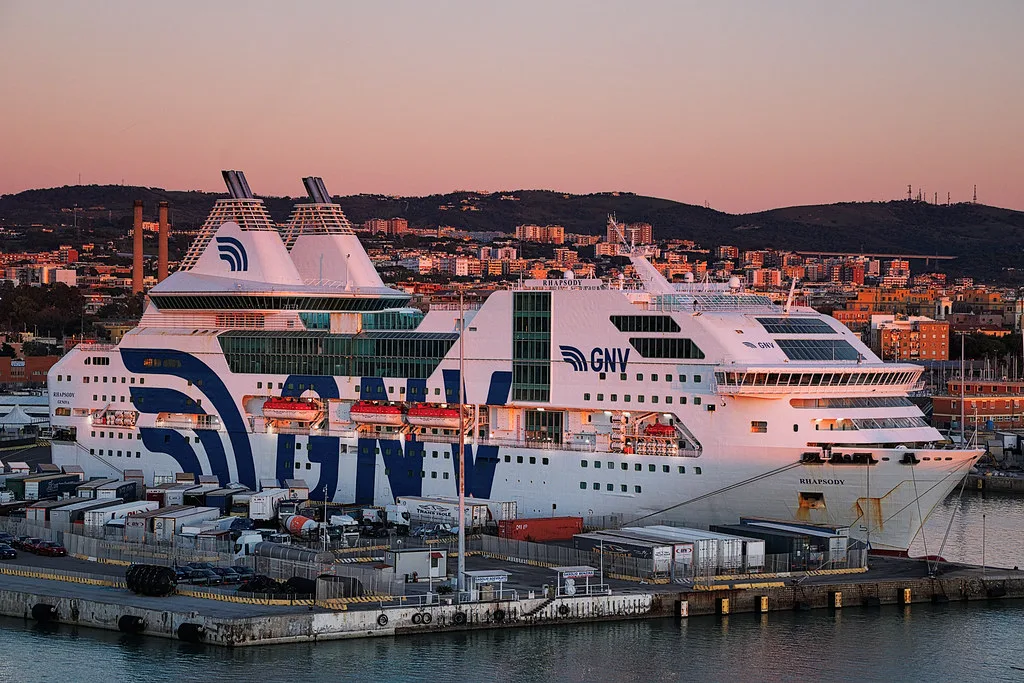
Note that large cruise ships moor at the Port de Joliette, north of the old harbour, because the Vieux-Port is not deep enough for them. That keeps the postcard view intact and keeps the crowds off your side of the water, but it also means coach parties can appear at the MuCEM and the port suddenly and then vanish again. Plan the harbour mouth for early morning or late afternoon to dodge them.
MuCEM and Fort Saint-Jean: outdoor walkways and the Tuesday closure
MuCEM, the Museum of European and Mediterranean Civilisations, opened in 2013 on the J4 breakwater and incorporates the 17th-century Fort Saint-Jean, with a pedestrian bridge linking the two. CosmopoliClan reports that the exterior area, including the Mediterranean garden, is open to the public free of charge; that makes the site worth visiting even on a day when you decide against paying for the exhibitions.
The same account says MuCEM is closed on Tuesdays, which is worth confirming on the museum's own site before you build a day around it. If it holds, Tuesday is the day for the History Museum instead, since the two would otherwise compete for the same slot. The History Museum opens Tuesday to Sunday, and the walkway between fort and museum gives you high views back over the port and the basilica without a ticket.
Give MuCEM and the fort two to three hours if you go inside both, or an hour for the exterior and the garden. Wear shoes you can climb stairs in, since the fort's ramparts and the bridge involve height and uneven surfaces. If the rain sets in, the History Museum nearby opens Tuesday to Sunday from 09:30 to 18:00 and makes a better indoor anchor than the exposed ramparts.
Le Panier and the Vieille Charité on foot
Le Panier was once a rough quarter and has rebuilt itself around street art, small boutiques and cafés, in a pedestrian maze of pastel houses above the port. Walk it without a fixed route and you will find the graffiti and the plant-filled alleys that give the area its character. The climb is real, though, so start from the Hôtel de Ville steps and take it slowly rather than arriving from the top.
The Vieille Charité is the architectural set piece of the quarter: a 17th-century building with a baroque chapel and a courtyard, now hosting temporary exhibitions plus the Mediterranean Archaeology Museum and a museum of African, Oceanian and Native American art. With the History Museum closed on Monday, it doubles as an indoor shelter on a wet start to the week at no great cost in time.
Pair the quarter with the Cathédrale de Sainte-Marie-Majeure, known as La Major, a huge Byzantine-style 19th-century cathedral on the water side. It is a ten-minute walk down from the old town and worth the detour for the scale of the interior alone. From there you can rejoin the port or continue south along the quays.
Notre-Dame de la Garde: the climb and the esplanade
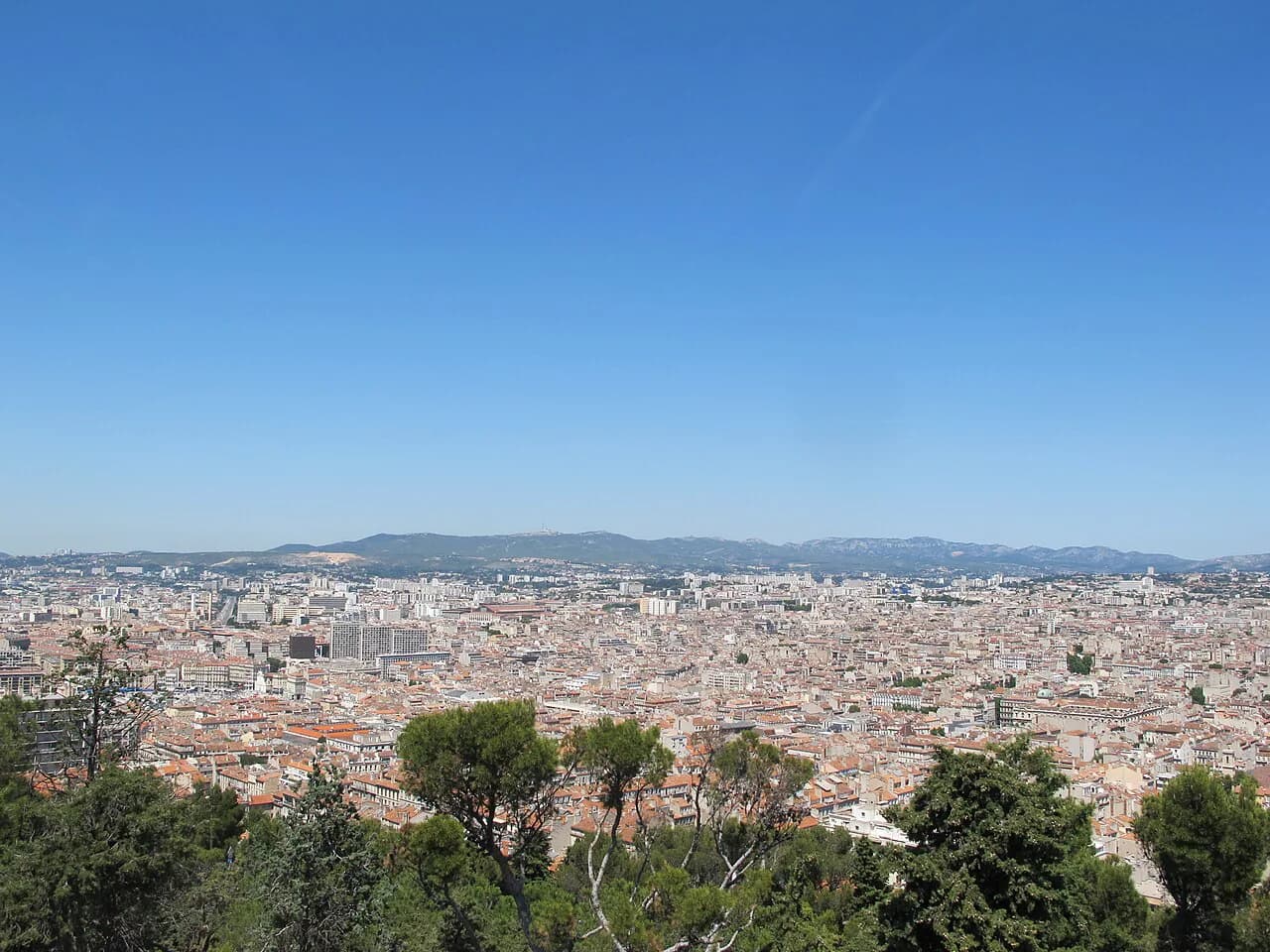
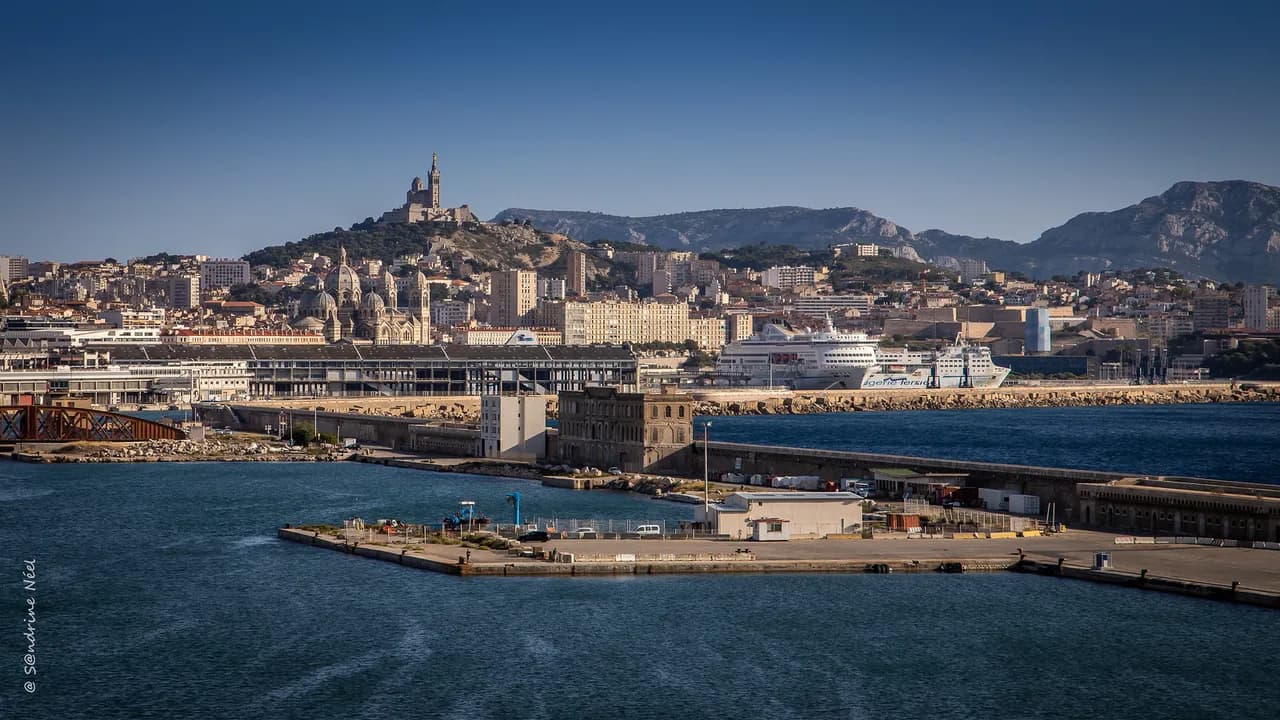
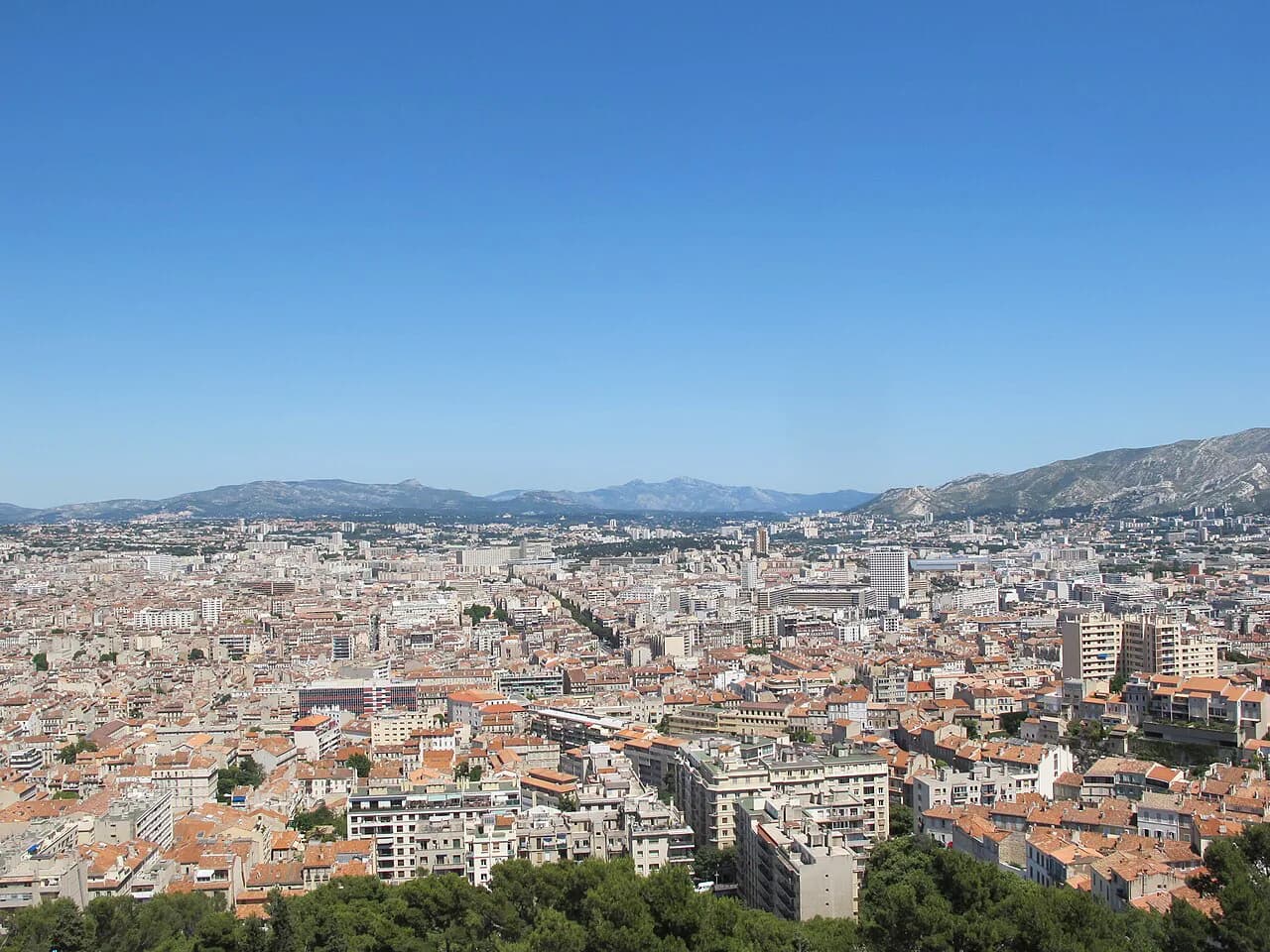
Notre-Dame de la Garde, known locally as La Bonne Mère, sits on a 161-metre cliff above the city, topped by a 60-metre bell tower and a monumental gilded Virgin, according to CosmopoliClan. It is a stiff climb on foot, and the reward is the esplanade, which offers the widest view in Marseille, from the port to the islands, with an orientation table to name what you are looking at.
Be honest about the effort. The walk up takes longer than the map suggests because of the gradients and the traffic, and the reward does not depend on reaching the summit on foot; a bus takes you most of the way. In October the climb is far more pleasant than in August, and the light on the city from the esplanade is at its best in the late afternoon.
The basilica itself mixes Roman and neo-Byzantine styles, with marble and mosaics inside and a crypt below, so allow time beyond the view. Combine it with the Abbaye Saint-Victor on the way back down, a much older church rebuilt in the 12th century, for a contrast in scale and atmosphere on the same stretch of the south side.
Marseille History Museum and the Jardin des Vestiges
The Marseille History Museum opened in 1983 beside the Vieux-Port and displays finds from the excavations of the ancient Greek port at the foot of the Lacydon inlet, including fragments of 6th-century BC shipwrecks. It runs Tuesday to Sunday, 09:30 to 18:00, at 2 Rue Henri Barbusse, reached by metro line 1 to Vieux-Port, and closes on 1 January, 1 May, 1 November, and 25 and 26 December.
The Jardin des Vestiges is the reason to choose this museum over a general collection: you can walk around the ancient walls and quays of the Greek port before or after the galleries. Inside, thirteen chronological sequences carry the story from prehistory to the modern city, with models, reconstructions and interactive displays that keep children occupied. A 3,500-square-metre exhibition space means it fills two hours comfortably.
Admission is charged, and the museum's own website is where you confirm the current rate and any concessions rather than relying on a guidebook printed earlier. Because it is closed on Monday, do not leave it to your last morning unless that morning is Tuesday or later. It is also the best single indoor option for an October downpour, since it sits a few minutes from the port.
The museum sits beside the Centre Bourse shopping centre, so a wet afternoon can combine the galleries with the shops without another journey. That adjacency is not elegant, but it is practical when the weather decides your day.
Palais Longchamp and Parc Longchamp
The Palais Longchamp was built where water from the Durance enters the city, a monument to the 19th-century engineering that ended Marseille's water shortage, and it now houses the Museum of Fine Arts and the Museum of Natural History. Parc Longchamp around it is listed as one of the Notable Gardens of France. In October the park is quiet and the walk between the two museums is part of the visit rather than a filler.
Getting there takes a metro ride or a long walk from the centre, so treat Longchamp as a half-day rather than a stop-off. The fountain facade alone justifies the trip, but the museums close on their own weekly day, so check both before choosing which to enter. If your time is tight, this is the sight to drop rather than squeeze, because the centre holds more than enough for two days.
Noailles, Cours Julien and a slower hour
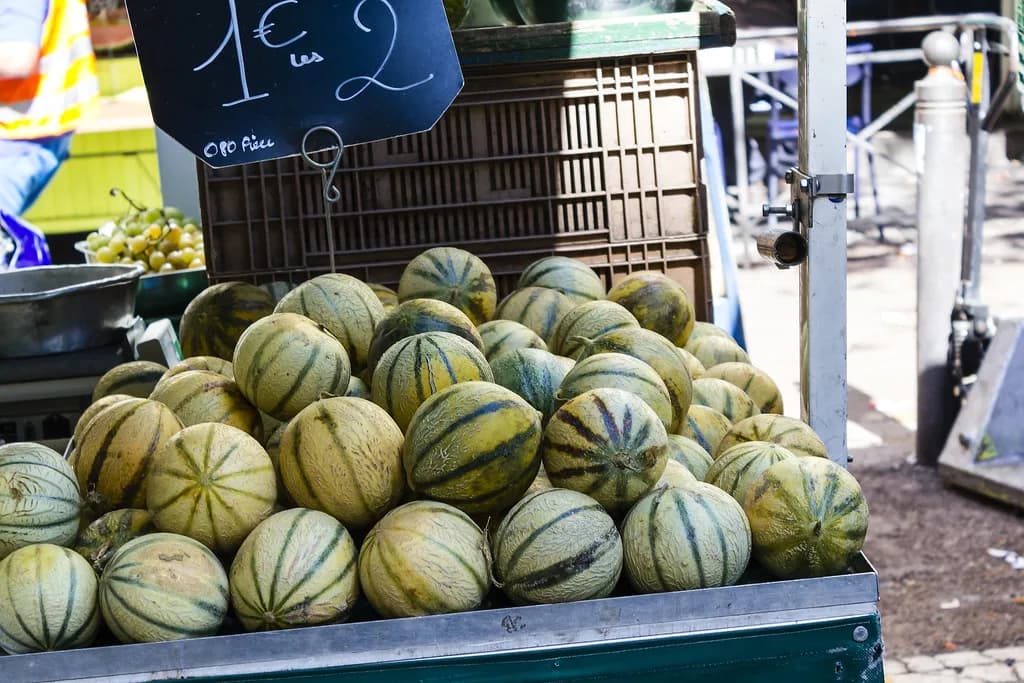
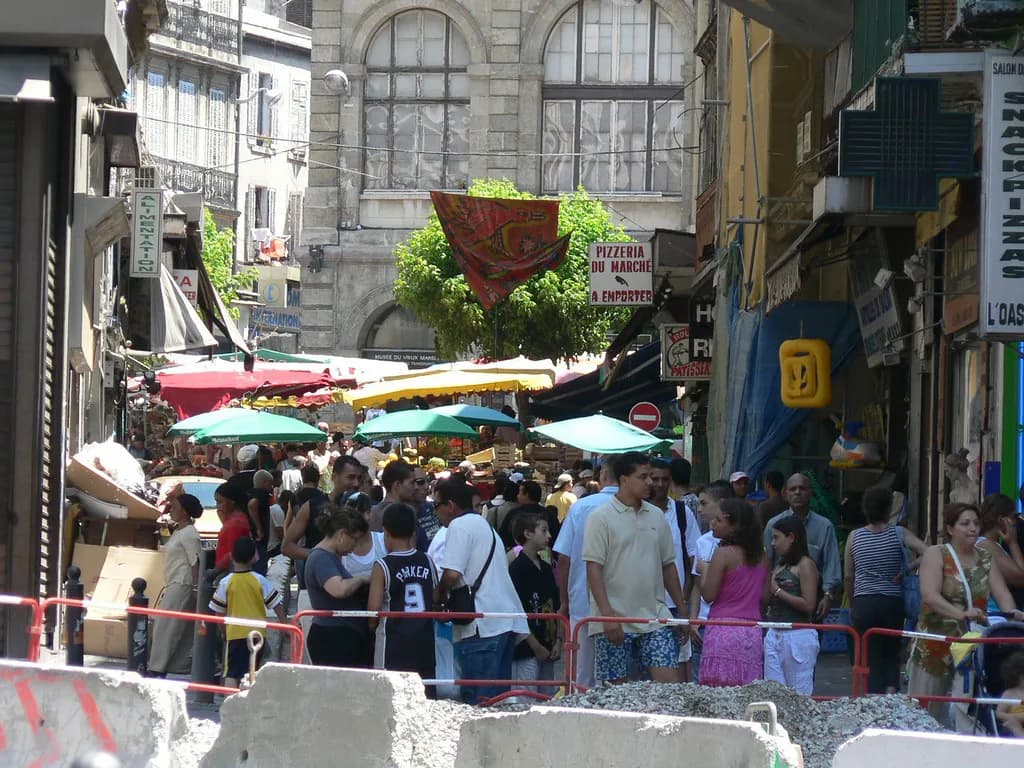
Noailles market runs daily along the Marché des Capucins and has a North African character, with produce and spices that set it apart from the port-side stalls. It sits at the lower end of the Canebière, which makes it a natural stop between the old port and the shopping streets. Like any street market, it is best in the morning before the produce goes over.
Cross to the other side of the street and you reach Cours Julien, a bohemian quarter of street art, vintage shops and bars with a relaxed, local feel. It is the right place to spend a slow hour in October when the light is going and you do not want another museum. Combine it with an evening meal nearby rather than treating it as a sight to tick off.
Boat trips to the Frioul islands and the Château d'If
When the weather holds, boats leave the port for the Frioul archipelago and the Château d'If, the 16th-century fortress that became a prison and later a setting for The Count of Monte Cristo. The crossing is short, and the fortress itself is the draw for most people, though the island paths give you a coastal walk and views back to the city.
The Calanques, the rocky inlets between Marseille and Cassis, are a separate outing, and the most famous are crowded even outside high season. Boat trips show them from the water only, so if you want to be among them you need a hike, which is a full day and weather-dependent in October. My advice for a short break is to pick either the islands or the Calanques, not both, and only once the forecast looks settled.
Boat schedules and fares change with the season, so buy on the day at the harbour kiosks rather than pre-booking a crossing weeks out. Harbour sailings are the first thing to be cancelled when the mistral blows, which is another argument for keeping the boat trip late in the itinerary.
What October costs and the trade-offs
October generally means off-peak prices on travel and easier availability than the summer months, though the city's museums and attractions do not discount their tickets in step. Budget for a paid museum or two rather than a pass, and check current admission on each museum's site, since the cheap combination deals are rarely worth it for a two-day stay. The main saving is not on tickets but on flights, trains and rooms.
The costs of coming in October are daylight and weather risk. You lose the long evenings, some boat trips and a reliable dry afternoon, and you gain space at the basilica, the MuCEM walkways and the market. For a weekend built on walking and one museum, that is a good exchange.
If a wet day arrives, the History Museum and MuCEM's indoor spaces absorb it, and the covered parts of Le Panier keep you moving. If it stays dry, the esplanade at Notre-Dame de la Garde and the port at sunrise are the two hours worth setting an alarm for.
Sunday and Monday in Marseille: plan around closures
The Marseille History Museum closes on Monday, which reshapes any short break that starts on a Sunday night: make Monday your port, Le Panier and basilica day and keep the museum for Tuesday morning. MuCEM's Tuesday closure, if confirmed, points the same way, so a Monday-to-Wednesday trip needs its museum day on Tuesday and its harbour-mouth day on Monday.
Outdoor sights do not observe museum closing days, so the basilica, the Jardin des Vestiges exterior, the port and Le Panier fill a Monday without difficulty. The catch is that a wet Monday removes your obvious indoor anchor, since the History Museum is closed, so keep an eye on the forecast and move the outdoor day if rain is forecast for Tuesday instead.
When to come back: a quick look at the other seasons
If you want heat and sea swimming, come in high summer and accept the crowds and the closed-in feeling of the old town at midday. If you want the city at its most comfortable for walking, spring and autumn both deliver, with spring bringing the markets back to life. Winter is the quietest and cheapest, and you trade long outdoor days for short ones and a lot of museum time.
The honest recommendation for a first short break is May, June or October, when the walks work, the terraces are open and the museums are not heaving. October has the added advantage of arriving after the summer rush without the cold that sets in by December.
Plan Your October Weekend
Build the weekend around two anchors: a morning at the Quai des Belges fish market and one full museum visit at the Marseille History Museum on a day it opens, which is Tuesday to Sunday, from 09:30 to 18:00. Fill the rest with the climb through Le Panier, the esplanade at Notre-Dame de la Garde and the free outdoor spaces at MuCEM, and hold a boat trip as an optional third-day extra.
Reserve the exhibitions, restaurants and any boat crossing once you have seen the forecast, and check the two big closure days before you fix dates. If you are still deciding whether the city suits you, weigh it against a Riviera break rather than against Paris; Cannes in October is a fair comparison for a Côte d'Azur shoulder-season trip, and read up on the neighbourhoods before booking.
Explore more Marseille guides
Frequently Asked Questions
What is Marseille like in October?
October is shoulder season, with mild weather suited to walking and significantly thinner crowds than in summer. Daylight is shorter and rain is possible, so plan outdoor sights for the morning and keep a museum such as the Marseille History Museum in reserve for a wet afternoon.
How many days do you need in Marseille?
Two full days cover the Vieux-Port, Le Panier, the MuCEM and Fort Saint-Jean, and the basilica. A third day lets you add either the Frioul islands and the Château d'If or the Palais Longchamp and Parc Longchamp without rushing.
When is the Marseille History Museum open?
It opens Tuesday to Sunday, from 09:30 to 18:00, at 2 Rue Henri Barbusse near the Vieux-Port, and closes on 1 January, 1 May, 1 November, and 25 and 26 December. Because Monday is a closing day, put the museum on Tuesday if your trip starts at the weekend.
Is MuCEM closed on Tuesdays?
The site's outdoor areas, including the Mediterranean garden, are open to the public without charge, and MuCEM has been reported as closed on Tuesdays. Confirm the current weekly closing day on the museum's own site before you build a day around it.
Can you swim in Marseille in October?
Sea temperatures drop through the autumn and most visitors treat October as walking weather rather than swimming weather. If swimming matters to you, check a current sea-temperature source close to your dates rather than relying on general climate descriptions.
Is Marseille busy in October?
October is quieter than the summer months, so the basilica esplanade and the MuCEM walkways are easier to enjoy. Cruise ships moor at the Port de Joliette rather than the Vieux-Port, so coach parties can still appear at the harbour mouth in bursts.
Sources
Notes for French city breaks
Optional updates to our guides.
You might also like
Continue reading
More guides you'll find useful