
Palais Longchamp: Marseille's Water Palace in the 4th Arrondissement
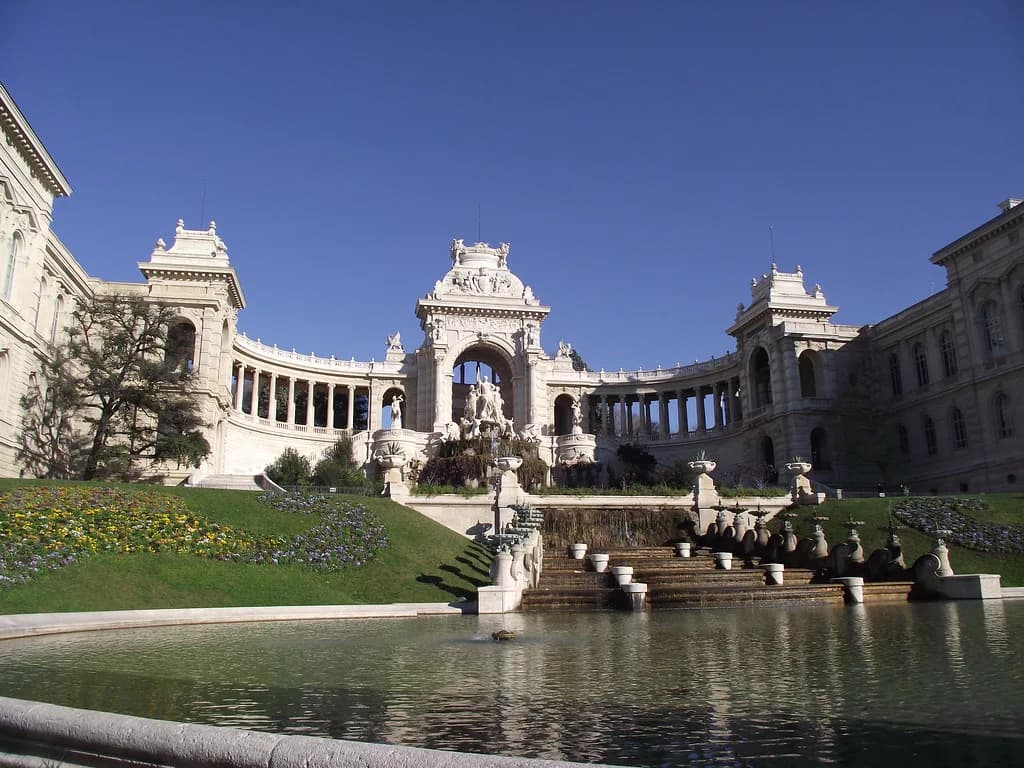
The Palais Longchamp is a 19th-century neoclassical water monument in Marseille's 4th arrondissement, built to mark the arrival of Durance water in the city, and inaugurated in 1869. It is not a royal residence but a piece of civic engineering dressed as a palace, and that explains the cascades and the water theme running through the facade. Treat it as a half-day stop with the park and the two museums inside, not a headline sight that will fill a whole day.
What the Palais Longchamp Is
Marseille suffered from a water shortage in the 19th century, and a network of tunnels and aqueducts brought fresh water from the Durance river to the city. The Palais Longchamp was built at the point where that water entered Marseille, as a monument to the engineering that solved the problem, and it was inaugurated in 1869. The building now houses the Musée des Beaux-Arts and the Muséum d'Histoire Naturelle, so the same site combines a civic monument, a park and two museums.
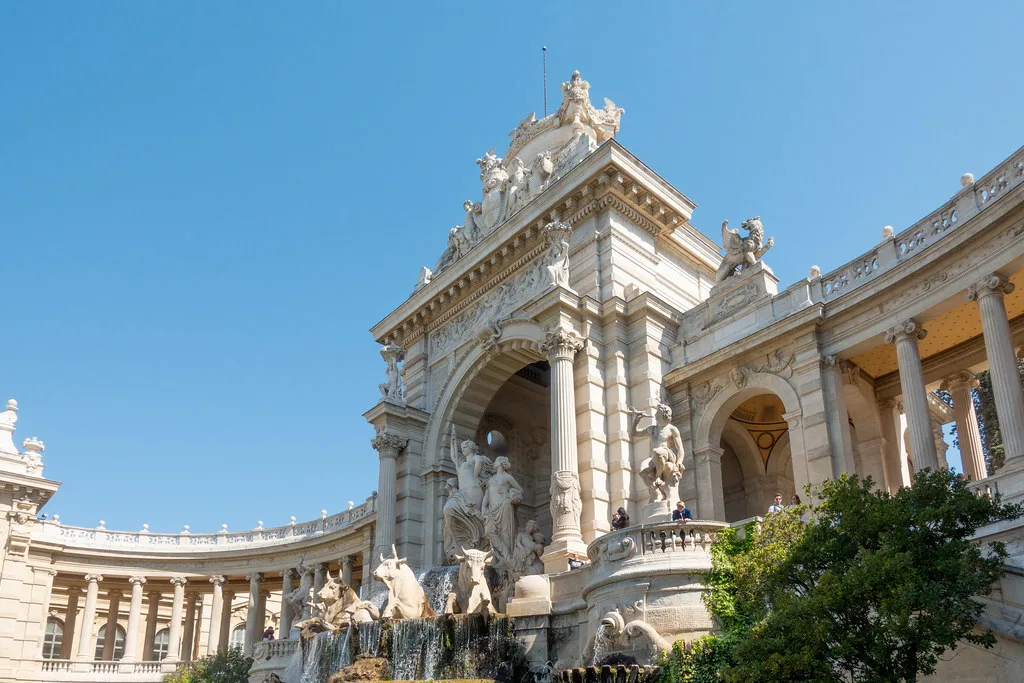
The architecture is neoclassical and dates from the second half of the 19th century, which puts it in the same era as much of the city's grandest public building work. Reading the facade as a celebration of water rather than as a royal palace makes the visit more interesting, because the fountains and the decorative scheme are the point. Allow time to look up at the building before heading into the park or the museums.
Where It Sits in Marseille
The Palais Longchamp occupies the 4th arrondissement, north-east of the Vieux-Port, and the Parc Longchamp is the green space wrapped around it. That position makes it a natural add-on to a day built around the old harbour rather than a stand-alone trip across town. If you are planning a weekend, the Marseille guides on this site cover the waterfront sights, while this page sticks to the one monument.
The park itself has been recognised as a Notable Garden by the French Ministry of Culture, which is a useful signal that the grounds are worth more than a quick pass through. Combine the palace forecourt with a loop of the park and you get a proper look at the site without needing a museum ticket. The layout suits a morning or an afternoon, not a full day.
How to Reach the Palais Longchamp
The palace sits far enough from the Vieux-Port that walking the whole way is a commitment, and public transport is the sensible way to close the gap. Marseille has a metro network that serves the centre, and the city is compact enough that a short ride plus a walk gets you to most central sights. Work out your route from wherever you are staying and treat the journey as part of the plan rather than an afterthought.
If you are spending the day around the harbour first, the Vieux-Port Marseille is the obvious anchor, with boats, cafés and the fish market along the Quai des Belges. From there, head north-east to the 4th arrondissement for the palace and park. Doing the waterfront first and the palace second keeps the day in a logical order.
The Facade and the Water Feature
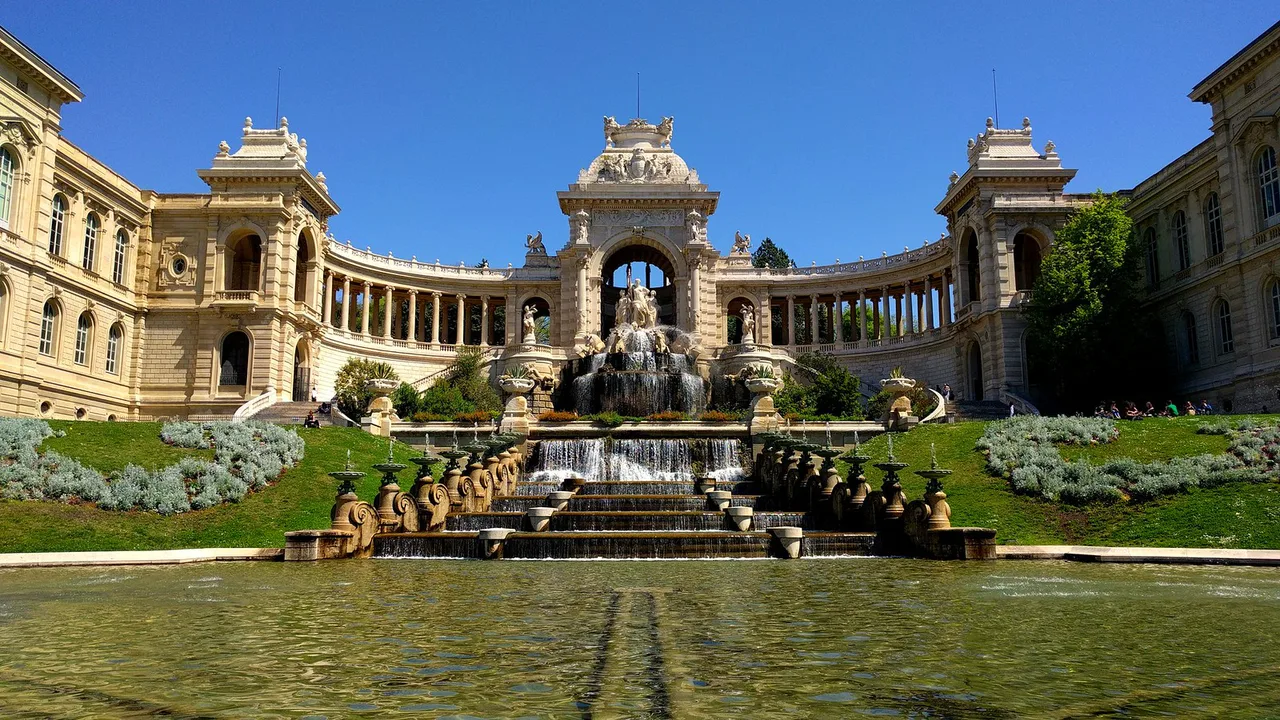
From the forecourt, the palace reads as a monumental composition of stone, sculpture and cascading water, and it is the reason most people come. The fountains and the decorative programme are the main event, so give them ten or fifteen minutes before you move on. Photographs work best from the open ground in front of the building, where you can take in the full width of the facade.
The building's scale is easy to underestimate from a map, and the combination of palace, park and museums means the site spreads out more than a single address suggests. Wear shoes you can walk in and plan for standing around rather than sitting. A short visit to the facade alone is worthwhile if your time in Marseille is tight.
Inside the Palace: Two Museums
The Musée des Beaux-Arts and the Muséum d'Histoire Naturelle both sit inside the Palais Longchamp, which means one address covers art and natural history. Choose one if you are short on time, because doing both properly takes most of an afternoon. The park outside is the natural break between them.
Marseille's museums often close on a set day of the week, so it is worth checking the day before you build your plan around either collection. The Marseille History Museum, for example, opens Tuesday to Sunday and closes on Mondays as well as on 1 January, 1 May, 1 November, 25 and 26 December. Follow the same habit here and confirm the museums' days and ticket prices on the venue's own site before you travel.
Parc Longchamp and the Gardens
Parc Longchamp wraps around the palace and gives the site its breathing space, with lawns, paths and shade that make it a good place to slow down after the museums. The Notable Garden designation reflects the quality of the landscaping rather than its size. Bring something to eat if you want a picnic, since the park is the natural lunch stop in this part of the city.
The gardens are also the reason the palace works as a low-cost stop: you can enjoy the setting without committing to a museum ticket. If you are travelling with children, the open space and the water features make the park the easier half of the visit. Budget your energy for the walk back into the centre at the end.
How Long to Allow
For a quick look at the facade and a circuit of the park, allow around an hour to ninety minutes. That covers the main water feature, a walk through the gardens and time to take photographs without rushing. It is a realistic slot for a weekend when the Vieux-Port and Le Panier are also on the list.
If you add one museum, plan on half a day; if you want both the art and natural history collections plus the park, give the site a full afternoon. The trade-off is straightforward: the palace and park are the distinctive part, and the museums are a bonus if you have the time. On a two-day Marseille weekend, the palace fits best as a morning or an afternoon block rather than a whole day.
Practical Notes Before You Go
Ticket prices, opening hours and closure days for the Musée des Beaux-Arts and the Muséum d'Histoire Naturelle are set by the venues themselves, so check the official Marseille tourism pages before you travel. Confirm which day of the week your visit falls on, because a museum closure can turn a planned half-day into a park-only visit. The park and the forecourt remain the parts you can enjoy without a booking.
The surrounding area is residential and relaxed rather than touristy, so do not expect the café-and-boutique density of the Vieux-Port. Eat before you arrive or bring a picnic for the park, and keep the palace as a focused stop rather than a place to linger over lunch. That approach keeps the visit efficient and leaves the rest of the day free.
Nearby in the Same Trip
The Vieux-Port, Le Panier and Notre-Dame de la Garde form the core of a Marseille weekend, and all three sit south of the Palais Longchamp. Notre-Dame de la Garde, Marseille tops a 161-metre cliff and gives the widest view over the city and the sea, which makes it a natural counterpoint to the flat, formal gardens at Longchamp. Le Panier, the old town on the hill above the harbour, is the place to wander afterwards.
For a sense of the city's longer history, the Marseille History Museum near the Vieux-Port covers the Greek foundation and the ancient port, and the Château d'If out on its island adds the offshore chapter. Pairing the water palace with one of these gives a balanced weekend of civic engineering, old port and sea.
Plan Your Visit
The Palais Longchamp earns its place on a Marseille weekend as a half-day stop: the 1869 water monument and the park first, one museum second if time allows. Start from the Vieux-Port, head north-east to the 4th arrondissement, and confirm the museums' opening days and ticket prices before you set out. That way a closed gallery never catches you out and you still get the best of the site.
Explore more Marseille guides
Frequently Asked Questions
What is the Palais Longchamp in Marseille?
It is a 19th-century neoclassical monument in Marseille's 4th arrondissement, inaugurated in 1869 to celebrate water arriving in the city from the Durance river. The building now houses the Musée des Beaux-Arts and the Muséum d'Histoire Naturelle, and it sits inside the Parc Longchamp.
Is the Palais Longchamp free to visit?
The palace facade and the park are part of the public setting, while the two museums inside have their own admission arrangements. Check the venues' current prices on the official Marseille tourism pages before you travel, because those details change.
How do I get to the Palais Longchamp?
The palace is in the 4th arrondissement, north-east of the Vieux-Port. Marseille's metro serves the city centre, so the practical approach is a metro ride followed by a short walk, or a longer walk from the harbour if you prefer to see the city on foot.
How long should I spend at the Palais Longchamp?
An hour to ninety minutes covers the facade, the water feature and a circuit of the park. Add one museum and you are into half a day, while both museums plus the park justify a full afternoon.
What museums are inside the Palais Longchamp?
The Musée des Beaux-Arts and the Muséum d'Histoire Naturelle both sit within the building. Opening days and ticket prices are set by the venues, so confirm them before you plan a visit around either collection.
When was the Palais Longchamp built?
It was inaugurated in 1869, in the second half of the 19th century. It was built to mark the arrival of Durance water in Marseille, which is why the fountains and water imagery dominate the design.