
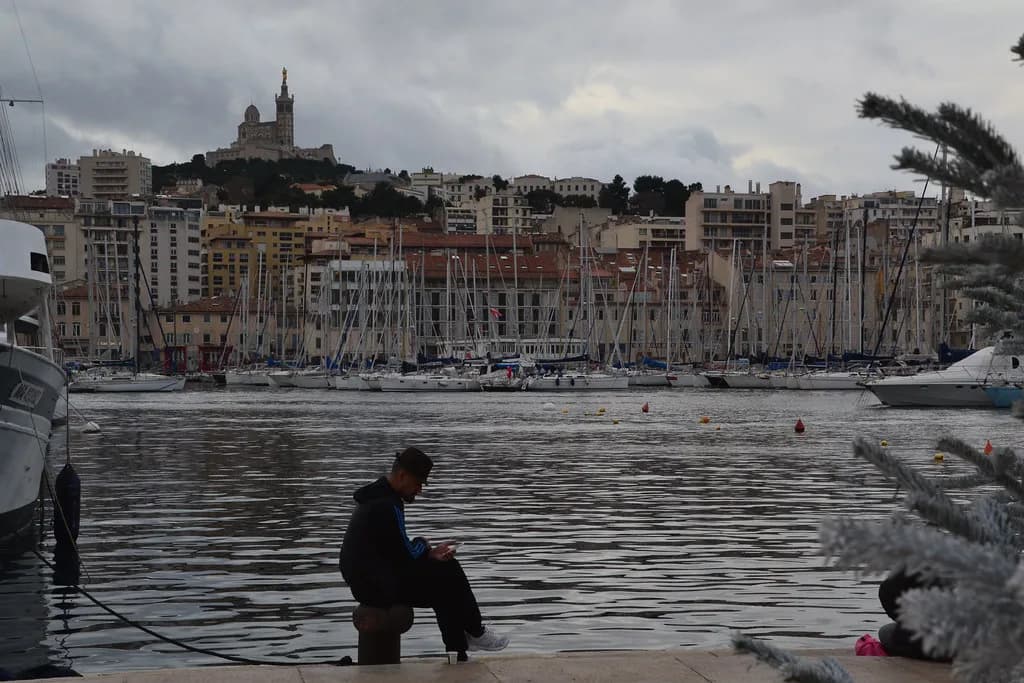
Vieux-Port Marseille: A Visitor's Guide to the Old Port
The Vieux-Port is Marseille's historic harbour and the obvious place to begin a weekend in the city. It is free to walk around, and the quays double as a transport hub, a market, a meeting point and the departure point for boat trips. Allow an hour for the port itself and rather longer once you add the sights that crowd its banks.
This guide covers one place: what the port is, how the two banks differ, what leaves from the quays and what you can reach on foot without crossing town. It does not attempt a full city itinerary, and it deliberately leaves out hours, prices and departure times, which belong on the individual tour companies' own pages.
What the Vieux-Port is and why it anchors a Marseille weekend
According to legend, Marseille began on these shores: Greek colonists from Phocaea founded Massalia on the calanque of the Lacydon around 600 BC, and the story of Protis and Gyptis has the local king's daughter hand the ceremonial cup to a Greek newcomer rather than a rival suitor. The tale is tradition rather than documented fact, but it explains why the harbour is treated as the city's birthplace.
The harbour kept that central role for centuries, ringed by ramparts that squeezed the city into a small space until the walls came down in the seventeenth century. By the 1840s the old basin could no longer hold Marseille's maritime traffic, and the government ordered the new Joliette docks in 1844. The Vieux-Port lost its commercial primacy and reinvented itself as the city's social and cultural centre.
That shift is what makes the port useful to a short break: it is no longer an industrial waterfront but a promenade lined with cafés and bars on both banks, with the city's highest concentration of restaurants around it. Treat it as your orientation point and you can build a day outwards from the quays.
Where it sits: the Lacydon calanque, between the Panier and the city centre
The port occupies the long inlet of the Lacydon, running inland from the sea to the foot of the Canebière. The north bank leads towards Le Panier, the old quarter on the hill above the water; the south bank pushes towards the MuCEM and Fort Saint-Jean. Knowing which side you are on saves a lot of backtracking, much as it does at the Vieux-Port de Bastia.
At the head of the basin, the quays meet the bottom of the Canebière, the broad avenue that cuts through the centre. Two of the city's oldest buildings, the Hôtel de Cabre and the Maison Diamantée, stand near this end of the port and are worth a look as you pass.
How to get there and how the quays are laid out
The port is central enough to reach on foot from much of the city, and the quays were made semi-pedestrian in 2012, when Marseille prepared for its year as European Capital of Culture. The transformation of the harbour was completed in 2020, and pedestrianisation has since extended along the lower Canebière to the cours Saint-Louis. That means you cross fewer roads than the old layout allowed, though you still share the quays with delivery vehicles and bikes.
Walk the full circuit of both banks to understand the geography, then commit to one side for the rest of your visit. The north quay faces the sunset and the boats; the south quay points you towards the museums. Neither is long: a complete loop at an unhurried pace takes well under an hour.
The morning fish market and the boats that give the port its working character
The traditional fish market and the fishermen's boats keep the harbour's working identity alive, and the market is a morning affair. Visitors describe the old port as a marina with a fish market in the morning and a flower market alongside the stalls. Turn up early rather than late in the day if the market is the reason for your visit.
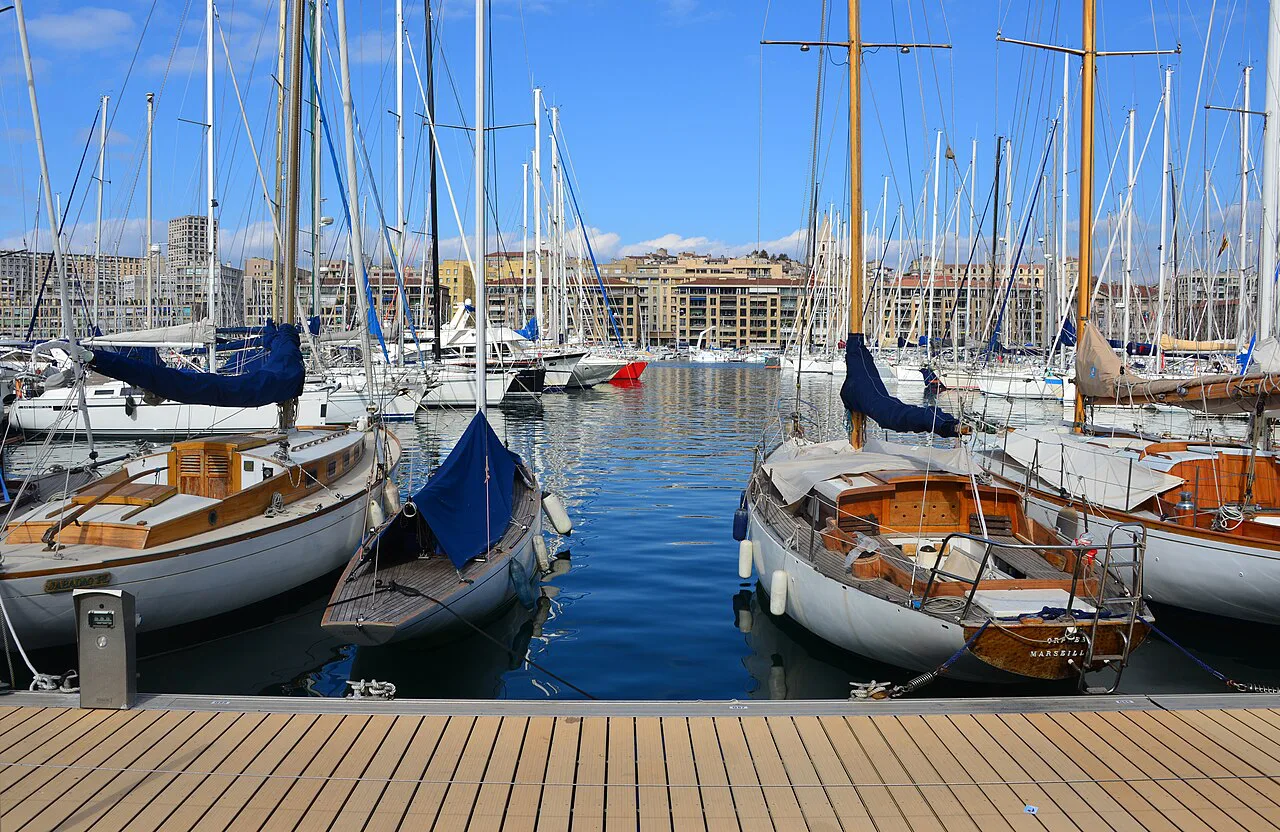
The rest of the day the basin is a forest of masts, with boats coming and going and the quays busy with people simply sitting and watching. The bars on both banks fill on evenings when Olympique de Marseille play, with supporters gathering at the port to celebrate wins. If you want quiet, go in the morning; if you want atmosphere, go after dark.

The ombrière canopy and the mirror effect
The ombrière, a vast mirrored canopy, has become part of the port's landscape since the harbour works finished in 2020. Both residents and visitors use it for photographs, and the reflective underside throws light and reflections back across the quay. It is the clearest sign that the Vieux-Port you see today is a recent rebuild of an old working harbour.
The canopy gives shade but not a full escape from the sun, and the quays are exposed for most of their length. In summer, plan your walk for the morning or the evening and keep the middle of the day for a museum or a long lunch.
Boat trips, the little train and excursions that leave from the port
The Vieux-Port is where the ticket desks and departure points for many excursions sit: boat trips to the islands and the calanques, boat hire, the little train that runs through the city, and even segway tours. Book on the day at the quay or check the tour company's own page for departure times and prices, which change with the season.
Tickets for these trips can be bought in advance through tour platforms, which list what each excursion covers and where it leaves from. Read the departure point carefully: several operators use different quays around the basin, and the walk between them is short but easy to get wrong when you are hurrying.
The boat to the Château d'If, the island fortress in the bay, is a natural pairing with a morning at the port. It is a separate visit with its own ticket and timetable, and it deserves at least half a day rather than an hour squeezed between other stops.
Around the port on foot: Fort Saint-Jean, the MuCEM, La Major and Le Panier
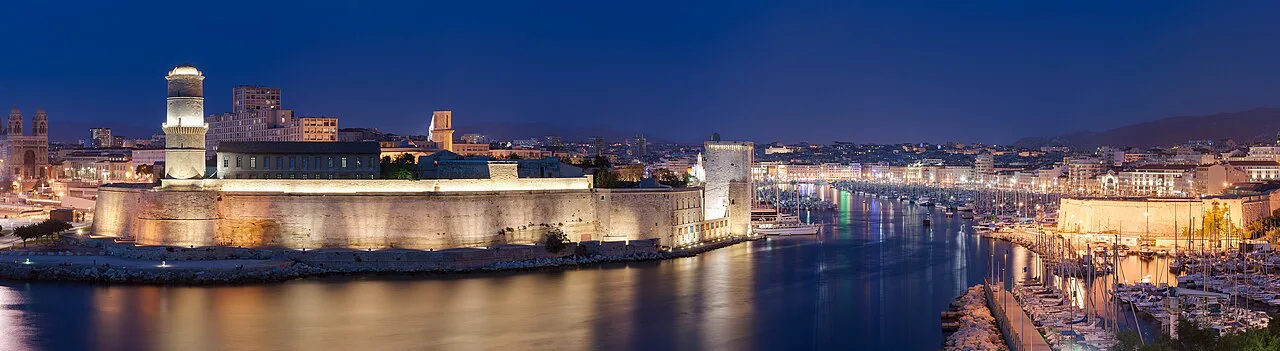
Walk to the south end of the port and you reach Fort Saint-Jean, the church of Saint-Ferréol les Augustins and the Cathédrale de La Major, all within a few minutes of the water. The MuCEM, the museum of European and Mediterranean civilisations, sits beside Fort Saint-Jean on the seafront. These four make a natural half-day circuit from the quays.
The Cathédrale de la Major is a short walk along the quay and worth a pause for its size and its striped stonework, even if you do not go inside. Beyond it, the path continues towards the sea and the museum quarter.
Cross to the north bank instead and you climb into Le Panier, the oldest quarter, with narrow streets above the port. The walk up is steep in places but short, and the reward is a different view back down over the boats.
For a wider view, Notre-Dame de la Garde sits on the hill above the city and is visible from much of the port. Reaching it takes a climb or a bus ride, so treat it as a separate outing rather than a quick detour from the quay.
If you have time for one more stop inland, the Palais Longchamp, built to celebrate the arrival of Durance water in the city in 1849, is a short metro ride from the port rather than a walk. It works best as part of a longer stay.
The sardine story and Marseille's founding legend, briefly
The famous claim that a sardine blocked the Vieux-Port is a galéjade, a tall tale, but it rests on a real episode. In 1779, during war with the British, the frigate La Sartine was carrying released French prisoners under a white flag when it was struck by British cannon fire, and on 17 May 1780 it ran aground at the entrance to the harbour. The ship's size and masts temporarily paralysed port traffic, and Marseille's self-deprecating humour did the rest.
It is a good story to carry with you as you walk the quay, and a reminder that this harbour has been a working port far longer than it has been a visitor attraction.

How long to allow and how to slot the Vieux-Port into a two- or three-day trip
Give the port itself an hour: a loop of both quays, the fish market if you are there in the morning, and a stop under the ombrière. Add two to three hours for the museum quarter at the south end, and another half-day if you take a boat out to the islands.
On a two-day break, use the first morning for the port and Le Panier, then spend the afternoon at the MuCEM and Fort Saint-Jean. Keep the second day for Notre-Dame de la Garde or a boat trip, depending on the weather. On a three-day visit, a morning on the water and an afternoon inland at the Palais Longchamp fit comfortably around the port.
Practical trade-offs: crowds, heat and where to pause for a drink
The port is the busiest spot in Marseille and the quays are broad but exposed, with little natural shade beyond the ombrière. The cafés and restaurants along both banks are the obvious place to pause, and they line the waterfront in greater concentration than anywhere else in the city.
Expect the fish market to be gone by the afternoon and the quays to fill as the day goes on, so an early start gives you both the market and a quieter walk. In high summer, the heat off the stone is real, and a hat and water matter more than a packed schedule.
Plan Your Visit
The Vieux-Port works best as the fixed point of a Marseille weekend: start there in the morning, walk one bank, then commit to the museum quarter or Le Panier for the rest of the day. It costs nothing to wander, and everything else in the centre is within reach.
Check operator pages for boat timetables and museum sites for opening days before you set out, since these change with the season.
Explore more Marseille guides
Frequently Asked Questions
Where is the Vieux-Port in Marseille?
The Vieux-Port occupies the Lacydon inlet at the head of the old harbour, running inland to the foot of the Canebière. Le Panier is on the north bank, while the MuCEM and Fort Saint-Jean are at the south end of the basin.
What can you see at the Vieux-Port?
The morning fish market, the fishermen's boats, the mirrored ombrière canopy and the boat trip ticket desks are all on the quays. Within a few minutes' walk are Fort Saint-Jean, the MuCEM, the Cathédrale de la Major and the streets of Le Panier.
Is the Vieux-Port free to visit?
Walking the quays and the market costs nothing. Boat trips, the little train and entry to the nearby museums are separate tickets, and prices vary by operator and season, so check current details before booking.
How long do you need at the Old Port of Marseille?
An hour covers a loop of both banks, the market in the morning and a stop under the ombrière. Add two to three hours for the museum quarter and half a day if you take a boat to the islands.
What is nearby the Vieux-Port?
Fort Saint-Jean and the MuCEM sit at the south end of the port, the Cathédrale de la Major is a short walk along the quay, and Le Panier climbs the hill on the north bank. Notre-Dame de la Garde is further up and needs a bus or a climb.
Why is the Vieux-Port famous?
It is the site where Greek colonists are said to have founded Massalia around 600 BC, and it was Marseille's commercial harbour for centuries. The story of the sardine that blocked the port is a tall tale based on the 1780 grounding of the frigate La Sartine.