
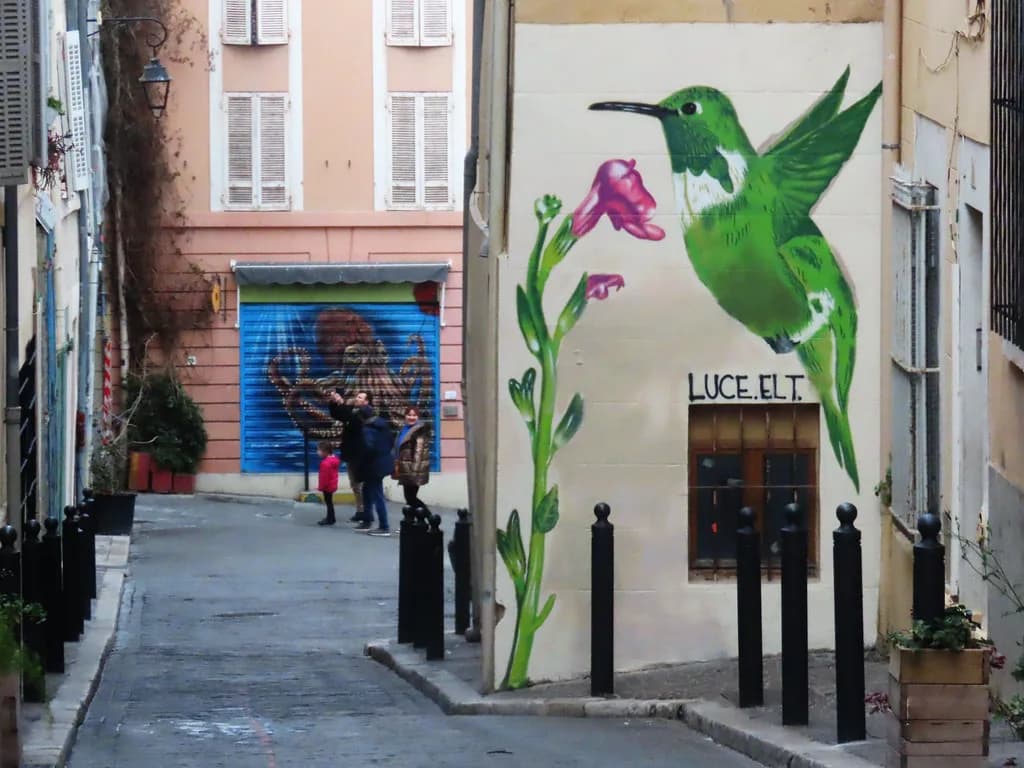
Le Panier, Marseille: A Guide to the City's Oldest District
Le Panier is the oldest district of Marseille, the quarter where the ancient city of Massalia began, set on a hill a stone's throw from the Vieux-Port. Its draw is the texture rather than any single sight: tall narrow houses, steep alleys, three small squares and a cluster of cultural venues on its western edge. Plan half a day for the lanes and squares, or a full day if you add the Vieille Charité and the Mucem.
The district is compact enough to cover on foot, but it climbs, and that shapes how you should route a visit. Walk it downhill from the top squares towards the port and the museums and you will see more with less effort.
What Le Panier is and why it's worth your time
This is the old Marseille: cramped medieval street lines, four- and five-storey houses packed shoulder to shoulder, and a village feel that sits oddly beside the modern city. The district takes its name from an old inn, Le Logis du Panier, which gave its name to the street and then to the whole quarter. It is a place to wander slowly rather than tick off sights.
The trade-off is real. Le Panier is one of the most visited parts of Marseille, now known for craft studios, small bistros and concept stores, and residents have complained about gentrification and the multiplication of tourist shops. You come for atmosphere, colour and a handful of strong sights, not for peace and quiet or a museum-heavy day indoors.
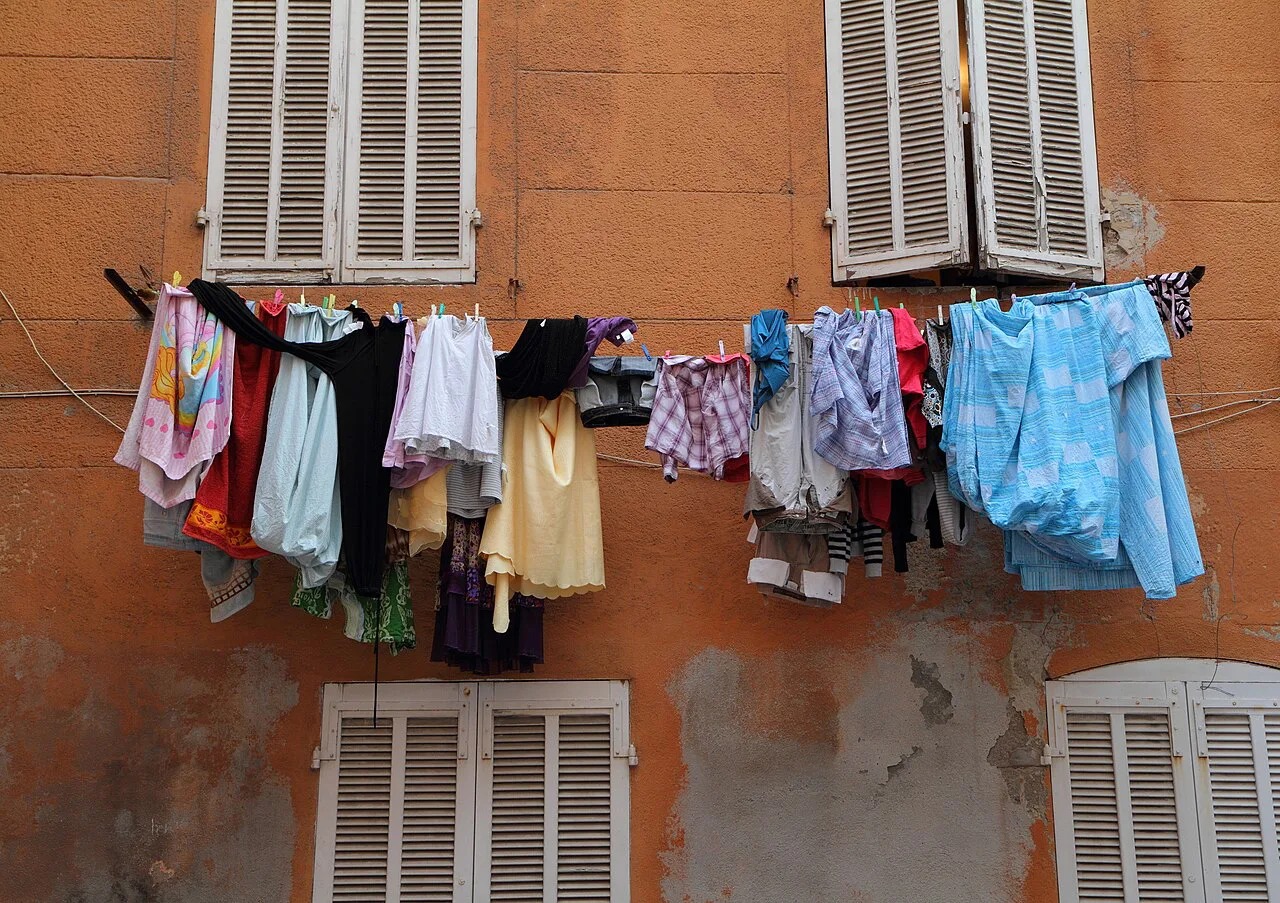
Come with time to look up: coloured shutters and flowered facades do much of the work here, and street art has taken hold on the walls. The official tourist board calls the district an open-air museum, which is a fair description of a quarter whose interest is spread across its lanes.
Where it sits: between the Vieux-Port and La Major
Le Panier occupies the hill immediately north of the Vieux-Port, bounded roughly by the quays to the south and the Cathédrale de La Major to the northwest. Everything between those points is walkable within minutes, which is why the whole quarter fits into a half-day.
That position makes it easy to combine with neighbours: the port front for a ferry or a drink, La Joliette and the J4 esplanade to the west for the Mucem and the Grotte Cosquer. Treat Le Panier as the middle chapter of a day that starts on the water and ends among the docks.
How to get there: Passage Lorette, Montée des Accoules and Place Sadi Carnot
The classic approach is from Rue de la République, the broad modern artery cut through the old quarter, where the Passage Lorette carries you between tall buildings and flips you from city to village in a few steps. From the Vieux-Port side, the Montée des Accoules is one of the main entrances, climbing steeply into the lanes.
On public transport, the tram stops at Place Sadi Carnot give the most convenient arrival for this approach, and trams T2 and T3 serve the stop. Buses 60 and 49 connect the district with the centre and with Notre-Dame de la Garde.
Coming from further out, the Marseille Neighborhoods: 4 Area Guides page puts Le Panier in context with the city's other quarters, which helps you sequence a short break without criss-crossing town.
The layout: three hills, steep lanes and the phrase 'monter au Panier'
The district grew on three mounds, and the locals speak of going up to the Panier and down to the port, which tells you what to expect underfoot. Houses are four to five storeys high and the streets are narrow, long and often on a gradient. Wheelchair users and anyone with a pushchair should plan carefully, and the Petit Train is the obvious low-effort alternative.
A sensible route runs from the high squares down through the lanes to the port and museums, so the climbing is done in short bursts rather than at the end of a long day. The tourist board's English page lays out the district's three hills clearly enough to sketch this on a map.
Place de Lenche: the district's historic marketplace and meeting point
Place de Lenche sits at the bottom of the district on the site of the ancient Greek agora, named after a Corsican family whose mansion stood here. It has long worked as a meeting place and market square, and today it is ringed with restaurants and bars, with the historic Théâtre de Lenche on the square.
It also delivers one of the district's signature views, looking out to Notre-Dame de la Garde on its hill above the city. Use it as a breathing stop before or after the climb rather than a destination in itself.
Place des Pistoles and the Vieille Charité
Place des Pistoles is a paved square shaded by plane trees and surrounded by restaurant terraces, an easy lunch stop in the heart of the quarter. The Vieille Charité beside it is the district's architectural centrepiece: a 17th-century building designed by Pierre Puget as an almshouse for the city's poor, now home to the archaeology museum and a contemporary art museum.
Treat the Vieille Charité as a short architectural visit in its own right, with the chapel and courtyard as the highlight, and check the museums' current opening days and ticket prices on their own site before you build the day around them.
Place des Moulins and its last remaining mill
Place des Moulins is the highest and most hidden of the three squares, named for the windmills that once stood on this summit; only one mill remains in the area. It is a quiet spot with plane trees and a fountain, where residents come to sit rather than sightsee.
Start here if you want the downhill version of the district: from the top square you can drop through the lanes to Place des Pistoles and on to the port without ever facing a long climb.
Rue du Panier, Rue du Petit-Puits and the Maison de Pierre Puget
Rue du Panier is one of the district's main lanes, running from the Place des Treize Cantons up towards Place des Moulins and lined with shops and restaurants. Rue du Petit-Puits runs across the hill and holds the house where the architect Pierre Puget was born, a modest plaque-and-facade stop rather than a museum.
Rue du Refuge is the other rewarding lane, crossing the district's height and opening onto the large Place du Refuge, laid out where a convent once stood, before running down to Place des Pistoles and the Vieille Charité.
Street art and craft studios along the lanes
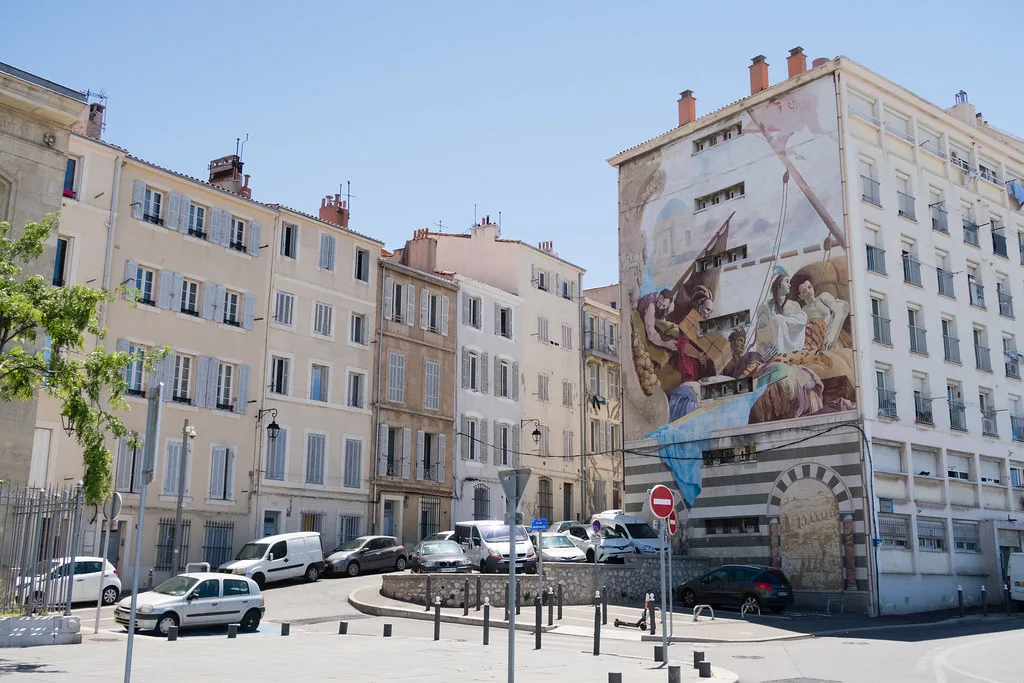
Le Panier has become a magnet for street artists, and frescos appear on walls as you walk without any fixed route. The same lanes hold craft studios, antique dealers and concept stores, many of them trading on a made-in-Marseille identity that runs from soap to food.
Expect a mix: genuine workshops sit alongside souvenir shops aimed squarely at visitors, and that blend is the honest picture of the quarter today. If you want to browse, keep the walking light and let the lanes lead you rather than chasing a list.
The Mucem, Fort Saint-Jean and the Grotte Cosquer at the J4 esplanade
At the district's seaward edge, the Mucem opened for Marseille's year as European Capital of Culture in 2013 and combines a modern museum building with the restored Fort Saint-Jean, whose walkways and Mediterranean gardens are free to wander. Late afternoon is the best light for the fort's stone and the concrete lattice on the museum roof.
On the J4 esplanade, the Grotte Cosquer is a full-scale reconstruction of the painted cave in the Calanques, covering some 1,750 square metres, and it opens from Tuesday to Sunday. Book and check times directly, since they vary by season.
The concrete footbridge from near the Église Saint-Laurent links the district to Fort Saint-Jean and the Mucem, so you can end a walk through the lanes at the water without retracing your steps.

Cathédrale de La Major and Église Saint-Laurent
The Cathédrale de La Major is a monumental baroque building with a striped exterior that contrasts sharply with its sober interior, and it sits at the district's northwestern edge by the port. The smaller Église Saint-Laurent is an older, plainer church whose esplanade gives a view back over the Vieux-Port.
The Église des Accoules is one of Marseille's oldest churches, sitting above the quarter on the climb up from the port. Together these three give the walk a spine of landmarks without turning it into a church crawl.
Who Le Panier suits and who should skip it
It suits travellers who like walking old quarters, browsing small shops and stopping for a drink on a terrace, and it works well for a half-day on a short city break. It is also the obvious introduction to Marseille if you have never been.
Skip it, or take the Petit Train instead, if steep lanes and steps are a problem, if you want big indoor collections under one roof, or if you are after a quiet residential feel. The district's popularity means company in the main lanes for much of the day.
Travellers who prefer a younger, flatter scene with bars and food markets tend to head for Cours Julien instead, and the contrast is a useful way to choose how to spend a Saturday.
Where to eat and drink in the district
Eating here is mostly casual: restaurants around Place de Lenche, terraces on Place des Pistoles and bistros along Rue du Panier and the surrounding lanes. Menus change with the seasons, so the practical move is to walk the squares, read what is chalked up and pick from what you find open rather than relying on a fixed list.
For a drink, the upper lanes near Rue du Petit-Puits and Rue du Panier catch late sun, and the walk down to the Vieux-Port at the end of the afternoon is short.
Practical points: daytime wandering, slopes and steps
Plan around daylight: the lanes are the point, and street art, shutters and views all read better before dusk. Carry water in summer, wear shoes with grip for the polished stone, and keep the Petit Train in mind if the climb feels like too much.
Allow a couple of hours for the lanes alone, another hour for the Vieille Charité, and the rest of a day if you add the Mucem and the Grotte Cosquer. For the wider city beyond the quarter, the things to do in Marseille guide covers what else deserves your time. If you are weighing up other Provençal old towns for the same kind of slow wander, our Arles city guide is a useful comparison.
Plan Your Visit
Le Panier rewards a loose plan: enter from Rue de la République through the Passage Lorette or climb the Montée des Accoules from the port, work the squares from Place des Moulins down to Place de Lenche, and finish at the Mucem or La Major. Build in time for a slow lunch and leave room for the unplanned lane.
Check current opening days and ticket prices for the Vieille Charité museums and the Grotte Cosquer directly with each venue before booking anything, since these change by season.
Explore more Marseille guides
Frequently Asked Questions
What is Le Panier in Marseille?
Le Panier is Marseille's oldest district, on the hill just north of the Vieux-Port, where the ancient city of Massalia began. It is known for steep lanes, three small squares and a cluster of cultural venues including the Vieille Charité and the Mucem.
Why is the district called Le Panier?
The name comes from an inn called Le Logis du Panier, which gave its name to the street and then to the whole quarter. The district also grew around three mounds, and locals still speak of going up to the Panier and down to the port.
How do you get to Le Panier from the Vieux-Port?
From the Vieux-Port side, the Montée des Accoules is one of the main entrances, climbing steeply into the lanes. From the modern city, the classic approach is through the Passage Lorette off Rue de la République, near the tram stops at Place Sadi Carnot served by lines T2 and T3.
Is Le Panier worth visiting?
It is worth it for travellers who like walking old quarters, browsing small shops and stopping for a drink on a terrace, and it works well as a half-day on a short city break. Skip it if steep lanes are a problem or you want big indoor collections under one roof.
How long does it take to walk around Le Panier?
Allow a couple of hours for the lanes alone, another hour for the Vieille Charité, and the rest of a day if you add the Mucem and the Grotte Cosquer. The district is compact but climbs, so route it downhill from Place des Moulins towards the port.
What are the main squares in Le Panier?
The three main squares are Place de Lenche at the bottom, Place des Pistoles in the heart of the quarter beside the Vieille Charité, and Place des Moulins at the top, the highest and most hidden of the three.
Where can you eat in Le Panier?
Eating here is mostly casual, with restaurants around Place de Lenche, terraces on Place des Pistoles and bistros along Rue du Panier and the surrounding lanes. Menus change with the seasons, so walk the squares and pick from what you find open.
Is Le Panier hilly?
Yes. The district grew on three mounds and its lanes are narrow, long and often on a gradient, with houses four to five storeys high. Wheelchair users and anyone with a pushchair should plan carefully, and the Petit Train is the obvious low-effort alternative.