
Pont Vieux: Carcassonne's Medieval Bridge Between the Bastide and the Cité
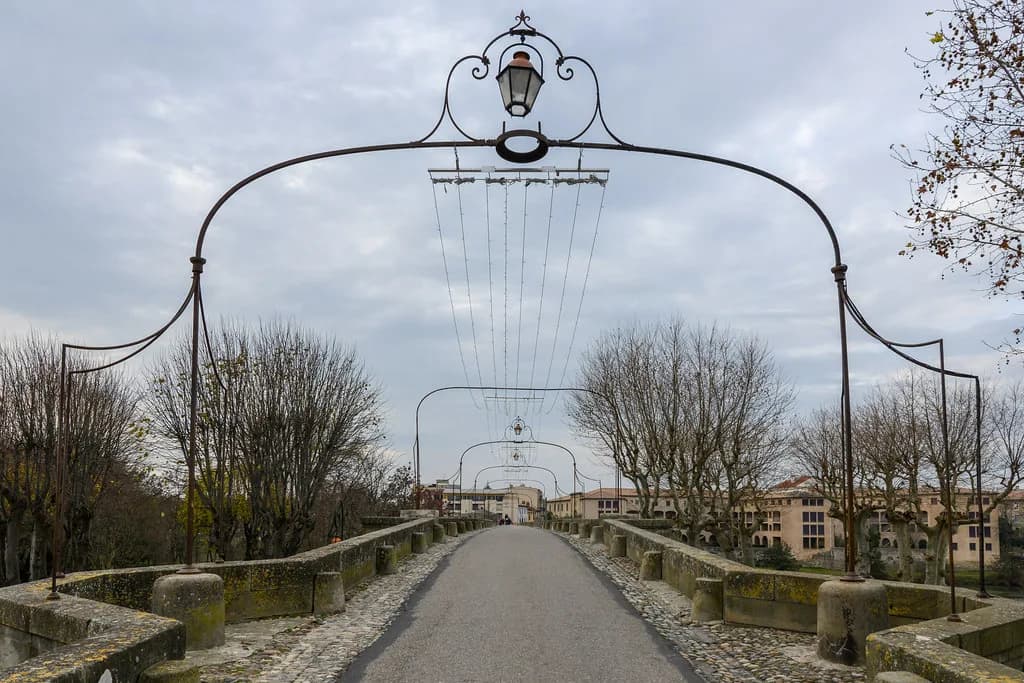
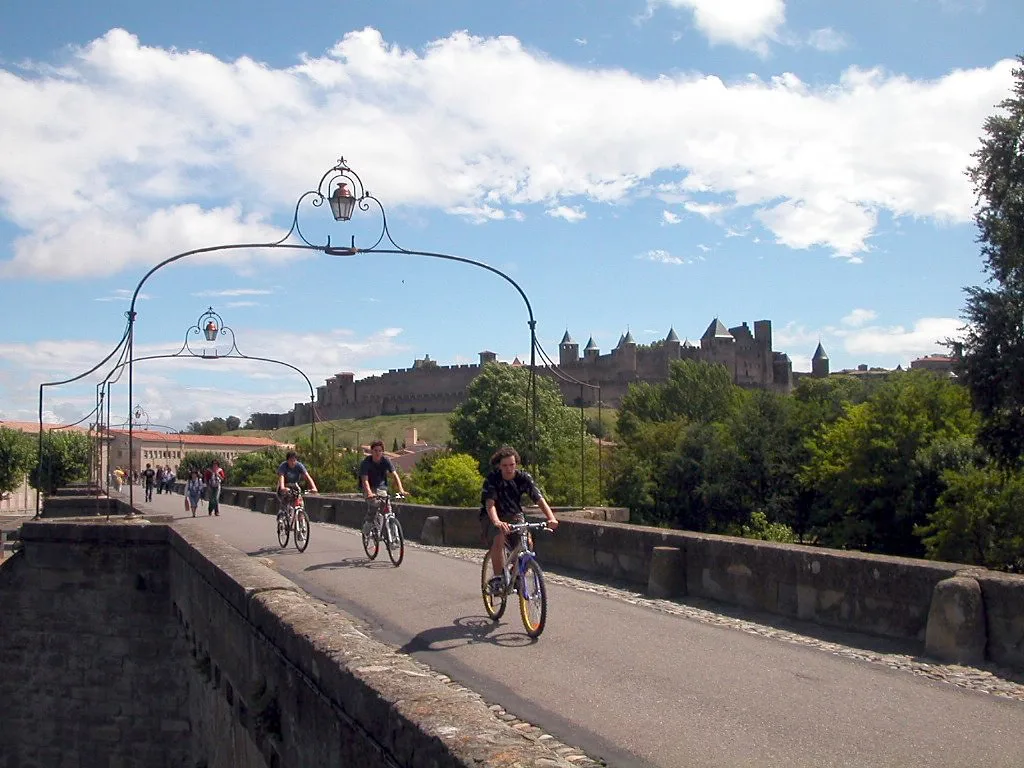
The Pont Vieux is Carcassonne's medieval stone bridge over the Aude, and for centuries it was the only crossing between the Bastide Saint-Louis below and the Cité on its hill. Walking it takes a few minutes, and it gives you the view most visitors come for: the walled city stacked up above the river.
Treat it as a piece of the trip rather than a photo stop. The bridge sits at the hinge between the two halves of the city, so crossing it on foot is the natural way to move from the lower town's streets and market to the gates of the Cité.
What the Pont Vieux is and where it sits
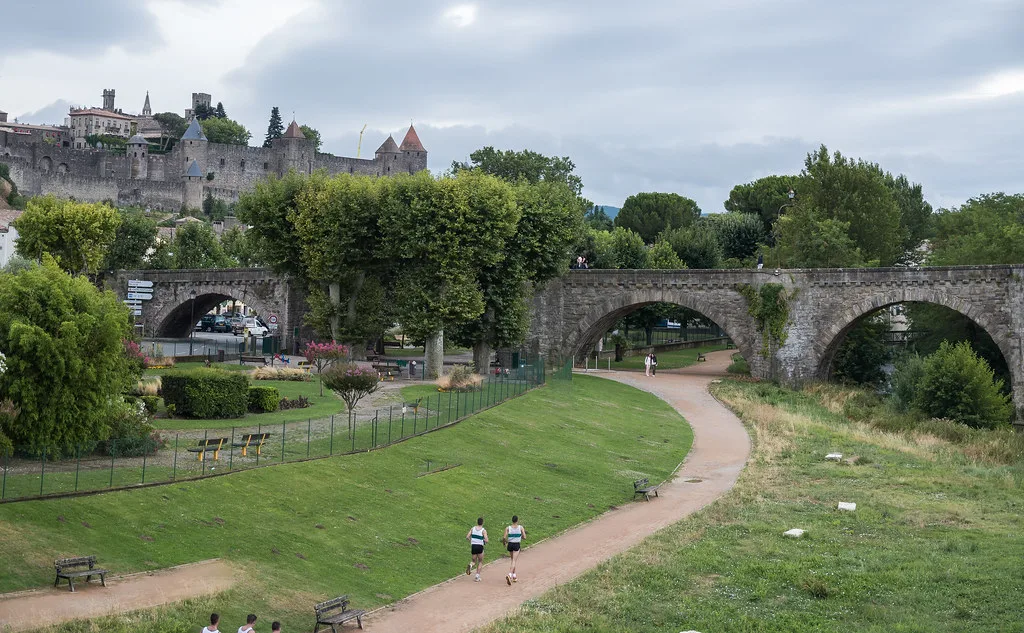
The bridge spans the Aude between the Bastide Saint-Louis, the grid of streets on the right bank, and the Cité, the fortified town on the opposite hill. The tourist office for the Aude describes the Pont Vieux as a medieval bridge of the 14th century that remained for centuries the only point of passage between the Bastide Saint-Louis and the Cité.
Its position is the whole point: stand at the Bastide end and you look up at the Cité; stand at the Cité end and the lower town spreads out behind you. That geography makes the bridge the obvious walking route between the two, whichever direction your day runs.
If you are working out how the city fits together before you arrive, the area guides cover the lower town's quarters and how they relate to the hill.
Which bridge to take: Pont Vieux, Pont Neuf or the footbridge
Carcassonne has more than one way across the river, and choosing between them is mostly about what you want from the crossing. The Pont Vieux is the old stone bridge and the one with the view; the Pont Neuf, built in 1841, carries vehicles as well as pedestrians, according to a long-running local blog.
That same account mentions a second pedestrian footbridge near Parc Bellevue, which gives quick access from the park below the castle into the heart of the lower town. If you are coming from that side, the footbridge is the shorter line; if you want the classic view of the Cité, take the Pont Vieux.
In practice most visitors on foot should default to the Pont Vieux and use the Pont Neuf only if they are driving or cycling across. The stone bridge is the pedestrian route between the two halves of the city, which keeps the crossing calm and the camera angles clear.
The view back to the Cité and towards the Pyrenees
From the bridge you get the postcard shot: the Cité's towers and walls rising above the riverbank, with the water below. The old crossing is widely praised for exactly this framing, which is why it appears on so many Carcassonne photographs.
Look the other way and, on a clear day, the Pyrenees show up on the southern horizon. The local blog notes the bridge as a vantage point for both the castle and the mountains, so give yourself a moment at the parapet rather than hurrying across.
Light matters more than season here. The Cité sits above the far bank, so the walls are usually easiest to photograph from the Bastide side when the sun is behind you; late afternoon and early morning give the softest contrast on the stone.
How long to allow on the bridge
The crossing itself is a few minutes' walk, so the bridge should not be a half-day item on your plan. Budget ten to fifteen minutes if you stop for photographs at both parapets, and rather less if you are simply moving between the two halves of the city.
Think of it as the connector in a walking loop: Bastide streets, Place Carnot, the bridge, then the climb to the Cité. Because the bridge sits between the two districts, it earns its place in the day without needing a slot of its own.
Place Carnot and the market at the lower-town end
At the Bastide end, Place Carnot is the lower town's main square and the anchor for a morning in this half of Carcassonne. The market is held there, and the local blog treats a walk from the river side to Place Carnot as an ordinary part of weekly life in the Bastide rather than a special expedition.
The covered Halle aux Grains is the other market building worth knowing in the Bastide, and it is a sensible stop before or after the bridge if you are assembling a picnic or buying provisions for the day.
Market days and hours change, so confirm the schedule with the Carcassonne tourist office before you build a morning around Place Carnot. What is reliable is the geography: the square is a short walk from the Bastide end of the Pont Vieux.
A short note on the bridge's origins and later remodelling
The Pont Vieux was built in 1359, according to the local blog, and the tourist office dates it to the 14th century. Either way, it is a medieval structure that has been part of the city's daily life for more than six centuries.
It has been remodelled over the centuries, which is why the stonework reads as a patchwork rather than a single build; the bridge you cross today is the result of that long series of repairs and adjustments.
That history is easy to miss if you only look at the Cité from the middle of the span. A glance at the arches and the cutwaters on the upstream side tells you more about the bridge's age than any plaque.
Practical points: surfaces, crossings and busy periods
The bridge is a stone surface with a slight camber, and the parapets are low enough to see over but high enough to lean on. Wear shoes you can walk in comfortably, because the far side of the crossing is followed by the climb up to the Cité's gates.
The Cité draws around three million visitors a year, according to the local blog, so the paths to the gates and the bridge itself fill up in the middle of the day in high season. Crossing early or late gives you a quieter stone bridge and a cleaner photograph.
There are no gates or tickets on the bridge itself; it is a public crossing, and you walk on and off as you please. Anything that does have a ticket, such as the Cité's own attractions, is a separate arrangement you should confirm before visiting.
Pairing the Pont Vieux with the Cité
Most people cross the Pont Vieux because the Cité is on the other side, and that is the right way to use it. The bridge is the approach, the Cité is the destination, and the two together make the essential Carcassonne walk.
Once through the gates, the Château Comtal and the ramparts are the headline interiors, both separately ticketed and both worth checking in advance for opening days and times.
Inside the walls, the Basilique Saint-Nazaire is the other building most visitors make time for, and it sits comfortably within a walk around the Cité after you have crossed the bridge.
On the Bastide side, the Cathédrale Saint-Michel is the lower town's principal church and a natural stop on the walk back from the bridge, so the crossing bookends a day that covers both halves of the city.
Plan Your Visit
Use the Pont Vieux as the walking link between the Bastide Saint-Louis and the Cité: cross it early or late for the best light and the thinnest crowds, and stop at both parapets for the view of the walls and, on a clear day, the Pyrenees. Allow ten to fifteen minutes on the bridge and build the rest of the day around the two ends.
Beyond the bridge, the wider guide to what to see in the city will help you order the rest of your time.
Explore more Carcassonne guides
Frequently Asked Questions
Where is the Pont Vieux in Carcassonne?
It crosses the Aude between the Bastide Saint-Louis, the lower town on the right bank, and the Cité on its hill. It was for centuries the only crossing between the two, which is why it sits at the centre of any walk between them.
Is the Pont Vieux pedestrian-only?
The old stone bridge is the pedestrian route across the river. The Pont Neuf, built in 1841, carries vehicles as well as pedestrians, and a separate footbridge from the 1960s near Parc Bellevue offers a second walking option from that side of town.
How old is the Pont Vieux in Carcassonne?
It dates from the 14th century, with the local blog giving 1359 as the year it was built. It has been remodelled over the centuries, so the stonework shows several phases of repair rather than one original build.
What can you see from the Pont Vieux?
The classic view is back towards the Cité, with its towers and walls above the river. On a clear day the Pyrenees are visible on the southern horizon, which is why the bridge is the usual spot for photographs of the walled city.
How long does it take to walk across the Pont Vieux?
The crossing itself is only a few minutes on foot. Allow ten to fifteen minutes if you stop at the parapets for photographs, and plan for the climb up to the Cité's gates on the far side.
Do you need a ticket for the Pont Vieux?
No. The bridge is a public crossing with no gates or set opening hours, so you walk on and off as you please. The ticketed sights are in the Cité itself, where the Château Comtal and the ramparts are separate visits.
When is the best time to cross the Pont Vieux?
Early or late in the day is calmer, since the Cité draws around three million visitors a year and the paths to its gates fill up in the middle of the day in high season. Light on the walls is also softer at those hours.