
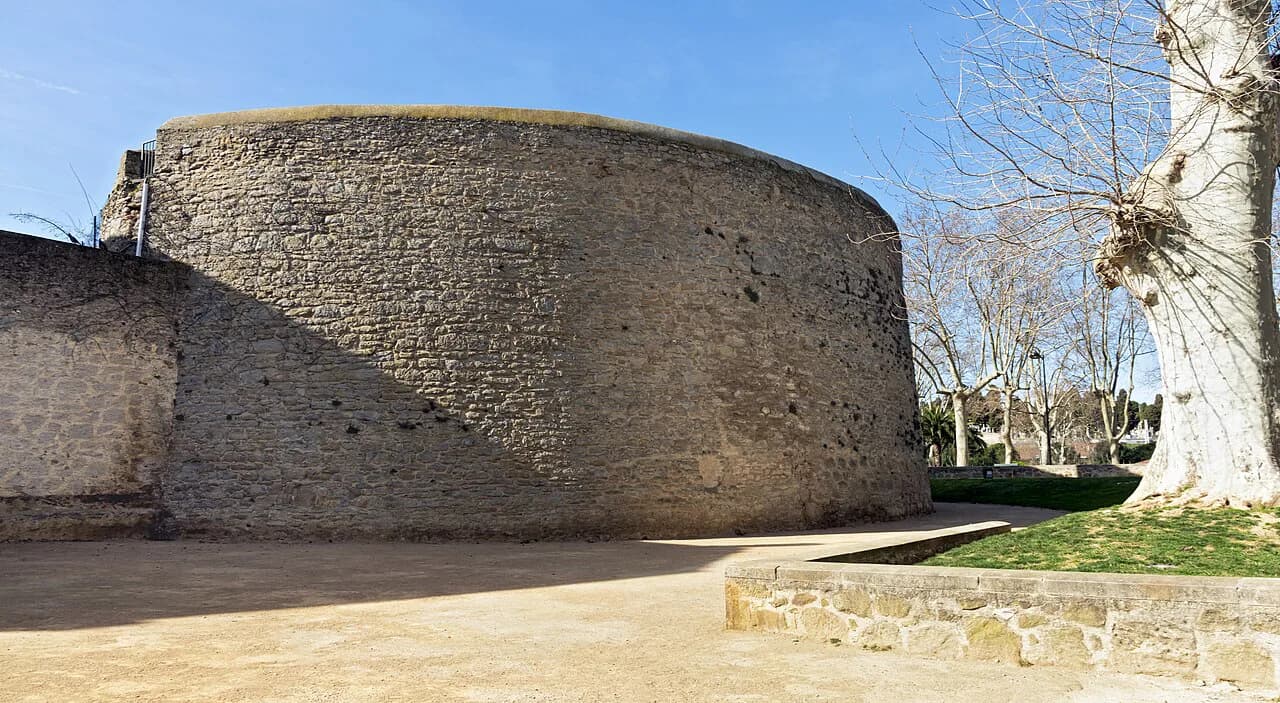
Bastide Saint-Louis, Carcassonne: The Lower Town Explained

The Bastide Saint-Louis is the flat, workaday half of Carcassonne, laid out as a grid of streets around Place Carnot and founded in 1260 under Saint Louis. The postcard fortress sits on the hill above, but the lower town is where the station, the buses, the shops and most of the restaurants are. Treat it as your base and the walled Cité as the half-day trip you walk or ride up to.
This guide sticks to the Bastide: what to see inside it, where it sits in the city's geography, and who it suits for a weekend. The hilltop fortress and the streets immediately beneath it are covered in the Carcassonne Neighborhoods: 4 Area Guides overview, which places the Bastide alongside La Barbacane and Rue Trivalle.
What the Bastide Saint-Louis is and why it matters to your weekend
Carcassonne splits into two parts that visitors constantly confuse. The Cité is the walled fortress on the hill, a UNESCO World Heritage Site ringed by 3 km of double walls and 52 towers. The Bastide Saint-Louis is the planned lower town on the plain, founded in 1260 under Saint Louis, with a checkerboard street pattern, Place Carnot at its centre and the Cathédrale Saint-Michel among its landmarks.
For a weekend, that division is the single most useful thing to understand. The Bastide gives you flat walking, ordinary prices, a market square and quick access to the train station and airport shuttle. The Cité gives you the spectacle but has only a few dozen permanent residents, so its restaurants and shops cater to visitors. Base yourself in the Bastide and you get both without carrying a bag uphill.
How the Bastide is laid out: the grid, Place Carnot and the main squares
The Bastide is easy to navigate because it was designed that way: perpendicular streets forming a grid, with Place Carnot as the central square and the Cathédrale Saint-Michel on the southern edge. Within a few minutes on foot you pass from the market square to the cathedral, the Jardin du Calvaire and the Musée des Beaux-Arts. This is the area to wander without a map.
Place Carnot holds the Neptune fountain and the regular market, and it is the natural orientation point for the district. If you remember only one thing, make it this: Place Carnot for food and people-watching, Cathédrale Saint-Michel for Gothic architecture, Square Gambetta for a park bench.
The Bastide's history in brief: founded in 1260 under Saint Louis
The Bastide Saint-Louis was founded in 1260 under the reign of Saint Louis, which answers the most common local-history question visitors ask. It was laid out as a planned new town after the royal takeover of the region, which is why it looks so different from the winding streets of the Cité. The grid is not a modern intervention; it is the original medieval plan.
The Bastide was originally walled, but only fragments of its fortifications survive, and the town later spread beyond them. What remains is the street pattern, the cathedral, the two parish churches and the market square. Reading the Bastide as a deliberate 13th-century town, rather than a random cluster around the fortress, makes the walk more interesting.
Place Carnot: the market square and its Neptune fountain
Place Carnot is the social heart of the Bastide, with the Neptune fountain at its centre and café terraces around the edge. The square hosts the lower town's regular market, and the surrounding streets have the everyday shops that the Cité lacks. Come here first thing in the morning for the market atmosphere, then linger over coffee as the square fills up.
Carcassonne's markets follow the usual Languedoc pattern: open-air markets in town squares on fixed days, generally running through the morning. Market days in the Bastide are set locally, so confirm the day and hours with the tourist office before you plan your morning around it. The wider Languedoc market calendar is a useful guide to how these markets work across the region, with most taking place between 8am and 1pm and cash still the norm at stalls.
Cathédrale Saint-Michel and the Gothic lower town
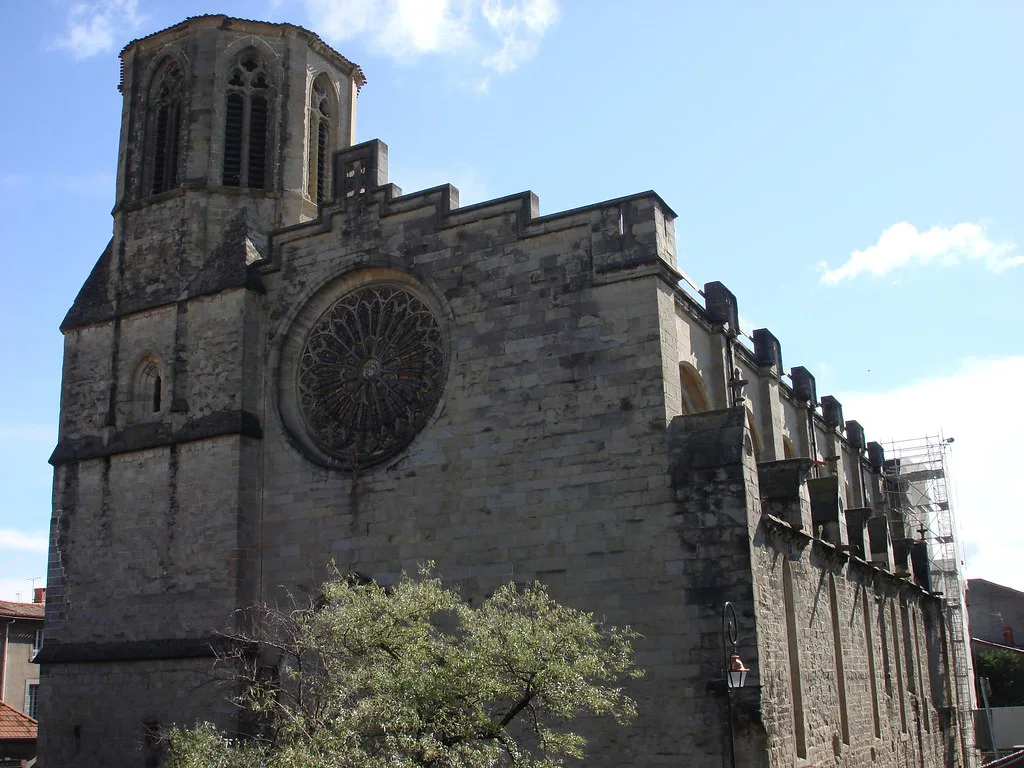
Cathédrale Saint-Michel is the Bastide's principal church, begun at the end of the 13th century and incorporated into the town's defensive walls. It is a fine example of Languedoc Gothic, and the square outside holds a war memorial listing local names from both world wars. The scale of the memorial is a reminder of how much the lower town, not just the fortress, shaped the city's identity.
The cathedral is worth a look for its stained glass and its position on the edge of the grid, where the medieval town once met its walls. It is a working parish church rather than a museum, so treat it as a short stop of twenty minutes rather than a sight in itself.
Musée des Beaux-Arts and Square Gambetta
The Musée des Beaux-Arts is a small fine-arts museum in the Bastide, with around ten rooms of paintings ranging from religious art to regional landscapes and portraits. Many of the works are by local painters. Entry is free, which makes it an easy rainy-day stop without committing a whole afternoon.
The museum sits next to Square Gambetta, a manicured park with a reflecting pool, paths and a small play area. Pair the two: half an hour in the museum, then a stroll through the gardens before heading back into the grid for lunch.
Église Saint-Vincent and its bell tower
Église Saint-Vincent is the largest church in the Bastide and worth a look for its stained glass and arches. Its best feature is the clock tower: a 220-step spiral staircase leads to a panorama over the lower town and up to the fortress. The church is free to enter; the bell tower climb costs €2.50, cash only, which makes it one of the cheapest viewpoints in the city.
Climbing the tower gives you the one view the Bastide itself offers of the Cité, and it is a sensible substitute on days when the fortress is crowded. Combine it with Place Carnot and the cathedral for a compact walking loop of the district.
The Bastide's markets and when to shop
Markets are the daily life of the Languedoc, and the Bastide has them in Place Carnot on fixed days. The broader regional pattern is that markets run in the morning, often between 8am and 1pm, and many stalls still prefer cash. Bring a few euros in coins and a bag, and go early enough to browse before the best produce goes.
The same guide notes that parking in historic town centres on market days can be difficult and recommends arriving early or parking on the edge of the centre. In the Bastide, that means using the perimeter car parks and walking in rather than circling Place Carnot.
Where to eat in the Bastide: cassoulet and bistro stops
Cassoulet is the dish to try in Carcassonne, and the Bastide has plenty of places serving it alongside regional wines from the Corbières and Minervois appellations. The tourist office lists the city's restaurants, which is the most reliable way to find a table near Place Carnot or the cathedral rather than in the tourist-heavy Cité.
If you want a quick lunch, look for the bakers and small bistros around the grid; the Bastide's flat streets make it easy to eat cheaply and then walk it off. Eating in the Bastide is also cheaper than eating inside the walls, which is part of the argument for staying down here.
Walking between the Bastide and the Cité: times, gates and bridges
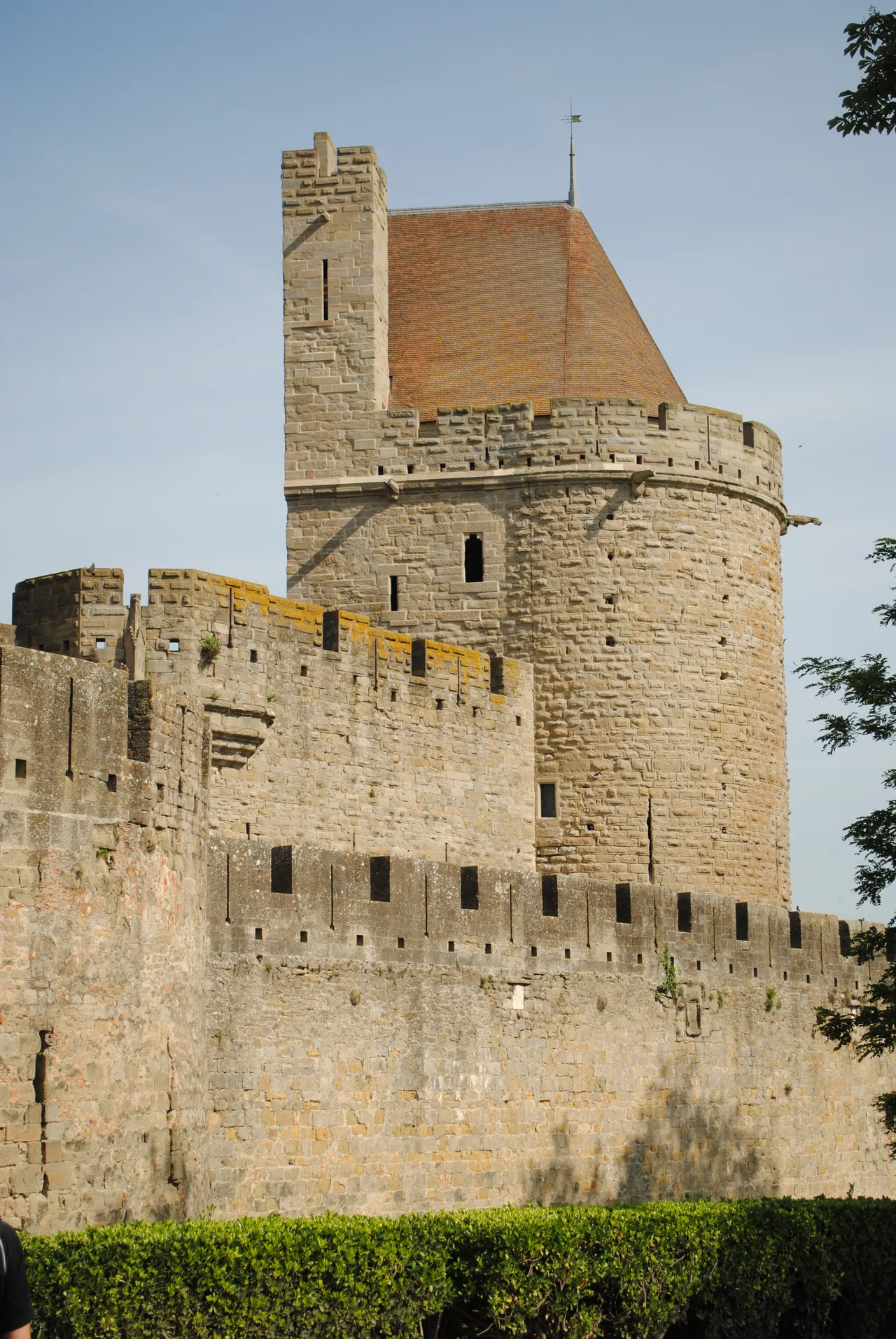
The Cité is a 30-minute walk from the SNCF station and 15 minutes uphill from the Bastide, and the climb is the price of the postcard view. Enter through the Porte Narbonnaise, the main gate, and leave through the quieter Porte d'Aude, which gives you both approaches. The Pont Neuf and the bridge on the N113 offer the best frames of the fortress on the way.
Between the two halves of its double walls, the Cité has walkable baileys that let you circle the fortress without paying for the Counts' Castle. The castle and ramparts ticket is the one paid sight in Carcassonne: €13 for the castle, including the upper ramparts, bought on site or online. The basilica and the Cité streets themselves are free to enter.
If the climb does not appeal, take bus line 3 to the Cité Médiévale stop, which is 150 metres from the Narbonnaise Gate; tickets cost €1.20 from the driver. The Porte d'Aude stop on line 4 is closer to the Bastide side but leads up a steep cobbled street. From June to September a little tourist train also runs a commented tour of the Cité and Bastide for €7.
Getting in and out: train station, buses and the little train
The Bastide sits between the station and the Cité, which is what makes it the practical base. Trains run from Toulouse in about an hour, the airport has a shuttle into town, and the P1 car park is 250 metres from the Narbonnaise Gate. If you arrive by car, park on the Bastide side and walk up; if by train, you can reach the fortress on foot in half an hour.
Within the Bastide everything is walkable, and the grid makes it hard to get lost. Bike rental, including self-service e-bikes, is available in town, which is useful if you want to follow the Canal du Midi towpaths out of the city. The canal passes right by the Bastide, so you can pick up the path within minutes of the square.
Who the Bastide suits, and who should base themselves elsewhere
The Bastide suits travellers who want a flat, ordinary French town base with a market, shops, restaurants and public transport on the doorstep, and who are happy to walk or bus up to the Cité. It also suits anyone arriving by train or staying only one night, since the station is closer to the Bastide than to the fortress. Families will find the flat streets and the gardens around Square Gambetta easier than the steep lanes under the walls.
If you want to wake up inside the medieval walls, look at the streets immediately beneath the Cité instead; Rue Trivalle and the lanes around La Barbacane mix old stone with access on foot. Those areas are the strong choice for a short romantic break, while the Bastide wins on practicalities. If you are weighing a larger southern city base with the same mix of old town and everyday life, see our guide to the things to do in Montpellier.
A half-day plan for the Bastide
Start early in Place Carnot, when the market is still setting up and the square belongs to locals. Walk the grid to Cathédrale Saint-Michel, pop into the Musée des Beaux-Arts for its free rooms, then rest in Square Gambetta. Finish with the bell tower of Église Saint-Vincent and its 220 steps, €2.50 in cash, before an early cassoulet lunch.
That loop is easy to walk in half a morning, and it leaves the afternoon free for the Cité. If you have a full weekend, repeat the pattern on the second day, adding the Canal du Midi towpath in the late afternoon.
Practical points before you go
Plan around the walk uphill to the Cité rather than expecting to shuttle between the two on a whim, and remember that the fortress streets are steep and cobbled. Carry small cash for markets and the bell tower, and keep a layer handy for the wind on the exposed walls. The tourist office by the Narbonnaise Gate inside the Cité stocks maps and listings, along with market days, opening hours and transport times.
If you want a quieter version of the medieval streets, stay in the Bastide and wander up in the evening, when the day-trippers leave and the Cité lights come on. For the neighbourhood that sits directly under the walls, the separate guide to Saint-Gimer, Carcassonne covers the streets on the approach to the fortress.
Plan Your Visit
Choose the Bastide Saint-Louis if you want a flat, lively base with markets, restaurants and transport on hand, and treat the Cité as a half-day on foot or a short bus ride. Budget for the castle ticket, keep coins for the bell tower and markets — entry prices change, so compare current listings before you go — and build your day around Place Carnot.
Check the market day and any seasonal opening changes with the tourist office before you depend on them, and check current prices at the ticket desk. The district rewards a slow morning more than a hurried checklist.
Explore more Carcassonne guides
Frequently Asked Questions
What is the Bastide Saint-Louis in Carcassonne?
It is the lower town on the plain beneath the walled Cité, laid out on a grid of streets around Place Carnot and founded in 1260 under Saint Louis. It holds the Cathédrale Saint-Michel, the Église Saint-Vincent, the Musée des Beaux-Arts and the city's regular market.
How long does it take to walk from the Bastide to the Cité?
Allow around 15 minutes on foot from the Bastide up to the Porte Narbonnaise, or 30 minutes from the SNCF station, with a climb at the end. Bus line 3 stops 150 metres from the gate, and a little tourist train runs between the two in July and August.
Where is the market in Carcassonne's lower town?
The regular market is held on Place Carnot, with stalls traditionally running through the morning. Confirm the exact day and hours with the tourist office, since market days are set locally.
Is the Bastide Saint-Louis worth visiting on a weekend in Carcassonne?
Yes, as a base and as a half-day of sightseeing: the cathedral, the bell tower, the free Musée des Beaux-Arts and the market square fit easily into one morning. The Cité is then the half-day trip on the hill above.
What does it cost to visit the main sights in Carcassonne?
The Cité itself, the basilica and the Musée des Beaux-Arts are free, while the Counts' Castle and the Saint-Vincent bell tower are the paid sights. The castle's own website and the ticket desk publish the current admission, and the bell tower is cash only, so check both before you go.
Who should not base themselves in the Bastide?
Travellers who want to sleep inside the medieval walls and wake up in old stone should look at the streets beneath the Cité instead, such as Rue Trivalle and the lanes around La Barbacane. The Bastide is the practical choice rather than the romantic one.