
Saint-Gimer, Carcassonne: The Quarter at the Foot of the Cité
Saint-Gimer is the district of Carcassonne that sits directly below the Cité, in the Barbacane area along rue Barbacane, within sight of the medieval walls. It is not a sightseeing zone in its own right: it is a handful of streets whose main draw is a 19th-century church by Eugène Viollet-le-Duc, seen on the way between the Bastide Saint-Louis and the Cité. Treat it as a 30-minute stop folded into a walk.
The quarter earns its name from Saint Gimer, Bishop of Carcassonne from 902 to 931, and the modern church commemorates a chapel built on the site of his birthplace. For a weekend in the city, use Saint-Gimer to connect the lower town with the fortress rather than as a destination with its own timetable. Our Carcassonne Neighborhoods guide sets it alongside the other districts you will cross. If you are weighing up a longer Languedoc trip, our guide to things to do in Montpellier covers a very different kind of old town.
What and where Saint-Gimer is
Saint-Gimer occupies the ground between the foot of the Cité and the river Aude, and the church's address places it squarely in that band: rue Barbacane, at the point where the climb to the walls begins. The Musée de la Cité and the main gateways sit a few minutes uphill, while the Pont Vieux and the Bastide are downhill across the water. Plan your walk in one direction so you are always going gently down or up, not both.
This is a small, quiet quarter of streets rather than a polished tourist zone, with no square or market of its own to build a morning around. The reason to come is the church and the sense of passing through a working part of the city on the approach to the Cité. Anyone expecting cafés, shops and gallery-lined lanes on their doorstep will be disappointed; walkers heading between the two halves of Carcassonne will find it a useful and calm link.
Why the church matters
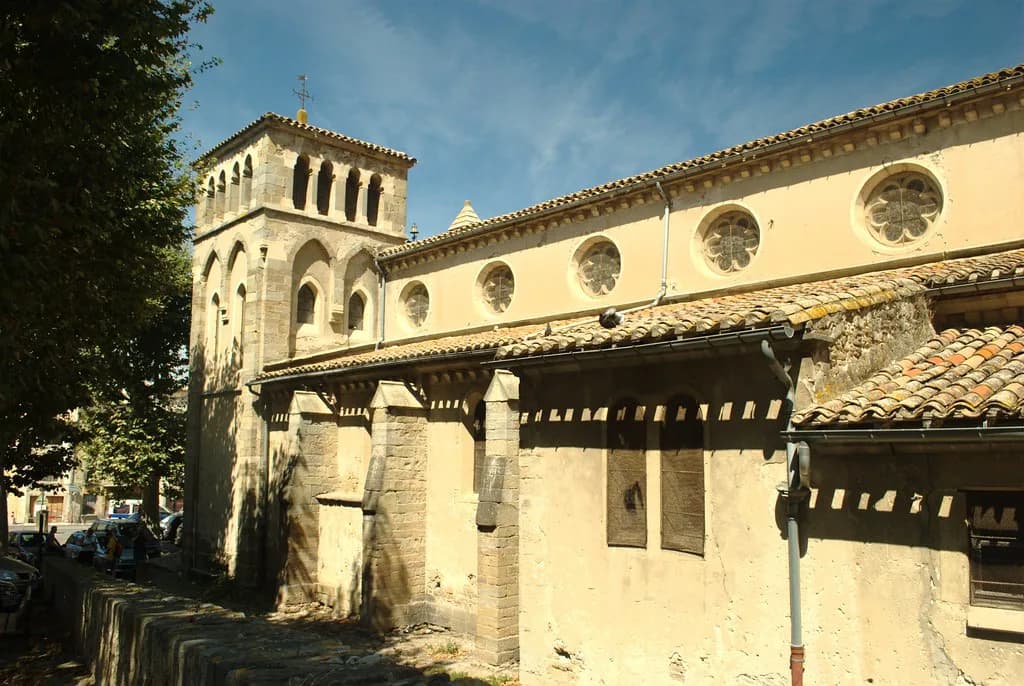
The Église Saint-Gimer is one of three churches designed by Viollet-le-Duc, the architect most associated with the restoration of the Cité, and it belongs with the fortified city on the UNESCO World Heritage list. The tourist office gives its construction as lasting from 1849 to 1859. That is the unusual interest here: a Gothic Revival parish church by a restorer, standing at the foot of the medieval walls he famously reworked.
The city's own account puts the build slightly differently, describing work from 1854 to 1859 after an earlier chapel was judged unsafe, with Violet-le-Duc stepping back for a time before the church was completed under his direction and consecrated in June 1859. Read the two accounts together and the 1850s are the reliable frame. What is not in doubt is the result: a compact parish church the city presents as a simple, functional model example of the type.
The setting: the Grosse Barbacane
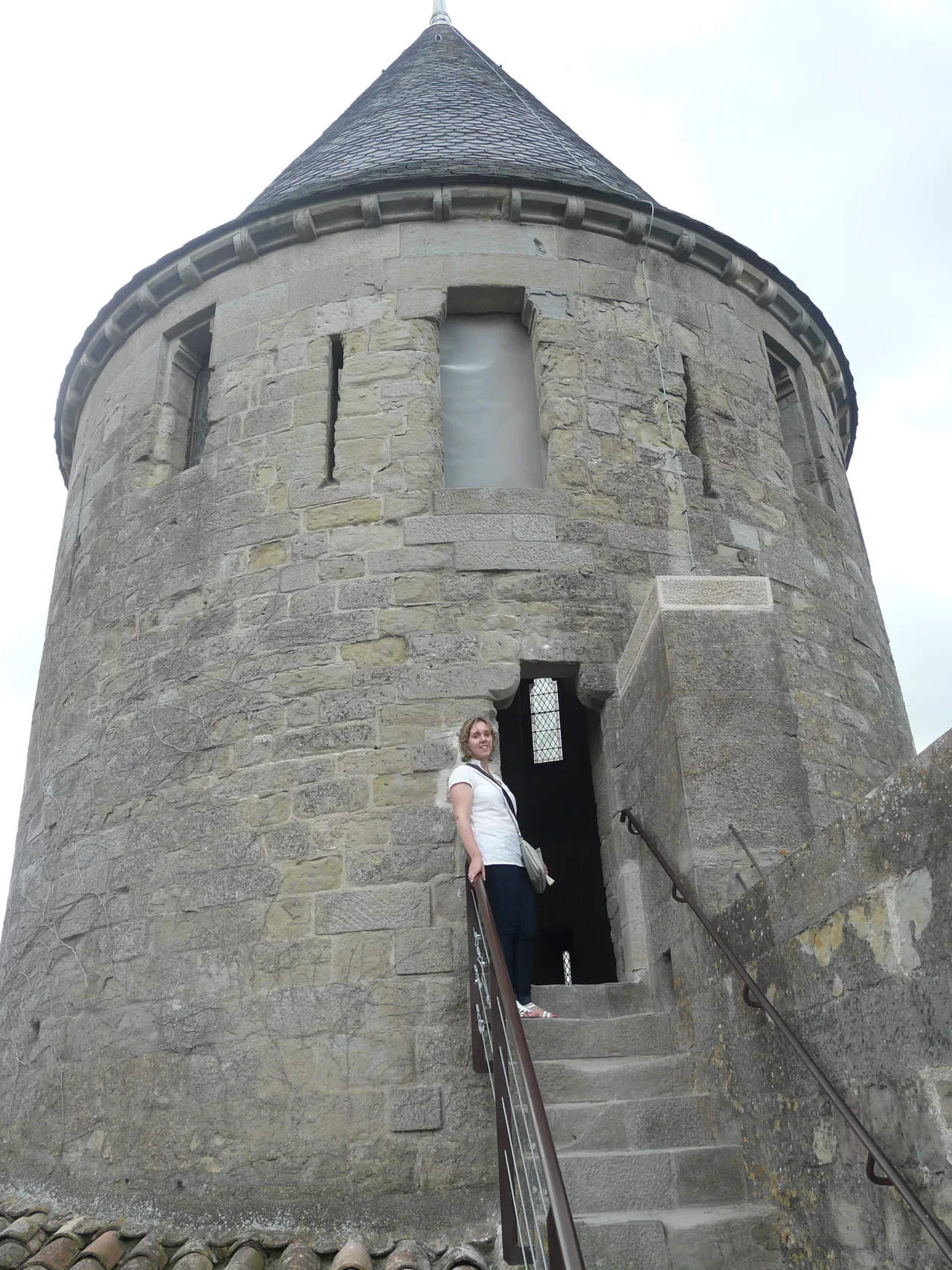
The church does not simply stand near the old defences; it was built inside them. It occupies the centre of the former Grosse Barbacane, the 13th-century outwork that guarded the approach to the Aude, which was largely demolished to make room for the new building. Fragments of the medieval structure remain visible behind the church, which is why this modest façade sits so convincingly in the shadow of the walls.
For a weekend visitor the practical point is that you can read the two eras in one place: the 13th-century defences that controlled the river crossing, and the 19th-century church that replaced part of them. Walk behind the building before climbing to the Cité. That short detour is the best reason to give the quarter more than a passing glance.
The older Saint-Gimer, and who the saint was
On the ground it is easy to confuse two buildings. The current church on rue Barbacane is the 1850s one; the older church, at 58 rue Barbacane, is now disused and was built on the spot where Saint Gimer is said to have been born. A 17th-century chapel stood in the quarter before the new church went up. If you are looking for the historic interior, you are looking at the wrong building.
Gimer was Bishop of Carcassonne from 902 to 931 and is remembered for charity to the poor and for moving the episcopal seat to the church of Saint-Nazaire and Saint-Celse, where he was buried. The quarter's name, then, is not a street label but a direct line to a reforming bishop of the early 10th century. That context gives the church's dedication more weight than its modest size suggests.
Architecture to look for
Viollet-le-Duc married northern and southern Gothic in this building. The northern influence shows in the nave divided into three vessels of unequal height and in the engaged colonnettes carrying the vaults; the southern side appears in the simple, compact exterior massing and in the row of oculi that light the nave. Look up at those round windows and along the roofline rather than only at the altar end.
Much of the furniture came across from the old church, so the fittings are older than the shell around them. The city notes that the surviving drawings show close attention to decorative detail: the altar, the pulpit, the chapels, candle-holders and ironwork. Give the interior fifteen minutes and read it as a designed whole, from the windows down to the grilles, rather than a quick look at the pews.
How to visit: pair it with the Cité and the Pont Vieux
Saint-Gimer works best as one leg of a triangle: the Bastide Saint-Louis across the river, the Pont Vieux crossing the Aude, and the Cité on its hill. Come down from the fortress by rue Barbacane, look behind the church at the remains of the outwork, then continue to the bridge and into the grid of the Bastide for lunch. That route takes in the best of the quarter without making it the point of the day.
Budget a short stop rather than a half-day. There is no cluster of museums or sights here to fill a morning, and the church itself is a single interior to read in a quarter of an hour. The Cité above, with its walls, castle and streets, will rightly take the bulk of your time; Saint-Gimer is the calm interval between the crowds and the lower town.
Who the quarter suits, and who it does not
Saint-Gimer suits walkers who want to approach the Cité on foot from the Bastide and prefer a quieter route to a taxi or a car park. It also suits anyone interested in 19th-century architecture and in how a medieval outwork was reused, since the layers sit on top of each other within a few metres. Bring sturdy shoes, because the streets between the river and the walls rise and fall.
It does not suit visitors who want shops, a spread of restaurants and bustle within a few steps of their accommodation, or families needing a park and play space to break up the day. Those needs are better served down in the Bastide grid. If your time in Carcassonne is a single full day, the church is a pleasant ten-minute addition; if you have two days, it slots naturally into the walk between the two halves of the city.
Getting there and around on foot
The quarter sits on the natural walking line between the Bastide Saint-Louis and the Cité, so the practical approach is simply to walk it: from the Bastide, cross the Aude by the Pont Vieux, then climb rue Barbacane towards the walls. Coming the other way, leave the Cité by the same street and drop down to the river. Either direction takes you past the church door.
Because the streets are narrow and the gradients real, allow more time than the distance suggests, especially in warm weather or with luggage. If you are staying in the Bastide, this is a comfortable evening stroll up to see the walls lit; if you are staying near the Cité, it is the way down to dinner in the lower town.
Where to eat and stay in and around the quarter
The church quarter itself has no restaurant or hotel that the city or the tourist office singles out by name, so plan your meals in the Bastide Saint-Louis or around the Cité rather than expecting options on rue Barbacane. The Bastide's grid streets hold the broadest choice in the city, and the walk back across the Pont Vieux is short. Book ahead for weekend evenings, when the city fills with visitors.
For sleeping, the same logic applies: the quarter is a pleasant, quiet place to pass through rather than a base with a concentration of hotels. Staying in the Bastide puts you near the station and everyday shops, while staying by the Cité puts the walls at your door and the church a short walk below. Choose according to whether you want evening restaurants on your doorstep or the fortress view.
Practical points for your visit
The city and the tourist office publish the church's address and its history, but neither publishes opening hours, service times or entry prices for it. Do not build a day around getting inside; check the current access arrangements with the Grand Carcassonne tourist office before you go, and treat the exterior and the streets around it as the reliable part of the visit.
Carry the address with you: rue Barbacane, 11000 Carcassonne. That places you at the foot of the Cité and within a short walk of the Pont Vieux and the climb to the walls, which is all the orientation the quarter needs. The rest of your weekend planning, from the Cité's own sights to the Bastide's streets, sits in the wider city guides.
Plan Your Visit
Saint-Gimer is a short, worthwhile stop on the walk between the Bastide Saint-Louis and the Cité, not a district to set aside an afternoon for. The 1850s church by Viollet-le-Duc, the older disused building at 58 rue Barbacane and the remains of the Grosse Barbacane behind the apse give you three layers of the city's history within a few minutes. Fold it into a crossing of the Pont Vieux and you have used the quarter well.
Build your day around the Cité and the Bastide, with the church as the link between them, and check access details with the tourist office before relying on getting inside. A weekend is enough time to walk the quarter slowly and still see the walls, the castle and the lower town without rushing.
Explore more Carcassonne guides
Frequently Asked Questions
What is Saint-Gimer in Carcassonne?
It is the quarter at the foot of the Cité, along rue Barbacane, named after Saint Gimer, Bishop of Carcassonne from 902 to 931. Its main sight is the 19th-century Église Saint-Gimer by Eugène Viollet-le-Duc, built within the former Grosse Barbacane outwork.
Who designed the Église Saint-Gimer and when was it built?
Eugène Viollet-le-Duc designed it, and it is one of the three churches attributed to him. The tourist office dates construction from 1849 to 1859; the city describes the main build from 1854 to 1859, with consecration in June 1859.
Is the Église Saint-Gimer part of the UNESCO World Heritage site?
Yes. The tourist office states that the church is listed, together with the City of Carcassonne, in the register of UNESCO World Heritage sites.
Who was Saint Gimer?
Gimer was Bishop of Carcassonne from 902 to 931, remembered for charity to the poor. He moved the episcopal seat to the church of Saint-Nazaire and Saint-Celse and was buried in his cathedral; the quarter and its church carry his name.
Is the Saint-Gimer quarter worth visiting on a Carcassonne weekend?
Yes, as a short stop. Pair the church and the medieval remains behind it with the walk between the Bastide Saint-Louis and the Cité across the Pont Vieux, and allow around half an hour rather than an afternoon.
Where should I eat or stay near Saint-Gimer?
The quarter has no named restaurants or hotels in the city's own listing, so look to the Bastide Saint-Louis for the widest choice of places to eat and for a practical base near the station, or stay close to the Cité for the walls on your doorstep.