
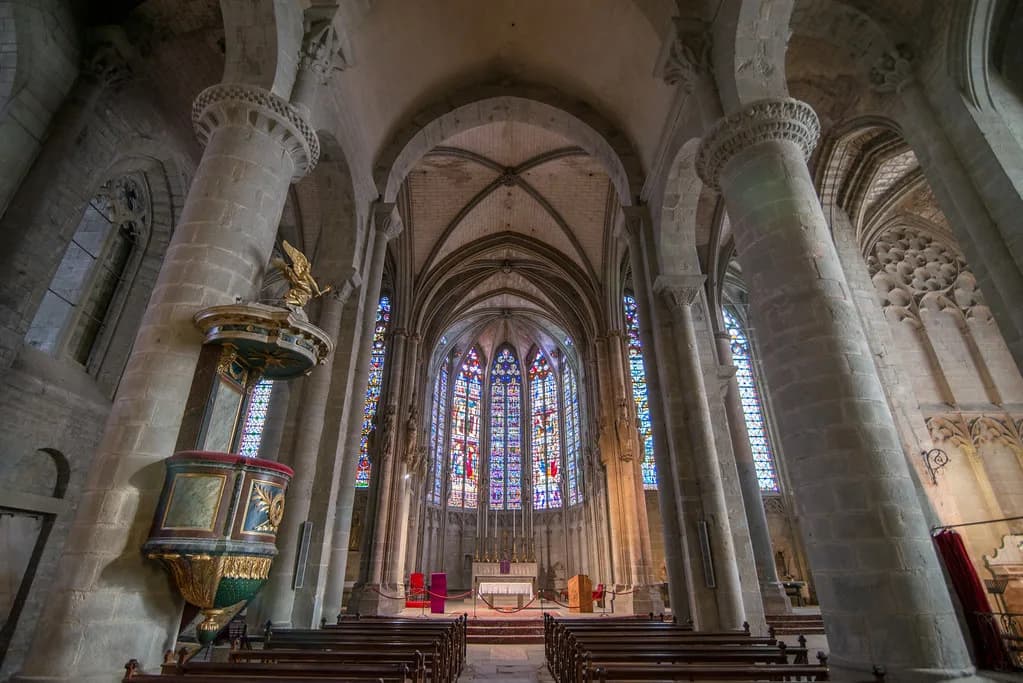
Basilique Saint-Nazaire: Carcassonne's Citadel Church
The Basilique Saint-Nazaire is free to enter and sits inside the walls of the Cité de Carcassonne, the fortified hilltop town that anchors any weekend in Carcassonne. Admission costs nothing, so the only real currency is time: give it half an hour or so between the Counts' Castle and the ramparts.
The tourist office calls it the jewel of the Citadel and singles out its stained glass as the finest in the south of France, which is the strongest reason to step inside rather than photograph the exterior and move on. You can see the church on the same half-day as the castle and the walls without adding a separate trip. If you are weighing it against the other sights, our guide to the things to do in Carcassonne puts the basilica alongside the Cité and La Bastide.
What the Basilique Saint-Nazaire is and why it is worth your time
This is a working basilica, not a museum: the tourist office lists mass every Sunday at 11am and free admission, so worshippers and sightseers share the same nave. The building spans the 11th to 14th centuries according to the same listing, and its Romanesque and Gothic phases sit side by side rather than in separate buildings. Plan around a service if you want quiet, or deliberately arrive for one if the liturgy interests you.
Treat it as a 30 to 45 minute stop with a purpose rather than a quick photo. The tourist office recommends at least half a day for the whole Cité, suggesting one to two hours for the Counts' Castle plus time for the streets, so the church fits naturally into the back half of that window.
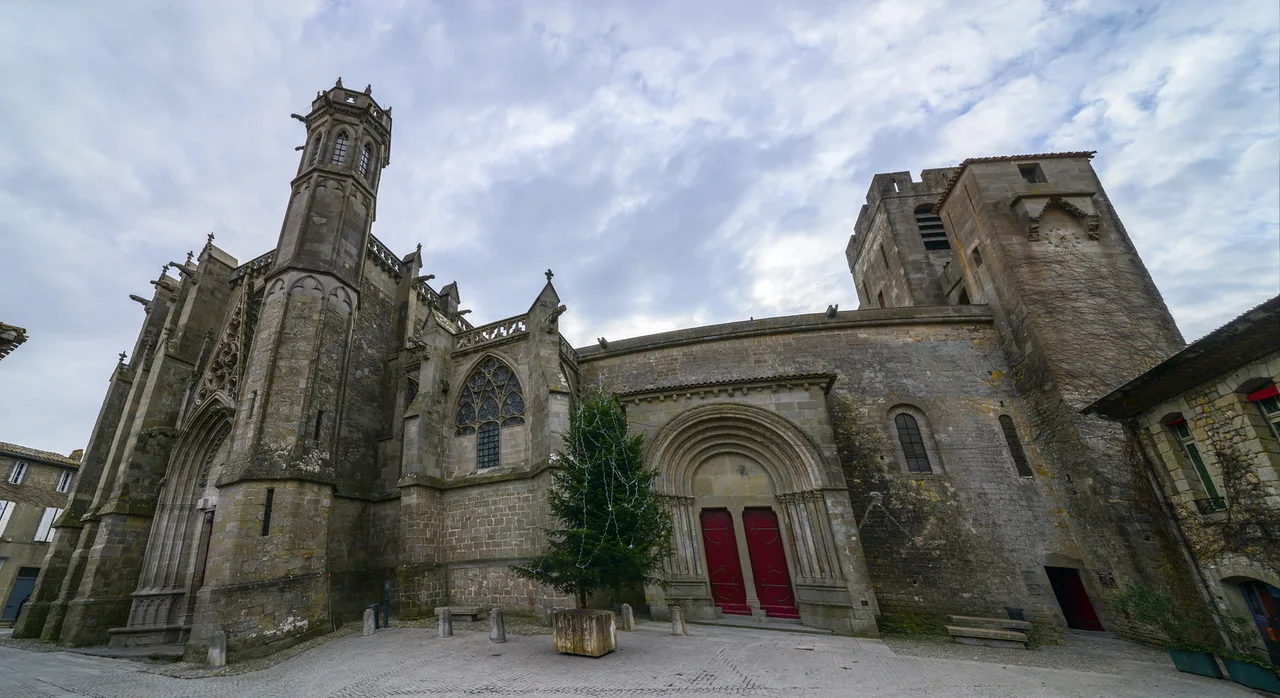
Architecturally it is described as a national monument and a Romanesque-Gothic minor basilica located in the citadel. In practice that means two distinct experiences in one visit: the darker, heavier Romanesque nave and the taller, lighter Gothic east end.
Where it sits inside the medieval Cité
The basilica stands within the walls of the Cité, the hilltop fortress with 52 towers along roughly 3km of ramparts, listed as a UNESCO World Heritage Site. Because the whole Cité is compact, you reach the church on foot from anywhere inside it; there is no separate ticket, gate or queue for the basilica itself.
Once through the main gate you are walking on cobbles, so flat shoes matter more than any map. The tourist office lists Place Marcou, Place du Plô and Place du Prado among the squares with benches where you can sit, which gives you natural stopping points on the way up.
If you only have time for one church in Carcassonne, weigh this against the Cathédrale Saint-Michel in the lower town. Saint-Nazaire wins on setting inside the walls; Saint-Michel wins if you want to stay on level ground in the Bastide. For the wider picture beyond the churches, our guide to the things to do in Carcassonne covers the Cité, La Bastide and the rest.
Getting there from the station, car parks and the Bastide
On foot from Carcassonne's SNCF station, the Cité is about a 30-minute walk, mostly uphill at the end, and the tourist office recommends bus lines 2, 3 and 4 from the town centre if you would rather save your legs. Line 3 stops closest, roughly 150 metres from the Narbonnaise Gate, while line 2 leaves you about 500 metres out and line 4 arrives via a steep cobbled climb. Tickets are bought from the driver for €1.20, a flat fare that makes the bus an easy decision. By car, the nearest car park, P1, is about 250 metres from the main entrance at the Narbonnaise Gate. Motorway traffic should leave at exit 24, and parking around the citadel is charged between 8am and 8pm, with the closest car park, P0, offering an evening flat rate of €3 in December and from 1 May to 30 September.
From the Bastide Saint-Louis, the lower town on the plain, the climb to the Cité takes about 15 minutes on foot. Cross the Pont Vieux for the classic view of the walls before you start up, then enter by the Narbonnaise Gate and leave by the Porte d'Aude if you want two different perspectives in one loop.
The Narbonnaise Gate approach and the walk up
The Porte Narbonnaise is the main entrance, the most heavily fortified gate in the Cité, and the one that faced the road to Narbonne; look for the statue of Dame Carcas just outside it. Because it is the busiest approach, arriving early in the day makes the cobbled climb through the gate far calmer.
Inside, the streets are narrow and lined with shops, and the tourist office suggests simply wandering the baileys, the strips of ground between the two walls, as part of the visit. That walk between the ramparts is free and open around the clock, which makes it a good way to fill time before the basilica or the castle opens.
For a guided introduction, the tourist office promotes guided tours of the medieval town in English and lists period-costume tours as a bookable option. A tour costs money that the basilica itself does not, so decide first whether you want context or just the building.
What to see: the Romanesque nave and the Gothic choir
The church began in the Romanesque style before the Gothic rebuild of the eastern end, and the two sit together rather than in separate buildings. Walk the nave first, then move east to the choir, where the proportions open up and the windows do the work. That sequence makes the change in style legible instead of something you read about afterwards.
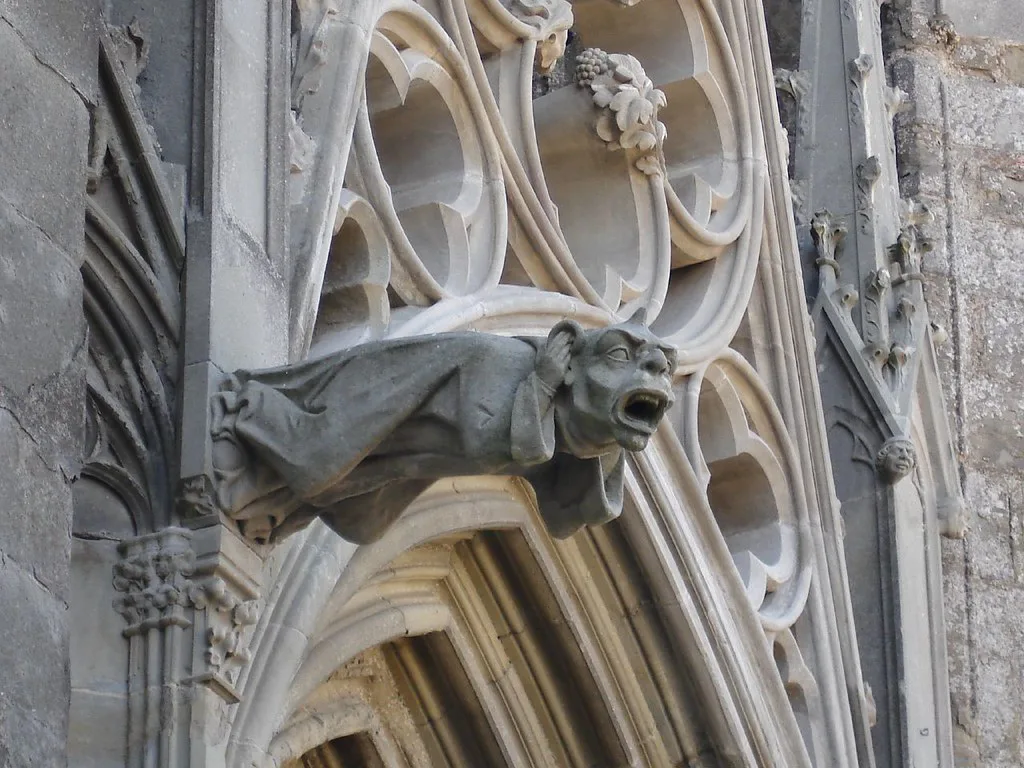
Look at the sculpture as well as the glass: the tourist office describes Saint-Nazaire as a fine example of Romanesque and Gothic styles coexisting harmoniously, a phrase that points to the joint between the two campaigns. The building is still an active place of worship, with mass each Sunday, so keep voices low and avoid wandering during a service.
The stained glass and why the windows draw people in
The windows are the reason many visitors rate the interior above the exterior. The tourist office calls the stained glass the finest in the south of France, a claim worth testing against a mid-morning or late-afternoon visit when light comes through the upper windows.
Glass this old sits behind centuries of lead and stone, so bring patience rather than binoculars. Stand back in the nave to read the composition, then move closer to the choir to pick out individual panels.
Admission and visiting practicalities
Entry to the basilica is free, and the Cité itself is open 24 hours a day with no admission charge, so only the Counts' Castle and its rampart route carry a ticket. The tourist office states that visiting the Counts' Castle, a National Monument, can be booked online, and that booking is not compulsory but strongly recommended.
Prices and opening times for the castle change and are set by the body that runs it, so check the castle's own listing through the tourist office before you travel rather than relying on a figure in a blog. The basilica's own published opening hours can be confirmed with the tourist office in the Cité at 21 rue Cros Mayrevieille, which the office lists as open daily from 9am to 8pm except 25 December and 1 January.
Dogs may accompany you through the medieval town but not into the Counts' Castle, and eating is banned in the castle grounds and on the ramparts, though picnic squares with benches exist inside the walls. Those rules shape how you split the day if you are travelling with a dog or a packed lunch.
How long to allow, and slotting it into a half-day
The tourist office's own advice is to allow at least half a day for the Cité: an hour or two for the Counts' Castle, then time for the streets, shops and the basilica. Build the church in after the castle, when the rampart walk has already given you the views and the interior offers shade and quiet.
For the castle and walls, the rampart route runs about 1.3km and takes roughly an hour with photo stops, and the walk is split into sections with exits after each. Pairing that with 30 to 45 minutes in the basilica and a slow wander through the baileys gives a comfortable half-day without rushing.
If you only have one full day in the city, spend the morning on the Cité and the afternoon in the Bastide rather than trying to add the Canal du Midi as well. The canal is a pleasant add-on for a longer stay but dilutes a single day.
Nearby in the Cité: the Counts' Castle, ramparts and museums
The Counts' Castle adjoins the ramparts and its ticket is the gateway to the upper wall walk, with views over the Pyrenees, the Montagne Noire and the Bastide below. That is the paid highlight of the Cité, so budget for it in both money and time on the same afternoon as the basilica.
For something smaller, the Cité's museums include the Musée de l'École, a reconstructed 19th-century classroom, and the Musée de l'Inquisition, both listed as bookable attractions by the tourist office. They suit a wet hour better than a sunny one and cost less commitment than the castle.
In summer the tourist office lists a night-time tour of the ramparts and the castle, Les Remparts et Lumières, with tickets in the region of 12 to 15 euros, and an annual fireworks display on the evening of 14 July at 10.30pm. Both are evening plans, so keep the basilica and castle for daylight.
Practical tips: mass, dogs and picnics
Sunday mass is at 11am, so if you want the church to yourself avoid that slot and aim for earlier in the morning or after lunch. The basilica is free, which means no ticket queue, but it also means no timed entry system to manage around the service.
Bring water and wear shoes that handle cobbles, because the climb from the gate to the church is steep in places and the streets are uneven. Combine the basilica with the free stretch between the walls rather than paying for a ride: the tourist office lists a little train from June to September at €7, and that money is better spent on the castle.
For lunch, the Cité's restaurants and the Bastide's squares both work; the local dish to look for is cassoulet, the Occitan speciality the tourist office names as the star of the region's cuisine. Booking ahead matters more in high season than at other times of year.
Where to Check Times and Any Changes
Confirm the basilica's current opening hours and any service times with the tourist office before you set out, since a working church can close for weddings and funerals without notice. The office in the Cité publishes daily opening hours of 9am to 8pm, except 25 December and 1 January.
Use the castle's own booking page for its times and prices rather than any second-hand figure. Then build the day around the free basilica, the paid castle and a slow walk between the walls, and Carcassonne's Cité will fill a half-day comfortably.
Explore more Carcassonne guides
Frequently Asked Questions
Is entry to the Basilique Saint-Nazaire in Carcassonne free?
Yes. The basilica has free admission according to the Grand Carcassonne tourist office, and the medieval Cité around it is also free to enter and open around the clock. The paid element of a Cité visit is the Counts' Castle and its rampart route, which is ticketed separately.
What time is mass at the Basilique Saint-Nazaire?
The tourist office lists mass every Sunday at 11am. Because it is a working church, service times can change, so confirm with the tourist office in the Cité before planning your visit around it, and keep quiet if you arrive during a service.
How long does it take to visit the basilica and the Cité?
Allow 30 to 45 minutes for the basilica and at least half a day for the whole Cité. The tourist office suggests one to two hours for the Counts' Castle, then time for the cobbled streets, the baileys between the walls and the small museums inside the fortress.
Do you need to book to visit the Cité de Carcassonne?
No, the Cité itself is open 24 hours a day with free admission and nothing to book. The Counts' Castle is the exception: booking is not compulsory but strongly recommended, and tickets for the castle and its guided options are bought online.
How do you get to the Cité from Carcassonne station?
The Cité is about a 30-minute walk from the SNCF station. Bus lines 2, 3 and 4 run from the town centre, with line 3 stopping nearest the Narbonnaise Gate, and tickets are bought from the driver for a flat fare.
Are dogs allowed in the Basilique Saint-Nazaire and the Cité?
Dogs are allowed in the medieval town with the exception of the Counts' Castle, according to the tourist office. Whether a dog may enter the basilica itself is a question for the church, so ask on the day.
What should I look for inside the basilica?
The Romanesque nave and the later Gothic choir show two building phases side by side, and the stained glass is the highlight, described by the tourist office as the finest in the south of France. Look up in the choir and give the windows time rather than hurrying through.
What else is near the basilica inside the Cité?
The Counts' Castle and the rampart walk are the obvious paid pairing, and the streets between the two walls are free to wander. The tourist office also lists the Musée de l'École and the Musée de l'Inquisition among the small museums inside the Cité.