
Cité de Carcassonne: A Visitor's Guide to the Medieval City
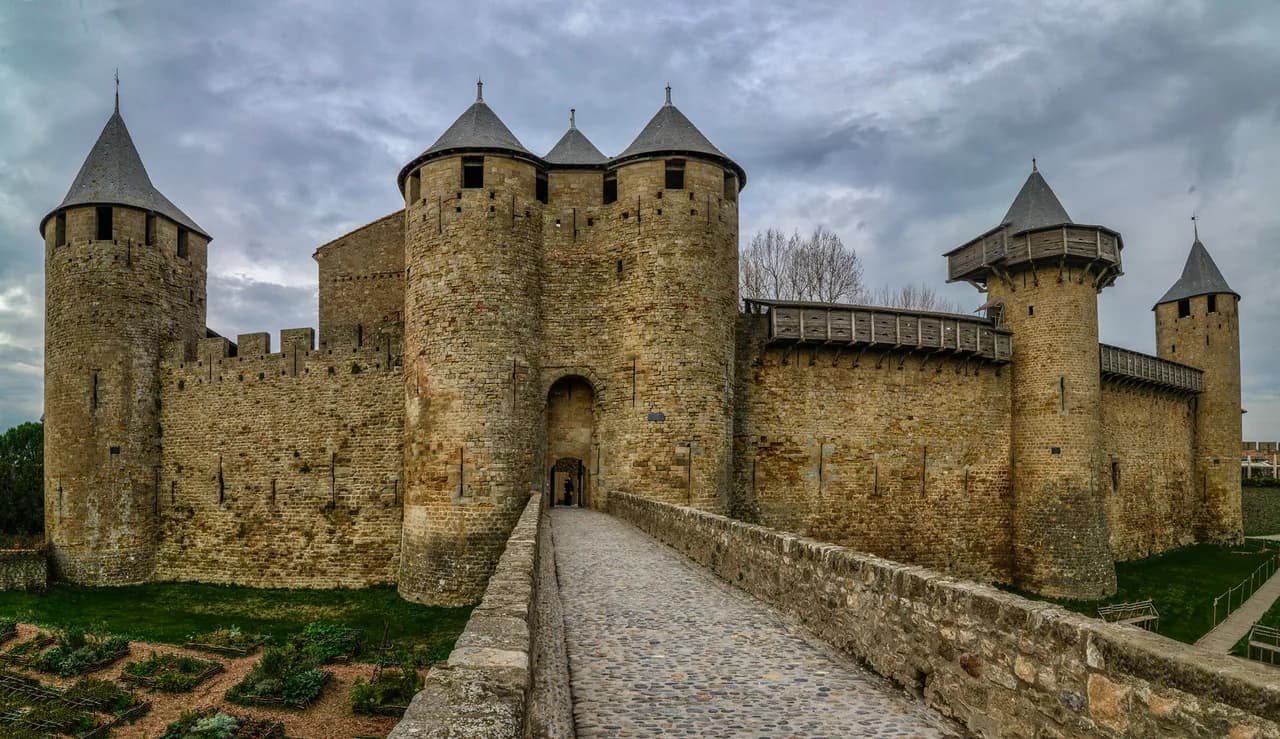
The Cité de Carcassonne is a fortified medieval town crowning a hill above the modern town of Carcassonne, in the Aude department of south-west France. It is one of the best-preserved medieval ensembles anywhere, and it works as a half-day visit that can stretch into a full day if you take the château and a guided tour. The walled streets sit at the top of the hill; everything else in Carcassonne spreads out below them.
Treat the place as one sight with layers. The lanes and ramparts give you the atmosphere at no cost, while the Château Comtal is the fortified centrepiece and the part that explains how the whole defensive system worked. Families get a separate draw in the Medieval Camp and its workshops.
What the Cité de Carcassonne Is and Why It Draws Visitors
The Cité is a complete walled town rather than a single monument: houses, churches and a castle packed inside a double ring of ramparts. Its history reaches back around 2,500 years, and it is a UNESCO World Heritage Site. That combination of scale and survival is what makes it unusual.
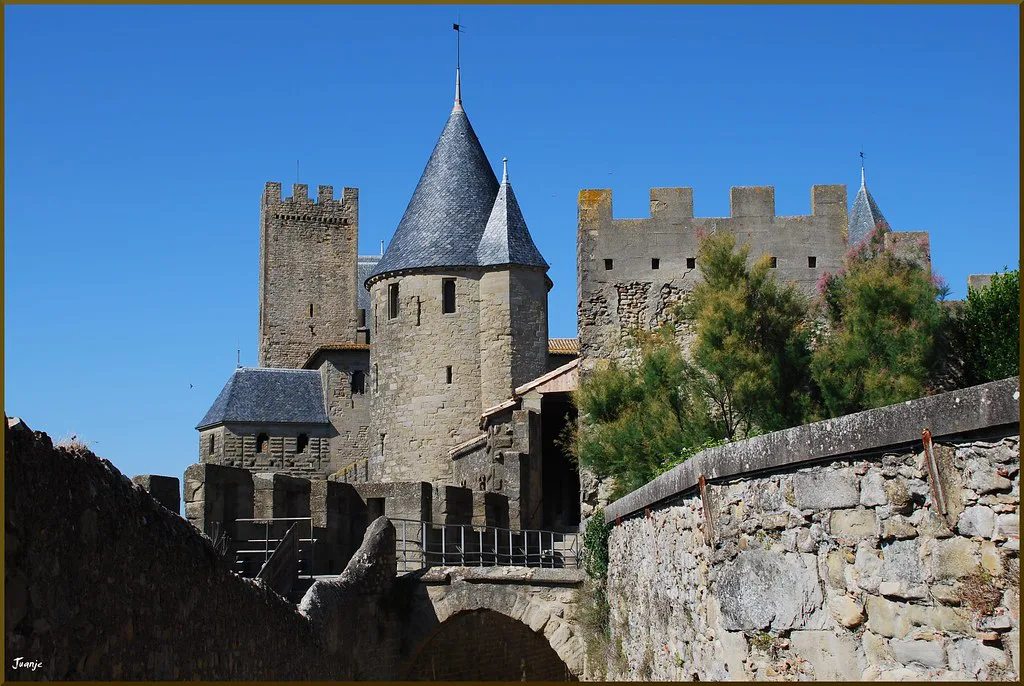
Most visitors come for the picture-postcard view of towers and slate roofs, then discover that the interior rewards slow wandering. The cobbled streets are lined with small shops and places to eat, and the walls can be admired from inside and from the lower town. Allow time to look up: the fortifications change character as you move around the circuit.
The Cité belongs in any short break built around Carcassonne, and it anchors the wider list of sights in the city. If you are weighing how to divide your days, start with the walled town and build the rest of the trip around it.
Where La Cité Sits Above Carcassonne and How to Reach It
La Cité occupies the high ground on the right bank of the Aude, looking across at the newer town. The two are close enough to walk between, and the climb is the main practical decision of the day. The Pont Vieux is the historic crossing over the river and gives the classic approach, with the walls rising ahead of you as you cross.
From the bridge, the route up to the gates climbs steadily through streets below the walls. The slope is real and the surface inside is largely cobbled, so decent shoes matter more than any other bit of kit. If walking uphill is a problem, a taxi or a lift up the hill is worth arranging before you set out.
Coming from the lower town, the Bastide Saint-Louis side gives you shops, markets and the everyday city, which makes a useful contrast either before or after the climb. See how the two halves of Carcassonne fit together before you commit your afternoon to one of them.
The Walls and Cobbled Streets: What to See on a First Walk
Start at the main gate and walk the length of the central street, which carries you through the town's spine. The lanes off it are quieter and often steeper. The towers and curtain walls are best appreciated by stopping at the open stretches where the ramparts reveal their full height.
The Basilique Saint-Nazaire sits inside the walls and is the one interior most visitors should not skip. Its windows and stonework give the visit a different register from the military architecture outside. Step in between stretches of walking rather than treating it as a separate outing.
Walking the ramparts is the highlight of Carcassonne for many visitors, with towers to climb and long views over the Aude and towards the Pyrenees.
The château and its museum complete the picture of how the fortress was held, and the two together justify most of a morning.
Château Comtal: The Centrepiece and Its History
The Château Comtal is the castle within the Cité, built into the defences at its heart. The first stones were laid in 1130 and the building was reshaped by successive fortifications over the following centuries. In the 13th century the former Trencavel palace became a château comtal.
It was abandoned between the 17th and 19th centuries and has since been restored, so what you see now is a careful reconstruction of its former state. Guided tours explain the building and the role it played in French history. Look for the tour options at the ticket desk rather than assuming a self-guided route covers everything.
The scale of the château is smaller than the outer walls suggest, so it slots neatly into a half-day rather than swallowing one. Pair it with the ramparts for the full picture of the defences. Buy your ticket before you climb if you want to avoid a second queue at the top.
The Medieval Camp and the Ateliers Médiévaux for Families
Inside the Cité, a reconstructed medieval camp brings to life the household of a lord travelling to meet his subjects. Historical events, educational workshops and demonstrations of medieval crafts run in the setting. It is a good way to give children something active between stretches of sightseeing.
The Ateliers Médiévaux are the family workshops, aimed at children aged 6 to 11. They introduce the trades and skills of the Middle Ages and run every Wednesday and weekend, plus every day during school holidays. Time your visit around one of those days if the workshops are the reason you are bringing children.
The Night Lantern Guided Tour of the Medieval City takes you through the medieval streets after dark, lantern in hand, with the history of the walls revealed in a new light. It suits older children and adults better than a full day of walking. Book ahead in busy periods, since places on evening tours are limited.
How Much Time to Allow Inside the Cité
Three to four hours covers the streets, the basilica and the château at an unhurried pace. Add an hour if you want a sit-down lunch inside the walls or a guided tour. Families should allow longer, because the workshops and the camp absorb time quickly.
A full day makes sense if you are combining the Cité with the lower town. A half-day is enough if the castle is the priority and you are content to see the streets in passing. The trade-off is depth against breadth: the lanes reward wandering, but the ticketed sights reward attention.
If Carcassonne is one stop on a longer trip, two nights gives you a comfortable split between the walled town and the Bastide. Use an evening for the lower town and a morning for the climb.
Tickets and Opening Times: Where to Check Before You Go
Ticket prices, opening hours and any closure days for the château and ramparts are set by the site and change with the season. Check the official Château et Remparts de la Cité pages before you travel, and buy in advance if you are visiting in high summer. The ticket covers the castle and the rampart walk, so it is the one purchase that matters.
Guided tours and the evening lantern walk have their own arrangements, and places are limited. Confirm times when you arrive or when you book, rather than relying on a schedule you saw months earlier. Group tours in particular can fill up on weekends.
The medieval camp and its workshops follow the weekly pattern of Wednesdays, weekends and daily school-holiday sessions. That rhythm is the one reliable planning tool for families. Confirm the current programme at the camp itself on the day.


Practical Trade-offs: Crowds, Walking Surfaces and Steep Lanes
The Cité is compact, and in peak season the main street can feel crowded. Going early in the morning or later in the afternoon gives you quieter lanes and better light on the walls. The side streets empty out quickly once you leave the central axis.
Cobbles, steps and sloping streets are constant, so pushchairs and wheelchairs face a challenge in the older sections. Wear shoes with grip and carry water in summer. The climb from the lower town is the hardest part; once inside the walls, the walking is gentler than it looks from below.
Eating inside the walls costs more than eating in the Bastide, which is the usual trade-off for a captive audience. A picnic on the ramparts, or lunch in the lower town before the climb, keeps the day affordable. Shops inside the Cité are geared to visitors, so buy anything practical below.
What Is Nearby on the Same Visit
The Pont Vieux is the natural companion sight, giving you the river crossing and the best view back up at the walls. Walk it at the end of the day when the light softens. It costs nothing and takes minutes.
Down in the Bastide, the Cathédrale Saint-Michel anchors the grid of streets that make up the everyday town. It is a different kind of building from the basilica up the hill, and a reminder that Carcassonne has a working life beyond the postcard.
The Halle aux Grains in the lower town is the place to look for local produce and a sense of the city's food culture. Combine it with a walk along the Bastide's straight streets. It makes a good counterweight to the medieval circuit.
If you have time for one more stop, the walled town and the riverbank together give you the essential Carcassonne. Beyond that, the wider region offers Cathar castles and vineyards, which are a separate trip rather than an add-on to a short break.
Plan Your Visit
Build your day around the Château Comtal and the ramparts, with the streets and basilica filling the gaps. Arrive early, wear proper shoes and keep the climb in mind when you plan the route. That gives you the best of the Cité without exhausting yourself.
Check the official ticket pages for current hours and prices before you go, and confirm the workshop programme if you are bringing children. Everything else you can decide on the day.
Explore more Carcassonne guides
Frequently Asked Questions
What is there to see inside the Cité de Carcassonne?
The walled town holds cobbled lanes, the Basilique Saint-Nazaire, the Château Comtal with its museum, and a reconstructed medieval camp with craft workshops aimed at children aged 6 to 11. The ramparts can be walked as part of the castle ticket.
How long does it take to visit the Cité de Carcassonne?
Three to four hours covers the streets, the basilica and the château at a relaxed pace. Add an hour for a sit-down meal or a guided tour, and allow longer with children if you plan to join a workshop at the medieval camp.
Is the Château Comtal worth visiting?
Yes, if you want to understand how the fortress worked. The castle sits at the heart of the defences, was begun in 1130 and was reshaped over later centuries, and guided tours explain its history. The rampart walk is usually included with the castle ticket.
Are the medieval workshops suitable for young children?
The Ateliers Médiévaux are aimed at children aged 6 to 11 and introduce the trades and skills of the Middle Ages. They run on Wednesdays and weekends, and every day during school holidays.
Where do I check ticket prices and opening times?
Prices and hours change with the season, so check the official Château et Remparts de la Cité pages before you travel. Buying in advance is sensible in high summer, when the main street and ticket queues are busiest.
Can I visit the Cité de Carcassonne on foot from the lower town?
Yes. The climb from the Bastide up to the gates is steady but manageable for most people, and the Pont Vieux gives the classic approach across the Aude. Wear shoes with grip for the cobbles and allow extra time if you are pushing a buggy.