Best Time to Visit Ajaccio: When to Go Guide
Pick the best time to visit Ajaccio with typical monthly temperatures, rainfall and sunshine, plus how each season affects crowds and what is open.
On this page
For most weekend trips from the UK, Ajaccio works best from late April to early June or from September into mid-October. Those windows give comfortable walking temperatures along the marina and through the old town, while July and August bring the driest, sunniest and busiest conditions. Winter is mild by British standards, but short daylight and a thin events calendar change what a short break feels like.
Ajaccio's climate is Mediterranean, and the figures below are long-run monthly averages rather than a forecast. The city's shape matters too: the waterfront, Place Foch and the market sit on a compact strip between the sea and the hills, so a wet or hot day is felt mostly in how far you plan to walk.
The Short Answer: Which Months Suit Which Trips
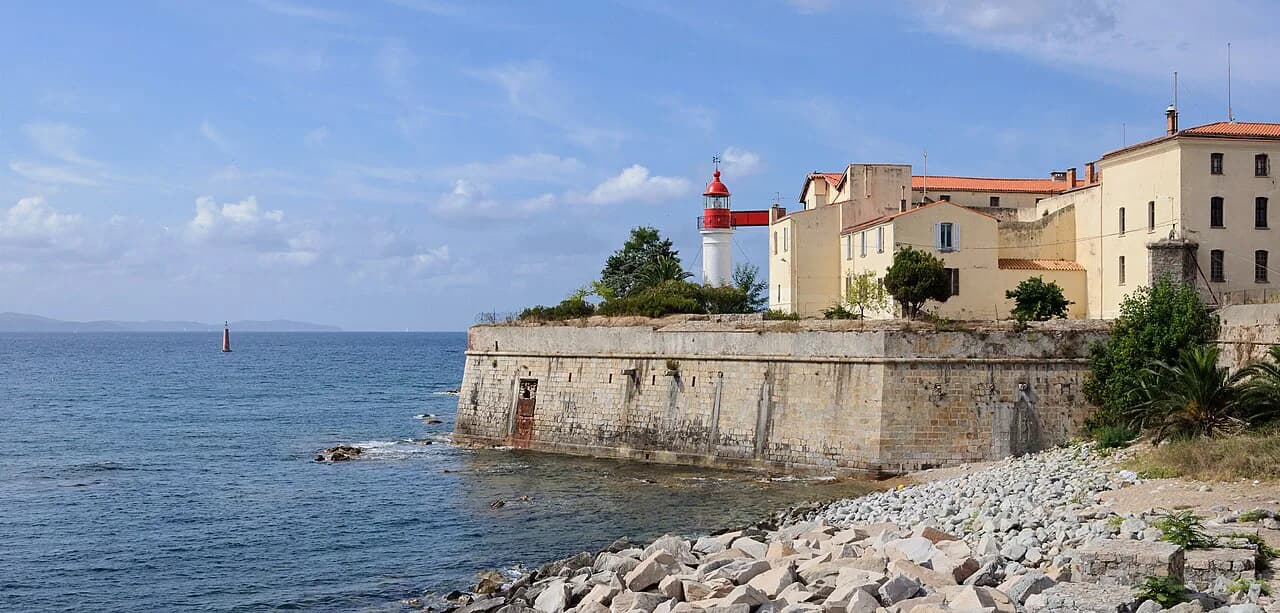
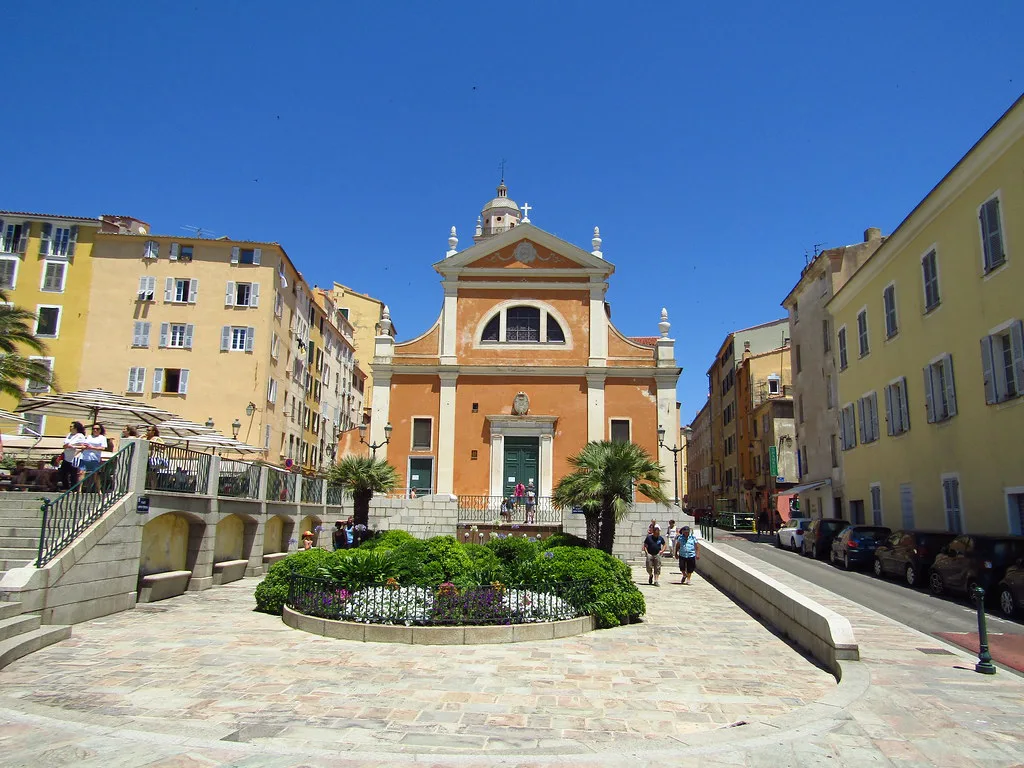
A first weekend is easiest in May, June, September and early October, when daytime temperatures sit in the low twenties and you can cover the harbour, the citadel area and the Fesch quarter on foot without heat exhaustion. An art-and-Napoleon trip favours spring and autumn for the same reason: the Fesch Museum, the cathedral where Napoleon was baptised and Maison Bonaparte are all close together and reward unhurried hours.
A beach-led break points at July and August for the driest, sunniest stretch, with the trade-off being crowds, especially when cruise ships are in. Late September often gives warm sea and softer light with fewer people on the sand. The Imperial Chapel opens only from May to the end of October, which rules it out for a deep-winter visit.
Ajaccio's Climate in Brief: Mediterranean, Mild Winters, Dry Summers
Average maximum temperatures run from roughly 14°C in January to 29°C in August, and the rainfall pattern is sharply uneven. July averages about 10 mm of rain over a single wet day, while November and December average around 96 to 97 mm across 11 to 13 wet days. That contrast is the single most useful fact for planning: summer is reliably dry, late autumn is not.
Daylight follows the same curve, from about four hours of sunshine a day in December and January to roughly 12 in July. Snow is rare and winters are mild, though the city can see violent storms in autumn and spring. Build a wet-weather alternative into any trip between October and March.
Spring (March to May): Temperatures, Rainfall and Sunshine
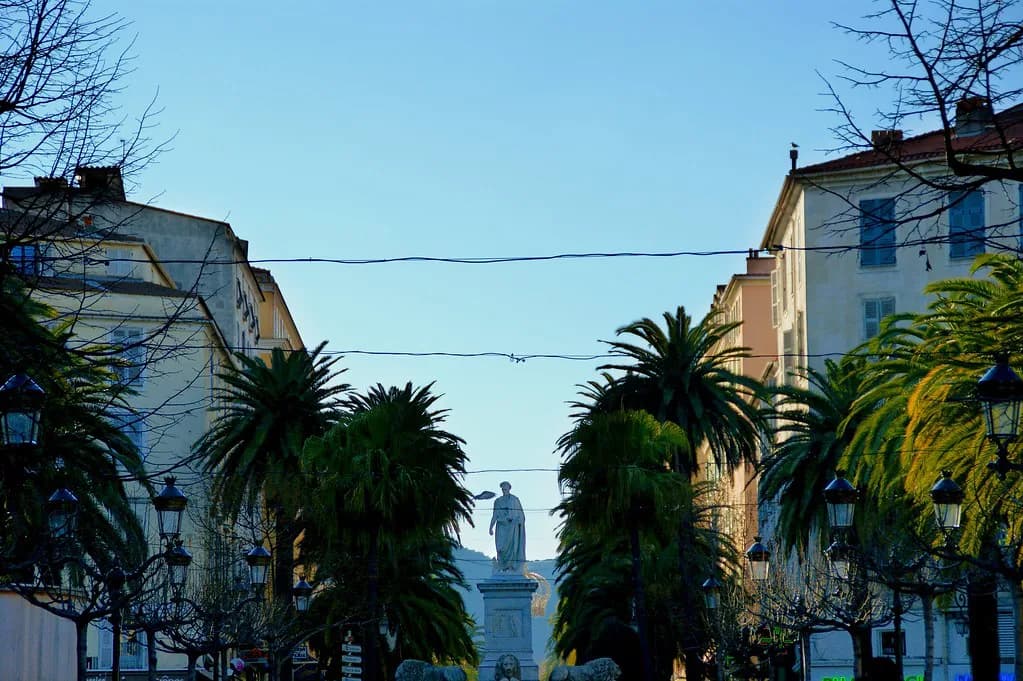
March averages about 17°C by day with around 52 mm of rain, then April lifts to 19°C and May to 22°C, with rainfall falling to about 49 mm. Sunshine climbs from six hours a day in March to ten in May. In practice, late May is the sweet spot for a weekend: warm enough for a T-shirt on the promenade, cool enough to climb towards the Napoleon monument on Place d'Austerlitz without wilting.
The Imperial Chapel opens from May to the end of October, so a late-spring visit finally puts it on the table alongside the Fesch Museum next door. May also sits before the summer surge of ferry arrivals and day visitors.
Summer (June to August): Heat, Dry Spells and the Busiest Beaches
June averages 26°C by day with about 20 mm of rain over four wet days; July and August reach 28 to 29°C with 10 to 15 mm of rain and just one or two wet days. Sunshine sits at 11 to 12 hours a day. Those are excellent beach numbers, and the city beaches such as Plage Saint-François next to the citadel make a swim possible without leaving the centre.
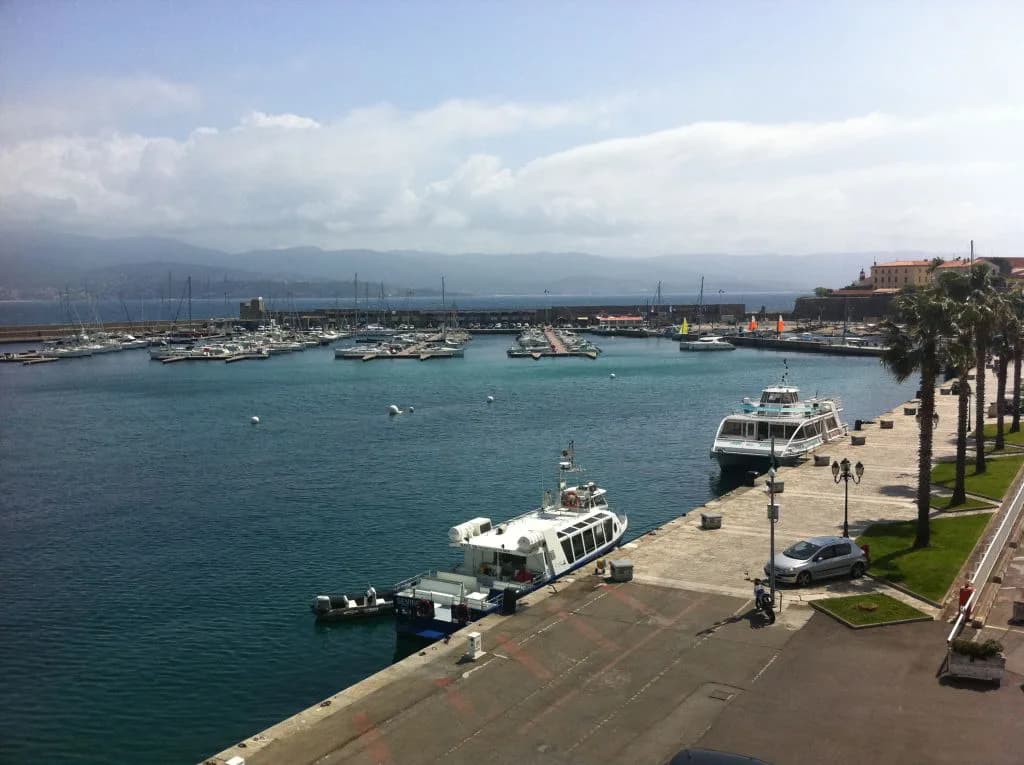
The trade-off is volume. July and August pack the marina, the market and the ferries, and the centre feels noticeably busier when a cruise ship docks. Sightsee early, save the shaded Bois des Anglais path or a museum for the middle of the day, and leave the beach for late afternoon.
Autumn (September to November): The Wettest Months and What That Means
September still averages 27°C with about 49 mm of rain over six wet days, and October cools to 23°C. November is a different proposition: 19°C by day and 96 mm of rain across about 11 wet days, with sunshine down to five hours. Early September to mid-October is the realistic autumn window for a short break; late November is for museum-heavy trips and a rain jacket.
Wet days are when the compact, walkable centre earns its keep. The cathedral, the Fesch Museum and the old town lanes are minutes apart, so you can move between them without a car. Autumn storms can be violent, so keep one indoor day in reserve rather than booking every hour outdoors.
Winter (December to February): Mild Days and the Quietest City
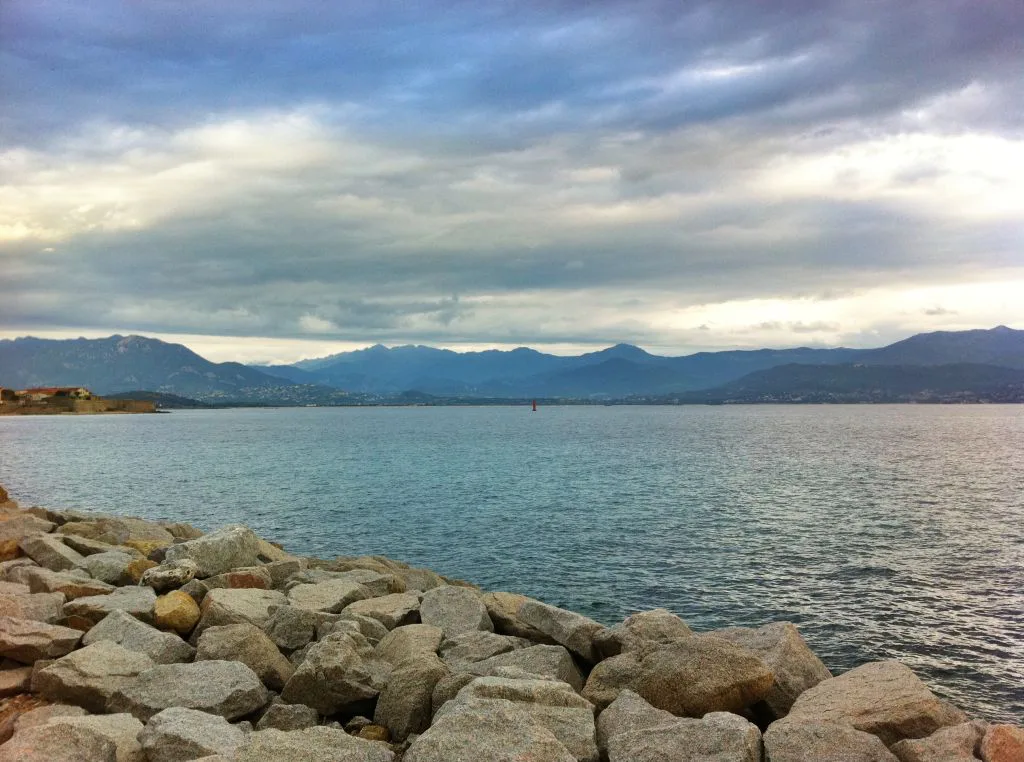
Winter days average 14 to 16°C, which is mild enough for the marina and the old town in a coat, but sunshine drops to four to five hours and December brings about 97 mm of rain over 13 wet days. The city is at its quietest, so you get the squares and streets largely to yourself. The catch is that short daylight compresses what you can see, and some seasonal sights are closed.
Maison Bonaparte closes on Mondays and shuts for a short break around lunchtime, which makes a Monday arrival in winter a poor use of a short trip. The Imperial Chapel is outside its May-to-October window, so winter visits should lean on the Fesch Museum and the cathedral instead.
Month-by-Month Temperature and Rainfall Table
The table below uses average daily maximum and minimum temperatures, monthly rainfall and wet-day counts, with sunshine hours per day. Treat the figures as long-run averages for choosing a month, not as a prediction for your dates. Averages hide the odd washed-out week, especially in October and November.
Read it in two columns. From June to August expect highs of 26 to 29°C, rainfall under 20 mm and one to four wet days; from October to December expect highs of 16 to 23°C and 87 to 97 mm of rain over 10 to 13 wet days. April, May and September are the balanced middle ground, with highs of 19 to 27°C and moderate rain.
Beaches and Sea Time: When the Weather Suits the Coast
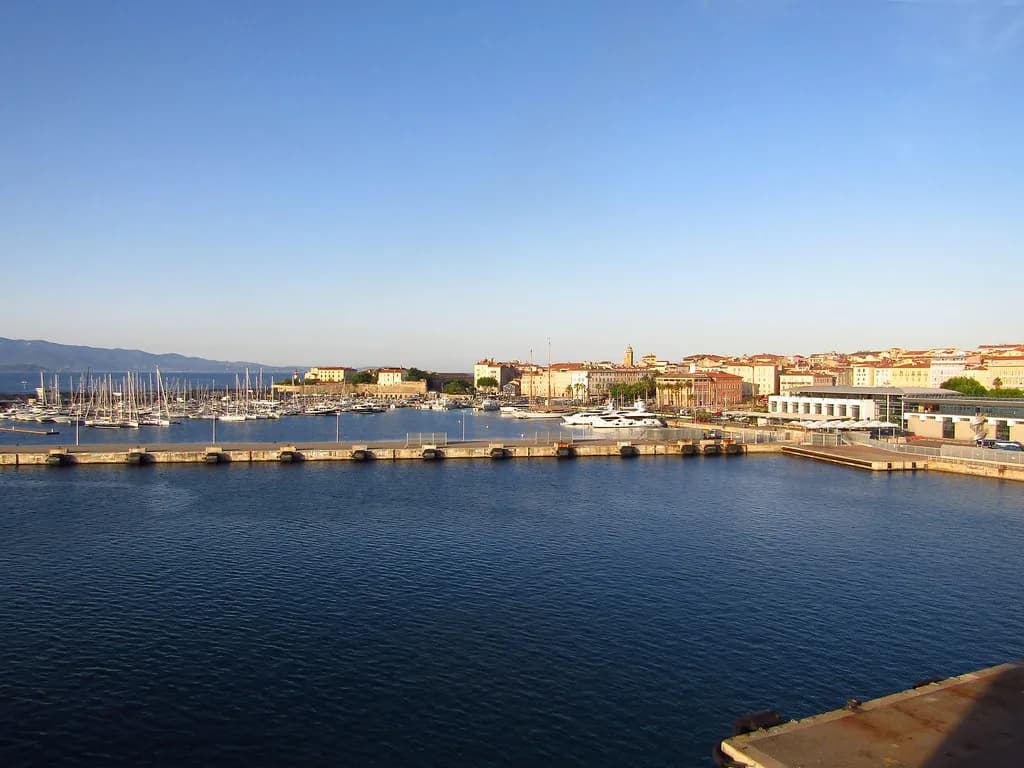
For swimming and lounging, July and August are the obvious picks: the driest, sunniest, hottest months, and the city beaches sit within walking distance of the centre. June and September are the connoisseur's compromise, warm enough for the water with fewer people on the sand and easier bus and road access to the coast.
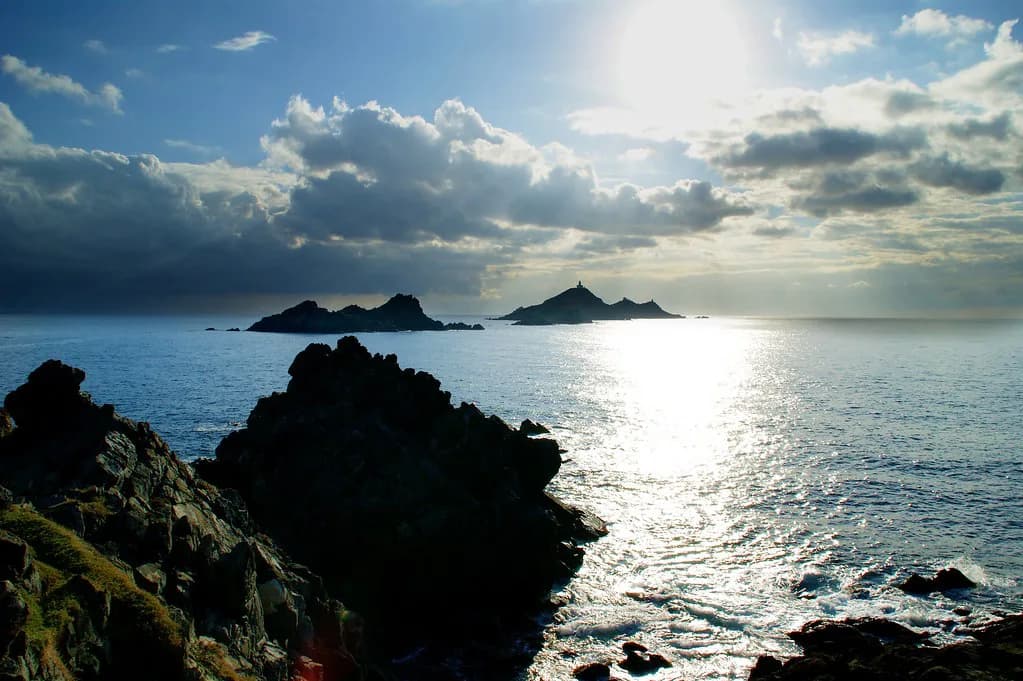
Beyond the centre, the Route des Sanguinaires follows the coast towards Pointe de la Parata and the Îles Sanguinaires, and the Petit Train runs guided rides from Place Foch out to the pointe. Beach time works best in the morning in high summer, before the heat peaks and the afternoon ferries and tours land.
Rainy-Day Fallback: Museums and Indoor Sights in the Old Town
The Fesch Museum holds Italian paintings from the 14th to the 18th century, including works by Botticelli, and sits on Rue Cardinal Fesch. The cathedral where Napoleon was baptised is a few minutes away, and the old town lanes and Genoese quarter give you a compact, sheltered circuit when rain sets in. Book a wet-weather day around these rather than around the coast.
Winter and late autumn are exactly when this indoor circuit matters, because outdoor plans are the first to fail. A day built on the Fesch Museum, the cathedral and a long lunch needs no more than a coat and an umbrella, and Rue Cardinal Fesch keeps you close to cafés between showers.
Cruise-Ship Days and How They Change the Centre
When a cruise ship docks, the centre and the marina crowd up quickly, and the market hall near Place César Campinchi fills with day visitors. The market runs from Tuesday to Sunday, roughly 7:00 to 13:00, opens on Mondays in summer, and is liveliest on Wednesdays and Saturdays when more local sellers join. Go early on a market day and you get the produce and the space.
Ships also push up demand along Cours Napoléon and the waterfront at lunchtime. Move outlying sights to ship days: the Napoleon monument and the Bois des Anglais path above town stay quieter, and the walk up Cours Grandval is a good use of an hour when the harbour is packed.
Outside the peak weeks of July and August, ship traffic thins out and the market mornings are calmer. Midweek days in May, June and September give the best mix of open sights, quiet streets and reliable weather.
Shoulder-Season Trade-offs: Daylight, Openings and Walking Comfort
May, June, September and October give you better walking weather and longer usable days than high summer, when midday heat pushes you indoors. Daylight in May and September is still generous, around nine to ten hours of sunshine, so you can split the day between town and coast. The compromise is a higher chance of rain in October.
Opening windows shift with the season too. The Imperial Chapel runs from May to the end of October, and Maison Bonaparte closes on Mondays with a lunch break. Plan a midweek shoulder-season trip and you clear most of these hurdles at once.
If you like the sound of a shoulder-season city break in France, the same logic applies elsewhere: warm-but-not-hot weather and thinner crowds. Compare the best time to visit Aix-en-Provence, where the Cours Mirabeau is far more pleasant outside high summer, or the best time to visit Annecy, where Lake Annecy looks best in late spring and early autumn.
Seasonal Events and Closures to Plan Around
Three seasonal markers matter most. The market follows a Tuesday-to-Sunday pattern with summer Mondays and Wednesday/Saturday as the big days; Maison Bonaparte closes on Mondays and pauses around lunch; and the Imperial Chapel opens only from May to the end of October. Around those, the city's regular sights run through the year.
Plan a Monday-only trip carefully: the market is shut outside summer, Maison Bonaparte is closed, and the Fesch Museum becomes your main indoor option. A Tuesday-to-Sunday trip covers everything.
Verdict: Our Picks for a First Weekend, an Art Trip and a Beach Break
For a first weekend, pick late May, June or September: warm days, manageable rain and daylight long enough to walk the marina, the old town and the citadel area in one relaxed loop. For an art-and-Napoleon trip, aim for May to early June or September to mid-October, when the Imperial Chapel is open and the Fesch Museum, cathedral and Maison Bonaparte sit together with no heat pressure.
For a beach break, July and August deliver the driest, sunniest weather, with June and September as the softer alternatives. Whatever month you choose, the weather is a set of averages, so build in one flexible day and let the forecast settle the rest.
Plan Your Visit
The best time to visit Ajaccio depends on what you want from the trip. Late spring and early autumn suit sightseeing and walking; midsummer suits the sea and the driest skies; winter is mild and quiet but short on daylight and seasonal openings. Weigh those trade-offs against your own priorities, and let the weather decide which sights you put first.
Before booking, check the market rhythm, Maison Bonaparte's Monday closure, and the Imperial Chapel's May-to-October window against your dates. If your trip is short, a Tuesday-to-Sunday plan gives you the best odds of everything being open at once.
Frequently Asked Questions
What is the best month to visit Ajaccio?
Late May, June and September give the best balance of warm days, manageable rain and long daylight for walking the city and coast. July and August are the driest, sunniest and busiest, while October and November turn wetter.
How hot is Ajaccio in summer?
Average daily highs reach 26°C in June and 28 to 29°C in July and August, with around 11 to 12 hours of sunshine a day and little rain. Those are long-run averages, so expect variation year to year.
How much rain does Ajaccio get in autumn?
September averages about 49 mm over six wet days, and October about 87 mm over 10 wet days. November is much wetter, with roughly 96 mm across 11 wet days, so plan indoor options.
Is Ajaccio worth visiting in winter?
Yes if you want a quiet, mild city break with museums and the old town as the focus. Days average 14 to 16°C but sunshine drops to four to five hours, and the Imperial Chapel is closed outside May to October.
When is the quietest time to visit Ajaccio?
December to February is the quietest stretch, when the squares and streets are least crowded. Short daylight and some seasonal closures mean you should plan around indoor sights and check openings before you go.
Do museums in Ajaccio close on Mondays?
Maison Bonaparte closes on Mondays and shuts briefly around lunchtime. The market is also closed on Mondays outside summer, so a Monday trip is better built around the Fesch Museum and the cathedral. Check individual openings before you travel.
When can I visit the Imperial Chapel in Ajaccio?
The chapel opens from May to the end of October and can be visited with the same ticket as the Fesch Museum. Outside that window it is closed, so plan spring, summer or early autumn if it matters to you.
When is the Ajaccio market open?
The market runs from Tuesday to Sunday, roughly 7:00 to 13:00, and opens on Mondays in summer. Wednesdays and Saturdays draw the most local sellers, and weekends add a street market alongside the food stalls.
Sources
Notes for French city breaks
Optional updates to our guides.
You might also like
Continue reading
More guides you'll find useful