
Îles Sanguinaires, Ajaccio: How to Visit the Archipelago and Pointe de la Parata
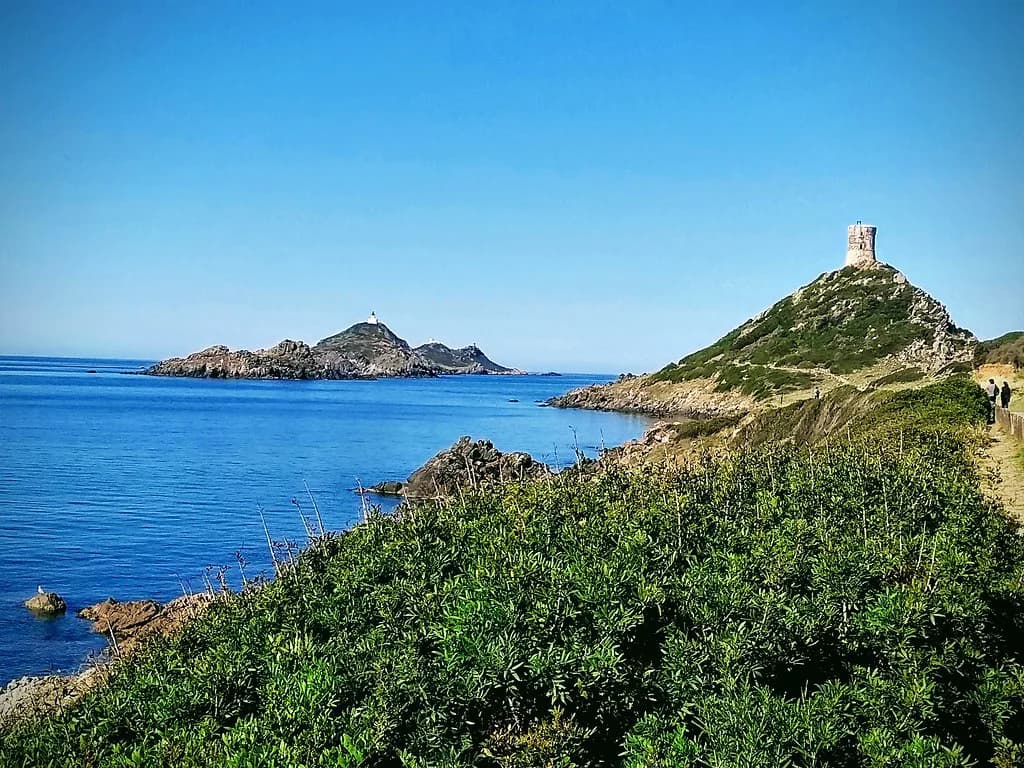
The Îles Sanguinaires are four rocky islets off the Pointe de la Parata, at the northern mouth of the Gulf of Ajaccio, and they are the city's signature view. You can look at them for nothing from the headland, or pay for a boat that lands on Mezu Mare, the main island. The choice between those two outings shapes your whole half-day.
The archipelago and the Parata point together hold the Grand Site de France label, awarded on 22 March 2017 for the sustainable management of this landscape. The site is protected, rocky and exposed, with the sea on three sides of the headland. Plan around wind and light rather than around a list of sights.
What the Îles Sanguinaires are
The group is an archipelago of four rocky islands of magmatic origin, formed of dark rock with paler granite, sitting at the entrance to the Gulf of Ajaccio. Mezu Mare is the largest and the only one most boat trips reach. The others are seen from the water or from the headland.
Mezu Mare carries more than 150 plant species, some of them rare or absent elsewhere in Corsica. The islands are also a quiet breeding ground for seabirds, including yellow-legged gulls and, more rarely, Cory's shearwaters. That wildlife is the reason the islets are protected rather than developed.
The name has been attached to this coast for centuries, and Alphonse Daudet gave the islands lasting literary fame in Les Lettres de mon moulin. Human traces on Mezu Mare run from a Genoese tower through a quarantine hospital to a semaphore and a lighthouse. Treat the archipelago as a small inhabited fragment of Corsican history, not just a photo stop.
Where the Îles Sanguinaires sit
The islands lie west of the Parata peninsula, which closes the north side of the Gulf of Ajaccio. The Route des Sanguinaires, the D111, runs about 11 km west from central Ajaccio to the tip, a drive of roughly 25 minutes by car and around 40 minutes by bicycle. The road ends at a large car park beside the headland.
Everything on land happens on the Parata headland and the road that leads to it; the islands themselves are reached only by sea. That means a visit splits cleanly into a free walk with the view and a paid crossing with a landing. Work out which one your short break has room for before you set off.
Getting there by car on the D111
Drive the D111 west from the centre of Ajaccio and follow it to its end, where a spacious car park serves the headland. Parking is free outside the summer months and charged during the tourist season, with the rate set locally rather than posted in advance on the sources here. Arrive earlier in the day in high summer if you want an easy space.
A car gives you the most control over timing, which matters if you want to stay for the evening light. The trade-off is the end-of-road car park, which fills in season. The bus and the little train remove that worry entirely.
Getting there by bus: ligne 5 from Place de Gaulle
Bus ligne 5 leaves from Place de Gaulle and runs to Punta de la Parata, calling at Barbicaja, Scudo and Terre Sacre on the way. Lines 1 and 2 only go as far as the Ajaccio cemetery, so check the number on the front before boarding. The bus is the cheapest way to reach the headland without a car.
Because the bus timetable is seasonal, confirm the last return service before you commit to a sunset visit. Missing it leaves you with a long walk back into the city. A midday trip is the safer choice if you are relying on public transport.
Getting there by Trinichellu, the little train
The Trinichellu tourist train departs from Place Foch, opposite the town hall, roughly every 45 minutes between 10am and 7pm. The full loop takes 1 hour 40 minutes and includes a 15-minute stop at the Napoleon cave and the Parata peninsula, with commentary in eight languages. In the year covered by that listing, an adult ticket cost 12 euros and a child ticket 5 euros; treat those as historical figures and confirm the current fare when you book.
The train suits anyone who wants the headland view without driving or reading a bus timetable, and the commentary adds context. The catch is the brief 15-minute stop, which is not enough for the longer Parata loop walks. If walking is the point of your trip, take the bus or drive instead.
Getting there by boat from Ajaccio and Porticcio
Several operators run shuttle services and excursions to the archipelago from the Tino Rossi port in Ajaccio and from Porticcio. Crossings pass the Citadel of Ajaccio and the 18th-century Chapel of the Greeks, then the Parata peninsula, before docking at Mezu Mare. The island stopover is typically about an hour, long enough for the lighthouse, the semaphore and the lazaret ruins.
Excursions run from two to four hours and vary in what they include: a landing, a swimming stop, or a Corsican aperitif on board. Prices ranged from about 35 to 65 euros in the year that guide was updated, depending on the formula and the season, so check the current fare with the boat company you choose. Small speedboats are unsuitable for pregnant travellers and people with back or heart conditions; pick a larger vessel in that case.
Kayaks can also be rented in Ajaccio for a paddle out to the islands, with double kayaks starting at around 20 euros an hour and up to 90 euros for four hours in that same listing. You need to be able to swim. Check the sea state before setting out, since the gulf can turn choppy.
Walking the Pointe de la Parata
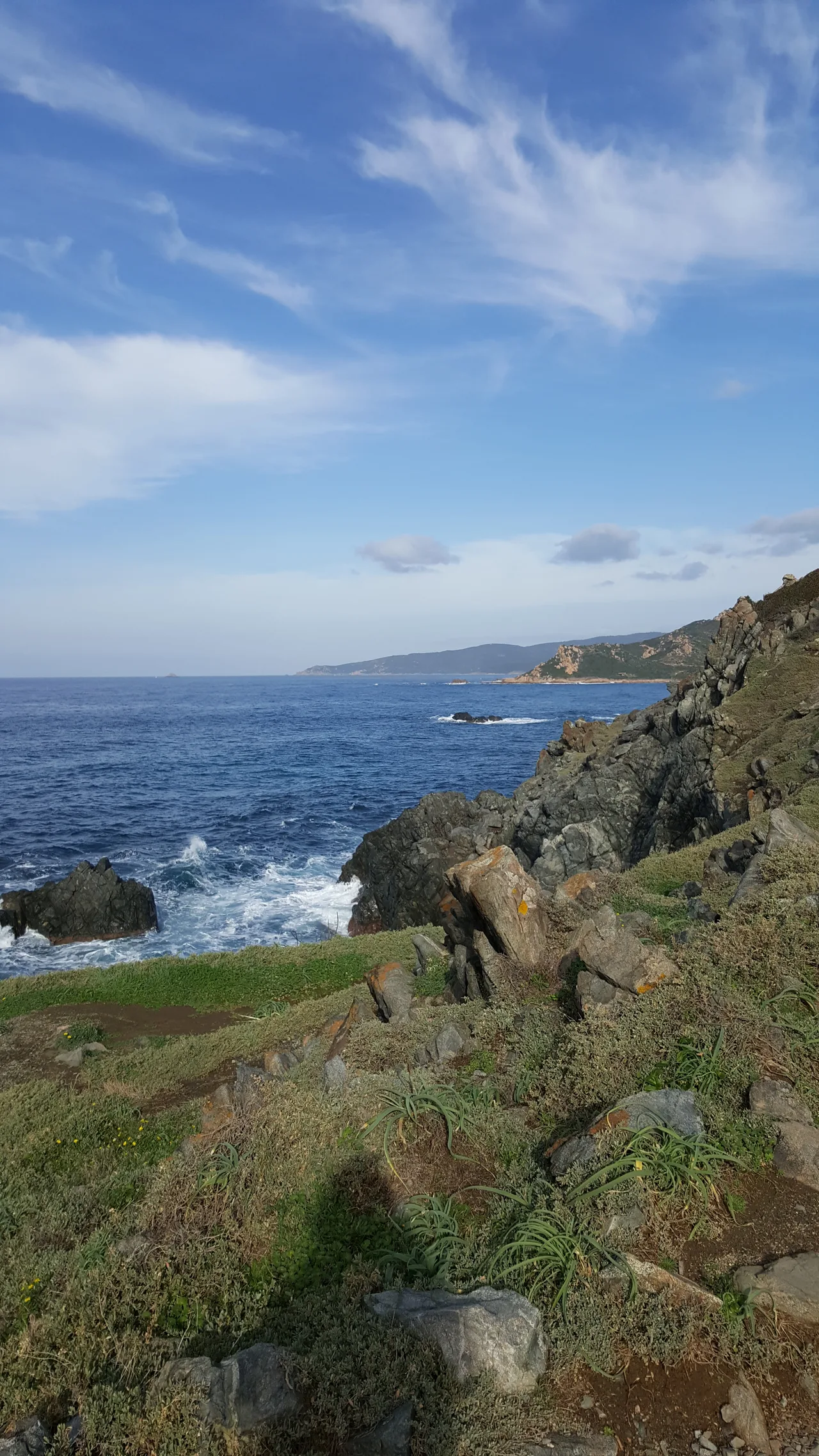
The Tour de la Parata is a 2.7 km loop around the peninsula that takes about 50 minutes, starting from the coastal road beside the Parata car park. Three shorter options branch off it: an easy 20-minute coastal promenade, a 12-minute climb to the tower with the best view of the archipelago, and a sportier 30-minute outer route with some exposed passages. Choose the tower climb if you only have time for one.
The path is rocky underfoot, so trainers or walking shoes are worth the luggage space. Carry water, because the headland is exposed and shade is scarce. Wind layers earn their place even on a warm day.
What you see on Mezu Mare
The main island holds a 16th-century Genoese watchtower, part of the coastal defence chain Genoa built between the 15th and 17th centuries against pirate raids. The semaphore was put into service in 1865 and decommissioned in 1955. The lighthouse, automated in 1985, stands on the site of the old Genoese tower.
Ruins of a lazaret, or quarantine hospital, date from 1806, when Mezu Mare became a sanitary post for coral fishermen returning from Africa. The site was bought by the Conseil Général de la Corse in 1973, which is why the island is now managed as a protected place rather than a private one. Allow most of your stopover for the walk between these structures.
Wildlife and landscape
The islands shelter breeding colonies of yellow-legged gull, black-headed gull, Audouin's gull, crested cormorant and shearwater. On Mezu Mare the flora is unusually rich for such a small, dry rock, with more than 150 species recorded. Spring brings the maquis into flower across the Parata peninsula.
Stay on the marked paths on the island, since the bird colonies nest on open ground and the rock is fragile. Dolphins are sometimes seen in the gulf, but treat any sighting as luck rather than a scheduled part of the trip.
When to go: sunset or clear midday
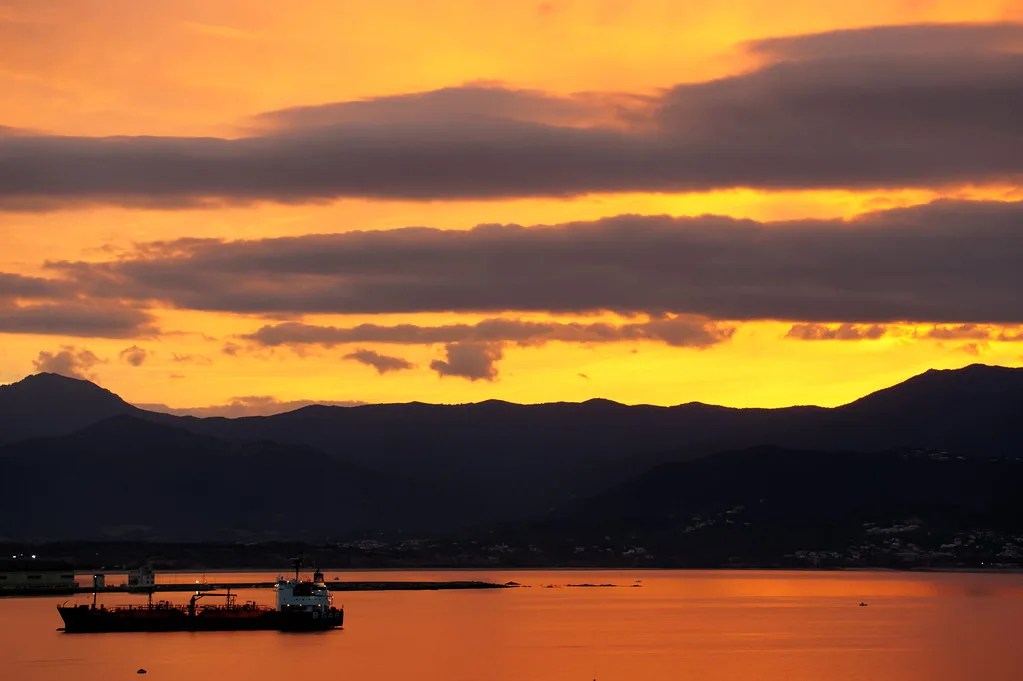
Late afternoon and evening are the strongest times to be here, when the dark rock catches the low sun and the islands live up to their name. Sunset from the Pointe de la Parata is the free version of the experience, and the tower gives the best viewpoint. Set out early enough to find a spot on the headland before the light turns.
A clear midday visit has its own advantages: better visibility for spotting the islets' shape and easier navigation of the rocky paths. The trade-off is glare and heat on the exposed headland. If you are taking the bus, midday also keeps you inside the timetable.
How long to allow and what to bring
Budget half a day in total. The Parata loop alone takes about 50 minutes, the tower climb about 12 minutes from the car park, and a boat excursion runs two to four hours including the crossing. Adding a landing and a headland walk in one afternoon is comfortable if you start early enough.
Wear shoes with grip for the rocky trails on the island and the headland, and bring water, sun protection and a wind layer. Water shoes help if you plan to swim from the rocks. Leave the flip-flops for the beach.
A sensible half-day shape
Walk the Parata headland first, taking the tower climb for the view, then drive or take the bus back into Ajaccio for an afternoon boat departure. Doing it in that order means the headland visit is not squeezed against a fixed sailing time. If you would rather be on the water at sunset, reverse it and walk the headland earlier in the day.
Keep the boat trip as the fixed point and build the rest of the day around it, since departures are limited and sea conditions can change plans. A morning crossing followed by a relaxed headland walk also works well. Either way, one booking and one walk is enough for a weekend.
Nearby: the Sentier des Douaniers and where to eat
The Sentier des Douaniers, the old customs path, starts about 3.3 km from the archipelago and follows the coast for further walking. The Brasserie I Sanguinari sits near the Parata car park with a terrace facing the islands, useful for a meal after the walk. Check its opening days directly before you rely on it.
Back in the city, the Maison Bonaparte and the cathedral fill the history half of an Ajaccio weekend, and the Palais Fesch covers the art. Pair one of them with the islands and you have a balanced two days without overplanning.
What this trip suits and what it does not
The Îles Sanguinaires make a nature half-day, not a full day out. The headland walk is short, the island itself is small, and the appeal is the view and the sea rather than a run of attractions. Travellers who want museums and streets should treat it as one morning of a longer stay.
If you have limited mobility, the boat landing and the rocky island paths will be difficult; the promenade option on the Parata headland is the gentlest way to see the view. Families with young children will find the little train easier than the bus. Decide based on the least mobile member of your group.
Plan Your Visit
Decide first between the free headland view and the paid boat landing, then choose your transport to match: the ligne 5 bus for simplicity, the car for timing, the Trinichellu for commentary, the boat for the island itself. Whichever you pick, give the Parata walk its own hour and do not rush it.
Before you go, check current sailing times, fares and the last bus back, and look at the sea forecast if you are crossing. Parking in high season is charged and the car park fills, so early or late in the day is easier. The rest is weather and light.
Explore more Ajaccio guides
Frequently Asked Questions
Can you walk to the Îles Sanguinaires from Ajaccio?
No. The islands are reached only by boat. You can walk the Pointe de la Parata headland at the end of the D111, which gives the classic view of the archipelago, but the islets themselves are offshore. The bus, car or little train get you to that headland.
How do you get to the Îles Sanguinaires from Ajaccio?
Take bus ligne 5 from Place de Gaulle to Punta de la Parata, drive the D111 to its end car park, ride the Trinichellu little train from Place Foch, or take a shuttle or excursion boat from the Tino Rossi port or Porticcio. The boat is the only option that lands on Mezu Mare.
How long does the boat trip to the Îles Sanguinaires take?
Excursions run from two to four hours depending on the operator and formula, usually with a stopover of about an hour on Mezu Mare and sometimes a swimming break. Check the crossing time when you book, since it affects how you plan the rest of the day.
What is there to see on Mezu Mare?
A 16th-century Genoese watchtower, a semaphore used from 1865 to 1955, the lighthouse automated in 1985, and the ruins of the 1806 lazaret that served as a quarantine hospital for coral fishermen. The walk between them fits comfortably into a one-hour stopover.
Is visiting the Îles Sanguinaires worth it?
Yes, if you want the coastal scenery that defines Ajaccio. The headland view costs nothing and takes an hour; the boat adds a landing, a closer look at the island structures and often a swim. Travellers who want museums and city streets should treat it as a half-day, not the whole trip.
When is the best time to see the Îles Sanguinaires?
Late afternoon and sunset, when the dark rock catches the low light. A clear midday gives better visibility for spotting the islets and easier walking. If you are relying on the bus, check the last return before planning a sunset visit.
What should you bring to the Parata headland?
Shoes with grip for the rocky paths, water, sun protection and a wind layer. Add water shoes if you plan to swim from the rocks on Mezu Mare. The headland is exposed, so shade and shelter are limited.
How much time should you allow for the Îles Sanguinaires?
Half a day. The Tour de la Parata loop takes about 50 minutes, the tower climb about 12 minutes from the car park, and a boat excursion two to four hours. Combining a walk and a crossing is comfortable if you start early enough.