
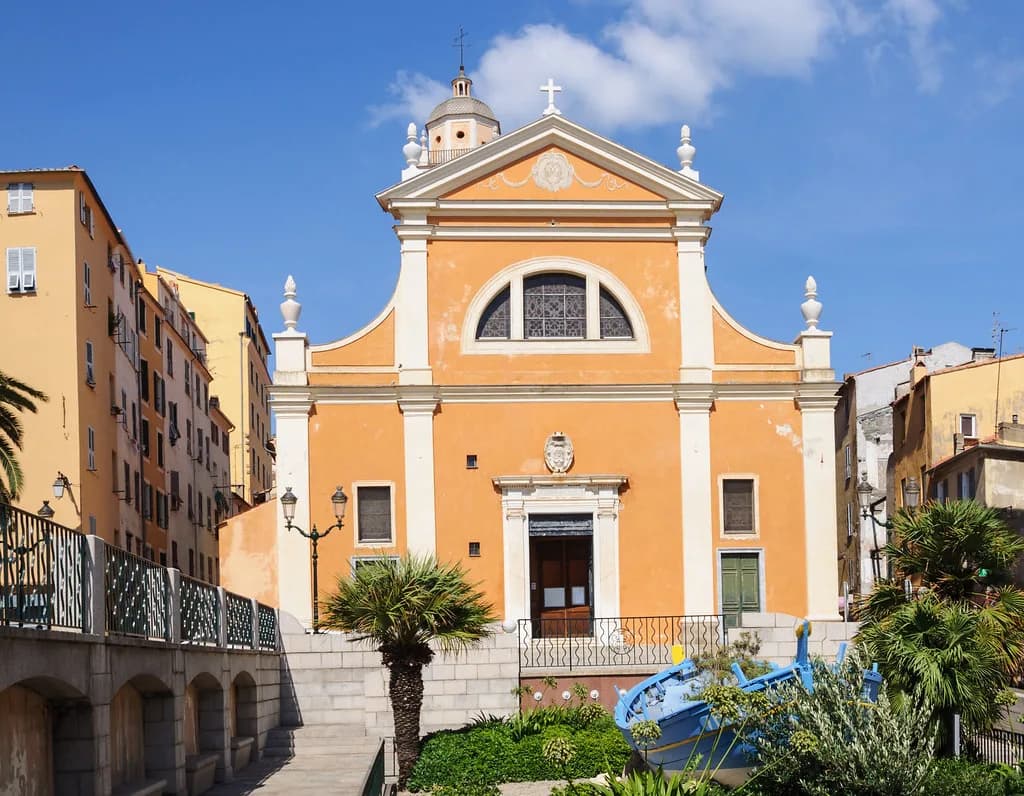
Ajaccio Cathedral: A Visitor's Guide to Santa Maria Assunta
Ajaccio Cathedral is a compact Renaissance church in the old town, worth roughly half an hour of a morning or afternoon in the city. It rewards a slow look upwards rather than a long stay: the ceiling, dome and altar carry the visit, and the Napoleonic connection at the entrance gives it its local weight. Slot it into a wander through the streets between the port and the market rather than treating it as a standalone outing.
Ajaccio Cathedral in brief
The cathedral is dedicated to Santa Maria Assunta, Saint Mary of the Assumption, and is also known as the Cathédrale Notre-Dame-de-l'Assomption. It is a Roman Catholic cathedral in Ajaccio, the capital of Corsica, and sits in the city's old quarter. Treat it as a heritage stop of modest size: the interest is in the building itself and its associations, not in a long sequence of rooms.
Where the cathedral sits and how to find it
The cathedral is listed at 20000 Ajaccio, placing it in the old town close to the waterfront rather than out in the modern suburbs. Approach on foot through the old quarter, where narrow streets make driving and parking a poor use of a short city break. If you are coming from the port or the main squares, the cathedral works best as a stop on a walking loop rather than a separate journey.
Because the surrounding lanes are tight and signposted for pedestrians, allow a little wandering time rather than expecting a direct line from the harbour. Use the cathedral as one fixed point in a half-day route through the old town. For a wider set of nearby stops to build that route around, the Ajaccio Attractions: 6 Visitor Guides collection covers the main sights in one place.
The building: a 16th-century Renaissance church
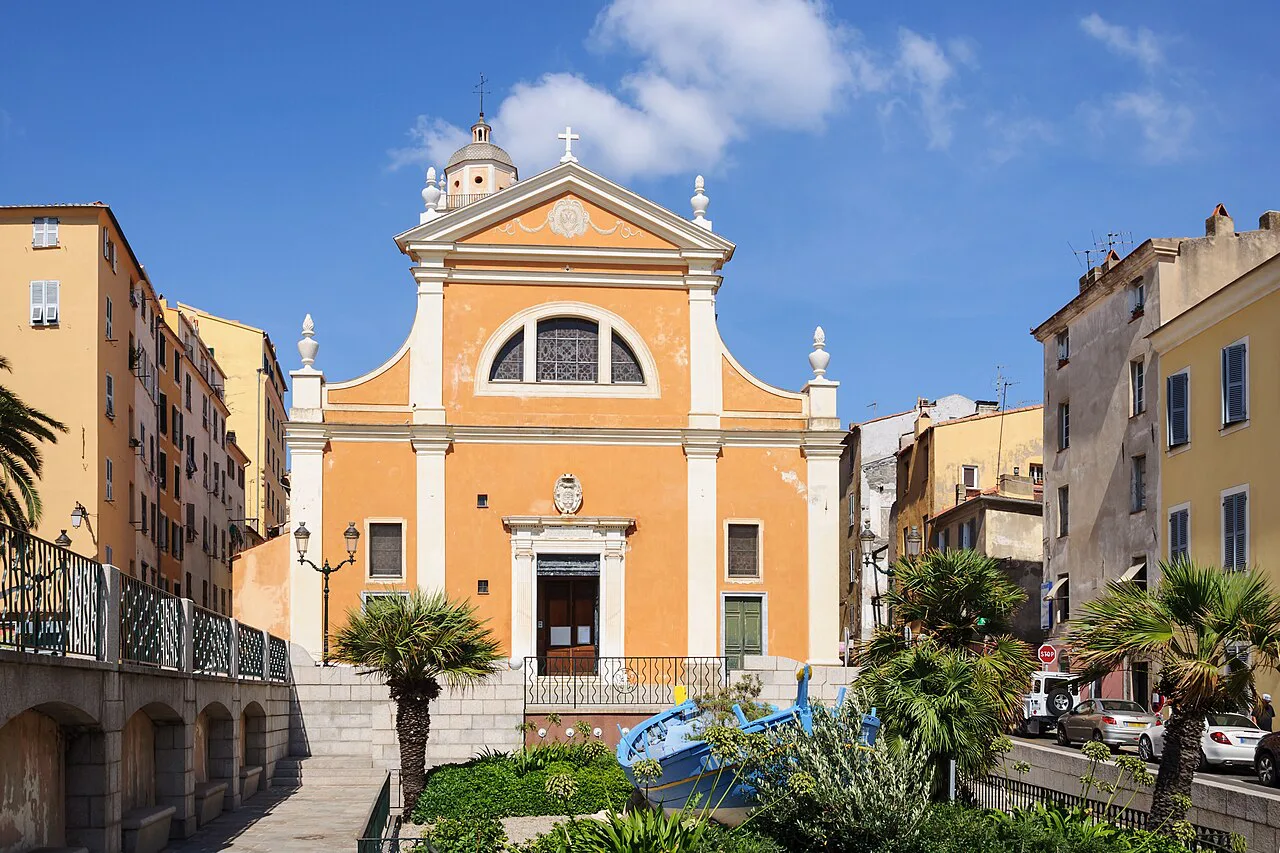
Santa Maria Assunta was built in the second half of the 16th century and is a good example of monumental Renaissance architecture. Its design is attributed to Giacomo Della Porta, the architect associated with Pope Gregory XIII, though this remains an attribution rather than a documented certainty. Read the facade with that in mind: it is restrained by comparison with Corsica's later Baroque churches, which is precisely what makes the interior a surprise.
One travel account dates the construction to 1577–1593, a narrower span within that second half of the 16th century; treat the specific years as reported detail rather than a fixed record. The same building is described as combining Renaissance structure with Baroque and Rococo detailing, which explains the contrast between the plain exterior and the ornate interior. That combination is the main architectural reason to step inside rather than simply photograph the front.
What to look for inside
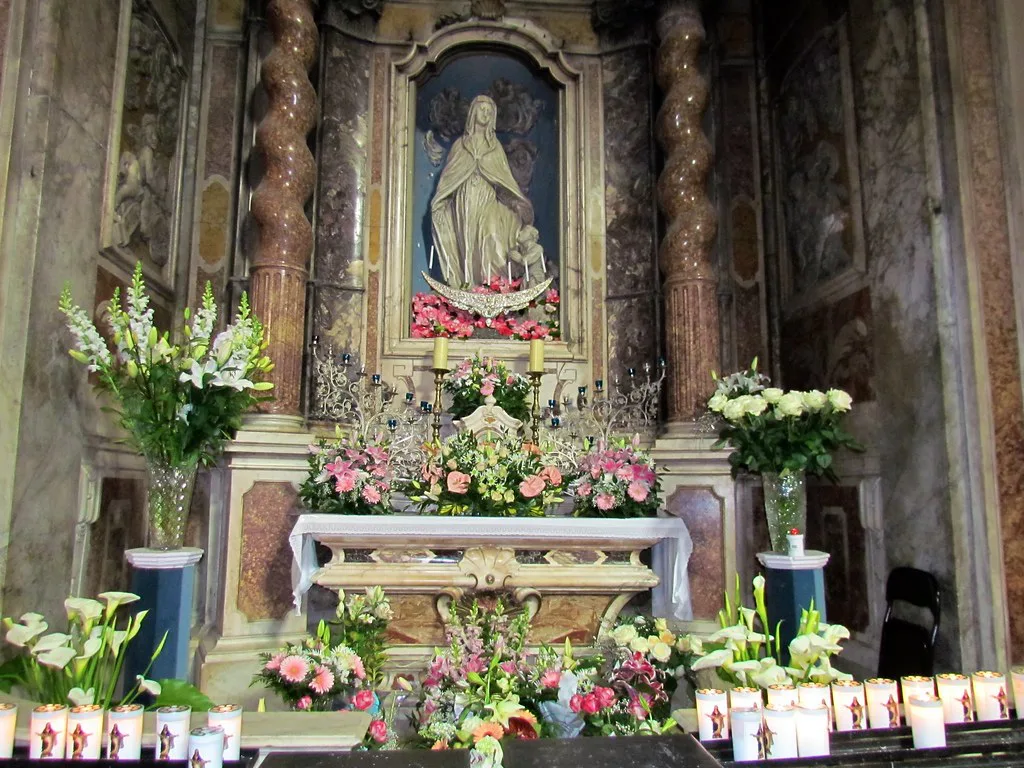
Look up first. The dome, the decorated ceiling and the monumental staircase are the elements singled out as remarkable, along with stained-glass windows that filter the light onto the nave. The interior reads as Baroque and Rococo against the Renaissance shell, so the ceiling and altar end are where to spend your time. Walk to the back of the nave for the widest view of the dome before moving forward.
Behind the altar hangs a large painting that rewards a closer look, and the pipe organ, built in 1849 by Aristide Cavaillé-Coll and since restored and electrified, sits as a piece of 19th-century craft in its own right. None of this needs specialist knowledge to enjoy, but knowing what you are looking at turns a two-minute walk-through into a proper stop.
Napoleon's baptism and the entrance plaque
Napoleon Bonaparte was baptised in this cathedral in 1771, and a marble plaque at the entrance carries his later wish to be buried with his ancestors in Ajaccio rather than on Saint Helena. The plaque is the detail most visitors come for, so look for it on the way in rather than on the way out. It is a small feature in a small church, but it anchors the building in the city's most famous family.
How much time to allow
Budget around 20 to 30 minutes inside. That is enough to read the plaque, sit for a few minutes under the dome, look at the altar painting and register the organ without rushing. There is no long circuit of side chapels to work through, so the visit does not stretch to an hour unless you are attending a service or linger deliberately.
The honest trade-off is that the cathedral is a supporting act rather than the main event of a day in Ajaccio. Build it into a half-day that includes the old town lanes and one larger sight nearby, and it will feel well judged; make it the sole reason for a trip across town and it may feel thin. Pair it with the Maison Bonaparte, Ajaccio, the family home associated with the same story, to give the Napoleonic thread a second stop. If you enjoy comparing cathedral interiors, the Avignon Cathedral guide shows how another French city treats a similarly compact church.

Opening hours and entry
Opening hours and any entry arrangements for Ajaccio Cathedral are set locally and change with the season and the church calendar. Confirm them with the cathedral or the city's tourist office before you build a day around it, particularly if you are visiting on a Sunday or a public holiday. As a working place of worship, access can also be adjusted around services.
Nearby: continuing into the old town
The cathedral sits within easy walking distance of the rest of the old quarter, which is the natural way to continue. The Palais Fesch, Ajaccio holds one of Corsica's principal fine-art collections and makes a logical next stop if you want an indoor contrast to the church.
If your taste runs to military architecture and sea views, the Citadelle d'Ajaccio is another old-town stop that pairs well with a cathedral visit in the same morning. Keep the walking loop tight: three stops in the old quarter is a comfortable half-day, and adding more turns it into a march.
Plan Your Visit
Ajaccio Cathedral suits travellers who like reading a building closely: half an hour, a look at the dome and ceiling, the altar painting, the organ and the plaque at the door. Place it in the middle of an old-town walk rather than at the centre of your day, and check the current opening arrangements before setting out.
Explore more Ajaccio guides
Frequently Asked Questions
Where is Ajaccio Cathedral?
It is in Ajaccio's old town, in the heart of the city close to the waterfront, at 20000 Ajaccio. It is best reached on foot through the old quarter rather than by car, as the surrounding lanes are narrow and pedestrian-heavy.
When was Ajaccio Cathedral built?
Construction is placed in the second half of the 16th century, and it is regarded as a good example of monumental Renaissance architecture. One travel account gives the specific span as 1577 to 1593.
Who designed Ajaccio Cathedral?
The design is attributed to Giacomo Della Porta, the architect associated with Pope Gregory XIII. Treat this as an attribution rather than a settled record.
Was Napoleon baptised in Ajaccio Cathedral?
Yes. Napoleon Bonaparte was baptised here in 1771, and a marble plaque at the entrance records his wish to be buried with his ancestors in Ajaccio.
How long does a visit to Ajaccio Cathedral take?
Allow around 20 to 30 minutes. That covers the entrance plaque, the dome and ceiling, the altar painting and the organ without hurrying, and longer only if you attend a service.
Is there an entry fee for Ajaccio Cathedral?
Entry arrangements for Ajaccio Cathedral are set locally and vary, so there is no fixed charge or guaranteed free access; check the current position with the cathedral or Ajaccio's tourist office before you go.
What else is near Ajaccio Cathedral?
The old quarter surrounds it, and both the Maison Bonaparte and the Palais Fesch are close enough to combine with a cathedral visit in a single half-day on foot.