
Avignon Cathedral (Cathédrale Notre-Dame-des-Doms): What to See
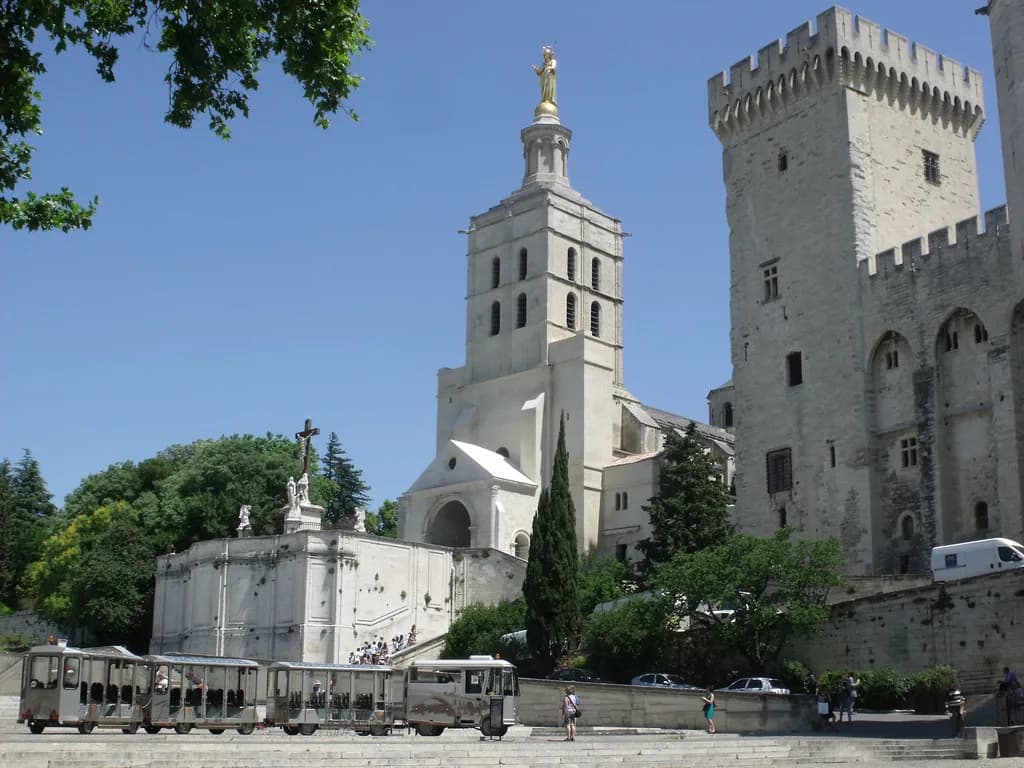
Avignon Cathedral is the Cathédrale Notre-Dame-des-Doms, standing on the northern edge of intramuros Avignon at the foot of the Rocher des Doms, a couple of minutes on foot from the Palais des Papes. It is a working cathedral rather than a ticketed monument, and most visitors spend 30 to 45 minutes in it before continuing to the gardens and the palace next door.
Read it as one piece of a northern-quarter circuit: cathedral, Rocher des Doms gardens, Palais des Papes and the Pont Saint-Bénézet in that order or the reverse. Visiting it in isolation wastes the climb, because almost everything worth seeing here sits within a few minutes of the same high ground above the Rhône.
Where Avignon Cathedral is and how to get there
The cathedral occupies the north side of Avignon's walled centre, directly behind the Rocher des Doms and just north of the Palais des Papes. From the Place du Palais des Papes, the west front is a short walk uphill through the narrow lane beside the palace; from the Place de l'Horloge, allow roughly ten minutes on foot across the old town.
The last stretch is a climb. The cathedral sits on the flank of the Rocher des Doms, so whichever route you take ends with steps or a slope, and in summer heat that matters more than the distance. Build the ascent into your timing rather than arriving breathless with a palace slot booked.
Avignon's old town is compact enough to cross on foot, which makes the cathedral easy to fold into a walking day rather than a separate trip. Our Avignon Attractions: 6 Visitor Guides page sets out the other sights in the same quarter so you can order them without backtracking.
What you see from outside: the west front and the bell tower
The building has Romanesque origins, with a cathedral group attested from the tenth century, and it was listed as a historic monument in 1840. That listing is history rather than a current designation to argue about; what it signals is a building that has been recognised as significant for nearly two centuries.
The west front is the part to study before you go in: a Romanesque porch with columns, a rose window above and a bell tower behind. The tower is crowned by a gilded statue, the figure most photographs of the cathedral are actually of, and it is best seen from the Rocher des Doms garden terrace rather than the crowded lane below.
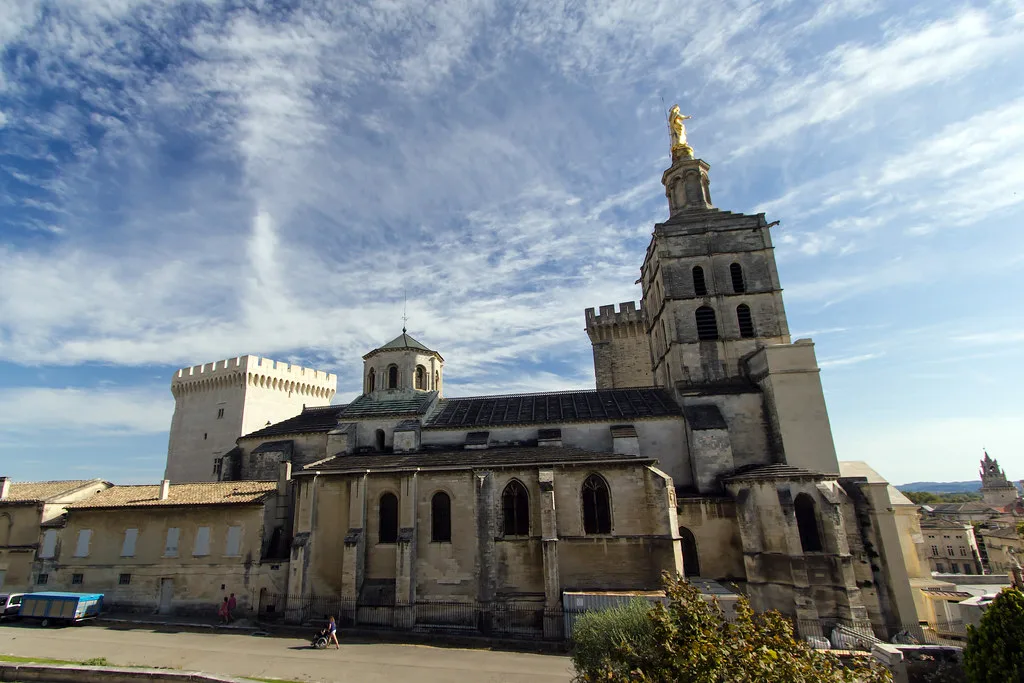
Look at the stonework rather than walking past. The cathedral has been rebuilt, fortified and restored across centuries, and the mix of heavy Romanesque masonry with later additions is the reason the exterior repays ten minutes of slow circling before you push through the door.
For contrast, the Basilique Saint-Pierre a few minutes south in the old town has a flamboyant Provençal Gothic façade and monumental walnut doors, so it is a different building entirely rather than a second name for the same place.
Inside the cathedral
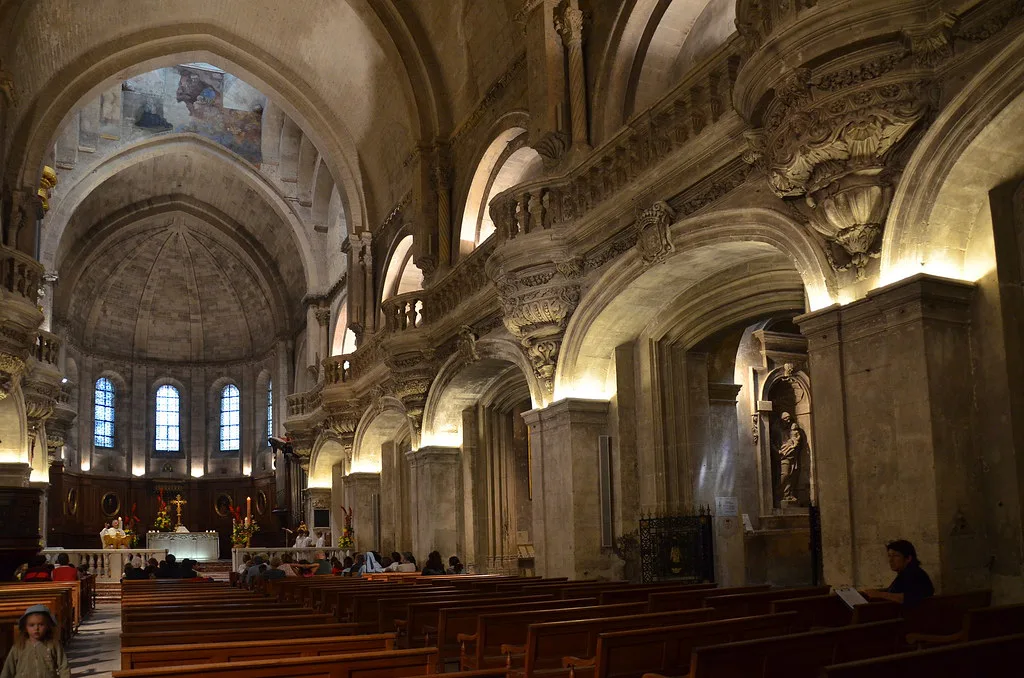
Inside, the plan is a single broad nave with side chapels, heavy pillars and a comparatively dark interior that keeps the eye moving toward the choir. The chapels along the sides hold tombs and monuments, several of them tied to the Avignon papacy, and they are where most of the detail sits.
The cathedral is dedicated to Notre-Dame, and its position beside the papal palace explains the scale: this was the bishop's church of a city that hosted the papacy in the fourteenth century, which is why Avignon is known as the city of popes. The Palais des Papes next door is the building that makes that history tangible, and it is worth seeing the two together.
Give the interior 20 to 30 minutes. The nave is not large, and the reward is in the chapels and the stained glass rather than in covering ground; anyone who wants to sit quietly should add time, and anyone who wants a quick look will be done in ten.
Opening hours, entry and what to confirm
Treat the cathedral as a place of worship first: it is an active church, so services take priority, and sightseeing is not possible during mass. Dress modestly, keep voices down and avoid wandering during a service rather than treating the nave as a museum hall.
The diocese publishes current opening times and mass schedules, and those are the details to confirm shortly before you go, since they change with the liturgical calendar. Do not plan a tight slot around the cathedral alone; hold it as a flexible stop in the circuit and let the palace or gardens absorb the slack.
How long to allow
Plan on 30 to 45 minutes for the cathedral itself, including a slow look at the west front. That is a realistic figure for a building of this size, and it is honest: this is not a half-day monument, and padding it out only makes the Rocher climb feel wasted.
Add 20 to 30 minutes for the Rocher des Doms gardens directly behind it, which are the natural pairing and give the views over the Rhône that the cathedral lane cannot. Together, cathedral and gardens make a comfortable hour; add the Palais des Papes and you have a full morning.
The Rocher des Doms gardens next door
The Rocher des Doms is the rocky outcrop immediately north of the cathedral, laid out as a public garden with terraces, trees and views across the Rhône. It is the obvious next stop: exit the cathedral, walk up and around, and you get the panorama that explains Avignon's position on the river.
The climb is short but real, and in summer the exposed terraces are hot in the middle of the day. Go early or late, carry water, and use the shaded paths rather than the open stone staircases; the difference in comfort is considerable.
Nearby: what to pair with the cathedral
The Palais des Papes is the closest major sight, a few minutes' walk downhill from the cathedral, and it is the one to book a slot for because it takes far longer than the church. The Pont Saint-Bénézet, the surviving bridge of the famous song, is a few minutes further at the riverside.
For a change of register, the Musée Calvet holds fine art and antiquities in the old town, while the Collection Lambert covers contemporary work; both sit across the city and are sensible for a second day rather than this circuit.
If you are building a longer trip, cathedrals in other French cities make a useful comparison: Lyon Cathedral (Cathédrale Saint-Jean) pairs a Gothic exterior with an astronomical clock, and Marseille Cathedral (Cathédrale de la Major) is a striped Byzantine-Romanesque affair by the water.
Practical points and common mistakes
The cathedral is not the Basilique Saint-Pierre. Visitors mix the two up constantly, and the confusion sends people to the wrong side of the old town; Notre-Dame-des-Doms is the one on the rock by the palace, Saint-Pierre is the parish church near the Place Saint-Pierre.
The most common mistake is arriving mid-afternoon in summer, when the heat is at its worst, the Rocher terraces are exposed and the palace courtyard is crowded. Go in the morning, take the cathedral first while it is cool, then the gardens, then the palace.
The second mistake is treating the cathedral as a five-minute photo stop and skipping the gardens behind it, which removes the main reason to climb this far. If you only have time for one thing up here, make it the Rocher des Doms terrace and see the cathedral from outside.
Putting the Cathedral in Your Day
Build the cathedral into a northern-quarter morning: cathedral first, Rocher des Doms gardens second, Palais des Papes third, then the Pont Saint-Bénézet at the river. That order follows the ground upward and back down, and it avoids the worst of the afternoon heat on the exposed terraces.
Allow 30 to 45 minutes for Notre-Dame-des-Doms itself and treat it as a calm, free-standing stop rather than a ticketed attraction. The diocese publishes current opening times and mass schedules, so check those the week you travel and plan the rest of the quarter around them.
Explore more Avignon guides
Frequently Asked Questions
Where is Avignon Cathedral?
Avignon Cathedral, the Cathédrale Notre-Dame-des-Doms, stands on the northern edge of the walled old town, at the foot of the Rocher des Doms and a short walk from the Palais des Papes. From the Place de l'Horloge it is roughly ten minutes on foot across the old town, with a climb at the end.
Is Avignon Cathedral free to visit?
The cathedral is an active place of worship rather than a ticketed monument, but entry arrangements and any restrictions are set locally. The diocese publishes current visiting conditions, so confirm there before you build it into a tight schedule.
How long does it take to visit Notre-Dame-des-Doms?
Allow 30 to 45 minutes including a slow look at the Romanesque west front and the chapels inside. Add 20 to 30 minutes for the Rocher des Doms gardens behind it, which are the natural pairing for the climb.
What is the difference between Avignon Cathedral and Basilique Saint-Pierre?
They are two different buildings. Notre-Dame-des-Doms is the cathedral on the Rocher des Doms beside the Palais des Papes; the Basilique Saint-Pierre is a parish church in the old town with a flamboyant Provençal Gothic façade and monumental walnut doors.
Why is Avignon called the city of popes?
Avignon hosted the papacy in the fourteenth century, and the Palais des Papes beside the cathedral is the physical evidence of that period. Seeing the cathedral and the palace together is the clearest way to understand the city's unusual status.
When is the best time of day to visit Avignon Cathedral?
Go in the morning. The cathedral interior is cooler early, the Rocher des Doms terraces are exposed to sun for much of the day, and the palace courtyard becomes busy in the afternoon. In summer, avoid the middle of the day for the climb.
Is the Rocher des Doms worth combining with the cathedral?
Yes. The gardens sit directly behind the cathedral and provide the views over the Rhône that the narrow lane below cannot. Cathedral and gardens together make a comfortable hour on the same high ground.