
Pont Saint-Bénézet: A Visitor's Guide to the Pont d'Avignon
The Pont Saint-Bénézet, universally known as the Pont d'Avignon, is a ruined medieval bridge over the Rhône with four of its original 22 arches still standing. Built from the 12th century onwards, it is a UNESCO World Heritage Site and the monument on Avignon's coat of arms in the minds of most visitors. A visit takes well under an hour, but the detour earns its place through the view back to the Palais des Papes and out across the river.
What the Pont Saint-Bénézet is
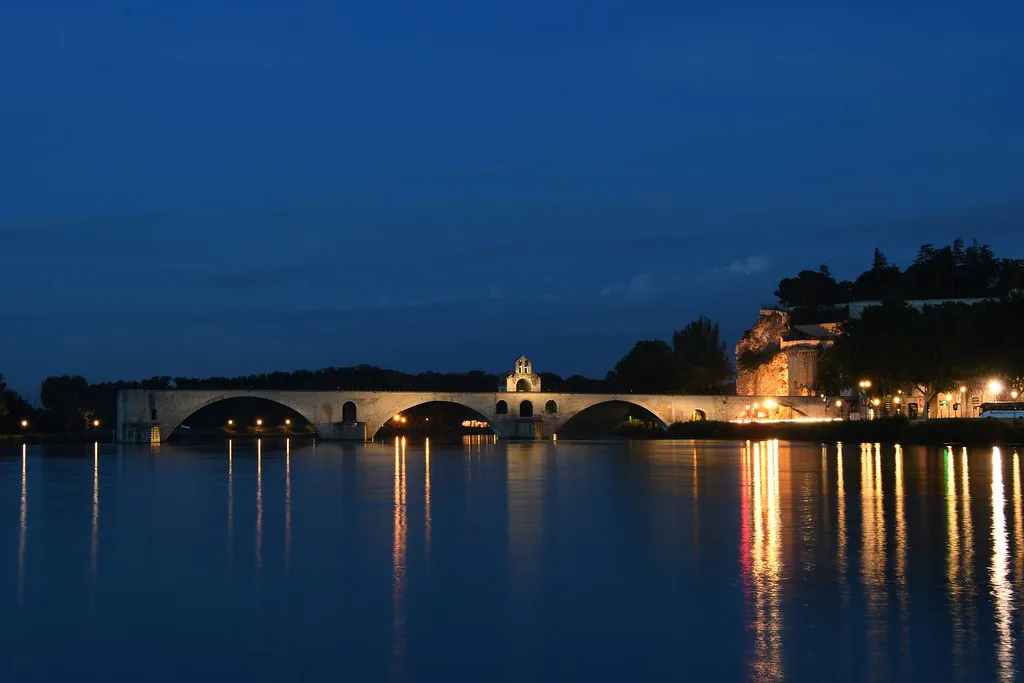
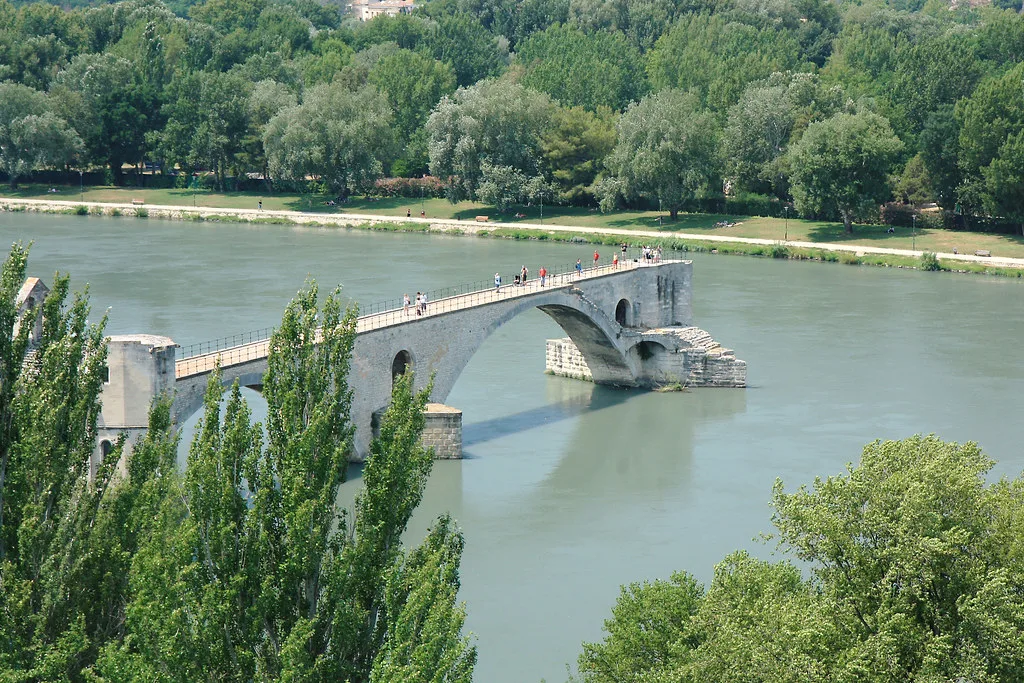
The bridge was begun in 1177 and finished by 1185, a 920-metre crossing with 22 arches and a roadway four metres wide. Of that structure, only four arches remain, plus the Philippe le Bel tower on the Villeneuve-lès-Avignon side. The Avignon Tourisme page confirms its UNESCO World Heritage listing since 1995 and the 12th-century construction, while the dimensions come from regional heritage site Avignon et Provence.
The monument is small, and it is the scale that surprises people. Four arches is a fragment, not a crossing, and you cannot walk from one bank to the other. Treat it as a short, atmospheric stop rather than a half-day excursion, and pair it with something substantial nearby.
Where it sits and how to reach it
The bridge entrance sits on the Rhône bank at Boulevard de la Ligne, directly below the Rocher des Doms and a short walk from the Place du Palais. From the tourist office on cours Jean Jaurès, it is a straightforward ten to fifteen minutes on foot through the old town, and the approach is signed. The walk itself is worth doing slowly because you get the classic view of the bridge with the Palais des Papes behind it before you reach the entrance.
There is no need to cross the river by car to see it. If you arrive from Villeneuve-lès-Avignon, look across from the Philippe le Bel tower on the right bank; you get the full profile of the four arches from there without paying the entry fee. That is the best free view, and it is worth building into an afternoon on the other bank.
The story in brief
Avignon Tourisme traces the bridge to a young shepherd from the Vivarais named Bénezet, said to have been told by God to build it. That legend sits alongside the documented dates: the crossing was begun in 1177, and the bridge was part of a major pilgrimage route between Italy and Spain in the Middle Ages. When the popes settled in Avignon in the 14th century, the bridge became the direct link between the cardinals' residences in Villeneuve-lès-Avignon and the Palais des Papes.
The bridge charged tolls, and Avignon's toll revenue helped the city grow before the popes arrived. When Arles lost its Roman bridge, the Avignon crossing became the only crossing point between Lyon and the Mediterranean. That is the detail that explains the wealth and strategic importance of the town.
Why the bridge is broken
The Rhône is the culprit, repeatedly. In 1226 three quarters of the bridge was destroyed during Louis VIII's siege of the city; in 1603 an arch collapsed following serious flooding and others went in 1605. A plague interrupted repairs from 1628, and the bridge was usable again only in 1633 before more arches were swept away within months. From the 17th century the city could not bear the maintenance costs, and the structure was left to fail.
By the time the crossing stopped functioning, traffic shifted to ferries and a path across the island in the river bed, now the Île de la Barthelasse. The relics of the saint were moved out of the Chapelle Saint-Nicolas in 1674 because of the collapse risk. The bridge is described in detail on the Pont Saint-Bénézet reference page, which gives you dates and dimensions to check against the information boards on site.
The song and the width question
'Sur le pont d'Avignon' is not a medieval tune. Avignon Tourisme traces its history to the mid-19th century: composed by Adolphe Adam, it was first performed at the Opéra Comique in Paris on 2 February 1853 in a play set in Avignon, and within three years an operetta built around it was a triumph. It has done more for the bridge's fame than any work of engineering.
The song invites you to dance on the bridge, but the roadway was only four metres wide, which makes a circle dance hard to picture. The more likely setting is an inn on the Île de la Barthelasse at the foot of one of the small arches. That is the discrepancy the display panels linger on, and it is worth a minute of your time on the bridge itself.
What you actually see on the bridge
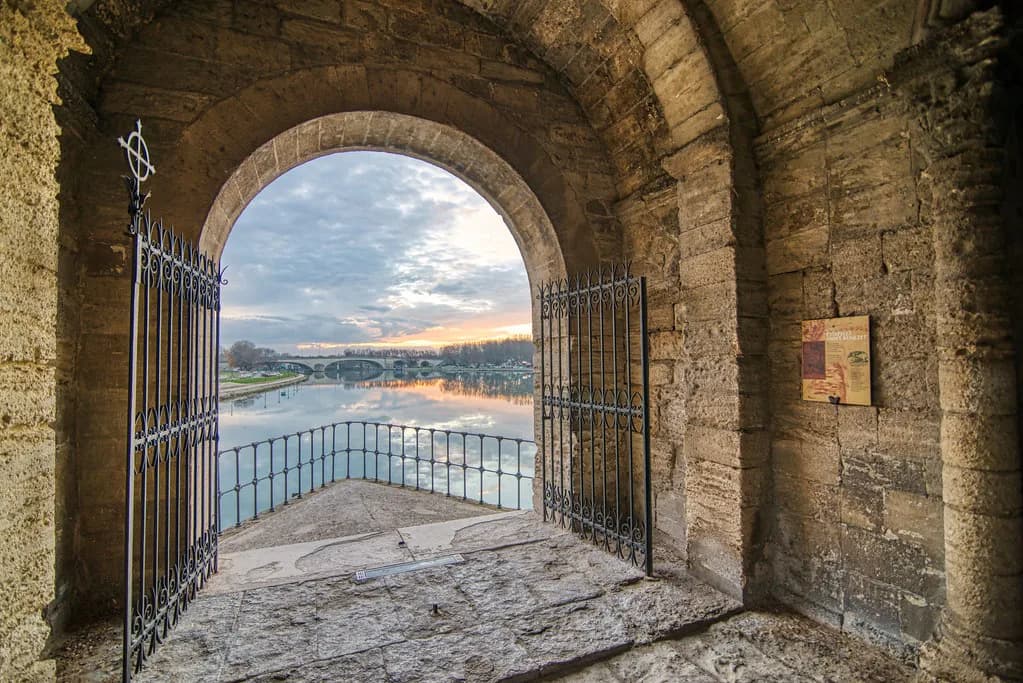
Inside, the surviving arches run out towards the middle of the river and stop. The Chapelle Saint-Nicolas sits on the bridge, and there is a lower chapel remaining from the earlier structure that was raised when the roadway was rebuilt. Part of the pleasure is the emptiness: the deck ends, and you look out over water rather than into the next town.
Allow roughly 30 to 45 minutes on the monument including the film and interpretation, and add another twenty minutes if you walk down to the riverside path for the exterior view. The bridge is not a long visit, but the position on the river is the point, so do not rush it. It also works as a quiet break between heavier sights such as the Musée Calvet or the palace.
The view and the Île de la Barthelasse
From the bridge, look back up at the Rocher des Doms and the Palais des Papes above you; that is the shot that appears on every Avignon postcard. Across the water, the Île de la Barthelasse opens up as a flat green wedge between the arms of the Rhône. This is genuinely the strongest argument for paying the entry rather than photographing from the bank.
The best exterior view is from the Boulevard de la Ligne downstream or from the island itself, from which you see the full row of arches. The nearby Rocher des Doms gives you the city and river from above, and the cathedral terrace next door gives you almost the same picture without the crowd. Between the bridge, the Rocher des Doms and the cathedral, you can cover Avignon's riverbank in an afternoon.
Tickets, booking and the combined palace ticket
Avignon Tourisme sells a combined ticket for the Palais des Papes and the Pont d'Avignon, and its ticket page is the place to check the current price and opening hours. The bridge is also included in the Avignon City Pass, which the tourist office markets with a claimed saving of up to €70.50 across the destination's sights. Buy in advance only if you know you want the palace too; the bridge entrance is rarely a queue.
Entry is ticketed, and the site keeps seasonal opening hours. Check the official page for the current dates before travelling, especially outside the summer season. For the palace next door, opening hours and pricing are published separately by the Palais des Papes.
Accessibility and practical details
The bridge has a lift for visitors with reduced mobility and has held the Tourisme et handicap label for motor and mental disabilities since 2015. In the details Avignon Tourisme asks visitors to phone ahead to confirm the lift is working before relying on it. The number is published on the bridge page, along with the tourist office address on cours Jean Jaurès if you prefer to ask in person.
Wear shoes that cope with uneven stone, and take water in high summer because the deck has little shade. The bridge is exposed to wind off the river, which is welcome in July and less so in November. If you are travelling with a pushchair, the lift covers the main access but the deck remains a historic surface.
What's nearby
The bridge sits at the foot of the Rocher des Doms, with the Palais des Papes and the Cathédrale Notre-Dame-des-Doms a few minutes uphill. The palace and the bridge share a ticket, so pairing them is straightforward and saves you a second queue. Allow half a day for the two if you want to read the information panels properly.
Across the river in Villeneuve-lès-Avignon, the Tour Philippe le Bel and the Saint-André Abbey sit above the right bank and give you the view back across to the bridge. The collection Lambert is a short walk from the palace end of town if you want modern art alongside the medieval. A single sentence covers the day-trip option: the other bank is close enough to visit on foot within the same afternoon.
Before you go
Buying a combined palace and bridge ticket is the sensible move if you plan to see both, and it is how most visitors do it. The bridge alone is a short stop, so pair it with the palace, the Rocher des Doms and the cathedral for a full riverbank half-day. Start with the exterior view from Boulevard de la Ligne before you go in, so you understand the shape of the structure you are walking on.
Check the official page for current opening times before you travel; seasonal closures happen. The site is small, so no guided tour is needed, but the interpretation is good and the walk out onto the water is short enough for most visitors.
Plan Your Visit
The Pont Saint-Bénézet is worth 45 minutes of an Avignon weekend, and it earns that time mainly through the view back at the palace and across to the island. Combine it with the Palais des Papes on a joint ticket, check the official page for the day's opening hours, and take in the exterior view from the riverbank first. The four remaining arches say more about the Rhône than about medieval engineering, and that is reason enough to go.
Explore more Avignon guides
Frequently Asked Questions
Why is the Avignon bridge so famous?
It features in the children's song 'Sur le pont d'Avignon', which has carried the name around the world since the mid-19th century, and it is a UNESCO World Heritage Site. The four remaining arches over the Rhône are its visual signature.
What is odd about the bridge at Avignon?
It stops in the middle of the river. Twenty-two arches were built in the 12th century and only four survive. The point the display panels dwell on is that the roadway was four metres wide, which makes the song's circle dance hard to picture.
What happened to the Pont d'Avignon?
Floods repeatedly destroyed arches, including in 1603 and 1605, and the city could not keep up with repairs from the 17th century. The bridge was abandoned as a crossing and traffic shifted to ferries and the Île de la Barthelasse.
How many arches does the Pont Saint-Bénézet still have?
Four of the original 22 arches remain, along with the Philippe le Bel tower on the Villeneuve-lès-Avignon side of the river.
Can you walk across the Pont d'Avignon?
No. The deck ends partway across and the bridge is a dead end, not a crossing. You walk out for the view and walk back to the entrance.
Why is the Avignon bridge broken?
The Rhône. Serious flooding in 1603 and 1605 brought arches down, plague interrupted the repairs, and the city could no longer fund maintenance. The structure was progressively abandoned.
Do you need to book the Pont d'Avignon in advance?
Booking ahead is rarely necessary. A combined palace and bridge ticket is available from Avignon Tourisme, and the official page carries the current details.
Is the Pont d'Avignon accessible for wheelchair users?
There is a lift providing access for visitors with reduced mobility, and the site holds the Tourisme et handicap label for motor and mental disabilities. The operator asks visitors to call ahead to confirm the lift is working.