
Palais des Papes: Visiting Avignon's Gothic Palace
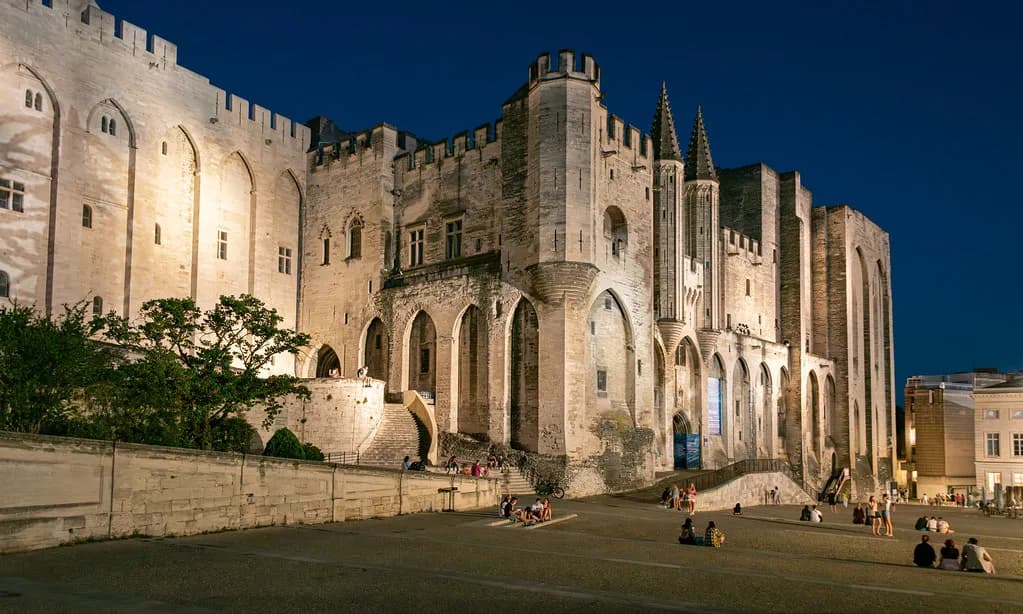
The Palais des Papes is the enormous Gothic palace on Place du Palais des Papes, at the northern edge of Avignon's walled centre beside the Rocher des Doms. It is the reason Avignon feels like a papal capital rather than a Provençal market town, and it deserves the best part of a morning or afternoon. Budget roughly two hours for the palace and its gardens, and decide before you arrive whether you want the palace-only ticket or the combined ticket with the Pont d'Avignon.
Where the Palais des Papes sits in Avignon
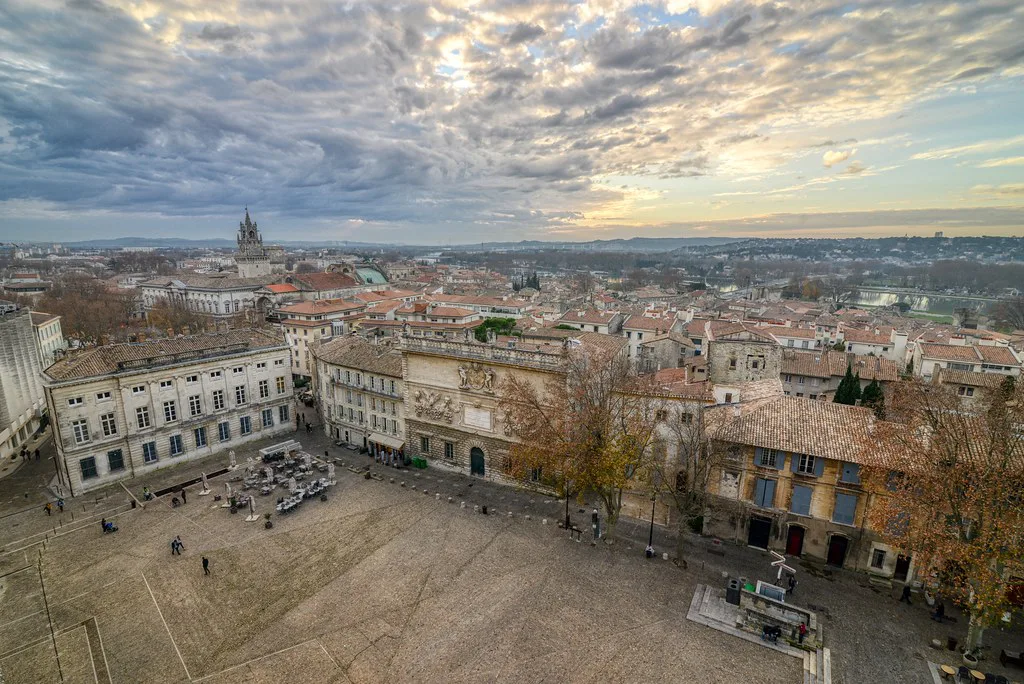
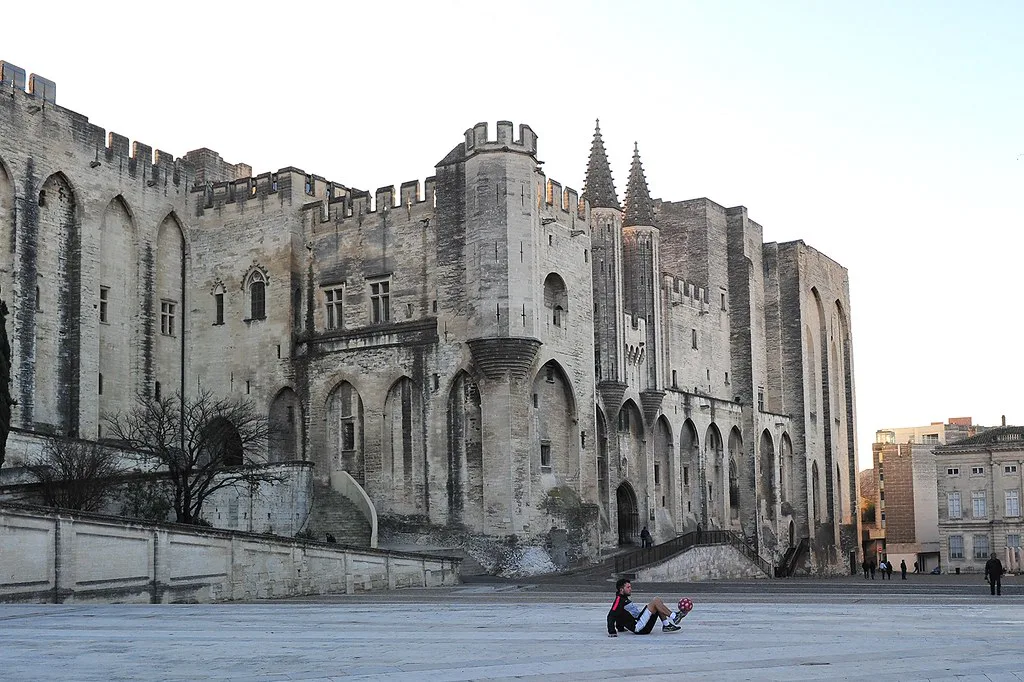
The palace faces Place du Palais des Papes, a wide paved square that slopes up towards the monument's main front. Behind and above it the Rocher des Doms rises, giving the palace its fortress-like profile from the river side. Everything here is inside the old walls, so you can walk from the main streets of the centre to the square in minutes rather than needing transport.
Avignon's tourist office sits at 41 cours Jean Jaurès, the straight street running from the station towards the historic centre, which makes it a sensible first stop for a map before you climb to the palace. The palace itself is signposted from the centre and the walk up through the old streets is short. For the wider spread of sights around it, see the Avignon Attractions: 6 Visitor Guides hub before you fix your order of attack.
Why the popes built here
In the 14th century the popes left Rome and settled in Avignon for political and security reasons, and the residence gradually grew into a vast palace built to house the government of the Church and the papal court. For several decades the city became the heart of western Christendom. That history is why a provincial French city has one of the largest Gothic buildings in Europe.
The scale is hard to picture until you are in front of it: the palace covers 15,000 square metres of floor space, a volume comparable to four Gothic cathedrals, and it is listed as UNESCO World Heritage. It holds around twenty rooms, including the pope's private apartments and the wall paintings of the Italian artist Matteo Giovannetti. Knowing that in advance helps you read the empty halls, which can otherwise feel austere.
What you walk through
The visit route covers 25 rooms, and the big set pieces are the ceremonial halls: the Grande Chapelle, the Grande Audience and the Grand Tinel, plus the pope's private apartments. The Grande Audience was one of the palace's main courts of justice, where papal justice was dispensed in the name of the pope across the Christian world, with painted decoration reinforcing that authority. The Grande Chapelle hosted the major religious ceremonies of the papal court and, with the Grande Audience, formed the heart of papal power.
Allow time for the route rather than rushing the halls, because the interest is in the accumulation of spaces rather than one showpiece room. The WebApp Les Clefs du Palais works on your own smartphone, uses a room-number plan to locate you, and supplies text and audio in six languages without downloading an app. Bring earphones if you plan to use the audio and video content.
Frescoes and the rooms where photography stops
Matteo Giovannetti's wall paintings are the artistic highlight, and the palace's painted decoration is one of the reasons the building ranks so highly among medieval interiors. Photography is allowed in general, but not in the rooms with fragile painted decoration: the Chambre du Pape, the Chambre du Cerf and the Chapelle Saint-Martial. Set your expectations accordingly and look properly at those three rather than reaching for your phone.
The pontifical gardens and their views
The Jardins pontificaux are included in the palace visit and are not just somewhere to wait: they give you a different reading of the monument and open unexpected panoramas over it and over the city. They also carry the historical story of daily life under the popes, which the stone halls alone do not convey. Last access to the gardens is 30 minutes before closing, earlier than the palace cut-off, so visit them before you finish the interior if you are arriving late.
How much time to allow
The palace and the pontifical gardens together take about two hours at a normal pace. Add time if you intend to work through the WebApp room by room, because the commentary invites you to stop at numbered points rather than walk straight through. A half-day is the realistic slot once you include the security check and the climb up to the square.
If you are fitting Avignon into a short break, pair the palace with one other sight rather than three. The combined ticket with the Pont d'Avignon is valid from the day of purchase until the following day, with one entry per site, so the two can be split across a late afternoon and the next morning. That flexibility is the main argument for the combination.
Tickets and prices
From 1 August 2026 the palace and pontifical gardens cost 16 euros at full rate, and the combined ticket covering the palace, gardens and Pont d'Avignon costs 19.50 euros. Children aged 10 to 17 pay 10 euros for the palace alone or 12 euros for the combination, and under-10s go free. The combined ticket is the better buy if you genuinely intend to see the bridge, and poor value if you are squeezing the palace into a couple of hours before a train.
The Avignon City Pass is a prepaid pass giving access to the main sites in Avignon and Villeneuve-lès-Avignon over 24 or 48 hours, with the palace, gardens and Pont d'Avignon included. It only pays off if you are visiting several of the included monuments within that window; for a single palace visit, the standard ticket is simpler. Check what you actually plan to see before buying.
Opening hours through the year
Hours shift with the season: the palace runs 9h to 19h from 1 March to 1 November, 10h to 17h from 5 January to 6 February 2026, 10h to 18h during the February school holidays, 10h to 17h from 2 November to 18 December, and 10h to 18h from 19 December to 3 January 2027. Last access to the palace is one hour before closing. That final hour matters more than the headline closing time when you are planning a late arrival.
The palace opens every day of the year, including Sundays, so a Monday or Tuesday in Avignon is not wasted here even when other museums in the city are shut. It is not a national monument, so there is no free first-Sunday arrangement of the kind that applies elsewhere in France. Free entry is reserved for residents of Avignon and Montfavet on Saturdays, Sundays and public holidays, on proof of address and identity.
Booking, security and luggage
Advance booking is not compulsory but is recommended, and buying online gives you a queue-cutting route, though everyone still passes through the bag-check zone. There is no need to carry a heavy bag around the halls: the monument has a free, attended luggage store for the duration of your visit. You can pay by card, cash, cheque, American Express, holiday vouchers or online voucher.
Some rooms close exceptionally for events held in the monument, and the palace posts the specific halls and dates on its site. If a particular hall is central to your reason for visiting, look for that notice before you book rather than after.
Access, pushchairs and dogs
The palace involves a great many steps and is not accessible to visitors with reduced mobility, although the staff can advise on alternatives by telephone. Pushchairs must be left in the cloakroom, with a baby carrier lent free of charge in exchange. Animals are not allowed, with the exception of guide dogs, so plan around these limits before turning up with a pram or a pet.
Who should prioritise it and who might skip it
Prioritise the palace if you care about medieval architecture, papal history or fresco cycles, and accept that you are looking at large, bare ceremonial spaces rather than furnished rooms. If your ideal city break is markets, cafés and small museums, two hours here may feel long, and the bridge or the Rocher des Doms will give you more reward for less time. Families with younger children should weigh the steps and the no-pushchair rule before committing.
The palace is mid-transformation, with new visitor narratives and previously unseen rooms opening from 1 May 2026 as part of a programme of works continuing to spring 2027. That makes it a more interesting visit than a static monument, but it also means some areas may be affected during your stay.
Nearby sights
The Pont d'Avignon, or Pont Saint-Bénézet, is a short walk from the palace square and is the natural second stop, either on the combined ticket or as a separate visit for the famous view back at the palace. The Avignon Cathedral (Cathédrale Notre-Dame-des-Doms) sits immediately beside the palace on the same rise, so you can step in without another journey. Both are close enough to combine with the palace in a single half-day.
The Rocher des Doms, the garden-topped rock behind the palace, gives you the classic view over the Rhône and back over the rooftops, and costs nothing to walk through. It is the obvious place to end a palace visit rather than heading straight back into the streets.
Plan Your Visit
Treat the Palais des Papes as the anchor of an Avignon morning: arrive early, take the palace and gardens at an unhurried pace, and leave the gardens until just before you exit. Buy the combined ticket only if the Pont d'Avignon is genuinely on your list.
For the rest of your short break, the things to do in Avignon guide will help you fit the palace around markets, museums and the walk along the river. Then check opening hours and prices on the palace's own pages for your dates before you travel.
Explore more Avignon guides
Frequently Asked Questions
Why were the popes in Avignon?
In the 14th century the popes left Rome and settled in Avignon for political and security reasons. The papal residence grew into an enormous palace built to house the government of the Church and the papal court, and for several decades the city was the heart of western Christendom.
How long does it take to visit the Palais des Papes?
The palace and the pontifical gardens together take about two hours at a normal pace. Allow longer if you plan to use the Les Clefs du Palais smartphone WebApp room by room, and factor in the bag check at the entrance.
How much does entry to the Palais des Papes cost?
The palace publishes current full, child and combined rates on its official site, with reduced rates for children aged 10 to 17, free entry for under-10s and a combined ticket covering the palace, the gardens and the Pont d'Avignon. Check those pages for the rates in force on your dates before booking.
Is the Palais des Papes open every day?
Yes, the palace opens every day of the year, including Sundays, so a Monday or Tuesday in Avignon is not wasted here. Opening hours change with the season and last access to the palace is one hour before closing.
Is the Palais des Papes accessible for wheelchair users?
No. The visit involves a great many steps and is not accessible to visitors with reduced mobility, though the staff can advise on alternatives. Pushchairs must be left in the cloakroom, where a baby carrier is lent free of charge.
Can you take photos inside the Palais des Papes?
Photography is allowed in most of the palace but not in the rooms with fragile painted decoration: the Chambre du Pape, the Chambre du Cerf and the Chapelle Saint-Martial. Plan to look properly at those three rather than photograph them.
Is the palace-plus-pont ticket worth it?
It is worth it if you genuinely intend to see the Pont d'Avignon as well, since the combined ticket is valid from the day of purchase until the following day with one entry per site. If you only have time for the palace, the palace-only ticket is the sensible choice.
What is there to see near the Palais des Papes?
The Pont d'Avignon and the Avignon Cathedral are both a short walk from the palace square, and the Rocher des Doms behind the palace gives the classic view over the Rhône. All three fit around a palace visit in a single half-day.