
Musée Calvet, Avignon: A Visitor's Guide to the Collection
The Musée Calvet is Avignon's main fine arts museum, housed in an 18th-century townhouse at 65 rue Joseph Vernet, in the centre of town. Entry to the permanent collections is free, which makes it the cheapest serious art stop in a city better known for its papal palace. The catch is timing: it shuts on Mondays and opens an hour earlier at weekends than on weekdays.
It is a manageable museum rather than an exhausting one, and it sits close enough to the old town to be walked to between other sights. Plan around the closure day and the opening hours below rather than turning up on spec.
What the Musée Calvet is
The museum is a municipal institution holding an encyclopedic collection that runs across painting, sculpture, decorative arts, ethnology and ceramics, according to the Avignon tourist office. French, Italian, Flemish and modern painting all feature, so the visit is broader than a single-school gallery.
It belongs to the Institut Calvet, the Avignon foundation that also runs the Musée Lapidaire, the Musée du Petit Palais, the Muséum Requien and two rare-book libraries. Since the 1980s the old Calvet collection has been divided between buildings, with the fine arts staying here. That split matters: if you expect antiquities and Egyptian pieces in the same rooms as the paintings, you will be looking in the wrong building.
Treat it as a compact municipal museum with a genuinely strong old-master and modern core, not as a national gallery. That expectation is what makes a one- to two-hour visit feel generous rather than rushed.
Where it is and how to reach it
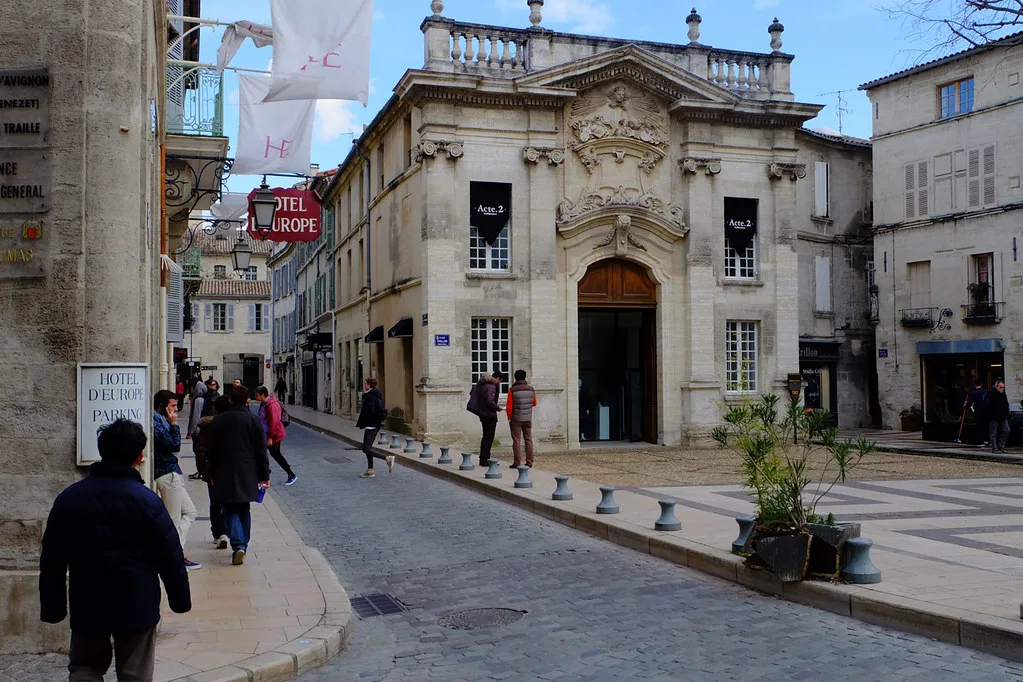
The address is 65 rue Joseph Vernet, 84000 Avignon, on the edge of the historic centre rather than inside the walled papal quarter. The tourist office lists the setting as town centre, so the walk from the old town is short and flat.
If you are working through the city's headline sights, this slots naturally into a morning or afternoon built around the Palais des Papes, Avignon's papal palace, and the broken bridge. The wider set of city sights is mapped in the Avignon Attractions guide, which is the sensible place to sequence your days before fixing a museum slot.
Coming from the TGV station, allow for the extra hop into the centre before walking to Rue Joseph Vernet; Avignon Tourisme can tell you the current bus and shuttle arrangements rather than leaving you to guess at timetables.
The building: an 18th-century hôtel particulier
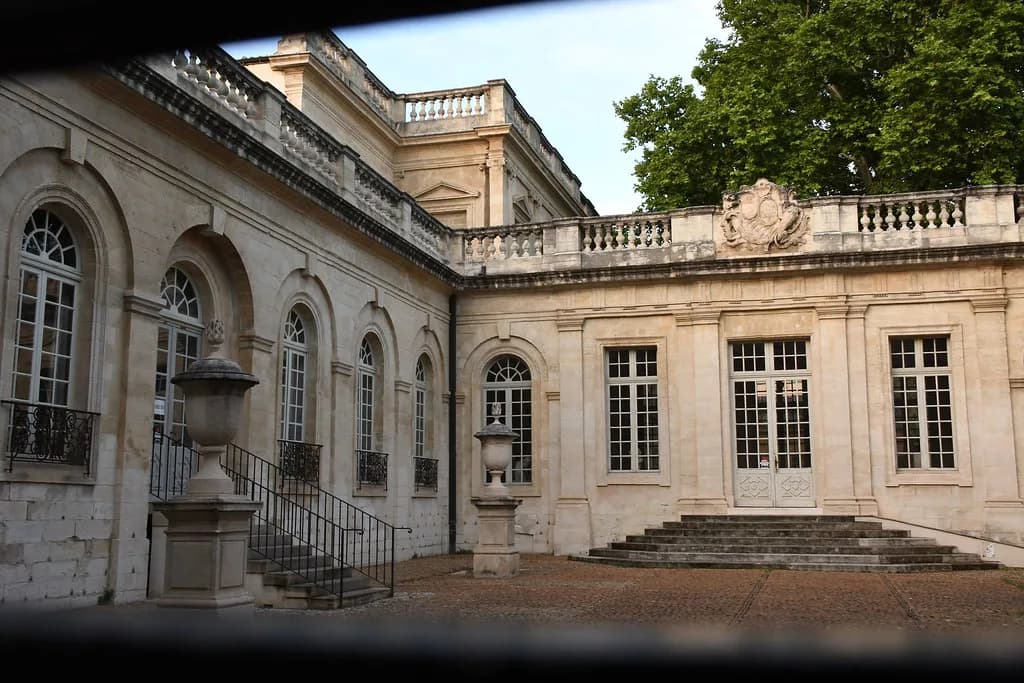
The museum occupies a mansion given its solemn, symmetrical form in the early 18th century under the architect Jean-Baptiste Franque, who designed it for Joseph Ignace de Villeneuve-Martignan and his wife Henriette Victoire de Sade. It was built between a main courtyard and French-style gardens in the heart of Avignon.
Inside, the reception room and the staircase climbing to the Vernet Gallery carry the decorative weight of the Enlightenment interiors. Give the staircase a few minutes on the way up rather than treating it as circulation; it is one of the reasons the building is worth entering even before the pictures.
The layout is a circuit of enfilade rooms opening one into another behind a forged gate, which means you can walk it in sequence without doubling back. That makes the visit easy to pace and easy to cut short if your time in Avignon is tight.
What to see inside
Start with the paintings. The collection spans French, Italian and Flemish schools plus modern work, with sculpture, decorative arts and earthenware and porcelain displayed alongside. If you only have an hour, pick either the old masters or the modern rooms and accept that you will not cover both properly.
The decorative arts and ceramics are the quiet strength of a municipal collection like this: expect display cases of earthenware and porcelain rather than blockbuster rooms. They also give you something to look at when the painting galleries feel dense.
The highlight works
The single most cited work is Jacques-Louis David's The Death of Young Bara, donated by Horace Vernet in 1846. Horace Vernet and his father Carle, together with their friend Esprit Requien, were effectively the founders of the art gallery here, so the Vernet name recurs throughout the building.
The modern holdings are stronger than a small provincial museum has any right to claim: a drawing by Cézanne, two by Modigliani, paintings by Dufy and Utrillo, a Vlaminck and five works by Soutine. The Soutines are described as unique in France outside Paris, which is the strongest single argument for paying the museum proper attention rather than treating it as a rainy-day filler.
The Louvre has also lent a significant group of works by Hubert Robert, so temporary hangings can shift the emphasis of the rooms. Ask at the desk what is on loan or on display when you arrive, since loan arrangements change and are not fixed features of the collection.
The garden
Behind the main courtyard, the museum's garden is exceptionally large for a townhouse and shaded by century-old plane trees. It is used for private events, so access can be affected by what is booked.
In practice the garden is a good place to sit for ten minutes between the painting galleries and the ceramics, and it costs nothing. It is not a botanical garden and there is no separate admission; treat it as part of the museum rather than a destination on its own.
Opening days and hours
The museum is closed on Mondays. It opens Tuesday to Friday from 11:00 to 18:00, and Saturday and Sunday from 10:00 to 18:00. The weekend opening an hour earlier is worth knowing if you are fitting the museum in before a lunch booking or a train.
The tourist office listing also carries a scheduled closure notice running to 7 December inclusive, so check the dates on that page against your travel dates before you build a day around the museum. Beyond that, do not assume fixed last-entry rules: none are stated, so arrive with enough margin before closing.
Tickets and entry
Entry to the permanent collections is free, and the listing notes a free guided tour among the services. That makes the museum a low-risk stop: you can drop in for forty minutes without feeling you have wasted an admission fee.
No price is quoted for temporary exhibitions, so if a paid show is running, confirm the charge at the desk or on the museum's own site before you go. The museum is also labelled Accueil Vélo, which is useful if you are cycling through the city.
How long to allow
Give the museum between one and two hours. The enfilade layout lets you move steadily through the painting rooms, then slow down for the ceramics and the garden, and a focused hour covers the headline works without leaving you saturated.
If art is the point of your trip, pair it with a second museum rather than stretching this one. The Calvet's own antiquities sit in the Musée Lapidaire, and Avignon's contemporary art is held at the Collection Lambert, so a two-museum half-day is realistic and keeps each visit sharp.
Accessibility and the courtyard approach
The approach needs a word of warning. The pavement on Rue Joseph Vernet is adapted for access to the main courtyard, but the cobbled path up to the museum is difficult for wheelchair users with an assistant or in electric wheelchairs because the stones are round.
From there, an accessible ramp reaches the ground floor and ticket desk, an outdoor lift links the ground floor and ticket office, and a further lift serves the upper floor. There are two designated parking spaces for people with reduced mobility and a bell at the entrance gate, with alternative vehicle access on Rue Basile.
Nearby sights worth pairing
The Institut Calvet's other Avignon museums are the obvious pairing. The Musée Lapidaire holds the foundation's ancient sculpture in the former Jesuit chapel, while the Musée du Petit Palais displays Italian paintings from the Campana collection in a 14th-century former bishop's palace.
For the classic Avignon circuit, the Palais des Papes and the Pont Saint-Bénézet are the two sights most visitors come for, and both are short walks from the old town centre. The Rocher des Doms gardens above them give you a free viewpoint over the Rhône and a break between ticketed visits.
If your taste runs to church interiors, the cathedral next to the palace is a quick add-on rather than a half-day. Otherwise, use the Avignon Neighborhoods guide to pick which quarter you base your walking route around.
Fitting it into an Avignon weekend
Slot the Musée Calvet into a Tuesday-to-Sunday itinerary and keep Monday for the streets, the Rocher des Doms and the river front, where nothing depends on a museum door being open. A weekend visit benefits from the 10:00 opening, which lets you take in the paintings before the day fills up.
Because entry is free, the museum works well as the flexible element of a short break rather than the anchor. Build the day around one ticketed sight and use the Calvet as the low-cost hour that fills the gap.
Plan Your Visit
The Musée Calvet is free, central and closed on Mondays, with an earlier 10:00 start at weekends and a scheduled closure to 7 December worth checking against your dates. It rewards an hour or two with David's The Death of Young Bara, the Vernet legacy and a modern group that includes five Soutines.
Work out the rest of your days with the broader Avignon Attractions: 6 Visitor Guides before you book anything, then place the museum where it fits the opening hours rather than the other way round.
Frequently Asked Questions
Is the Musée Calvet free to visit?
Yes. Entry to the permanent collections is free, and the museum also offers a free guided tour. No charge is listed for temporary exhibitions, so ask at the desk if a paid show is on when you visit.
When is the Musée Calvet closed?
The museum closes on Mondays. It opens Tuesday to Friday from 11:00 to 18:00, and Saturday and Sunday from 10:00 to 18:00. The Avignon tourist office listing also shows a scheduled closure running to 7 December inclusive.
What can you see at the Musée Calvet?
French, Italian, Flemish and modern painting, plus sculpture, decorative arts, earthenware and porcelain. Standout pieces include Jacques-Louis David's The Death of Young Bara, works by the Vernet painters, drawings by Cézanne and Modigliani, and five paintings by Soutine.
How long does a visit to the Musée Calvet take?
Allow one to two hours. The rooms run in enfilade, so you can move through the paintings in sequence, slow down for the ceramics and finish in the shaded garden without retracing your steps.
Where is the Musée Calvet in Avignon?
It is at 65 rue Joseph Vernet, 84000 Avignon, in the town centre and within walking distance of the old town. The building is an 18th-century mansion designed by Jean-Baptiste Franque, set between a courtyard and gardens.
Is the Musée Calvet accessible for wheelchair users?
There is an adapted pavement to the main courtyard, but the cobbled path to the museum is difficult for wheelchair users with an assistant or in electric wheelchairs. A ramp reaches the ground floor, an outdoor lift serves the ticket office and ground floor, and a lift reaches the upper floor.
What else is nearby?
The Institut Calvet's Musée Lapidaire and the Musée du Petit Palais are the closest related museums. The Palais des Papes, the Pont Saint-Bénézet and the Rocher des Doms gardens are all a short walk away in the old town.