
Lyon Cathedral: Visiting the Cathédrale Saint-Jean-Baptiste
Lyon Cathedral is the Cathédrale Saint-Jean-Baptiste, the seat of the Archbishop of Lyon, standing on Place Saint-Jean in the Vieux Lyon quarter on the west bank of the Saône. It is a working cathedral rather than a museum piece, and it slots neatly into a half-day that pairs the old town streets with the climb to Fourvière. Treat it as one substantial stop on a Vieux Lyon walk, not a morning in itself.
Lyon Cathedral in brief
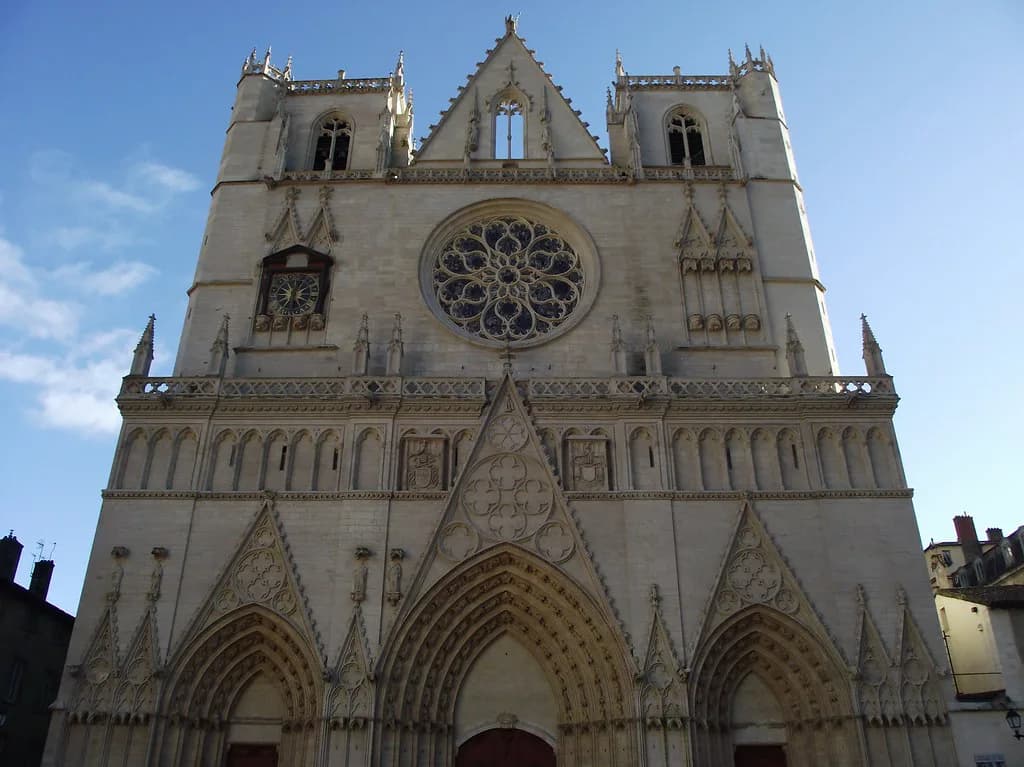
The building is dedicated to Saint John the Baptist and was begun in 1180 on the site of a 6th-century church, which is why the fabric spans centuries rather than a single campaign. The Lyon tourist office describes it as both an iconic monument and a medieval artistic masterpiece, built between the 12th and 15th centuries. That long build explains the mix of Romanesque solidity and Gothic height you see in the nave.
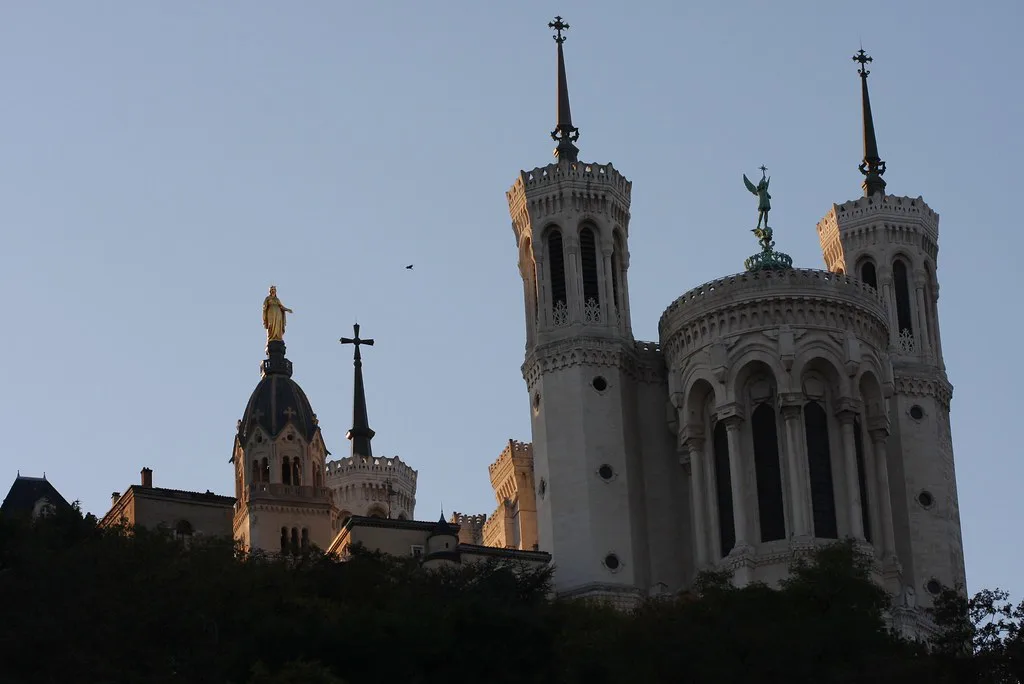
Do not confuse it with the Basilica of Notre-Dame de Fourvière on the hill above. They are separate buildings serving different purposes: the cathedral is the archbishop's seat down in the old town, while the basilica is the pilgrimage church with the four towers that dominates the skyline. If you only have time for one interior, the cathedral gives you the medieval history and the basilica gives you the panorama.
The cathedral belongs to the Quartier Saint-Jean, one of the three neighbourhoods that make up Vieux Lyon alongside Saint-Paul and Saint-Georges. That matters for planning: you can arrive through the pedestrianised old streets and leave on foot for the river or the metro without any transport in between.
Where it is: Place Saint-Jean in Vieux Lyon
The cathedral faces Place Saint-Jean, a small square in the 5th arrondissement on the west bank of the Saône, directly across the river from the Presqu'île. The square is the natural meeting point for the Quartier Saint-Jean and the last open space before the streets tighten towards the river.
Vieux Lyon sits below Fourvière hill, so the cathedral is the low point of the day rather than the high one. Walking from Place Bellecour across the Saône takes you into the old town in one straight push, which makes the cathedral an easy first stop before you tackle the climb.
How to get there
The nearest metro stop is Vieux Lyon on line D, right at the foot of the old town and the departure point for the two funiculars. From there the cathedral is a short walk through the pedestrian streets of Quartier Saint-Jean. Because the station also serves the funicular, you can combine the cathedral and Fourvière in a single journey rather than paying twice.
If you are coming from the Presqu'île, walking across the Saône puts you in Vieux Lyon within minutes and saves the interchange. The old town is compact and cobbled, so flat shoes matter more than any transport decision.
What to see: the carved façade and the interior
Start outside. The west façade is richly carved, and the three portals reward a few minutes of looking before you go in, particularly the central door and the stonework around it. The Tripadvisor listing for the cathedral singles out the beautifully carved façade as a reason to slow down at the entrance.
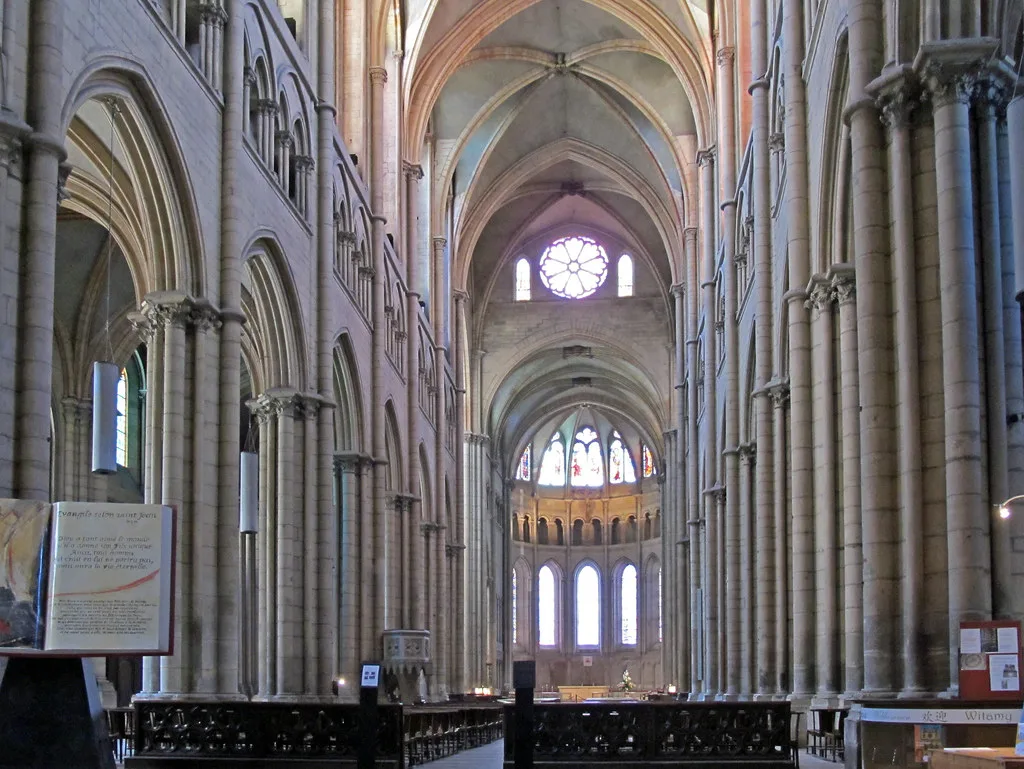
Inside, the nave gives you the full sense of the building's age: heavy Romanesque proportions at the west end giving way to taller Gothic work further east. The cathedral has a collection of stained glass windows that the tourist office treats as one of its medieval artistic highlights, so look up rather than only at eye level.
The cathedral is an active place of worship, so visits can overlap with services. Keep voices low in the side chapels and read the notice at the door if you want to sit in on part of a service rather than walk the aisles.
The astronomical clock and the stained glass
The astronomical clock is the interior feature most visitors come for, and it is the one to prioritise if your time is tight. The dial carries a complex set of indications beyond the time of day, so give it a few minutes rather than a glance.
Pair the clock with the glass. The windows in the choir and aisles are best seen with daylight behind them, which argues for a morning or early afternoon visit rather than a late one. If you are weighing the cathedral against another indoor stop on a wet day, the two together justify the detour more than either alone.
How much time to allow
Thirty to 45 minutes covers the façade, the nave, the clock and a proper look at the glass. Add another quarter of an hour if you want to sit in the square afterwards or read the interpretation panels.
The bigger trade-off is the half-day. Vieux Lyon and Fourvière together fill a morning or an afternoon comfortably, and the cathedral is the piece that gets squeezed if you run late. If you are tight for time, do the cathedral interior briefly and save your lingering for the basilica esplanade, where the view of the city is the reason most people make the climb. If you are comparing cathedral interiors across your trip, the compact Ajaccio Cathedral offers a similarly quick, free stop in its own old town.
Nearby: Place Saint-Jean, the old streets and the Fourvière funicular
Place Saint-Jean is a good place to pause: it is small, central to the quarter and surrounded by the cafés and shopfronts of the old town. From the square you can wander the pedestrian streets of Quartier Saint-Jean towards the river or turn uphill for Fourvière.
The funicular leaves from Vieux Lyon metro station and is the sensible way up the hill, since the climb on foot is steep and eats time. One branch runs all the way to Fourvière while the other stops partway at Saint-Just and leaves you with a climb, so check the platform before you board.
Further afield, the Musée des Beaux-Arts de Lyon sits across the river in the Presqu'île and makes a logical pairing with the cathedral if you want a full day of interiors. Its permanent collections are ticketed separately from temporary exhibitions, and a combined visit is worth pricing before you decide.
The Musée des Confluences is the other big indoor option, at the southern tip of the Presqu'île where the two rivers meet. It is a tram or metro ride from Vieux Lyon rather than a walk, so plan it as a separate block.
Practical points: when to go and fitting it into a weekend
Spring and autumn are the most comfortable seasons for a walking-heavy old town day, with May and September averaging around 19 to 20°C. July is the hottest and busiest month at roughly 26°C, and January is the coldest at around 1°C, which makes the cathedral's interior a welcome warm stop.
A weekend is enough for Lyon if you concentrate on Vieux Lyon, the Presqu'île and one museum. Give the cathedral a slot on the Vieux Lyon morning, then take the funicular up and walk back down through the old streets. The rest of the short break can go to the city's food markets and squares without feeling rushed.
Sunday is the practical trap in Lyon: many restaurants, shops and cafés close on Sunday or Monday, so build the cathedral and the outdoor sights into those days and save indoor browsing for the rest of the week.
If you want green space after the stone, the Parc de la Tête d'Or is a tram ride away in the 6th arrondissement, with a lake, gardens and a free zoo section. The park opens early and closes in the evening, with shorter hours in winter than in summer, so check the gate times posted at the Porte des Enfants du Rhône before a late stroll.
Is Lyon Cathedral Worth Visiting?
Yes, provided you treat it as part of a Vieux Lyon morning rather than a destination on its own. The medieval fabric, the carved west front and the astronomical clock give you a compact, genuinely historic stop that costs nothing but time, and it sits directly on the route between the metro and the Fourvière funicular.
Build the day around the cathedral, the old town streets and the hill, and check the cathedral's own site or the tourist office for current opening times before you set out.
Explore more Lyon guides
Frequently Asked Questions
What is Lyon Cathedral famous for?
It is the Cathédrale Saint-Jean-Baptiste, the seat of the Archbishop of Lyon, begun in 1180 and built over roughly three centuries. Visitors come for the carved west façade, the stained glass and the astronomical clock inside. It is also the natural anchor of a walk through Vieux Lyon.
Is Lyon Cathedral the same as the basilica on the hill?
No. Lyon Cathedral is down in Vieux Lyon on Place Saint-Jean, while the Basilica of Notre-Dame de Fourvière stands on the hill above the old town. They are separate buildings with different roles, and many visitors see both on the same half-day using the funicular from Vieux Lyon metro station.
How long do you need at Lyon Cathedral?
Allow around 30 to 45 minutes for the façade, the nave, the astronomical clock and the stained glass. Add time if you want to sit on Place Saint-Jean afterwards. Budget the rest of the half-day for the old town streets and the climb to Fourvière.
What should I look for inside Lyon Cathedral?
Prioritise the astronomical clock and the stained glass windows, then take in the change in proportions from the Romanesque west end to the later Gothic work further east. The carved portals on the outside deserve a few minutes before you go in. It is an active church, so keep quiet in the chapels.
How do I get to Lyon Cathedral in Vieux Lyon?
Take metro line D to Vieux Lyon, then walk a few minutes through the pedestrian streets of Quartier Saint-Jean to Place Saint-Jean. The same station serves the funiculars up to Fourvière, so you can combine the cathedral and the hill without a second journey.
When is the best time to visit Lyon Cathedral?
May and September are the most comfortable months for walking Vieux Lyon, with typical averages around 19 to 20°C. July is the hottest and busiest at roughly 26°C, and January the coldest at around 1°C. Morning light also suits the stained glass better than a late-afternoon visit.