
Parc de la Tête d'Or: Lyon's Great City Park
The Parc de la Tête d'Or is Lyon's great landscaped park: free to enter, open every day, and worth roughly half a day if you want to see the lake, the botanical garden and the greenhouses without rushing. It is a place for walking rather than for ticking off monuments, so the honest advice is to pick two or three areas and treat the rest as somewhere to come back to.
The park sits in the 6th arrondissement, close to the Rhône, and has seven entrances, which matters more than it sounds: you can start at one gate and leave by another instead of doubling back. The layout is a circuit around a 16-hectare lake, with themed gardens and spaces set around it.
What the Parc de la Tête d'Or is and why it is worth an afternoon
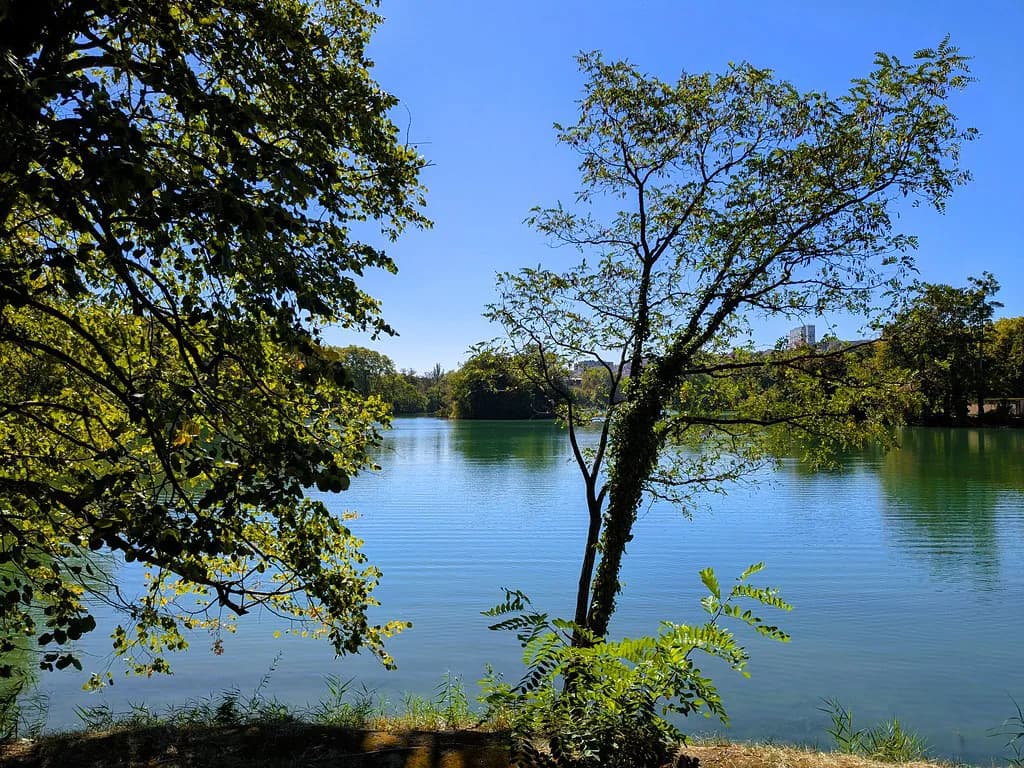
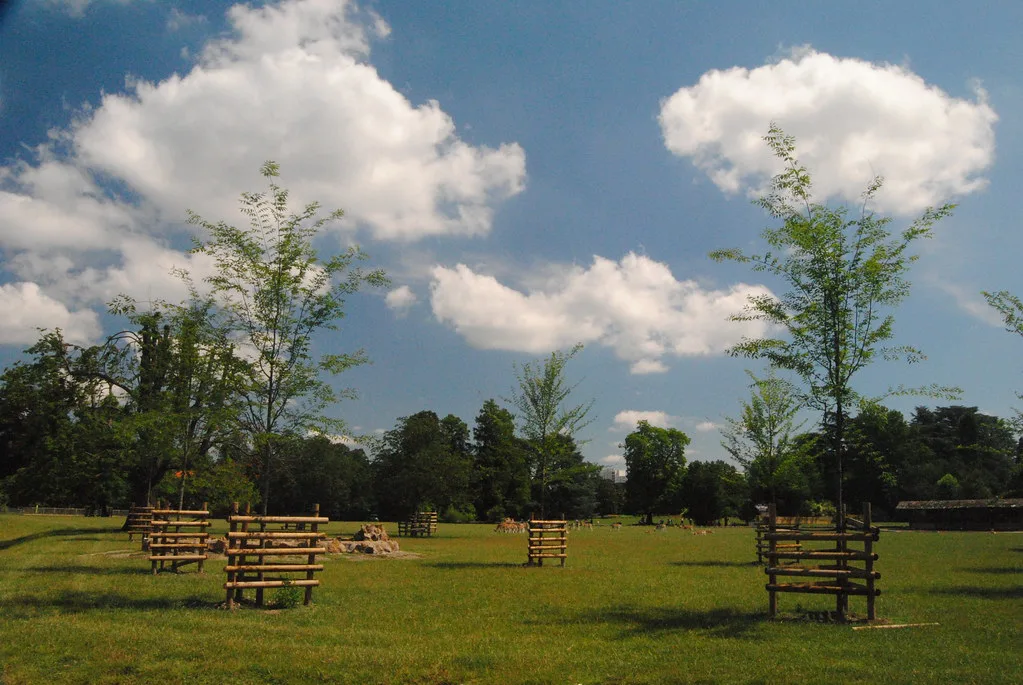
This is a large English-style landscape park, not a formal garden you walk through in twenty minutes. Vast lawns broken by clumps of mature trees, curving paths, flower beds and long open views from the entrances towards the lake give it the feel of a piece of countryside dropped into the city.
Its history explains the layout. The land belonged to the Lambert family from the 16th century before the city bought it, and in 1856 Senator Vaïsse, then prefect and mayor, set the creation of a new public pleasure ground in motion. The design went to the landscape gardeners Eugène and Denis Bühler, work began in 1857 and lasted five years, and the city's botanical garden was moved here from the slopes of the Croix-Rousse.
For a weekend in Lyon, that makes it a good counterweight to the dense old quarters: an afternoon of open sky after a morning of stairways and churches. If you are building a wider shortlist, the rest of our Lyon Attractions: 6 Visitor Guides covers the city's headline sights.
Where the park is: the Rhône, the 6th arrondissement and the seven entrances
The park lies in the 6th arrondissement near the banks of the Rhône, and the river feeds the lake at the centre of the composition. Because there are seven entrances, the gate you choose shapes your visit: arrive from the river side and the lake is your natural first stop.
Think of the park as a loop rather than a single sight. A sensible plan is to enter at one gate, walk the lake circuit with stops at the gardens that interest you, and leave by a different gate on the far side, which saves retracing your steps on a park this size.
How to get there and how long it takes to reach the park on foot or by public transport
The park is a straightforward walk from the central peninsula and the Part-Dieu side of the city, and the riverbank routes make the approach pleasant rather than a chore. Allow a comfortable block of time for getting there on foot rather than treating it as a doorstep attraction, because the park sits at the northern edge of the centre.
Check the current bus, tram and metro options and the stop nearest your chosen gate before you set out, since the park is large enough that the wrong stop can add a long walk. A map of the seven entrances is the single most useful thing to have on your phone.
Opening hours: 6.30am to 8.30pm in winter and 6.30am to 10.30pm in summer, with free entry
The park opens at 6.30am all year. Closing time is 8.30pm in winter up to 14 April, then 10.30pm in summer up to 14 October, so a long evening daylight walk is possible for much of the visitor season.
Entry is free, with no ticket to buy for the park itself. That makes it an easy filler for a spare morning or a cheap way to break up a day of paid museums.
Guided visits exist alongside straightforward self-guided walks, so if you want commentary on the planting and the history, ask about guided options rather than assuming you must go it alone.
The lake and the Île des Cygnes war memorial by Tony Garnier
The 16-hectare lake is the heart of the park, and the Rhône supplies its water. Paths run around it and views open up from the entrances and the shoreline, so the circuit makes a natural spine for your visit.
In the middle sits the Île des Cygnes, also called the Île du Souvenir, which carries the monument to the dead designed by the architect Tony Garnier with sculpture by Jean Larrive. It is the one unmissable monument inside the park, and the reason to walk the full lake loop rather than cut across.
The Jardin Botanique and the large greenhouses
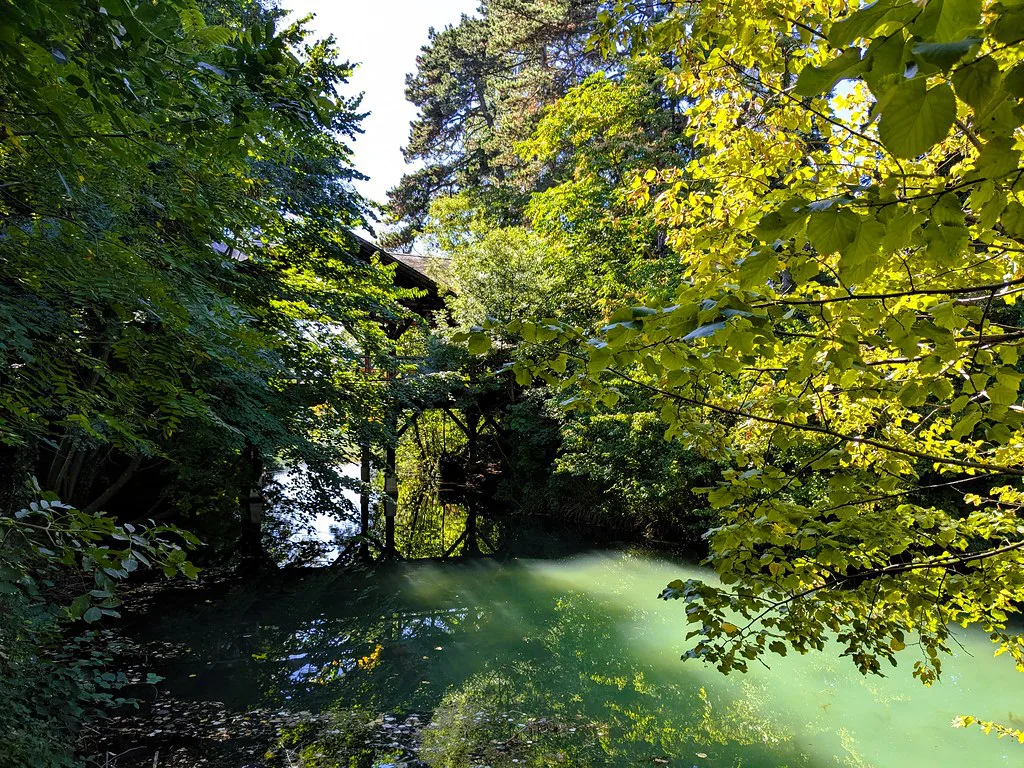
The botanical garden was transferred here from the Croix-Rousse slopes when the park was created, and it remains one of the park's distinct spaces rather than an afterthought. The large greenhouses and the surrounding beds are where plant-minded visitors will want to spend their time.
Treat the greenhouses as a separate stop with its own timing rather than something you pass through on the way to the lake. Hours for the glasshouses and the botanical garden are set separately from the park gates, so confirm them before you build your route around them.
The Jardin Zoologique and what families should expect
A zoological garden was created here in 1858 and is still one of the park's named spaces, alongside the botanical garden, the greenhouses and the roseraie. It is a free part of a free park, which is why families gravitate to it.
Set expectations accordingly: this is a city park's animal collection, not a full zoo, and it works best as one stop on a walk rather than the whole outing. The park as a whole is described as suited to all ages from five upwards, with open-air activities including a mini-golf on site.
The roseraie, the woodland and the open lawns
The roseraie was inaugurated in 1964 and is one of the park's later additions, while the woodland and the wide lawns are the original landscape bones of the Bühler design. Between them they give the park its range: formal planting in one direction, shade and open grass in another.
The lawns are the reason to come without a plan. Bring something to sit on, pick a stretch of grass away from the main paths, and let the park do the work.
How much time to allow, and a realistic half-day route
Half a day is the right allowance: enough for the lake circuit, one garden properly and a pause on the grass, without turning a pleasant park into a route march. If you only have an hour, walk the lake and see the memorial; if you have three, add the botanical garden and greenhouses.
A workable route is to enter from the river side, follow the lake path to the Île des Cygnes, continue to the botanical garden and greenhouses, then head through the lawns to a different gate. If you want a bigger day out, the city's largest green space is described as the setting for a full family day with gardens, sports facilities and rides among its attractions.
Practical points: eating, toilets and walking distances
The park is a place to walk, and the distances add up: the lake alone is 16 hectares and the grounds spread well beyond it, so wear shoes you can cover ground in. Plan your exit gate before you get tired rather than after.
There are shops and places to eat within the park's setting, which means you need not leave the gates for a drink or a snack. Exact hours vary by outlet and season, so check on the day rather than budgeting around a particular kiosk.
What is nearby when you leave the park
Leaving by a river-side gate puts you on the Rhône banks with an easy walk back into the centre. From there the old city and its cathedral are a straightforward continuation of the day; our guide to Lyon Cathedral (Cathédrale Saint-Jean) covers the building itself.
On the peninsula, Place Bellecour makes an obvious second stop on the walk back, and the Musée des Beaux-Arts de Lyon sits close to it if you want an indoor hour after the park.
If you would rather plan the whole weekend around neighbourhoods than single sights, our Lyon Neighborhoods: 4 Area Guides sets out how the city's quarters fit together.
Verdict: who should go and when to skip it
Go if you want a free, unforced half day outdoors, if you are travelling with children, or if plants and glasshouses interest you more than another museum. Skip it on a tight one-day trip where the old city and Fourvière are the priority, or in steady rain, when the park's appeal is mostly the walking.
It also suits a repeat visit better than a single tick-off: see the lake first, then come back for the roseraie or the greenhouses on another morning. The park rewards that slower approach more than a hurried circuit.
Plan Your Visit
The Parc de la Tête d'Or is free, open daily from 6.30am, and closes at 8.30pm in winter and 10.30pm in summer. Give it half a day, enter by one gate and leave by another, and put the lake and the Tony Garnier memorial at the centre of the walk.
Check the park's own pages for the greenhouses, botanical garden and zoo before you go, since their hours run separately from the park gates and change with the season.
Explore more Lyon guides
Frequently Asked Questions
What are the opening hours of the Parc de la Tête d'Or?
The park opens at 6.30am every day. It closes at 8.30pm in winter up to 14 April and at 10.30pm in summer up to 14 October, so evening walks are possible for much of the visitor season.
Is the Parc de la Tête d'Or free to enter?
Yes. Entry to the park is free and there is no ticket for the grounds. Individual activities inside, such as the mini-golf, are separate and priced on the spot.
How big is the Parc de la Tête d'Or?
The lake at its centre covers 16 hectares and is fed by the Rhône. The park spreads well beyond the lake around a circuit of paths, lawns and themed gardens, so allow for real walking distances.
Are there still animals at the Parc de la Tête d'Or?
Yes. A zoological garden was created in the park in 1858 and remains one of its named spaces. Treat it as a city park's animal collection rather than a full zoo and as one stop on a longer walk.
How long does it take to walk around the Parc de la Tête d'Or?
Allow half a day to walk the lake circuit, visit one garden properly and sit on the grass. With an hour, walk the lake and see the Île des Cygnes memorial; with three, add the botanical garden and greenhouses.
Where is the Parc de la Tête d'Or in Lyon?
It is in the 6th arrondissement, close to the banks of the Rhône, and has seven entrances. Choosing your gate in advance lets you walk a loop and leave on the far side instead of retracing your steps.