
Musée des Confluences: A Visitor's Guide to Lyon's Riverside Museum
The Musée des Confluences is a museum of natural history, anthropology and civilisations standing at the point where the Rhône and Saône meet, on the southern tip of the Presqu'île in Lyon. It is the city's big modern museum building, and it works well as a half-day stop rather than a quick look-in.
The decision that shapes a visit is what you pay for and what you do not. The entrance hall, the walkway around the Puits de gravité, the terrace and the bookshop are open without a ticket, while the exhibition rooms need one. A single ticket covers the permanent route and the temporary shows and stays valid all day, so you can step out and come back.
What the Musée des Confluences is
The museum covers natural sciences, human sciences and science and technology, and its collections range from dinosaurs and fossils to Egyptian mummies and a samurai armour. The museum's own account of its subject centres on the place of humanity within the living world, touching on the origins of the world and of life. That breadth means the permanent route is not a single subject told once; it moves across continents and periods.
It sits at the confluence itself, which is the reason for both the name and the setting: the two rivers join immediately behind and beside the building. Treat the address as the southern end of the Presqu'île rather than the historic centre, and plan the rest of the day around that geography.
Where it is and how to reach it
The museum has its own tram stop, called musée des Confluences, and there is a car park signed Parking musée des Confluences-Gerland beside it. Arriving by tram drops you at the building rather than somewhere near it, which matters on a short break.
From the centre, treat this as a southward trip along the Presqu'île rather than a walk between sights. Pair it with a stop at Place Bellecour on the way down, which keeps the day linear instead of doubling back.
The building by CoopHimmelb(l)au
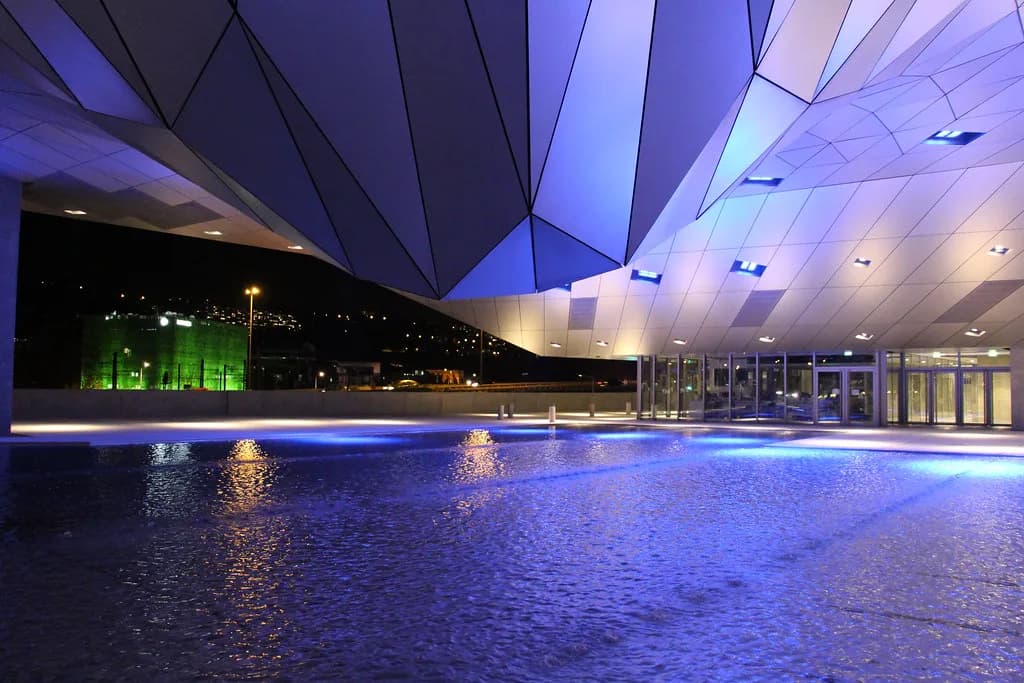
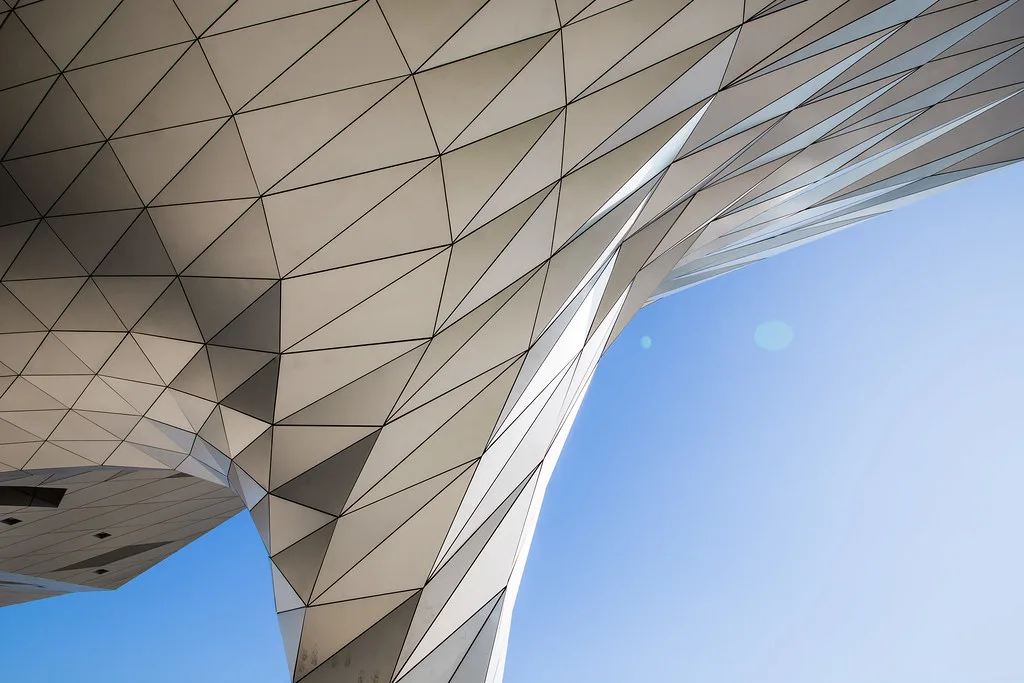
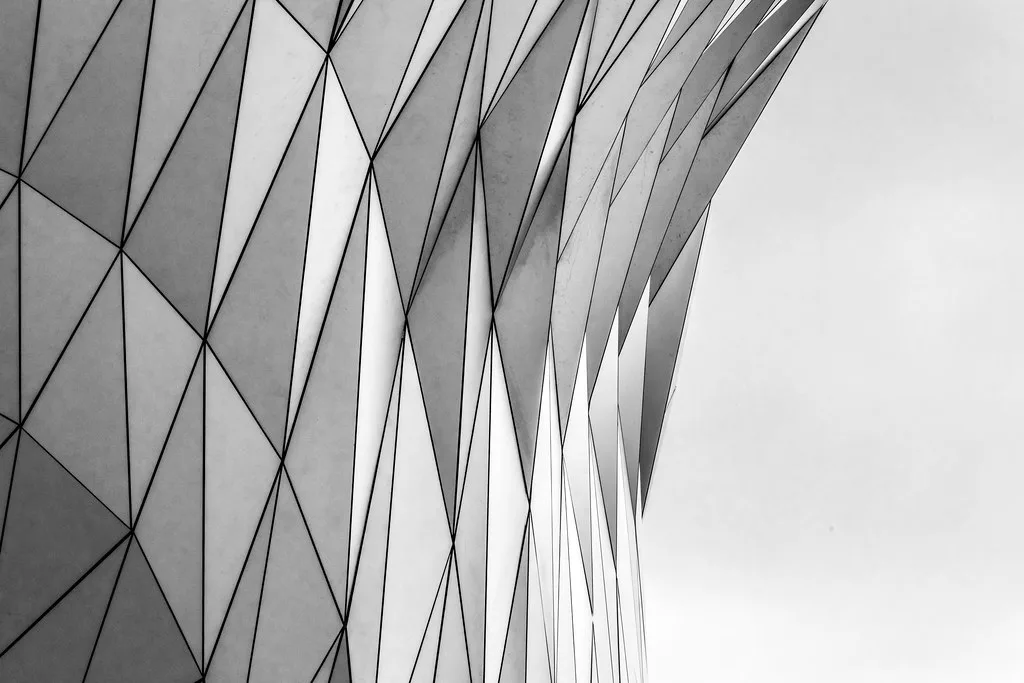
The Austrian practice CoopHimmelb(l)au designed the building, and it deliberately has no main façade: the silhouette shifts with the angle you approach from. That makes it unusually rewarding to see from more than one side, and the museum itself points photographers towards the changing profile.
The tourist office describes it as a monumental glass-and-steel landmark, which is a fair summary of why it reads so differently from the stone heritage elsewhere in the city. If architecture is your main interest rather than the collections, the exterior and the free interior spaces may be enough on their own.
What you can see without a ticket
Several spaces are free to enter: the light-filled hall, the walkway that winds around the Puits de gravité, the terrace with its view over Lyon and towards the Mont Blanc, and the bookshop in the entrance hall. The Mont Blanc sighting is the museum's own description of the view, so treat it as a possibility rather than a promise.
This matters most on a tight weekend: you can see the building and the riverside setting, and get the terrace view, without committing to a full visit. The exhibition rooms are separate, so decide before you arrive whether the collections or the architecture is the draw.
The permanent route and the collections
The permanent route runs through four rooms and is included in the standard ticket, alongside whatever temporary exhibitions are on. Objects such as a Tasmanian wolf, minerals, an astronomical telescope and the samurai armour give a sense of how wide the brief is. Allow time for the rooms themselves rather than treating the permanent route as a corridor to the temporary shows.
Temporary exhibitions and the day ticket
The museum stages three to four temporary exhibitions a year on top of the permanent route, and one ticket covers the whole lot for the day. That day-validity is the practical detail worth knowing: you can break for lunch or the garden and return without paying again.
Check which shows are running before you fix a date, because the programme changes several times a year and a single exhibition can justify the trip on its own. The current programme and ticket prices sit on the museum's own exhibitions and ticketing pages.
How long to allow
For a half-day, take the free hall and terrace first, then give the permanent route a focused pass and leave the temporary shows for a return. For a full afternoon, work through the permanent rooms properly and add one temporary exhibition, using the day ticket to pause in the garden or the café between them.
The building is large and the route is spread out, so a rushed hour at the end of the day rarely does it justice. If you have only an hour, come for the architecture and the terrace and skip the exhibition rooms entirely.
Opening hours and late openings
In school term and in summer the museum opens Tuesday to Sunday from 10.30 to 18.30. During zone A school holidays, excluding summer, it opens every day including Monday at the same hours, and there is a late opening until 22.00 on the first Thursday of each month.
Those two variations are what can change a weekend plan: a Monday visit only works in zone A holidays outside summer, and a Thursday evening is the one reliably late slot. A Monday in term time falls outside the published pattern, so build the rest of the day around a different sight.
Free entry for children and flash talks
Children enter free, which changes the arithmetic for families weighing up a museum stop against other paid sights. The museum also runs flash talks included in the admission price, lasting about 15 minutes and giving the key ideas of an exhibition.
Flash talks run on Wednesday afternoons, Saturdays and Sundays in school term, and every day during school holidays and on public holidays, with details available on site on the day. They are a sensible first move on arrival if you want orientation before walking the rooms.
Eating, shopping and the garden
There is a bookshop in the entrance hall and a shop and restaurant on site, so you do not need to leave the building mid-visit. Bought online in advance, tickets let you skip the queue at the entrance, which is worth doing at busy holiday periods.
Behind the building, the garden runs out to the point where the rivers meet, giving a view back over southern Lyon and a different angle on the architecture. It is a free way to end the visit and to see the confluence the museum is named for.
Nearby and how it fits a Lyon weekend
The museum anchors the southern end of the Presqu'île, so it pairs naturally with Place Bellecour and the centre rather than with the hilltop sights across the river. Give it a half-day and keep Vieux Lyon and the cathedral quarter for a separate block.
If you are building a wider itinerary, the Lyon Neighborhoods: 4 Area Guides help you work out which quarter to base each part of the weekend in, and how the river divides the city. The Basilica of Notre-Dame de Fourvière and the Cathédrale Saint-Jean-Baptiste sit on the opposite bank and suit a different half-day.
Museum fatigue is real in a city with this much to see, so alternate big collections with open-air stops. The Musée des Beaux-Arts de Lyon and the Parc de la Tête d'Or give you a second museum day and an outdoors one to balance the schedule.
Verdict: who it suits and when to skip it
The Musée des Confluences suits travellers who want one substantial modern museum alongside the old city, and families benefit from free child entry and the short flash talks. It is also a strong pick for anyone interested in architecture, since the building rewards a look from several angles.
Skip the exhibition rooms if your weekend is short and you would rather spend the time in Vieux Lyon or on the Fourvière hill. Come for the free hall, terrace and garden instead, which costs nothing and takes far less time.
Plan Your Visit
Decide first whether you are coming for the collections or the building, because that choice determines whether you buy a ticket at all. If you are going in, buy online to avoid the queue and use the day-validity to break the visit with the garden.
Then fix your day against the opening pattern: Tuesday to Sunday in term time, Mondays added in zone A holidays outside summer, and the first Thursday of the month for an evening visit. Ticket prices and the current exhibition programme are published on the museum's own site.
Frequently Asked Questions
How long does it take to visit the Musée des Confluences?
Allow a half-day if you want the free hall, the walkway around the Puits de gravité, the terrace and the permanent route of four rooms. A full afternoon lets you add a temporary exhibition, and the day ticket allows you to pause in the garden or the café and return without paying again.
What is the Musée des Confluences about?
It is a museum of natural history, anthropology and civilisations, built where the Rhône and Saône meet at the southern tip of the Presqu'île. Its collections cover natural sciences, human sciences and science and technology, from dinosaurs and fossils to Egyptian mummies and a samurai armour.
Is the Musée des Confluences open on Mondays?
The museum opens Tuesday to Sunday from 10.30 to 18.30 in school term and summer. During zone A school holidays, excluding summer, it opens every day including Monday at the same hours, and it stays open until 22.00 on the first Thursday of each month.
Do you need to book tickets in advance?
Booking online saves you the queue at the entrance, which helps during busy holiday periods. Ticket prices and the current exhibition programme are published on the museum's own site, so check them before you fix your date.
What can you visit without a ticket?
You can enter the hall, take the walkway around the Puits de gravité, go up to the terrace for the view over Lyon and towards the Mont Blanc, and browse the bookshop, all without a ticket. The exhibition rooms need one, and a single ticket covers both the permanent route and the temporary shows for the whole day.
Where is the museum and how do you get there?
It stands at the confluence of the Rhône and Saône, at the southern end of the Presqu'île. It has its own tram stop named musée des Confluences and a car park signed Parking musée des Confluences-Gerland beside it.