Is Aix-en-Provence Worth Visiting? An Honest Weekend Verdict
Yes, Aix-en-Provence earns a weekend: walkable squares, Cours Mirabeau, the Granet Museum and daily markets. Here is who it suits and how long to stay.
On this page
Yes, Aix-en-Provence is worth visiting for a two- or three-day break, provided you want a dense, walkable city of fountains, mansions and food markets rather than a coastal resort. The old town sits around Cours Mirabeau, the museums are close together, and one square, Place Richelme, holds a fruit and vegetable market every day of the week. What you give up is the sea and the bigger-city bustle; what you gain is a place you can cross on foot in half an hour and still fill two full days.
What Aix-en-Provence Does Best
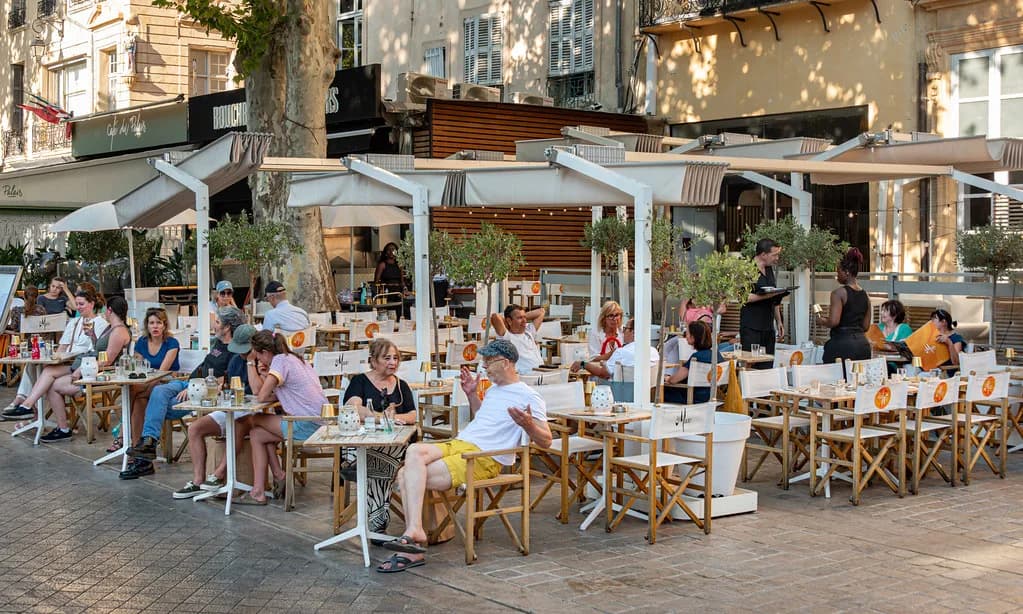
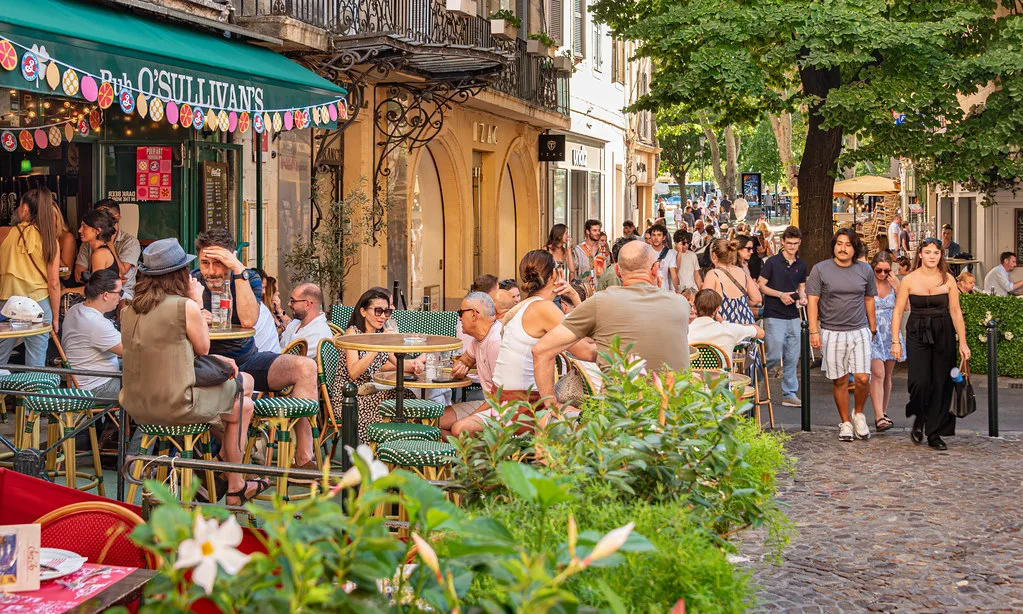
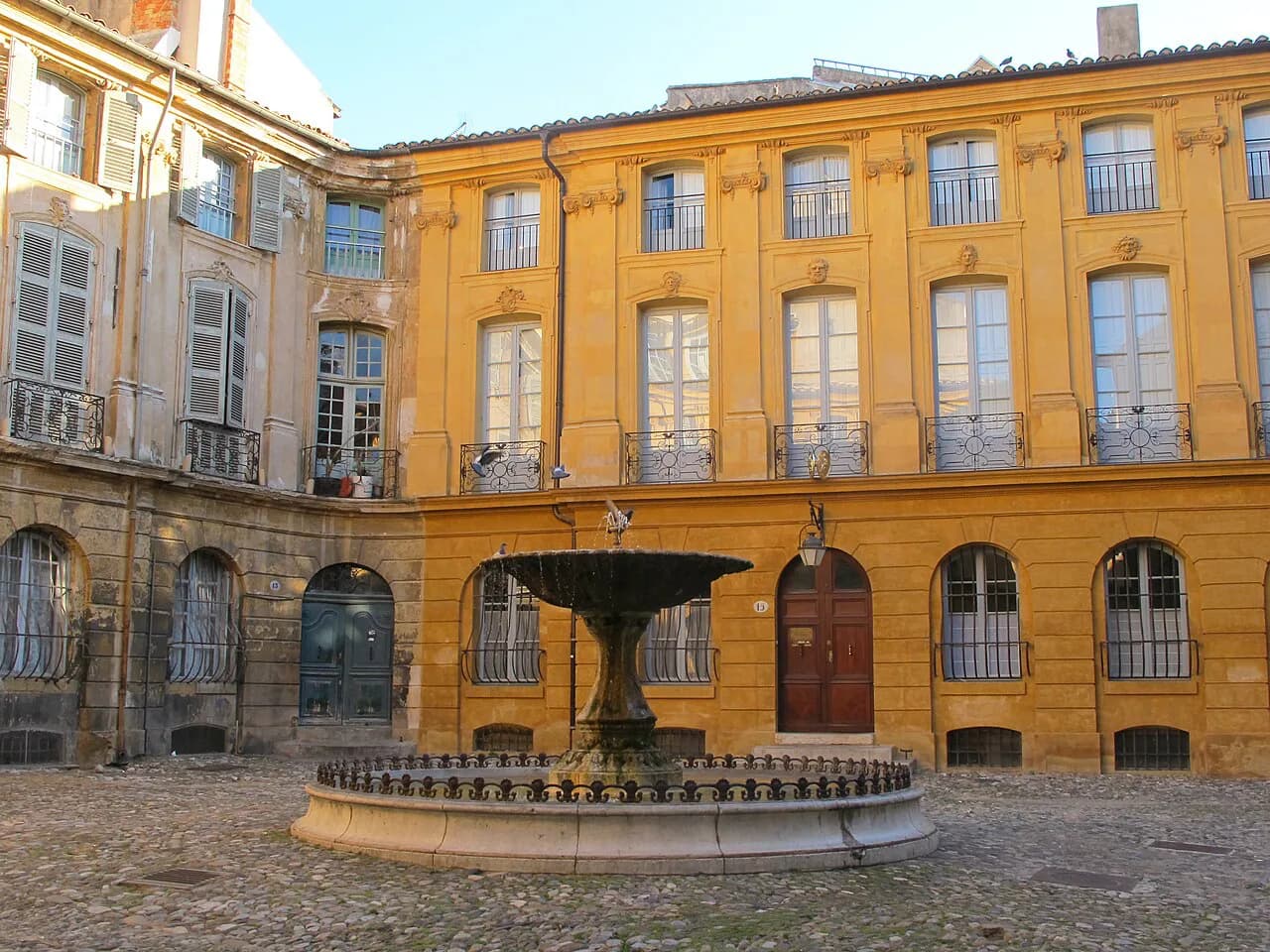
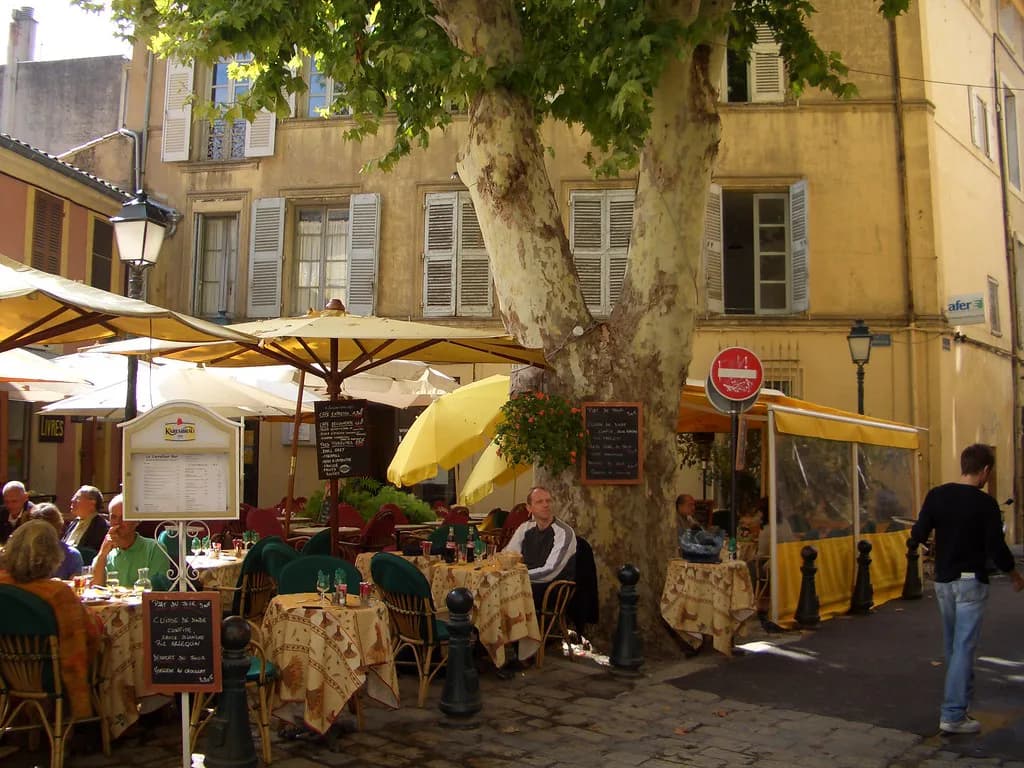
Aix packs an unusual amount of architecture into a small centre. The tourist office puts the city's Baroque heritage third in France, behind only Paris and Versailles, which is why a simple walk past the fountains and private mansions feels like the main event rather than filler between sights. Cours Mirabeau is the spine of it: a former carriage route, now the busiest stretch in town, with cafe terraces under the plane trees from morning coffee to early evening. The wider things to do in Aix-en-Provence are largely free and outdoors, which keeps a weekend cheap.
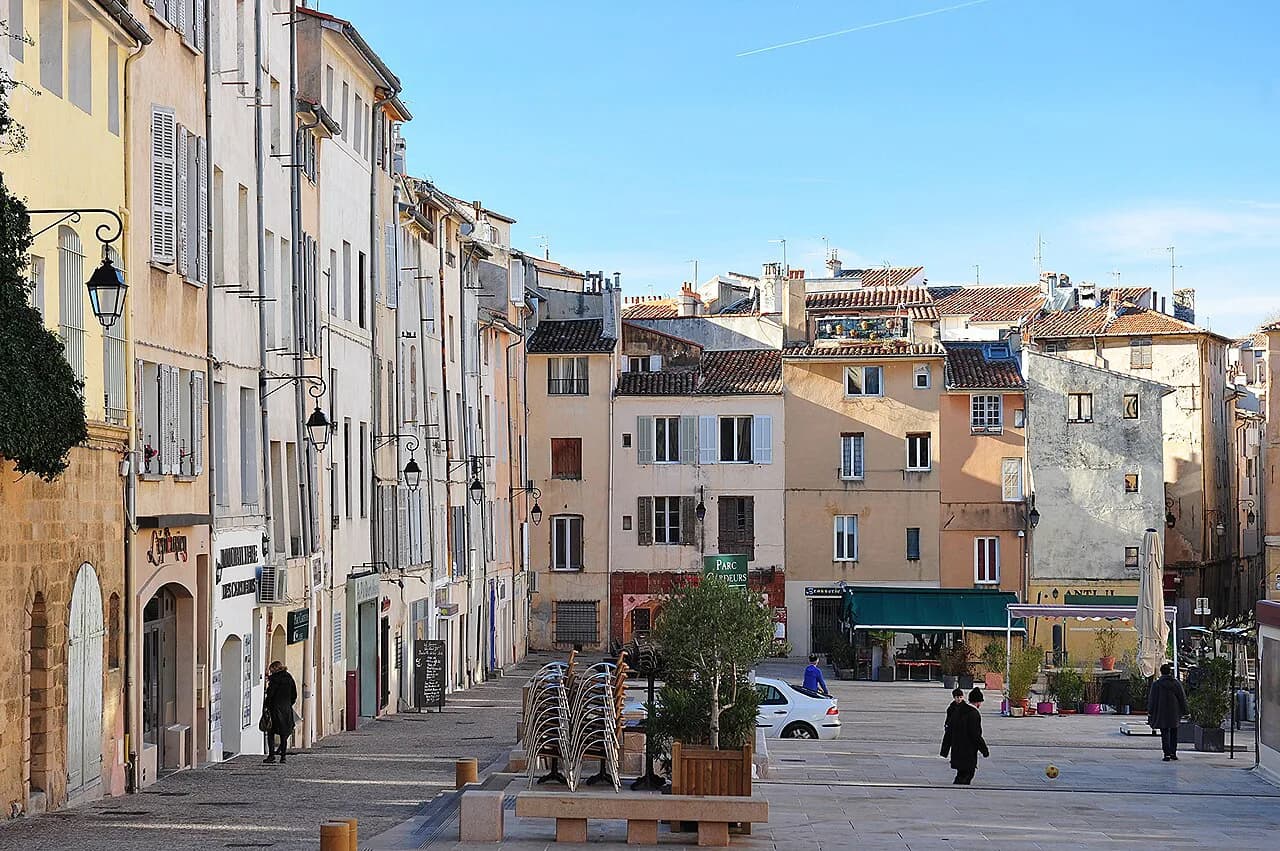
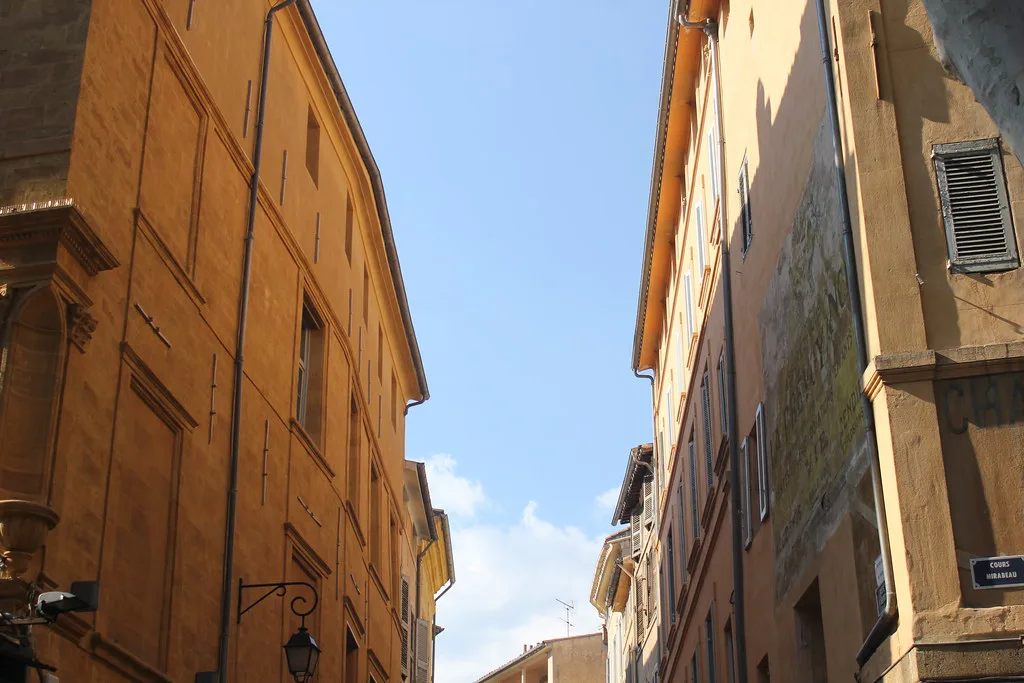
The old town rewards aimless wandering more than ticking off monuments. A marked pedestrian route, waymarked with studs stamped with a C, runs from Cézanne's birthplace to the Saint-Jean cemetery, so you can follow the painter's Aix without booking anything. This is the city's real advantage for a short break: you can arrive without a plan and still spend a satisfying half-day on foot.
Cours Mirabeau and the Centre on Foot
Treat Cours Mirabeau as a half-day in itself rather than a photo stop. The tourist office describes it as the place for a morning coffee on a terrace, lunch in the shade of the plane trees and an early-evening drink, and that rhythm is the honest way to use it. From the boulevard you reach the Granet Museum just off Rue d'Italie in a few minutes, the Mazarin district beyond it, and the daily market at Place Richelme on the other side.
A realistic shape for day one is the boulevard, the old town squares and the Mazarin district, saving the museums for the next morning. Distances are short enough that you will pass the same fountain several times, which is the pleasure of the place rather than a failure of planning. Keep a loose Aix-en-Provence itinerary so the walking does not crowd out the interiors.
Museums That Justify a Morning
The Granet Museum is the one to prioritise. It holds works from the 14th to the 20th century, including Rembrandt, Ingres and Cézanne, plus the Jean Planque collection of around 300 Impressionist and modern pieces shown in the restored Chapel of the White Penitents. Allow a couple of hours; more if a temporary exhibition is running. The full set of museums in Aix-en-Provence is worth checking before you fix your days.
The Musée du Pavillon de Vendôme is the second fixed point: a 1665 classical pleasure house set in a French garden on Rue Célony, with 17th- and 18th-century portraits and Provençal furniture. Full price is 5,00 € for the period from 16 April 2026 to 15 April 2027, with free entry on the first Sunday of each month and for under-26s and students. It closes on Tuesdays, which matters when you are choosing which day to give to museums.
For Roman remains, the Thermes Sextius on avenue des Thermes are a fragment rather than a site you tour: a vaulted pool survives inside what is now the Hôtel Aquabella and its spa, on the spot where the baths were built in the second half of the first century. Treat it as a curiosity to note while crossing town, not as a sight that earns a slot in the schedule.
Markets: Place Richelme Every Day
The market is the strongest single argument for Aix over a quieter Provençal town. Place Richelme holds a fruit and vegetable market every day, with Luberon goat's cheese, Alpilles olive oil, honey, charcuterie and seasonal produce sold by growers and traders. A second food market runs on Tuesday, Thursday and Saturday mornings at Place de Verdun and Place des Prêcheurs, and a fairground market with fabrics, pottery and clothes runs the same three mornings along Cours Mirabeau and Rue Thiers.
The flower market fills the Town Hall square every day except the first Sunday of the month, and a flea market sells furniture, old books and decorative pieces on Tuesday, Thursday and Saturday at Place des Combattants d'Afrique du Nord on avenue Victor Hugo. That first-Sunday exception is worth noting because it is also the day the Pavillon de Vendôme is free: you trade the flowers for a cheaper museum ticket. The wider guide to markets in aix-en-provence explains how the squares fit together on foot.
Cézanne's Aix
Cézanne gives Aix a cultural second layer beyond Baroque streets. You can visit his studio, the Jas de Bouffan family property where he began painting, the Bibémus Quarries looking across to Sainte-Victoire, and a room of his works in the Granet Museum. The free Cezanne Pocket Guide from the tourist office maps the self-guided C route through the city; a guided walk in his footsteps runs from April to October.
The studio and quarries sit outside the tight centre, so they cost you time rather than money. If you have two days, pick the city route and the Granet room; with three, add one site beyond the boulevard. Do not try to fit all of Cézanne's addresses into a weekend alongside the museums.
Beyond the Centre
Three sights pull you away from Cours Mirabeau. Hôtel de Caumont, in the Mazarin district, is a restored 18th-century mansion now run as an art centre with two temporary exhibitions a year, a tea room and a bookshop. The Vasarely Foundation, a listed building of sixteen hexagonal modules holding 44 monumental architectural integrations, suits anyone interested in optical art. The Memorial Site of Camp des Milles, the only major French internment and deportation camp still intact and open to the public, needs a half-day and a different mood entirely.
How Aix Compares with Marseille and Nice
Choose Aix over Marseille if you want a small, polished, walkable centre and are happy to skip the port and the coast. Choose it over Nice if you do not need a beach: Nice gives you the sea and a bigger city, Aix gives you density. The trade-off is real rather than a sales pitch, and if a waterfront is the point of your trip, Aix will feel inland.
Against other Provençal cities, Aix is the museum-and-market option. If Roman ruins and a bigger historic core appeal more, weigh is arles worth visiting; if you want the papal palace and the river, weigh is avignon worth visiting. Both are stronger on headline monuments; Aix is stronger on the pleasure of an ordinary afternoon.
How Many Days Aix Needs
Two days is the honest minimum. Day one: Cours Mirabeau, the old town squares, Place Richelme and the flower market, an afternoon in the Mazarin district and the Pavillon de Vendôme. Day two: the Granet Museum in the morning, then Hôtel de Caumont or the Vasarely Foundation, depending on whether you prefer old interiors or optical art.
A third day buys you one of the outlying sights without rushing: the Camp des Milles memorial, the Bibémus Quarries or Cézanne's studio. It also absorbs a Monday or Tuesday closure, which is the practical reason to build in slack. Two days in Aix with everything shut is worse than three days with one museum saved for the last morning.
When to Go and What Is Open
Opening days, not weather, should decide your dates. The Pavillon de Vendôme shuts on Tuesdays, and its published hours split into morning and afternoon sessions with a lunchtime gap. From mid-April to late October it closes at 18:00 and from late October to mid-April at 17:00, so an early-afternoon arrival still works.
A Friday-to-Sunday break gives you all three market mornings plus a full Saturday for the centre, and leaves Monday's closures irrelevant. If your only free window includes a Tuesday, plan that day around the daily Place Richelme market, the Cézanne walk and Cours Mirabeau instead of the museums. The best time to visit Aix-en-Provence otherwise comes down to preferring spring and autumn for walking.
Costs and Tickets
Aix is a cheap city to fill a weekend in, because the best of it is free. The Pavillon de Vendôme costs 5,00 € at full price for the 2026–27 period, nothing on the first Sunday of the month, and nothing for under-26s, students and teachers; a City Pass Aix-en-Provence gives free access there. Budget separately for the Granet Museum and Hôtel de Caumont and check their current ticket prices before you travel, since they change with exhibitions. The free Cezanne Pocket Guide saves you a paid tour if you are happy to walk alone.
Shopping is where a budget slips rather than sightseeing. The pedestrian streets carry Hermès, Longchamp and Agnès B, Les Allées Provençales has Zara, Fnac and Monoprix, and the calisson makers and patisseries around the centre sell the city's signature almond and candied-melon sweet. Our guide to shopping in Aix-en-Provence covers where those streets run.
The Verdict
Go to Aix-en-Provence if you want a compact, elegant city where markets run daily, the museums are serious and the whole centre is walkable in an afternoon. Skip it if a beach or a big-city waterfront is what makes a short break for you, or if your only available day is a Tuesday and the Pavillon de Vendôme was the draw.
Two days is enough to judge it for yourself. Book a Friday to Sunday, use the Place Richelme market as your anchor each morning, and save one museum morning for the day you leave.
Explore more Aix-en-Provence guides
Frequently Asked Questions
Is Aix-en-Provence worth visiting for a weekend?
Yes, if you want a dense, walkable centre of fountains, private mansions and markets rather than a coastal resort. Cours Mirabeau, the Granet Museum and the daily market at Place Richelme sit within a short walk of each other, so two days fills comfortably. Anyone who needs a beach should look at Nice instead.
Is it worth staying in Aix-en-Provence or just passing through?
Stay at least one night. Passing through gives you the boulevard and a coffee, but the markets start in the morning and the museums reward a fresh start, so a Friday-to-Sunday stay lets you use three market mornings and a full day in the centre.
What day is market day in Aix-en-Provence?
Place Richelme holds a fruit and vegetable market every day. Further food markets run on Tuesday, Thursday and Saturday mornings at Place de Verdun and Place des Prêcheurs, and a fairground market runs the same three mornings along Cours Mirabeau and Rue Thiers. The flower market on the Town Hall square runs daily except the first Sunday of the month.
What is open in Aix-en-Provence on a Monday or Tuesday?
The Musée du Pavillon de Vendôme closes on Tuesdays, so build that day around the daily Place Richelme market, the C-marked Cézanne walk and Cours Mirabeau. Opening days elsewhere change with exhibitions and seasons, so confirm the museums you want on their own sites before fixing your days.
Is Nice or Aix-en-Provence better for a short break?
Nice wins if you want the sea and a bigger city. Aix wins if you want a compact centre you can cross on foot in half an hour, with markets, Baroque architecture and the Granet Museum packed into it. Neither is better in the abstract; it depends on whether a waterfront is the point of your trip.
How many days do you need in Aix-en-Provence?
Two days covers the centre: Cours Mirabeau, the old town squares, the markets, the Pavillon de Vendôme and the Granet Museum. A third day adds one outlying sight such as the Bibémus Quarries or the Camp des Milles memorial, and gives you room to absorb a Tuesday museum closure.
What is there to see in Aix-en-Provence?
Start with Cours Mirabeau and the old town squares, the daily market at Place Richelme and the flower market on the Town Hall square. Add the Granet Museum, the Musée du Pavillon de Vendôme on Rue Célony, Hôtel de Caumont, the Vasarely Foundation and the Cézanne sites, including his studio and the Bibémus Quarries outside the centre.
Sources
Notes for French city breaks
Optional updates to our guides.
You might also like

Continue reading
More guides you'll find useful