Lyon in October: Weather, Crowds and What to Do
Plan a weekend in Lyon in October with typical temperatures, quieter streets and a mix of riverside walks, markets, museums and hillside views.
On this page
October is one of the better months for a short break in Lyon: daytime temperatures are mild enough for long walks along the two rivers, and the summer crowds have thinned. Evenings cool down noticeably, so a light jacket earns its place in your bag. Build the trip around one outdoor day and one flexible day that can absorb rain.
The city rewards planning by geography rather than by checklist. The Presqu'île sits between the Rhône and the Saône, Fourvière rises to the west, and Croix-Rousse sits on the northern plateau. Grouping sights by hill and riverbank saves you from criss-crossing the city, and our guide to things to do in Lyon sets out the full menu of sights if you want to build a longer list.
What October in Lyon is like
Autumn in Lyon is generally mild by day and cool once the sun drops, which suits a weekend of walking punctuated by cafés and museums. Expect a mix of bright spells and wetter days rather than a settled blue sky. That variability is the main planning consideration: keep at least one indoor option ready for each day.
Visitors who have spent time in the city in autumn describe warm, sunny days arriving late in the season, alongside the first genuinely cool mornings. Treat that as a description of what October can deliver rather than a guarantee. Pack layers rather than a heavy coat, and add a compact umbrella.
Typical October temperatures and how to pack
Average October temperatures in Lyon sit around 16°C, which is comfortable for walking but not for sitting outside all evening. Averages hide the range, so expect some days noticeably warmer and some distinctly cooler. A mid-layer, a waterproof shell and shoes with grip for wet cobbles cover most of it.
Daylight shortens through the month, so front-load outdoor sights into the morning and early afternoon and keep museums for the late slot. The terraces at Fourvière and the riverside paths are best in the middle of the day, when the light is at its strongest. Plan your hill climb before the afternoon cloud builds.
Fewer crowds than high summer
October falls outside the peak summer window, so the main sights are easier to move through and riverside cafés are less contested. That matters most on the Presqu'île and in the old town, where narrow streets jam in July and August. The trade-off is a slightly higher chance of a wet afternoon.
Lyon is often treated as a stopover on the way south, which keeps it calmer than Paris even in good weather. A weekend here in October feels like a proper city break rather than a queue. If you are weighing it against a larger French destination, the honest verdict is that Lyon rewards a slower pace. If you are also considering an alpine counterpart for the same month, our guide to Annecy in October covers the weather and how many days to allow.
Outdoors: the Berges du Rhône and the Saône quays
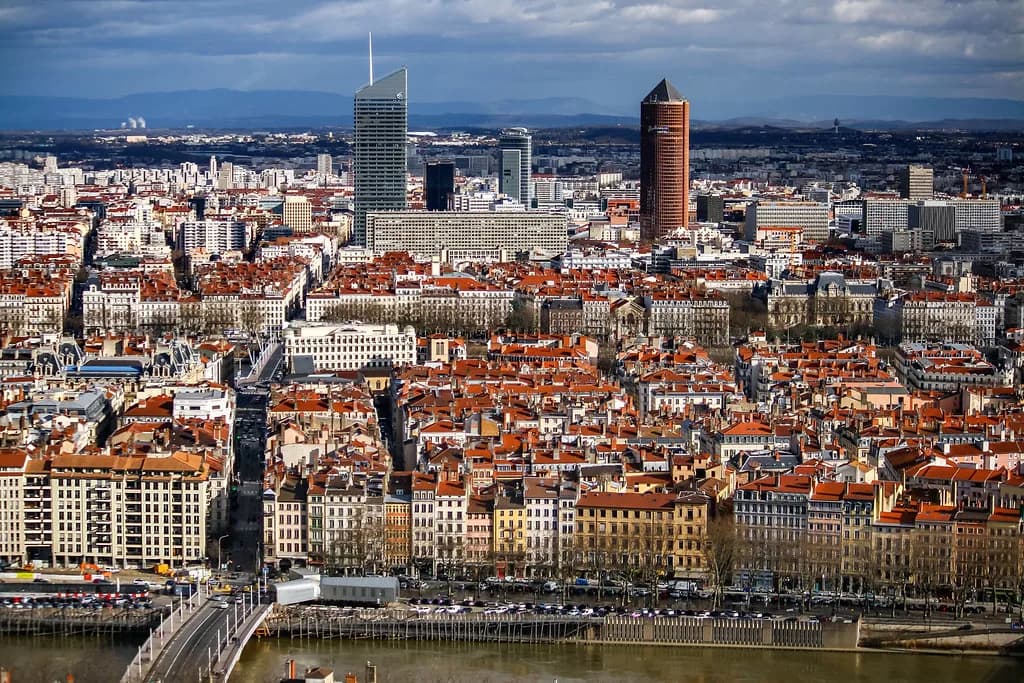
The Berges du Rhône give you roughly five kilometres of riverside paths, wide enough for walking and cycling and lined with cafés on the left bank. It is the easiest place to start a morning: flat, open and quick to reach from most central points. Use it to orient yourself before heading into the denser streets. If you want to add green space to the walk, our guide to Lyon parks picks out the city's gardens and open spaces.
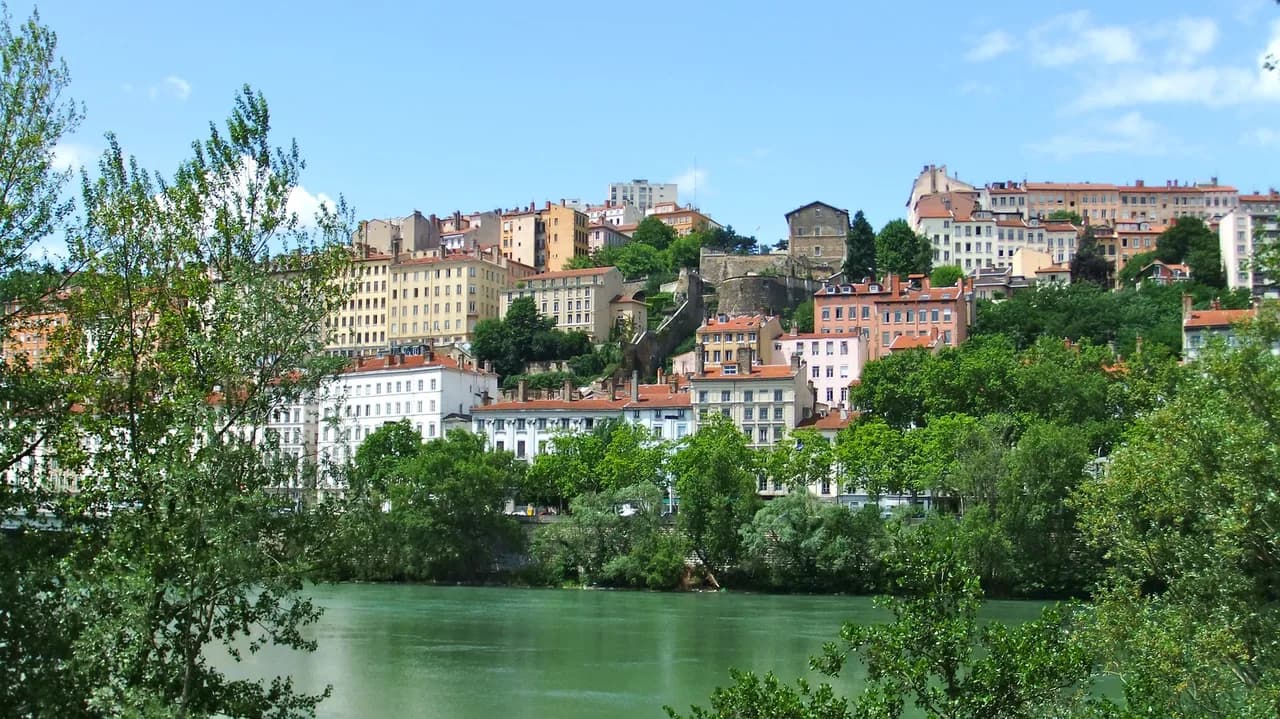
The Saône has a grittier, more industrial feel than the Rhône promenades, which makes it the better choice for a quieter stroll rather than a scenic set piece. Cross between the two banks where it suits your route, but do not try to walk both rivers end to end in one day. Pick one for the morning and save the other for a later wander.
Climbing to Croix-Rousse via the Montée de la Grande-Côte
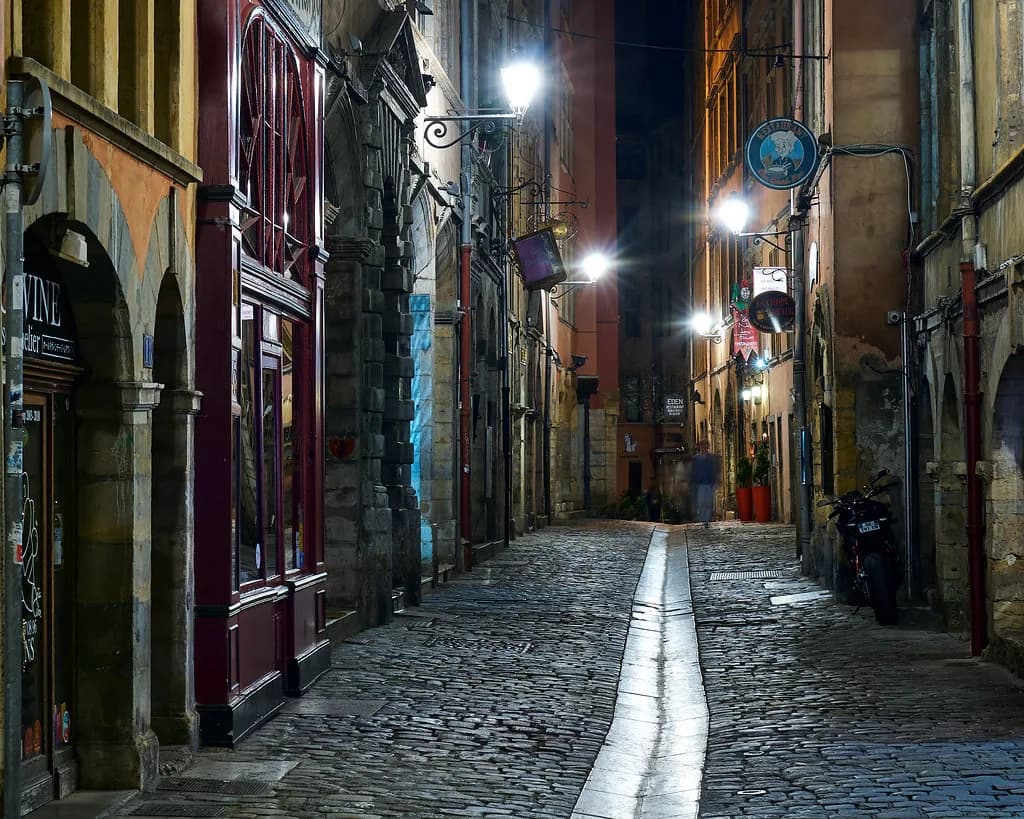
The pedestrianised Montée de la Grande-Côte climbs from the Presqu'île up to Croix-Rousse, and it is the most rewarding way to gain height without leaving the city centre. Take it slowly, because the slope is steady and the cobbles are slippery after rain. At the top you are in the old silk-workers' quarter, which has a village feel.
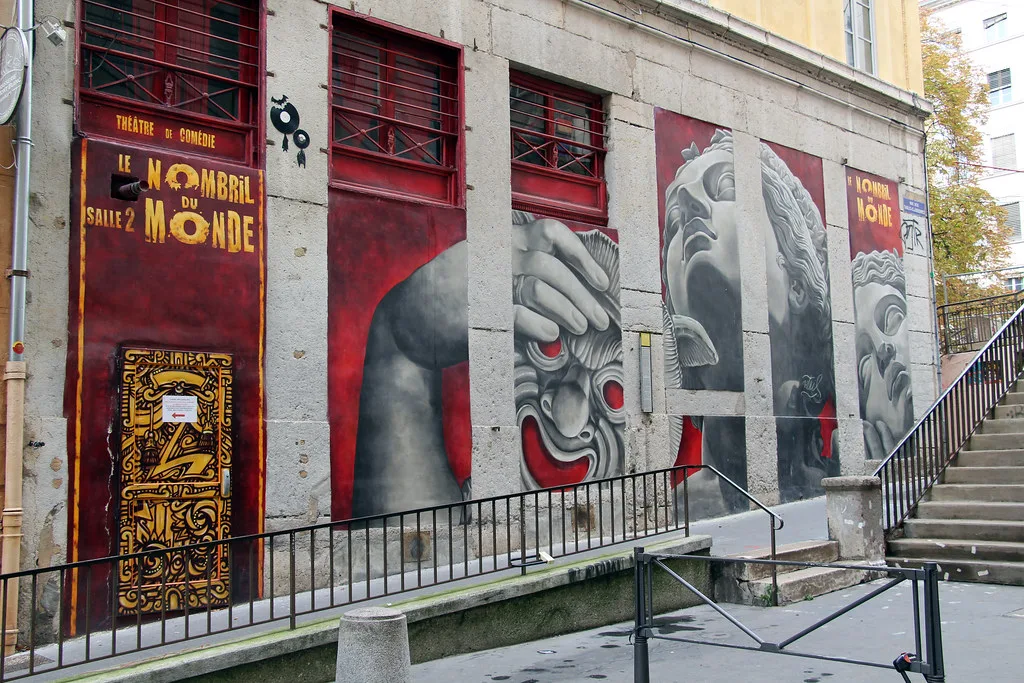
On the way up, the Mur des Canuts covers the side of a building with a huge painted scene of the neighbourhood and its silk-working past. The mural depicts the silk workers' revolts of the 1830s and 1840s, some of the earliest labour uprisings of the industrial era. It takes only a few minutes, so it fits naturally into the climb.
Fourvière, the funicular and city views
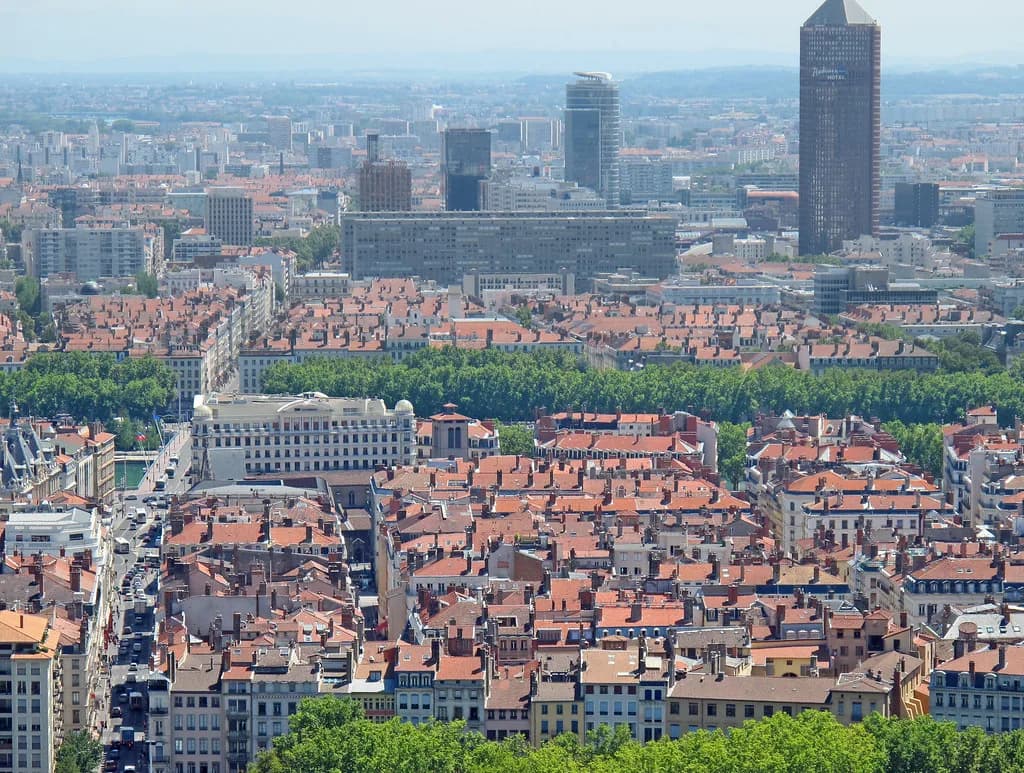
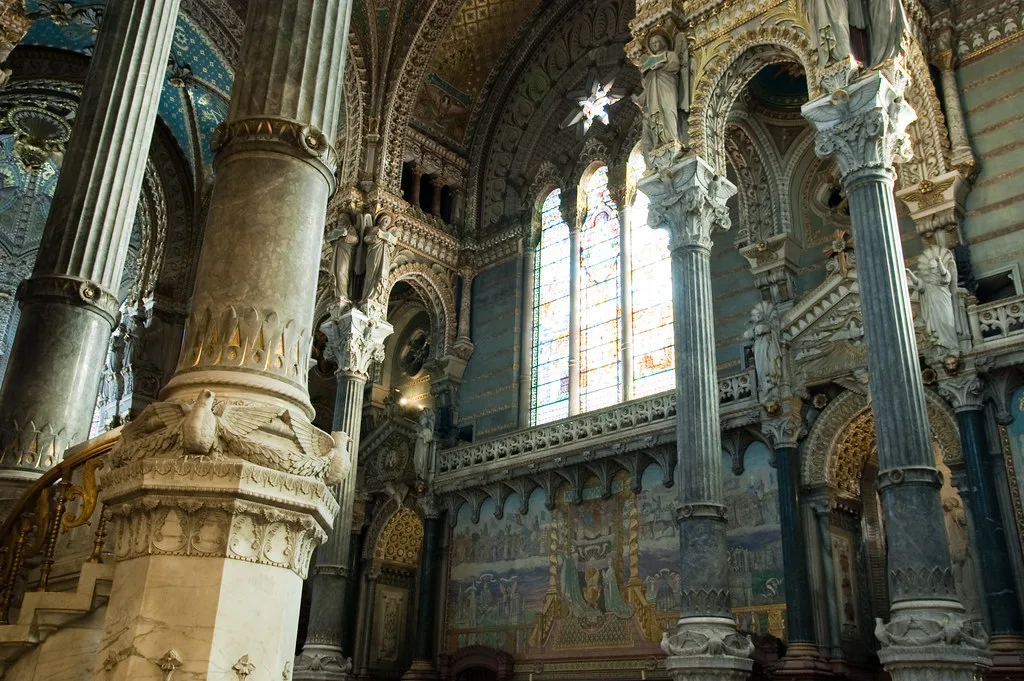
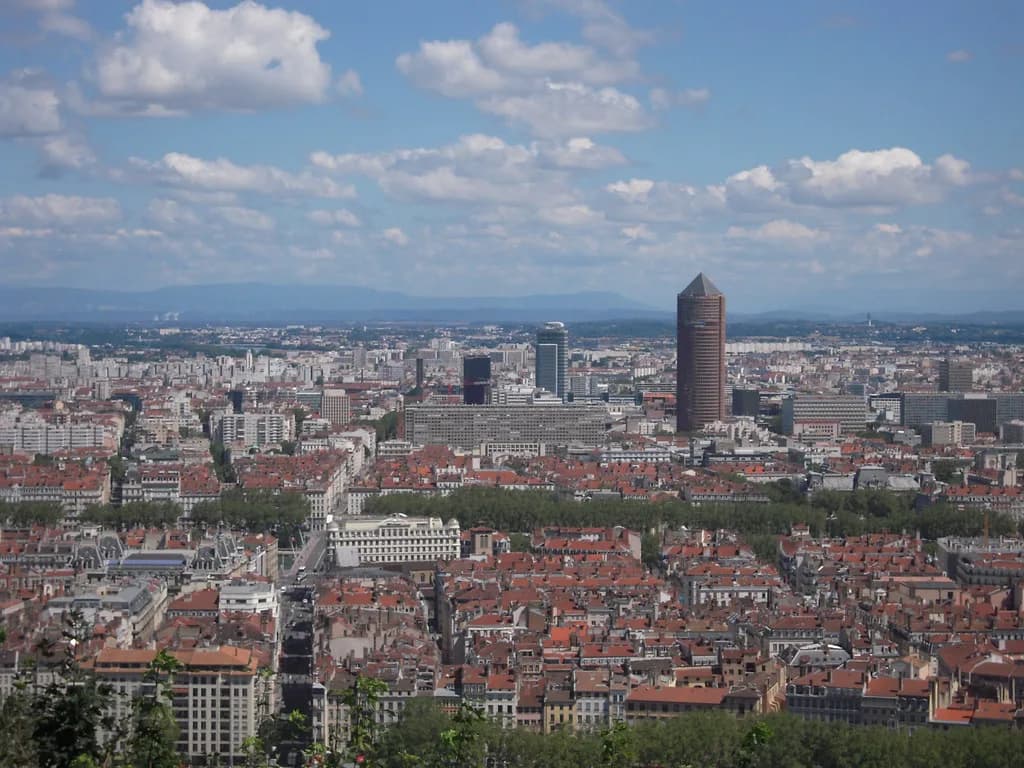
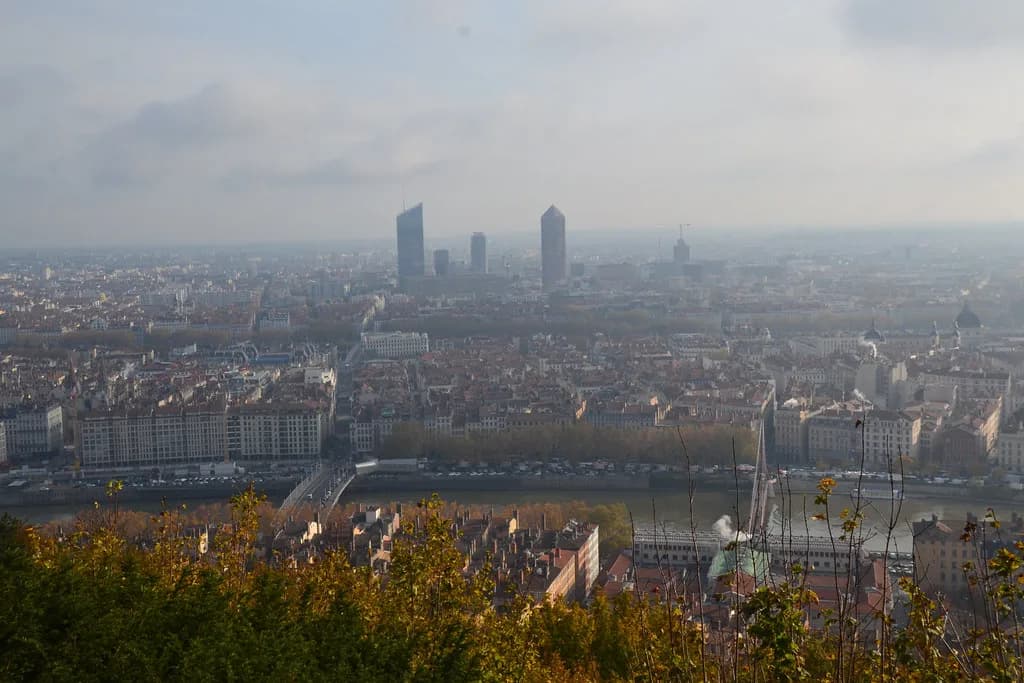
Basilica of Notre-Dame de Fourvière sits on the hill above the old town, and the terrace beside it gives the broadest view over the city, with the Alps visible on clear days. The funicular saves the climb and is the sensible choice if you are short of time or the weather is closing in. Ride up, look out, and walk back down through the old town streets.
Combine the basilica with the Roman sites on the same hill rather than making two separate trips. Riding the funicular up and walking back down through the old town turns Fourvière into a half-day rather than a full one.
Roman Lyon: the amphitheatres and the Gallo-Roman collections
Lyon began as Lugdunum, a Roman city founded in 43 BC that may have reached 200,000 inhabitants at its height, and Roman remnants turn up in unexpected corners of the modern city. The Amphithéâtre des Trois Gaules, dated to around AD 19, sits in the 1st arrondissement, and two amphitheatres remain on the Fourvière hill.
For the collections rather than the ruins, the Gallo-Roman museum on the Fourvière hill holds the finds and context. On a wet October day it is a better use of an afternoon than walking between scattered fragments. Check the museum's own site for the day's opening before you commit.
Indoor picks for a wet afternoon
The Musée Lumière, on the site of the Lumière family's home and workshops, covers the invention of cinematography and the family's technical work, with early film equipment and interactive displays. It is well curated and manageable in a couple of hours, which makes it a reliable wet-weather pick. Buy your ticket at the museum or through its official site, and check its opening days there.
The Musée d'art contemporain de Lyon and the Musée des Confluences are the other strong indoor options, and both are big enough to swallow an afternoon. During school holidays, family-friendly museums fill up, so arrive early or book ahead. The Confluences building alone justifies the trip to the southern tip of the Presqu'île.
Les Halles Paul Bocuse and a sit-down lunch
Les Halles Paul Bocuse is the city's covered food market, named for Lyon's most famous chef, and it is as much a place to look as to eat. Stalls present charcuterie, cheese and pastries with real care, and the atmosphere is livelier at lunch than in the morning. Go hungry and plan to sit down rather than graze standing up.
A sit-down lunch here is the natural October anchor for a day: it gets you out of the rain, breaks up the walking and sets up an afternoon indoors or on the river. Book ahead for weekend lunches if you have a particular spot in mind. For a wider spread of places, see our picks for the best restaurants in Lyon.
Squares and architecture on the Presqu'île
Place des Jacobins dates to the mid-sixteenth century and marks the junction of twelve streets, with a fountain added in 1885 after some dispute over its design. It is a natural pause between the shopping streets and the river. Nearby, the Grand Hôtel-Dieu, a former nineteenth-century hospital, now holds shops and gathering spaces, so it doubles as shelter on a wet afternoon.
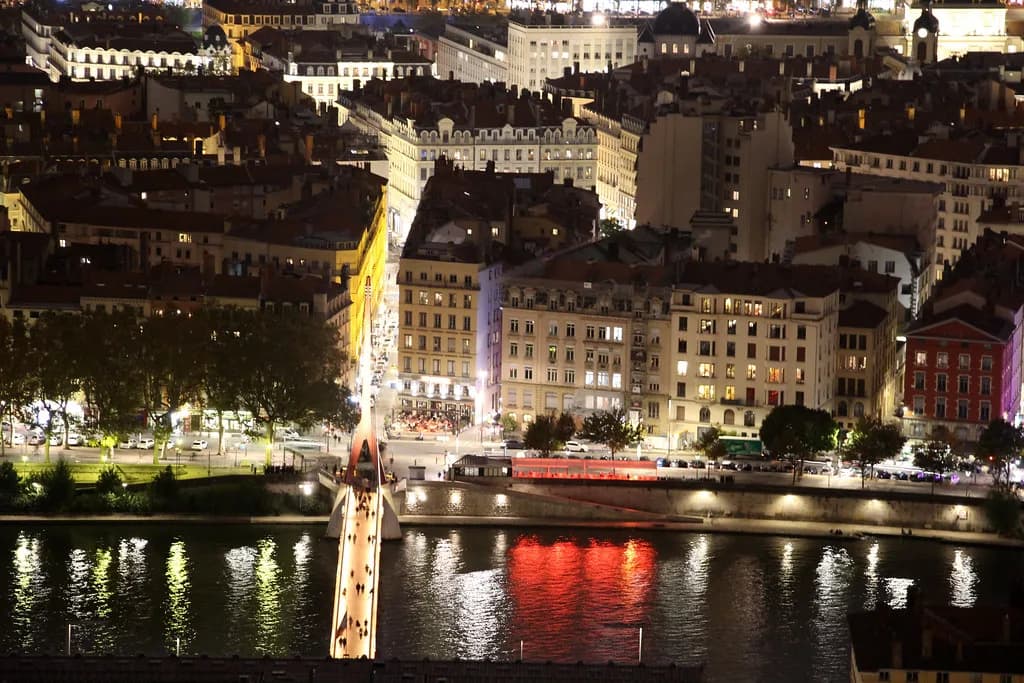
Les Célestins theatre sits close to the river and looks its best in low morning light, which makes it a good early stop before the day fills up. Combine it with the Place des Jacobins and the Grand Hôtel-Dieu for a compact loop that stays flat. These are also good streets to walk at dusk, when the shops are lit.
Getting around: metro, tram, funicular and the 24-hour pass
The city has four underground metro lines and seven tram lines that cover most of what a visitor wants, and the surface trams double as a way to see the city while travelling. The funicular to Fourvière is part of the same network. A 24-hour transit pass is the simplest way to cover a full day of hilltop and riverside movement, and you can buy one from the transport operator's machines.
Part-Dieu is the main railway station and is undergoing a major renovation, so allow extra time for platforms and signage on the way in or out. If you arrive by train from Paris or elsewhere, the metro from Part-Dieu reaches the centre quickly. Check the station's own departure boards on the day.
How many days October in Lyon needs
Two full days covers the Presqu'île, one hill and a museum, which is the right shape for a weekend. Give day one to the rivers and the old town, with the funicular up to Fourvière late in the afternoon. Give day two to Croix-Rousse in the morning and a museum or Les Halles in the afternoon.
If you have a third day, use it for the Roman sites on Fourvière and the Musée des Confluences, which sit at opposite ends of the city. A common mistake is trying to fit both hills and both museums into two days; you will spend more time in transit than looking at things. Drop the second hill rather than rushing the first.
What to do when it rains
October's wet spells are the main reason to hold a flexible afternoon rather than a rigid itinerary. The Musée Lumière, the Musée d'art contemporain and the Musée des Confluences all absorb two hours or more. Keep one of them in reserve rather than booking every slot.
If the rain is light, the covered passages and the Grand Hôtel-Dieu give you a dry route through the shopping streets. Save the hill climbs for a brighter day, because the views from Fourvière and Croix-Rousse are the whole point. Wet cobbles on the Montée de la Grande-Côte are genuinely slippery.
Honest trade-offs
The case against October is real: cooler evenings, wetter spells and darker afternoons cut into the time you can spend outside. If you want long lunches on a terrace and evenings outdoors, a summer trip serves you better. If you prefer thinner crowds and a mix of museums and walks, October wins.
The compensation is that indoor sights feel like a reward rather than a penalty when the weather turns, and the city's food culture suits a slower pace. You will also find that the rivers and the hills are quiet enough to enjoy without jostling. Most visitors leave wishing they had spent a day more.
Plan Your October Weekend
Shape your October weekend in Lyon around two full days: rivers and Vieux Lyon with an afternoon on Fourvière on day one, then Croix-Rousse and a long lunch or museum on day two. Put the funicular and a 24-hour transit pass at the centre of your plan. Leave one slot free for rain.
Book the big museums and a weekend lunch ahead, and check the day's opening hours directly with each venue before you set out. Pack layers, a waterproof and shoes with grip. That is the whole October calculation, and it is a favourable one.
Frequently Asked Questions
What is the weather like in Lyon in late October?
Average October temperatures in Lyon sit around 16°C, which is mild enough for walking but cool enough that you will want layers. Late October brings shorter daylight, cooler evenings and a mix of bright spells and wet days rather than a settled pattern, so pack a waterproof shell and grip-friendly shoes alongside a mid-layer.
Is Lyon worth visiting in October?
Yes, if you want thinner crowds and a mix of riverside walks, hills and museums. October falls outside the peak summer window, so the Presqu'île and the old town are easier to move through. The trade-off is a higher chance of a wet afternoon, so keep one indoor sight in reserve for each day.
Does it rain a lot in Lyon in autumn?
October is not a washout, but wet spells are part of the picture, and a flexible afternoon makes more sense than a rigid itinerary. The Musée Lumière, the Musée d'art contemporain and the Musée des Confluences each absorb two hours or more, so hold one back rather than booking every slot.
How many days do you need in Lyon in October?
Two full days cover the Presqu'île, one hill and a museum, which is the right shape for a weekend. Give day one to the rivers and the old town with an afternoon on Fourvière, and day two to Croix-Rousse plus a long lunch or museum. A third day lets you add the Roman sites and the Musée des Confluences without rushing.
Sources
Notes for French city breaks
Optional updates to our guides.
You might also like
Continue reading
More guides you'll find useful