Lyon Old Town: What to See in Vieux Lyon and How to Walk It
A practical walk through Vieux Lyon, the Renaissance old town: which quarter to start in, the squares and streets to see, the traboules, and how long it needs.
On this page
Vieux Lyon is the Renaissance old town on the west bank of the Saône, and it is compact enough to walk end to end in an afternoon, though most visitors give it half a day or more once the cathedral, the squares and a pause for praline tarts are counted. It splits into three quarters — Saint-Paul in the north, Saint-Jean in the middle and Saint-Georges in the south — each named for its church, which is the single most useful thing to know before you set off. Allow four hours for a first pass and treat the hill above as a separate outing.
Where Vieux Lyon sits and how to reach it
The old town faces the Presqu'île across the Saône, so the natural approach is on foot from the river's eastern bank, crossing one of the footbridges into the pedestrianised cobbled streets. Vieux Lyon metro station, on line D, sits at the southern edge of the district and is also where the two funiculars leave from, one climbing all the way to Fourvière and the other stopping partway up at Saint-Just, which leaves a steep climb of its own. Ride the funicular as part of a metro ticket or an all-day card, or buy a single at the station.
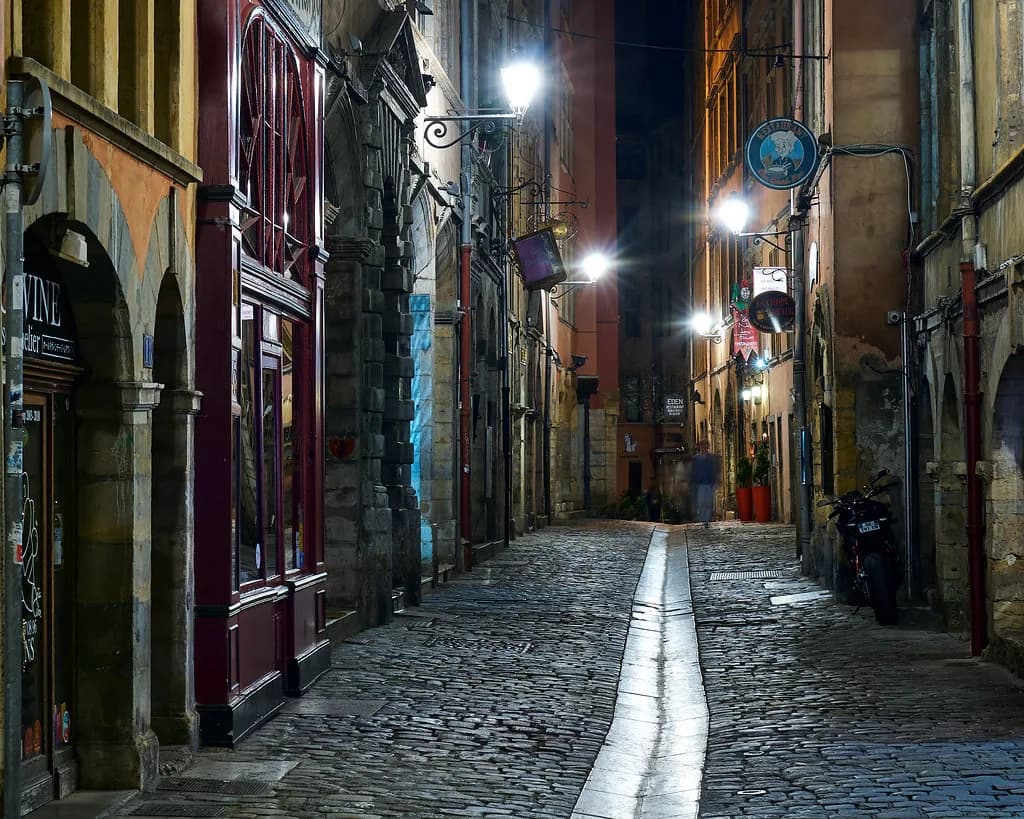
Treat the old town as a walking district rather than a sight with a gate: there is no ticket, and the pleasure is in the lanes themselves, which the city saved from demolition from the 1960s onwards and which now mix hand-painted shop signs with courtyards that open unexpectedly off the street. The wider city's headline sights are mapped in this guide to things to do in Lyon if you want to plan the old town alongside the rest.
How Vieux Lyon is laid out: Saint-Paul, Saint-Jean and Saint-Georges
Start with the shape of the place, because the three quarters have different characters and a short break only needs one or two of them walked properly. Saint-Paul, at the northern end, holds Place du Change and the Renaissance merchant street Rue Juiverie; Saint-Jean, in the middle, has the cathedral and the busiest souvenir trade; Saint-Georges, to the south, is quieter and more residential.
If your time is tight, walk the quarters in that order from north to south, which keeps the cathedral as a midpoint pause and ends near the metro and funiculars. The streets are pedestrianised and cobbled, so flat shoes matter more than a map.
Start at Place du Change in Saint-Paul, then Rue Juiverie
Place du Change, or Exchange Square, is a small, handsome square in Saint-Paul that makes a good first stop for a coffee and a look at the surrounding facades. From there, Rue Juiverie runs nearby and shows the kind of wealthy merchant architecture that shaped this quarter, including the decorated frontage at number 8.
This northern stretch is the least crowded part of the old town and the easiest place to get your bearings before the denser lanes around the cathedral. Give Saint-Paul 45 minutes and use it to notice details — doorways, courtyards, old shopfronts — rather than to tick off a list.
Cathédrale Saint-Jean: the astronomical clock and stained glass
The Cathédrale Saint-Jean is the old town's principal building and the reason many people walk this far south, known for its astronomical clock and its stained glass. Step inside for both, and take the time to look up rather than photographing from the doorway.
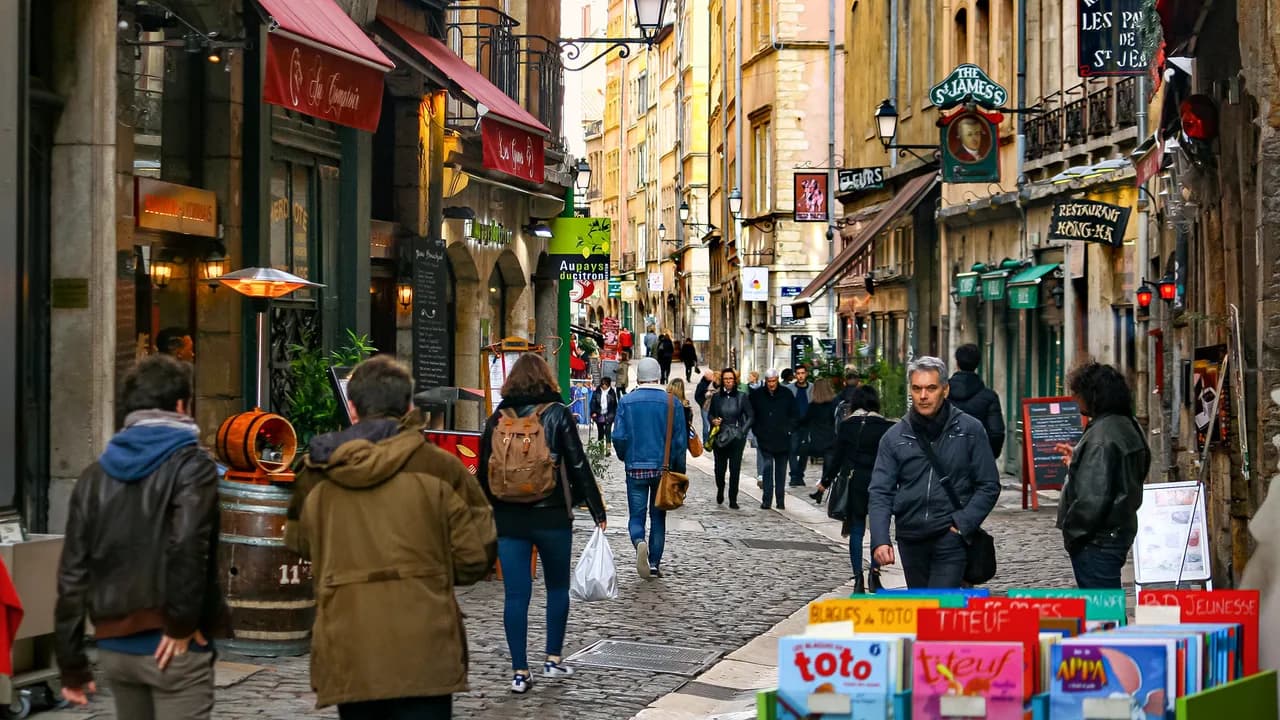
Outside the cathedral, the lanes of Saint-Jean are the busiest in Vieux Lyon, lined with shops and eateries that make this the obvious place to stop for lunch. The square in front and the surrounding streets are where a short break will spend most of its browsing time.
Pausing for pink praline tarts in Saint-Jean
Pink praline is Lyon's signature sweet, and the tarts built from it are the thing to order in Saint-Jean. A La Marquise, in the Saint-Jean quarter, is known for them, and its tearoom is the obvious spot for a mid-walk pause.
Go early if you want the room to yourself: the tearoom fills once the morning gets going, and it works best as a breakfast stop before the cathedral rather than an afternoon one. For sit-down meals beyond patisserie, the best restaurants in Lyon cover bouchons and modern kitchens across the city.
The traboules of Vieux Lyon: what they are and how to walk them politely
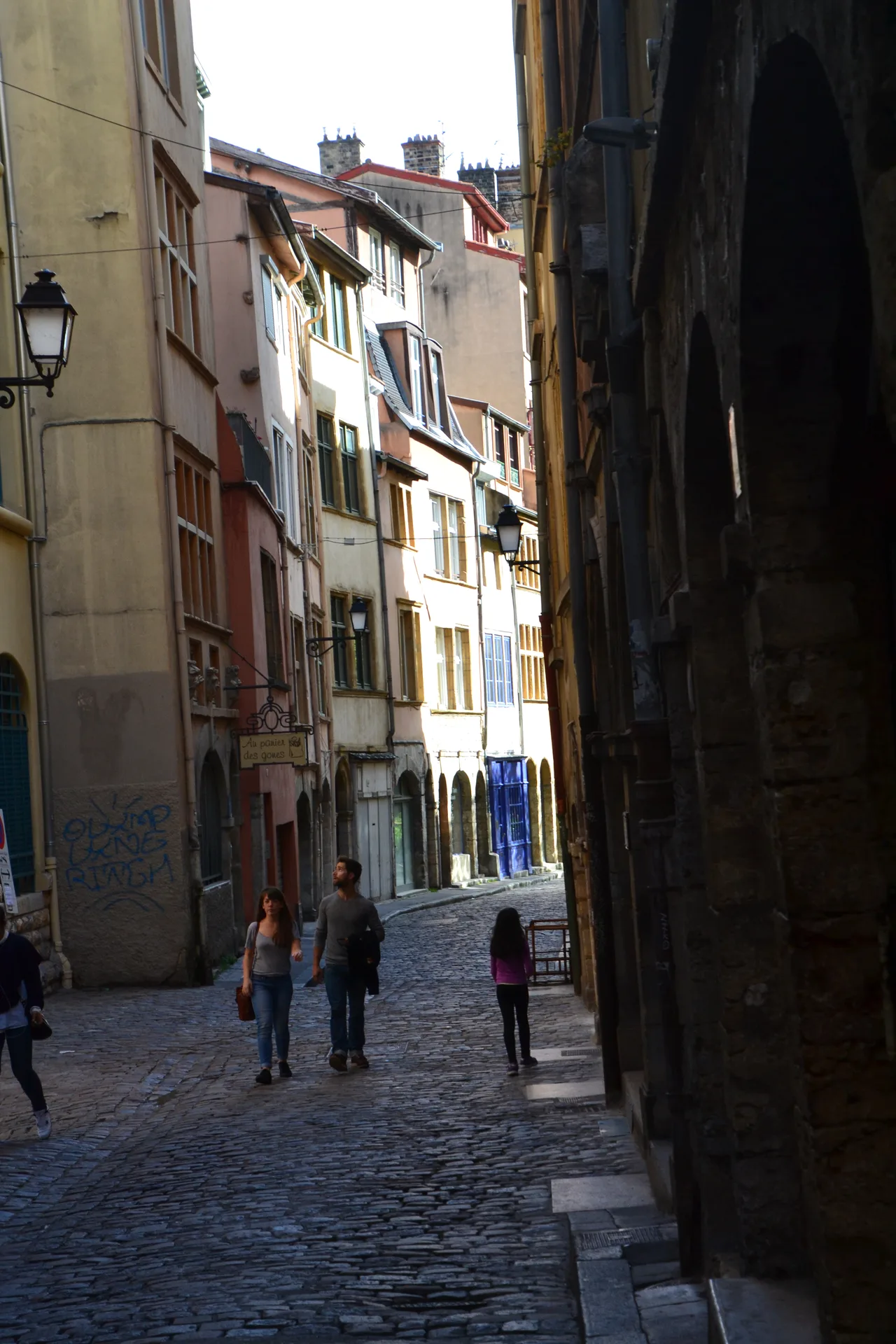
Traboules are covered passageways cut through buildings to give a short cut between streets, originally practical routes for residents fetching water and later used to move silk and goods without exposing them to the weather. More than 40 are open to the public, concentrated in Vieux Lyon and Croix-Rousse, and they differ from one another in detail, which is half the reason to look for a few rather than all of them.
The courtesy code matters: most traboules run through residential buildings, so keep your voice down, close doors behind you and do not treat a passage as a photo set. Look for a free walking route with a map if you want a plotted line rather than guesswork.
Crossing to the Presqu'île: Place Bellecour and Place des Terreaux compared
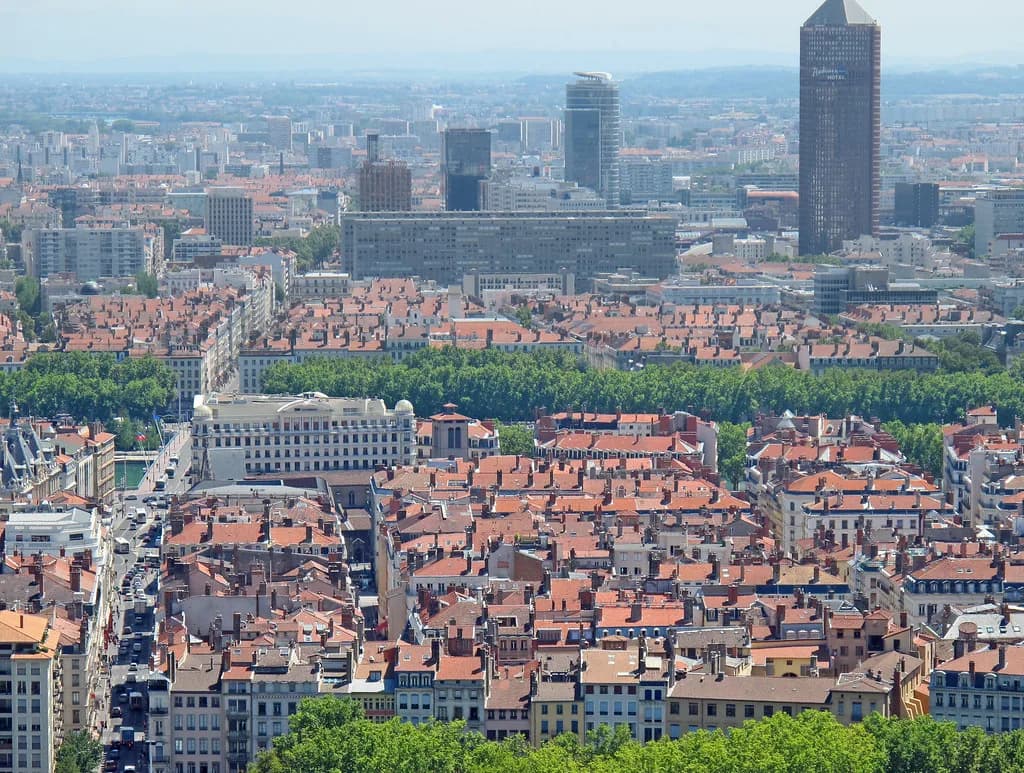
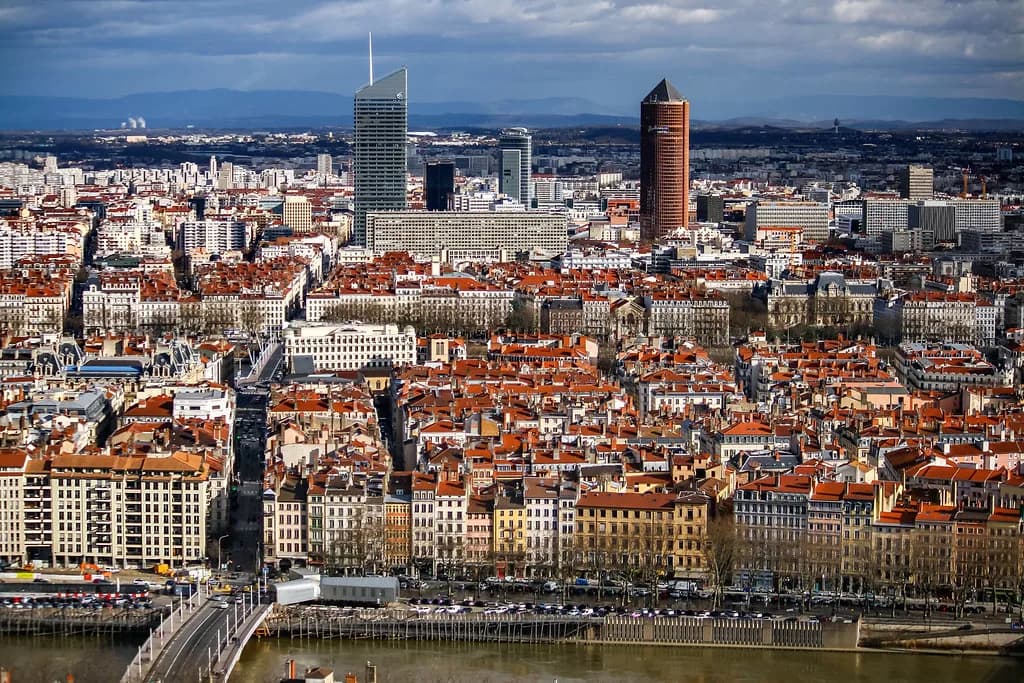
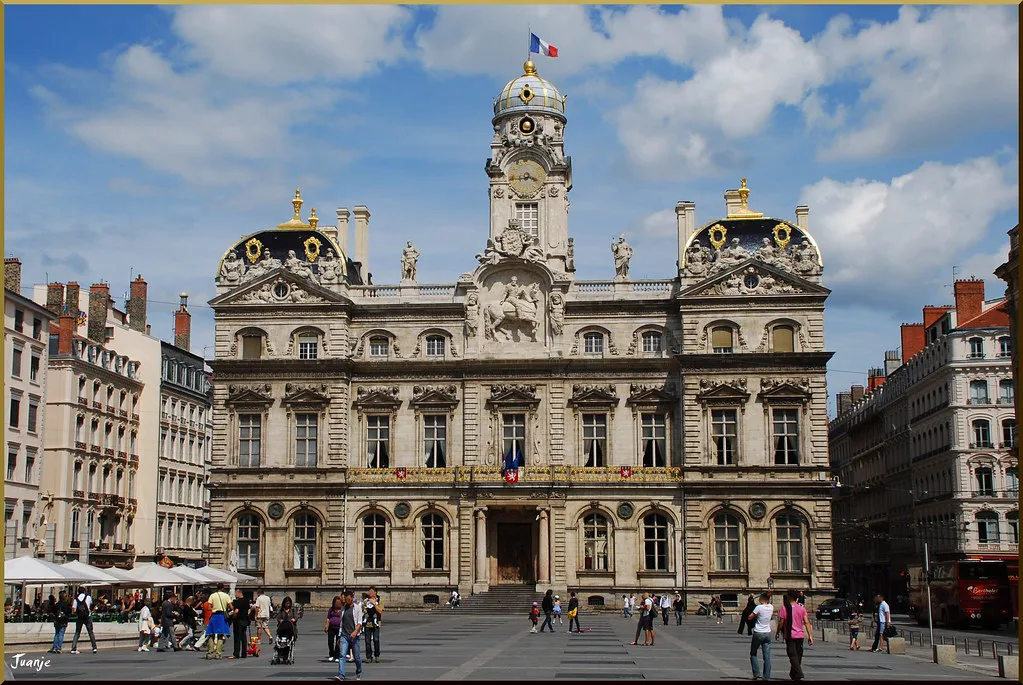
Cross the Saône and the old town gives way to the Presqu'île, the wedge of city between the two rivers, with 19th-century boulevards, designer shops and large squares. Place Bellecour is the big open one, pedestrianised and anchored by the equestrian statue of Louis XIV; Place des Terreaux is smaller and grander, framed by the Hôtel de Ville and the Bartholdi fountain, with the shopping streets Rue Victor Hugo and Rue de la République running nearby.
Choose between them by mood rather than distance: Bellecour for space and a breather, Terreaux for architecture and a coffee at a pavement table. Many shops in this part of Lyon stay closed on Sundays, so a Sunday plan is better built around walking than browsing.
Croix-Rousse for more traboules and the Mur des Canuts
North of the Presqu'île, the Croix-Rousse slope is the old silk-working district and the second great traboule territory, with passages threaded through the steep streets. The Mur des Canuts is the best-known of the city's large painted walls, one of nearly 60 outdoor frescoes produced by the CitéCréation cooperative, and La Fresque des Lyonnais is the other one to seek out.
The climb is real, so pair Croix-Rousse with a metro ride uphill and walk down rather than the reverse. A market runs along Boulevard de la Croix-Rousse near the metro stop, a local produce affair that suits a morning visit.
When to go: typical temperatures, rain days and the Sunday and Monday caveats
Lyon's monthly averages run from around 1°C in January to about 26°C in July, with roughly seven to eleven rain days a month depending on the season, so spring and autumn give the most comfortable walking weather without summer heat. May averages about 19°C and September about 20°C, both good months for a long day on foot through the old town.
Build your days around opening patterns: many Lyon restaurants, shops and cafés close on Sunday and/or Monday, so check individual websites before you count on a particular address. For a fuller picture of seasons, crowds and costs, see the guide to the best time to visit Lyon.
What Vieux Lyon costs: museum and funicular ticket prices
Vieux Lyon itself costs nothing to walk, and the Théâtre Antique on Fourvière above it is free to enter, which makes the hill a cheap addition to an old town day. The Musée Gallo-Romain next door charges an entrance fee, a modest add-on if you want Roman context for the city.
The funicular up to Fourvière is a single metro ticket under the TCL system, with a one-way fare of €1.90, and the Musée des Beaux-Arts lists €8 full price and €4 reduced for its permanent collections, with free entry for under-18s. Note that the clock in the cathedral, the funicular timetable and museum schedules are all worth confirming before you set out.
Two-day shape if Vieux Lyon is your base
Day one: Saint-Paul and Rue Juiverie in the morning, the cathedral and its clock before lunch, a praline pause at A La Marquise, then the traboules of Saint-Jean and Saint-Georges in the afternoon, finishing with a walk along the Saône. Day two: cross to the Presqu'île for Place Bellecour and Place des Terreaux, then take the metro to Croix-Rousse for the Mur des Canuts and the market, or ride the funicular to Fourvière for the basilica and the Roman theatre.
Lyon's parks are the obvious change of scene if the cobbles wear thin; Parc de la Tête d'Or runs to 290 acres with a lake, a free zoo and gardens, and its stated hours are 6.30am to 10.30pm from mid-April to mid-October, closing at 8.30pm in winter. Use the parks in Lyon for a slower afternoon rather than squeezing them into an old town day.
Plan Your Visit
Vieux Lyon rewards a slow walk more than a checklist: start in Saint-Paul, let the cathedral set your midpoint, and treat the traboules as the quiet, residential passages they are. Four hours covers the core; a full day lets you add the Presqu'île or the Croix-Rousse slope without rushing. If you are comparing Renaissance quarters, the Aix-en-Provence old town makes a natural counterpart to this one.
Two practical decisions settle most of a short break: which day you give to the old town and whether you climb Fourvière on foot or by funicular. Settle those and the rest of the weekend fills itself.
Explore more Lyon guides
Frequently Asked Questions
Which area of Lyon is the touristy part?
Vieux Lyon, the Renaissance old town on the west bank of the Saône, is the most heavily visited quarter, with the cathedral and the busiest lanes in Saint-Jean. The Presqu'île, between the two rivers, is the city's elegant commercial heart and the other obvious place to spend time.
What is there to see in Vieux Lyon?
The three quarters of Saint-Paul, Saint-Jean and Saint-Georges, Place du Change and Rue Juiverie, the Cathédrale Saint-Jean with its astronomical clock, and the traboules that thread through the buildings. Pink praline tarts in Saint-Jean are the local sweet worth stopping for.
What are the traboules and can you walk through them?
They are covered passageways cut through buildings as short cuts between streets, and more than 40 are open to the public, mainly in Vieux Lyon and Croix-Rousse. Walk them quietly, because most run through residential buildings, and close doors behind you.
How long do you need in Lyon old town?
Four hours covers Saint-Paul, the cathedral, Saint-Jean and Saint-Georges at an unhurried pace with a pause for a tart. A full day lets you add the Presqu'île across the river or the Croix-Rousse slope and its painted walls.
What is Lyon's signature dish?
Quenelles de brochet, pike dumplings in a creamy sauce, are the dish most associated with the city's bouchons, the traditional Lyonnaise restaurants. Bouchons serve hearty Lyonnaise cooking in a homely setting rather than modern fine dining.
How do you get up to Fourvière from the old town?
Two funiculars leave from Vieux Lyon metro station, one to Fourvière at the top and one partway to Saint-Just, which still leaves a steep climb. The funicular counts as part of the TCL metro system, so it can be covered by a single ticket or an all-day card.
Sources
Notes for French city breaks
Optional updates to our guides.
You might also like
Continue reading
More guides you'll find useful