
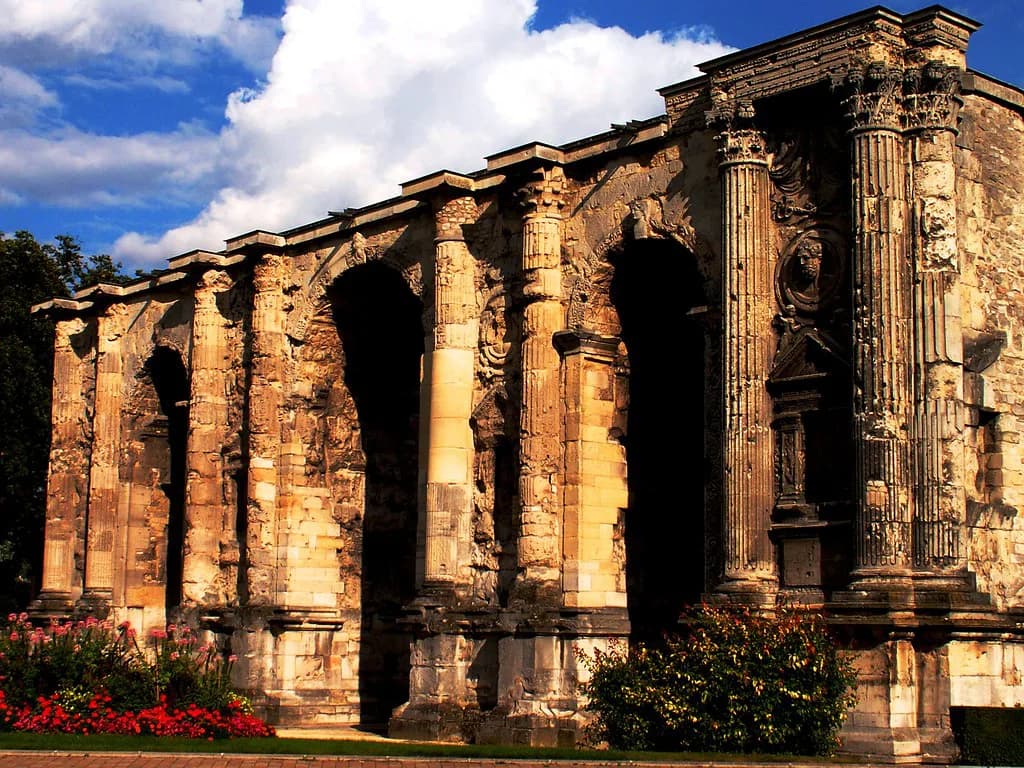
Porte de Mars: Reims' Roman Triumphal Arch
The Porte de Mars is a Roman monumental arch in Reims, built as the city's northern gate and used as a triumphal arch in the 2nd century. It stands on the western edge of the centre, where the Promenades begin, and it is one of the quickest ancient sights to fold into a Reims weekend.
You do not need a ticket or a slot in the day to look at it: the arch stands in the open and is seen from the surrounding streets and paths. That makes it an easy twenty-minute addition before or after the cathedral, rather than a half-day outing in its own right.
What the Porte de Mars is
The arch was the north gate of the Roman city of Durocortorum, and in the 2nd century it served as a triumphal arch. Its triple opening once carried traffic through the city wall, and it now stands free of the ramparts it belonged to.
It is the only survivor of the city's four original gates, and it was classed as a monument historique before the cathedral was. That early listing helps explain why so much of the stonework has come down to the present intact.
Where it stands and how to reach it
The arch sits at the western side of central Reims, at the edge of the Promenades, the long green space that curves around the old town. From the cathedral area the walk is straightforward and largely flat, following the boulevards west rather than crossing the city.
It also marks the start of a long green walking route that runs through the redeveloped Promenades, so it works as a natural first or last point on a stroll rather than a detour. If you are working out how the centre fits together, the arch makes a useful western anchor.
Size and scale
This is not a small fragment: it is among the longest arches of its kind in the Roman world. Sources differ slightly on the figures, with 33 metres long and 13 metres high recorded in one account, while Reims tourism gives roughly 32 metres by 12 metres, so expect a very wide, comparatively low structure rather than a tall tower.
Stand back far enough to take in the full width: from close up the three openings dominate and the span disappears. The proportions are what make the sight worth the stop, because a single glance explains the Roman-world comparison better than any description.
The carvings to look for
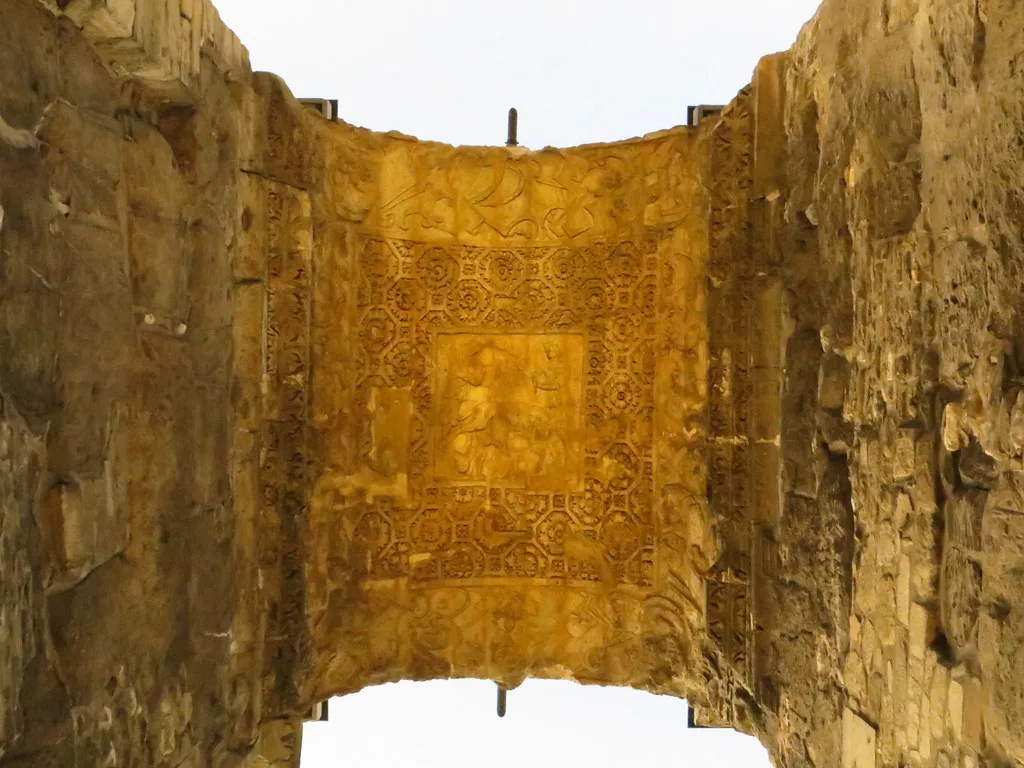
The decoration is the reason to slow down. Look for a scene of Gaulish harvesting with an agricultural calendar, a rare depiction of rural work rather than emperors or gods, and a medallion of the she-wolf suckling Romulus and Remus that ties the city's founding myth to Rome.
Carved panels like these weather badly, so read them as survivals rather than a complete picture, and give yourself a few minutes to pick out the figures rather than walking straight through the openings. Binoculars are not needed; a slow circuit of both faces is enough.
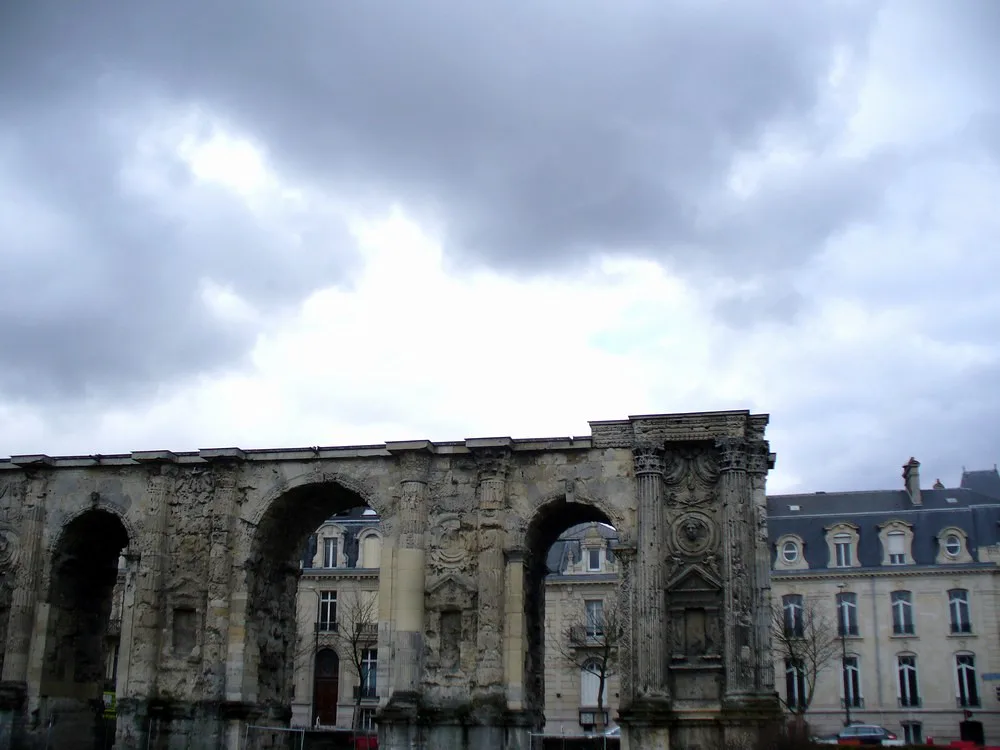
Restoration and scaffolding
Restoration work has been carried out to preserve the structure, and a second phase covering the decoration has been under way. That means part of the arch may be under wraps or behind hoardings when you arrive, which affects how much of the carving you can actually see.
Even with scaffolding up, the scale of the monument reads clearly from the pavement, so the stop rarely becomes pointless. If the carvings are your main reason for coming, it is worth checking the current state of the works with Reims tourism before you build the walk around them.
How long to allow
Treat the Porte de Mars as a twenty-to-thirty-minute stop, longer if you want to work out the carvings or continue into the Promenades. It is not a museum and there is nothing to queue for, so it fits neatly into a gap between bigger sights.
The sensible way to use it is as the opening or closing move of a half-day: pair it with the cathedral and the Palais du Tau, then walk west to finish at the arch and the green route beyond. Building a whole morning around the arch alone would leave you with time on your hands.
Nearby: the cryptoportique and the cathedral quarter
The cryptoportique, a Roman subterranean gallery beneath the Place du Forum, is the closest ancient companion piece and sits back in the direction of the centre. Pairing the two gives you a Roman Reims in miniature without committing a day to it.
The cathedral quarter, with the Cathédrale Notre-Dame de Reims and the Palais du Tau beside it, is a short walk east and forms the core of most weekend plans. Further out, the Basilica Saint-Remi and the Musée Saint-Remi anchor the southern side of the city for anyone extending the stay.
Practical points
There is no admission charge to view the arch from outside, and there is no interior to enter, so no ticket or booking applies. Opening hours are therefore not a factor in planning, which is unusual for a listed monument in a city of this size.
The wider Roman layers of the city are covered in the attractions guides for Reims, which help place the arch alongside the cryptoportique and the cathedral group. Read them before you fix a route so you are not doubling back across the centre.
Fitting the Arch into a Reims Weekend
The Porte de Mars earns its place as a short, free stop on the western edge of central Reims, best combined with the cathedral quarter and the Promenades rather than visited on its own. Give it half an hour, look properly at the harvesting scene and the she-wolf medallion, and accept that restoration may hide some of the detail.
Check the current state of the restoration with Reims tourism before making the carvings the centrepiece of your walk, and keep the visit flexible within a day built around the cathedral and the museums.
Explore more Reims guides
Frequently Asked Questions
How old is the Porte de Mars in Reims?
It was the northern gate of the Roman city and served as a triumphal arch in the 2nd century. It is the only one of the city's four original gates still standing, and it was classed as a monument historique before the cathedral.
How big is the Porte de Mars?
It measures about 33 metres long and 13 metres high according to ICI, while the Reims tourism listing gives roughly 32 metres by 12 metres. Either way it is the largest arch of its kind in the Roman world, and its width is more striking than its height.
Is the Porte de Mars free to visit?
Yes. The arch stands in the open and is viewed from the surrounding streets and paths at no charge, and there is no interior to enter, so no ticket or booking is needed.
What can you see on the Porte de Mars carvings?
Look for a scene of Gaulish harvesting with an agricultural calendar, and a medallion of the she-wolf suckling Romulus and Remus. A second phase of restoration has been under way on the decoration, so parts may be covered.
How long do you need at the Porte de Mars?
Allow twenty to thirty minutes. It works best as the start or end of a half-day that also takes in the cathedral and the Palais du Tau, followed by a walk into the Promenades.
What else is near the Porte de Mars in Reims?
The cryptoportique beneath the Place du Forum is the closest Roman sight, and the cathedral with the Palais du Tau is a short walk east. The arch also marks the start of a green walking route through the Promenades.