Things to Do in Reims: Cathedral and Champagne Cellars
Plan a weekend in Reims with the cathedral, Palais du Tau, Roman remains and champagne cellars, plus how the city is laid out and how long it needs.
On this page
Reims is a two-night city for most weekenders. The cathedral, the coronation museum next door, the Roman remains and a champagne cellar tour fit comfortably into 48 hours, with time left for café terraces and a plate of oysters. The city centre is compact and largely walkable, so you spend your time looking rather than travelling.
This guide is organised by area and theme rather than as an exhaustive list. It covers the headline sights, the quieter corners worth seeking out, the museums that reward a detour and the practical trade-offs — booking ahead, Sunday openings and the value of a city pass — that decide whether your weekend feels rushed or relaxed.
What to do in Reims in a weekend: the short answer
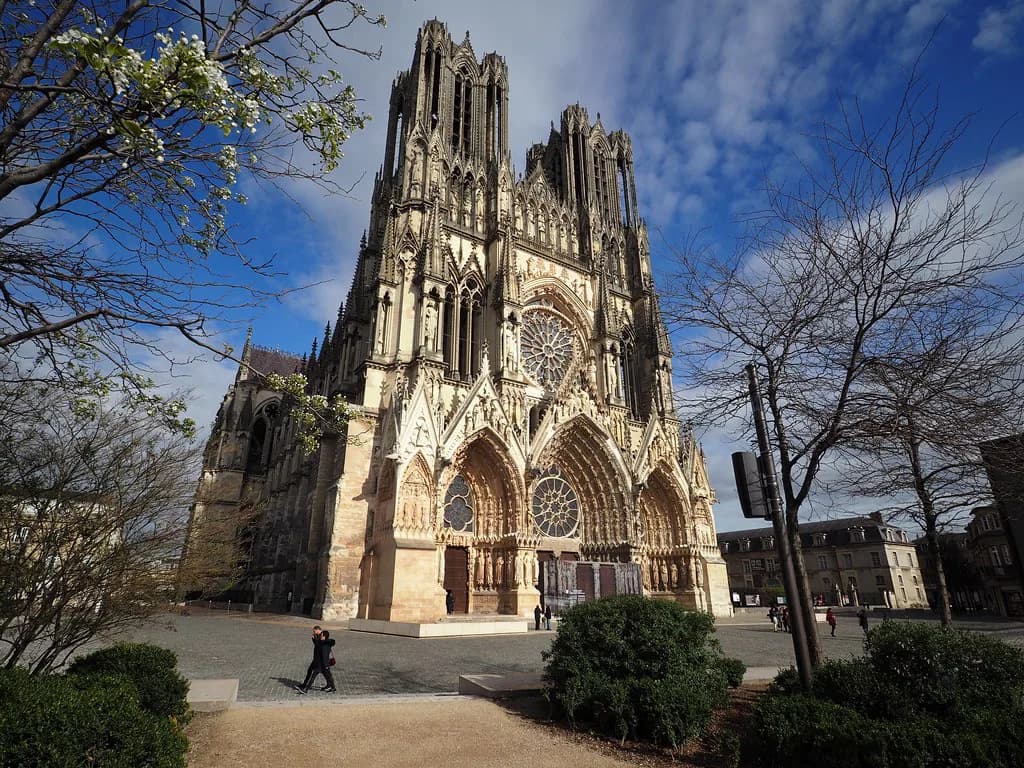
Spend your first morning at Notre-Dame de Reims and the Palais du Tau, the coronation museum next door. No fewer than 33 kings were crowned in the cathedral, and the palace holds the tapestries and objects used at those ceremonies. The two sit side by side, so you can see both before lunch.
Give the afternoon to Roman Reims and the squares: the Porte de Mars, the cryptoportique under Place du Forum and a drink on Place Drouet d'Erlon. Book a champagne cellar tour for the following morning, when you are fresh and the cellars are quiet. That leaves the second afternoon free for a museum, the pink biscuits and whatever the weather allows. If you are still deciding whether the city justifies the trip, Is Reims Worth Visiting? What a Short Break in Reims Really Gives You sets out the honest case.
How Reims is laid out and what you can walk to
Most sights in Reims can be reached on foot, which makes the city unusually easy to plan. The cathedral anchors the centre, with the Palais du Tau immediately beside it and the Carnegie Library a few steps away. From there, Place Drouet d'Erlon, Place du Forum and Place Royale are all within a short stroll.
The champagne houses are scattered around the same central area rather than out in the suburbs, so a cellar visit slots into a walking day without a bus ride. Think of the city in three rough bands: the cathedral and old town core, the café squares to the south-west, and the champagne houses on the periphery of the centre. Our guide to the old town covers the streets around the cathedral in more detail.
Reims Cathedral: what to see inside and the tower climb
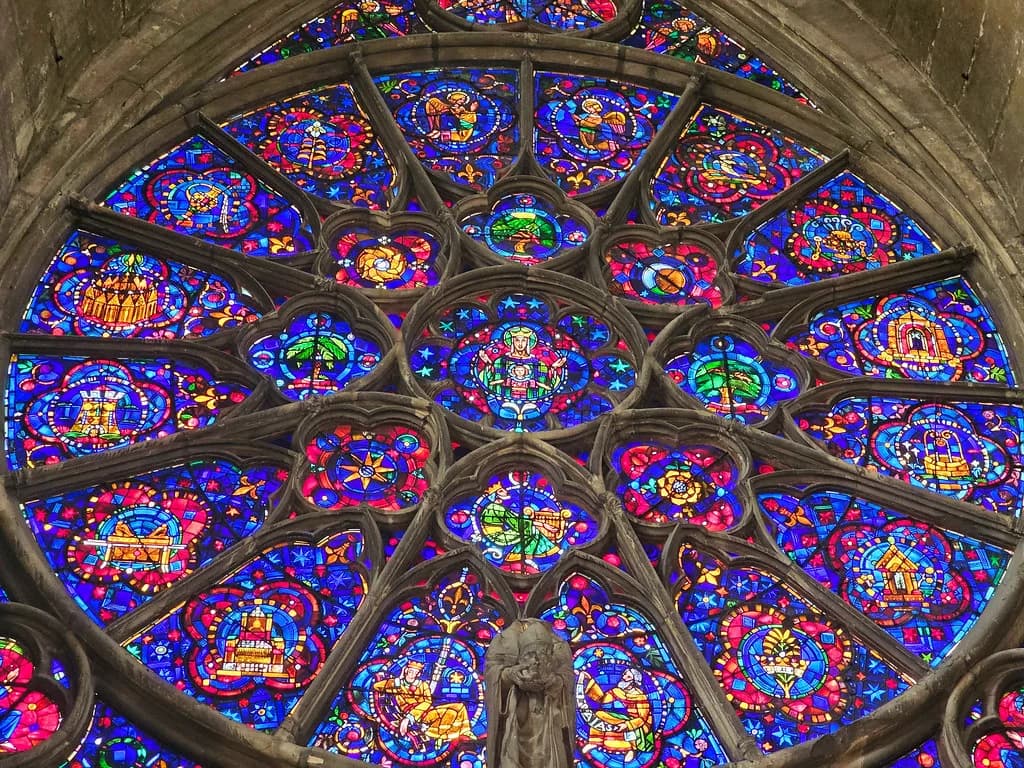
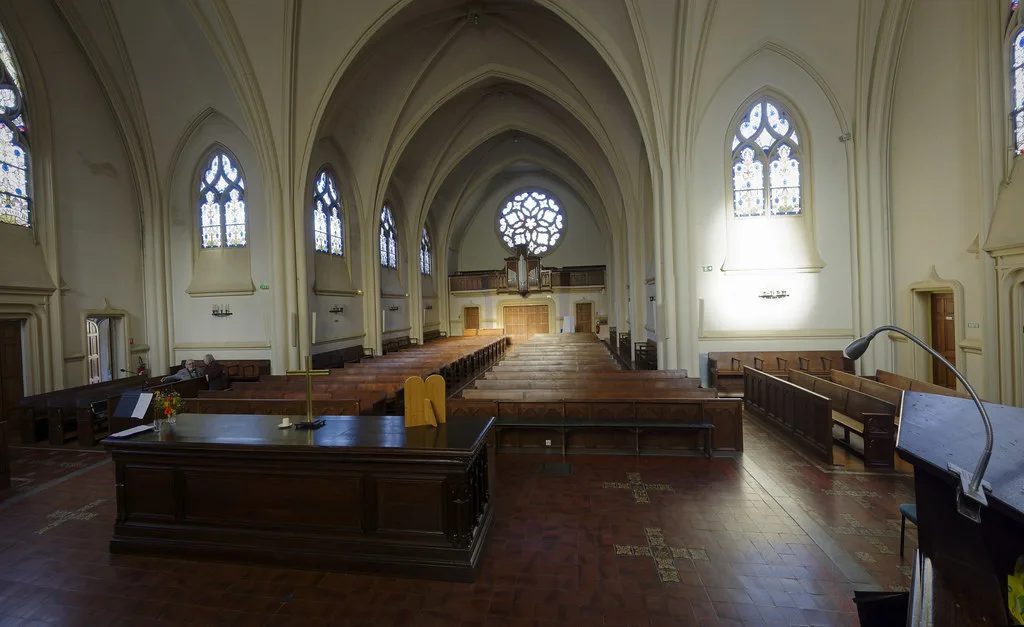
The cathedral is immense, and the exterior alone justifies the detour. Inside, the stained glass is the main event: the windows are enormous, and there is a fine organ and a statue of Jeanne d'Arc. An audio guide is available from the tourist office around the corner if you want the coronation history explained as you walk.
The tower climb runs to 250 steps and is worth attempting for the view, but access is subject to conditions. Buy the tower ticket at the Palais du Tau next door rather than queueing at the wrong door. A guided cathedral visit is listed at €7 per person, though that covers a tour rather than the tower itself.
In the summer months a light show is projected onto the cathedral facade in the evening, lasting about half an hour. It starts when it is dark enough for the lights to work, which means the time shifts through the season. If you plan your dinner around it, check the start time on the day.
Palais du Tau next door: the coronation museum
The Palais du Tau is a UNESCO World Heritage Site alongside the cathedral, and it was the archbishop's residence in the 17th and 18th centuries. Princes slept here before their coronation, and the museum now displays the tapestries and objects used in those ceremonies. It is a compact, focused visit rather than an all-afternoon affair.
Entry is included with the Reims City Pass, which makes the palace a sensible stop if you are already buying the pass for other visits. Even without it, the palace earns its place because it explains what you have just seen in the cathedral next door. Our guide to museums in Reims covers the rest of the city's collections.
Roman Reims: Porte de Mars and the cryptoportique on Place du Forum
The Porte de Mars was the largest arch of the Roman Empire, and you can admire it from the pavement for free. It is a quick stop rather than a destination in itself, but it pairs naturally with a walk towards Place du Forum. For a tight budget, it is the best free sight in the city.
Place du Forum holds a Roman cryptoportique — an arcade half above and half below ground — that you can enter on summer afternoons. Open-air concerts are sometimes held on the square in the evenings. The square also has a handful of outside cafés that are more characteristic and friendly than the terraces on Place Drouet d'Erlon.
Place Drouet d'Erlon, the Fontaine Subé and where to sit
Place Drouet d'Erlon is a long street of restaurants and bars with outdoor seating that fills on sunny days, centred on the Fontaine Subé, which is over a hundred years old. It is lively and convenient, but the terraces are crowded and the atmosphere is a bit en masse. Come here for a drink and people-watching rather than a quiet meal.
For a calmer sit, head to Place du Forum, where the cafés face the Roman remains and the pace is slower. If you want a proper meal rather than a terrace snack, our pick of the best restaurants sets out where to book.
Champagne houses: how a cellar visit works and what it costs
A cellar tour is the one experience that distinguishes Reims from any other French city, so book at least one. Maison G.H. Mumm runs a guided tour with a glass of champagne at €28 per person, and the cellars themselves are extraordinary: 25 kilometres of galleries holding 25 million bottles. The tour explains the grape varieties, the grand cru and premier cru classifications and the full production process.
Other houses in Reims include Pommery, Taittinger, Veuve Clicquot, Charles de Cazanove, Lanson, G.H. Martel and Ruinart. Book direct or through the house website, and expect tours to fill at weekends. A cellar visit takes roughly an hour to ninety minutes, so it fits neatly into a morning or an early afternoon.
The Foujita Chapel and the Musée des Beaux-Arts ticket
The small Chapelle Notre-Dame-de-la-Paix, known as the Foujita Chapel, sits on the grounds of the Mumm champagne house. The Japanese painter Léonard Foujita designed it, which explains the Japanese details, and he and his wife are buried there. It is a quiet, unusual stop that most weekenders miss.
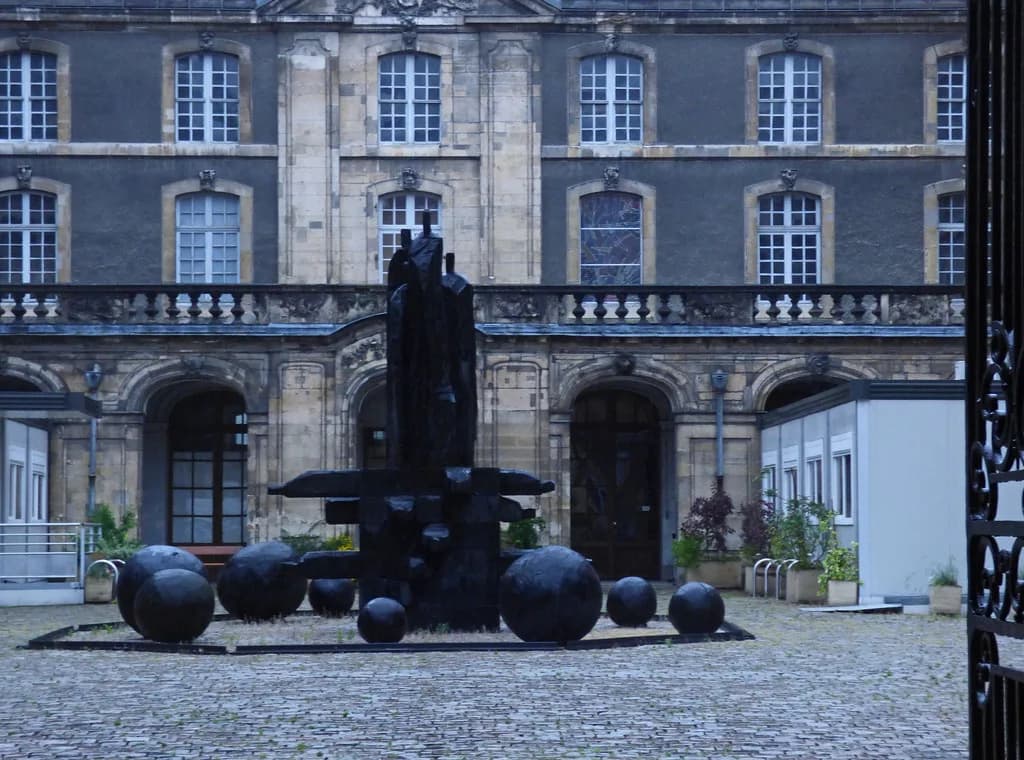
The ticket for the chapel also gets you into the Musée des Beaux-Arts, a genuine two-for-one. The museum is housed in an abbey and is strongest on paintings. If you are choosing between museums on a short trip, this combination gives you the best value for a single ticket.
Museums worth your time: Musée Saint-Rémi and the rest
Musée Saint-Rémi occupies an old abbey and covers a military collection, tapestries and the history of Reims. It rewards anyone interested in the city's longer story rather than in art alone. The Musée des Beaux-Arts, in another abbey, is the pick for paintings and comes free with the Foujita Chapel ticket.
Beyond those, Reims has the Musée Automobile Reims Champagne for car enthusiasts, a planetarium for stargazing and the Musée Hôtel Le Vergeur, a historic monument with art and fully furnished rooms in the style of the 15th century. Do not try to see them all in a weekend; pick one or two that match your interests and leave the rest for a return visit. Our round-up of museums in Reims compares them in more depth.
Pink biscuits from Fossier and the Reims food souvenir
The pink biscuit is Reims's edible signature, made by Fossier and around since the 18th century. In taste it sits close to a ladyfinger; it is the look that sells it. You can buy them at almost any souvenir shop and even in the supermarket, which makes them an easy gift to carry home.
If you want to see how they are made, the biscuit factory runs tours, but you need to reserve in advance. For a food-focused weekend, pair a factory visit with a wander through the city's food markets; our guide to shopping in Reims covers the food halls and where to find them.
Hôtel de Ville on Place Royale and the Carnegie Library
The Hôtel de Ville stands on Place Royale, a spacious square with beautiful arched galleries. The building is handsome rather than a sight to linger over for hours, so treat it as part of a walk through the centre rather than a destination. Place Royale itself is worth a few minutes for the arcades alone.
The Carnegie Library sits right next to Notre-Dame, which makes it an easy add-on to a cathedral visit. The reading room is beautiful, though the working part of the library is not set up for tourists taking their time. Look in, admire the old-fashioned card catalogue room and move on.
The Reims City Pass: when it pays off
The Reims City Pass covers public transport and gives discounts on entrance fees and tours, and sometimes free drinks at restaurants. It also includes entry to the Palais du Tau. The pass only makes sense if you stack several paid visits and at least one cellar tour into your trip.
Do the arithmetic before you buy. Add up the cathedral tour, the Palais du Tau, a champagne house and one or two museums, then compare that total with the pass price. If you are planning a slow weekend with one cellar and a lot of walking, you will probably spend less paying as you go.
How many days Reims needs, and a two-day plan
Two nights is the right length for Reims if you are mainly staying in the city. That is enough to cover the cathedral, the Palais du Tau, the Roman sights, a cellar tour and a museum without rushing. One day is possible but tight, and you would have to choose between the cellars and the museums. If you are weighing up other short-break bases, our things to do in Aix-en-Provence shows how a similarly compact old town fills two days.
A workable plan: day one for the cathedral, Palais du Tau, Place Royale, the Carnegie Library and an evening on Place du Forum. Day two for a morning cellar tour, the Foujita Chapel with the Musée des Beaux-Arts, the Porte de Mars and a last walk through the old town. If you want the detail hour by hour, our Reims itinerary lays it out.
If you are extending the trip, Épernay and the Champagne vineyards are within easy reach, but a single day out is enough. Keep the rest of your time in the city, where the sights are close together and the walking is easy.
Where to eat and drink: Le Bocal, Le Clos, BibiViNo and Aux 3 P'tits Bouchons
Le Bocal is a simple, well-priced fish restaurant where the waiter explains the menu clearly. Oysters, salmon tartare and langoustines with a glass of champagne make a memorable lunch. Book ahead for weekend lunches, when the small room fills quickly.
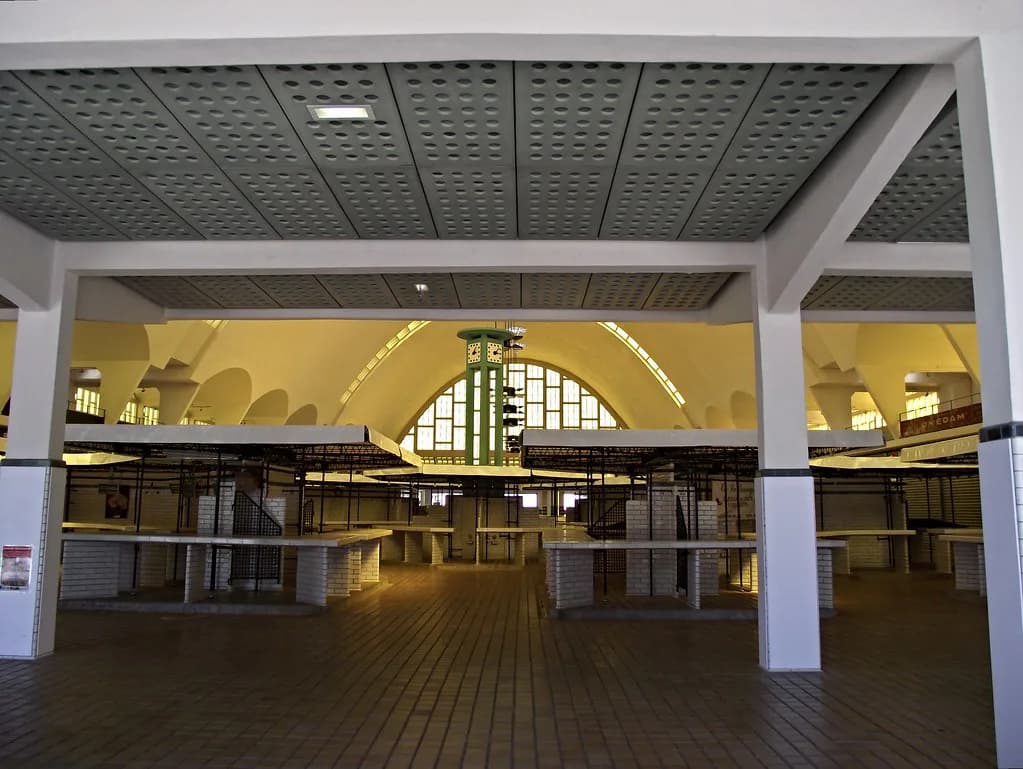
Around the market hall there are several lovely places for a snack and a drink. Wine bar Le Clos is good for a glass of wine or champagne in the evening, with street-side seats and an inner garden that includes an outdoor bar and street art. BibiViNo is the place for informed advice about wine in English, though it serves nothing to eat — go for the people-watching and a glass.
Aux 3 P'tits Bouchons sits in a somewhat remote street. The staff do not speak much English, but ordering a glass of wine with snacks is straightforward, and the snacks are delicious even if the bill is on the pricey side. Our full guide to the best restaurants in Reims covers these and more.
Practical trade-offs: Sundays, closing days and booking ahead
French museums and shops often keep patterns that catch British and American visitors out: Monday or Tuesday closures, Sunday shutdowns and lunchtime gaps. Those patterns vary by venue, so confirm the days and hours for each place you plan to visit when you book. The same applies to markets, which run on set mornings rather than daily.
Book cellar tours and the Fossier factory visit in advance, especially at weekends. For the cathedral tower, remember that access can be restricted, so treat the climb as a bonus rather than the centrepiece of your day. Building a flexible plan around one or two fixed bookings is the key to a relaxed weekend.
Reims in winter and summer: picking your season
Summer brings the evening light show on the cathedral facade and the chance to sit outside on Place Drouet d'Erlon and Place du Forum. The cryptoportique opens on summer afternoons, which adds a Roman sight to the walking route. The trade-off is busier terraces and fuller cellar tours.
Winter pushes you indoors, which suits the cellars, the museums and the Palais du Tau. The city is quieter and the champagne houses are easier to book, though the outdoor squares lose their appeal in the cold. Our guide to the best time to visit covers the seasonal picture in more detail.
Plan Your Visit
Reims rewards a focused weekend rather than a checklist. Two nights gives you the cathedral and its coronation palace, the Roman remains, one good cellar tour and enough time left to sit on a square with a glass in hand. The city is compact, walkable and easy to fit around a Friday-to-Sunday break from the UK.
Fix your cellar tour and any museum you care about before you travel, leave the rest of the days loose and let the weather decide between the terraces and the collections. For the wider planning picture, our weekend in Reims guide pulls the pieces together.
Explore more Reims guides
Frequently Asked Questions
Should I visit Reims, France?
Yes, if you want a compact French city with a major cathedral, Roman remains and champagne cellars within walking distance. Reims suits a two-night break; it is less grand than Paris but far easier to cover on foot.
How many days do you need in Reims?
Two nights is enough to see the cathedral, the Palais du Tau, the Roman sights, a cellar tour and at least one museum without rushing. One day is possible but forces a choice between the cellars and the museums.
What is there to do in Reims on a Sunday?
The cathedral, the Palais du Tau and the outdoor squares remain the core of a Sunday. Cellar tours and museums run on published schedules, so confirm the day and time for each venue you plan to visit before you travel.
What can you see in Reims in one day?
A one-day visit works best as cathedral, Palais du Tau and a single cellar tour, with a walk past the Porte de Mars and a drink on Place du Forum. Leave the museums for a longer trip.
Are there free things to do in Reims?
The Porte de Mars can be admired from the pavement at no cost, and the cathedral exterior and the city squares are free to walk. The light show on the cathedral facade in summer is also free to watch.
How much does a champagne cellar tour cost in Reims?
Charges differ by house and by the length of the tour. The price and availability for each cellar visit are published by the individual champagne house, so compare those listings.
Is Reims walkable?
Yes. Most sights in Reims can be reached on foot, with the cathedral, the Palais du Tau, the squares and the champagne houses all in or around the centre.
What food is Reims known for?
The pink biscuit made by Fossier is the city's signature edible souvenir, sold in souvenir shops and supermarkets. Reims also has a strong fish and seafood restaurant scene, with Le Bocal a reliable lunch stop.
Sources
Notes for French city breaks
Optional updates to our guides.
You might also like
Continue reading
More guides you'll find useful