Weekend in Reims: Two-Day Plan and What to Skip
Plan a weekend in Reims with a two-day itinerary covering Reims Cathedral, the Boulingrin market, Champagne cellars, Roman remains and Art Deco sights.
On this page
A weekend in Reims works best as two nights focused on the city centre, which is compact enough to cross on foot between the cathedral, the market and the Champagne cellars. The essential pairing is Notre-Dame de Reims with a cellar tour, and everything else slots around those two. Build the plan around opening days rather than a wish list, because the Boulingrin market and the museums do not all run on the same schedule.
Weekend in Reims: the short answer
Two nights covers the centre comfortably: arrive Friday evening, give Saturday to the cathedral and a Champagne house, and keep Sunday for the market and the southern quarters. You can cover the main sights of Reims in that time, and the city rewards a slower pace than a day trip allows. If Champagne cellars are the point of the trip, book the visits before you travel rather than hoping for a walk-in.
Reims sits in the north of the Champagne region, and it feels more urban than Épernay while staying small enough to walk. Some people treat Reims as the capital of the region and others give that title to Épernay; the honest framing is that Reims gives you the cathedral, the museums and the big houses in one walkable centre. If you want vineyards and a single famous avenue instead, base yourself in Épernay and treat Reims as the half-day counterpoint. For a lakeside contrast in the Alps, a weekend in Annecy shows how a two-day plan changes when the draw is scenery rather than cellars.
How Reims is laid out
The tourist centre splits into two halves. Notre-Dame de Reims and the Palais du Tau sit at the southern end, close to the Carnegie Library and the Place Drouet d'Erlon strip of restaurants and bars. North of that lies the older street pattern around Place du Forum and the Porte de Mars, with the Boulingrin covered market and the Rue de Mars food shops at the northern edge of the walkable core.
That layout means you can plan each day as a loop rather than a series of taxi hops. A Saturday that starts at the cathedral, moves north through Place du Forum and ends at Boulingrin covers most of the centre without backtracking. The Art Deco and Roman remnants are scattered along the same route, so they cost you minutes rather than a detour.
How many days you need, and what to cut if you only have one
Two full days lets you do the cathedral properly, take one cellar tour, see the market and still sit over lunch. With only one day, cut the museums and the Foujita Chapelle and keep the cathedral, one Champagne house and a walk through the Boulingrin area. Trying to add a second cellar tour usually buys you a similar experience rather than a new one.
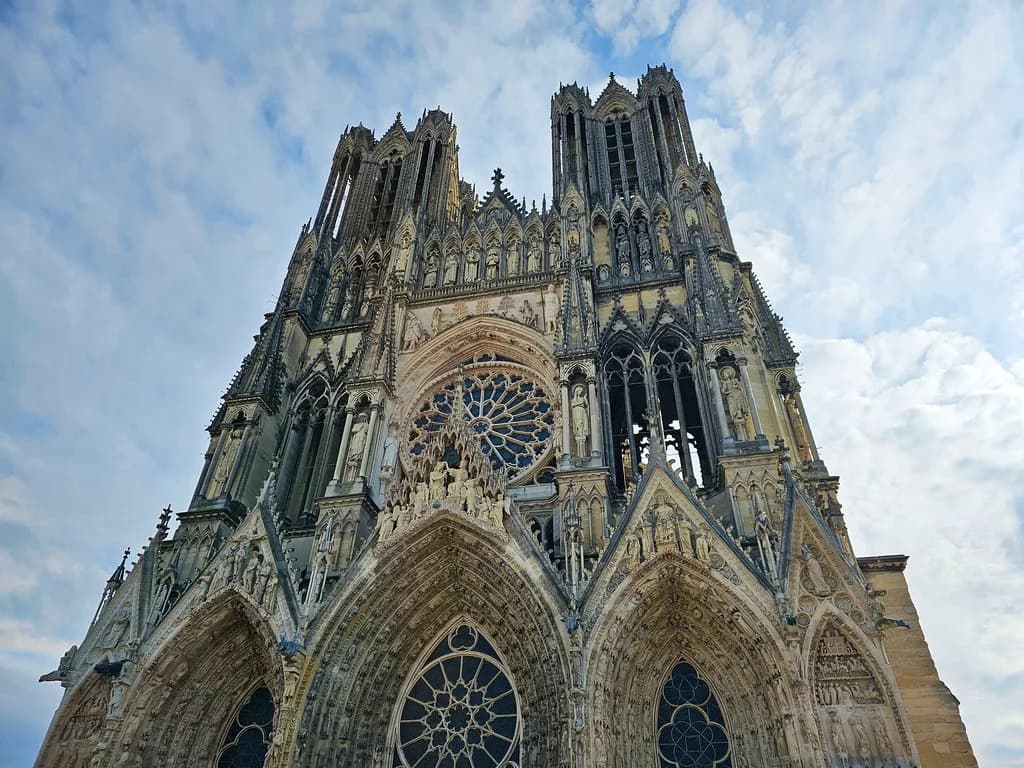
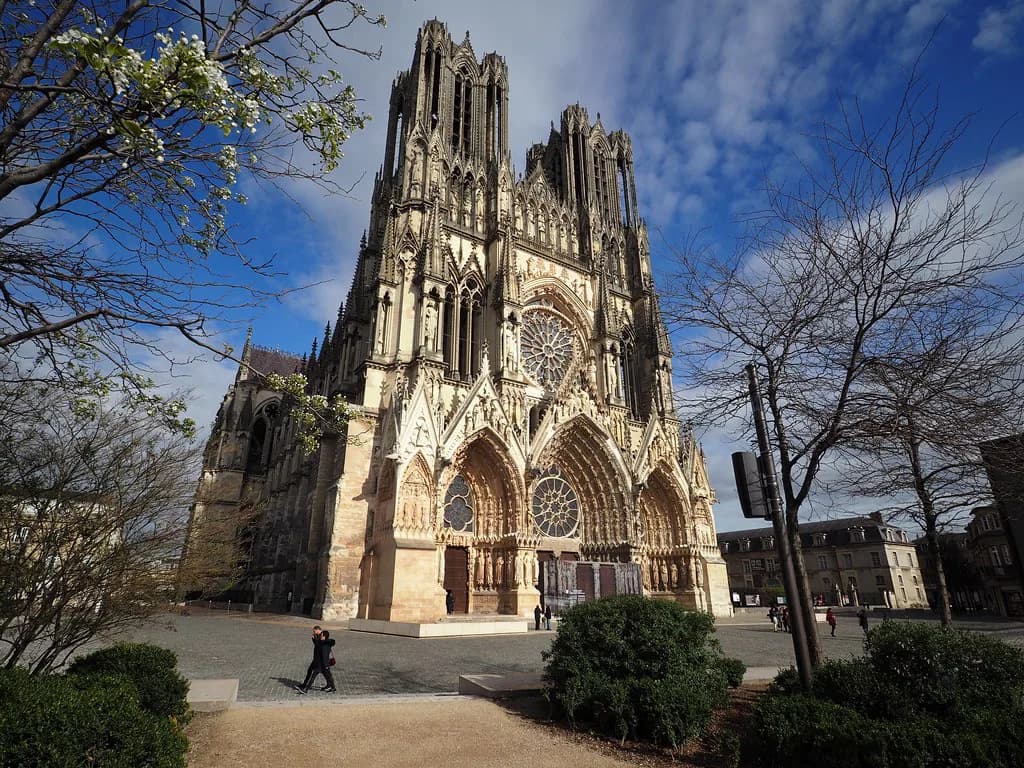
If your time is very short, the building to protect is the cathedral. Notre-Dame de Reims is immense, and the stained glass, the organ and the Smiling Angel statue reward a slow hour rather than a photo stop. An audio guide is available from the tourist office around the corner from the cathedral, which is worth the small detour if you want context on the 33 royal coronations held here.
Friday evening: Place du Forum, Place Drouet d'Erlon and the Fontaine Subé
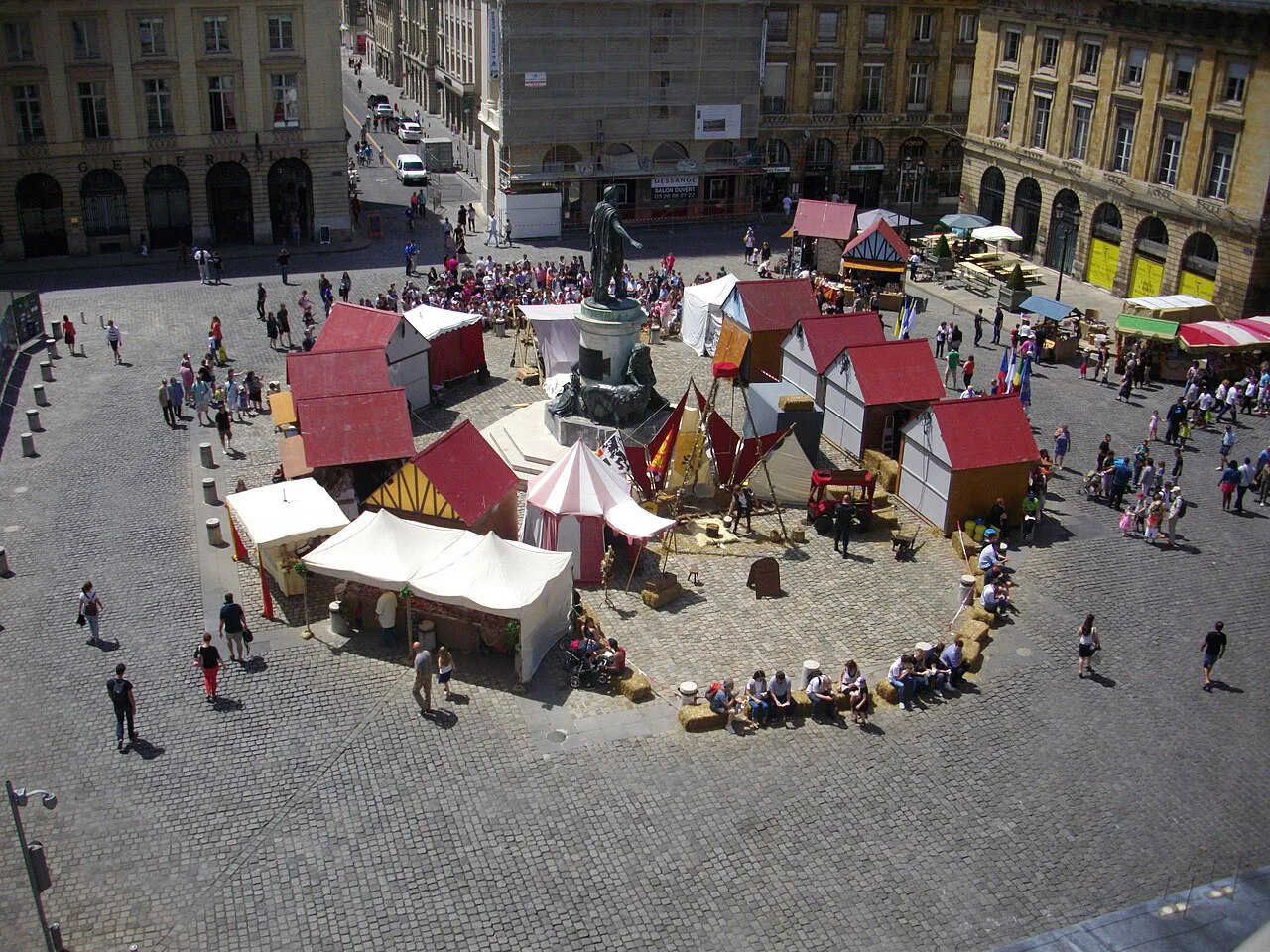
Start with Place du Forum, where a Roman cryptoportique sits half above and half below the square and a few café terraces face it. The square feels more characteristic and friendly than the long strip of outdoor seating on Place Drouet d'Erlon, which fills up en masse on sunny evenings. Choose a sunny spot, order a glass of Champagne, and leave the serious sightseeing for daylight.
If you want the obvious focal point, walk the length of Place Drouet d'Erlon to the Fontaine Subé, a large fountain over a century old in the middle of the street. It is a landmark to orient yourself by rather than a sight that needs a slot in the plan, and the surrounding terraces are convenient for a first-night dinner. The cryptoportique gallery can be visited in the afternoon during the summer months, so it fits better on a later day than on Friday night.
Saturday morning: Notre-Dame de Reims, the tower and the Palais du Tau
Give Saturday morning to the cathedral and its neighbour. The Palais du Tau, the former archiepiscopal residence and a UNESCO World Heritage Site alongside the cathedral, is now a museum of coronation objects and tapestries, and it displays the coronation gown of Charles X, the last king crowned here in 1825. Visiting both in one block saves you a second trip north.
If you want the workout, the tower climb is 250 steps, and tickets are bought at the Palais du Tau next door rather than at the cathedral door. Treat the climb as a bonus rather than the reason for the visit, since access can be closed on the day. The cathedral itself is free to enter as a place of worship, and the audio guide from the nearby tourist office fills in the history.
Saturday afternoon: a Champagne house cellar tour and the 10°C caves
Reims sits on top of chalk chambers linked by roughly 200 kilometres of tunnels, and the big houses run tours that end with a tasting. The caves are around 10°C, so pack a sweater for the afternoon even in summer; this is a packing decision, not a footnote. G.H. Mumm is one of the largest houses in the city, with lime cellars holding 25 million bottles.
Book the cellar visit in advance, because scheduled tours run in both French and English and walk-ins are usually accepted only for simple tastings. Veuve Clicquot, Taittinger and Pommery are the other names to compare, and Pommery combines its cellars with contemporary art exhibitions. Prices differ by house and by the tasting flight, so look at each house's own booking page before choosing rather than picking on name alone.
Set a budget ceiling before you look, then compare two or three houses against it. The cheapest entry-level tour and the longest prestige tasting are not the same product, so check what each visit includes.
Saturday evening: dinner around Boulingrin and Rue de Mars
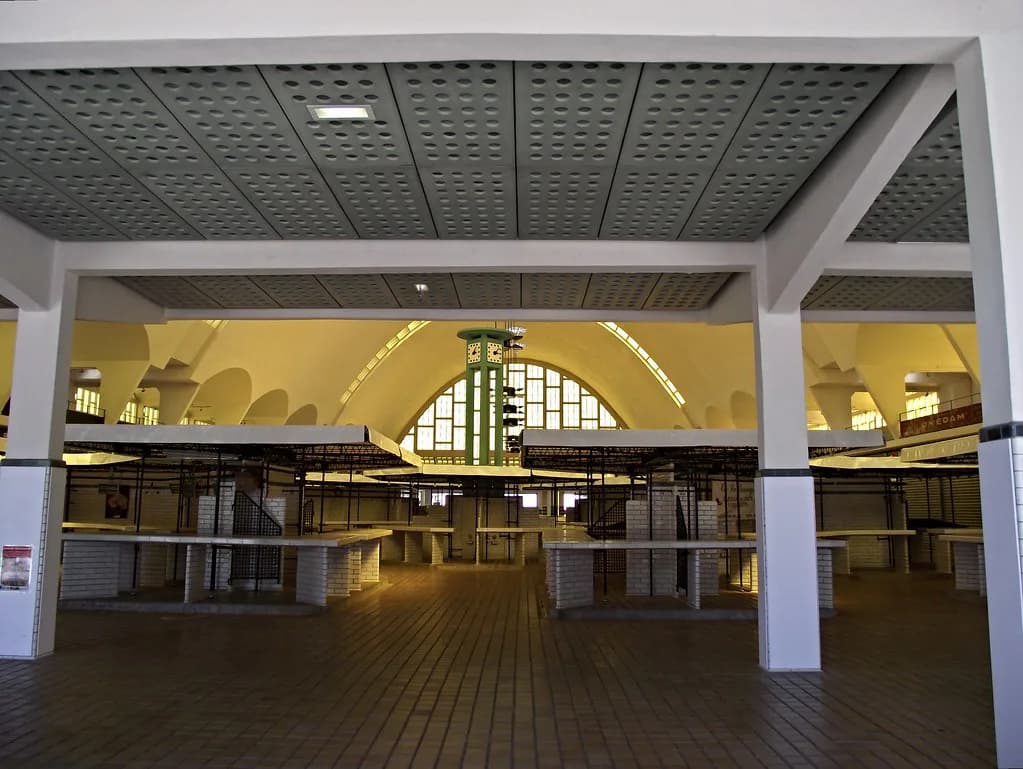
The streets around Boulingrin and the Rue de Mars are the best base for an evening that mixes a drink with food shopping. The Rue de Mars clusters the award-winning chocolaterie Maison Caffet, the Boulangerie les Halles, a fromagerie and, opposite, Aux Gourmets des Halles for charcuterie. A short stroll from the art deco Boulingrin covered market, this is the block to browse before dinner.
For a sit-down meal, the streets between the cathedral and Place Drouet d'Erlon hold most of the city's restaurants, from wine bars to brasseries. Compare a few menus before committing, since the range in price and style is wide and the busiest terraces are not automatically the best value. Our best restaurants in Reims guide narrows the shortlist by neighbourhood so you can book before you travel.
Sunday in Reims: the Boulingrin market and the southern quarters
The Boulingrin covered market is open on Wednesday, Friday and Saturday, so a Sunday visit will find it shut and the food shopping should move to the Rue de Mars boutiques instead. Built in 1927 and restored, it is the anchor for a Saturday that stays outdoors and indoors in equal measure. Plan the market for Friday or Saturday morning if it matters to you.
For the southern half of the city, the Basilica of Saint-Remi and the Musée Saint-Remi next door hold the history of the abbey and the relics of the bishop who baptised Clovis. The museum occupies a former abbey and covers the history of Reims alongside tapestries and a military collection. The Parc de Champagne nearby gives you a green pause between the two.
Sunday and Monday trade-offs: what to do when indoor sights are shut
Many French museums close on a Monday or Tuesday, so build a fallback day that does not depend on them. The Porte de Mars, the largest arch of the Roman Empire, is admired from the pavement, and the cryptoportique on Place du Forum is a short walk away. The Carnegie Library beside the cathedral is a working reading room rather than a sight.
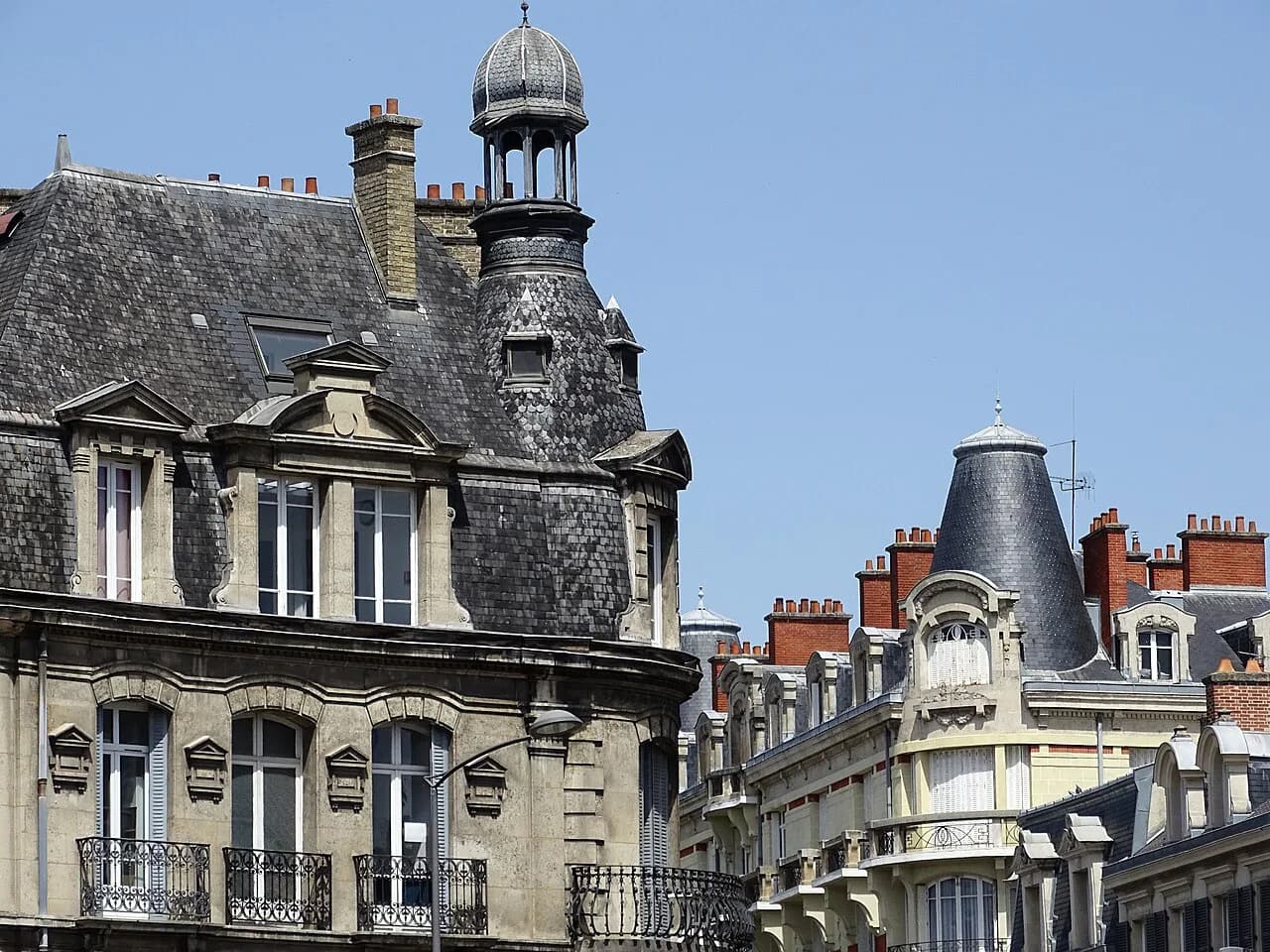
Reims was largely rebuilt after the First World War, which is why Art Deco architecture sits so close to the medieval core. The Hôtel de Ville on Place Royal and the Cinéma Opéra are quick looks on a walk rather than destinations, and the Manège circus building dates from 1865. Fort de la Pompelle and the Musée de la Reddition are the war-history alternatives if the weather turns.
Monday morning: Roman Reims at the Porte de Mars and the cryptoportique
Roman Reims survives in two fragments: the Porte de Mars, once the widest arch of the Roman Empire, and the cryptoportique, a semi-underground gallery dating from the 3rd century. Both are viewed from the street or the square, so neither depends on a ticket desk being open. Pair them with a coffee on Place du Forum and you have a solid half-day that works on any day of the week.
If you are leaving on Monday afternoon, use the morning for the Foujita Chapelle on the Mumm estate, where a single ticket also admits you to the Musée des Beaux-Arts. The chapel was designed by the Japanese painter Léonard Foujita, who is buried there with his wife. Allow time to cross town to the station afterwards.
Tasting Reims: Biscuit Rose, Reims ham, Clovis mustard and bouchon de champagne
The city's signature food is the Biscuit Rose de Reims, a twice-baked pink biscuit with a dry crunch that locals dip into Champagne. Fossier sells its biscuits from a candy-pink shopfront on Cours Jean-Baptiste Langlet. Buy a box early in the trip so it survives the journey home.
The savoury side is Reims ham, cooked in stock and rolled in breadcrumbs, often served thickly sliced with Clovis mustard, which comes in a version made with Champagne grapes. Soft cow's cheeses such as Chaource and Langres appear on many restaurant menus, melted into sauces or gratin. To finish, the bouchon de champagne is a cork-shaped chocolate filled with marc de champagne.
Costs to budget: cellar tours, museums and the Reims City Pass
The two big variable costs are the cellar tour and the museums. The €28 per person reported for the G.H. Mumm guided tour with a glass of Champagne in 2023 is a benchmark from an earlier year, not a quote. Check each house's own booking page for the current rate before you commit.
The Reims City Pass comes as a one, two or three-day version and gives entry to more than ten museums plus free public transport and discounts at some shops and restaurants. Do the arithmetic against the sights you actually intend to see, because a pass only pays off if you visit several museums and use the transport. A single cellar tour plus a cathedral visit does not justify it on its own.
Getting there and around: the train from Paris and walking the centre
Reims is about 45 minutes from Paris by train, which makes it realistic as a Friday-to-Sunday break from the UK via Paris rather than a long-haul commitment. From the station, the centre is walkable and most sights sit within a compact loop. You do not need a car for a city weekend, and parking in the centre is the least appealing part of driving.
The cathedral square is the natural orientation point: the tourist office sits beside it, the Palais du Tau is next door, and the Carnegie Library is a short step away. From there, Place Drouet d'Erlon is a straight walk south and Boulingrin a straight walk north. That geography is why two nights works without public transport.
When to go: the summer sound-and-light show versus quieter months
From May to mid-September, the cathedral facade hosts Regalia, a sound-and-light show projected onto the World Heritage monument at nightfall. That single feature is the strongest argument for a summer weekend. It runs on darkness, so the start time shifts through the season.
Outside that window you lose the projection but gain quieter cellars and easier restaurant bookings, and the indoor sights are unaffected. If the show is the reason for the trip, plan around the summer season rather than a specific date. Otherwise choose the months that suit your budget and accept the cathedral without the light.
Where a weekend in Reims fits against Épernay
Reims gives you the cathedral, the coronation history, the museums and several major houses within one walkable centre. Épernay gives you the Avenue de Champagne, a 1.5-kilometre street inscribed on the UNESCO World Heritage list with 110 kilometres of cellars beneath it. The two are close enough that a weekend can lean on one and glance at the other.
If you have only two nights and want urban sightseeing with your Champagne, Reims is the stronger base. If the cellars and the avenue are the whole point, base in Épernay and spend one morning in Reims. Choose before you book the cellar tours, since the houses on the Avenue de Champagne need advance reservation too.
What to skip on a two-day trip
Skip a second cellar tour. The underground chambers are memorable once, and a second visit buys you a similar hour for another ticket price you could spend on a good lunch. Spend the saved time on the Boulingrin area instead, where the food shops on the Rue de Mars give you a better return.
Skip anything that requires a car unless war history is your priority; Fort de la Pompelle and the Musée de la Reddition are worth the trip only if they displace something you care about. Skip the tower climb if access is closed on your dates, and skip the temptation to cram Épernay and Reims into the same day. Two focused days beat three rushed ones.
Plan Your Visit
Build the weekend around Saturday: cathedral and Palais du Tau in the morning, a booked cellar tour in the afternoon with a sweater for the 10°C caves, and dinner near Boulingrin. Put the market on Friday or Saturday, since Boulingrin opens on Wednesday, Friday and Saturday. Keep Monday for the Porte de Mars and the cryptoportique if the museums are shut.
Book cellar tours and any timed museum entry before you leave, and compare house prices on their own sites rather than relying on an older figure. The Reims City Pass is worth costing against your actual list, and the train from Paris keeps the trip short. Check current opening times and event schedules with the Reims tourist office close to your dates.
Explore more Reims guides
Frequently Asked Questions
How many days do you need for a weekend in Reims?
Two nights covers the city centre on foot: the cathedral and Palais du Tau, one Champagne cellar tour, the Boulingrin area and a southern half-day around Saint-Remi. With a single day, keep the cathedral and one cellar tour and drop the museums.
What is open in Reims on a Sunday?
The Boulingrin covered market does not open on Sunday, so shift market shopping to Friday or Saturday and use Sunday for the Basilica of Saint-Remi, the Musée Saint-Remi and the Parc de Champagne. Confirm individual museum hours with the Reims tourist office before you set out.
What can you do in Reims on a Monday when museums are shut?
Build a free outdoor day around the Porte de Mars, the Roman arch viewed from the pavement, and the cryptoportique on Place du Forum. The Carnegie Library beside the cathedral is free to look into, and the Art Deco town hall and Cinéma Opéra are quick stops on the same walk.
How much does a Champagne cellar tour in Reims cost?
Prices vary by house and by the tasting flight, so compare each house's own booking page before you choose. Entry-level tours and longer prestige tastings are different products, and the rate you see quoted on a blog may be several years old, so treat the house's own price list as the only figure to budget from.
How do you get to Reims from Paris?
Take the train, which takes about 45 minutes from Paris. The centre is then walkable, with the cathedral square as the orientation point and Place Drouet d'Erlon a straight walk south.
Sources
Notes for French city breaks
Optional updates to our guides.
You might also like
Continue reading
More guides you'll find useful