
Château de Blois: A Visitor's Guide to the Royal Château
The Château de Blois is worth an afternoon because one courtyard shows four building campaigns in sequence, from a 13th-century fortress to a classical wing left unfinished in the 17th century. Seven kings and ten queens of France lived here, and the château now holds a labelled Musée de France collection of more than 35,000 works.
It sits in the middle of Blois rather than in a park, so you walk out of the old town streets straight into the entrance. That makes it an easy half-day combined with the surrounding squares and museums, not a country estate that swallows a whole day.
What the Château de Blois is
The château is a royal residence turned museum, and the visit is as much about the building as the objects inside it. Because each wing belongs to a different reign, you can read the place as a timeline: medieval fortress, Gothic palace, Renaissance palace, classical palace.
Seventeen furnished royal apartments, a hall of the Estates General covering 540 square metres and over a thousand displayed objects fill the route. Budget on the palace itself, not on a sculpture park or formal gardens, as the original Renaissance gardens have disappeared.
Where the château sits in Blois
The entrance is on Place du Château, in the old town above the Loire. The square holds restaurants, a garden, the tourist office, the Musée de la Résistance and the Centre d'interprétation de l'architecture et du patrimoine, so you are already in the historic core when you arrive.
Face the château from the square and you will see the Maison de la Magie directly opposite, the theatre and museum devoted to Jean-Eugène Robert-Houdin, the 19th-century magician born in Blois. It is an easy pairing with the castle if you have a second slot in the day.
How to get there
Blois-Chambord is the station, reached on the Nantes line, and the château is a short walk uphill through the old town from the riverfront. Azalys runs the local buses, with a stop named for the château, and there is parking at the foot of the monument and on the square.
Cyclists arrive on the Loire à vélo and EuroVelo 6 routes, and the château has bicycle parking. Allow a little extra time for the climb from the riverside if you are arriving on foot with luggage.
The courtyard: four building campaigns
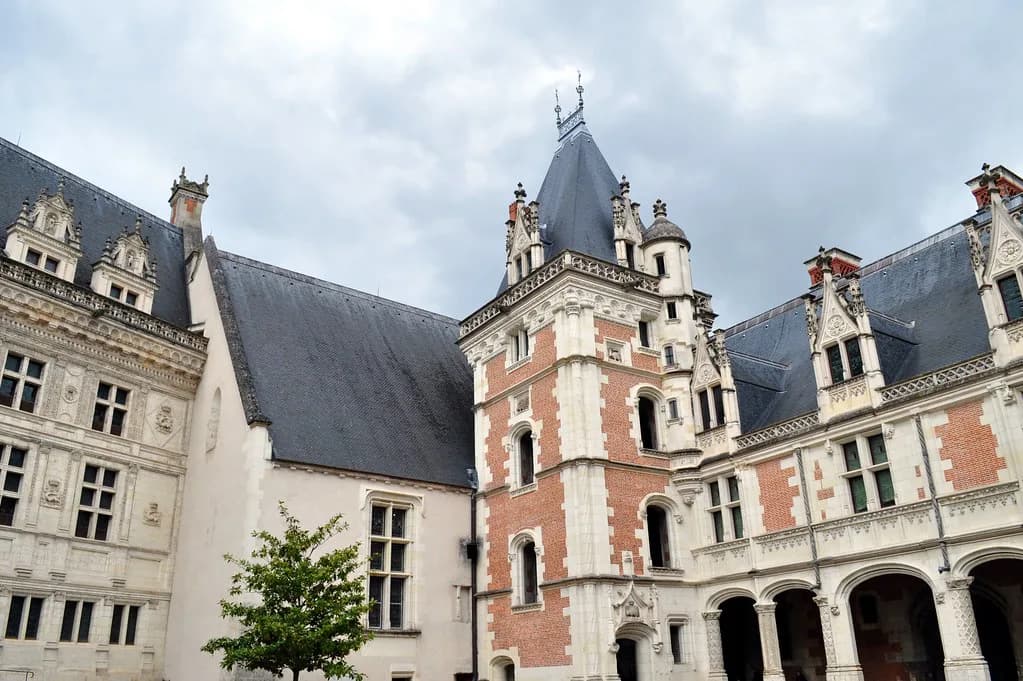
Stand in the courtyard and turn slowly: each facade marks a different era. The medieval fortress dates from the 13th century, Louis XII added a Gothic wing between 1498 and 1500, François I built his Renaissance wing between 1515 and 1518, and Gaston d'Orléans began his classical wing between 1635 and 1638.
This is the single best reason to visit Blois rather than a more uniform Loire château. Few other places let you compare four centuries of French architecture at arm's length in one space.
The Louis XII wing and the Salle des États
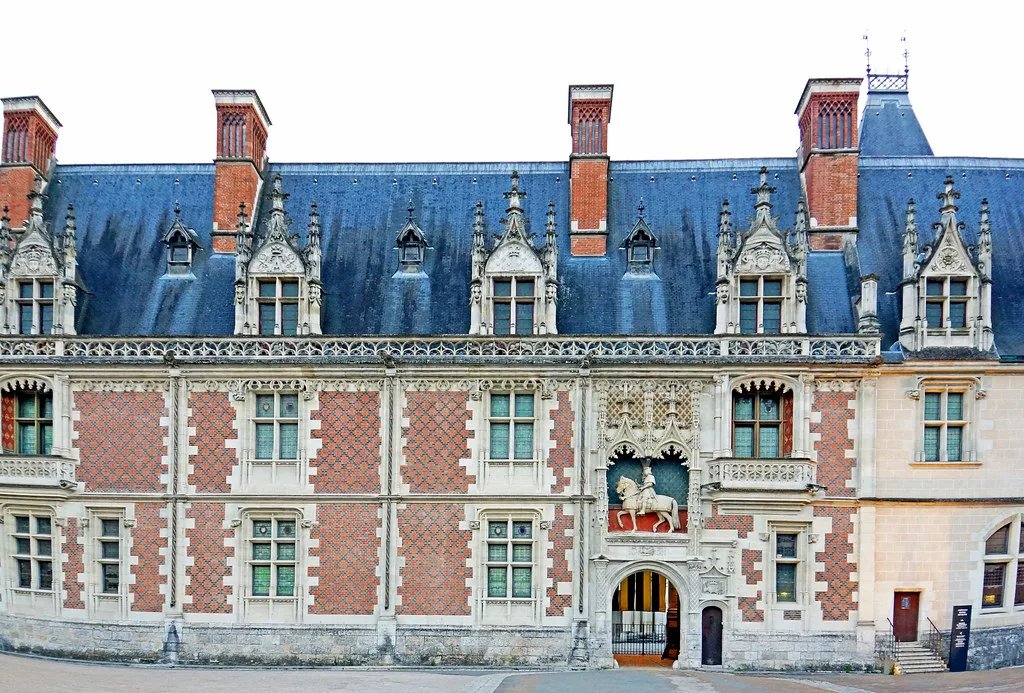
The Louis XII wing is the red-brick and stone Gothic block, with the Salle des États and the Chapel of Saint-Calais inside it. The hall is the largest interior space you will see, a reminder that this was a working political palace as well as a residence.
Look for the monograms and porcupine emblems worked into the decoration, heraldry that signals which reign built which room. The Gothic chapel holds stained glass and religious furnishings that reward a slower look than the state rooms.
The François I wing and the spiral staircase
François I's wing is the Renaissance showpiece, and its open spiral staircase is the image most visitors carry away. The staircase is carved rather than merely functional, and it is worth waiting for a gap in the crowd to see it from the courtyard floor.
Inside this wing the royal apartments are richly decorated with tapestries and painted ceilings. The château's own collection runs to more than 35,000 works, of which over a thousand are on display across the rooms.
The Gaston d'Orléans wing, left unfinished
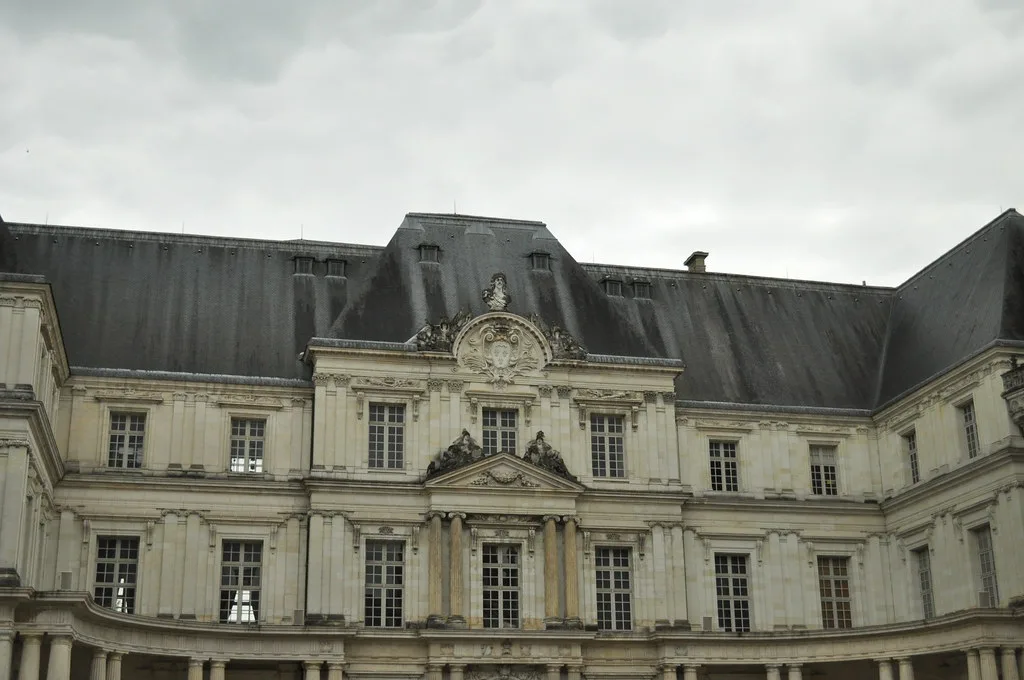
Gaston d'Orléans' classical wing is grand but incomplete, which is exactly why it is interesting. Columns and a monumental design are in place, yet the money and the political will ran out, leaving a fragment of a much larger plan.
Compare it with the medieval fortress opposite and you have the whole story of French royal building in one view. If you only have time for one facade, this contrast is the one to seek out.
The Musée des beaux-arts inside the castle
The Musée des beaux-arts de Blois occupies the first floor of the Louis XII wing, so it is part of the same visit rather than a separate trip across town. Its paintings include works by Rubens, Ingres and Boucher, and the route is organised around the five senses.
Treat it as a twenty-minute stop if you are short of time, or a proper hour if you like Old Master painting. Many visitors skip it, which usually means the rooms are quieter than the royal apartments.
The HistoPad and the 3D screens
Four hundred HistoPad tablets are available, and the augmented-reality guide is included in the admission ticket rather than sold as an extra. In several rooms it overlays a reconstruction of the 16th-century interiors onto what you actually see, and elsewhere it runs a treasure hunt.
Large interactive 3D screens show how the building evolved over time and set Blois against other historic monuments in the town. Families tend to gravitate to the screens and the treasure hunt, so plan the quiet rooms around them if you want to read in peace.
The terrace du Foix and the view over the Loire
The terrace du Foix covers more than 2,000 square metres inside the château precinct and overlooks the old town and the Loire, a UNESCO World Heritage river landscape. It is laid out as two gardens, the jardin Gaston-d'Orléans and the jardin Anne-de-Bretagne, recalling the Renaissance gardens that once spread over nearly ten hectares.
Use it as your rest stop: it is free of the press of the state rooms, and the panorama gives you a sense of how the town relates to the river. Bring the camera here rather than to the courtyard.
The son et lumière after dark
In the evening the courtyard hosts a sound and light show, with 360-degree video mapping projected onto the four facades and voices recorded by French actors. The spectacle covers the loves, dramas and secrets of the château's history rather than acting as a simple illumination.
It runs after dark in the courtyard, so a winter weekend may not fit it into your plans. Check the château's own events calendar for the dates in your window before you build an evening around it.
Tickets, combined tickets and free entry
Base admission ranges from 8 to 16 euros depending on the ticket chosen, and combined tickets give cheaper access to other major cultural sites in the city. Tickets can be bought online in advance.
Entry is free for residents of Blois holding the Pass Blois culture and for disabled visitors with one accompanying person. Note that this is a resident pass, not a general discount for French visitors.
How long to allow and when it is busiest
Allow two to three hours for the château, the Musée des beaux-arts and the terrace. If you have only 90 minutes, do the courtyard, the François I staircase, the royal apartments and the terrace, and save the museum for another visit.
The château draws around 330,000 visitors a year, so mornings and shoulder seasons are calmer. Weekday mornings give you the best chance of seeing the staircase and the state rooms without a crowd.
Opening days, closures and tickets in practice
The château is open all year except 1 January and 25 December, and the daily hours change with the season. Confirm opening times for your dates before travelling.
Buying online saves time at the ticket office, and the HistoPad is collected on site as part of your admission. If you are visiting on a public holiday, book ahead rather than turning up at opening.
What else is on Place du Château
The square is a cluster of small sights rather than one big one. Alongside the restaurants and the tourist office you will find the Musée de la Résistance and the architecture and heritage centre, both opened in recent years.
The Maison de la Magie Robert-Houdin is opposite the château, and it makes a good second stop if you are travelling with children. The cathedral sits a short walk away in the old town, and if you want more ideas beyond the castle, our guide to things to do in Blois covers the squares and museums around it.
Honest trade-offs: one castle or a wider Loire circuit
Blois is a town sight rather than a park-and-gardens estate: there is no formal garden to stroll, and the château sits among streets and buildings. If you want the postcard image of a château reflected in a moat, this is not it.
On a short break, Blois works well as a single focused visit paired with the old town, the cathedral and the river. A wider circuit of Loire châteaux means choosing one or two others, not collecting them all, and it helps to plan the rest of your day around things to do in Blois once the château is done.
Plan Your Visit
Book online, arrive in the morning, and give the château two to three hours with the museum and terrace included. Read the courtyard as a timeline before you go inside and the interiors make far more sense.
Leave the evening free for the son et lumière in season, or for the old town streets and the cathedral if the show is not running. Either way, the château is the anchor of a day in Blois rather than a quick stop.
Explore more Blois guides
Frequently Asked Questions
Is Blois Castle worth visiting?
Yes, if you want to see four architectural styles in one courtyard: a 13th-century fortress, the Gothic Louis XII wing, the Renaissance François I wing and Gaston d'Orléans' unfinished classical wing. Add the Musée des beaux-arts inside the building and the terrace over the Loire, and it fills a morning or afternoon comfortably.
How long does a visit to the Château de Blois take?
Allow two to three hours to cover the courtyard, the royal apartments, the Musée des beaux-arts and the terrace du Foix. With 90 minutes, concentrate on the courtyard, the François I staircase, the state rooms and the terrace, and leave the museum out.
How much does the Château de Blois cost?
Admission is tiered, and combined tickets cover other cultural sites in Blois. The official Ville de Blois page for the château sets out the current range and where to buy tickets online, so check the rate there before booking.
Is the Château de Blois open every day?
It is open all year except 1 January and 25 December. Daily opening hours vary by season, so confirm them for your dates before you travel.
Is the Musée des beaux-arts included in the castle ticket?
Yes. The Musée des beaux-arts de Blois occupies the first floor of the Louis XII wing, so it forms part of the same visit and the same admission. Its paintings include works by Rubens, Ingres and Boucher.
Is the HistoPad included in the ticket price?
Yes. The HistoPad augmented-reality tablet is included in admission rather than sold separately, and 400 are available to visitors. It reconstructs 16th-century interiors in several rooms and offers a treasure hunt elsewhere.
What is the son et lumière at the Château de Blois?
It is an evening sound and light show in the courtyard, with 360-degree video mapping projected onto the four facades and recorded voices. Check the château's events calendar for dates during your stay, as it runs after dark.
How do you get to the Château de Blois from the station?
From Blois-Chambord station it is a short walk uphill through the old town to Place du Château. Local Azalys buses serve a stop named for the château, and there is parking at the foot of the monument and on the square.