
Unterlinden Museum, Colmar: What to See and How to Visit
The Unterlinden Museum is Colmar's principal museum and the reason many people come to the city: a 13th-century Dominican convent holding the Isenheimer Altar, a carved and painted altarpiece dated 1512–1516 and attributed to Grünewald and Niklaus von Hagenau. The collections run across roughly 7,000 years, from archaeology to 20th-century painting, spread over a convent, a former municipal baths building and a contemporary wing. Give it half a day rather than an hour, and start with the altar.
What the Unterlinden Museum is and why it matters
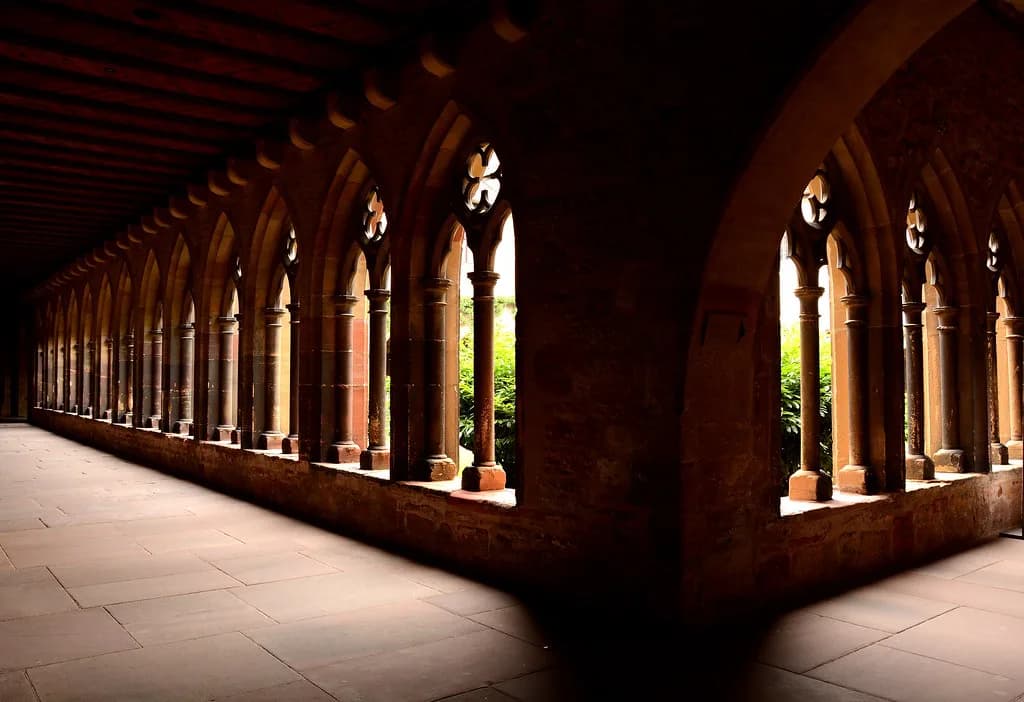
The museum occupies a Dominican convent that dates to the 13th century, and the medieval rooms are where its reputation rests. A single circuit moves from prehistory through the medieval and Renaissance collections, decorative and everyday arts, 19th-century painting and on to modern art. Because everything sits on one route, the building itself explains the collection: you walk from cloister to baths hall to new wing as the periods change.
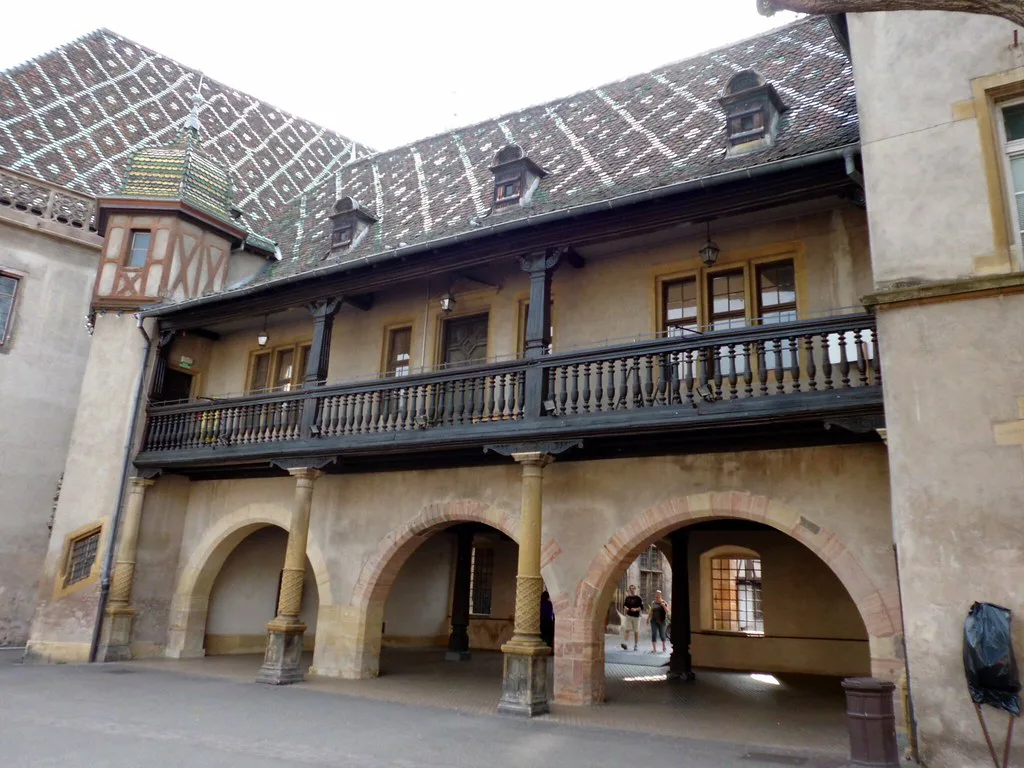
Architects Herzog & de Meuron unified the convent, the old baths and a new exhibition wing, which is why the museum can feel like three museums joined end to end. Expect stone vaults and cloister walks in one stretch, then clean modern galleries with controlled light in another. That contrast is part of the appeal, but it also means the visit is longer than the façade suggests.
Where it is and how to get there
The museum stands on Place Unterlinden, 68000 Colmar, in the old town, a short walk from the pedestrian centre and its squares. Arriving on foot is the sensible approach: the surrounding streets are narrow and one-way, and the station is within walking distance for travellers coming in by train. Treat the museum as the anchor of a day in Colmar rather than a separate excursion. If you are weighing up a bigger city for another break, our Strasbourg city guide covers the same sort of museum-and-old-town day at a larger scale.
If you are assembling a route, the museum pairs naturally with the streets around Little Venice (La Petite Venise) to the south and the Maison des Têtes in the old centre. Both are close enough to combine with a museum morning, which keeps the day compact. Walk between them rather than driving.
Opening hours and closures
The museum opens Wednesday to Monday from 9h to 18h, with last entry at 17h30, and closes on Tuesdays. It also closes on 1 January, 1 May, 1 November and 25 December, and runs shorter hours of 9h to 16h on 24 and 31 December. A Tuesday in Colmar needs a different plan, so build the museum into a Monday, Wednesday or weekend day instead.
Allow time for the security and ticket queue at peak periods, and aim to be inside by mid-afternoon so the altar rooms are not rushed. The 17h30 last entry is a firm cut-off rather than a suggested time to leave.
Tickets and booking
The museum sells tickets online as well as at the entrance, and there are separate arrangements for adults, groups and families. Prices are set by the museum and listed on its own pages rather than fixed here, so check the prices section before you budget. Buying in advance is most useful for weekend afternoons, when the convent rooms fill up.
Accessibility information and the visitor rules are published alongside the practical pages, which is worth reading if anyone in your party has mobility needs. The museum can be reached on +33 (0)3 89 20 15 50 for questions about access or group visits.
The Isenheimer Altar
The Isenheimer Altar, made between 1512 and 1516 by Grünewald and Niklaus von Hagenau, is the museum's centrepiece and sits within the medieval and Renaissance galleries. It is a large polyptych with painted panels and carved sculpture, and it rewards slow looking rather than a quick photograph. Plan your visit around it: see the altar first, while you are fresh, then work backwards through the rest of the convent rooms.
The altar is displayed as part of the museum's permanent collections, and any change to how it is shown appears in the museum's own news rather than in advance warning. Check the current exhibitions and news before a trip if the altar is your main reason for coming.
Medieval and Renaissance paintings beyond the altar
The same convent galleries hold paintings by Martin Schongauer, Hans Holbein and Lucas Cranach, which is why this section deserves more than a passing glance. Schongauer worked in Colmar, so his presence here gives the collection a local anchor rather than a purely encyclopaedic one. If you only have an hour for the old collections, split it between the altar and these panels.
Light levels in the medieval rooms are deliberately low, and the route through the cloister is not a straight line. Keep an eye on the room numbers so you do not loop back on yourself.
The architecture: convent, baths and modern wing
The former municipal baths, opened in 1906, now provide space for temporary exhibitions, while the contemporary wing shows 20th-century works by Monet, de Staël, Picasso and Dubuffet. Herzog & de Meuron's work ties these parts together, and the baths hall is the most striking single interior after the convent itself. Walk the whole building once before settling into any one gallery.
Temporary exhibitions change and are listed on the museum's current exhibitions page, so a return visit is rarely the same as the first. If a show is on in the baths hall, allow extra time rather than squeezing it in at the end.
Modern art in the contemporary wing
The modern galleries are the easiest part of the museum to skip and the part that surprises people most, with Monet, Picasso, Dubuffet and de Staël among the names represented. They sit at the far end of the circuit, so a tired visitor often arrives already flagging. If modern art matters to you, consider doing this wing first and the altar second.
The wing is compact enough to cover in a focused stretch rather than a slow amble, which makes it a good contrast to the density of the medieval rooms.
Other collections: archaeology, decorative arts and the 19th century
Beyond the paintings, the museum covers archaeology, decorative and everyday arts, and 19th-century art across its sequence of galleries. These sections are where a short visit gets swallowed: the archaeology in particular is extensive and sits early in the route. Decide in advance whether you want breadth or depth, and skip accordingly.
There is also a library of more than 15,000 art-history titles, open to researchers, students and curious visitors since 2017. It is a working resource rather than a tourist stop, so treat it as a bonus if you have a specific interest.
How long to allow and how to pace the visit
Two to three hours is a sensible allowance for the altar, the convent paintings and a pass through the modern wing, and a half day is better if you want the archaeological and decorative collections too. A 45-minute dash wastes the best of the museum, because the Isenheimer Altar alone repays twenty minutes of quiet attention. Build in a break rather than pushing straight through.
The Café Restaurant Schongauer sits in the old baths area, in a space designed by Herzog & de Meuron, and serves simple and more elaborate dishes plus pastries in the afternoon. In good weather the courtyard, lined with apple trees, is the obvious place to regroup before a second stretch. Its opening times are set by the restaurant, so confirm before relying on it for a late lunch.
The museum shop
The shop covers around 80 square metres with stationery, art books, tableware and a good range for younger visitors. It opens daily except Tuesday from 10h to 18h, and on Sundays from 11h to 18h, so it follows the museum's Tuesday closure. Buy the heavy art books at the end of the visit, not the start.
Nearby in Colmar to pair with the museum
The old town around the museum holds most of Colmar's headline sights within a compact walk: the Maison des Têtes, the Pfister House and St Martin's Church are all close by. A museum morning followed by an afternoon on the streets works better than trying to do both in reverse, since the museum is the more demanding half.
If you are travelling with children, the Musée du Jouet is a short walk away and makes a practical second stop after the convent rooms. Use the rest of the day for the waterside streets around Little Venice rather than adding another interior.
Plan Your Visit
The Unterlinden Museum is the one Colmar sight worth arranging your day around, and the Tuesday closure is the single detail most likely to catch you out. Go early, see the Isenheimer Altar while you are fresh, then decide how much of the rest you actually want.
Pair it with the old-town streets and a waterside walk, and leave the shop and the café for the end rather than the start. For the wider picture of what else the city offers, work through the Colmar Attractions: 6 Visitor Guides before you lock in your days.
Explore more Colmar guides
Frequently Asked Questions
What is the Musée Unterlinden in Colmar?
It is Colmar's main museum, housed in a 13th-century Dominican convent with a former municipal baths building and a contemporary wing added by Herzog & de Meuron. Its collections run from archaeology to 20th-century art, and its best-known work is the Isenheimer Altar.
Where is the Isenheimer Altar kept?
The altar is displayed in the medieval and Renaissance galleries of the Musée Unterlinden in Colmar, inside the former convent. It is dated 1512–1516 and attributed to Grünewald and Niklaus von Hagenau.
What are the opening hours of the Unterlinden Museum?
The museum opens Wednesday to Monday from 9h to 18h, with last entry at 17h30. It closes on Tuesdays and on 1 January, 1 May, 1 November and 25 December, and closes at 16h on 24 and 31 December.
Is the museum closed on Tuesdays?
Yes. The museum is closed on Tuesdays, so a Tuesday in Colmar needs a different plan. The museum shop also closes on Tuesdays.
How long does it take to visit the Unterlinden Museum?
Allow two to three hours for the altar, the convent paintings and the modern wing, and half a day if you also want the archaeology and decorative arts. A 45-minute stop is too short to do the collection justice.
What artworks can you see at the Unterlinden Museum?
Alongside the Isenheimer Altar there are paintings by Martin Schongauer, Hans Holbein and Lucas Cranach, and modern works by Monet, Picasso, Dubuffet and de Staël. Archaeology, decorative arts and 19th-century paintings form the rest of the circuit.