
Lille Cathedral: A Visitor's Guide to Notre-Dame-de-la-Treille
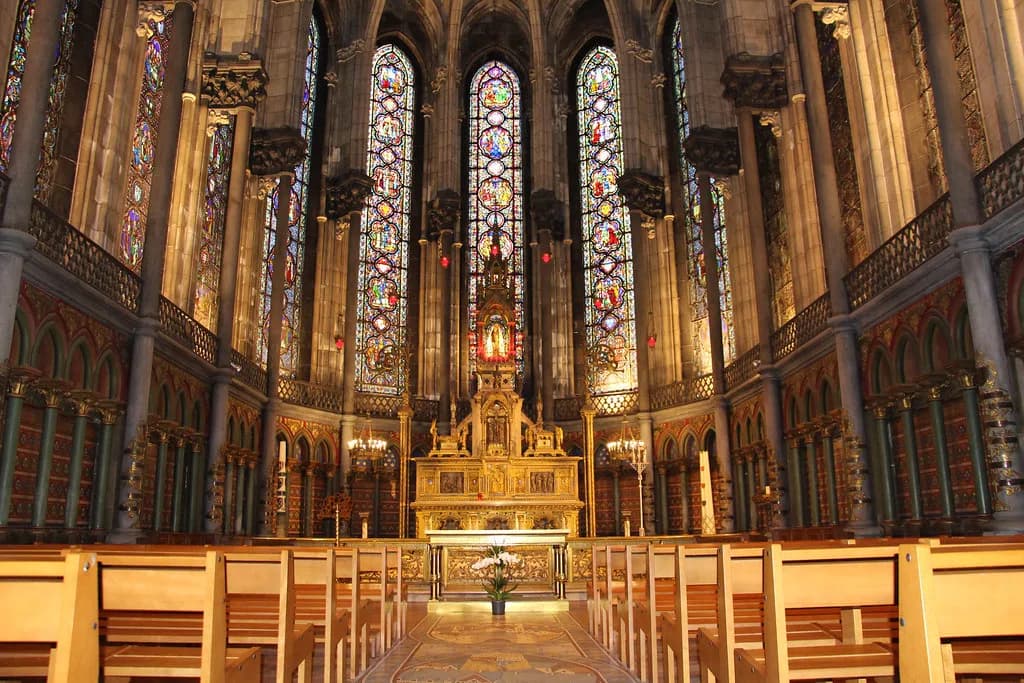
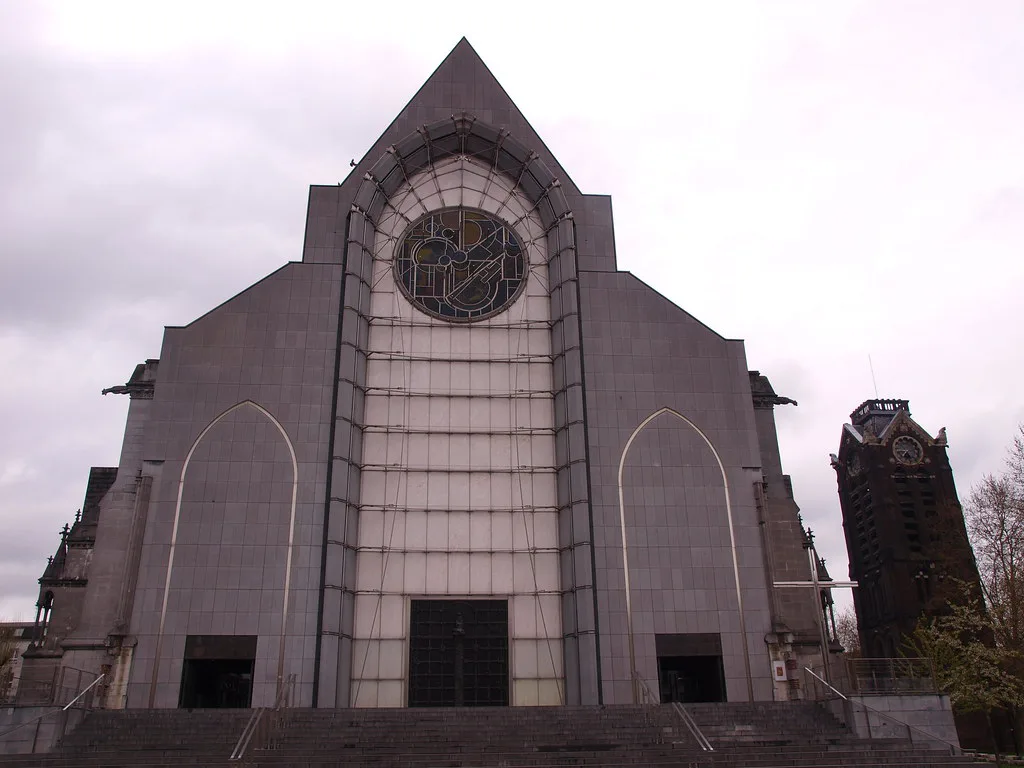
Lille Cathedral, properly the Cathédrale Notre-Dame-de-la-Treille, is worth a stop if you are already spending time in Vieux-Lille. It is a hybrid building: begun in 1854 as a Neo-Gothic design to house the 12th-century statue of Notre-Dame de la Treille, which is why the frontage and interior do not read like a single medieval church. Allow about an hour, and treat it as one piece of a Vieux-Lille morning rather than a stand-alone trip.
What Lille Cathedral is and why it stands out
This is not a cathedral that grew organically over centuries. Construction started in 1854 in a Neo-Gothic style, with the express purpose of providing a home for a revered medieval statue of the Virgin. That origin explains the building's mix of eras and the sense that parts of it feel deliberately old while others look unmistakably 19th-century.
The dedication matters to the city's Catholic history: the cathedral has served as the seat of the diocese of Lille since 1913 and is dedicated to Mary, inspired by the medieval statue. Visitors who arrive expecting a monument on the scale of France's great Gothic cathedrals will find something more modest and more layered. Judge it on its own terms and the hybrid character becomes the interest rather than the drawback.
Where it is: Vieux-Lille, near Place Gilleson
The cathedral sits in Vieux-Lille, the old quarter of cobbled streets, brick and coloured stone facades that most weekenders gravitate towards anyway. The tourist office places it near Place Gilleson, alongside the house where Charles de Gaulle was born and the Hospice Comtesse, so it slots naturally into a walk through the quarter. If you only have time for one area of the city beyond the centre, this is the one to choose.
Lille itself covers only about 35 square kilometres and is divided into distinct districts, which is why the old quarter feels compact rather than sprawling. Use the neighbourhood structure to plan: the centre around the Grand'Place, then Vieux-Lille immediately beside it, then the rest. Once you are in the old streets, the cathedral is an easy landmark to steer by.
How to get there from the station and Grand Place
From Lille-Flandres or Lille-Europe stations, the Grand'Place is only a few hundred metres away, and Vieux-Lille begins directly off it. Walk from the square into the old quarter and you will reach the cathedral on foot in a short stroll, which makes it a sensible first stop after arriving. The tourist office's own one-day route uses exactly that sequence, starting at the Grand'Place and heading into Vieux-Lille.
If you are coming from further out, the city's metro and bus network covers the centre, and the tourist office publishes maps and practical transport information from its desk at Palais Rihour on Place Rihour. That desk is open every day, which makes it a useful first port of call for a paper map before you set off into the old streets.
The building: begun in 1854 as a neo-Gothic design
The Neo-Gothic design was chosen in the mid-19th century, a period when French church architecture was looking backwards for its models. What you see is a building conceived as a whole rather than assembled across the Middle Ages, which shows in the regularity of the plan and the consistency of the detailing. Read it as a 19th-century statement of faith and civic ambition rather than as a medieval survivor.
For context on how Lille's architects handled the same revival impulse elsewhere, look at the neo-Flemish brick and stone work of Louis-Marie Cordonnier across the city. His Chamber of Commerce belfry behind the Grand'Place and his belfries at Armentières and Comines show the northern variant of the same historicising instinct. Seeing both sharpens your eye for what is genuinely old in Lille and what was rebuilt or invented.
The 12th-century statue it was built to house
The whole project exists because of a medieval statue of the Virgin, Notre-Dame de la Treille, which the 19th-century building was designed to accommodate. That single object is the reason for the dedication and the reason the cathedral carries the name it does. Look for it as the focal point of your visit rather than treating the architecture alone as the attraction.
Because the statue predates the building by centuries, the cathedral is best understood as a container for an older devotion. That framing also explains the dedication to Mary and the continuing role of the site in the diocese. Keep it in mind when you walk the interior: the building is the setting, the statue is the point.
Inside: the chapels and their scenes from the life of Christ
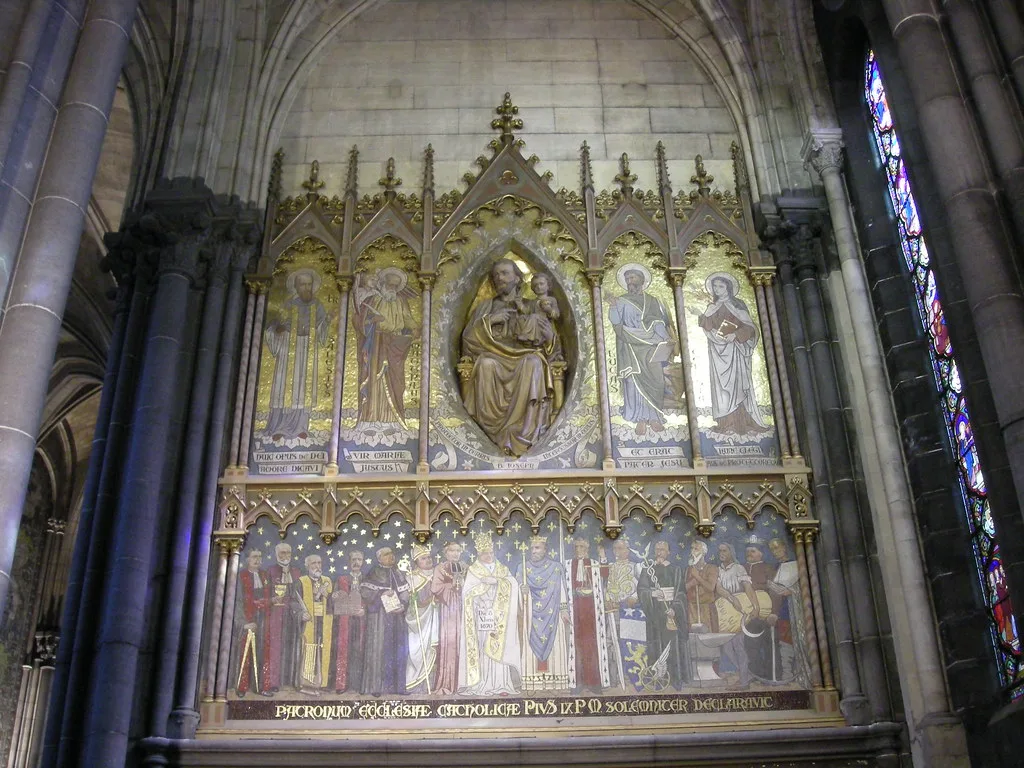
Inside, the cathedral holds eight chapels decorated with scenes depicting the lives of Jesus Christ and his followers. Work round them methodically rather than drifting, because the sequence gives the interior a narrative structure that a quick lap would miss. Give the chapels twenty minutes of your hour and the rest to the nave and the statue.
The interior is also where the building's hybrid character is easiest to read: 19th-century structure, older object of devotion, and later additions layered on top. Sit for a few minutes rather than photographing and leaving, since the scale rewards a slower pace. If you have come from the busy Grand'Place, this is the natural place to slow down before the next stop.
The Centre of Sacred Art in the crypt and the Delaine Collection
The part most visitors miss is below the church. In the neo-Gothic crypt of Notre-Dame de la Treille you will find the Centre of Sacred Art, showing works from the Delaine Collection: paintings, sculptures, photographs, drawings and stained glass by 20th and 21st-century artists on the theme of the Passion of Christ. The tourist office describes it as a collection unique in France, and it is the strongest reason to give the cathedral more than a passing glance.
Check the cathedral's own notices or ask at the tourist office desk about crypt access before you plan around it, since a separate space can have its own arrangements. Budget it as an add-on of perhaps half an hour if it is open when you visit. Miss it and you have seen the shell of the building without its most distinctive contents.
How long to allow and how to pace the visit
An hour covers the nave, the chapels and the statue at an unhurried pace; add half an hour if the Centre of Sacred Art is open. That makes the cathedral a half-morning rather than a day. Build it into a Vieux-Lille walk instead of making a special journey across the city for it alone.
If you are working to the tourist office's one-day template, the cathedral fits between the Grand'Place and the Hospice Comtesse without stretching the schedule. Two days gives you room to add the Palais des Beaux-Arts de Lille and still walk the old quarter properly. Three days lets you take in Roubaix and the metropolitan museums without rushing the centre.
Accessibility and practical points for the visit
The cathedral is wheelchair accessible, according to visitor information for the site. There is no separate charge described for entering the cathedral, so plan your budget around the city's paid museums instead. Before travelling, confirm current opening arrangements through the diocese or the Lille tourist office, whose desk on Place Rihour is open daily.
Remember that this is an active place of worship, so dress and behaviour should suit that. Photography is generally tolerated but should not interfere with anyone praying. Keep your voice low in the chapels and crypt.
Nearby: Hospice Comtesse, Rue de la Monnaie and Vieux-Lille streets
The Hospice Comtesse museum sits on Rue de la Monnaie in Vieux-Lille, a short walk from the cathedral, and gives an overview of the city's history with reconstructed 17th-century interiors. It occupies a former hospice founded by Countess Jeanne de Flandre, which ties it directly to the medieval city the cathedral's statue belongs to. Pair the two for a coherent half-day on Lille's older layers.
Beyond the museum, the old quarter itself is the attraction: cobbled streets, brick and coloured stone facades, and shopfronts whose interiors surprise you after the modest exteriors. Charles de Gaulle's birthplace is in the same cluster of streets, so you can cover several sights without any transport. The tourist office runs guided walks of Vieux-Lille if you want the evolution of the district explained as you go.
Pairing it with the city's other sights using the Lille City Pass
The City Pass covers free entry to 20 tourist and cultural attractions in Lille and its metropolitan area, with public transport included if you choose that option. Prices are published as from 25 euros for 24 hours, from 35 euros for 48 hours and from 45 euros for 72 hours. The Hospice Comtesse, the Palais des Beaux-Arts, the town hall belfry and a guided tour of Vieux-Lille all appear among the inclusions the tourist office lists, so a two-day pass can pay for itself on museums alone.
One thing the cathedral does not offer is the city's highest view. That belongs to the town hall belfry, a 104-metre Art Deco tower with 415 steps and an authentic lift for the first stretch, with a 360-degree panorama in clear weather. If a rooftop view is on your list, plan it as a separate stop in the Saint-Sauveur district rather than expecting it here.
For a green finish, the citadel and its park form the city's largest green space, a walk along the Deûle from the old quarter. It is a working military base, visited through the tourist office, so treat it as a separate excursion rather than a stroll-by.
Plan Your Visit
Notre-Dame-de-la-Treille rewards an hour of your Vieux-Lille morning rather than a dedicated expedition. Go for the medieval statue at its heart, the eight chapels, and the crypt's Centre of Sacred Art if it is open, then continue through the old streets to the Hospice Comtesse on Rue de la Monnaie.
Explore more Lille guides
Frequently Asked Questions
Is Lille Cathedral worth visiting?
Yes, if you are already in Vieux-Lille. Its interest lies in the mix: a Neo-Gothic building begun in 1854 built around a much older statue of the Virgin, with eight chapels inside and a crypt housing the Centre of Sacred Art. It is a modest cathedral by French standards, so give it an hour rather than a day.
How long does it take to see Notre-Dame-de-la-Treille?
About an hour covers the nave, the chapels and the statue. Add roughly half an hour if the Centre of Sacred Art in the crypt is open when you visit. It works best as part of a Vieux-Lille walk rather than a stand-alone stop.
What is there to see inside Lille Cathedral?
The 12th-century statue of Notre-Dame de la Treille, the eight chapels decorated with scenes from the life of Christ and his followers, and the neo-Gothic crypt containing the Centre of Sacred Art's Delaine Collection of modern and contemporary works on the Passion.
When was Lille Cathedral built?
Construction began in 1854 as a Neo-Gothic design, built to house the medieval statue of Notre-Dame de la Treille. The cathedral has been the seat of the diocese of Lille since 1913. It is not a medieval building, despite the age of the statue it shelters.
What is the Centre of Sacred Art in Lille?
It is a collection housed in the cathedral's neo-Gothic crypt, showing paintings, sculptures, photographs, drawings and stained glass by 20th and 21st-century artists on the theme of the Passion of Christ. The works come from the Delaine Collection and the tourist office describes it as unique in France.
What is near Lille Cathedral in Vieux-Lille?
The Hospice Comtesse museum on Rue de la Monnaie, the birthplace of Charles de Gaulle, and the cobbled streets and shopfronts of the old quarter itself. The Grand'Place is a short walk away, and guided walks of Vieux-Lille start from the centre.
Where should I check opening times for the cathedral?
The Lille tourist office at Palais Rihour on Place Rihour is open daily for practical information, and the cathedral's own notices carry current arrangements. Confirm crypt access there before planning your morning around it.
Sources
- Belfries and town hall Office de Tourisme de Lille
- Museums and cultural venues Office de Tourisme de Lille
- Lille and its districts Office de Tourisme de Lille
- Lille in 1 day | Office de Tourisme de Lille
- Lille's Cathedral is an interesting hybrid…
- Lille Cathedral (Cathédrale Notre-Dame-de-la-Treille) ...
- Churches & Cathedrals in Lille