
Basilica Saint-Michel-Archange, Menton: A Visitor's Guide
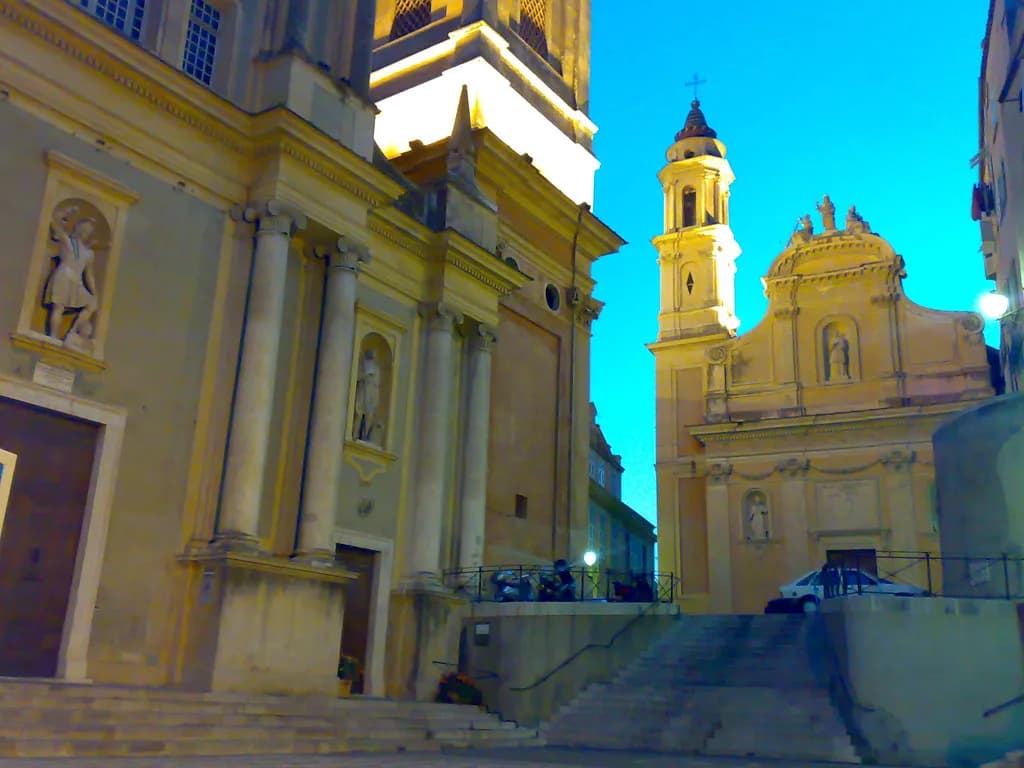
The Basilica Saint-Michel-Archange is the Baroque parish church at the heart of Menton's historic centre, raised above the old town and reached by the Saint-Michel ramps. It is a working Catholic church rather than a museum, so the visit is short: 30 to 45 minutes covers the nave, the side chapels and the parvis outside. Treat it as the anchor of a wander through the old town rather than a standalone destination.
Where the Basilica sits in Menton
The address is Parvis Saint-Michel, 06500 Menton, in the pedestrian heart of the historic centre. The church stands on high ground above the old town lanes, so you arrive by climbing rather than walking straight in off the seafront. The tourist office describes the setting as a town-centre location in the historic centre on a pedestrian area.
The approach is part of the sight. Majestic stair ramps lead up to the church, and the ramps were inaugurated in March 2021 according to the city. The parvis itself is a mosaic of pebbles: 250,000 of them were used to remake 170 square metres, with a central motif reproducing the arms of the Grimaldi family. Look down before you look up.
Getting there on foot through the old town
There is no dedicated car park at the door, and the lanes around the church are pedestrian, so plan to arrive on foot. Allow extra time for the climb, especially in summer heat, and wear shoes that cope with steps and cobbles rather than smooth soles. If you are staying along the seafront, the walk up through the old town is the natural route and takes you past the shops and cafés of the lower lanes.
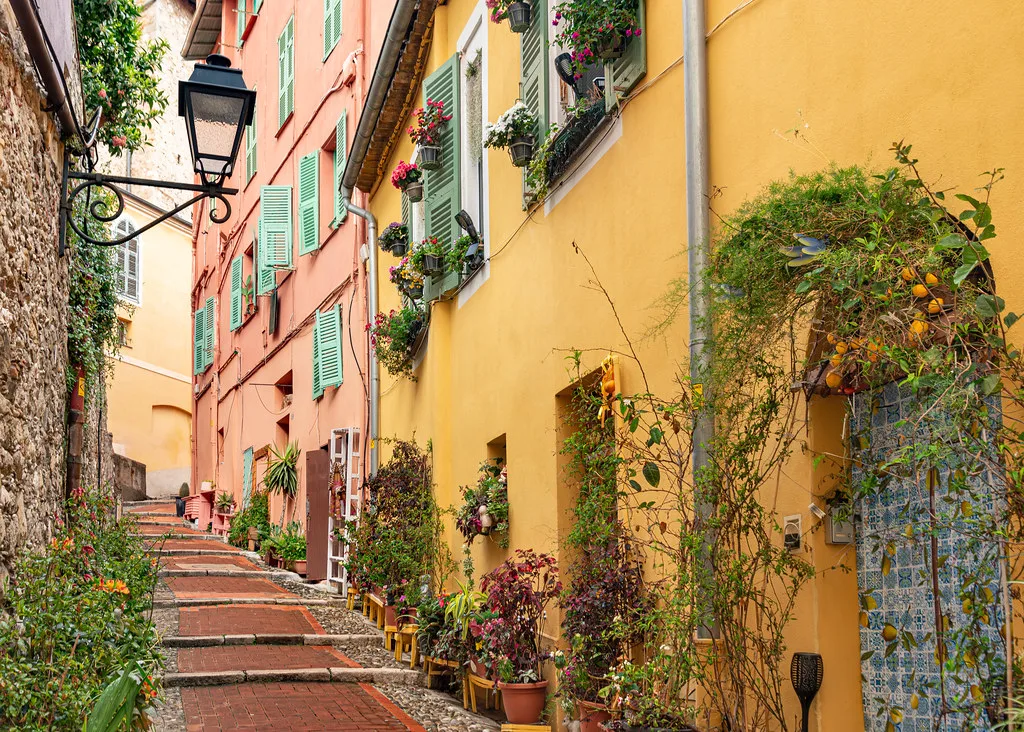
Menton's old town is compact enough that the basilica works as a midpoint: come up from the seafront side, visit the church, then continue to the upper viewpoints rather than retracing your steps. The lanes are steep in places and the surfaces uneven, which matters more than distance. If you enjoy this kind of old-town wandering anchored by a single monument, compare it with the things to do in Antibes, where a similar cluster of lanes and churches rewards a slow half-day.
The building in brief
Construction was entrusted to the Genoese architect Laurent Lavagna, working to the wish of Prince Honoré II of Monaco, and the foundation stone was laid on 27 May 1619. The building was handed over for worship in 1653 and consecrated on 8 May 1675. The 53-metre bell tower, the emblem of Menton, was added in 1701 by the Monégasque architect Emmanuel Cantone.
The facade was not finished until 1819, built in the spirit of the seventeenth century, and Pope John Paul II elevated the church to the rank of minor basilica in March 1999. It has been listed as a Historic Monument since 1947. These layers explain why the exterior reads as a composite rather than a single campaign of building.
What to see inside
The interior is a Baroque set piece, and the church still holds a collection of eighteenth-century damask drapes given by Prince Honoré III for his wedding. Look for the side chapels and the painted decoration rather than expecting a gallery of labelled masterpieces. It is a parish church, so the furnishings are in use and not staged for visitors.
On the exterior, the sundial on the facade is an easy detail to miss if you keep your eyes on the doors. Step back across the parvis to see the bell tower and the facade together, which is the view most photographs chase. The pebble parvis and the ramps also give you a raised platform over the old town rooftops.
Opening days and hours
Visiting hours are limited and follow a weekly pattern: Monday to Friday 15:00 to 17:00, Saturday 10:00 to 12:00 and 15:00 to 17:00, and Sunday closed to visits, though mass is held at 11:00. The tourist office publishes the same pattern and flags the hours as unsecured. Plan the basilica for an afternoon slot and build the rest of the day around it.
The city's own page lists the same weekday and Saturday times and notes the Sunday mass at 11:00. There is no admission charge for the church, and no ticket is sold for entry. Because the schedule is described as unsecured, confirm the day's hours before making the climb the centrepiece of your morning.
How long to allow, and the honest trade-off
Budget 30 to 45 minutes: the nave and chapels are quickly seen, and the real pleasure is the parvis, the ramps and the view down over the old town. If you are short of time in Menton, this is a worthwhile 20-minute stop combined with the lanes rather than a reason to reshape a day. It is not a museum-style visit and there is no audio guide circuit to work through.
The trade-off is the climb: the church rewards those who walk up through the old town, but anyone with limited mobility should weigh the steps on the ramps against the short time spent inside. Coming in the afternoon slot also means the light on the facade is softer than at midday.
Nearby in the old town
The Chapelle des Pénitents Blancs, also known as the Chapelle de la Conception, is the other Menton monument on the Route du Baroque Nisso-Ligure alongside the basilica, and it sits within the old town. Pair the two for a short Baroque circuit on foot rather than treating the basilica in isolation. The lanes of the Vieille-Ville around them are the reason to linger.
The Jean Cocteau Museum sits lower in town, closer to the seafront, and makes a sensible second stop on the same day once you have come down from the parvis. It is a different kind of visit, indoors and collection-led, so it balances the church nicely.
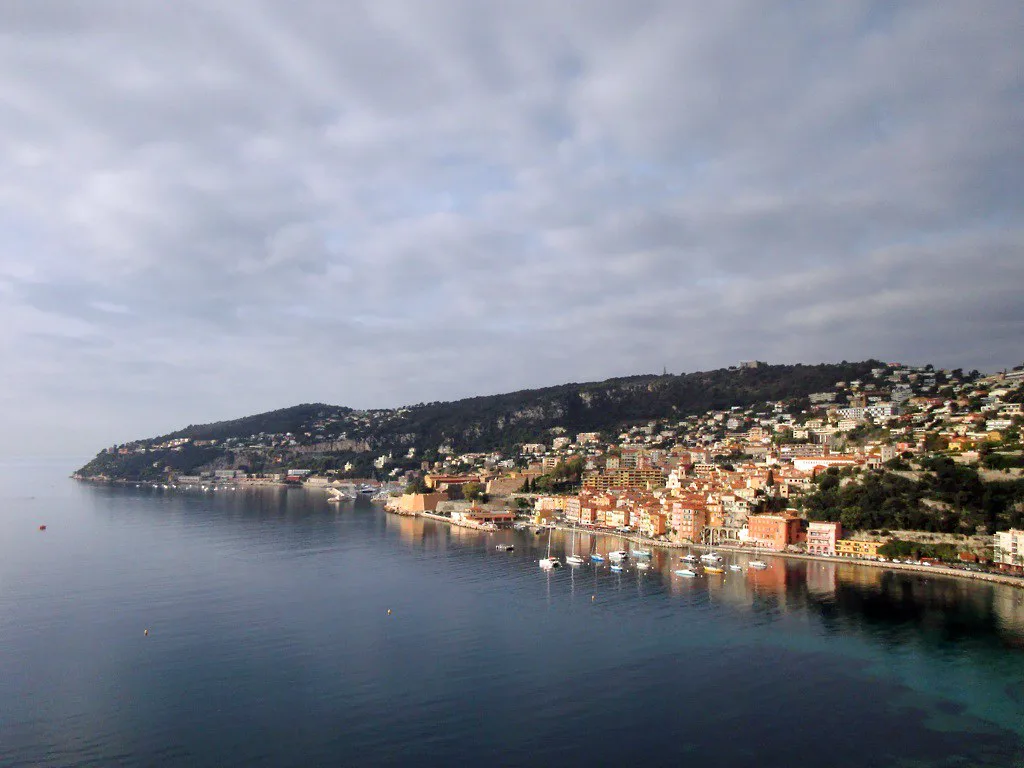
For a longer walk, continue up to the cemetery on the site of the old castle, which gives the widest view over Menton and the coast. The climb is steeper than the basilica ramps, so decide at the parvis whether you have the legs for it.
Practical points for a working church
This is an active parish, so dress modestly, keep voices low and stay out of the way during services; Sunday visits are not possible because of the 11:00 mass. Photography inside should be discreet and without flash. The ramps and parvis are uneven stone and pebble, so watch your footing in wet weather.
There are no tickets to book and no timed entry, which means the visit flexes around the rest of your day. Check the published hours on the day you plan to go, then let the old town fill the rest of the afternoon.
Plan Your Visit
Build the basilica into a half-day in the old town: climb the ramps, spend 30 to 45 minutes inside and on the parvis, then drop down through the lanes towards the Chapelle des Pénitents Blancs or the Cocteau museum. Aim for a weekday or Saturday afternoon when the church is open.
If gardens are your priority, the Val Rahmeh Botanical Garden and the Serre de la Madone are elsewhere in Menton and need their own time slots rather than a quick add-on. Keep the basilica visit short and let the town do the rest.
Explore more Menton guides
Frequently Asked Questions
Is the Basilica Saint-Michel-Archange in Menton free to visit?
Yes. Entry to the church is free and there is no ticket to book. It is an active parish church, so visits fit around services rather than a ticketed timetable.
What are the opening hours?
The published pattern is Monday to Friday 15:00 to 17:00, Saturday 10:00 to 12:00 and 15:00 to 17:00, with Sunday closed to visits apart from the 11:00 mass. The hours are listed as unsecured, so confirm before you climb.
Can I visit on a Sunday?
Not for sightseeing. The church is closed to visits on Sunday and holds mass at 11:00, so plan your visit for a weekday or Saturday instead.
How long does a visit take?
Allow 30 to 45 minutes for the interior, the parvis and the views from the ramps. Most people combine it with a walk through the old town lanes rather than staying longer.
How do I get to the basilica?
It is at Parvis Saint-Michel in the pedestrian historic centre, reached on foot via the Saint-Michel ramps. The lanes are steep and the surfaces uneven, so allow extra time for the climb.
What should I see inside?
Look for the Baroque interior and the eighteenth-century damask drapes given by Prince Honoré III, plus the sundial on the facade outside. The 53-metre bell tower is the landmark to spot from the parvis.
What else is nearby?
The Chapelle des Pénitents Blancs is in the old town and on the same Baroque route, and the Jean Cocteau Museum is a short walk downhill towards the seafront.
Is the basilica wheelchair accessible?
Access is by stair ramps and a pebble parvis, so the approach involves steps and uneven ground. Anyone with limited mobility should weigh the climb against the short time spent inside.