Things to Do in Menton: Old Town, Port and Gardens
Plan a short break in Menton with the old town, basilica views, Cocteau museums, gardens and the Halles market, plus how many days the town needs.
On this page
Menton rewards a weekend rather than a rushed hour between Nice and Monaco: the old town climbs a hill in steep lanes, the port and the Promenade du Soleil sit below it, and the border with Italy is a short walk east. The town became part of France only in 1860, having previously belonged to Monaco and Sardinia, which explains the Italianate look of the pastel façades and green shutters.
Most of what you will want to see is free or cheap and within walking distance, which makes Menton a good-value short break. The main decision is how much climbing you want to do, because the lanes of Vieux Menton are steps-only and the best viewpoints sit above the rooftops.
Why Menton Suits a Short Break
Menton works as a weekend because the sights are tightly grouped and the town stays walkable. It sits on the very edge of the Côte d'Azur, with Italy on the next hill, and the surrounding area is known for citrus, so lemon-themed shops and produce run through the centre. If you are weighing it against bigger Riviera names, the appeal is a real working town rather than a resort strip. It is a similar decision to the one you face when planning things to do in Aix-en-Provence, where the old town rewards walking rather than a checklist.
The trade-off is scale. Menton is compact, so two full days covers the old town, the port and at least one garden without rushing, but it will not fill a week on its own unless you use it as a base for the wider eastern Riviera. Trains connect it to Nice and Monaco, so an overnight stay gives you the town in the evening after the day-trippers leave.
How Menton Is Laid Out
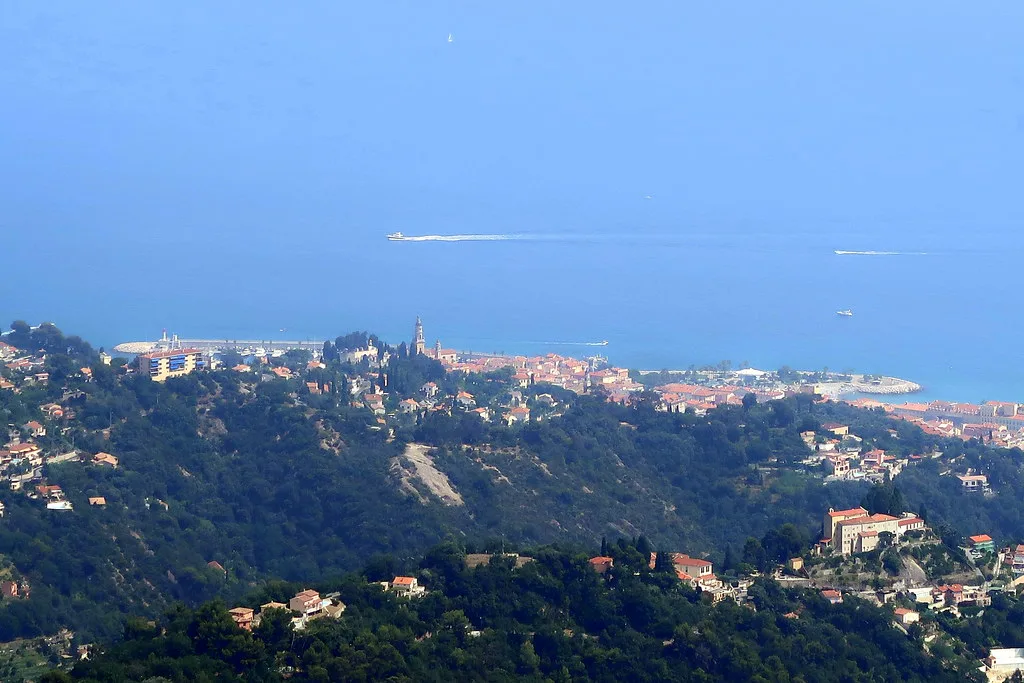
Think of Menton in three bands. The old town rises steeply from the water toward the basilica, the Vieux Port and the seafront promenade run along the bottom, and the Garavan quarter and the Italian border lie to the east. Because the old town is built on a hill with steps and narrow passages barely wide enough for one person, you explore it entirely on foot.
A sensible plan is to start at the port or the promenade, climb into the old town once, and save the high viewpoints for the cooler part of the day. Walking the seafront toward Italy is flat and easy by contrast, so it makes a good late-afternoon leg when your legs are tired of stairs.
The Old Town on Foot
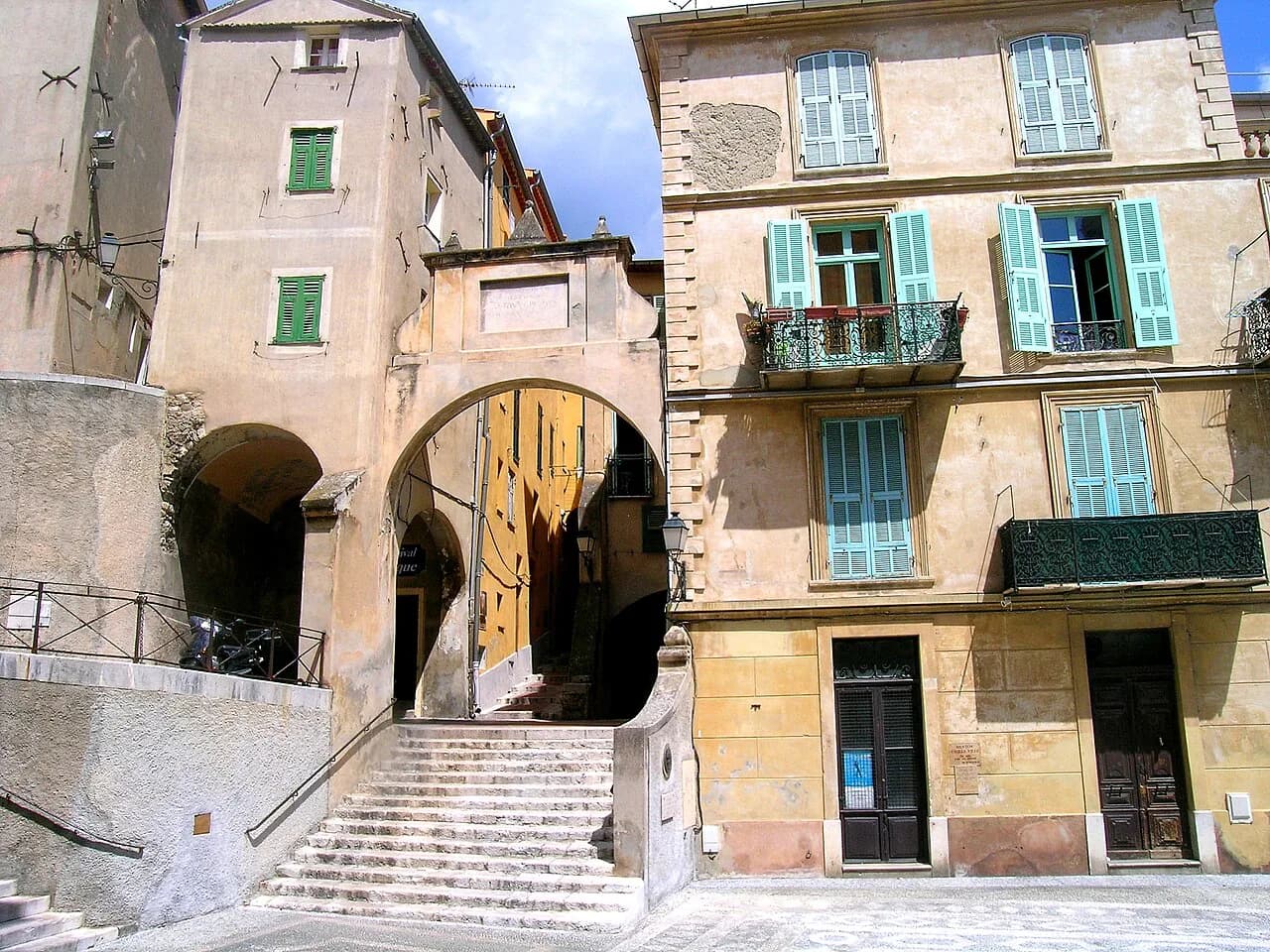
Rue Saint-Michel is the main pedestrian artery, lined with souvenir shops selling lemon soaps, liqueurs and ceramics, plus cafés and gelato counters. It is touristy, and it is the obvious place to pick up gifts, but the real pleasure is in the quieter side streets that branch off it, where you find archways joining buildings and fountains in small squares.
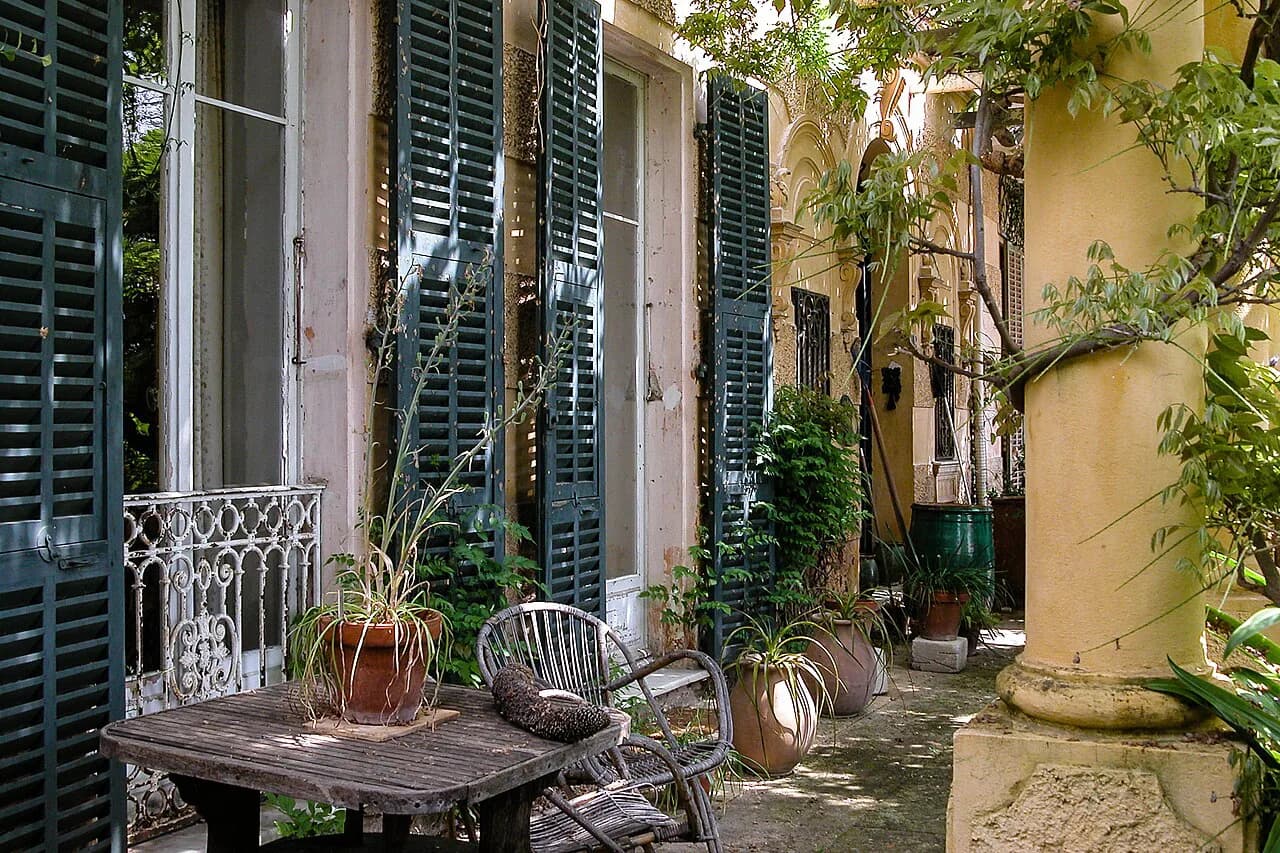
Wear proper shoes and carry water, because the lanes are steep and the steps add up. The fallow-green shutters on walls in shades of peach and gold give the whole quarter a deliberate harmony, and the small side alleys photograph better than the main street. Give the old town at least half a day rather than squeezing it between trains.
Basilique Saint-Michel-Archange and the Parvis
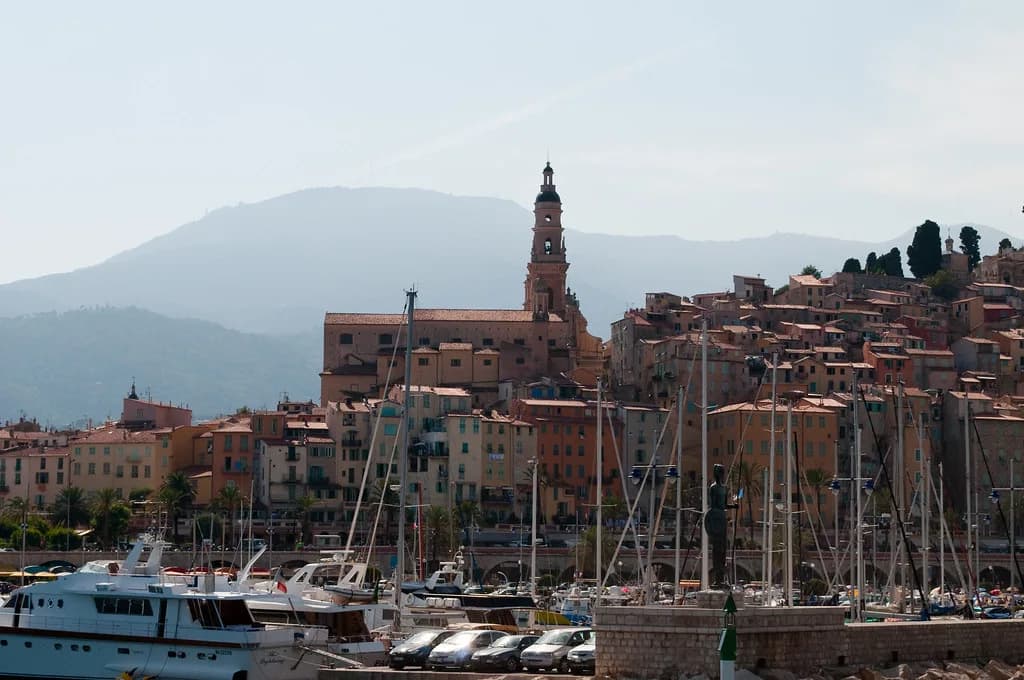
The basilica is the highest building in town, a Baroque church dating from the early 17th century and said to be the largest Baroque building in the region. Entry is free, and the square in front, Parvis Saint-Michel, looks out over terracotta rooftops to the sea. Inside, look for the 18th-century damask drapes given to the parish by Prince Honoré III on the occasion of his wedding.
The climb is the price of the view. It is manageable in spring or autumn, but in high summer heat you will want to do it early or late, and there is no shortcut for tired legs. Pair the basilica with the cemetery above at the same time so you only make the ascent once.
The Best High Viewpoints
Above the basilica, the Cimetière du Vieux-Château occupies the site of the old castle and offers one of the finest panoramas in town, taking in the harbour, the Italian border and the coastline. The stairs are tough in the heat, but the reward is a quiet, peaceful spot after the bustle of the lanes. William Webb Ellis, credited as the founder of rugby, is buried here.
Beside the cemetery, the Pointe de Vue du Port gives a different angle looking down over the Vieux Port and the waterfront buildings. Further along, the Boulevard de Garavan viewpoint near the little tourist train takes in the old town, the beach and the coast stretching toward Nice. Treat these as one outing rather than three separate trips up the hill.
Jean Cocteau in Menton
Menton has two Cocteau sites worth knowing. The Musée Jean Cocteau – Séverin Wunderman Collection holds drawings, ceramics and tapestries in a striking modern building, while the smaller Musée Jean Cocteau – Le Bastion occupies the old harbour fort. Both are good rainy-day options, and the Wunderman collection is the bigger of the two if you only have time for one.
A third Cocteau site is easy to miss: the civil wedding room at the Hôtel de Ville, decorated by the artist in 1957 and 1958 with murals covering the walls. Visitors can see it, though access may depend on a scheduled tour, and it is worth a short detour while you are in the lower town. It sits within the old town circuit rather than needing its own trip.
Markets: Marché des Halles
The covered Marché des Halles is open from Tuesday to Sunday and closed on Mondays, operating from 7am to 1pm. That makes it a morning stop, and the obvious place to assemble picnic supplies from bread, local fruit, cheese and wine. Go early, bring cash, and treat Saturday as the busiest day.
Because the Halles shuts at lunchtime and stays closed on Mondays, plan your days around it. If your break falls over a Monday, do the museums or the cemetery climb that morning instead. Beyond the Halles, other markets in town keep their own schedules, and a quick look at current opening times before you build a day around one saves a wasted morning.
Gardens: Val-Rahmeh and Serre de la Madone
Menton's mild microclimate lets plants grow here that struggle elsewhere in France, and the gardens are the best expression of that. Val-Rahmeh is a 19th-century botanical garden a short walk from the train station, with cacti, exotic trees and shaded paths, and it takes about an hour to see properly. Entry is paid.
Serre de la Madone is the quieter, more hidden option, laid out between 1924 and 1939 around a pool with exotic planting, and it charges for entry too. If you only have time for one garden and want variety and easy access, pick Val-Rahmeh; if you prefer somewhere calm and uncrowded, Serre de la Madone is the better choice. Neither needs more than about an hour.
The Port and Waterfront
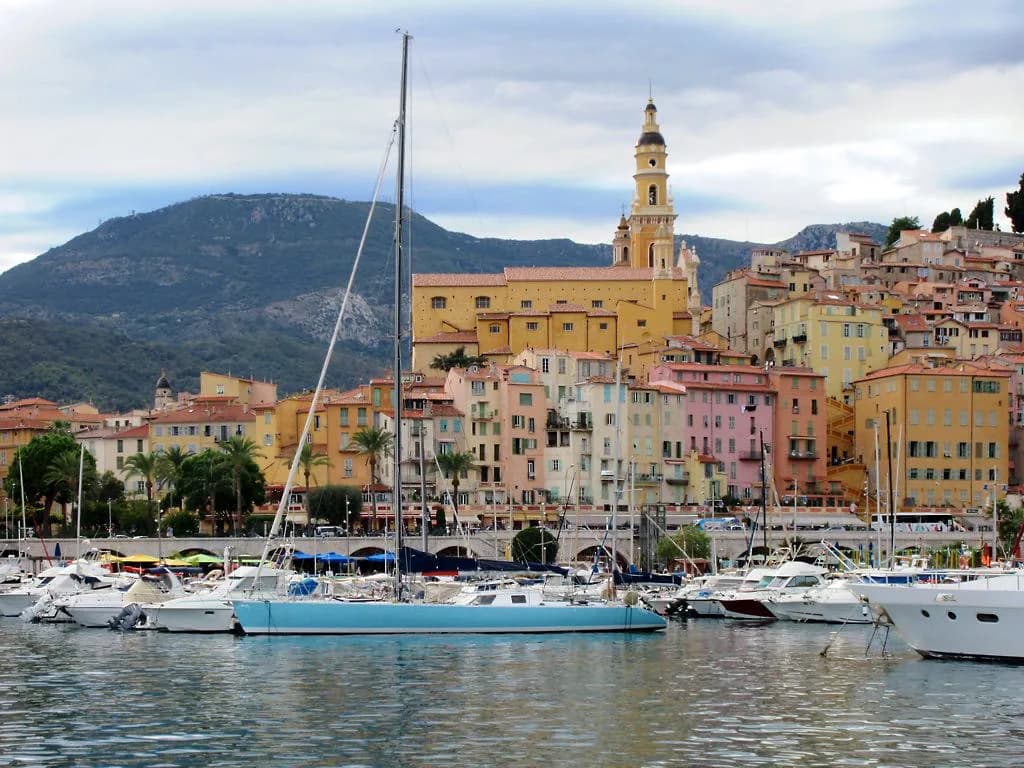
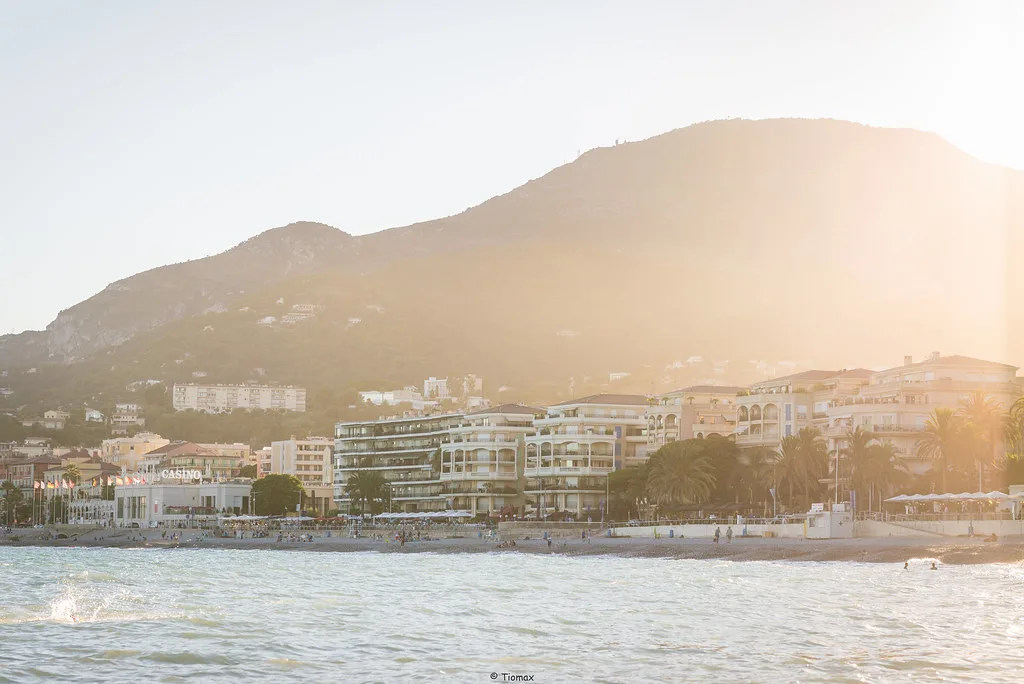
The Vieux Port is where Menton feels most Italian, with fishing boats bobbing in the water and restaurants lining the quay with tables spilling out onto the pavement. From the waterfront you can see Italy on the opposite hill. Plage des Sablettes, the main beach, is pebbled and sheltered by rock jetties, so bring water shoes and expect it to be busy on summer days.
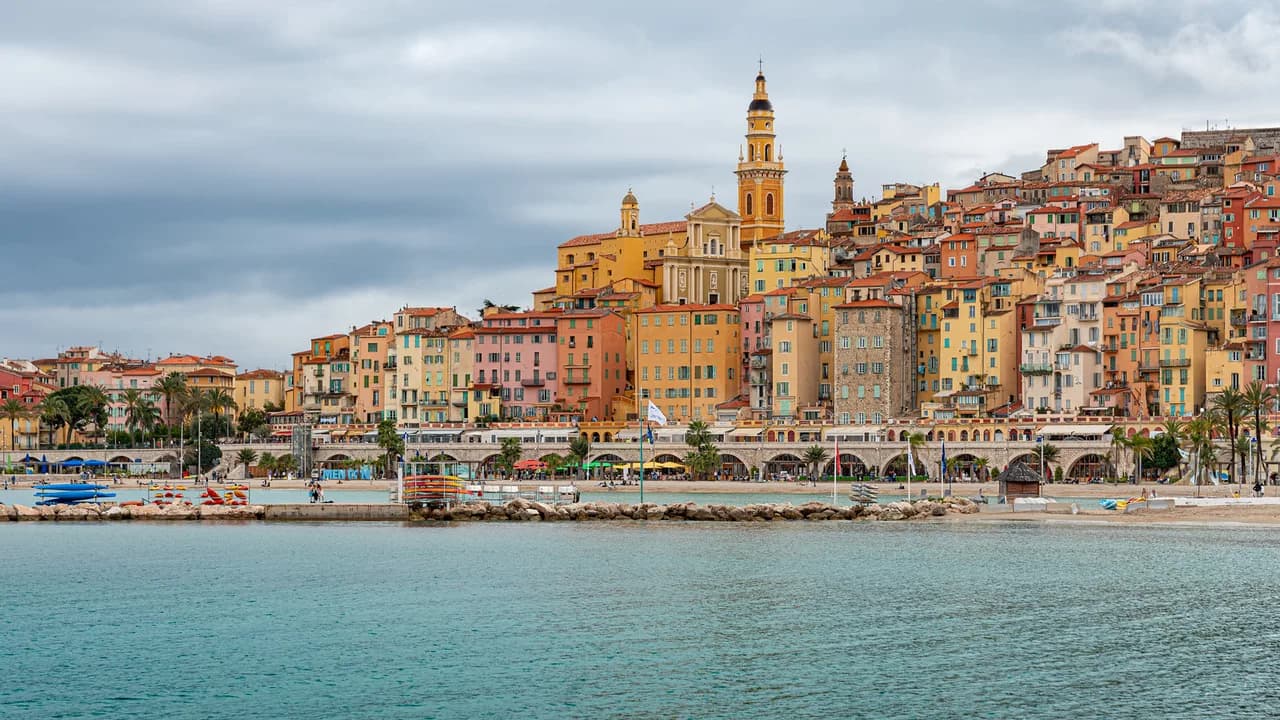
The Promenade du Soleil hugs the coastline for several kilometres, and the Quai Impératrice Eugénie gives the postcard view of the old town stacked up the hillside with the basilica on top. Most people stop halfway along the quay and take their photo; walk to the far end toward the sea for the best angle. Early morning or late afternoon light is the most flattering.
A cash-only tourist train loops the seafront, departing from the outcrop next to Fossan beach, which suits anyone who cannot manage the full seafront walk on foot.
Walking to Italy
One of the easiest outings from the centre is the waterfront walk from the old port toward Italy, about three kilometres along the sea with beaches, cafés and mountains along the way. The border is marked by the Roya, the small stream you cross on foot from France into Italy. It is flat and straightforward, making it a good half-day when you want a break from the steps.
Beyond the border, Ventimiglia is a short train ride away and has a large market on Fridays, while Bordighera and Dolceacqua make easy Italian add-ons. Keep this as a half-day rather than the main event, since the point of a Menton weekend is the town itself.
How Many Days Menton Needs
Two full days is the right allowance for Menton. Day one covers the old town, the basilica, the cemetery viewpoint and the port; day two takes in a Cocteau museum, the Halles market in the morning and a garden or the walk toward Italy in the afternoon. That pace leaves room to sit in a square rather than ticking off sights.
One day is enough to see the old town and the port if you arrive early and leave late, but you will miss the gardens and the quieter evening atmosphere. Staying overnight is what separates a pleasant stop from a proper short break, since the day-trippers clear out and the seafront empties.
When to Go
Menton is characterised as the warmest town on the French Riviera, with over 300 days of sun a year, which is a description of its climate rather than a promise for your dates. Spring and September give the best balance of warmth, lighter crowds and comfortable climbing weather. July and August are peak season and bring the busiest streets, especially at weekends.
Outside summer, the town quietens considerably, and some restaurants and attractions close over the winter months. February is the exception, when the Fête du Citron draws crowds for its citrus sculptures and parades. If you want a calm, cheap break, the shoulder months beat high summer for comfort.
Practical Trade-offs
Plan around the steps. The old town is a hill with staircases and passages, so pack comfortable shoes and a water bottle, and expect the climb to the basilica and cemetery to be slow going in the heat. If mobility is limited, the flat promenade and the tourist train give you the coast without the stairs.
Beaches are pebble rather than sand, so water shoes make a real difference, and the Sablettes gets crowded during the day because it is so close to the centre. Trains to Nice and Monaco run regularly, which makes Menton a plausible base for the eastern Riviera without a car.
Where to Eat
The port is the place to eat seafood, with tables right on the water. Le Petit Port is the pick for fresh fish and seafood platters, while Coco Loco is the more casual option for the atmosphere and views over the boats. Neither is a splurge, and both suit a relaxed evening after a day on your feet.
Look out for local specialities as you go: tourte de blettes, a sweet-savoury tart of Swiss chard, raisins and pine nuts; pissaladière, the onion and anchovy flatbread; and pan bagnat, the tuna sandwich that makes good beach picnic food. Bakeries, the market and small cafés around town sell all three.
Plan Your Visit
Menton is best treated as a two-day town rather than a photo stop: climb the old town once, take in the basilica and cemetery views, then spend your second day on the market, a museum and the seafront. The Halles' Tuesday-to-Sunday, morning-only hours and its Monday closure are the one detail most likely to trip up a weekend plan.
Trains to Nice and Monaco make it workable as a base for the eastern Riviera, and the flat promenade balances the stairs above. Check the current opening times for the museums and gardens before you travel, since they change with the seasons.
Explore more Menton guides
Frequently Asked Questions
Is Menton worth visiting for a weekend?
Yes, if you want a compact Riviera town rather than a resort strip. The old town, basilica, port and seafront sit within walking distance of each other, so two full days covers the main sights without rushing. It is a working town with an Italianate look, and the border with Italy is a short walk east.
How many days do you need in Menton?
Two full days is the right allowance. Day one takes the old town, the basilica, the cemetery viewpoint and the port; day two takes a Cocteau museum, the Halles market in the morning and a garden or the walk toward Italy in the afternoon. One long day covers the old town and port but leaves no time for the gardens.
What is there to do in Menton's old town?
Walk Rue Saint-Michel for shops and cafés, then branch into the quieter side streets with archways and small squares. Climb to the Basilique Saint-Michel-Archange for the view from Parvis Saint-Michel, and continue above it to the Cimetière du Vieux-Château. The lanes are steps-only, so allow at least half a day and wear proper shoes.
When is the Marché des Halles open in Menton?
The covered market is open Tuesday to Sunday from 7am to 1pm and closed on Mondays. Go in the morning, bring cash, and expect Saturday to be the busiest day. If your break falls over a Monday, use that morning for a museum or the cemetery climb instead.
Which Menton museums cover Jean Cocteau?
Two: the Musée Jean Cocteau – Séverin Wunderman Collection, which holds drawings, ceramics and tapestries, and the smaller Musée Jean Cocteau – Le Bastion in the old harbour fort. The Wunderman collection is the larger of the two. The civil wedding room at the Hôtel de Ville is a third Cocteau site, decorated by the artist in 1957 and 1958.
Can you walk from Menton to Italy?
Yes. The waterfront walk from the old port toward Italy runs about three kilometres along the sea, and the border is marked by the Roya, the small stream you cross on foot into Italy. It is flat and easy, so it makes a good half-day when you want a break from the stairs of the old town.
Is Menton a good base for Nice and Monaco?
It works well for the eastern Riviera because trains connect Menton with Nice and Monaco, so you can see the bigger towns and return in the evening. Staying overnight also means you get the old town and port after the day-trippers have left. Just accept that you are at the far eastern edge of the coast.
What is Menton like outside summer?
Spring and September give the best balance of warmth, lighter crowds and comfortable climbing weather. Outside summer the town quietens considerably, and some restaurants and attractions close over the winter months. February is the exception, when the Fête du Citron draws crowds for its citrus sculptures and parades.
Sources
Notes for French city breaks
Optional updates to our guides.
You might also like
Continue reading
More guides you'll find useful