Things to Do in Metz: A Weekend City Guide
Plan a weekend in Metz with the cathedral, Porte des Allemands, Centre Pompidou-Metz, the old town and river walks, plus getting there and around on foot.
On this page
Metz suits a weekend because the sights sit close together: the cathedral, the old town, the Porte des Allemands and the river walks are all within walking distance of each other in a city built where the Moselle meets the Seille. Two nights give you a calm Saturday and a Sunday that still has something open, while the contemporary art museum fills a wet afternoon. The city styles itself a UNESCO Creative City of Music, and the official tourist office highlights page sets out the mix of Gallo-Roman remains, medieval streets, 18th-century squares and the Imperial District you will notice as you cross town.
Plan around two anchors: the cathedral and old town on one side, the Moselle and the museums on the other. That split lets you keep a wet day for the Centre Pompidou-Metz and a dry one for the Esplanade and the riverside. If you are weighing the city against staying in Paris or heading to Nancy, start with whether is Metz worth visiting before you build an itinerary.
Why Metz suits a weekend: a compact centre between two rivers
The city centre is small enough to cross on foot, and the tourist office describes Metz as sitting at the confluence of the Moselle and the Seille. That geography shapes a visit: the Moselle gives you the riverside path and the Île du Petit-Saulcy with the Temple Neuf, while the medieval lanes and squares sit inland. You do not need a car or a transit pass to see the main sights.
The city splits into two halves that visitors tend to notice separately: the medieval centre with its cobbles and 18th-century squares, and the Imperial District with its grand avenues and contemporary architecture. Walking between them is the best way to feel the shift, and it takes minutes rather than a bus ride.
Metz Cathedral: the Gothic landmark and its stained glass
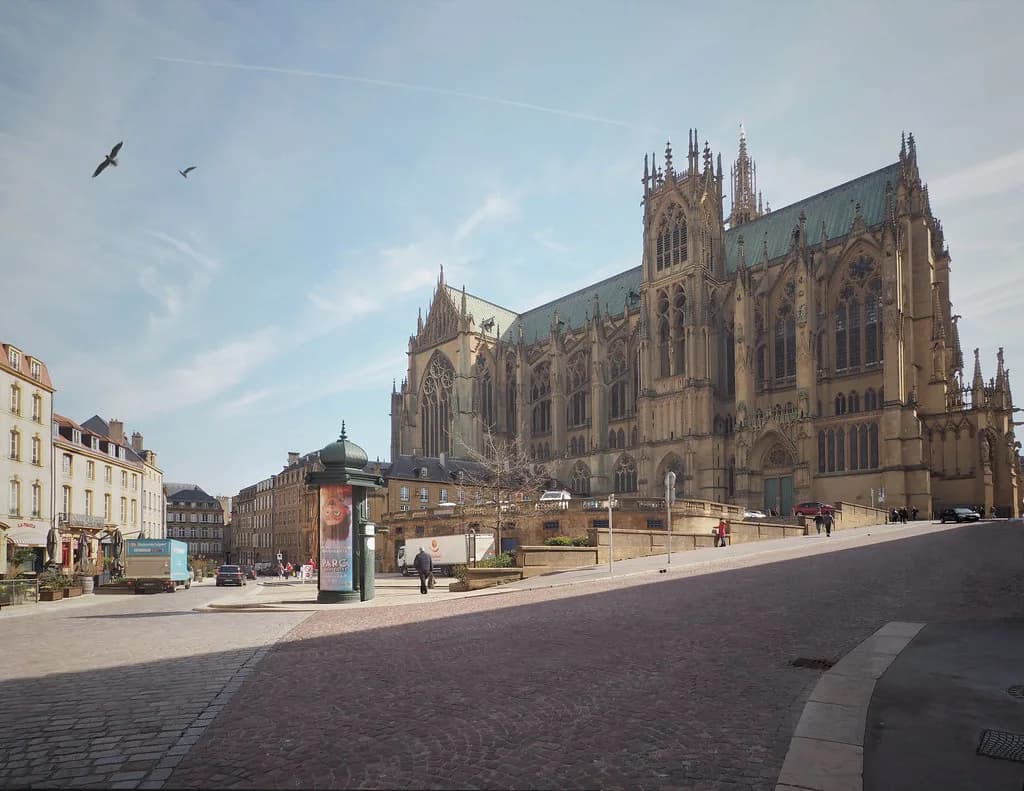
Metz Cathedral is the obvious first stop, a Gothic and Renaissance building whose spire rises 42 metres and which was built between 1220 and 1552. Inside, the stained glass fills the nave with light, which is why the building earned its nickname of God's Lantern. Allow around an hour to look properly at the windows and the nave, more if you want to sit.
The cathedral is free to enter as a working church, so it works as a short stop between other sights rather than a half-day commitment. Pair it with the lanes around Place Saint-Louis, which are a couple of minutes away on foot.
The historic centre: Place Saint-Louis and the old lanes
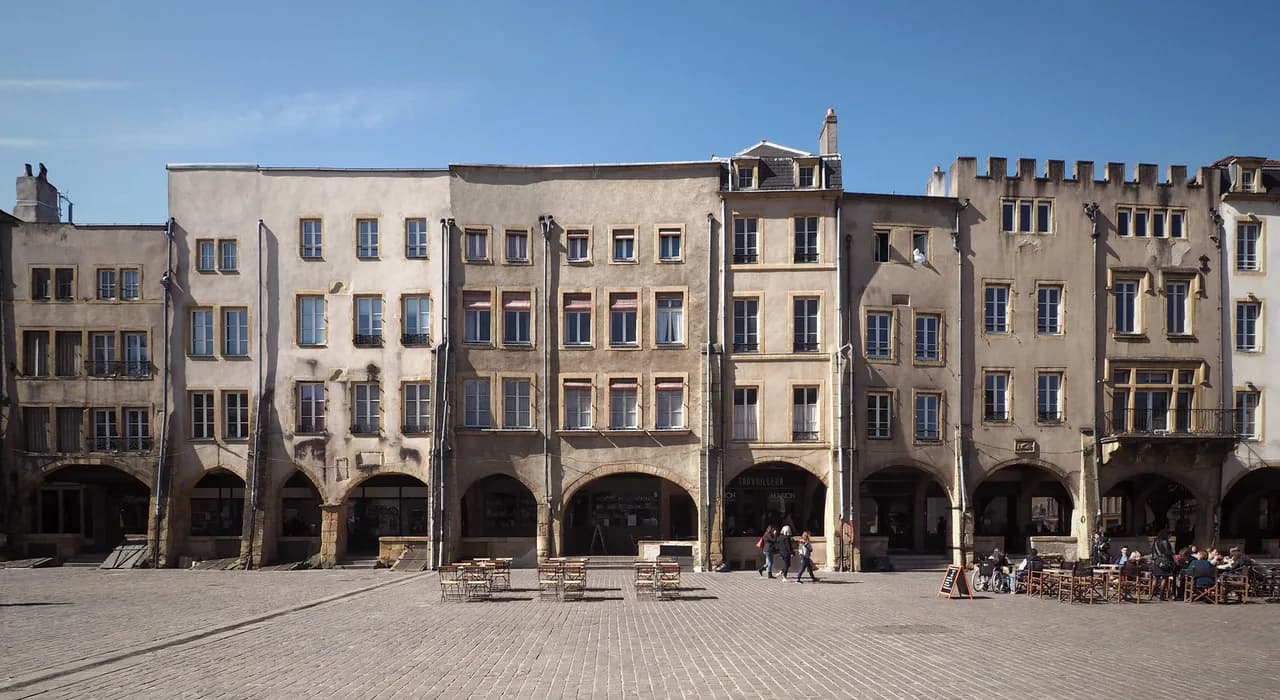
Place Saint-Louis is the square to aim for in the old town: 14th-century in origin, ringed by pastel houses with Mediterranean-style windows, and a natural place to stop for a coffee between sights. The surrounding lanes are cobbled and narrow, so flat shoes make the walking easier.
This is the part of Metz to wander without a plan. The tourist office highlights point to medieval streets and 18th-century French squares sitting alongside each other, so a loop from the cathedral through the old lanes covers both in under an hour.
Porte des Allemands and the medieval edge of the city
The Porte des Allemands is the surviving medieval fortified gate, with towers that once guarded the crossing into the city. It is open to the public, with information boards explaining the defences and a walking path around the old bridge. The lanes nearby hold small boutiques and artisan shops, which makes this a good hour's wander.
Treat this as the eastern end of your walking loop: from the old town it is a straightforward stroll, and from there you can drop down towards the river and pick up the waterside path back towards the centre.
Centre Pompidou-Metz: contemporary art and the Tuesday closure
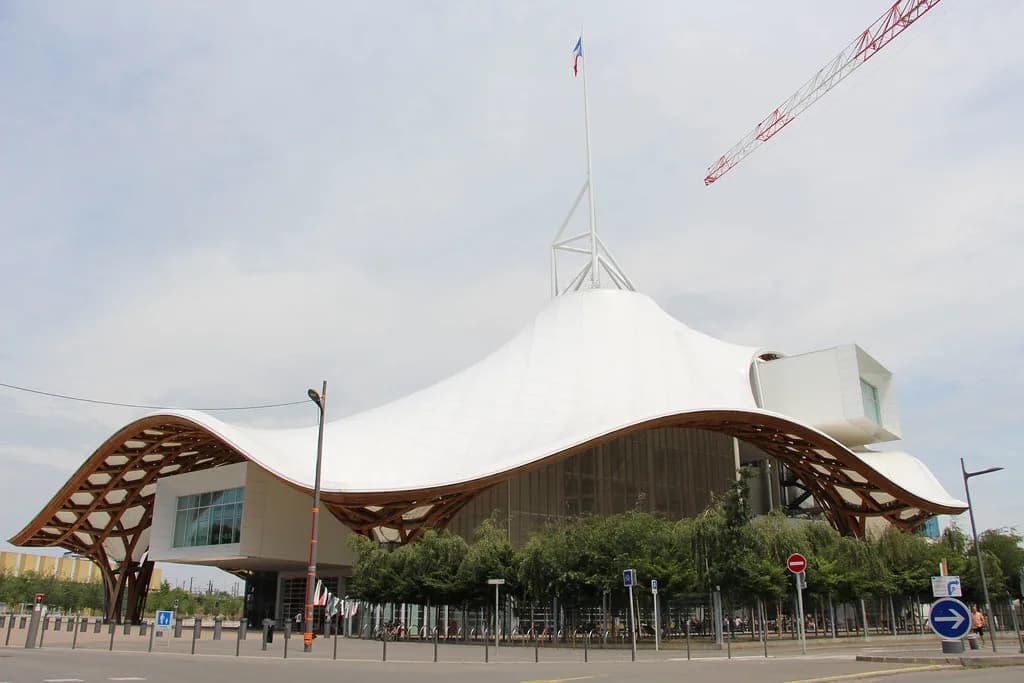
Centre Pompidou-Metz shows art from 1905 to the present across three galleries, drawing on the collection of the Centre Pompidou in Paris. It is the obvious wet-weather plan and a strong reason to give Metz two days rather than one. The museum is closed on Tuesdays and opens at 10:00 on other days, usually closing between 18:00 and 19:00 depending on the season, so build your weekend around that gap if modern art matters to you.
If your break starts on a Monday and ends on a Tuesday, put the museum on the Monday and keep the Tuesday for the cathedral, the old town and the riverside, none of which depend on museum hours. For the wider picture of what else is showing, this guide to museums in Metz covers the choices.
Basilica of Saint-Pierre-aux-Nonnains and the Roman remains
The Basilica of Saint-Pierre-aux-Nonnains began as part of a Roman spa complex around 380 AD and later became a church, making it one of the oldest surviving buildings of its kind in Europe. It now runs as a cultural venue, open daily from 14:00 to 18:00 on the published pattern, so slot it into an afternoon rather than a morning.
The Gallo-Roman layer of Metz is easy to miss if you stick to the cathedral and the museums. The tourist office lists Roman remains among the city's drawcards, and this basilica is the most convenient single stop for that part of the story.
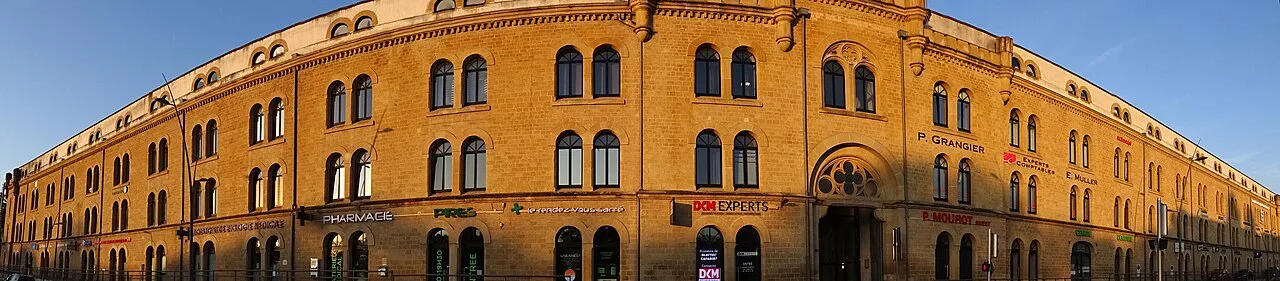
Opéra-Théâtre de Metz Métropole and Place de la Comédie
The Opéra-Théâtre de Metz Métropole is an 18th-century building described as the oldest working opera house in France. Even without a ticket, the square outside, Place de la Comédie, is worth the detour: neoclassical 18th-century facades wrap around it and it sits close to the river crossing to the Temple Neuf.
Check the opera's own programme if you want an evening performance, since the schedule changes through the year. Otherwise treat the square as a five-minute pause on the walk between the old town and the island.
Temple Neuf and the Île du Petit-Saulcy
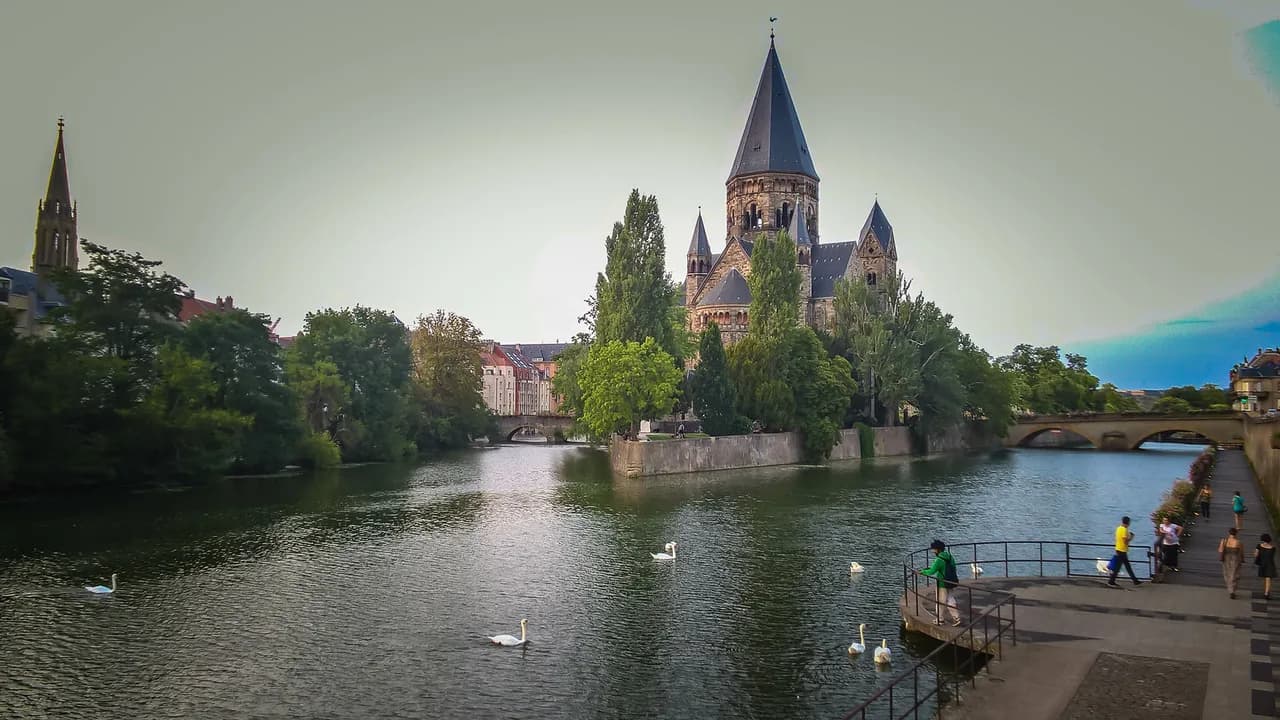
Temple Neuf stands on the Île du Petit-Saulcy, a small island in the Moselle connected by bridges on both sides. Built in Romanesque Revival style at the start of the 1900s, when Metz was under German rule, it sits in a garden beside the opera house and is one of the most photographed spots in the city.
The island is a natural point to cross the river and pick up the waterside path, so it fits neatly between Place de la Comédie and a longer riverside walk. Give it twenty minutes including the crossing.
Riverside walks on the Moselle and green space in the city
The riverside path along the Moselle is green, shaded in places and lined with bridges, with views back to the cathedral and the Temple Neuf. It is flat and easy, which makes it a good way to end a day of sightseeing without another museum.
Metz has a lot of green space for a city of its size, and the tourist office makes a point of nature in town as part of the city's appeal. If you are travelling with children or simply want a slower afternoon, the river and the parks give you an alternative to a third museum.
The Esplanade, Palais de Justice and views to Mont Saint-Quentin
The Esplanade is a 19th-century park flanked by grand buildings including the Palais de Justice, with views towards Mont Saint-Quentin and traces of the 16th-century citadel. It is the best place in the centre for a wide view and a sit-down, and it works well as a late-afternoon stop.
From the Esplanade you can walk back into the centre in around fifteen minutes, which makes it easy to combine with the cathedral or the old town on the same loop rather than a separate trip.
Markets and shopping: planning a Saturday versus a Sunday
Markets run through the year in Metz, and browsing one is one of the better ways to spend a Saturday morning before the museums open. Local boutiques and artisan shops cluster around the old town and near the Porte des Allemands, which suits a slower potter rather than a fixed itinerary.
For what is on and where, start with the guide to the Metz market scene. Keep Sunday flexible: plan the cathedral, the river and the Esplanade for that day and leave the browsing for Saturday.
If shopping is part of the trip, the guide to shopping in Metz sets out where the streets and shops sit in the centre. The tourist office sits at 2, place d'Armes and is a sensible first stop for a map, with the cathedral and the old lanes right outside.
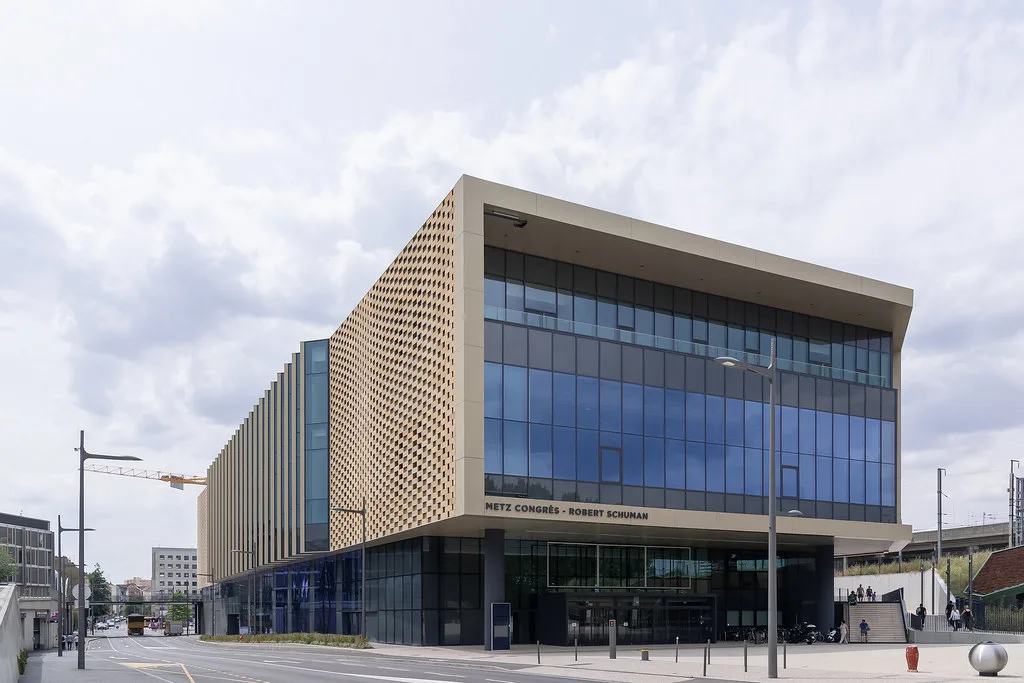
Getting there: Gare de Metz-Ville from Paris and Luxembourg
Trains arrive at the Gare de Metz-Ville, a historic monument built for Emperor Wilhelm II, with the main bus station, the Gare Routière, next door. The city is an easy trip from Paris by train, and its position near the border makes it straightforward from Luxembourg and Belgium as well.
If you are coming by car, there are central indoor car parks and street parking outside the centre is usually easy to find. From the station, the cathedral and the old town are a walk of around fifteen minutes, so you do not need a taxi.
Getting around: walking, bike parking and bus fares
Walking is the default way to see Metz: the sights are close together, the riverside paths are flat and the old lanes are pedestrian-friendly. The city is also well set up for bikes, with more than a thousand places to park one.
If you want to save your legs, the urban bus network is an option, with a single trip costing €1,50 and a Visi'Pass day pass at €4. Buy and top up a card at the station or a ticket point rather than relying on paying on board.
Before you set out, check the tourist office's opening times: in January it opens Monday to Saturday from 10.00 to 18.00 and is closed on Sundays, and from April to September it opens Monday to Saturday from 9.30 to 18.30 and on Sundays and public holidays from 10.00 to 16.00.
How many days Metz needs: one day versus a full weekend
One day covers the cathedral, the old town and a riverside walk, with the Porte des Allemands if you move briskly. A full weekend adds the Centre Pompidou-Metz, the basilica and the Esplanade without rushing, and leaves room for a proper lunch. For a tighter plan, see the one day in Metz itinerary.
Two nights is the sweet spot: Saturday for the markets, the old town and the cathedral, Sunday for the river, the Esplanade and whatever museum is open. If you have a third day, Nancy, Strasbourg and Luxembourg are all easy onward hops by train.
Weather and when to go
Metz has a continental climate with cold winters and warm summers, and the tourist office's pages spread the offer across seasons, from green spring and summer days in the parks to the December Christmas market. Spring and early autumn give you the best balance of mild weather, long daylight and fewer crowds.
Summer brings the riverside and the Esplanade at their best, while winter pushes you indoors towards the cathedral, the museums and the covered shopping streets. Either way, pack for rain: the city is green because it gets wet.
Plan Your Visit
Build the weekend around the cathedral and the old town for one half-day, then the Moselle, the Temple Neuf and the Centre Pompidou-Metz for the other. Keep Tuesday in mind as the museum's closing day and check the opera and each museum's own page for the hours on your dates, since schedules shift with the season. That leaves you enough slack for a market, a long lunch and the kind of wandering the old lanes reward.
If you are planning a wider trip through eastern France, the same approach works in other cities: pick two anchors, walk between them and let the rest fill in. Our other city guides, such as things to do in Aix-en-Provence and things to do in amboise, follow the same plan-by-days logic.
Explore more Metz guides
Frequently Asked Questions
How many days do you need in Metz?
Two days is enough to see the cathedral, the historic centre, the Porte des Allemands, the Centre Pompidou-Metz and a riverside walk without rushing. One day works if you stick to the cathedral, the old town and the river, but you would skip the contemporary art museum. A third day lets you slow down and add the Esplanade and the basilica.
Is Metz easy to explore on foot?
Yes. The main sights sit close together, the centre is compact and the riverside paths are flat, so walking covers the cathedral, the old town, the Porte des Allemands, the Temple Neuf and the Esplanade. The station is around fifteen minutes from the cathedral on foot, and buses are there if you want to save time rather than because you need them.
When is the Centre Pompidou-Metz closed?
The museum closes on Tuesdays and opens at 10:00 on other days, usually closing between 18:00 and 19:00 depending on the season. Plan your visit around that if modern art is a priority, and check the museum's own page for the hours on your dates, since the closing time varies through the year.
What is free to see in Metz?
Metz Cathedral is free to enter as a working church, and the old town, Place Saint-Louis, the Porte des Allemands, the Temple Neuf and the Esplanade are all open to wander without a ticket. The riverside paths cost nothing and give you the best views back to the cathedral. Paid sights such as the Centre Pompidou-Metz are the ones to budget for.
How do you get to Metz from Paris?
Trains from Paris arrive at the Gare de Metz-Ville, a historic station with the bus station next door, and the city is an easy trip by train. It is also straightforward from Luxembourg and Belgium thanks to the border position. From the station, the cathedral and old town are about fifteen minutes on foot.
How much do buses cost in Metz?
Single trips and day passes are priced on the local network's own fares, and the visitor information you pick up at the station or the tourist office will show the current rates. Walking covers most of the centre, so many visitors never need the bus at all.
Is Metz worth visiting for a weekend?
Yes. The combination of the Gothic cathedral, the compact old town, the medieval gate, the Centre Pompidou-Metz and the riverside walks gives a weekend real variety, and the city is small enough to feel relaxed rather than rushed. It also works as a stop between Paris and Strasbourg or Luxembourg.
What should you do in Metz on a Sunday?
Plan Sunday around the cathedral, the old town lanes, the Temple Neuf, the riverside path and the Esplanade, which do not depend on shop opening hours. Keep the Centre Pompidou-Metz and any shopping for other days, since the museum closes on Tuesdays and its other hours vary by season.
Sources
Notes for French city breaks
Optional updates to our guides.
You might also like
Continue reading
More guides you'll find useful