Metz Old Town: A Walking Guide to the Historic Centre
Plan a walk through Metz old town: the Gothic cathedral and place d'Armes, medieval place Saint-Louis, the Porte des Allemands and the German Imperial District.
On this page
Metz old town is worth a walking visit because its sights sit close together and the two halves of the centre feel like different cities. The medieval core clusters around the cathedral and place Saint-Louis, while the German Imperial District around the railway station, laid out after the 1870-71 annexation, adds neo-Romanesque and Jugendstil streets a short walk south.
A single continuous route beats a monument checklist here. Start at place d'Armes, work through the medieval lanes to the Seille, then finish along Avenue Foch, and you never double back.
How Metz Old Town Is Laid Out
Think of the centre as a spine running north to south. The cathedral and place d'Armes sit at the northern end, the medieval squares and the Seille riverside occupy the middle, and the German Imperial District stretches south from the station along the Grand Boulevards. The Moselle cuts through the middle near place de la Comédie, so you cross water twice on a full loop.
Everything in this guide is within comfortable walking distance of the cathedral, and the station-to-cathedral leg is a straight shot of roughly 20 minutes on foot. Treat the old town as one afternoon on foot rather than a series of taxi hops. Hotels are not part of this plan.
Start at Place d'Armes
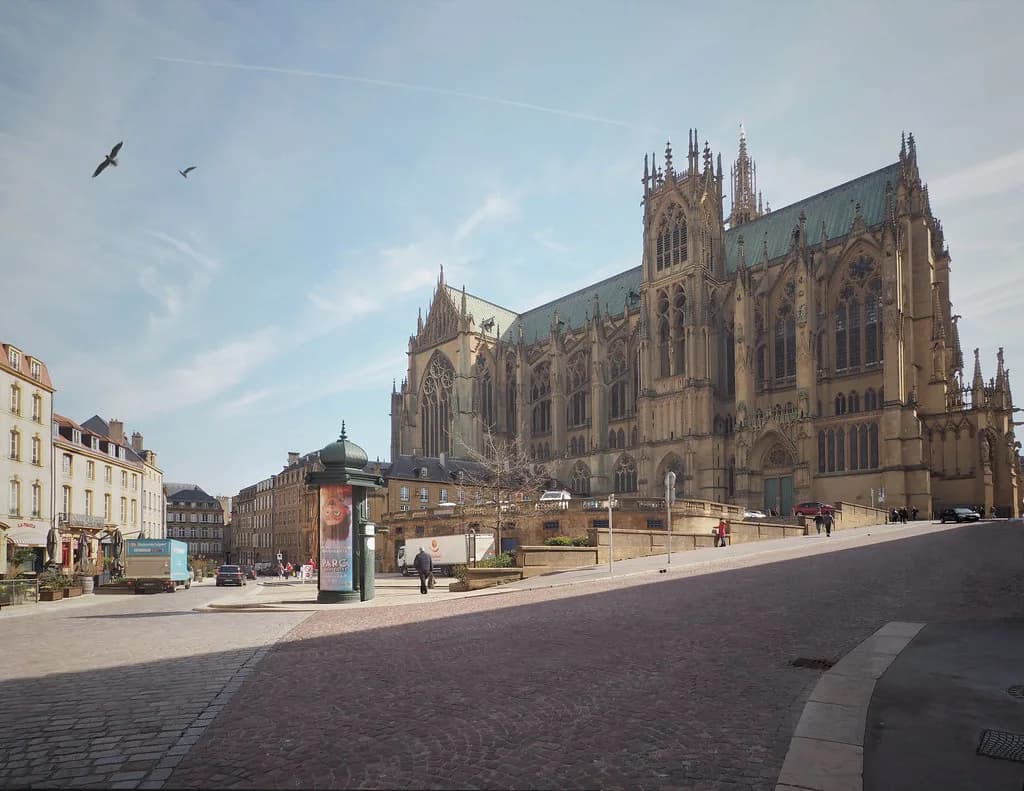
Place d'Armes is the right place to begin because it puts the cathedral facade and the town hall in one frame. The square was created between 1750 and 1770 by demolishing a church and cloister beside the cathedral, and it was laid out under Louis XV so that executive, legislative and judicial power would sit together. The pavilion closing the north side now houses the tourist office, which is the sensible first stop for a map.
This is a square for looking rather than lingering: the cobbles are elegant but the café life is elsewhere. Come back after dark at least once, because the facades were cleaned and relit in 2007.
Metz Cathedral: The Nave and the Glass
The cathedral of Saint-Étienne is the reason most people come. Its nave rises 41.41 metres, the third-highest in France after Amiens and Beauvais, and it holds 6,500 square metres of stained glass, the largest surface of any French church. Stand well back on place d'Armes first to take in the proportions, then walk the aisles.
The interior is dark on purpose, so give the windows time to read. For the wider picture of what else the city offers beyond this one building, the things to do in Metz guide covers the surrounding sights.
Place Saint-Jacques: The Sitting Square
Place Saint-Jacques sits between the cathedral and the main shopping streets, and its café and restaurant terraces are the local place to sit in summer. The square is named for a church that stood here until 1574, so there is nothing ancient to inspect; its job in the walk is a coffee stop.
If you want to weigh up the shopping streets around it before committing an afternoon, the shopping in Metz guide covers the central precinct. Otherwise pass through and keep heading east.
Place Saint-Louis and the Arcades
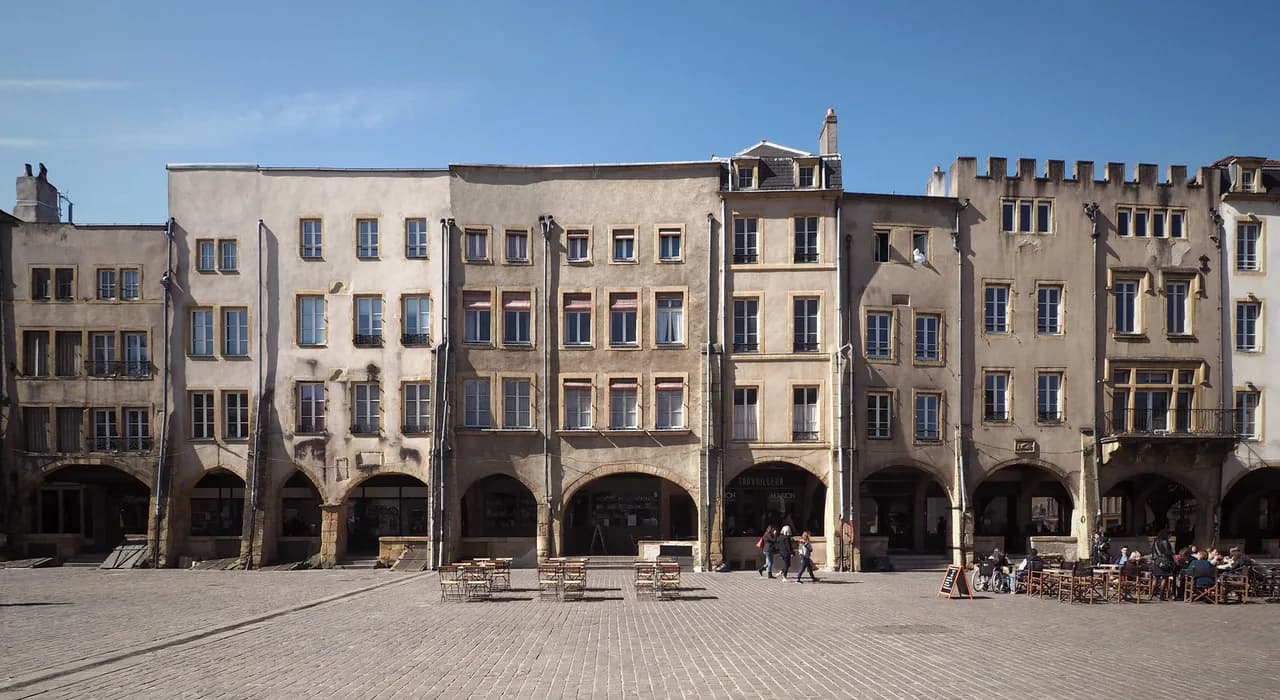
Place Saint-Louis is the most atmospheric medieval square in the old town. Its 14th- to 16th-century houses are buttressed and arcaded, and they were built on the original Roman ramparts, with some of the rampart stones reused in the foundations. More than 60 money changers once worked under the arcades, which hosted trade fairs and religious plays.
Today the arcades hold cafés and restaurants, so this is where you sit rather than pass through. It is a genuine contrast with the grand classical square at Nancy, and the two are worth seeing together for that reason.
Place de la Comédie and the Opera Theatre
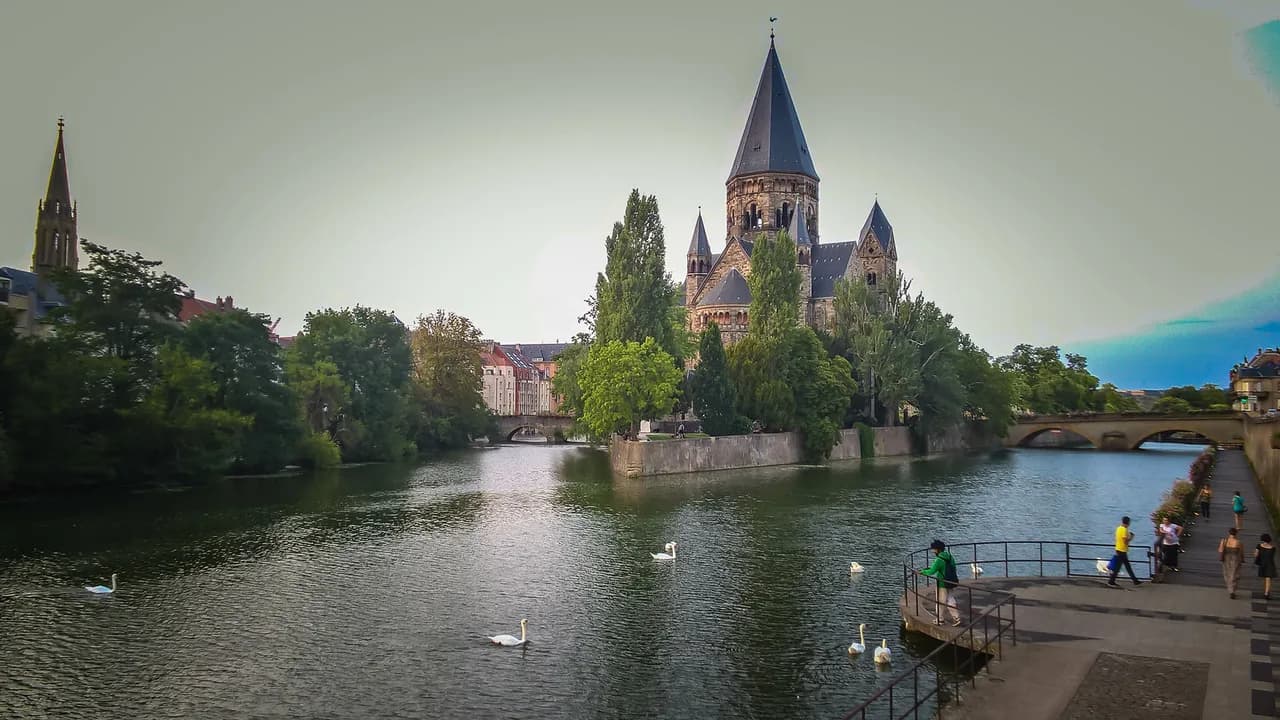
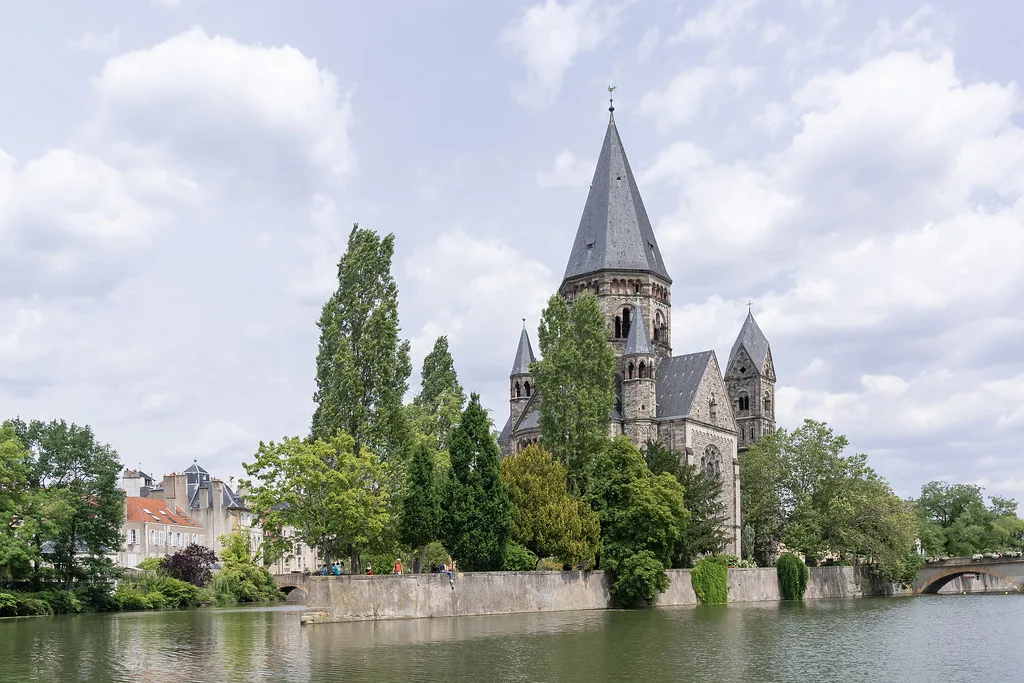
Place de la Comédie sits on the Île du Petit Saulcy beside the Moselle, a stone's throw from the cathedral. It is bordered by the oldest working opera theatre in France, inaugurated in 1752, and to the right of the theatre stands the Temple Neuf, built during the German annexation of 1871-1918.
The theatre's history is darker than its elegance suggests: the square hosted the guillotine during the Revolution. Treat this as a five-minute look rather than a stop, then walk out to the bridges.
The View from the Moyen-Pont
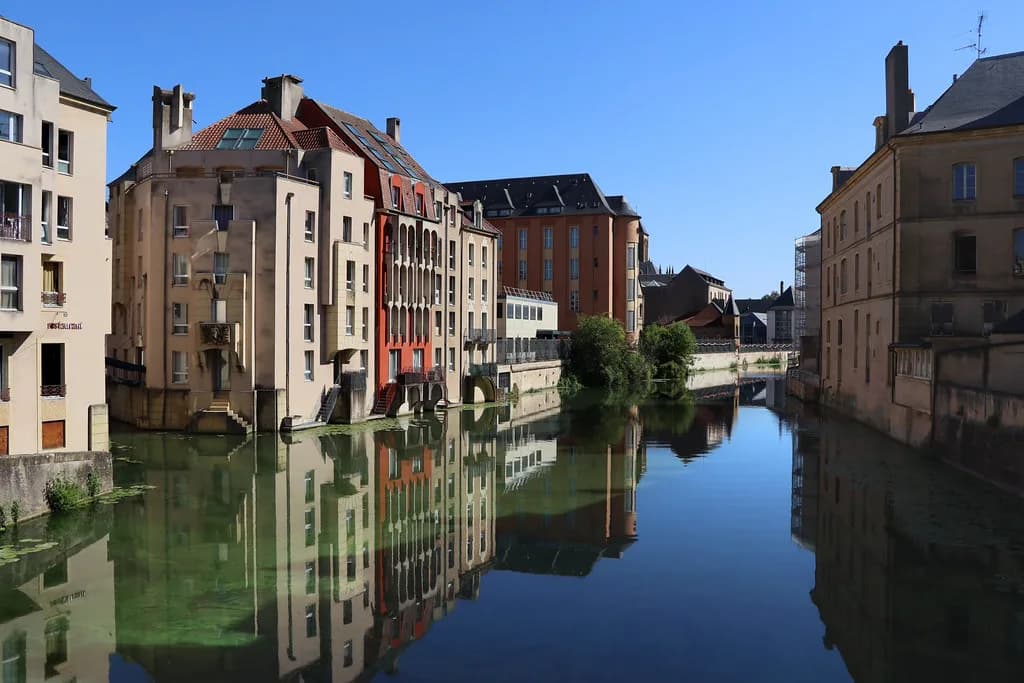
The Moyen-Pont is the picture-postcard viewpoint of the whole walk, framing the Moselle with the Temple Neuf and the cathedral in one shot. It is a quick stop, so build it into the route even if you are short of time. If you are travelling on a tight budget, the free things to do in metz list covers this and other low-cost stops.
The Esplanade, Place de la République and Saint-Pierre-aux-Nonnains
Walk up from the cathedral towards the Esplanade and you reach a flowered terrace with fountains and a view over Mont Saint-Quentin. It was built on the site of a citadel and links directly to place de la République, laid out in 1802.
A few metres on stands Saint-Pierre-aux-Nonnains, believed to be France's oldest church. It began as a Roman gymnasium between 380 and 395 AD, was consecrated in the 7th century, gained a Romanesque nave around 1000, and became an arsenal from 1556 until the 20th century, when it was turned into a concert and exhibition hall.
The Knights Templar Chapel
The Knights Templar Chapel is the only rotunda of its kind in Lorraine, built between 1180 and 1220 in the circular Templar tradition. The Romanesque exterior gives way to early Gothic vaults inside, where a sculpted keystone shows the dove of the Holy Spirit and restored murals cover the walls. The cross pattée of the order still marks the door lintel, and the chapel now functions as an exhibition hall.
Porte Serpenoise and Tour Camoufle
The Porte Serpenoise marks the old southern limit of the city and was rebuilt as a triumphal arch, crowned with four bartizans taken from destroyed ramparts, when the Germans cleared the walls. Its inscriptions record four events, including the 1552 siege in which Charles V failed to take the gate.
Tour Camoufle is easy to miss: the medieval tower of around 1437 sits in a public park on Avenue Foch, well inside the later imperial quarter. Both fragments are quick roadside stops rather than attractions, so do not budget long.
Porte des Allemands and the Seille Riverside
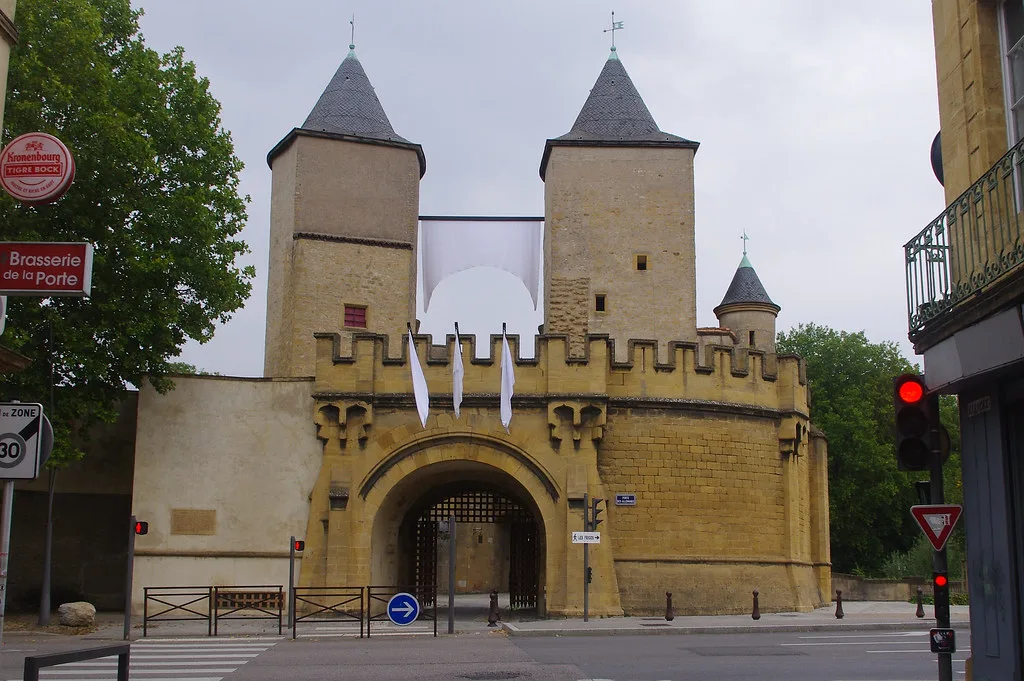
Porte des Allemands is a fortified double gate once part of the ramparts, not a fortress, and it guards the eastern approach to the city. The first gate, on the town side, went up in the 13th century with two slate pepper-pot towers; the second was added in 1445 with two large crenellated towers. It takes its name from the Teutonic Knights who ran a hospital on the nearby Rue des Allemands.
View the whole structure from the bridge of the N3 road, where both walls and the Seille sit in one frame, then walk through the gate itself. North along the town-side path you pass the Witches' Tower, Devil's Tower and Guilds' Tower before the river meets the Moselle and the path leads back towards the cathedral.
The German Imperial District
After the Franco-Prussian War, Metz and the Moselle were annexed to Germany and Kaiser Wilhelm II oversaw a new quarter south of the old town. The Berlin architect Kröger lined the Grand Boulevards with Rhenish-style buildings in pink and grey sandstone, granite and basalt, replacing the traditional Pierre de Jaumont.
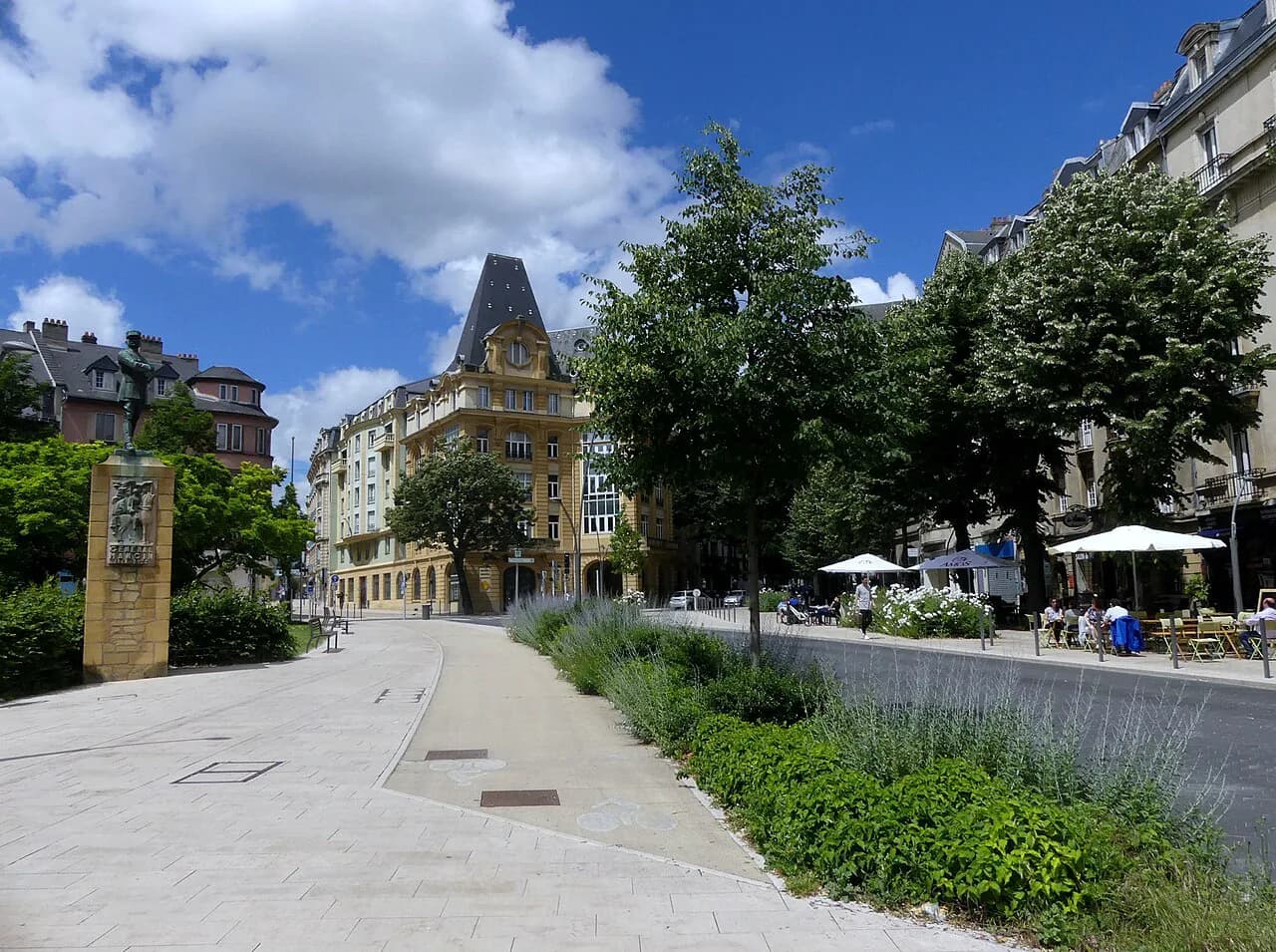
Look for the water tower and railway station, both 1908, the post office of 1911 and the Palais du Gouverneur of 1905, then the eclectic mix of Jugendstil mansions and mock-Bavarian farmhouses along Avenue Foch. The city put the district forward for UNESCO listing in 2007, and it is the second half of the walk that most visitors skip.
How Long the Walk Takes and How to Split It
Allow half a day for the medieval core and the riverside, and a further couple of hours for the German Imperial District. If you have one full day, do the cathedral, place d'Armes, the medieval squares and the Porte des Allemands in the morning, then rest and take Avenue Foch in the late afternoon.
With only a half day, cut the Esplanade and the imperial quarter and keep place d'Armes, the cathedral, place Saint-Louis, the Moyen-Pont and the Porte des Allemands. Those five stops cover the medieval city and the best viewpoints without any backtracking.
Practical Timing for the Walk
Morning light suits the cathedral facade and the open squares best, and afternoons work well for the Seille path and the wide imperial boulevards. Interiors are the variable, so check cathedral opening times on the day and confirm any museum hours before you build them in. That is the whole of the practical checks this route needs.
For a wider look at the city beyond the centre, the Metz Cathedral page and the broader attractions hub cover the rest of the sights.
Making the Walk Work
The strength of Metz old town is that one continuous line covers a Gothic cathedral, medieval arcades, a riverside gate and a German imperial quarter without any backtracking. Walk it north to south, sit on place Saint-Louis, and end on Avenue Foch.
Explore more Metz guides
Frequently Asked Questions
Is Metz old town worth visiting?
Yes, if you like architecture close together and walkable. The cathedral's nave and vast stained glass, the arcaded medieval place Saint-Louis, the Porte des Allemands and the German Imperial District all sit within a single afternoon's walk, and the two halves of the centre feel distinctly different.
What is there to see in Metz old town?
The key stops are place d'Armes and the cathedral, place Saint-Jacques, place Saint-Louis, place de la Comédie, the Moyen-Pont view, the Esplanade and Saint-Pierre-aux-Nonnains, the Knights Templar Chapel, the Porte Serpenoise, the Porte des Allemands and the German Imperial District along Avenue Foch.
How long does it take to walk around Metz old town?
Give the medieval core and the riverside half a day, and add a couple of hours for the German Imperial District. With only a half day, keep the cathedral, place d'Armes, place Saint-Louis, the Moyen-Pont and the Porte des Allemands and skip the rest.
Why does Metz have a German Imperial District?
After the Franco-Prussian War of 1870-71, Metz and the Moselle were annexed to Germany. Kaiser Wilhelm II oversaw a prestige quarter around the railway station, built in Rhenish styles with sandstone, granite and basalt, which is why the streets south of the old town look so different.
What is the Porte des Allemands?
It is a fortified double gate that formed part of Metz's ramparts. The first gate dates from the 13th century and the second from 1445, and it takes its name from the Teutonic Knights who ran a hospital on the nearby Rue des Allemands. The best view is from the bridge on the N3 road.
How old is Metz Cathedral?
The Gothic cathedral of Saint-Étienne is the city's crowning monument, with a nave 41.41 metres high and 6,500 square metres of stained glass. Its place d'Armes setting was created between 1750 and 1770 by demolishing a church and cloister beside it.
Sources
Notes for French city breaks
Optional updates to our guides.
You might also like
Continue reading
More guides you'll find useful