Best Time to Visit Menton: A Season-by-Season Guide
Menton's best months depend on whether you want gardens in bloom, beach weather or quieter lanes. Here is how each season shapes a short break.
On this page
Spring and early autumn suit most weekend breaks in Menton. The town is compact enough to cover the old quarter, seafront and port on foot in a day, so the season mainly decides whether you spend your time in gardens, on the promenade or sheltering from heat.
Menton sits on the French Riviera close to the Italian border, and its sheltered position gives it a mild reputation among Riviera towns. Lemon growing shapes its identity and its food, and the tourist office treats citrus and gardens as headline reasons to come.
Choose by trip type rather than by month alone: gardens reward spring, beach days need summer, photography works best in softer morning light, and quiet lanes belong to the cooler shoulder months. The rest of this guide works through each season, then sets out a two-day plan, a one-day plan from Nice, and indoor alternatives for wet or very hot days.
The short answer: spring and early autumn suit most weekend breaks
Aim for late spring or early autumn if you want to walk the old town and the coastal path without heat or heavy crowds. Spring is described as the ideal season for weather and gardens in bloom, with quieter beaches; summer is hot and sunny with livelier beaches and open-air events, which suits some travellers and not others.
The trade-off is straightforward. Spring gives you comfortable walking temperatures and garden colour but not reliable swimming weather; summer gives you the sea at its most inviting alongside the busiest seafront and the strongest sun. If your trip is built around long lunches and shaded lanes rather than sand, the shoulder months win.
Menton works as a short break because the main sights sit close together. Two nights covers the old town, the port and one garden; one full day covers the old quarter and the seafront comfortably if you start early and keep the pace slow.
Menton in spring: gardens, citrus and mild walking weather
Spring is when Menton's garden reputation earns its keep. The town's tourist office lists the Jardin Botanique Val Rahmeh, the garden at Villa Maria Serena and a set of six exceptional gardens open to the public at various times during the week, so a spring visit lets you build a route around two or three rather than racing between them.
Citrus is part of the spring picture, with lemon growing framed as a reason to visit the area and visits to lemon-growing domains offered locally. Treat garden opening days as the thing to confirm before you book, since the individual gardens keep different schedules.
Walking is the main pleasure of the season. The old town's stairways, the cemetery of the Vieux Château and the viewpoints above the port all involve climbing, which is far more pleasant in mild weather than in August heat.
Menton in summer: heat, beaches and a busier seafront
Summer is the hot, sunny season, with the beach at its liveliest and open-air events running. Sea temperatures are at their most inviting and the seafront fills accordingly, so the promenade and Plage des Sablettes are busiest during these months.
Plan summer days around shade and timing. Walk the old quarter early, take the stairs up to the Basilique Saint-Michel Archange before the sun is high, and save the cemetery and viewpoints for late afternoon; the climb is short but exposed.
The honest trade-off is company. A summer weekend gives you swimming and evening warmth at the cost of crowded beaches and slower service in the most popular spots. If you want the sea without the peak-season press, early autumn gives you warm water and a quieter promenade.
Menton in autumn: warm sea, fewer crowds, comfortable old-town strolls
Early autumn keeps enough warmth for the beach while the seafront empties out, which makes it the best compromise for travellers who want both swimming and comfortable sightseeing. Later in the season the light softens, which suits the viewpoints over the port and the waterfront.
Use an autumn day to walk the whole town in one loop rather than splitting it. Start at the waterfront, climb through the old quarter to the basilica terrace, then drop to the port and finish on the far side at Garavan; the distances are short and the climbing is broken up.
Food is a reason to come in this season as much as any other. Look for barbajuans, the fried parcels filled with chard, rice and ricotta, along with pichade de Menton and lemon-scented desserts; the best restaurants in Menton tend to be small, so booking ahead matters at weekends.
Menton in winter: the mild microclimate and what stays open
Winter is Menton's quietest season and the one that shows off its sheltered position. The town is known for a mild microclimate, and the garden tradition along this coast began with botanists coming for the comfortable winter climate, which is why the gardens are worth a winter visit as well as a spring one.
Expect some closures and shorter days. Individual gardens open at different times during the week, and the Menton, Riviera & Merveilles Tourist Office publishes a diary of events and activities, so check dates for anything you are building a trip around.
Winter rewards the indoor and semi-indoor sights: the basilica interior with its baroque decoration and painted ceiling, the covered market halls, and long lunches. It is a poor choice only if swimming or garden colour is the point of your trip.
How the town is laid out: old town, seafront, port and Garavan
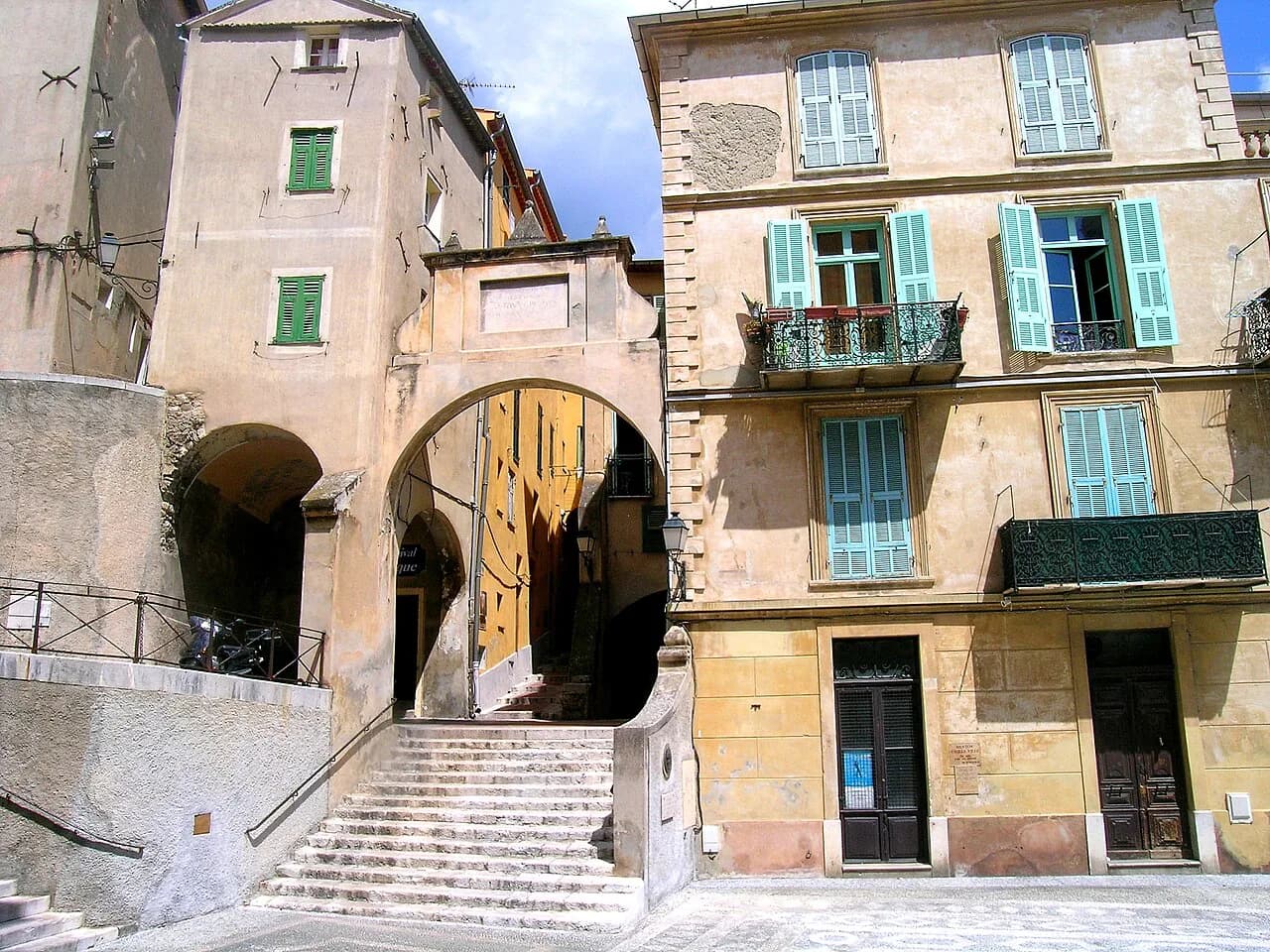
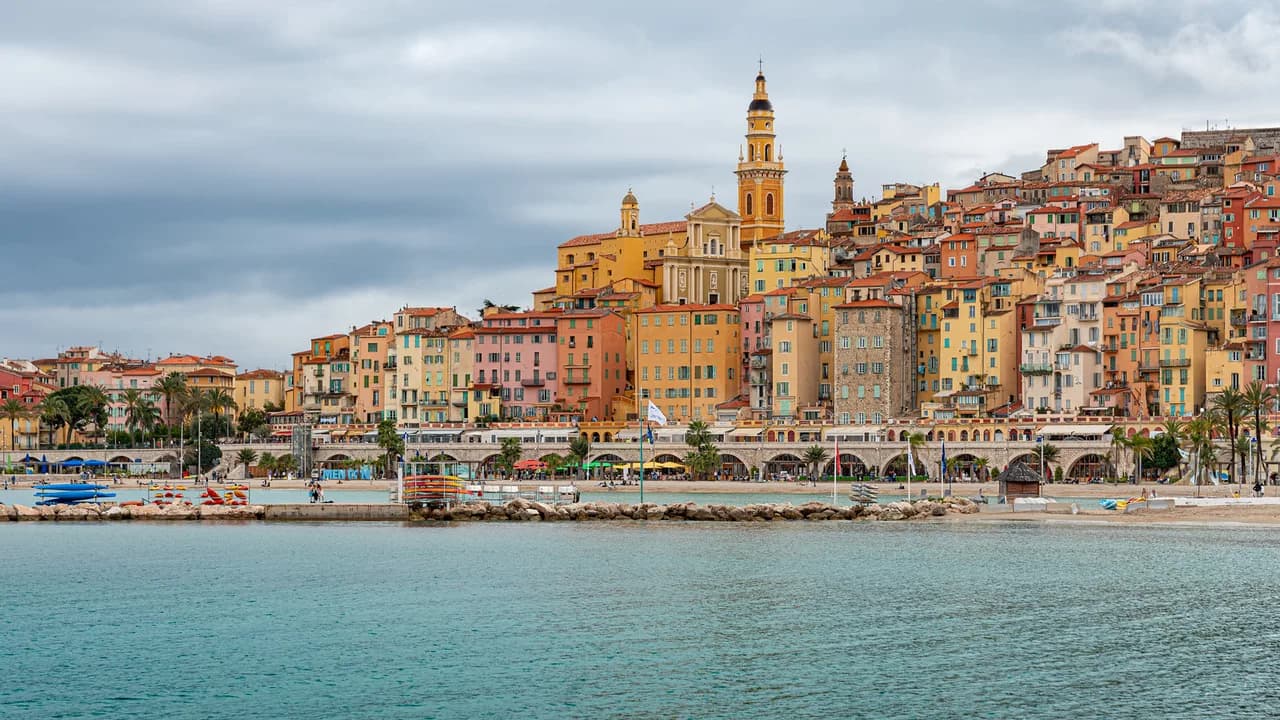
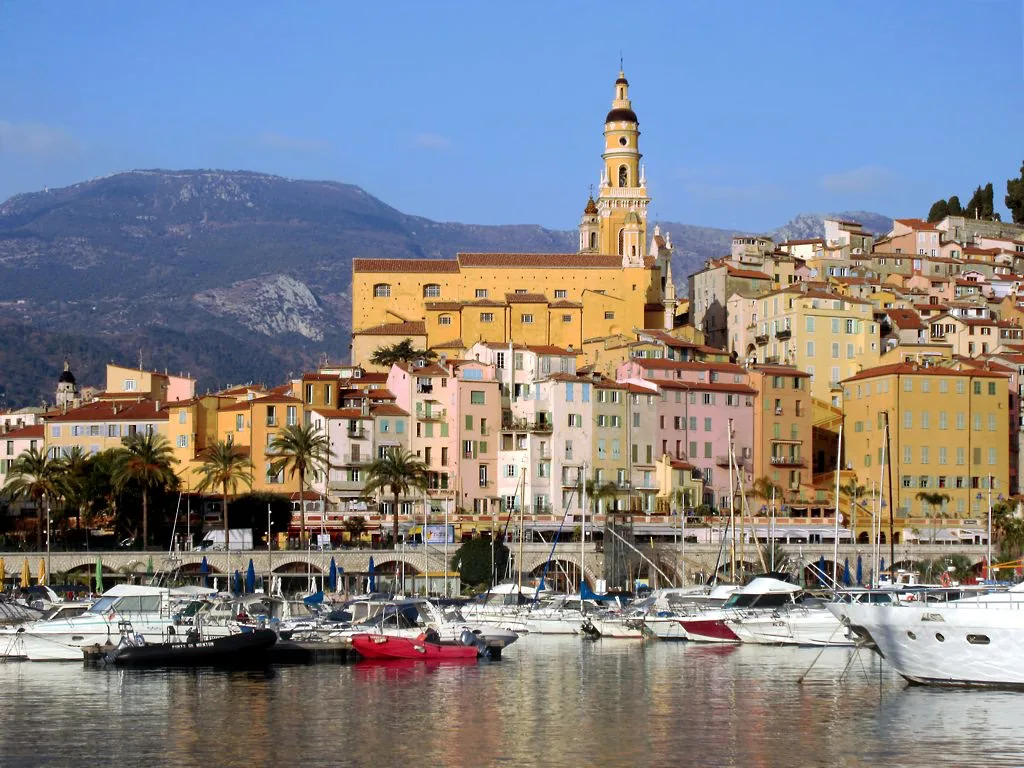
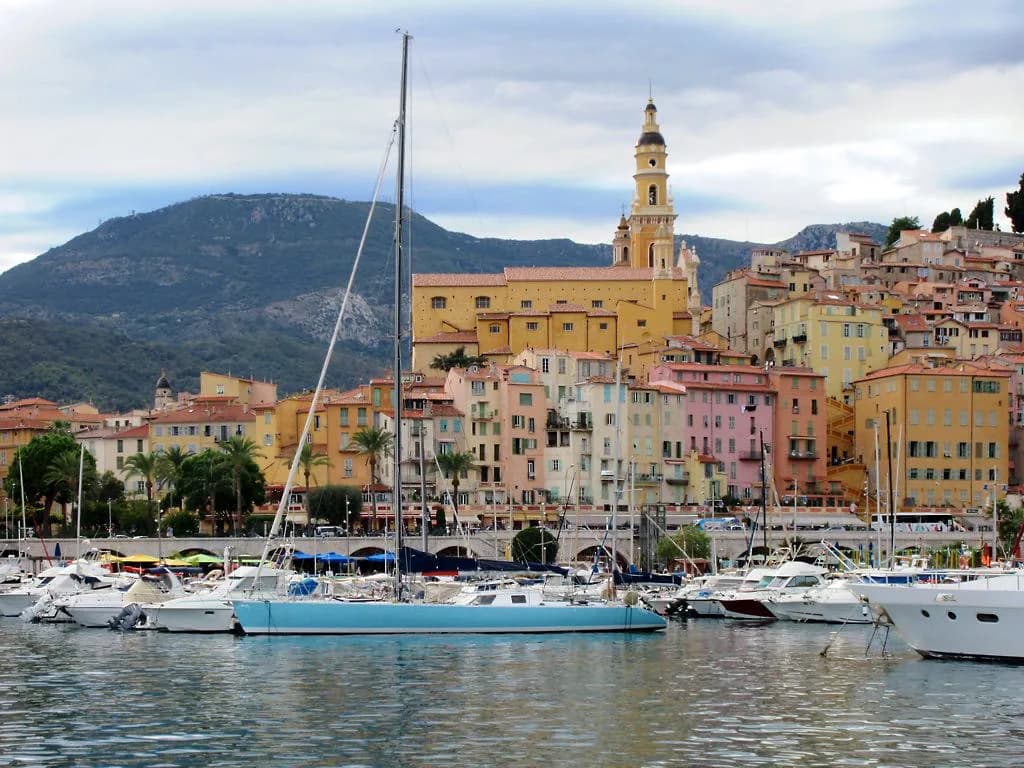
Menton runs along the coast in a narrow band, with the old town on a slope behind the beach and the port on the eastern side. The Vieux Menton is the dense quarter of narrow lanes and stairways, entered most photogenically by the lemon-coloured Les Rampes Saint-Michel, which climb towards the basilica.
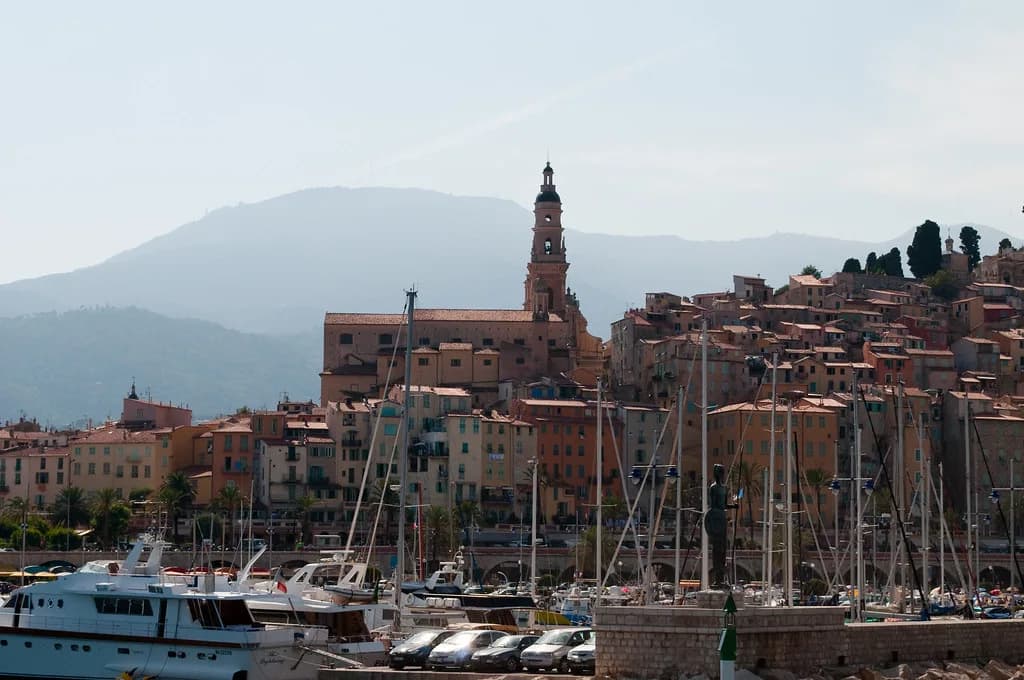
Above the old town sits the cemetery of the old château, a short climb with views back over the roofs, and the waterfront offers two named viewpoints: the Point de vue du Port across from the cemetery, looking over the old town, and the Vue Panoramique de Menton along the seafront. Morning light favours photographs of the waterfront because the sun sets behind the town.
The town has two train stations: Menton, about a ten-minute walk from the old town, and Menton Garavan, about ten minutes past the harbour. Either works, but Menton station is the simpler choice for a first arrival with luggage.
A two-day plan that works in most seasons
Day one belongs to the old town. Enter via Les Rampes Saint-Michel, visit the Basilique Saint-Michel Archange, wander the lanes of the Vieux Menton, then climb to the cemetery for the view and walk down to the Point de vue du Port. Finish with a slow meal rather than squeezing in another sight.
Day two is for the water and the gardens. Take the seafront promenade, choose one garden to do properly rather than several badly, and spend the afternoon at the port or on the beach. This is the day that changes most with the seasons: garden in spring, beach in summer and early autumn, indoor sights in winter.
Two days is enough because the town is small, but it is not enough for the surrounding hill villages and the valleys inland. Keep the scope tight and treat anything beyond the town as a separate trip; a single excursion towards Roquebrune-Cap-Martin is the most that fits comfortably.
A one-day plan for a Menton day trip from Nice
Menton works well as a day trip. Trains from Nice take around 35 minutes and run direct along the coast, which makes a morning arrival and an evening return entirely practical without a car.
Spend the morning on the old town loop, take lunch near the port, then use the afternoon for the seafront and a single garden or the beach. One day covers the historic quarter and the waterfront without rushing, though it leaves no time for the cemetery climb and a garden on the same visit.
If you are weighing up bases, staying in Menton suits a quiet break while Nice is more central for seeing several Riviera towns. For a short trip focused on Menton itself, the town's small scale means you spend your time walking rather than travelling.
Rainy or very hot day alternatives
When the weather turns, the covered market halls and the basilica interior absorb an hour or two without much planning, and the tourist office's event diary lists guided tours and visits that run regardless of the beach.
On very hot days, shift the walking to early morning and late afternoon and use the middle of the day for a long lunch indoors. The town's steep lanes and stairways offer shade, but the climbs to the cemetery and upper viewpoints are exposed and best avoided at midday in summer.
A useful wet-weather habit is to keep one indoor option unbooked each day. That way an unexpected downpour costs you a promenade rather than a whole plan, and you can swap in a market hall, a church or a café without losing the shape of the day.
What to eat and drink in season
Menton's food follows its lemon identity and its Italian border. Expect lemon in desserts, drinks and savoury dishes, alongside barbajuans, pichade de Menton, sugelli pasta and pistou, all of which appear on local menus throughout the year.
Spring brings citrus to the foreground, with lemon-growing domains open to visitors and lemon-themed activities promoted locally. Summer is better for eating outside and for ice cream on the seafront, while autumn and winter suit long, warm lunches between sights.
For a food-led visit, plan around the market rather than a specific restaurant. Buying bread, cheese and fruit in the morning and eating near the port is cheaper and more flexible than committing to a set lunch, and it leaves the afternoon free.
Practical trade-offs: trains, stations and walk times
Trains are the simplest way in. The coastal line links Menton with Nice, Monaco and the other Riviera towns, and the journey from Nice takes around 35 minutes; both Menton stations are about ten minutes on foot from the old town or harbour, depending on which side you arrive.
Once in town, everything is walkable, and the climbs are short but frequent. The stairways around Les Rampes Saint-Michel and the path to the cemetery are the steepest parts, so light shoes matter more than any transport plan.
The main trade-off between seasons is not transport but daylight. Shorter winter days compress a walking itinerary, while long summer evenings let you spread the walking across the day and rest during the hottest hours.
When to go for gardens, beaches or photography
For gardens, choose spring: the tourist office promotes the Val Rahmeh botanical garden, the Villa Maria Serena garden and the wider set of exceptional gardens, and spring weather makes a garden-led itinerary comfortable. For beaches, choose summer for the liveliest scene or early autumn for warm water and fewer people.
For photography, work with the sun. The waterfront is best shot in the morning because the sun sets behind the town, so afternoon light over the bay is harsher; the stairways and lanes of the old town photograph well at almost any hour because the buildings shade them.
For quiet lanes and low prices, winter and early spring are the best bet. The compromise is shorter days and a smaller choice of things running, which matters little if your plan is to walk, eat and look at the sea.
Plan Your Visit
Pick the season by what you want to do rather than by the calendar alone: spring for gardens, summer or early autumn for the sea, winter for mild walks and empty lanes. Two days covers Menton properly, and one day from Nice is enough to see the old town and the waterfront.
Where a garden, market or guided visit matters to your plan, confirm its days directly with the tourist office before booking travel, since opening patterns vary between sites and across the year.
If you are comparing Riviera towns for a longer break, the same seasonal logic applies elsewhere on the coast, and a guide to the best time to visit Aix-en-Provence shows how another Provençal city changes month by month.
Explore more Menton guides
Frequently Asked Questions
Is Menton a good place to visit?
Yes, particularly as a short break. The old town, the basilica, the cemetery viewpoint and the seafront sit within a compact area that you can cover on foot in a day, and the gardens and the port justify a second day. It suits travellers who want a quieter Riviera town rather than a busy resort.
How hot is Menton in August?
August is the hottest stretch of the year and counts as peak beach season, with hot, sunny days and open-air events. Rather than relying on averages, check a forecast for your dates before travelling and plan walking for the morning and late afternoon, when the exposed climbs are more comfortable.
Is Menton good for a day trip?
Yes. Direct trains from Nice take around 35 minutes, and the old town loop, the waterfront and a single garden or the beach fit into one unhurried day. Both Menton stations are about ten minutes on foot from the old town or harbour, so you can arrive, walk everything and leave by train.
Should I stay in Menton or Nice?
Menton suits a quiet break centred on the town itself; Nice is more central if you want to visit several Riviera towns in one trip. Menton's compact layout means little time is lost in transit, but day trips to other towns take longer than they would from Nice.
When are Menton's gardens at their best?
Spring is the strongest season for gardens, with mild weather and the garden tradition along this coast at its most appealing. The individual gardens open at different times during the week, so check the schedule for the specific garden you want; not all are open on the same days.
Do I need more than one day in Menton?
One day covers the old town, the basilica and the seafront; two days let you add a garden, the port and the cemetery climb without rushing. Beyond two days you are relying on excursions outside town rather than sights within Menton itself.
Sources
Notes for French city breaks
Optional updates to our guides.
You might also like
Continue reading
More guides you'll find useful