Best Restaurants in Avignon: Where to Eat on a City Break
Plan where to eat in Avignon, from market lunches at Les Halles to bistro terraces on Rue des Teinturiers and a starred lunch at La Mirande.
On this page
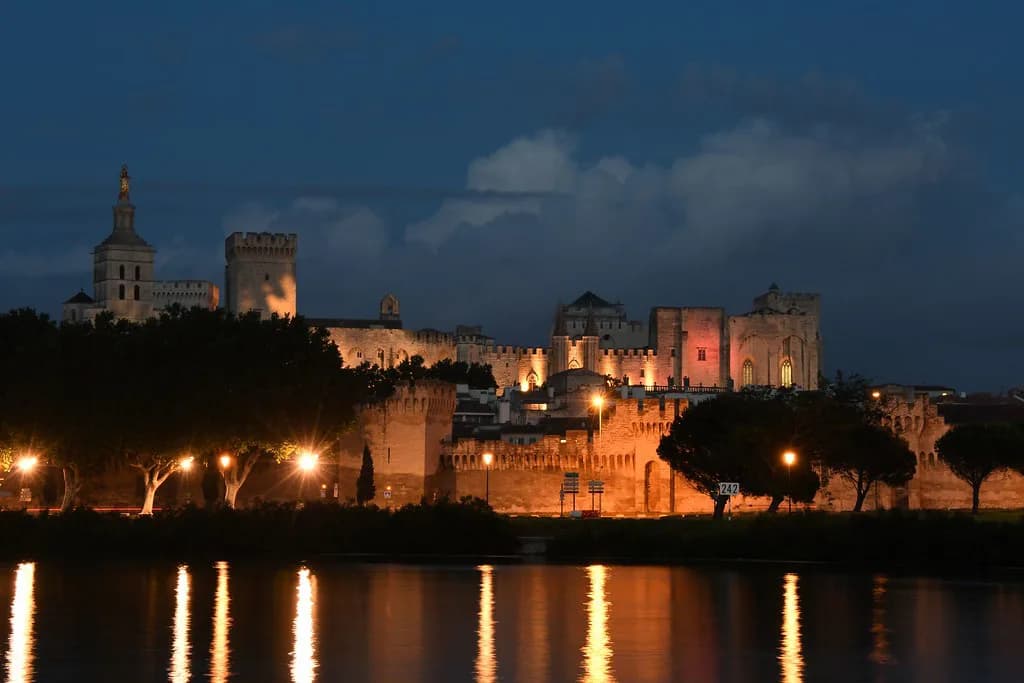
Avignon is small enough to cross on foot in twenty minutes and good enough to eat well three times a day. The practical rule for a weekend is to spend your money at lunch, when restaurants serve lighter, cheaper set menus, and keep dinner simpler or later. Everything below sits inside or just outside the old town walls, so you can slot meals between the Palais des Papes and the river without losing an afternoon to travel.
Why Avignon Eats Well: A Compact Old Town Where Lunch Is the Value Meal
The old town is a tight oval of streets between the Rocher des Doms and the Rhône, which means a good restaurant is rarely more than a ten-minute walk from whatever you are seeing. That density makes a proper midday meal realistic rather than a logistical project. Restaurants here lean on lunch: a three-course menu at midday is a lighter, more reasonably priced way to eat than the same kitchen's evening service.
Provence shapes the cooking. Look for olive oil, tomatoes, aubergine, fish from the Mediterranean coast and the pale rosé of the region, which the south drinks with almost everything. Market produce drives the specials boards, so a weekday lunch after a morning at the covered market often beats a planned dinner.
What to Try First: Sacristan, Fougasse, Calissons and Rosé
Start with the sacristan, Avignon's own pastry: layers of flaky filo-like dough, almonds and sugar, sold fresh and messy. Lisette in Avignon is the address to know for it, and the same shop turns out excellent chocolate croissants and fougasse, the flat savoury bread scented with olive oil.
Calissons, the almond-and-melon sweets of Provence, are the other local edible to carry home, and Puyricard makes a house version with a calisson recipe of its own alongside its chocolates. For macarons, Le Saint Chocolat draws a crowd and serves them to eat in the square or take away.
Drink-wise, order the chilled rosé of the region with lunch and you will be doing what the south does. Keep the coffee for after the pastry rather than before, and leave room for an ice cream in the afternoon heat.
Les Halles: The Covered Market as a Lunch Stop
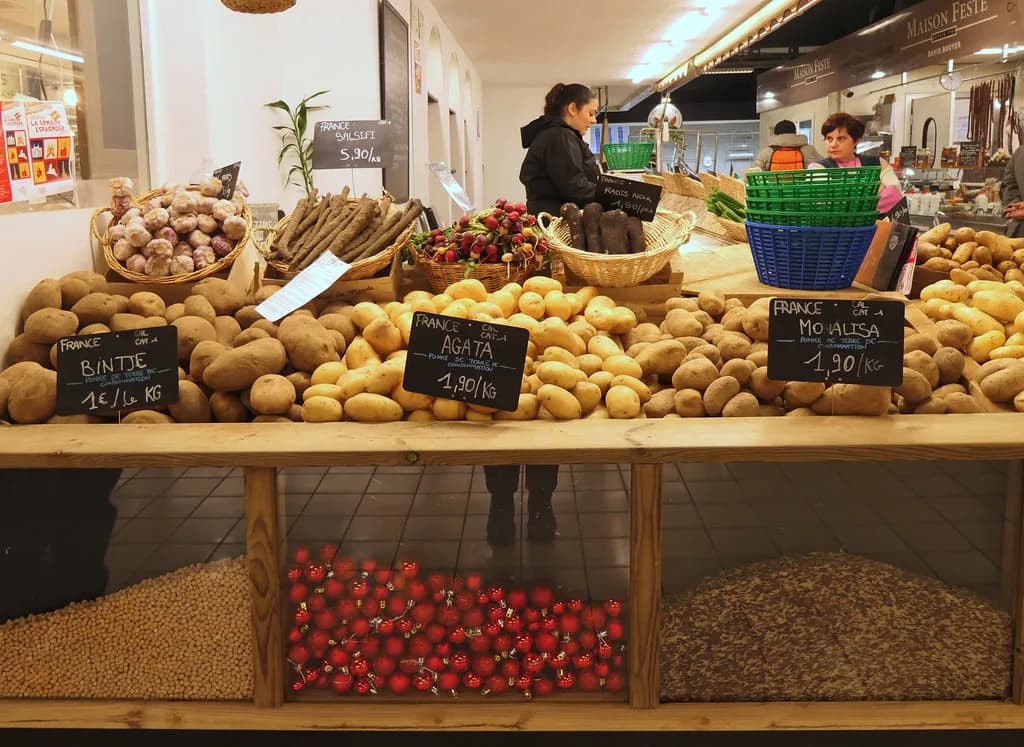
Les Halles is Avignon's covered market and, for a short break, the single most useful food address in town. It stands out for the range and quality of what the stallholders sell, from cheese and charcuterie to prepared dishes. Crucially, tables and booths sit in the middle of the market, so you can buy from the vendors and eat what you have bought on the spot, surrounded by locals doing the same.
Budget this as a lunch rather than a snack: pick a few things across stalls, share, and you have a full meal without a restaurant booking. Go earlier rather than at the end of service, when the best trays are picked over.
Bakeries and Pâtisseries Worth Queueing For
Bella Ciao earns its line, which tends to vanish only when the shelves are empty. The whole-grain breads and the brioche are the everyday picks; the crackers go first, so arrive early if you want them.
Violette runs several boutiques in Avignon, each with a slightly different balance of bread and pastry. Buy a multigrain loaf cut to size and priced by weight and you have breakfast and picnic material for two days.
Chocolate: Aline Géhant and Puyricard
For a box to take home, Aline Géhant's shop is the chocolatier to seek out; the truffles are chosen from the case and each has a distinct flavour rather than a single house style. Puyricard, with boutiques across Provence and further afield, is the more widely available option and its dark and milk chocolates are subtle rather than sweet.
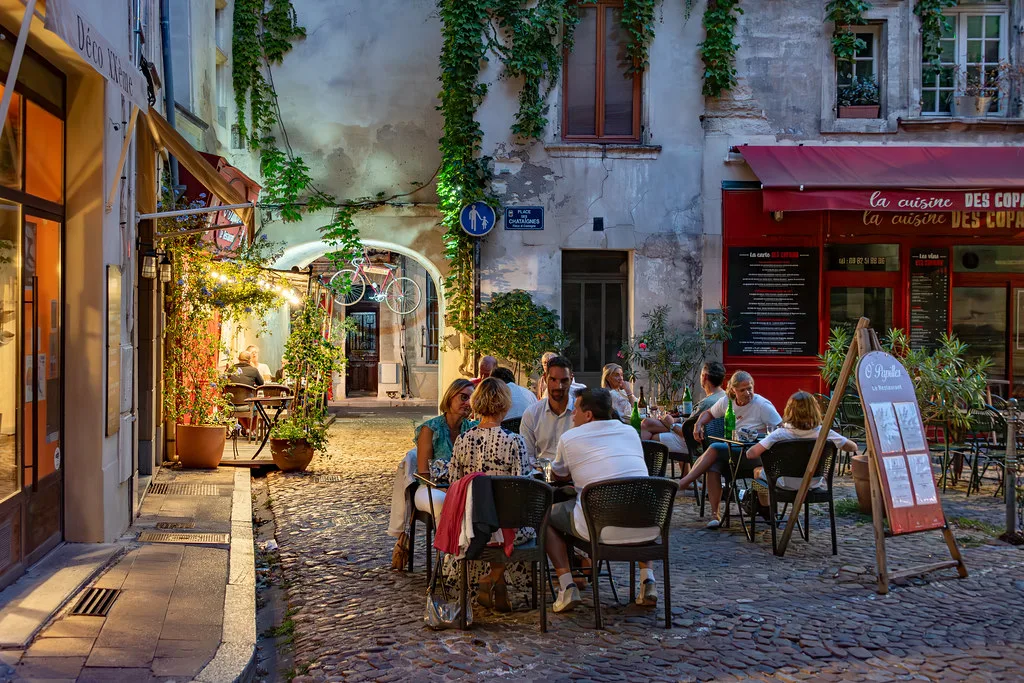
Sit-Down Restaurants: L'Agape, 46, L'Essentiel and La Mirande
L'Agape is a relaxed, elegant room that fills with a lunch crowd of all ages soon after opening; the three-course menu is the way to eat here, with house-made bread and a lighter profile than dinner.
Restaurant 46 is the casual neighbourhood choice, a cosy room of local families eating hearty, regularly changing food from a long wine list. Book it for a relaxed evening rather than a special occasion.
L'Essentiel sits in a courtyard not far from the Palais des Papes, which makes it the obvious lunch stop on a sightseeing day; the cooking is fresh and the setting calm despite the crowds nearby.
At the top end, La Mirande serves a tasting menu at the chef's discretion in a spacious room styled like a country estate, with service that runs like clockwork. It held one Michelin star at the time of that visit, and Sevin, also starred then, is the other name for an occasion lunch; treat both as a splurge rather than a default.
Rue des Teinturiers: Terraces by the Stream
Rue des Teinturiers is the prettiest street in the old town, its name recalling the dyers who once used the stream that still runs along one side to work their cloth. A few mill wheels and old buildings remain, plane trees shade the cobbles, and the trickle of water makes the street feel cooler on a hot day.
Bars, cafés and restaurants line the street with terraces spilling onto the pavement, so it works equally for lunch and for dinner. This is the street to choose when you want to eat outside without the crowds of the main square.
Place des Corps-Saints: The Shady Square Locals Use
Place des Corps-Saints is a shady square ringed by restaurants, bars and bistros, with tables and chairs pushed out onto the pavement and an unexpectedly rural feel for the centre of a city. Most visitors walk past it, which is exactly why it is worth knowing.
For pudding, La Princière on the same square is where the locals go for ice cream, with old-school sorbets alongside the scoops. It is a five-minute walk from the Palais des Papes and a good way to end an afternoon.
Place de l'Horloge and Around the Palais des Papes: Convenient but Busier
Place de l'Horloge, with its plane trees and terraces, sits on the natural route to the Palais des Papes and is genuinely pleasant for a drink or a plate of something simple. Expect it to be busy, especially at peak lunch hours, and expect to pay for the position.
The trade-off is straightforward: eat here when convenience matters more than food, and walk five or ten minutes to Rue des Teinturiers or Place des Corps-Saints when it doesn't. If you want a quiet cup of tea between sights, the tearoom at the Musée du Petit Palais sits in the gardens of a fifteenth-century mansion.
Budget and Timing: Why the Weekday Lunch Menu Beats Dinner
Restaurant menus in Avignon are built around the midday service. The lunch menu is usually lighter and less expensive than the same kitchen's evening cooking, which makes it possible to eat properly at lunch and keep dinner to bread, cheese and market purchases.
That rhythm suits a two-day break: a market lunch at Les Halles on day one, a set lunch at L'Agape or L'Essentiel on day two, and one dinner booked at 46 for the evening you want to sit down properly. If you prefer to build a whole weekend around the midday table, the best restaurants in Aix-en-Provence follow much the same lunch-first logic. Check the price of any set menu on the board or the restaurant's own site before you commit.
How to Plan Meals Around a Two-Day Visit
Day one: pastries from Lisette or Violette for breakfast, a morning at Les Halles for lunch, then the Palais des Papes and the Rocher des Doms in the afternoon, with an ice cream at La Princière on the way back. Dinner on Rue des Teinturiers or at 46.
Day two: a set lunch at L'Agape or L'Essentiel near the palace, an afternoon of sightseeing, and a light dinner of market purchases or a plate on Place des Corps-Saints. If you are weighing up whether the city justifies the trip at all, read Is Avignon Worth Visiting? What a Short Break Actually Gets You before you book.
Practical Notes: Booking, Lunch Hours and Sunday Eating
Book the starred rooms and the popular bistros ahead, especially for Friday and Saturday dinner, and treat a weekday lunch as your main reservation rather than an afterthought. Restaurants in Avignon tend to serve lunch in a defined window and close the kitchen before dinner service, so plan your day around that gap rather than hoping to eat at four in the afternoon.
Many restaurants close on one day of the week, and Sunday options thin out. Confirm the day you plan to eat against the restaurant's own published hours before you travel, and keep a market-and-bakery fallback in mind for the day your first choice is shut.
Where to Eat in Avignon: The Short Version
Eat your main meal at lunch, graze at Les Halles, queue at Lisette for a sacristan and book one dinner on Rue des Teinturiers or Place des Corps-Saints. Save La Mirande or Sevin for a celebration, and use Place de l'Horloge for a drink rather than the meal that matters.
Two days is enough to eat well here if you plan around the midday service and keep your evenings flexible. Build the rest of the trip around the old town on foot and you will spend more time eating than walking between meals.
Explore more Avignon guides
Frequently Asked Questions
Where do the locals eat in Avignon?
Rue des Teinturiers and Place des Corps-Saints are the streets and squares where locals eat and drink, with terraces along the stream and tables under the plane trees. Les Halles is where they shop and eat at the tables in the middle of the market. Place de l'Horloge is the busier, more tourist-facing option.
Is there a Michelin-starred restaurant in Avignon?
La Mirande held one Michelin star at the time of that visit, and Sevin also held a single star then. Both are occasion meals rather than everyday options; check the current Michelin guide for the star status before booking.
What food is Avignon known for?
The sacristan pastry is the local speciality, made with almonds and sugar and sold fresh at Lisette. Fougasse, the flat savoury bread, and calissons, the almond sweets of Provence, are the other things to try, along with the rosé of the region.
What should you not miss eating in Avignon?
A sacristan from Lisette, a lunch bought and eaten at the tables inside Les Halles and a box of chocolates from Aline Géhant or Puyricard. Add an ice cream at La Princière on Place des Corps-Saints if the weather is warm.
Where can you eat lunch in Avignon's old town?
Les Halles for a market lunch with tables in the middle of the market, L'Agape for an elegant set menu, L'Essentiel in its courtyard near the Palais des Papes, or a terrace on Rue des Teinturiers. Book the restaurant options ahead and keep the market as your fallback.
Sources
Notes for French city breaks
Optional updates to our guides.
You might also like
Continue reading
More guides you'll find useful