Avignon Itinerary: How Many Days Do You Need?
An Avignon itinerary for one to three days, covering the Palais des Papes, Pont d'Avignon, Les Halles and Place d'Horloge, with opening days that shape the plan.
On this page
Avignon needs one full day for the Palais des Papes, the Pont d'Avignon and Les Halles d'Avignon, and two days to add the museums and the Jardin des Doms without rushing. The old walled centre sits on the east bank of the Rhône, and the palace hill is a short walk from the market quarter, so a weekend break here involves very little transport. Three days lets you give the Pont du Gard a half-day of its own, but that trip needs a car and is the one part of the plan that is not walkable.
Avignon in a Nutshell: How Many Days the City Needs
One day covers the essential circuit: breakfast near Place Saint-Didier, the market at Les Halles d'Avignon, the Pont d'Avignon, then the Palais des Papes and its gardens, with Place d'Horloge in the evening. That is a solid day with a lot of walking in the warm months, and it leaves no room for the museums on the eastern side of the centre. Two days gives you a slower second morning for the Petit Palais or the Musée Calvet and an afternoon in the Jardin des Doms.
Three days adds a half-day out to the Pont du Gard, the Roman aqueduct about 30 minutes' drive from the centre, which is worth doing only if you have a car or a tour booked. Leftover time also suits the smaller sights: the Petit Palais Museum, the Calvet Museum and the Jardin des Doms are the additions most often tagged onto the main circuit. If you are still deciding whether Avignon justifies a trip at all, the honest answer is that one packed day is enough to see the two headline monuments properly.
How Avignon Is Laid Out: the Walled Centre, the Palace Hill and the Rhône
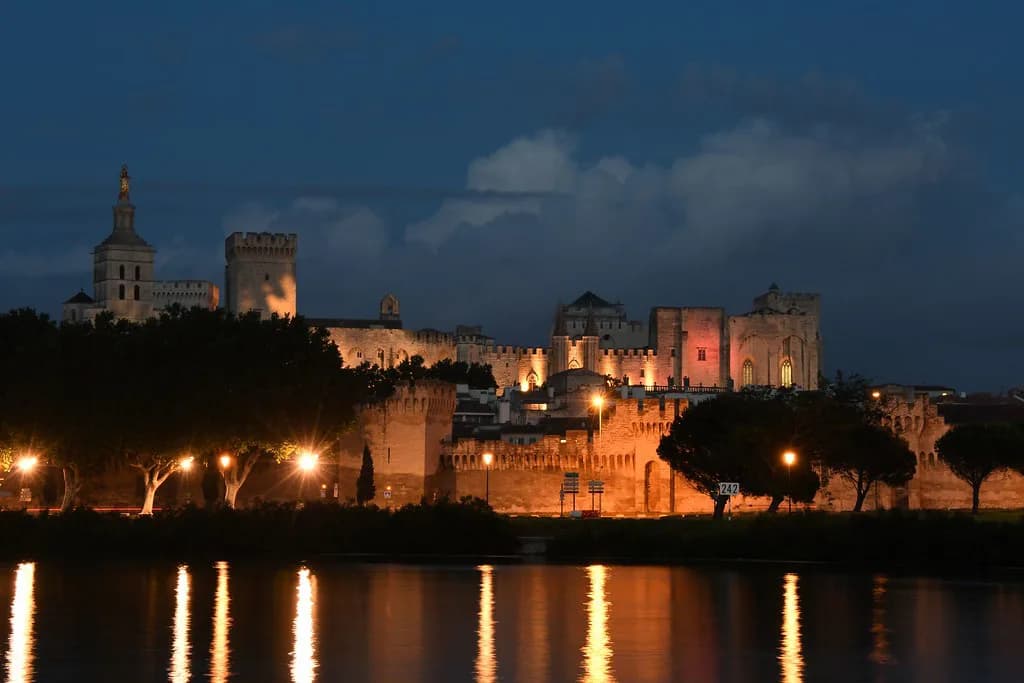
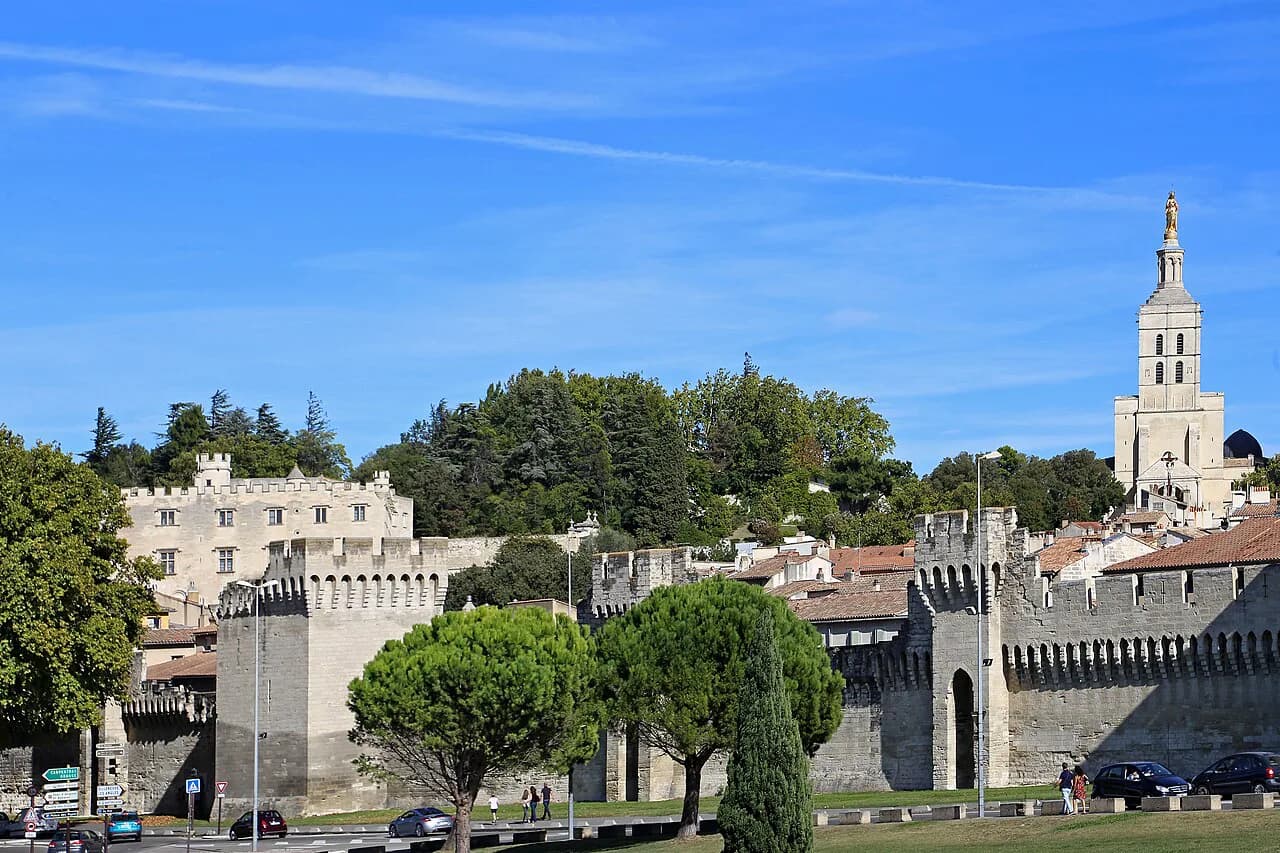
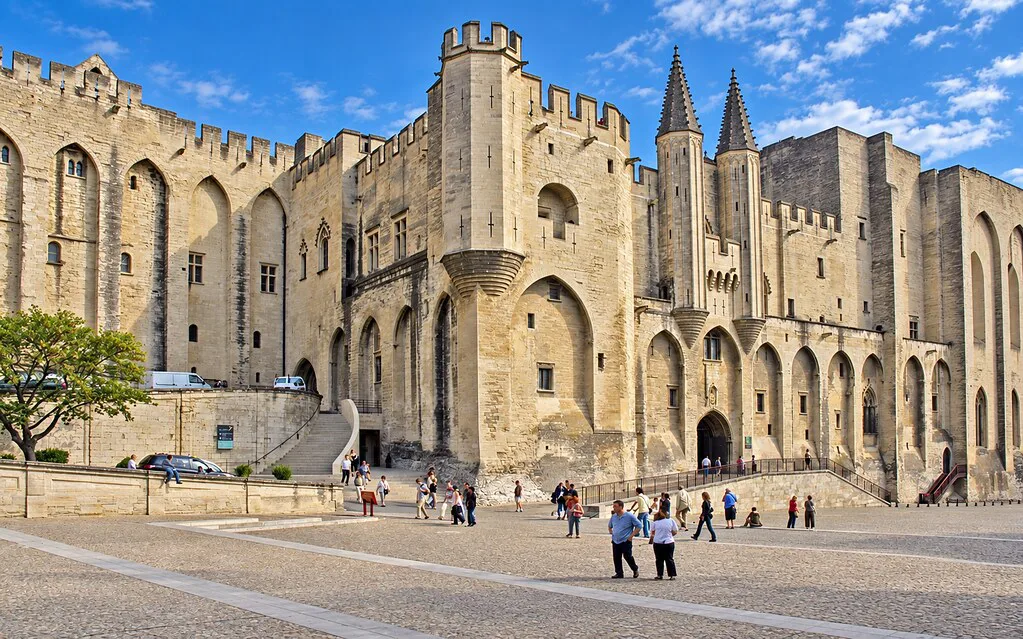
Avignon's historic core sits inside a ring of limestone ramparts on the left bank of the Rhône, and almost everything in this plan is inside that ring. The Palais des Papes and the Cathédrale Notre-Dame des Doms occupy the rocky outcrop at the northern tip, with the Pont d'Avignon below them running out into the river. Les Halles and Place d'Horloge sit in the flatter middle of the centre, a few minutes' walk south.
Because the monuments cluster at one end and the market and main square at the other, the sensible shape of a day is vertical: hill first thing, market and square later, or the reverse if the market's morning hours drive the schedule. Walking from the palace square down to Les Halles is a short downhill stretch, so the centre is easy to cover on foot and a bike rental is a bonus rather than a necessity. Our guide to the old town covers the streets and quarters in more detail.
Day One: Les Halles d'Avignon, Pont d'Avignon, Palais des Papes and Its Gardens
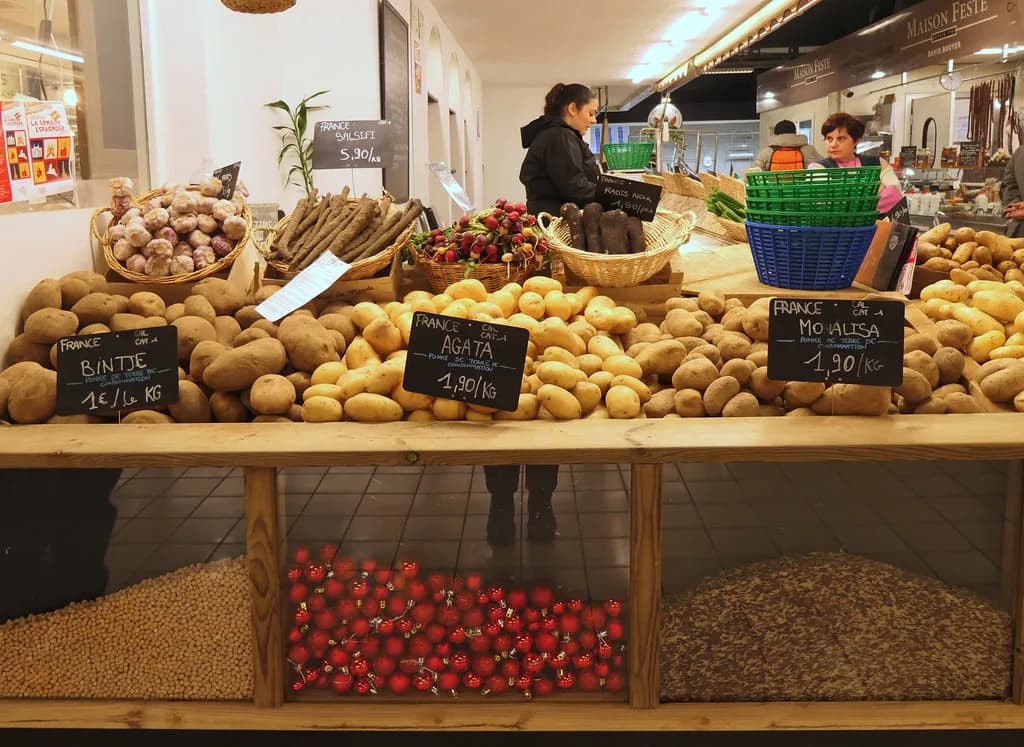
Start at Les Halles d'Avignon on Place Pie, where stalls sell meat, cheese, fruit and vegetables, with a wine shop for picnic supplies. It opens Tuesday to Sunday from 6am to 2pm, so a Monday visit means reorganising the morning around something else entirely. Go early enough to buy picnic pieces and drop them at your accommodation before the monuments.
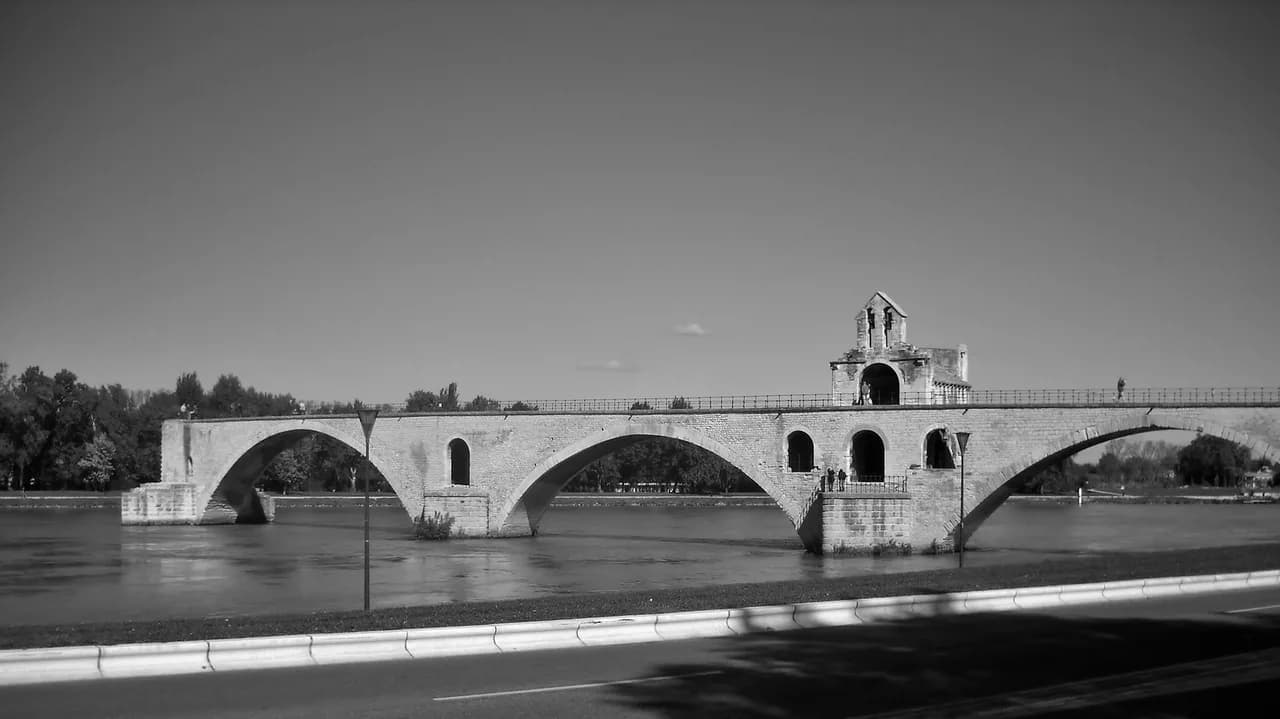
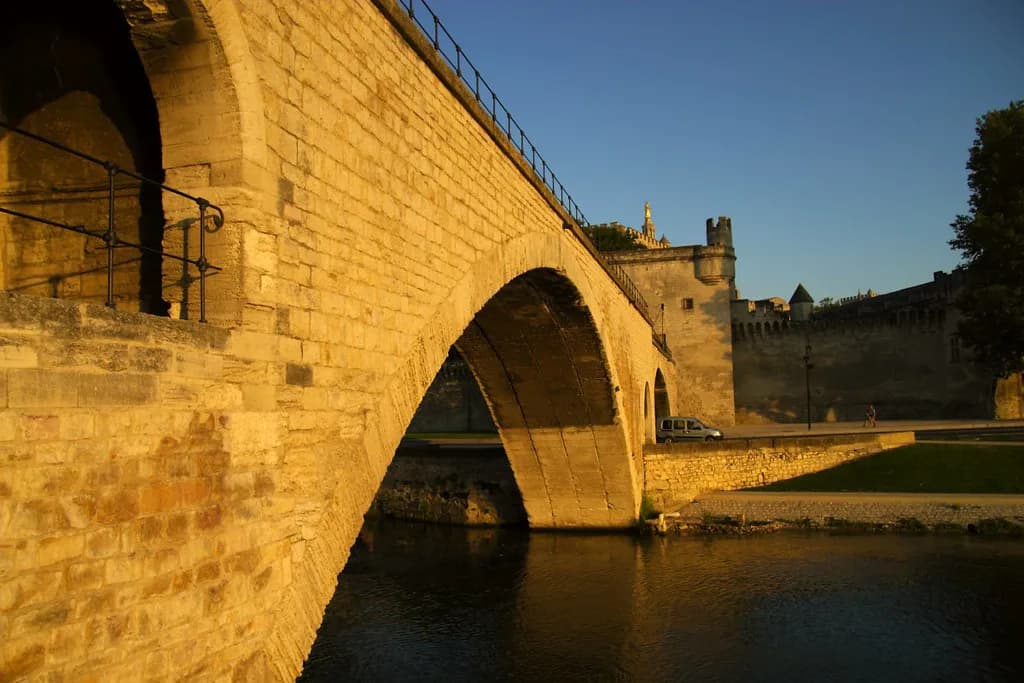
Walk down to the Pont d'Avignon, properly the Pont Saint-Bénézet, and aim to arrive at opening or before 10am to get ahead of the tour groups. Entry costs €5, and the bridge is open daily with seasonal hours: 9am to 7pm from March 1 to November 3, 10am to 5pm from January 8 to February 9 and from November 4 to December 20, and 10am to 6pm from February 10 to 28 and from December 21 to 31. Part of the medieval bridge survives and no longer crosses the river, which is why the visit takes minutes rather than an hour.
Next door, the Palais des Papes costs €12 and includes a HistoPad in several languages that overlays each room with how it looked in its medieval heyday. The palace opens at 9am and closes at 7pm from March 1 to November 3, with a 10am to 5pm window from January 1 to February 28 and from November 4 to December 31. The palace is the big monument and deserves the bulk of your morning. For the rest of the city, see our guide to things to do in Avignon.
The gardens of the Pope's Palace are inside the same complex, with benches in the sun for a pause between the palace halls and the cathedral. Buy the combined bridge, palace and gardens ticket rather than three separate ones, since you are visiting all three the same day anyway. If the weather turns, the gardens are the first thing to cut.
Day One Evening: Cathédrale Notre-Dame des Doms and Place d'Horloge
The Cathédrale Notre-Dame des Doms sits beside the palace entrance, a 12th-century Romanesque building with a notable west front. Its visiting hours split across lunchtime: from October to May it opens Monday to Saturday 8.30am to noon and 2.30pm to 5pm, with Sunday hours from 9.45am to 12.15pm and again from 2.30pm to 5pm. In June to September the afternoon slot runs later and Sundays close at 5.30pm. If the doors are shut, the exterior and the square in front still earn the detour.
Finish the day at Place d'Horloge, Avignon's main square, named for its clock tower and flanked by the city hall, the opera and a carousel. The square's cafés make it a natural point to sit with a drink before dinner, and it is a short walk from both the palace hill and Les Halles. For dinner options around the market and the palace square, our pick of the best restaurants in Avignon does the legwork.
Day Two: the Slower Avignon Day, with the Petit Palais and Calvet Museums as Options
Give the second day to the museums on the eastern side of the centre. The Petit Palais, next to the palace square, and the Musée Calvet are the two additions a one-day plan has to leave out, and both suit a morning when you want to be indoors. Check each museum's opening days before you commit, because French museums commonly close one day a week and it varies by institution. Our guide to museums in Avignon sets out which days each one runs.
If museums are not your thing, use the morning for the streets between Place d'Horloge and the ramparts, including the Tour Saint-Jean near Les Halles. The tower sits in a small square opposite Café Saint-Jean, which serves lunch from 8am to 1am daily, making it a workable stop after a museum morning. Shopping in the centre works around the same hours as the market, so a Sunday or lunchtime pause is worth planning for.
Day Two Afternoon: Jardin des Doms and the Ramparts on Foot
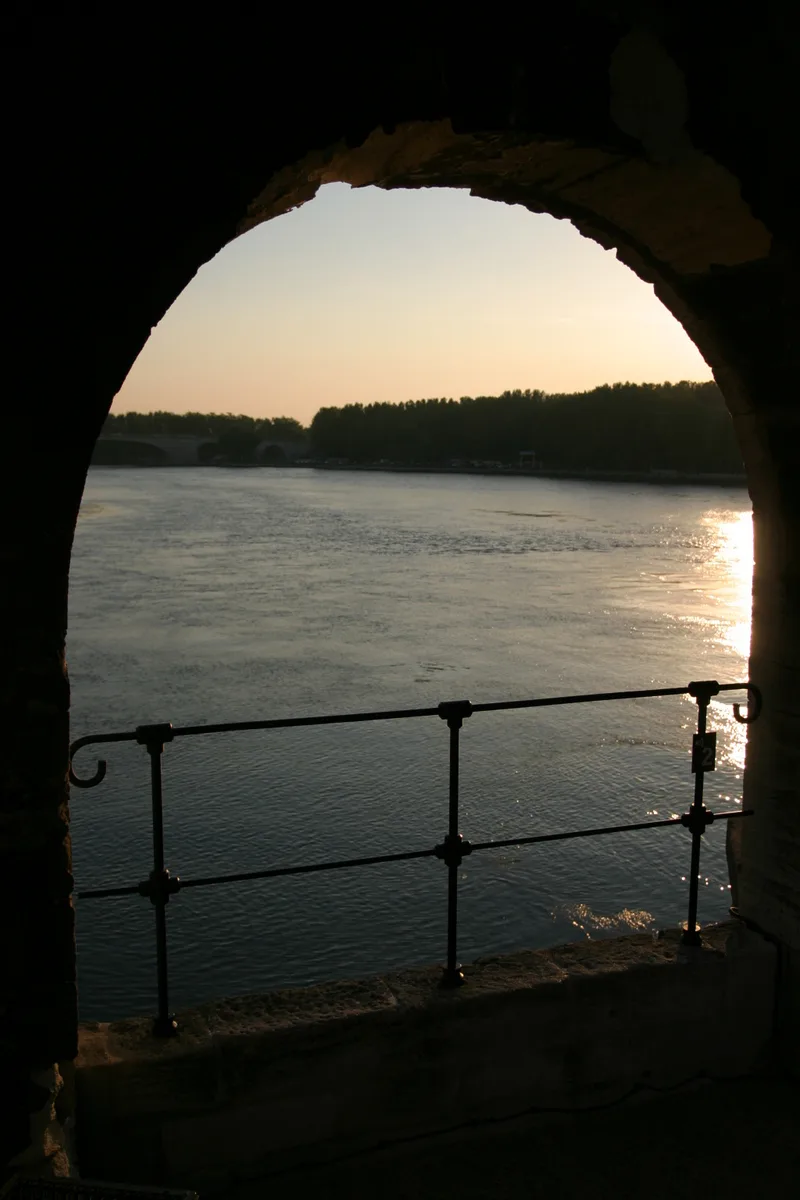
The Jardin des Doms climbs the rock behind the cathedral and gives the best free view in the city, over the Rhône and the broken bridge. It is the natural afternoon counterweight to a morning indoors, and it pairs well with a slow circuit of the ramparts back towards the Porte de la République. Wear shoes that cope with the slope, and carry water in the warm months.
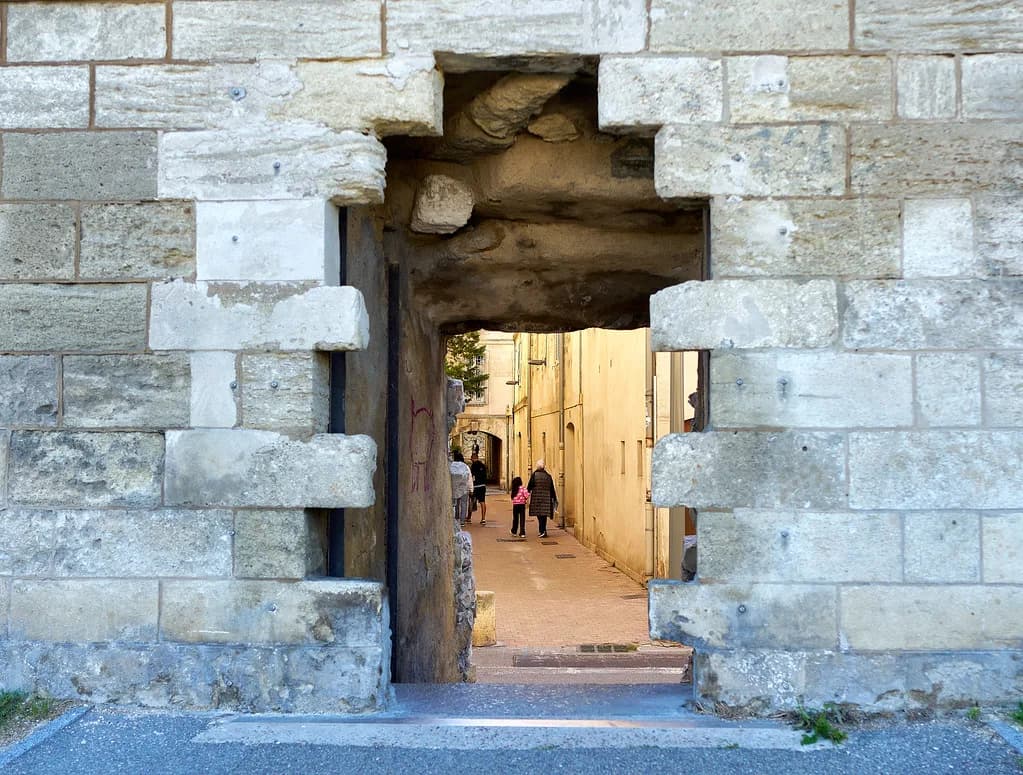
The ramparts themselves are the other half of this walk: the complete ring of walls is what makes Avignon's centre feel enclosed and easy to navigate. A loop from the palace hill around the southern walls and back through the streets takes a relaxed couple of hours without any ticketed stop. Treat it as the flexible slot in the plan that absorbs a late start or a long lunch.
Day Three: A Half-Day Out to the Pont du Gard
The Pont du Gard is about a 30-minute drive from central Avignon, so it works as a half-day rather than a stroll. The aqueduct area is free to enter, with cultural areas charged at €8 per adult and parking at €9 for the day. The site runs from 8am to midnight daily, and you cannot climb on the aqueduct itself: you cross the modern bridge alongside for a close view.
Without a car, this trip needs a booked tour or a bus connection, which is why it belongs on day three rather than squeezed into day one. The picnic you bought at Les Halles earns its keep here, eaten by the river watching kayakers pass under the arches. If your third day is a travel day, drop the aqueduct and keep the city instead: the rail connections make a morning departure easy.
Where to Eat: Breakfast, Lunch and Dinner Spots Around Les Halles and the Palace Square
Near Place Saint-Didier, Maison Violette is a bakery for croissants and coffee, open Tuesday to Saturday from 7.30am to 7pm, which makes it a workable first stop on any day except Sunday or Monday. From there it is a short walk to Les Halles for picnic provisions. If you would rather sit down later, Café Saint-Jean on Rue du Général Leclerc serves lunch on a square near the market.
For dinner, La Mirande on Place de l'Amirande sits close enough to the palace that you can see it from the terrace. Its bistro, Le Bistrot de Florent, serves lunch from 12pm to 1.45pm and dinner from 7.30pm to 9.45pm daily, and the bar runs from noon to midnight. This is a splurge end to the day rather than a cheap eat, so book ahead if you want the terrace.
Opening Days and Times That Shape the Plan
Three facts drive the whole itinerary. Les Halles d'Avignon runs Tuesday to Sunday, 6am to 2pm, so Monday visitors lose the market. The Pont d'Avignon and the Palais des Papes both shorten their hours outside the March-to-November season, and the cathedral splits its day around lunch. Build the plan around those windows rather than around a fixed list of sights.
The market plan is the one most easily wrecked, because a Monday in Avignon means no Les Halles and a quieter start elsewhere in the centre. Markets in Avignon sets out the other market options and their days if this timing catches you out. Beyond that, keep the palace and bridge on the same day so the combined ticket does its work.
Tickets and Costs: What the Combined Bridge, Palace and Gardens Ticket Saves You
Tickets to the Pont d'Avignon and the Palais des Papes are sold separately, and you can also buy a combined ticket that folds in the palace gardens — usually the obvious purchase if you are seeing all three in one day. Check current prices at the bridge or the palace ticket office and buy there to skip the separate queues.
Beyond tickets, budget for the market picnic, museum entry on day two and the Pont du Gard day if you go: the aqueduct area itself is free, but the cultural areas and parking add up. Prices are published by the sites themselves, so confirm the current figures on the official Palais des Papes and Pont du Gard pages before you travel. Museum pricing sits on the individual museum pages.
When to Go: Spring, Autumn and the Summer Festival Crowds
Spring and autumn are the sweet spots: April and October bring good weather without the summer crush, and the light on the limestone is at its best. Summer from June to August is hot and busy, and it coincides with lavender season in Provence from mid-June to mid-July if you want the fields in bloom. The Festival d'Avignon fills the city in July, so book around it or join it deliberately.
The trade-off is straightforward: the quietest weeks are cooler and shorter on daylight for the gardens and the evening square, while July gives you the festival and the crowds together. Pick spring or autumn for a weekend where the monuments are the point, and summer only if the lavender or the festival is the reason for the trip.
Getting There and Getting Around: the Two Avignon Stations and the Walkable Centre
Avignon has two stations: the TGV station outside the centre, where rental cars are available, and the city-centre station, so check your ticket before you book. Trains run from Paris in a little over 2.5 hours and from Marseille in about an hour, which makes Avignon an easy add-on to a longer Provence trip. Once inside the walls, most of the plan is on foot.
There is also a little tourist train from the Palais des Papes that loops the main sights in 45 minutes, useful if mobility is a concern or the day is hot. Bike rental is another quick way to cover the ramparts. Neither replaces walking the palace hill and the market quarter, which are close enough to link on foot.
Common Planning Mistakes That Eat a Day in Avignon
The biggest planning error is arriving on a Monday and assuming the market will be there, when Les Halles d'Avignon runs Tuesday to Sunday. The second is buying separate tickets for the bridge and palace when a combined ticket is available and generally cheaper. The third is treating the Pont du Gard as an afternoon stroll when the drive alone takes about 30 minutes each way and the parking charge applies.
A fourth is forgetting that the cathedral closes for lunch from October to May, catching out anyone who saves it for a midday break. Finally, do not stack two Provençal cities into one weekend without checking train times: an Avignon plan of two full days plus travel leaves little room for a second base. The Aix-en-Provence itinerary shows how to build a comparable plan if you are choosing between the two.
Plan Your Visit
Two days is the right call for most weekend breaks: a full monument-and-market day, then a slower morning in the museums and an afternoon in the Jardin des Doms. Book the palace and bridge visit for the same day to use the combined ticket, and check the market's Tuesday-to-Sunday opening before fixing your dates. Keep the Pont du Gard for a third day only if you have a car.
For the wider picture, the main guide to things to do in Avignon sits alongside the restaurant, market and museum pages linked above, so you can build the trip in one place. Confirm opening hours and prices on the official monument and museum pages shortly before you travel, since seasonal windows shift through the year.
Explore more Avignon guides
Frequently Asked Questions
Is one day in Avignon enough?
One full day covers the essentials: Les Halles d'Avignon in the morning, the Pont d'Avignon, the Palais des Papes and its gardens, then the cathedral and Place d'Horloge in the evening. It is a packed day with a fair amount of walking. Add a second day if you want the Petit Palais or Musée Calvet without rushing.
What should you not miss on an Avignon itinerary?
The Palais des Papes and the Pont d'Avignon are the two headline monuments, and buying the combined bridge, palace and gardens ticket covers both plus the palace gardens. Les Halles d'Avignon and Place d'Horloge give you the everyday city between the sights. On a second day, the Jardin des Doms is the best free view in town.
Should you see the Palais des Papes or the Pont d'Avignon first?
Do the bridge first, arriving at opening or before 10am to beat the tour groups, then move up to the palace. The two are minutes apart and the combined ticket covers both, so the order is about crowds rather than logistics. The palace deserves the longer slot.
Is Avignon walkable?
Yes. The walled centre holds the palace hill, Les Halles and Place d'Horloge within a short walk of each other, and the ramparts make a loop of their own. A bike rental or the little tourist train from the Palais des Papes helps if you want to cover more ground or avoid the heat.
How do you get from Avignon to the Pont du Gard?
The aqueduct is roughly a 30-minute drive from central Avignon, so a car or a booked tour is the practical route. The site area is free, with cultural areas and parking charged separately, and it runs from morning to midnight daily. Without a car, treat it as a half-day and check tour or bus options in advance.
When is the quietest time to visit Avignon?
Spring and autumn are the calmest and most comfortable options, with April and October the usual picks for good weather without the summer crowds. July brings the Festival d'Avignon and the lavender season at once, so it is the busiest month. Check the festival dates before booking if you want a quiet city.
Which day should you avoid for the market in Avignon?
Les Halles d'Avignon runs Tuesday to Sunday from 6am to 2pm, so Monday visitors miss the market entirely. Build your first morning around the market on any other day, and shop there before the monuments for picnic supplies. If you land on a Monday, swap the order and do the palace hill first.
Sources
Notes for French city breaks
Optional updates to our guides.
You might also like
Continue reading
More guides you'll find useful