Arles Old Town: What to See on a Historic Centre Walk
Plan a walk through Arles old town: the Roman arena, theatre and Alyscamps, the Saint-Trophime cloisters and the squares and streets that link them all.
On this page
Arles old town is worth a single unhurried day, and it rewards that day best on foot. The historic centre holds more than 100 listed Roman and Romanesque buildings and ruins, among them a Roman amphitheatre, an antique theatre, the Cryptoportiques, the Roman baths of Constantin, the Saint-Trophime cloisters and gate, and the Alyscamps, and UNESCO has listed the city as a World Heritage Site since 1981. You do not need to tick off every monument; a walking order that moves from the Roman sights to the Romanesque ones keeps the day coherent.
This guide is about the old town itself, not the surrounding Camargue or the wider commune, which covers 720 square kilometres and stretches from the Alpilles to the marshes. Plan your day around the centre's streets and squares and you will spend your time looking at buildings rather than covering ground. If you are still weighing up the city against other Provençal stops, our answer to is Arles worth visiting sets out what you get and who it suits.
How Arles Old Town Is Laid Out
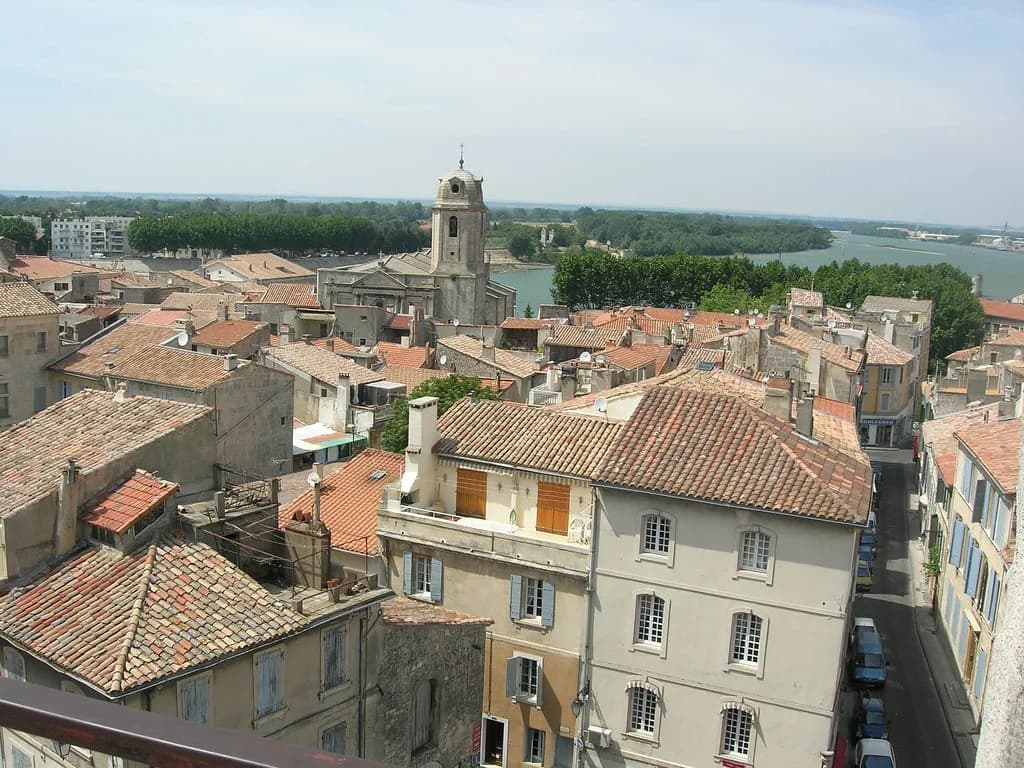
Arles sits on both banks of the Rhône, at the edge of the delta where the Camargue begins. The preserved historic centre is on the north bank, inside a tight ring of streets where most of the protected buildings sit. That compactness is the reason a single day works: the Roman arena, the antique theatre and the Place du Forum are close enough that you cross between them on foot without planning transport.
Think of the centre in three layers rather than one sight after another. The Roman layer is the amphitheatre, the theatre, the Cryptoportiques, the baths of Constantin and the Alyscamps; the Romanesque layer is Saint-Trophime with its gate and cloisters; and the squares and lanes between them are where you pause. The Espace Van Gogh, the restored former hospital, sits at the edge of the centre and makes a natural hinge between the two.
Start at the Roman Amphitheatre
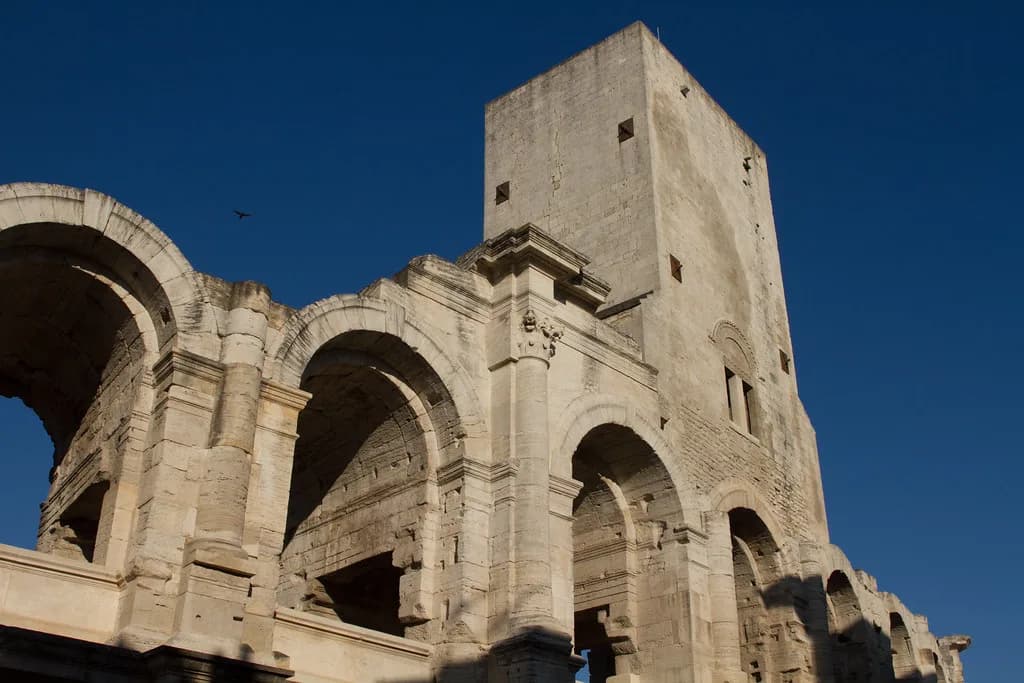
Begin at the Roman Amphitheatre, the arena, because it is the most obviously Roman thing in the city and sets the tone for everything after. It is one of the monuments that made Arles a UNESCO World Heritage Site, alongside the antique theatre, the Cryptoportiques, the baths of Constantin and the Alyscamps. Walk around the outside first so you read the structure from street level before deciding whether to go further in.
Treat the arena as the anchor of the morning rather than a place to linger all day. The trade-off is that the centre is dense and you still have the theatre, the Cryptoportiques and a Romanesque church ahead of you, so give the arena a fixed slice of time and move on. If you want a documented archaeological collection to add depth, our guide to museums in Arles covers the options, including the Musée départemental Arles antique.
The Antique Theatre and the Cryptoportiques Next Door
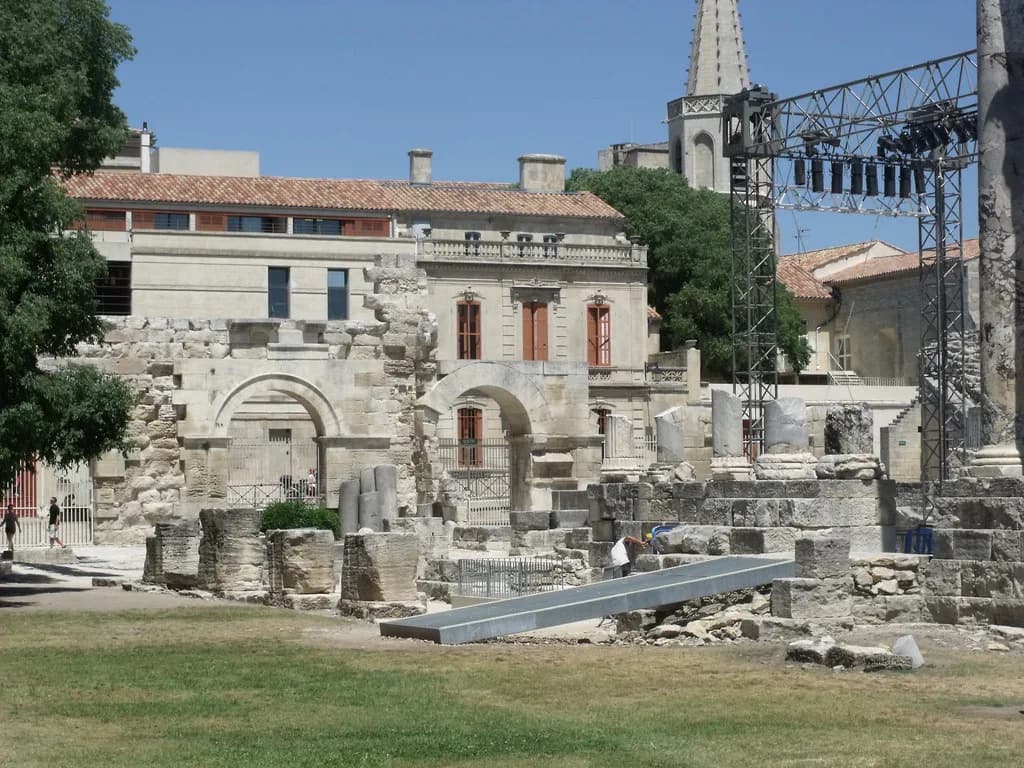
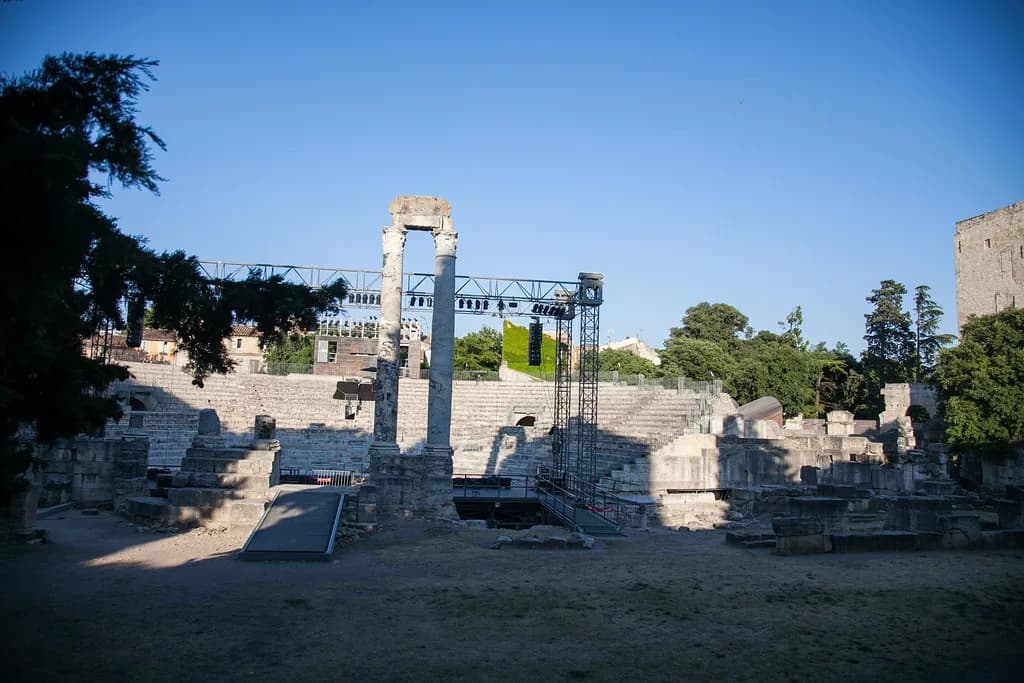
The Antique Theatre is the next stop, close enough to the arena that you should see it on the same leg of the walk. Both are listed among the city's protected Roman monuments, and seeing them in sequence makes the difference between a theatre and an amphitheatre legible without a guidebook. Photographs do not do the pair justice; the scale is what registers.
The Cryptoportiques belong to the same Roman group, an underground element of the city's heritage rather than a standalone sight. Slot them in here, between the theatre and the squares, so your Roman stops run together before the walk turns medieval. The centre's layout is the one genuinely useful thing to learn early: get your head around this cluster and the rest of the day is a straight route south.
Place du Forum as a Pause, Not a Sight
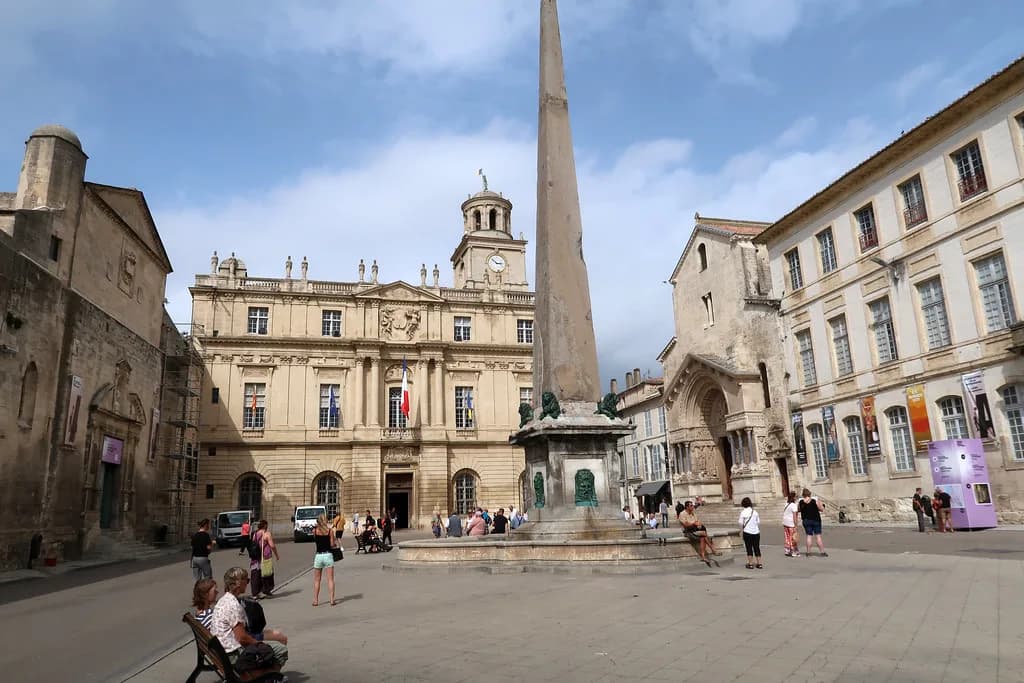
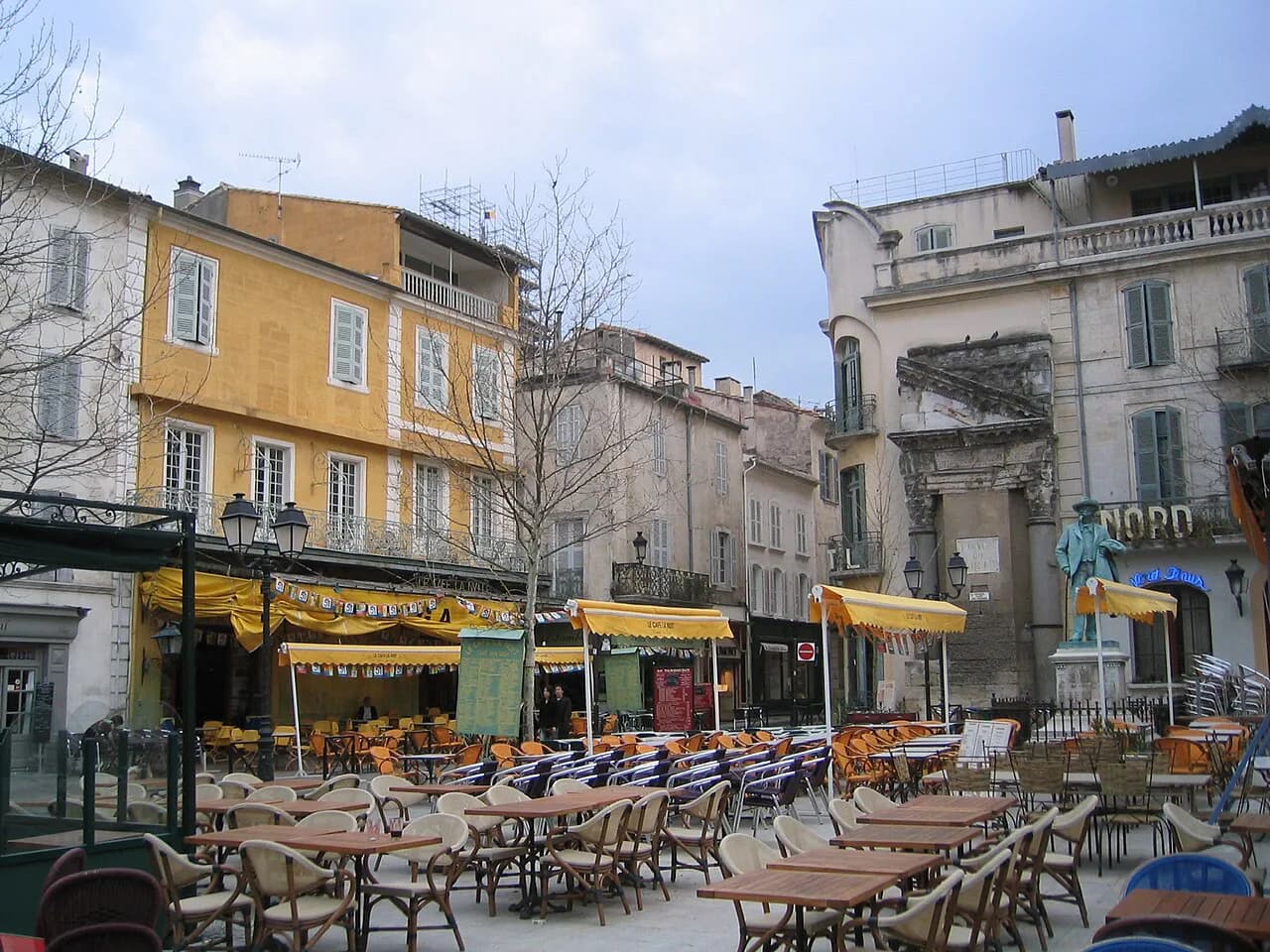
Place du Forum is the natural place to stop, because it sits in the middle of the walk and does the job a square should do: it breaks the monuments up. One visit will also let you see whether the old town suits a longer stay, which our Arles itinerary sets out day by day. Use it as a pause with a purpose, not another item on a checklist.
The centre's other squares work the same way. Place de la République is free to walk through and to stand in, and the same is true of the streets between the Roman and Romanesque stops, so push the budget sights to the morning and leave the paid interiors for the afternoon. Our list of free things to do in Arles covers the zero-cost options properly.
Saint-Trophime: The Gate and the Cloisters
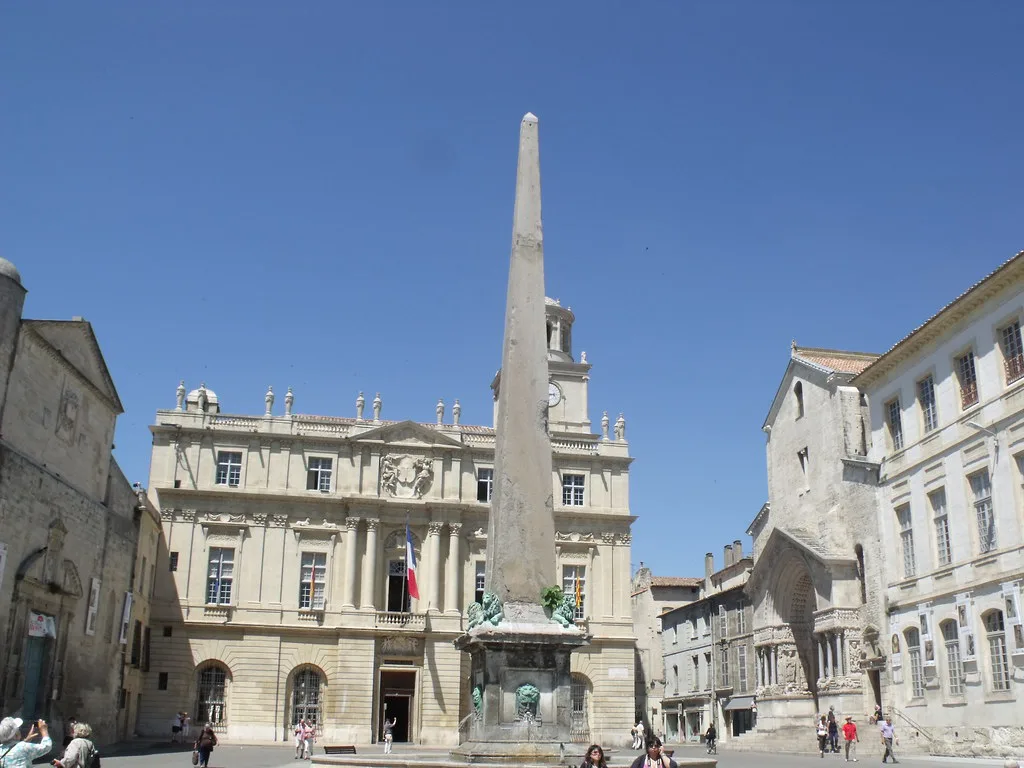
Saint-Trophime matters because it marks the shift from Roman to Romanesque Arles, and the gate and cloisters are the two parts to look at. Both are listed among the city's historic monuments and among the reasons UNESCO inscribed the city. The cathedral's cloisters are the quieter half: slow down here rather than rushing through to the next square.
This stop is where the day changes character. Everything before it is monumental and outdoors; Saint-Trophime is carved and enclosed, which is why it makes a sensible midpoint for a half-day rather than the finale. Warm days make the difference obvious, and a short stop with time to look beats a long one spent reading plaques.
Espace Van Gogh and the Former Hospital
The Espace Van Gogh is the former hospital and hospice, restored in 1986, and it now houses the multimedia library, the city archives, the Collège International des Traducteurs Littéraires, a university branch, an exhibition space and shops. It is on the edge of the centre, which makes it the right place to take stock. The building is named for Vincent van Gogh, who arrived in Arles in February 1888; Paul Gauguin later came at his request and painted Les Alyscamps and Café de Nuit here.
Van Gogh is the other story of Arles, distinct from the Roman and Romanesque one, and the centre carries both without confusing them. The useful habit is to notice which layer you are looking at: an old hospital building with a courtyard is not the same kind of stop as a Roman theatre. Keep the two separate and the day has a shape.
The Alyscamps
The Alyscamps, the Roman cemetery, is the last stop and the reason to walk south of the centre. It is a UNESCO-listed monument in the same protected group as the arena and the theatre, but its character is entirely different: below ground, quiet and linear. Arrive there at the end rather than the start, because after the arena and the theatre it reads as the natural close.
Distance is the trade-off. The Alyscamps lies south of the historic centre, so the return leg is the longest walk of the day, and if your energy dips it is the sight to drop. If you only have half a day, leave the Alyscamps out and finish at Saint-Trophime instead. The city's other Roman sites, including the Alyscamps itself, are set out in our guide to things to do in Arles.
Which Museums Reward a Second Half-Day
The Réattu Museum and the Departmental Museum of Ancient Arles are the two to add when you have a second half-day, and they are located at opposite ends of the centre. The Departmental Museum of Ancient Arles occupies a modern building on the banks of the Rhône, conceived by the architect Henri Ciriani, so the visit is as much about the building as the collection.
Add the Museum of the Camargue or the Arlaten Museum if the city's traditions interest you more than its archaeology; both appear on the city's official list of museums. Do not try to fit every museum into a single day. Mulling over which of these to include can wait until you have seen the centre on foot, which is when your preferences become clear.
A Suggested Route in Walking Order
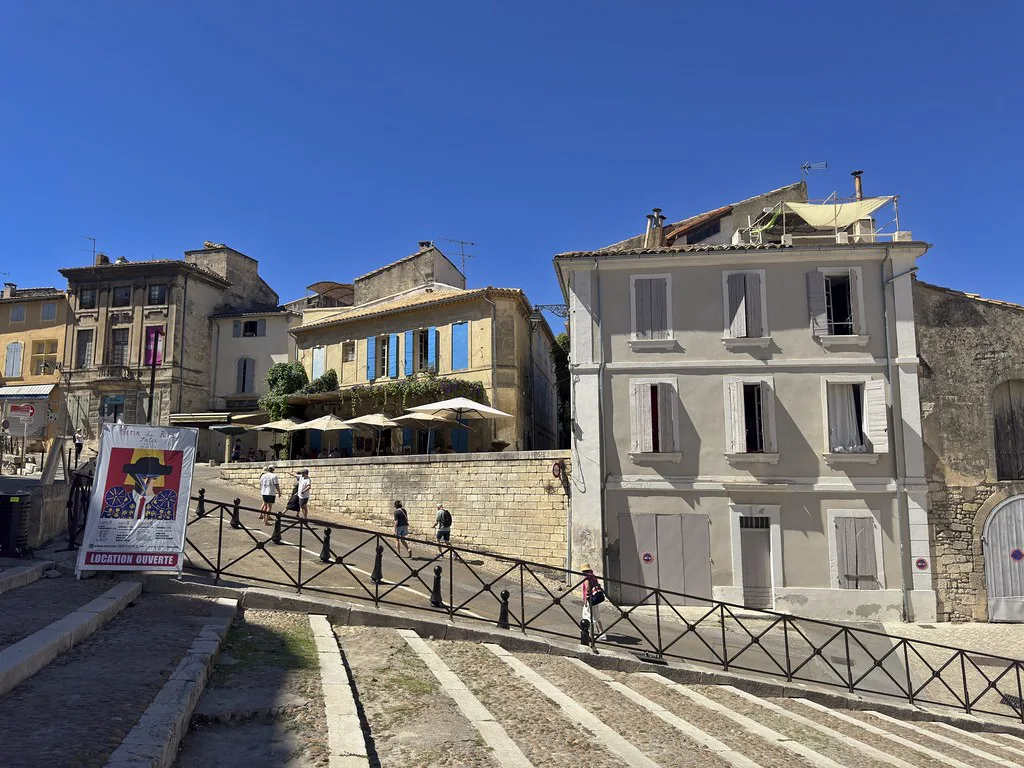
Here is the order: Roman amphitheatre, antique theatre, Cryptoportiques, Place du Forum, Saint-Trophime, Espace Van Gogh, then the Alyscamps to finish. That sequence runs from the Roman layer through the Romanesque and the Van Gogh layer and ends at the cemetery, which is the logical last stop. It also keeps the longest walk to the end, when you already have the day's sights behind you.
If you are staying the weekend, the same route works in reverse on the second day, starting at the Alyscamps and finishing at the arena. If your visit falls on a Sunday, the shopping is limited: check what the Boulevard Émile-Combes shops are doing before you plan an afternoon around browsing. Our guide to shopping in arles covers the centre's shops.
Where to Pause for Food and Drink
Pause on Place du Forum or around it for a morning coffee, then hold lunch until you have finished Saint-Trophime, when the walking half of the day is done. Our pick for dinner is La Gueule du Loup, which we would book ahead of the trip rather than leaving to chance. Full listings are in our guide to the best restaurants in Arles.
The market is a separate reason to choose which day you visit Arles, and its usefulness depends on what is running that day. Our Arles Markets guide sets out the market days; figure out which morning works, then build the walk around them. If your dates are open, a market morning plus an afternoon on the Roman route is a strong weekend.
Plan Your Visit
Arles old town is a half-day on foot if you stay at street level and a full day if you add one museum and the Alyscamps. Start at the arena, work south through Saint-Trophime and the Espace Van Gogh, and end at the cemetery. Check opening times and ticket prices with each monument and museum before you go, since they vary by site and season.
If you are weighing Arles against another Provençal city, our Avignon old town guide and our aix-en-provence old town guide make the comparison honest: Arles is smaller and denser, and its centre can be covered on foot. Whichever you choose, plan around the buildings rather than a checklist, and the day will be better for it.
Explore more Arles guides
Frequently Asked Questions
Is Arles old town worth visiting?
Yes, if you want Roman and Romanesque buildings within walking distance of each other. The centre holds the amphitheatre, the antique theatre, the Cryptoportiques, the baths of Constantin, the Saint-Trophime cloisters and gate, and the Alyscamps, and UNESCO has listed the city as a World Heritage Site since 1981. If you want bigger-city scale, choose another stop.
How long does it take to walk around Arles old town?
Plan a half-day for the compact route: arena, theatre, Cryptoportiques, Place du Forum, Saint-Trophime and the Espace Van Gogh. Adding the Alyscamps, which sits south of the centre, and one museum turns it into a full day. There is no need to plan transport between the sights in the centre.
What are the main Roman sights in Arles old town?
The Roman Amphitheatre (the arena), the Antique Theatre, the Cryptoportiques, the Roman thermal baths of Constantin and the Alyscamps are the main Roman monuments in the protected centre. The remains of the Roman circus are also listed. See them in sequence, with the arena first and the Alyscamps last.
Is the Arles arena in the old town?
Yes. The Roman Amphitheatre sits inside the preserved historic centre and is one of the monuments that made the city a UNESCO World Heritage Site. Start there and walk south through the theatre and the squares; you will not need transport between the stops.
What is Place du Forum in Arles known for?
Place du Forum is the square to use as a pause in the middle of the walk, a break between the Roman monuments and Saint-Trophime rather than a sight in its own right. Treat it as a place to sit, eat and reset rather than a stop to photograph and leave.
Where are the Saint-Trophime cloisters?
The Saint-Trophime gate and cloisters are part of the cathedral complex in the historic centre, listed among the city's historic monuments and among the Romanesque buildings that shaped the UNESCO listing. They mark the shift from the Roman layer of the city to the Romanesque layer.
Is Arles old town walkable in a day?
Yes. The centre's sights are close enough to cover on foot in a single day, with the Alyscamps as the longest leg because it is south of the centre. If your energy dips, drop the Alyscamps rather than the middle of the route. Comfortable shoes are essential for the pavements.
What museums are in Arles old town?
The Réattu Museum and the Departmental Museum of Ancient Arles repay a return visit, and the Departmental Museum occupies a modern building on the Rhône designed by Henri Ciriani. The Museum of the Camargue and the Arlaten Museum cover the city's traditions. Add one to a second half-day rather than squeezing them into the walking route.
Sources
Notes for French city breaks
Optional updates to our guides.
You might also like
Continue reading
More guides you'll find useful