Avignon Old Town: What to See and How to Walk It
Plan a walk through Avignon's old town: Place de l'Horloge, the Palais des Papes, the Pont Saint-Bénézet and the Rocher des Doms, with ticket prices.
On this page
Avignon's old town is a compact walled circuit where the popes' palace, the clock square, the broken bridge and a hilltop garden sit within roughly twenty minutes of each other on foot. You can see the headline sights in half a day, but a full day lets you add a museum and a long pause above the Rhône. This guide gives you the order to walk them in, the ticket maths and the honest trade-offs.
The centre is small enough that you rarely need transport once inside the ramparts, so the practical decision is where to start and what to pay for. Begin at Place de l'Horloge, work uphill to the Palais des Papes, finish in the Rocher des Doms gardens, and treat the bridge as a separate stop below the palace walls.
What Avignon's old town is and where it sits
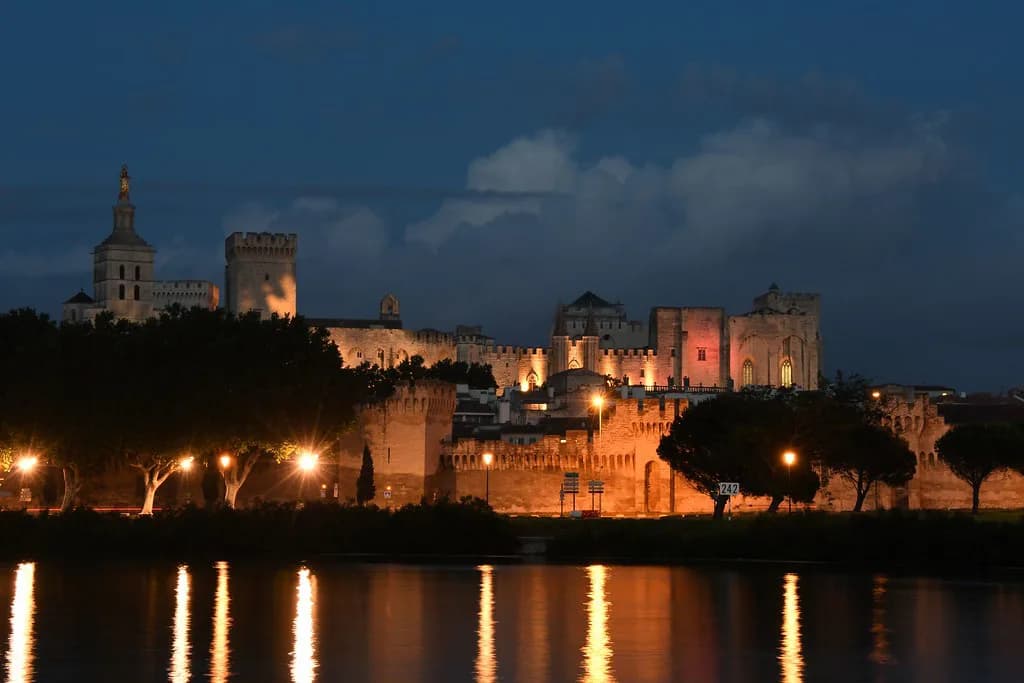
Avignon's historic centre is the UNESCO-listed ensemble inside the city walls, a tight knot of medieval streets on the left bank of the Rhône. The Palais des Papes dominates the top of the town, with the cathedral beside it and the Rocher des Doms gardens on the rock above the river. Below, Place de l'Horloge acts as the everyday hub of the old town.
Everything you came for sits within a short walk: the palace, the Petit Palais museum, the bridge and the main square. That compactness is the reason the old town suits a weekend rather than a week, and the reason a single ordered route beats a checklist of separate trips.
If you are still deciding whether the city earns a break, our take on whether Avignon is worth visiting sets the old town against the rest of the region.
How the centre is laid out
Think of the old town as three layers. Place de l'Horloge is the flat, busy base with the Hôtel de Ville and the Opéra Grand Théâtre on it, ringed by arcaded cafés and restaurants. Above it, the Palais des Papes and the Cathédrale Notre-Dame des Doms occupy the high ground, and the Rocher des Doms garden sits on the rock behind them, looking over the Rhône.
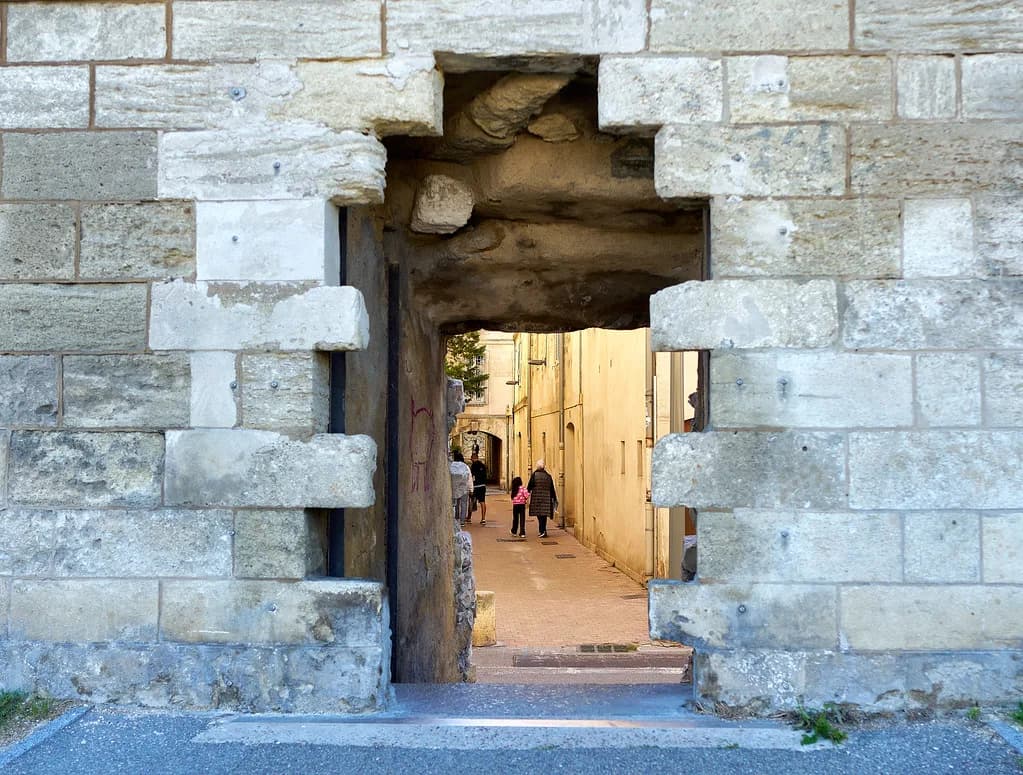
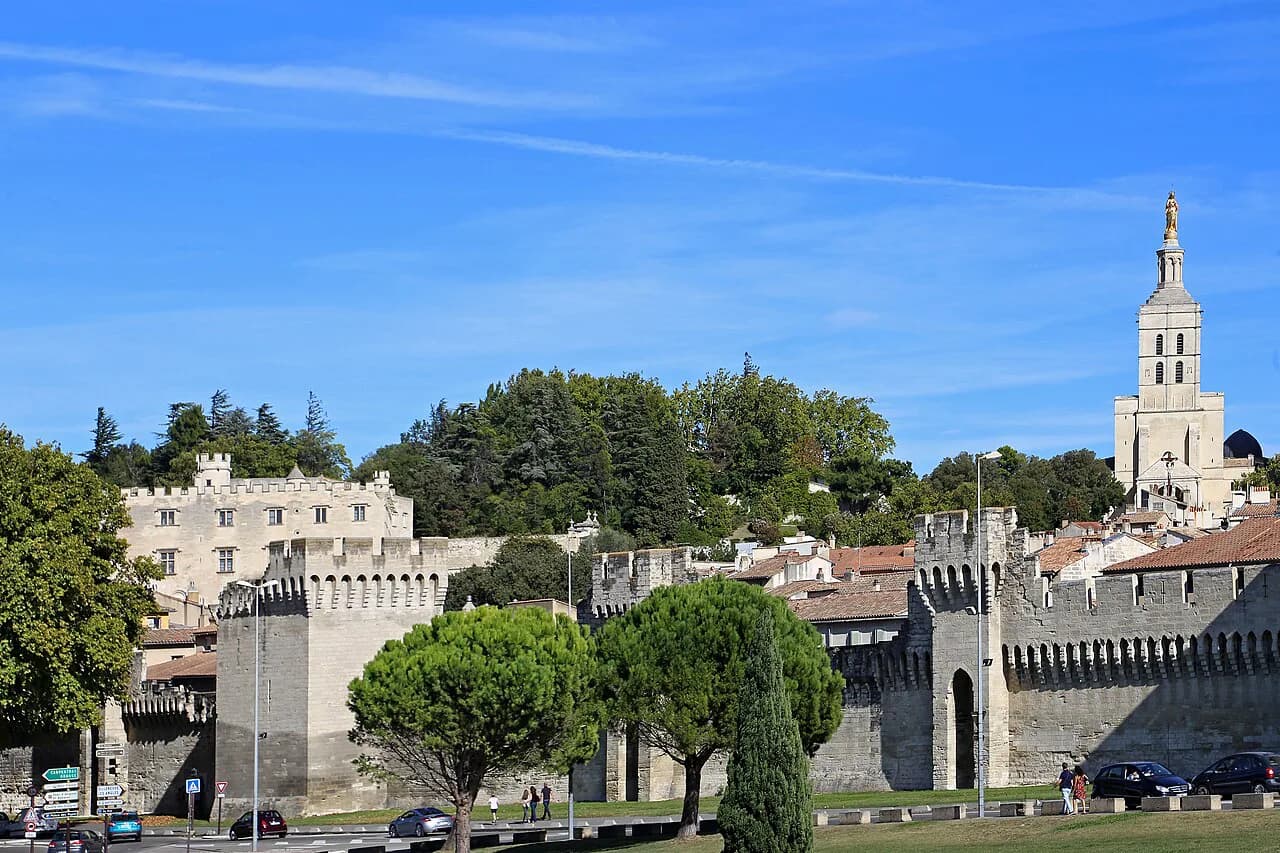
The Rhône forms the western edge, with the Pont Saint-Bénézet pushed out over the water from the walls. The ramparts still wrap the centre, so you can navigate by keeping the river on one side and the palace rock on the other. Streets are narrow and signposted, and the climb between the square and the palace is short but steady.
If you only have a day, the broader list of things to do in Avignon fills in the sights beyond this circuit and helps you sequence them.
A core half-day walk
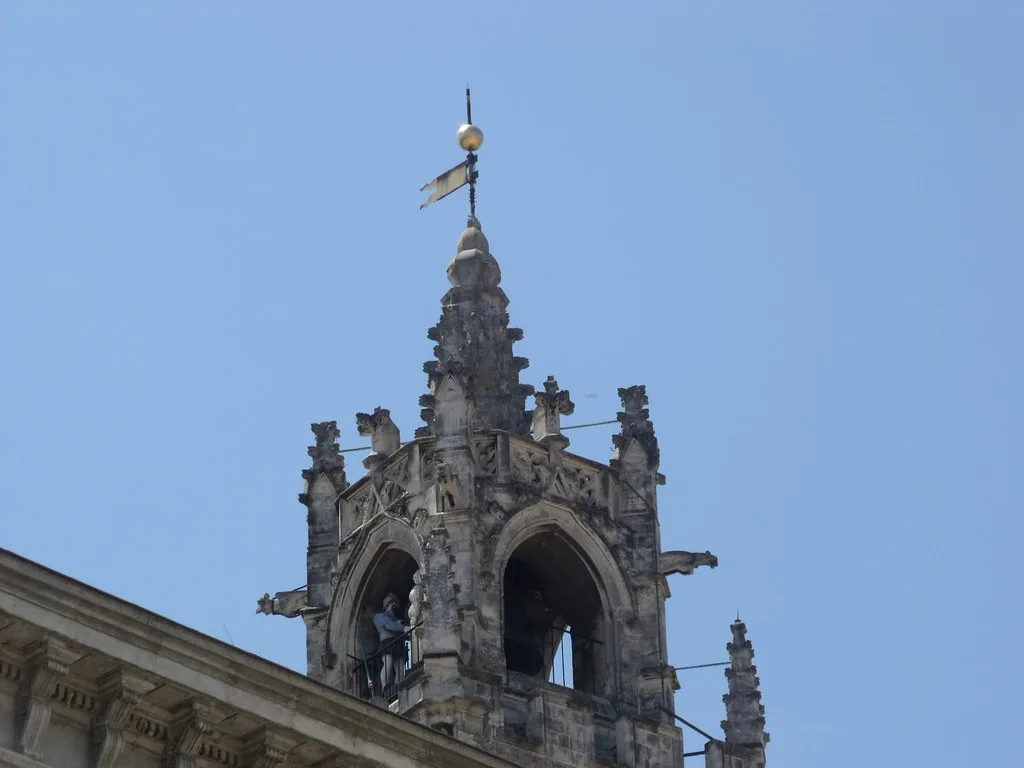
Start on Place de l'Horloge under the clock tower and look at the Opéra Grand Théâtre and Hôtel de Ville facing each other across the square. From there, head uphill towards the palace and pass the Basilique Saint-Pierre, a Provençal Gothic church with an ornate, flame-like façade, on the way. Allow about two hours for this stretch if you stop to look rather than march.
At the top, the Palais des Papes and the Cathédrale Notre-Dame des Doms stand side by side, the cathedral's Romanesque bell tower topped by a gilded statue of the Virgin. Continue behind them into the Rocher des Doms, where terraces, trees and water give you the panorama back over the river plain. This is the natural place to finish the walking half of the day.
If you want a structured version with timings attached, our Avignon itinerary slots this walk into a wider 24- and 48-hour plan.
The Palais des Papes and the papal gardens
The Palais des Papes is the largest Gothic palace in the world and the largest medieval fortress in Europe, the seat of nine popes in the fourteenth century. Inside, you walk the ceremonial rooms and chapels of the papal court; the sheer scale of the halls is the thing that stays with you. It is the one sight in Avignon worth paying for even on a tight budget.
The tourist office sells a combined ticket covering the Palais des Papes and Jardin des Papes plus the Pont d'Avignon at 19.50 euros, which is the sensible purchase if you intend to do both. Buying separately only makes sense if you plan to skip one of them. Check the tourist office site for what each ticket currently includes before you commit.
For the rest of the city's collections, museums in Avignon covers the paid and free options in more depth and helps you decide where the palace fits.
The Pont Saint-Bénézet and the view back
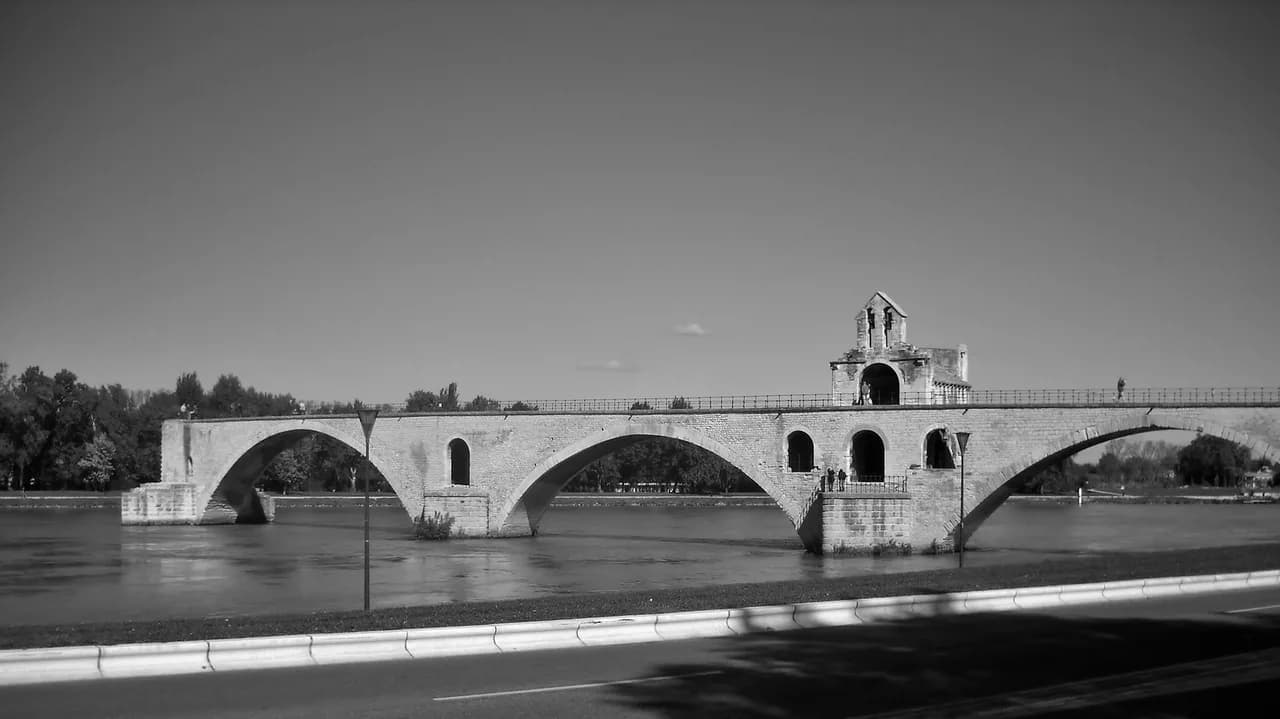
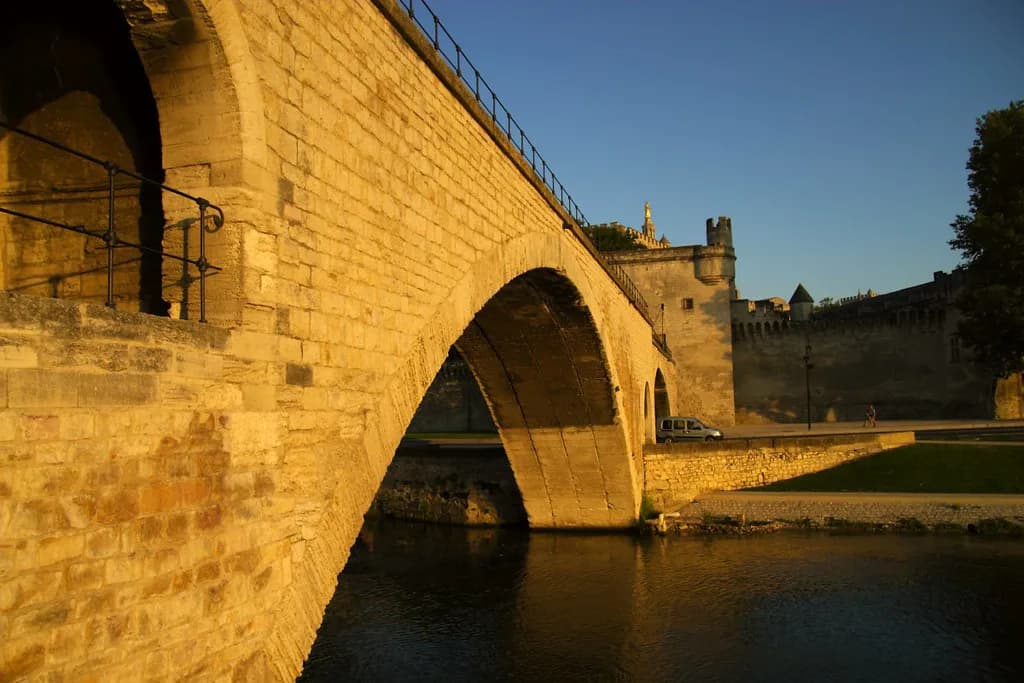
The Pont Saint-Bénézet, the surviving fragment of the medieval bridge, stretches out over the Rhône from below the palace rock. Only four of its original twenty-two arches remain, along with the small Saint-Nicolas chapel, so you are walking a stub rather than crossing the river. The reward is the view back up at the palace walls and the cathedral tower.
The bridge sits outside the main walking line, so either fold it into the combined ticket or treat it as an optional extra on a second pass. Morning light on the water is the reason to come early rather than at the end of the day.
Museums inside the old town
The Musée du Petit Palais sits next to the palace and holds a collection of paintings and sculpture that makes it a natural companion stop. The Musée Calvet covers fine art and archaeology in the lower town, and both give you a reason to slow down when the squares are crowded. Allow an hour each rather than trying to do both back to back.
Avignon's six municipal museums are covered on the tourist office's free museums page, so check which ones currently admit you without charge before you budget for the paid monuments. That distinction is the difference between a cheap day and an expensive one.
Place de l'Horloge and the arcaded cafés
Place de l'Horloge takes its name from the fifteenth-century clock tower and is the busiest square in the old town, edged with arcades and café tables. The Opéra Grand Théâtre and the Hôtel de Ville face each other across it, and in July the square becomes one of the stages of the Avignon Festival. That is the moment to expect crowds rather than quiet.
The square is the flat, central, easy-to-find reset point between sights. The arcades give you shade in summer, which matters on the climb to the palace.
When you want a proper meal rather than a café table, our picks for the best restaurants in Avignon point you beyond the square's tourist frontage.
The Rocher des Doms as the place to pause
The Rocher des Doms is the garden on the rock above the palace, reached by steps and terraces, with trees, fountains and pools that make it the best place in the city to sit down. The panorama takes in the Rhône, the bridge below and the plains beyond, and it is free to walk into. Treat it as the finish of the route rather than a detour.
The climb is short but steep, and the terraces are the reason to keep an hour spare at the end of the day rather than rushing back to the station. Come late afternoon for the light on the river.
When to go
Spring and early autumn give you the old town at a comfortable pace, with the squares busy but not overwhelmed. July is a different city: the Avignon Festival fills Place de l'Horloge and the palace courtyard with audiences and performers, which is thrilling if you want atmosphere and frustrating if you want quiet streets.
Our guide to the best time to visit Avignon weighs the seasons against crowds and cost without pretending there is one right answer.
Costs and tickets
The Avignon City Pass starts at 24 euros and bundles access to museums and monuments in Avignon and Villeneuve-lès-Avignon with discounts on guided tours and parking passes. It pays off if you plan to visit the palace, the bridge and at least one museum. If you are only doing the palace, the combined palace-and-bridge ticket is the simpler buy.
The Rocher des Doms garden and the streets of the old town cost nothing, so a budget day is entirely possible by mixing free museum entry with the squares and the viewpoints. Decide your paid stops first, then let the free ones fill the gaps.
For a balanced view of what the city gives you for the outlay, see is Avignon worth visiting before you fix your budget.
Getting to the old town and the tourist office
The tourist office sits at 41 cours Jean Jaurès, just outside the old town on the main approach from the station, and it is the place to pick up plans and confirm ticket inclusions. It opens Monday to Saturday from 9am to 6pm, and Sundays and public holidays from 10am to 5pm. Start there if you arrive by train and want the walk mapped out before you enter the walls.
The TGV station is a short walk from cours Jean Jaurès, which makes the old town reachable on foot without a taxi. Once inside the ramparts, walking is the only sensible way to move between the palace, the square and the bridge.
If you are comparing cities in the region, our Aix-en-Provence old town and Arles old town guides show how Avignon's centre differs in scale and in what it charges for.
Where the old town fits into your days
For a 24-hour visit, do the half-day walk in the morning, take the palace and the bridge in the afternoon, and end on the Rocher des Doms. For 48 hours, add a museum and a slow lunch on Place de l'Horloge, then use the second day for the city beyond the walls. The old town rewards a second pass, not a second checklist.
If you have time for one more stop inside the walls, our wider look at things to do in avignon should decide it for you.
Plan Your Visit
Avignon's old town works because it is walkable and compact: start on Place de l'Horloge, climb to the Palais des Papes, cross to the bridge and finish in the Rocher des Doms. Buy the combined ticket if you want both monuments, and take the City Pass if you are adding museums.
Use the tourist office on cours Jean Jaurès for plans and current inclusions, then let the streets between the sights fill the rest of your day. The route rewards a slow pace more than a long list.
Explore more Avignon guides
Frequently Asked Questions
What is there to see in Avignon old town?
The core sights are Place de l'Horloge, the Basilique Saint-Pierre, the Palais des Papes, the Cathédrale Notre-Dame des Doms, the Rocher des Doms gardens and the Pont Saint-Bénézet. The museums, including the Musée du Petit Palais and the Musée Calvet, fill in the rest of a day indoors.
How long does it take to walk around Avignon old town?
The core route from Place de l'Horloge up to the Palais des Papes and out to the Rocher des Doms takes about two hours at a look-around pace. Add an hour for the bridge and another for a museum to make it a full day.
Is Avignon old town worth visiting?
Yes, if you want a compact historic centre with the palace, the bridge and the gardens within a twenty-minute walk of each other. It is less rewarding if you want to avoid crowds in July, when the Avignon Festival fills the main square.
What is Avignon famous for?
Avignon is known for the Palais des Papes, the largest Gothic palace in the world, and for the Pont Saint-Bénézet, of which four arches remain. The Avignon Festival and the Rocher des Doms above the Rhône are the other reasons people come.
How much does it cost to visit the Palais des Papes and the Pont d'Avignon?
The tourist office sells a combined ticket for the Palais des Papes, the Jardin des Papes and the Pont d'Avignon, and a City Pass that bundles museums and monuments. Check the tourist office site for current prices and what each pass includes before you buy.
When is the best time to visit Avignon old town?
Spring and early autumn give you the old town at a manageable pace with the squares busy but not packed. July brings the Avignon Festival, which makes Place de l'Horloge and the palace courtyard far busier.
Sources
Notes for French city breaks
Optional updates to our guides.
You might also like
Continue reading
More guides you'll find useful