
Lille City Centre: What to See Around Grand Place and Vieux-Lille
Lille city centre is two places in one: the busy downtown around Grand Place, where the monuments and the shopping crowd together, and Vieux-Lille next door, where cobbled streets and brick-and-stone facades take over. Both are flat and compact enough to cover on foot, which is why a short break here can feel fuller than the map suggests. This guide sticks to that central pair and leaves the rest of the city to the wider Lille Neighborhoods overview.
What Lille city centre covers, and what sits outside it
The tourist office divides Lille into distinct quarters, and the centre is best understood as the downtown district plus Vieux-Lille. Downtown activity revolves around the Place du Général de Gaulle, better known as the Grand Place, ringed by the Vieille Bourse, the Opera House, the Grand-Garde, the Voix du Nord building and the Chamber of Commerce. Treat that square as the hinge of your visit and you will not spend the day doubling back.
The city spreads across 35 km², and several of its most interesting areas are separate quarters rather than extensions of the centre. Saint-Sauveur, the student-flavoured district with the town hall belfry, and Vauban, which holds the citadel and its park, each deserve their own half-day. If you have only a weekend, decide early whether the centre is your whole trip or a base for one excursion out of it.
Euralille is the exception worth flagging: it grew up around Lille-Europe station after the Channel Tunnel treaty made the city a rail crossroads between London, Brussels and Paris. It is a business district with the Parc Matisse and the Jardin des Géants, not a sightseeing quarter. You will pass through it on arrival rather than linger.
Where the centre sits and how the quarters connect on foot
Grand Place and Vieux-Lille sit side by side, and the whole central area is level, which makes it unusually easy to navigate without public transport. One traveller's account of a day in Lille describes the city as flat, fairly compact and simple to walk, and that is the single most useful thing to know when planning your timing. Wear comfortable shoes and you can cover the core without touching the metro.
Use Grand Place as your orientation point: from there you can head off to the other parts of the centre on foot, which is how most visitors structure the day. Walk into Vieux-Lille for the historic streets, then return to the square for a drink. The distances are short enough that a wrong turn costs you minutes, not an afternoon.
Grand Place: the natural starting point
The square carries the city's grandest civic architecture in a single sweep, and it is where the commercial life of the centre concentrates. Bars, cafés and takeaways line the surrounding streets, so it doubles as a lunch stop rather than a purely architectural detour. Arrive on foot from the station and the city unfolds in the right order.
La Vieille Bourse and its inner courtyard
The Vieille Bourse once served as the city's stock exchange under Spanish rule, and 24 merchant houses built in the same ornamental style enclose its arched inner courtyard. Step through the archway rather than photographing the facade and moving on: the courtyard is the point. It now hosts a second-hand book market, and the tourist office recommends timing a visit for when the booksellers are trading.
Vieux-Lille: cobbles, brick facades and the de Gaulle house
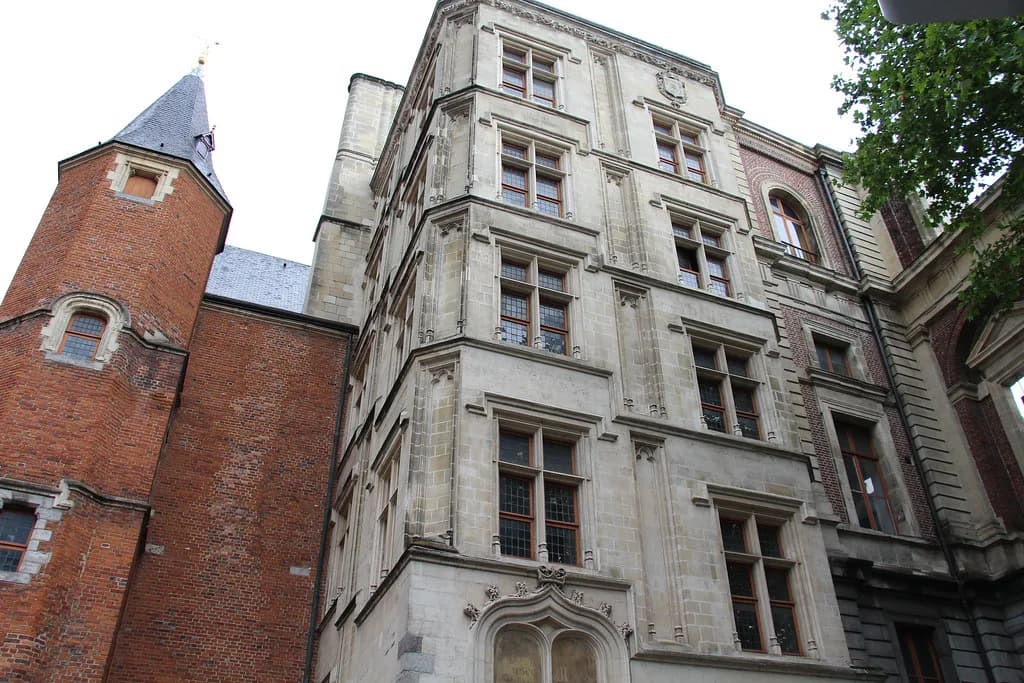
Vieux-Lille is where the city's Flemish and French inheritances sit most visibly together: cobbled lanes, brick walls banded with coloured stone and an eclectic mix of architectural styles. The tourist office highlights the house where Charles de Gaulle was born as one of the quarter's landmarks, alongside the cathedral and the Hospice Comtesse. Allow time to wander without a route; the appeal is the streets themselves, and guided walks of Vieux-Lille run if you want the history pinned down.
This is also where the cafés and independent shops cluster, and the atmosphere changes noticeably from the commercial bustle of Grand Place. If you only have an afternoon, choose between the two rather than rushing both. Vieux-Lille rewards a slower pace than the square.
Notre-Dame de la Treille and the Hospice Comtesse
Notre-Dame de la Treille Cathedral combines Gothic structure with a modern facade, and its interior carries mosaic floors and stained glass that justify more than a glance. The Hospice Comtesse, a former hospital turned museum, covers the city's medieval past through historical objects and artworks. Both sit within Vieux-Lille, so pair them in one loop rather than treating them as separate outings.
Check the cathedral and museum opening days before you fix your itinerary, since French museums commonly close one day a week and the pattern varies by venue. Confirm directly with each site for the days you plan to visit, and keep one flexible afternoon in case a closure shifts your plan.
Palais des Beaux-Arts and the République district
The Palais des Beaux-Arts ranks among the largest fine arts museums in France, holding paintings and sculpture from ancient Egypt through to 20th-century work. It sits on Place de la République in the République district, facing the Prefecture across the square, a 19th-century set piece of eclectic architecture laid out under Napoleon III. Boulevard de la Liberté, nearby, is the tourist office's example of that stylistic mix.
This quarter sits on the edge of the centre rather than within it, so budget a separate block of time rather than squeezing the museum between two Grand Place appointments. Collections of this size usually reward two hours or more. Buy tickets at the museum or check its own site for current admission rather than relying on second-hand figures.
Saint-Sauveur and the belfry: an optional extension
Saint-Sauveur is Lille's Latin Quarter, home to the former Faculty of Pharmacy, the Museum of Natural History and the Pasteur Institute. Its skyline landmark is the town hall belfry, 104 metres high, which the tourist office names as the best viewpoint over the city and its surroundings. Climbing it adds a distinct experience to a centre-focused weekend.
The area also has the Parc Jean-Baptiste Lebas and Gare Saint-Sauveur, plus a dense run of bars and restaurants. If you are in Lille for three days, this is a sensible second area to add after the centre. On a two-day trip, treat it as optional.
Wazemmes market: how far, and which morning
Wazemmes is famous for its market, which the tourist office lists as taking place every Sunday morning. It is a lively, bustling affair full of local produce, food stalls and eclectic treasures. The district is roughly a 20-minute walk from Grand Place, which makes it feasible as a morning outing without committing your whole day. Go early, shop, and walk back through the centre for lunch.
Beyond the stalls, Wazemmes has the Maison Folie Wazemmes with its cultural programme and a strong bistro culture the tourist office credits to residents preserving local habits. It feels like a working neighbourhood rather than a visitor quarter. Read the dedicated Wazemmes, Lille guide if the market is the reason you are coming.
Who the centre suits, and who should look elsewhere
The centre suits anyone on a short break who wants architecture, shopping and eating within a small radius, and it works well for families because it is flat and easy to navigate. It is also a sensible base for a one- or two-night stopover on a longer rail journey. If you want quiet streets, though, the crowds around Grand Place will wear on you. For a contrasting short city break built around a cathedral and champagne cellars, see these things to do in Reims.
Travellers drawn to canals, green space and quieter local life should weight their time towards Bois-Blancs and the Deûle canal, or towards Vauban and the citadel park. Business travellers arriving at Lille-Europe may find Euralille more convenient than the historic centre. Choose the quarter that matches how you want to spend the evenings, not just the mornings.
Eating in the centre
The streets around Grand Place hold the densest cluster of bars, cafés and takeaways, which makes the square a low-risk choice when you have not booked ahead. The station area is another practical option, with cafés, restaurants and shops around the building and a large shopping centre within a two-minute walk. For something more distinctive, Vieux-Lille's cafés and bistros suit a longer sit.
Mussels and chips are the local dish to look for, and the tourist office maintains its own restaurant and café listings if you want to book something specific. Prices vary widely across the centre, so compare menus posted outside before sitting down.
Getting in: stations and the metro
Lille-Flandres is the central station, an attractive building surrounded by eateries and shops and only a short walk from the shopping core and Grand Place. Lille-Europe, in Euralille, serves the high-speed lines to London, Brussels and Paris. Which one you use shapes your first impression of the city, but neither leaves you far from the centre.
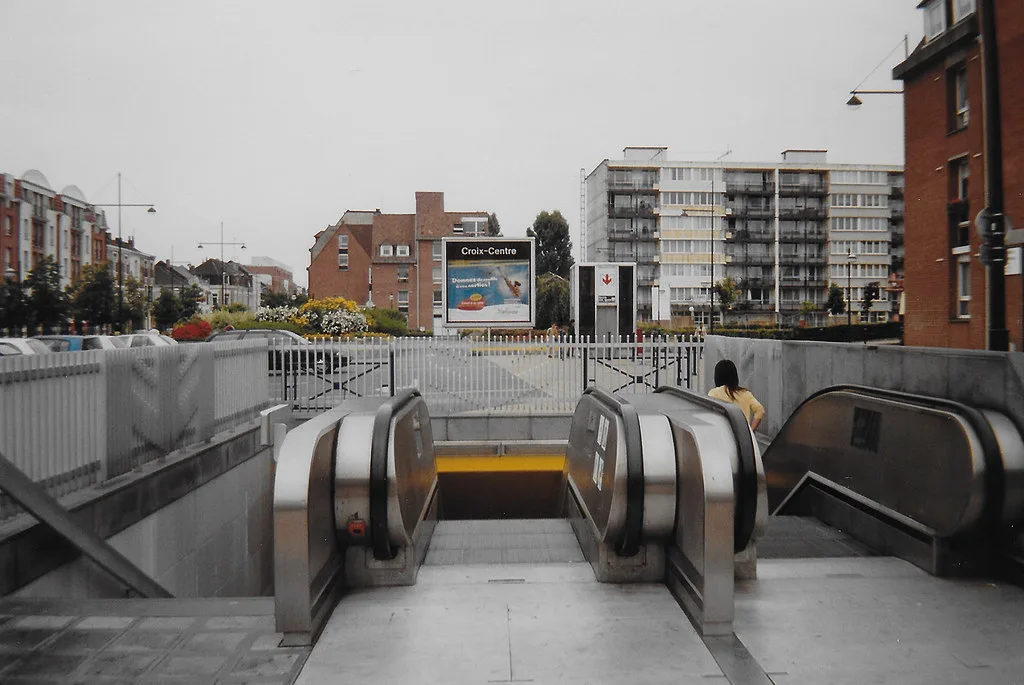
The metro covers the wider city, and the tourist office publishes mobility information and maps for visitors. For the centre itself you will barely need it. Save the tickets for a trip out to Wazemmes if the weather turns.
How much time the centre needs
A short stop of a day covers Grand Place, the Vieille Bourse courtyard and a wander through Vieux-Lille at an unhurried pace. Add the Palais des Beaux-Arts and you have filled a full day without leaving the central districts. The tourist office's own one-day itinerary is built on the same compact logic.
Two days lets you add Saint-Sauveur and the belfry, or a Sunday morning at Wazemmes, without rushing. Three days opens up Vauban and the citadel park. Beyond that, you are into the wider metropolis rather than the centre itself.
Practical rhythm: market days, Sundays and lunchtime
The Wazemmes market runs on Sunday mornings, which makes Sunday a market day rather than a quiet one in that district. The Vieille Bourse book market operates in the courtyard, and the tourist office advises visiting while it is open rather than assuming it trades daily. Plan shopping around those two fixed points.
The city works as a break at any time of year, with summer suiting outdoor cafés and slower wandering, and spring or autumn giving you the streets without the heat. The Braderie de Lille, the city's annual flea market, fills the streets with thousands of sellers and an eclectic range of treasures. If your dates are fixed, confirm the individual opening days of any museum you care about before building the day around it.
Plan Your Visit
Build your Lille city centre day around Grand Place, step into the Vieille Bourse courtyard, then give Vieux-Lille the rest of your morning. Add the Palais des Beaux-Arts only if you have a full day, and keep Sunday morning free for Wazemmes. That order matches how the centre actually sits on the ground.
Everything in the central quarters is walkable and flat, so the main planning decisions are which museum days to check and how much you want to spread beyond the centre. Get those two right and a weekend here feels generous rather than rushed.
Explore more Lille guides
Frequently Asked Questions
Is Vieux-Lille part of Lille city centre?
Vieux-Lille is a separate quarter immediately next to the downtown district, and the two connect on foot within minutes. The centre's activity concentrates around Grand Place, while Vieux-Lille holds the cobbled streets, the cathedral, the Hospice Comtesse and the Charles de Gaulle birthplace house. Treat them as one walkable area but two distinct atmospheres.
How long does it take to walk around central Lille?
The central quarters are flat and compact, and Grand Place to Vieux-Lille is a short walk. A day covers the square, the Vieille Bourse courtyard and a proper wander through Vieux-Lille; adding the Palais des Beaux-Arts fills the day. Wazemmes market is roughly a 20-minute walk from Grand Place.
What day is the Wazemmes market on?
The Lille tourist office lists the Wazemmes market as taking place every Sunday morning. It is about a 20-minute walk from Grand Place, so it works as a morning outing with a walk back through the centre for lunch.
Where is the book market in Lille?
The second-hand book market is held in the arched inner courtyard of the Vieille Bourse on Grand Place. The tourist office recommends visiting while the booksellers are trading, so check the days before you go; it does not run daily.
Is Lille city centre good for a day trip?
Yes. Grand Place, the Vieille Bourse and Vieux-Lille fit comfortably into a day, and Lille-Flandres station is a short walk from the shopping core. Add a museum only if you start early, since the Palais des Beaux-Arts deserves a couple of hours of its own.
What is there to see in Lille city centre?
Grand Place with the Vieille Bourse, the Opera House and the Chamber of Commerce, then Vieux-Lille with Notre-Dame de la Treille Cathedral, the Hospice Comtesse and the Charles de Gaulle birthplace house. On the edge of the centre, the Palais des Beaux-Arts faces the Prefecture on Place de la République.
Should I stay in the centre or another district?
The centre suits short breaks where you want architecture, shopping and restaurants within a small radius. Vauban and Bois-Blancs offer greener, quieter surroundings, while Euralille is a business district convenient for Lille-Europe station. Pick according to how you want to spend your evenings.