
Quartier de la Gare, Strasbourg: What the Station District Is Really Like
The Quartier de la Gare is Strasbourg's station quarter: a compact, functional district that most visitors cross through without noticing, and a handful choose deliberately. It rewards the second group with a real working-neighbourhood texture and a short walk or one tram hop to the Grande Île. Anyone who wants half-timbered charm outside the door should stay in Petite France instead.
The city's official neighbourhood list treats the station area as part of the Koenigshoffen, Gare-Laiterie and Les Halles grouping, which tells you something about how Strasbourg thinks of it: a transport and residential zone rather than a heritage set piece. It sits on the western edge of the centre, and the extension of tram line F has accelerated its transformation into what Cuej calls a district moving upmarket from its role as a popular inner-ring quarter.
Quartier de la Gare in a nutshell: what it is and who it suits
Think of this district as the city's front door rather than its sitting room. The Gare de Strasbourg is a striking glass-roofed station with a long concourse, and the streets behind it are a mix of offices, apartment blocks, cheap eateries and student-adjacent commerce. It is busy at commuter hours and entirely without the canal-side romance of the historic centre.
It suits travellers arriving late or leaving early, anyone who values a five-minute walk to a train over a fifteen-minute walk to a cathedral, and visitors on a tight budget who would rather spend on food than on a room with beams. It does not suit anyone hoping to step out of the hotel into cobbles and winstubs, or families who want the whole weekend to feel like a postcard inside the old town walls. If the cobbles-and-winstubs version of Alsace is what you are after, see our Colmar city guide for a base built around exactly that.
If you are weighing up where to anchor a short break, the wider set of Strasbourg Neighborhoods: 4 Area Guides helps you compare this functional quarter with the historic centre and the greener edges of the city before you commit.
Where the district sits and how it relates to the station
The quartier occupies the ground west of the Grande Île, the island that holds the cathedral and the old town. The station itself faces the Place de la Gare, with its modern glass canopy running along the front, and the district spreads out behind and beside it towards the Halles and Koenigshoffen. This western position makes it the natural bridge between the historic centre and the newer city.
That position matters for planning: from the station forecourt you can walk to the old town in roughly fifteen to twenty minutes, depending on where you cross the river Ill and which edge of the island you aim for. Neither route is scenic in any classic sense, but both are flat and easy with a case.
The city's own district list places the station zone next to the Grande Ile, Petite France, Tribunal, Vosges and Contades grouping to the north-east and the Bourse, Krutenau and Esplanade group to the south-east, which is a neat way of seeing the quarter as a hinge between two very different parts of Strasbourg.
How to get there and around: tram and walking
Arriving by train puts you at the heart of the district, which is the whole point of staying or passing through here. Trams run from the station forecourt into the city centre, and the extension of line F has improved connections through the station quarter and fed the western neighbourhoods into the network. For a weekend, a single tram ride to the old town or a twenty-minute walk covers most of what you need.
Within the district itself, walking is the best option: the streets are flat, the distances short, and the changing architecture is the attraction. The catch is that some stretches around the station are traffic-heavy and not especially pleasant at crossing points, so follow the tram tracks and pedestrian crossings rather than cutting diagonally through the road layout.
If you want a longer walk to balance a station-based stay, the greener Robertsau lies to the north-east of the centre and offers a very different, more residential atmosphere. It is not within walking distance of the station, so treat it as a half-day excursion rather than a stroll.
The changing face of the district, and what that means for a visit
The station quarter has been in flux for years, and the tram extension has speeded that up: new builds, refurbished facades, and a gradual shift in the kind of businesses that can afford the rents. Cuej's account of a popular inner-ring district in the middle of a change of tone matches what you see on the ground, with older shopfronts sitting directly beside newer residential blocks.
For a visitor, the trade-off is simple: the district is more convenient than the postcard centre, but it is also less settled and less pretty. You get a working city rather than a preserved one, which is why some travellers find it more interesting than the Grande Île and others find it unremarkable.
If the changing-city angle is what attracts you, the Neustadt on the other side of the centre is the imperial-era counterpoint: grand Wilhelminian boulevards and the monumental set pieces around Place de la République. Comparing the two makes clear how Strasbourg's growth has moved in different directions over different centuries.
Street art and the urban landscape: what to look for
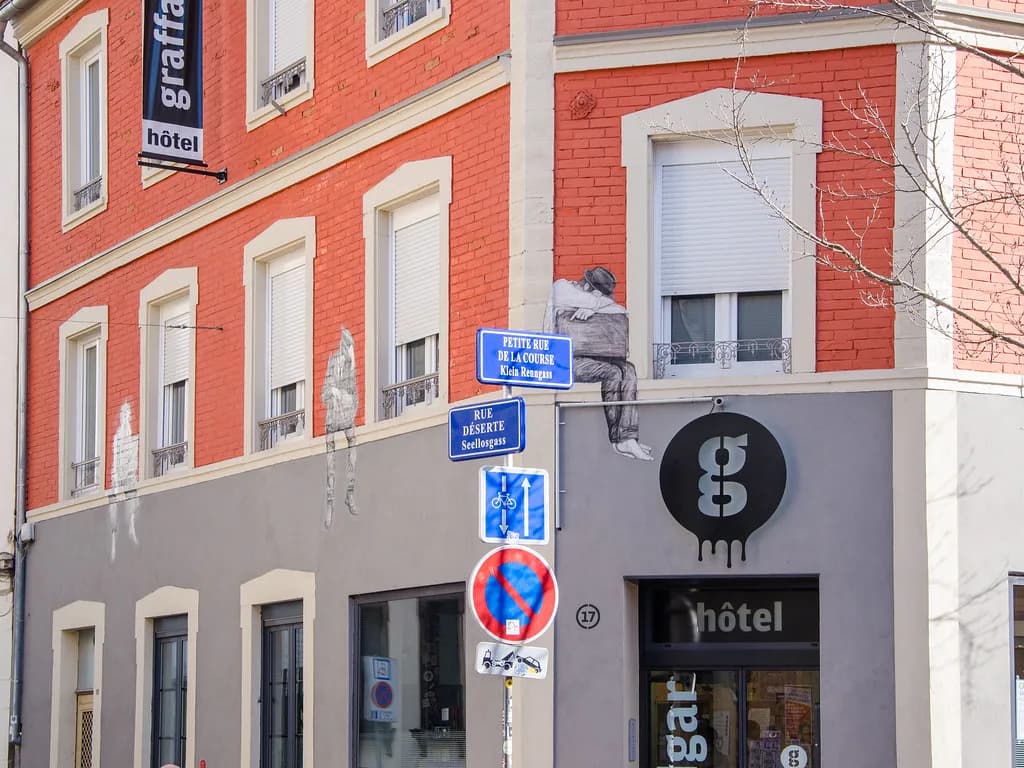
Street art is the district's most distinctive cultural draw for a wanderer, and it fits the area's scruffier, more contemporary character. Strasbourg's urban art mapping records works across the station quarter, including a piece at 50 Rue du Ban-de-la-Roche, which gives you a specific street to head for rather than a vague promise of murals somewhere.
Use the mapping as a loose route rather than a checklist: the pleasure here is in the side streets, the blank walls and the shuttered units, not in ticking off a fixed trail. Wear shoes you can walk in and give yourself an hour or two to cover the ground between the station and the Halles area, which is enough to see the district's texture at a decent pace.
The urban landscape itself is worth attention: the station's long glass roof, the concrete and glass of the newer residential blocks, and the older commercial frontages that survive between them. This is the part of Strasbourg where you can see the twentieth and twenty-first centuries stacked on top of each other without any attempt to hide the joins.
Food and drink in the district
The station quarter is not a dining destination in the way the historic centre is, and it is better for that: you eat with commuters and office workers rather than with other tourists. Expect bakeries and quick lunch counters around the station forecourt, plus a spread of everyday places along the main streets leading towards the Halles.
For a more considered meal, the smarter move is to walk into the old town for dinner and come back to the station for the night. If you want to eat well near your bed, the Krutenau, Strasbourg quarter south-east of the island is the better base for restaurants and bars, and it is a short tram or a twenty-minute walk from the station.
Where the district wins is in the morning: a bakery near the station before an early train beats almost anything else in the city on pure convenience. Check current opening days locally, since Sunday and lunchtime closing is common in Alsace.
Where to stay in the district
The quartier's hotel stock is heavily weighted towards the practical: chain properties and business hotels close to the platforms, aimed at people with a train to catch. That is exactly the appeal if your trip is built around a rail arrival and departure, and it keeps your luggage-handling time to almost nothing.
Weigh the trade-off before booking: you gain minutes at the station and lose the evening atmosphere of the old town, which you will have to walk or ride to reach. If you want the beams-and-cobbles experience, look at the Grande Île and Petite France instead; if you want efficiency, the station side is the sensible choice.
For a broader view of what is on offer across the city before you pick a base, the Strasbourg Attractions: 6 Visitor Guides collection is a useful cross-check on how the districts compare as places to spend your days.
Who should skip it, and where to head instead
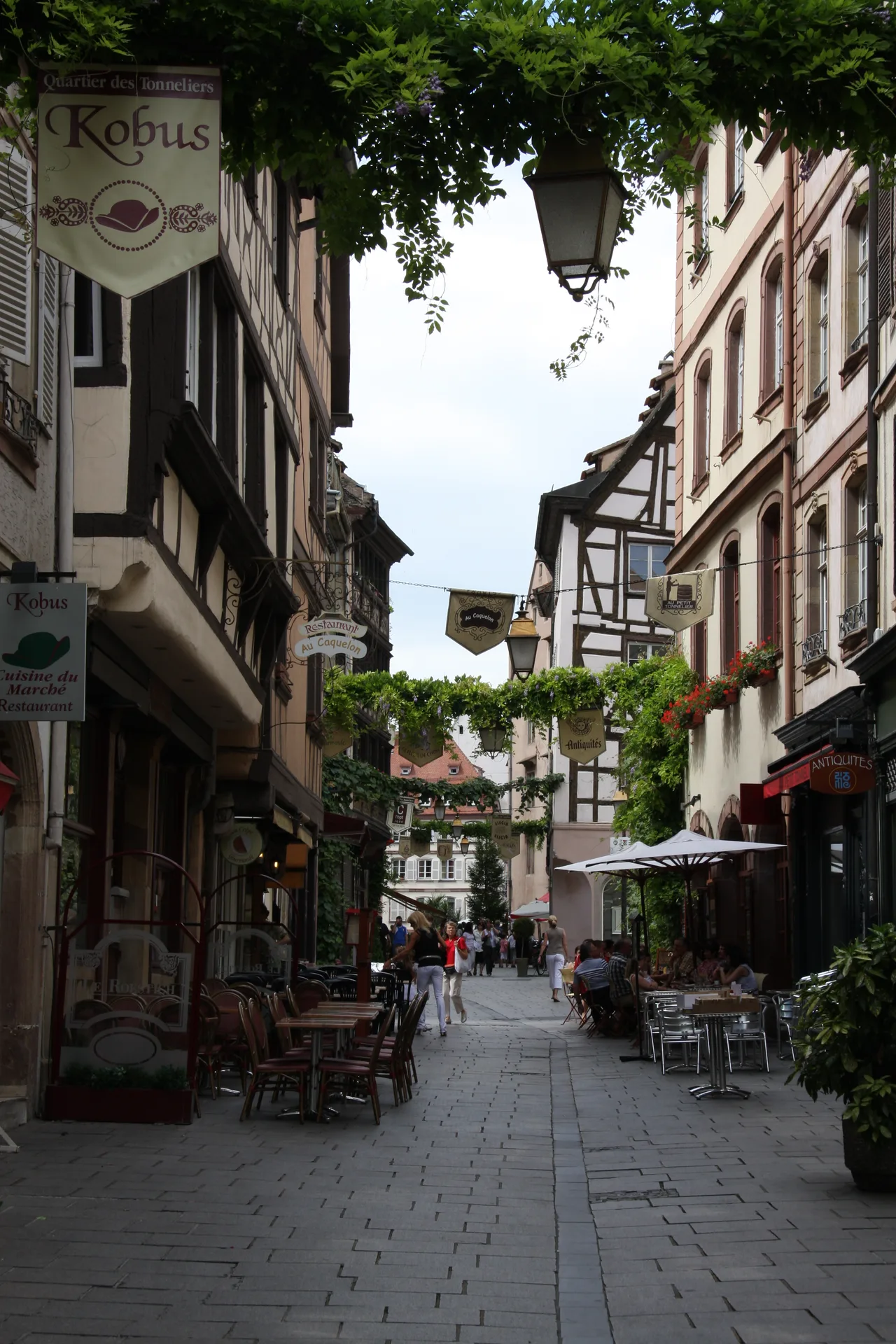
Skip the station quarter if your image of Strasbourg is canals, timber frames and tarte flambée by candlelight, because you will spend the weekend walking away from your hotel to find it. Skip it too if you want a quiet, characterful street to come back to at night; the area's traffic and commuter rhythm do not offer that.
Head instead for the Grande Île and Petite France if you want the classic experience in walking distance of everything, or for the Krutenau if you want a livelier, student-tinged neighbourhood with good food. Both put you inside the historic centre's orbit rather than at its edge.
If you are planning a fuller itinerary beyond the neighbourhood itself, the things to do in Strasbourg guide is the place to match the cathedral, museums and river walks to the days you actually have. From the station, almost all of it is reachable without a taxi.
Weather and when to come
Strasbourg has a continental climate with warm summers and cold winters, and the station quarter offers little shelter from either, so the season shapes how much time you spend wandering its streets. Spring and early autumn are the most comfortable for the kind of aimless walking the district rewards, while high summer can make the tarmac and glass feel oppressive in the middle of the day.
Winter has its own appeal here: fewer people on the pavements, and the walk into the illuminated centre becomes part of the evening rather than a chore. Pack for rain whatever the month, since Alsace weather shifts, and plan the street-art wandering for a dry morning rather than saving it for the last afternoon.
Plan Your Visit
The Quartier de la Gare is the right base for a rail-based weekend, a tight budget and an interest in how a city actually works, and the wrong one for a romantic break built around canals and cobbles. Treat it as your bed and your arrival point, walk into the centre for the postcard, and give the district an hour of your own time for the street art and the changing streetscape.
Before you travel, check tram routes and any planned disruption on the network, and confirm opening days for the specific bakeries and shops you plan to use, since Sunday and lunchtime closures are common in the region.
Frequently Asked Questions
What is the Quartier de la Gare in Strasbourg known for?
It is the station quarter, built around the Gare de Strasbourg and its glass-roofed concourse. The city lists the area within the Koenigshoffen, Gare-Laiterie and Les Halles grouping, and it is known more for everyday city life and recent redevelopment than for heritage sights. Street art is its most distinctive draw for a wanderer.
Is the area around Strasbourg station worth staying in?
Yes, if your trip is built around rail travel and you want short luggage hauls and a straightforward walk into the centre. It is less appealing if you want cobbled streets and canal views outside your door, which you would find on the Grande Île and in Petite France instead. The hotel stock near the platforms is mostly practical chain and business accommodation.
How do you get from Strasbourg station into the old town?
Walk west from the station forecourt across the river Ill, which takes roughly fifteen to twenty minutes depending on where you cross. Trams also leave the forecourt for the centre, and the extension of tram line F has improved connections through the station quarter and the western neighbourhoods. The route is flat and manageable with a case.
What street art can you see in the Quartier de la Gare?
Strasbourg's urban art mapping records works across the station quarter, including a piece at 50 Rue du Ban-de-la-Roche. Use the map as a rough guide rather than a strict trail, since the side streets and blank walls between the station and the Halles area are part of the appeal. Allow an hour or two on foot.
Which Strasbourg districts border the Quartier de la Gare?
The city's district list puts the Grande Ile, Petite France, Tribunal, Vosges and Contades grouping to the north-east, and the Bourse, Krutenau and Esplanade group to the south-east. Koenigshoffen and the Halles area sit on the western side. That makes the station quarter a hinge between the historic centre and the newer city.