
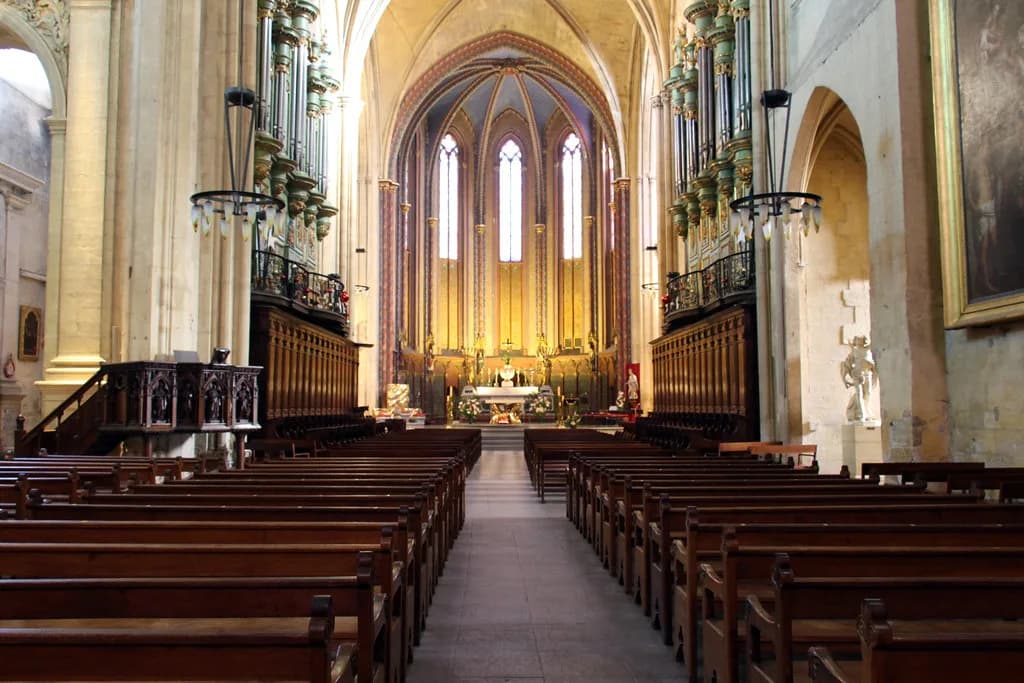
Cathédrale Saint-Sauveur: Aix-en-Provence's Layered Cathedral
Cathédrale Saint-Sauveur is the historic cathedral of Aix-en-Provence and, by visitor numbers, the city's most-visited public monument. It is not a single-style showpiece: the building accumulated across roughly 1,500 years, so Romanesque, Gothic and Baroque work sit side by side. Treat it as a compact, layered stop in the old town rather than a half-day destination, and read the fabric as you go.
The visit works best on foot. The cathedral belongs to the dense medieval core of Aix, so you reach it by walking through the old streets rather than driving to a dedicated car park beside it. Build it into a circuit that also takes in the Cours Mirabeau and the Musée Granet, and you get a coherent half-day in the centre.
Cathédrale Saint-Sauveur in a Nutshell
The cathedral is a synthesis of about 1,500 years of building, destruction and rebuilding, and its walls were last updated in 2016. That long accretion is why the interior reads as an assembly of strata rather than one coherent design. Come expecting to decode phases of construction, not to admire a single grand gesture.
For scale, set it against the city's other sights: this is a parish cathedral in a provincial capital, modest in footprint but rich in detail. The reward is in the small elements, especially the cloister, rather than in monumental dimensions. It sits near the top of the pick of Aix-en-Provence Attractions and works as a precise, focused visit rather than a whole morning.
Where the Cathedral Sits in Aix
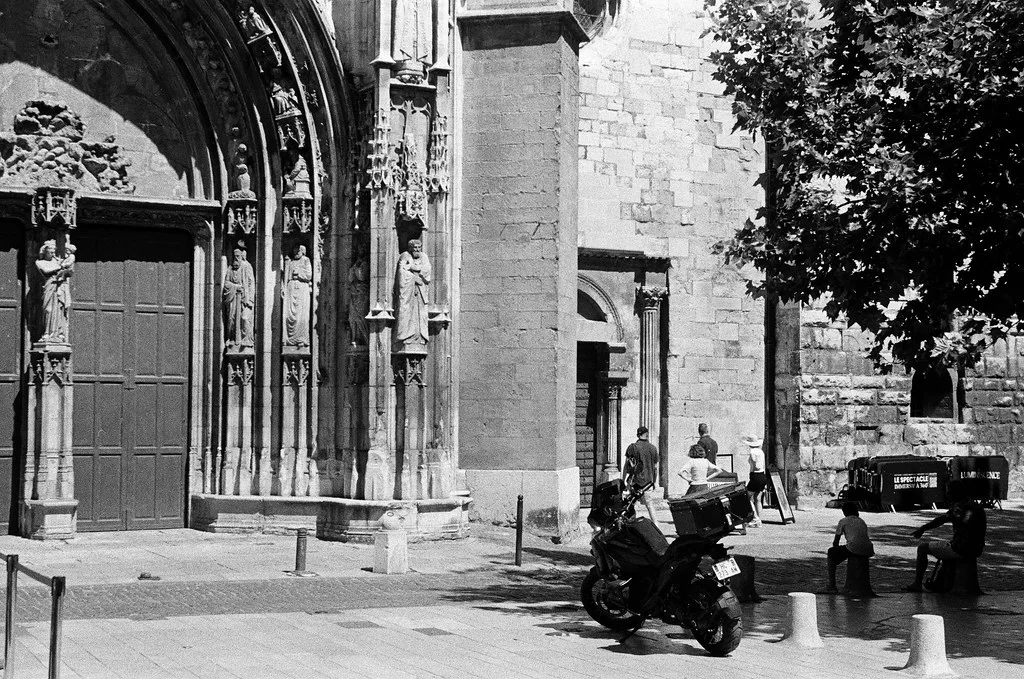
Cathédrale Saint-Sauveur stands in the heart of old Aix-en-Provence, within the medieval street pattern rather than on a wide modern square. That central position means you can walk to it from the main shopping and café streets of the centre. Approach it as part of a wander through the old town, with the cathedral as the focal point of one leg.
Because the streets around it are narrow and the building is tucked into the urban fabric, look for the cathedral close rather than a distant spire. Allow a little orientation time on your first approach; the surrounding lanes bend and fork. A map on your phone is more useful here than trying to keep a straight line.
What to See First: the Romanesque Cloister
The highlight to seek out first is the petit cloître Saint-Sauveur, a small cloister built of white Calissanne stone. It is praised as a masterpiece of Romanesque art, notable for its lightness and elegance despite its modest size. Step into it before the nave, because its calm and proportions set the tone for the rest of the visit.
Look at the stone itself: Calissanne is a local material, and its pale tone is central to the cloister's character. The arcading is on a human scale, so you can read carving details without straining. This is the part of the cathedral most worth slowing down for.
Inside: Roman Nave, Early Oratory and Baptistery
Inside, the building's earliest layers survive in the Roman nave, which preserves remains associated with an early oratory. The baptistery is Roman, and the interior incorporates re-used antique columns, including Greek columns. These elements are easy to walk past, so look for them deliberately rather than drifting through.
The first foundations of the site date to 408, at the moment Christianity became the official religion of the Roman empire. That date explains why the oldest parts feel archaeological rather than simply old. Keep the sequence in mind as you move from the Romanesque cloister into the later Gothic and Baroque zones.
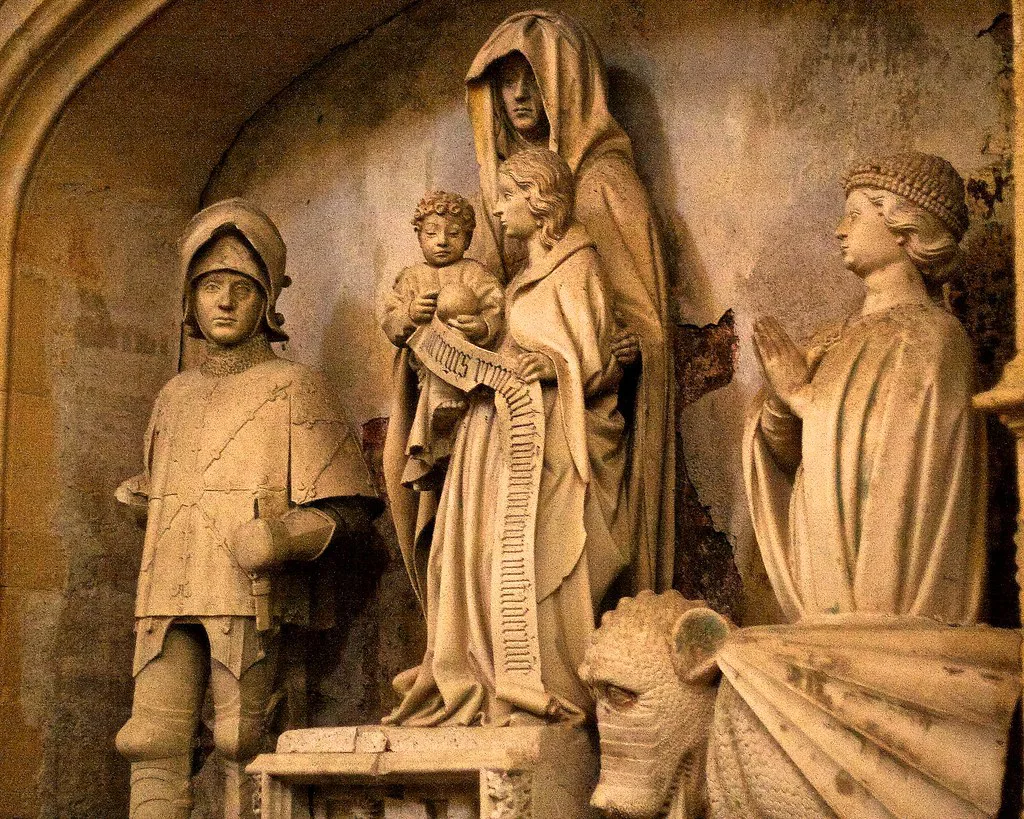
Romanesque, Gothic and Baroque in One Building
The cathedral mixes Romanesque, Gothic and Baroque work, and the effect has been described as assembled from odds and ends rather than conceived as a whole. The variety comes from repeated destruction and reconstruction, each phase starting from what survived rather than from nothing. Once you know that, the shifts in style stop looking like accidents.
Read the building as layers: an early Christian core, a Romanesque cloister, Gothic additions and later Baroque touches. That framing is more useful than trying to identify a single architect or date. It also explains why the interior can feel irregular in plan.
How Long to Allow
Budget under an hour for the cathedral and cloister. The footprint is small, and the pleasure comes from close looking rather than from covering ground. If you read the baptistery, the columns and the cloister properly, you will use the time well without rushing.
Pair the visit with one other nearby sight rather than trying to see everything in the old town at once. A short cathedral stop followed by a museum or a walk along the main avenue makes a balanced morning. Leave the rest of the centre for another day.
Practical Visiting Notes: Hours and Services
The cathedral holds regular services, and its schedule is published as a dated calendar rather than a fixed weekly rule. Check the current mass and celebration times before you travel, since weekday and Sunday patterns differ. The published schedule covers services rather than general tourist opening hours.
Tourist entry conditions, such as whether there is a charge or a booking requirement, are not stated in the schedule of services, so confirm them with the cathedral or the Aix tourist office before setting out. Entry rules for religious buildings often differ between visiting hours and service times. Do not assume the doors are open just because the building appears on a map.
Nearby: What Else Is Within a Short Walk
The Musée Granet is the natural companion in central Aix, and a visit to the cathedral slots neatly alongside it. Together they give you a religious monument and a fine-art collection within the same old-town circuit. Plan them for different parts of the day so neither feels compressed.
Cours Mirabeau, the city's grand tree-lined avenue, is the obvious next stop for a walk, a coffee and a sense of how Aix is laid out. For a wider spread of options across the city, including the Atelier Cézanne and the Pavillon de Vendôme, work from a broader list rather than adding them all to one day.
Honest Trade-offs
This is not a cathedral on the scale of the great Gothic monuments of northern France. Its appeal is intimacy and historical density: small spaces, layered fabric and a cloister that rewards attention. If you want spectacle, go elsewhere; if you want to understand how a Provençal city grew, this is the right stop.
The visit is quiet and quick, which makes it a poor headline act but an excellent anchor for an old-town walk. Set it against the city's broader neighbourhoods and streets so the building makes sense in its setting. That context turns a fifteen-minute look into a genuinely informative one.
Plan Your Visit
Cathédrale Saint-Sauveur rewards a short, deliberate stop: cloister first, then the Roman nave and baptistery, then the later Gothic and Baroque layers. Keep the visit under an hour and build the rest of your day around the old town. Check service times and entry conditions before you go, then let the building's layers do the rest.
Explore more Aix-en-Provence guides
Frequently Asked Questions
How long does it take to visit Cathédrale Saint-Sauveur in Aix-en-Provence?
Allow under an hour for the cathedral and its small cloister. The building has a modest footprint, so the time goes on close looking at the Roman nave, the baptistery and the re-used columns rather than on covering distance. If you also want to read the later Gothic and Baroque phases carefully, add a little more time but keep the visit short enough to pair with another old-town sight.
What is there to see inside Aix's cathedral?
Start with the petit cloître Saint-Sauveur, a small Romanesque cloister built of white Calissanne stone and admired for its lightness. Inside the church, look for the Roman nave with remains linked to an early oratory, the Roman baptistery, and antique columns re-used in the building, including Greek ones. The fabric mixes Romanesque, Gothic and Baroque work, so the interior reads as a sequence of building phases rather than one style.
When are services at Cathédrale Saint-Sauveur?
Services follow a dated calendar rather than a fixed weekly pattern, so the reliable approach is to check the published mass and celebration schedule for the days you plan to be in Aix. Weekday celebrations and Sunday masses are listed separately, and the calendar also flags special celebrations. Use the schedule to plan around a service rather than to assume general visiting hours.
Where is Cathédrale Saint-Sauveur in Aix-en-Provence?
The cathedral stands in the heart of old Aix-en-Provence, inside the medieval street pattern rather than on a broad modern square. You reach it on foot through the old lanes from the central shopping and café streets. The surrounding streets are narrow and bend, so a map on your phone helps more than trying to hold a straight line.
Is the cathedral free to visit?
The schedule of services does not set out tourist entry conditions, so check with the cathedral or the Aix tourist office. Entry arrangements for religious buildings can differ between visiting hours and service times, and the doors may not be open simply because the building appears on a map.